
Round cheese wheels—from creamy, bloomy-rind Brie to nutty, crystalline aged Gouda—are a staple of every well-curated charcuterie board, but cutting them correctly is the difference between a polished, easy-to-serve spread and a messy, frustrating experience. Improper cuts can smudge soft cheeses, crumble hard varieties, waste prized center cuts, and leave guests struggling to grab a portion without knocking over other board items. This expert guide covers every step, tool, and pro tip you need to cut any round cheese perfectly, tailored to its unique texture, so your board looks as good as it tastes.
Why Proper Round Cheese Cuts Matter
It’s not just about aesthetics: cutting round cheese the right way optimizes flavor, texture, and portion control for every guest. Uniform wedges or cubes ensure everyone gets an equal share of the cheese’s best parts—like the buttery, mushroom-forward center of Brie or the crunchy calcium lactate crystals that give aged Gouda its signature complexity. Clean cuts also prevent soft cheeses from smearing or sticking to the board, and reduce waste by letting you use the full wheel instead of discarding uneven, messy scraps. A common mistake home hosts make is cutting round cheese into random, irregular chunks, which makes serving messy and leaves the flavorful center of the wheel untouched.
Common Round Cheeses for Charcuterie Boards (and Their Ideal Cuts)
Different round cheeses have unique textures and rinds that require tailored cutting techniques to shine. The table below breaks down the most popular options and the cut shapes that work best for each:
| Cheese Type | Texture | Ideal Cut Shape | Why This Cut Works |
|---|---|---|---|
| Brie / Camembert | Soft, creamy, bloomy rind | Thin wedges (¼ inch thick) | Exposes the creamy paste without smearing the rind, easy to grab with a cracker |
| Babybel | Semi-hard, wax-coated | Halved or quartered wedges | The wax is easy to slice through, uniform portions prevent the small wheel from being over/under-served |
| Edam | Semi-hard, firmer paste | Triangular wedges | Holds its shape when cut, pairs well with the typical sweet pairings for this cheese |
| Young Gouda | Semi-hard, smooth, slightly sweet | Wedges or small cubes | Easy to chew, the small surface area prevents it from drying out too fast on the board |
| Aged Gouda / Hard Cheddar rounds | Firm, crumbly, crystalline | Small ½-inch cubes | Sturdy enough to pick up with fingers, the cubes showcase the texture without crumbling into a mess |
Essential Tools for Cutting Round Cheese
Having the right tools on hand makes cutting round cheese fast, clean, and frustration-free. Below are the must-have options, and when to use each:
- Cheese wire (thin, stainless steel): The best choice for soft-ripened cheeses like Brie, as a knife can smear the delicate creamy paste. Warm the wire with your hand before cutting to glide through the cheese without tearing the rind.
- Thin-bladed cheese knife (serrated or straight, stainless steel): Ideal for semi-hard and hard round cheeses. Serrated blades cut cleanly through wax-coated cheeses like Babybel without crushing the paste underneath, while straight blades work well for natural-rind hard cheeses. Always use a sharp knife—dull blades crush cheese instead of cutting it, leading to uneven, messy pieces.
- Stabilized cutting board: A non-slip base is non-negotiable for cutting round wheels, which can roll easily while you work. Use a stabilized cutting surface to keep the cheese firmly in place mid-cut.
- Cheese picks or a small fork: For serving cut pieces without touching the cheese directly, keeping flavors separate and the board sanitary.
Keep your cheese knives in top shape with regular kitchen equipment upkeep to ensure clean, even cuts every time you prep a board.
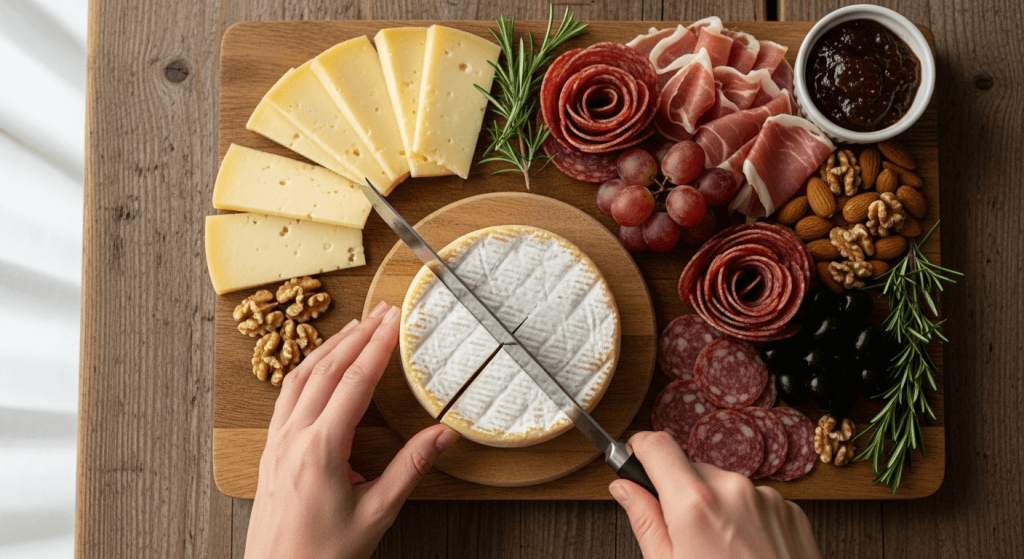
 A well-arranged charcuterie board features evenly cut round cheese wedges and cubes paired with cured meats, fruits, and crackers.
Image source: theheartylife.org
A well-arranged charcuterie board features evenly cut round cheese wedges and cubes paired with cured meats, fruits, and crackers.
Image source: theheartylife.org
Step-by-Step Cutting Guides for Every Round Cheese Texture
Follow these tailored steps for each cheese type to get clean, uniform cuts every time.
How to Cut Soft Round Cheeses (Brie, Camembert, Fresh Goat Cheese Wheels)
Soft-ripened cheeses have delicate, creamy pastes that smear easily if handled incorrectly.
- Chill the wheel in the refrigerator for 30 minutes before cutting: this firms up the paste slightly for clean cuts, without making it too hard or crumbly.
- Place the wheel rind-side up on your stabilized cutting board.
- If using a cheese wire: hold the wire taut, start at the exact center of the wheel, and saw gently in a circular motion to cut the wheel in half first. Cut each half into 4 equal wedges for a standard 2–4 person board.
- If using a knife: use a thin, sharp blade, and wipe it clean between each cut to avoid smearing the bloomy rind onto the creamy paste.
- Arrange the wedges rind-side down on the board so the creamy paste is exposed for guests. Pro tip: leave the rind on soft-ripened cheeses—many guests enjoy eating it, and it holds the wedge together while serving. Never cut soft cheese into cubes, as they will fall apart and create a messy board.
How to Cut Semi-Hard Round Cheeses (Babybel, Edam, Young Gouda)
Semi-hard cheeses hold their shape well, but can crack or crumble if cut while too cold.
- If the cheese has a wax coating (like Babybel or Edam), score the edge of the wax with a knife and peel it off in one piece to avoid getting wax in your cut cheese.
- Let the wheel sit at room temperature for 15 minutes before cutting to prevent cracking.
- Cut the wheel in half first, then cut each half into 3–4 equal triangular wedges, depending on the wheel size. For small Babybel wheels, cutting them in half is often enough for a small board.
- If you prefer cubes for snacking, cut the wedges into ½-inch cubes—these will hold their shape far better than soft cheese cubes.
- Pro tip: for semi-hard cheeses with natural rinds (like Edam), you can leave the rind on for visual appeal, or trim it off if your guests prefer not to eat it.
How to Cut Hard Round Cheeses (Aged Gouda, Aged Cheddar, Parmesan Wheels)
Hard, aged cheeses have a firm, crumbly texture and prized calcium lactate crystals that add signature crunch, so they require a gentler touch to avoid grinding those crystals into paste.
- Let the wheel sit at room temperature for 20–30 minutes before cutting: this softens the paste slightly, making it easier to cut, and amplifies the cheese’s complex flavor.
- Use a sharp, sturdy chef's knife or dedicated hard cheese knife. For wheels larger than 4 inches, cut the wheel into quarters first to make it easier to handle.
- Cut the quarters into ½-inch cubes for easy finger food, or thin shavings using a cheese plane for a more elevated presentation. Thin shavings melt slightly on the tongue, releasing more of the cheese’s nutty, complex flavor than thick chunks.
- Pro tip: avoid cutting hard cheese into very small pieces, as this will crush the calcium lactate crystals and ruin the cheese’s signature texture.
 A visual guide to the essential tools and basic steps for cutting round cheese to perfection.
Arranging Cut Round Cheese on Your Charcuterie Board
How you arrange your cut cheese impacts both the board’s aesthetic and how easy it is for guests to serve themselves. Follow these best practices:
- Place soft cheeses near the center of the board, as they are more perishable and benefit from the cooler temperature of the surrounding items. Place hard cheeses around the edges, where they will stay fresh longer.
- Mix cut shapes for visual interest: alternate wedges of Brie with cubes of aged Gouda to create a dynamic, curated look.
- Leave 1 inch of space between each cheese variety to prevent flavors from mixing, and make it easy for guests to pick up pieces without knocking over other items.
- Use small cheese picks or a dedicated knife for each cheese variety to avoid cross-contamination of flavors (for example, spicy salami grease on mild Brie).
Pro Tips for Flawless Cheese Presentation
Small, often overlooked details make your cut cheese look and taste its best:
- Always let cheese come to room temperature for 45–60 minutes before serving: cold cheese has muted flavor and a firm, unpleasant texture that turns guests off.
- Label each cheese variety with a small place card noting the name and a brief flavor description (e.g., "Aged Gouda: nutty, crystalline, 2 years aged") to help guests with dietary restrictions or preferences make informed choices.
- Don’t overcrowd the board: a sparse, curated board looks more elegant and is easier to navigate than one packed full of items.
- For soft-ripened cheeses, score the top of the wheel in a crosshatch pattern before serving to make it easy for guests to scoop out the creamy paste with a cracker, no extra cutting required.
Cheese Pairings to Complement Your Cut Round Cheeses
The right pairings elevate the flavor of your cut round cheese, balancing rich, creamy, or nutty notes with sweet, savory, or crunchy contrasts. The table below lists our top recommended pairings for the most common round cheeses:
| Cheese | Ideal Pairings | Why It Works |
|---|---|---|
| Brie / Camembert | Sliced apples, honey, walnuts, crusty baguette | The sweet fruit and nutty crunch balance the rich, creamy paste, while the baguette soaks up any melted cheese |
| Babybel | Grapes, whole-grain crackers, mild salami | The mild, slightly nutty flavor of Babybel pairs well with both sweet and savory items, making it a versatile board staple |
| Edam | Dried apricots, olives, pretzel sticks | The mild, slightly salty flavor of Edam stands up to bold savory pairings, while the dried fruit adds a sweet contrast |
| Young Gouda | Strawberries, almonds, honey mustard | The subtle sweetness of young Gouda pairs perfectly with bright fruit and nutty crunch |
| Aged Gouda / Hard Cheddar | Dark chocolate, dried cherries, crusty sourdough | The bold, nutty, crystalline texture of aged hard cheeses pairs beautifully with rich, dark sweet and savory items |
For a full spread, pair your cheese with cured meats, fresh produce, and crunchy carbs like crackers and baguette slices. If you’re growing your own produce, fresh homegrown produce like crisp apples, grapes, and herbs add an extra layer of freshness and flavor to your board.
Storing Leftover Cut Round Cheese
Proper storage keeps leftover cut cheese fresh and safe to eat for days after your gathering. Follow these steps:
- First, discard any cheese that has been left out at room temperature for more than 4 hours (2 hours if the ambient temperature is above 90°F/32°C) per FDA food safety guidelines to avoid spoilage and foodborne illness.
- Wrap leftover cut cheese in wax paper or parchment paper first—never plastic wrap, which traps moisture and accelerates mold growth.
- Place the wrapped cheese in an airtight container in the refrigerator.
- Hard aged cheeses will stay fresh for up to 4 weeks after cutting, while soft cheeses should be used within 3–5 days.
- Pro tip: for large leftover wheels, brush the cut surface with a thin layer of olive oil before wrapping to prevent it from drying out.
After serving, wipe down your cutting board and cheese tools thoroughly. For wood cutting boards, use our guide to remove tough wood stains caused by cheese oil, and lift fruit stains from berries or grapes to keep your board looking new. Store your cheese wire and knives in a dedicated cleaning caddy to keep them sanitary between uses.
Frequently Asked Questions
How do you cut a large round Brie wheel for a big charcuterie board?
For wheels larger than 8 inches, first cut the wheel in half, then cut each half into 6–8 equal wedges, depending on the number of guests. For extra-large wheels (12+ inches), you can cut the wedges into smaller 2-inch pieces for easier serving.
What’s the best knife for cutting wax-coated cheeses like Babybel?
A thin, sharp serrated cheese knife works best, as it slices through the wax cleanly without crushing the cheese underneath. A cheese wire also works, but you’ll need to score the wax first to get the wire started.
How thick should cheese slices be for a charcuterie board?
¼ to ½ inch thick is ideal for most cheeses: thick enough to get a good bite of flavor, thin enough to pick up easily with a cracker or your fingers. For very hard, aged cheeses, thin shavings are better than thick chunks to showcase their texture and flavor.
Can I cut round cheese ahead of time for a party?
Yes, cut hard and semi-hard cheeses up to 24 hours ahead of time, store them wrapped in wax paper in the fridge, and let them come to room temperature 45 minutes before serving. Soft cheeses should be cut no more than 2 hours ahead of time, as they can dry out or lose their creamy texture in the refrigerator.
How do I stop soft cheese from sticking to my knife or wire?
Wipe your knife or wire clean between each cut, and lightly grease the wire with a tiny bit of olive oil if you’re cutting very soft, sticky cheeses like fresh goat cheese.
Conclusion
Cutting round cheese for a charcuterie board doesn’t require professional skills—just the right tools, a little knowledge of your cheese’s texture, and a few simple steps. Proper cuts make your board look polished, ensure every guest gets a perfect portion, and amplify the flavor of every cheese variety you serve. With these tips, you’ll be able to cut any round wheel perfectly, no matter the occasion. Ready to build your full spread? For more charcuterie tips, easy party recipes, and kitchen hacks, browse our full kitchen entertaining guide for inspiration.

Hi, I’m Daniel Brooks—a food lover and kitchen gear enthusiast. I enjoy testing cookware, utensils, and gadgets to see what really works in everyday cooking. At PlugChef.com, I share honest reviews, comparisons, and simple guides to help you choose the best tools for a safer, smarter, and more enjoyable kitchen.
Related posts:
 How to Cut Triangle Cheese for Charcuterie Board: Expert Tips
 How to Cut Brie Cheese for Charcuterie Board: Expert Tips & Tricks
 Pull Down Under Cabinet Spice Rack: Maximize Your Space
 Navy Bean And Ham Recipes: Delicious Comfort Food Ideas
 Cherry Pistachio Chocolate Ice Cream: Irresistible Summer Delight
 How to Freeze Bacon Strips: Easy Tips for Freshness & Flavor

