
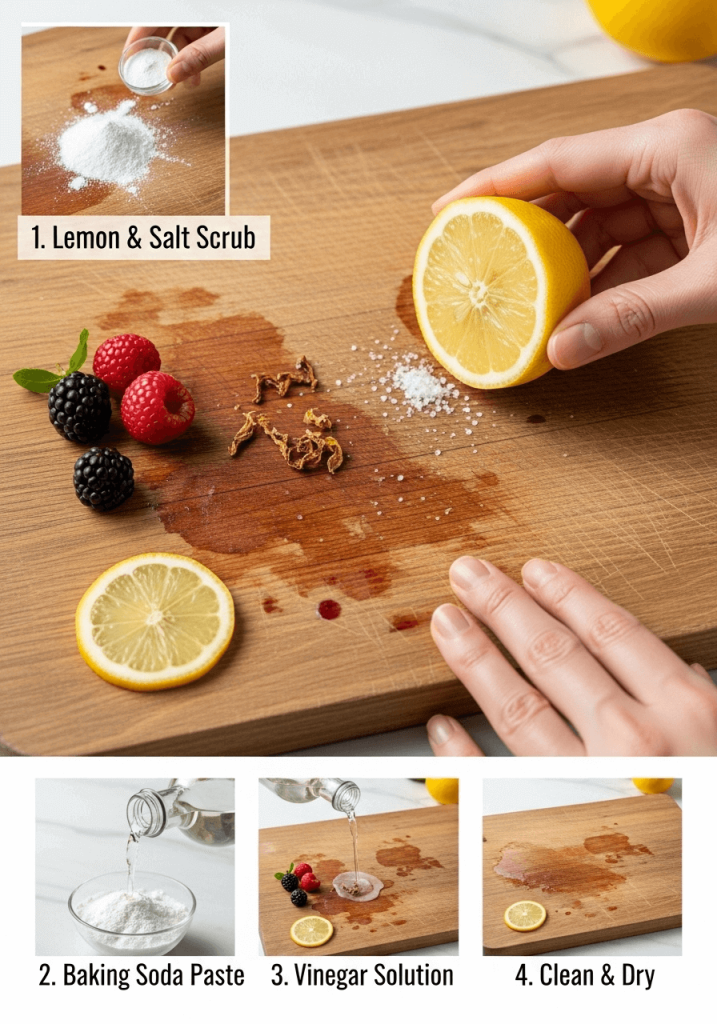
Whip up a bowl of fresh strawberry salsa or slice a platter of ripe blueberries for a charcuterie board, and you might be left with a bright purple or red stain on your favorite wood cutting board. Unlike plastic boards, wood is porous, so natural fruit pigments sink into the grain quickly — but that doesn’t mean the stain is permanent. In this guide, we’ll share tested, food-safe methods to remove fruit stains from all types of wood cutting boards (maple, walnut, bamboo, teak) in 10 minutes or less, plus tips to prevent stains from coming back. All methods use common household items, no harsh chemicals required, and are safe for food-contact surfaces when used as directed.
Why Fruit Stains Happen on Wood Cutting Boards
Fruit stains form when natural plant pigments seep into the open pores of wood. Berries contain anthocyanins, the compounds that give them their deep red, purple, and blue hues, while fruits like peaches and carrots have carotenoids that leave orange or yellow stains. End-grain cutting boards, which have exposed wood fibers, stain faster than edge-grain or laminated boards because they have more surface area for pigments to penetrate. Heat and prolonged contact speed up the process: if you left a bowl of cut watermelon on your board for an hour before cleaning, the stain will set much faster than a quick 2-minute chop of apples. The good news is that most fresh fruit stains are only surface-level, and can be removed with simple, non-toxic methods before they become permanent.
What You’ll Need (All Household Items)
You won’t need any specialized cleaning products for this process — all items listed are available at most grocery stores or pharmacies. We’ve split supplies into two categories based on stain severity:
Basic Stain Removal Supplies (for fresh to set-in stains)
- Mild liquid dish soap (avoid antibacterial formulas with harsh chemicals)
- Warm distilled water (tap water can leave mineral deposits on wood)
- White distilled vinegar
- Fresh lemons or bottled 100% lemon juice
- Fine sea salt or kosher salt (avoid coarse rock salt, which can scratch wood)
- Soft-bristled brush (an old, clean toothbrush works for small stains)
- Clean, lint-free microfiber cloths
Deep Cleaning Add-Ons (for stains older than 2 days)
- Baking soda
- 3% hydrogen peroxide (standard pharmacy-grade, no stronger concentrations)
- 120-grit sandpaper (for board restoration only)
- Food-grade mineral oil or beeswax/mineral oil blend (for post-cleaning sealing)
Step-by-Step Stain Removal Guide (Ordered by Stain Severity)
We’ve ordered these steps from easiest (for fresh stains) to most intensive (for old, set-in stains) to save you time and effort.
Step 1: Remove Fresh, Light Stains (Under 2 Hours Old)
Fresh fruit stains are the easiest to remove, and often only require soap and water. Start by wiping away any excess fruit pulp or juice with a dry paper towel — a common mistake is rubbing pulp into the wood, which pushes pigments deeper into the pores and makes the stain harder to remove. Next, mix a few drops of mild dish soap with warm distilled water, dip a soft sponge into the solution, and scrub the stained area in the direction of the wood grain (scrubbing across the grain can scratch the surface). Rinse the board thoroughly with warm water, then dry immediately with a clean microfiber cloth to prevent water damage. This method removes most fresh berry, cherry, and peach stains in under 2 minutes, with no extra products needed.
Step 2: Treat Set-In Stains (2 Hours to 2 Days Old)
If the stain is still visible after washing with soap and water, use a lemon juice and salt scrub to break down set pigments. Lemon juice contains citric acid, which gently lifts color from wood pores without damaging the surface, while fine salt acts as a mild abrasive that won’t scratch the wood. Squeeze fresh lemon juice directly onto the stained area until it’s fully saturated, then sprinkle a thin, even layer of fine sea salt over the juice. Let the mixture sit for 5–7 minutes — never longer than 10 minutes, as prolonged acid exposure can etch the wood surface. Scrub gently with a soft-bristled brush or the cut side of a lemon half, then rinse thoroughly with warm water and dry completely. This method works for most cherry, blueberry, and pomegranate stains that have set for up to 2 days.
Step 3: Remove Tough, Old Stains (2+ Days Old)
For stains that have set for 2 or more days, or dark stains from deeply pigmented fruits like beets and dragon fruit, use a baking soda and vinegar paste to break down stubborn pigment. Mix 2 parts baking soda with 1 part warm water to form a thick, spreadable paste, then apply it evenly to the stained area. Let the paste sit for 10 minutes to absorb the pigment. Next, pour or spray a small amount of white distilled vinegar over the baking soda paste — it will fizz as it reacts with the baking soda, lifting the stain from the wood pores. Let the reaction sit for 2 more minutes, then scrub gently with a soft sponge, rinse thoroughly with warm water, and dry completely. Note: Skip this step if you oiled your board in the last 2 weeks, as the vinegar can strip fresh protective sealant; for guidance on proper oiling frequency, refer to our dedicated guide.
Step 4: Erase Stubborn, Deeply Set Stains
If the stain is still visible after the baking soda and vinegar treatment, use 3% hydrogen peroxide (the standard concentration found in most pharmacy first aid kits) to lighten the pigment. Dab a small amount of hydrogen peroxide onto a cotton ball, then press it gently onto the stained area — don’t rub, as this can spread the pigment to surrounding wood. Let it sit for 3–5 minutes, then wipe away with a clean damp cloth, rinse the board thoroughly, and dry completely. This method is safe for food-contact surfaces once rinsed, and works for deeply set pomegranate and beet stains that have been on the board for weeks. Always test hydrogen peroxide on a small, hidden area of the board first if you have a light-colored wood (like maple) to avoid unwanted lightening. These methods work for all common wood cutting boards, including maple, walnut, bamboo, and teak; for teak-specific care, see our dedicated teak board cleaning guide.
 Fresh fruit stains on a new wood cutting board are easy to remove with quick cleaning
What Not To Do When Cleaning Your Board
Avoid these common mistakes to keep your cutting board safe and long-lasting:
- Don’t use chlorine bleach: Bleach breaks down wood fibers, leaves toxic residue that can leach into food, and causes permanent gray discoloration over time.
- Don’t use steel wool or harsh abrasive scrubbers: These scratch the wood surface, creating more porous areas for future stains and bacteria to harbor.
- Don’t soak the board in water for long periods: Wood swells when exposed to prolonged moisture, which can cause warping, cracking, and lift existing sealant. If you need to soak the board for deep cleaning, limit it to 5 minutes or less.
- Don’t use undiluted essential oils or citrus oils on sealed boards: These can degrade the board’s protective finish over time, leading to more frequent staining.
How to Prevent Future Fruit Stains
Preventing stains is far easier than removing them, and these simple habits will keep your board looking new for years:
- Stick to a regular sealing routine: Applying 2–3 thin coats of food-grade mineral oil or a beeswax/mineral oil blend once a month fills wood pores, creating a barrier that stops pigments from seeping in. This is the single most effective way to prevent permanent stains.
- Rinse the board immediately after use: Don’t let fruit pulp or juice sit on the wood surface for more than 5 minutes — the longer it sits, the deeper the pigment penetrates.
- Use separate boards for raw meat and produce: The USDA recommends this to avoid cross-contamination, which also prevents meat juices from seeping into pores that already hold fruit residue, which worsens stains over time USDA Cutting Board Safety Guidelines.
- Avoid cutting highly pigmented fruits directly on unsealed boards: Fruits like pomegranates, beets, and dragon fruit leave extremely dark, hard-to-remove stains. Use a dedicated plastic board for these items if your wood board is unsealed.
- Dry the board upright in a well-ventilated area: After washing, stand the board on its edge to air dry completely — laying it flat against a wall traps moisture on one side, which can cause warping and allow stains to set. After any deep cleaning, reapply a thin coat of food-grade mineral oil to replenish your board’s protective seal and lock out future stains. According to the University of Minnesota Extension, this practice extends your board’s lifespan by 2–3 times when done regularly UMN Extension Cutting Board Care.
When to Restore Your Board Instead of Just Stain Removal
If your board has deep gouges, widespread dark discoloration that won’t respond to stain removal methods, or a persistent sour smell, cleaning alone won’t fix it. In this case, you’ll need to restore the board to make it safe and functional again:
- Lightly sand the entire surface of the board with 120-grit sandpaper, sanding in the direction of the wood grain to remove stained outer layers and smooth out rough spots.
- Wipe away all sanding dust with a damp cloth, then let the board dry completely.
- Apply 3–4 thin coats of food-grade mineral oil, letting each coat absorb fully (about 15 minutes) before applying the next. For boards with heavy wear, use a beeswax/mineral oil blend for extra protection. Note: This restoration method only works for solid wood and bamboo boards. Laminated boards (made of glued-together wood strips) will separate if sanded, so these should be replaced when heavily stained or damaged. For detailed guidance on proper food-safe restoration steps, follow our dedicated guide. If minor discoloration remains after stain removal, our guide to removing stubborn cutting board stains has extra tips for lightening dark spots.
 A well-maintained wood cutting board can last for years with regular cleaning and oiling
Frequently Asked Questions
How do fruit stains form on wood cutting boards?
Fruit stains form when natural pigments (like anthocyanins in berries, carotenoids in orange fruits, and tannins in pomegranates) seep into the open pores of wood. End-grain boards stain faster than edge-grain or laminated boards because they have more exposed wood fibers for pigments to penetrate. Heat and prolonged contact with fruit juice also speed up the staining process.
What household items remove fruit stains from wood cutting boards?
The most effective natural stain removers are lemon juice, baking soda, white vinegar, fine salt, and 3% hydrogen peroxide. All are food-safe when used as directed and available at most grocery stores or pharmacies.
Can I use bleach to remove fruit stains from wood cutting boards?
No. Chlorine bleach breaks down wood fibers, leaves toxic residue that can leach into food, and causes permanent gray discoloration over time. It is not safe for food-contact surfaces like cutting boards. For safe methods for safe stain removal for damaged boards, use the methods outlined above.
How long should I let stain remover sit on wood?
For lemon juice and salt scrubs, let the mixture sit for 5–7 minutes maximum. For baking soda and vinegar paste, let it sit for 10 minutes before scrubbing. For hydrogen peroxide, limit contact time to 3–5 minutes to avoid lightening the wood.
Will fruit stains ruin my wood cutting board?
No, fruit stains are mostly cosmetic. However, if left untreated for weeks, they can seep deeper into the wood and harbor bacteria if the board is unsealed. Regular sealing and prompt cleaning prevent this.
Are fruit stains on wood cutting boards a health risk?
Minor stains on properly sealed boards pose no health risk. Unsealed boards with old, set-in stains can harbor bacteria, so these should be cleaned immediately and re-sealed regularly to stay safe for food contact.
How often should I oil my cutting board to prevent stains?
According to the University of Minnesota Extension, oil your board every 4–6 weeks for regular use, or immediately after deep cleaning to replenish the protective seal and lock out pigments UMN Extension Cutting Board Care.
Conclusion
Fruit stains on wood cutting boards are a common, easily fixed nuisance — no harsh chemicals or expensive products required. For fresh stains, a quick soap and water scrub is often all you need; for set-in or old stains, the lemon-salt scrub, baking soda-vinegar paste, or hydrogen peroxide methods will lift even the darkest pigmentation without damaging your board. The best long-term fix is prevention: stick to a regular oiling routine, rinse your board immediately after use, and use separate boards for produce and raw meat to keep your board looking like new for years. Ready for more easy kitchen maintenance tips? Browse our full library of tested home guides to keep every part of your kitchen in top shape.

I’m Abby Lu, a passionate home cook who loves simplifying everyday meals. At PlugChef.com, I share product reviews and cooking guides to help you find the best tools for your kitchen.
Related posts:
 How to Get Stain Out of Wood Cutting Board: Easy & Effective Tips
 Why is Blue Curacao Blue: Unveiling Its Vibrant Secret
 What is Plant Based Sausage: Delicious, Healthy, and Sustainable Choices
 How to Cook a Chateaubriand: Master the Perfect Steak Every Time
 Grate Cleaner for Gas Stoves: Ultimate Guide to Sparkling Results
 The Best Candied Yams Recipe: Irresistibly Sweet & Easy Guide

