Is Bamboo a Good Cutting Board: Pros & Cons Explored

Bamboo cutting boards have surged in popularity — and for good reason. They offer genuine sustainability advantages, natural antimicrobial properties, and a distinctive look that most plastic boards can't match. But the picture isn't all upside. Bamboo's hardness accelerates knife wear faster than softer hardwoods, its laminated construction demands regular oiling to prevent cracking, and moisture exposure can delaminate the strips over time.
This guide gives you the full picture: what bamboo actually is as a kitchen material, the real-world pros and cons, a head-to-head comparison with wood, plastic, glass, and composite alternatives, a concrete buying checklist, and a maintenance routine that will keep your board performing for years. Whether you're upgrading from plastic or deciding between bamboo and end-grain maple, you'll walk away with enough context to make a confident choice. For more on this, see our guide on cooking concepts bamboo cutting board.
What Bamboo Actually Is — and Why It Matters for Cutting Boards
A Grass, Not a Tree
Despite its lumber-like appearance, bamboo is a fast-growing grass. Individual culms can reach full height in three to five years, with certain species putting on 30 to 40 inches of vertical growth in a single day. That extraordinary growth rate — far exceeding any hardwood tree — is precisely why bamboo cutting boards sit at the intersection of speed, sustainability, and surprisingly robust structural strength.
How Cutting Boards Are Actually Made
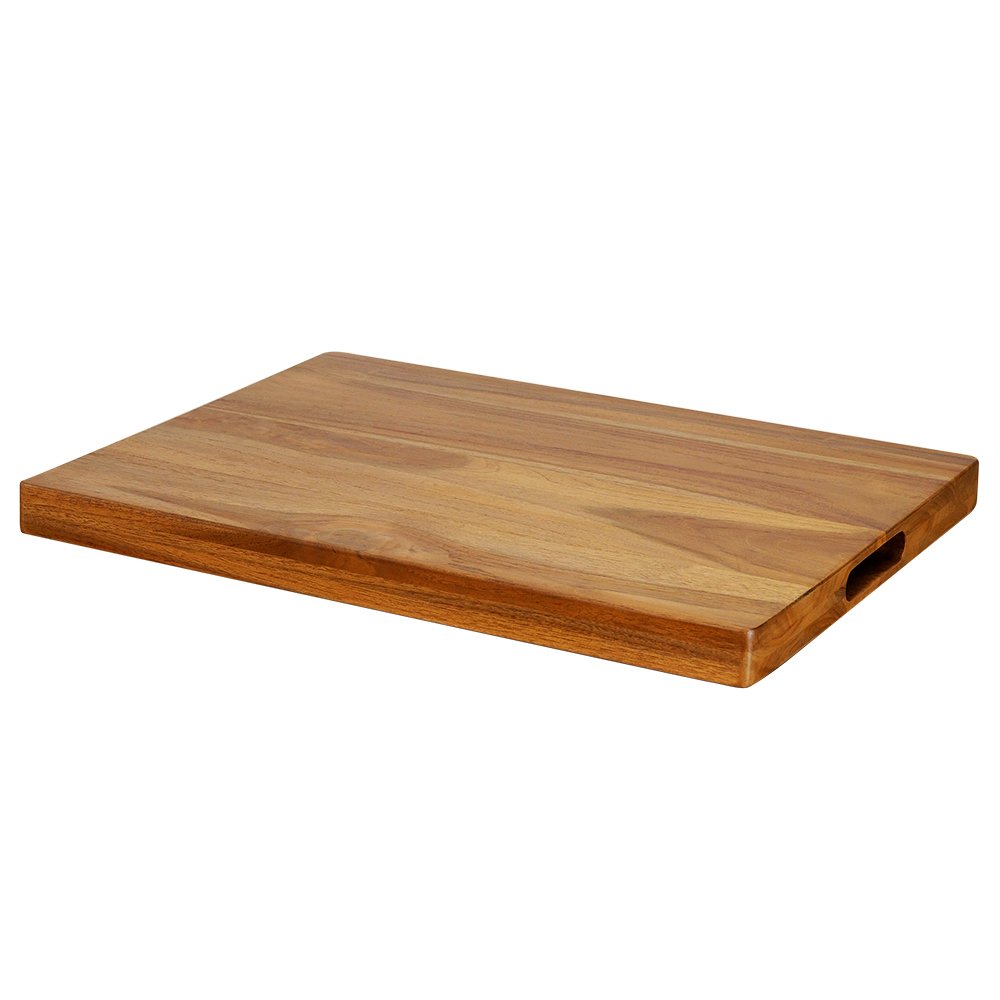
Most commercial bamboo cutting boards aren't solid slabs. They're typically constructed from Moso bamboo strips that are sliced, laminated, and bonded under heat and pressure using adhesives. This horizontal-strip lamination gives the finished board a distinctive striped grain and adds stability, though the bond lines between strips become the weak points that determine how long the board survives before delaminating under stress. For more on this, see our guide on oxo good grips food storage containers.

Credit: chefsvisionknives.com
Sustainability at a Glance
Bamboo's renewable credentials are well documented. According to the USDA, bamboo is recognized as one of the fastest-renewable plant materials available — harvested groves regenerate from their own root systems without replanting, require minimal irrigation, and grow without synthetic pesticides in most regions. Per-square-foot carbon sequestration rates are also notably higher than many timber species, which is a meaningful environmental advantage when weighing a board's full lifecycle impact.
Pros of Bamboo Cutting Boards
Impressive Surface Durability
Bamboo registers on the higher end of the Janka hardness scale — the standard measure for wood hardness — putting it above maple and approaching the density of teak. In practice, this means a well-made bamboo board develops a knife groove pattern much more slowly than maple or cherry boards. The surface resists deep gouging, so food particles aren't trapped in hidden crevices where bacteria can multiply between washings. For more on this, see our guide on do titanium cutting boards dull knives.
A common mistake is assuming that "durable" means the board never shows wear. While the surface holds up well, repeated use on the same spot will still leave cosmetic marks. Rotating where you chop — front to back, left to right — extends the board's visually attractive life considerably.
Genuine Environmental Advantage
Compared to solid wood boards sourced from hardwood trees, bamboo significantly reduces pressure on forest ecosystems. After a mature culm is harvested, the root system produces new shoots within months rather than the decades a replaced tree would require. This faster lifecycle means fewer trees felled per unit of board material, and bamboo groves typically require far less chemical input than managed timber plantations. For more on this, see our guide on good cook food thermometer.
For those who prioritize environmental impact, a bamboo board carries a smaller carbon footprint than its hardwood counterparts across the entire production chain — from cultivation to end-of-life disposal.
Natural Antimicrobial Activity
Bamboo's cell structure and inherent silica content give it measurable resistance to bacterial colonization. Research published in food-safety journals has noted that bamboo surfaces inhibit the growth of common pathogens — including E. coli and Salmonella — more effectively than untreated plastic. This doesn't eliminate the need for proper cleaning, but it means bamboo holds up better between washes than plastic boards do.
For general kitchen hygiene, the CDC's food safety guidelines recommend using separate cutting boards for raw meats and produce, regardless of material.
Lightweight and Visually Appealing
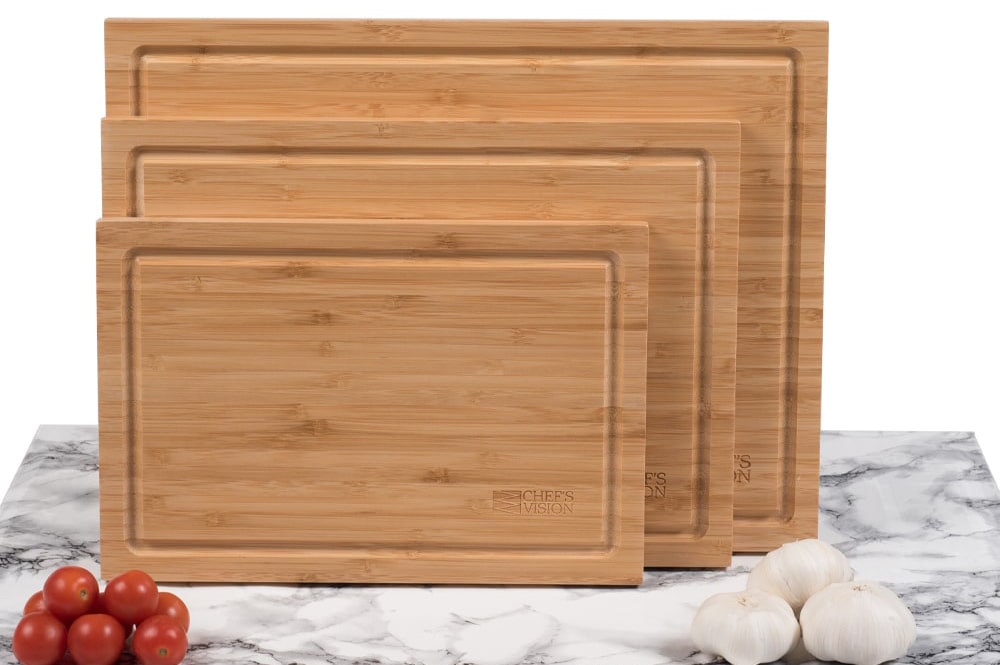
At roughly half the weight of an equivalently sized maple board, bamboo is far easier to carry between counter and sink — a practical advantage when you're juggling prep tasks in a crowded kitchen. The natural striped grain created by the horizontal strip lamination gives each board a distinctive look that photographs and displays well, making it a welcome addition to a styled countertop.
Cons of Bamboo Cutting Boards
The Blade-Dulling Problem
This is the most frequently cited drawback, and it's real. Because bamboo is denser than softer hardwoods like maple, it accelerates edge wear on fine Japanese knives and high-carbon Western knives. The effect is most pronounced with thin, high-hardness blades used for precision work like slicing fish or herbs.
Practical guidance: If you use a bamboo board for daily chopping (onions, vegetables, bread), the wear on a well-tempered Western chef's knife is minimal and easily managed with routine honing every few months. But if you invest heavily in Japanese-style knives with extremely thin, fragile edges, consider reserving a softer end-grain maple board for those tasks and using your bamboo board for heavier-duty prep.
Ongoing Oiling Required
Bamboo boards need regular conditioning with mineral oil or a dedicated board finish — typically every 3 to 6 weeks with normal use. This isn't difficult, but it adds a step to your routine that many people skip until the board has already dried out and developed hairline cracks along the laminations.
A common oversight: Oiling only the top surface. The sides and bottom of a bamboo board dry out just as readily as the top. Wipe mineral oil onto all exposed faces for even protection against moisture penetration.
Moisture Sensitivity and Warping Risk
Unlike solid wood, which can tolerate occasional soaking, bamboo boards absorb water along their laminated layers. Prolonged soaking or placement in a dishwasher introduces moisture into the bond lines, which can cause swelling, warping, or — in extreme cases — the strips to separate entirely.
Rule of thumb: Never submerge a bamboo board. Wash it upright in the sink with a sponge, rinse under running water, then dry immediately with a towel and air-dry vertically for at least 30 minutes before storing.
Adhesive and Chemical Considerations
Most mass-produced bamboo cutting boards are held together with urea-formaldehyde-based adhesives. While these are widely used in furniture and building products and are regulated for food-contact safety by the FDA and similar bodies, a small number of consumers report concerns about formaldehyde off-gassing in newer boards.
What to look for: Boards labeled with food-grade or non-toxic adhesives. Some premium brands use casein (milk protein) or other plant-based binders that eliminate formaldehyde concerns entirely. If price isn't a constraint, investing in a board with clearly stated non-toxic adhesives eliminates this concern altogether.
Surface Fatigue Under Heavy Use
Over time, the laminated strip construction can delaminate at the edges — the strips begin to separate, creating uneven surfaces that are unhygienic and unpleasant to work with. This typically happens after 2 to 5 years of daily use, depending on care quality and board thickness.
Bamboo vs. Other Cutting Board Materials
The right board depends on what you actually cook, how you sharpen your knives, and how much maintenance you're willing to do. Here's a head-to-head look at how bamboo stacks up against the alternatives.
Bamboo vs. Wood
Wood — particularly end-grain maple — remains the gold standard for serious knife work. End-grain construction presents the cut surface at the grain, which means the blade doesn't bind in the wood fibers the way it does on flat-grain boards. This makes end-grain maple gentler on edges, though it requires more frequent oiling and weighs significantly more.
Bamboo wins on sustainability and weight; wood wins on blade preservation and longevity with proper care.
Bamboo vs. Plastic
Plastic boards are cheap, dishwasher-safe, and disposable. The problem is that they develop deep, bacteria-trapping grooves within weeks of use, and microplastics leach into food over time. Bamboo is a more durable, aesthetically superior, and environmentally responsible alternative — the trade-off is that it can't go in the dishwasher and requires more care.
Bamboo vs. Glass
Glass boards are visually dramatic and completely non-porous, but they're among the hardest materials you can cut on. Glass effectively destroys knife edges and offers poor grip, making it more decorative than functional. Bamboo is a far more practical choice for regular food prep.
Bamboo vs. Composite
Composite boards (typically made from recycled plastic and paper pulp) are hard, durable, and relatively knife-friendly. They're non-porous and easy to clean. However, they don't offer the natural antimicrobial properties of bamboo, and they're made from synthetic materials — a downside if you're prioritizing natural resources.
Quick Comparison Table
| Factor | Bamboo | End-Grain Wood | Plastic | Glass | Composite |
|---|---|---|---|---|---|
| Knife-friendliness | Moderate | Excellent | Poor (grooves) | Very Poor | Good |
| Durability | Good | Excellent | Fair | Excellent | Good |
| Eco-friendliness | Excellent | Good | Poor | Fair | Moderate |
| Maintenance | Oiling (3–6 wks) | Oiling (2–4 wks) | Dishwasher-safe | Dishwasher-safe | Easy wipe |
| Weight | Light | Heavy | Light | Heavy | Moderate |
| Antimicrobial | Natural | Some natural | None | None | None |
| Cost | Low–Moderate | Moderate–High | Low | Moderate | Moderate |
| Dishwasher-safe | No | No | Yes | Yes | Yes |
| Lifespan (daily use) | 2–5 yrs | 10+ yrs | 1–3 yrs | Very long | 5+ yrs |
How to Choose a High-Quality Bamboo Cutting Board
Not all bamboo boards are equal. A $12 board from a big-box store and a $45 board from a specialty maker can behave very differently over time. Here's what to look for.
Construction Quality
- Lamination: Boards made from multiple layers of bamboo strips are more stable and resistant to warping than single-layer panels. Look for boards with at least 3 to 6 laminated layers.
- Edge finish: A properly finished board has sealed edges where the laminations meet. Rough or exposed strip ends will absorb water and delaminate faster.
- Adhesive type: As mentioned above, boards using food-grade or non-toxic adhesives are preferable, especially if you're cutting raw produce directly on the board.
Thickness
A board that's too thin will flex under the weight of a heavy knife, creating instability and uneven cuts. Aim for at least 0.75 inches (about 2 cm) of thickness for boards used for regular chopping. Anything under 0.5 inches is better suited for light tasks like butter or cheese plating.
Size Selection
- Small (8–10 inches): Ideal for bread, cheese, fruit slicing, and plating tasks
- Medium (12–16 inches): Best all-purpose size for most home kitchens — handles vegetable prep, meat, and general chopping
- Large (18+ inches): Suited for heavy-duty use, family-style prep, or professional kitchen environments
Surface Finish
Smooth-sanded boards are preferred over rough or textured finishes, which can harbor food particles in microscopic crevices. The grain pattern should be uniform without visible gaps between strips.

Credit: www.kitchenknifeguru.com
Bottom line on buying: Spend enough for quality lamination (at least 3/4 inch thick, 3+ layers, food-safe adhesives), oil it the week you buy it, never submerge it in water, and rotate your chopping zone to keep the surface even. A well-made bamboo board at $30 to $50 will outlast several cheap ones by a wide margin — invest once, benefit for years.
Care and Maintenance Routine
A bamboo board that's properly maintained can serve reliably for several years. A neglected one might crack or delaminate within a year. Here's a concrete routine.
After Each Use: Immediate Cleaning
- Scrape off food debris with a board scraper or the back of a knife
- Wash with warm (not hot) water and mild dish soap using a non-scratch sponge
- Rinse thoroughly under running water to remove all soap residue
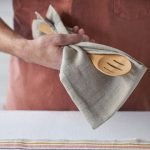
- Dry immediately with a clean kitchen towel — don't let standing water sit on the surface
- Air-dry vertically in an upright position for at least 30 to 60 minutes, ensuring air circulates on all sides
Never place a bamboo board in the dishwasher, and never let it soak flat in a basin of water.
Every 3 to 6 Weeks: Oiling
- Ensure the board is completely dry
- Pour a small amount of mineral oil (not vegetable oil or olive oil, which can go rancid) onto the board surface
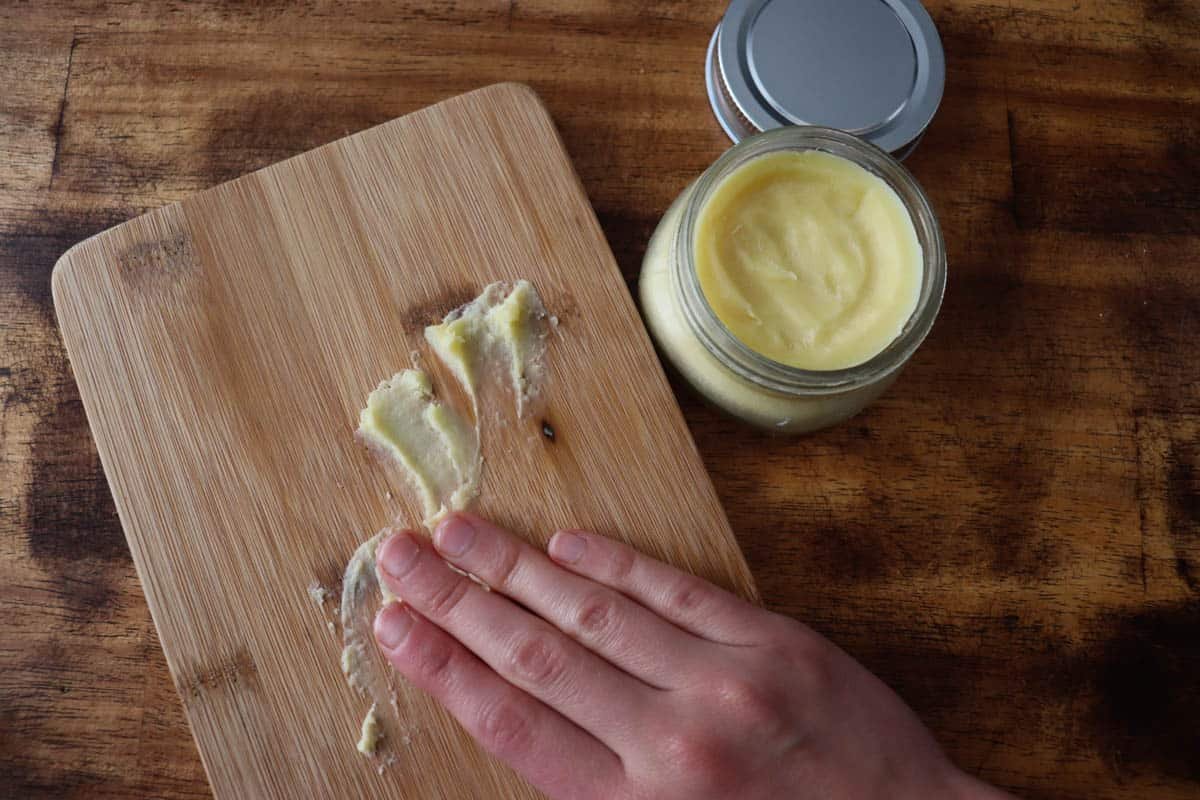
- Rub the oil into all exposed surfaces — top, sides, and bottom — using a soft cloth
- Let the oil soak in for at least 4 hours, ideally overnight
- Wipe off any excess oil that hasn't been absorbed
Mineral oil is preferred over other oils because it's odorless, flavorless, stable (won't turn rancid), and penetrates wood grain effectively. Food-safe wood finishes like board oil or beeswax blends are also good options for occasional deeper conditioning.
Seasonal Deep Care
Once or twice per year, you can buff the board with a paste wax or beeswax blend designed for cutting boards. This adds a protective barrier that repels moisture and extends the board's life significantly.
Storage
Store your bamboo board in a dry, well-ventilated area away from direct heat sources (ovens, radiators) and direct sunlight. If you have a dedicated board rack or slot in a cutting board holder, use it — this keeps air circulating around the board rather than trapping moisture against a wall or counter.
Credit: chefsvisionknives.com
Knife Safety: A Good Board Isn't the Whole Picture
The right cutting board reduces the risk of slips and accidental cuts, but kitchen knives cause thousands of minor — and occasionally serious — injuries every year. Even with a stable, well-maintained bamboo board, you should never assume you won't need first aid supplies within arm's reach.
If you cook regularly in a shared living space like a dorm or studio apartment, keeping dorm kitchen essentials (https://plugchef.com/first-aid-kit-for-college/) on hand makes sense — particularly antiseptic wipes, clean bandages, and pressure gauze for cuts that don't stop immediately.
For anyone who travels while cooking — food bloggers, camp chefs, or frequent travelers — a small personal first aid kit (https://plugchef.com/mini-first-aid-kit-for-purse/) is a practical addition to your carry-on or day bag, ensuring you have bandages and antiseptic within reach even away from home.
And if you cook outdoors as part of your routine — backyard camping, car camping, or trail cooking — minimal camping first aid gear (https://plugchef.com/lightweight-backpacking-first-aid-kit/) that includes waterproof supplies and a tourniquet should accompany your cutting tools every time.
Whatever your setup, remember that first aid supplies have a shelf life. Keeping your safety supplies current (https://plugchef.com/first-aid-kit-refill-supplies/) means checking expiration dates on medications, replacing used bandages, and restocking antiseptic regularly.
Finally, if you're organizing a new kitchen or moving into a new space, proper supply containers (https://plugchef.com/empty-first-aid-kit-box/) help ensure your first aid items are found in seconds rather than buried in a drawer. A dedicated, clearly labeled container near your prep station turns a minor cut from a disruption into a two-minute fix.
Bamboo Cutting Board FAQs
What is the healthiest cutting board material to use?
Bamboo and hardwood cutting boards are generally considered the healthiest options because they resist bacterial colonization better than plastic and don't leach microplastics. For maximum safety, the material matters less than your habits: use separate boards for raw meats and produce, wash boards immediately after use, and replace any board that develops deep, permanent grooves.
Does bamboo really dull knives?
Yes, it can — but the effect depends heavily on your knife type and how you use the board. Western chef's knives with a moderate edge angle (15–20 degrees per side) experience minimal measurable dulling on bamboo during normal use. Japanese-style knives with extremely thin, high-hardness edges are more susceptible to accelerated wear. If you use Japanese knives exclusively, a softer end-grain maple board for precision work is a reasonable compromise.
How often should I oil a bamboo cutting board?
With daily to several-times-weekly use, oil every 3 to 4 weeks. With light use (once or twice a week), every 4 to 6 weeks is sufficient. The board itself will tell you when it needs oiling: if the surface looks dry, matte, or shows light scratches that appear more pronounced than usual, it's time for a conditioning session.
Can I put a bamboo cutting board in the dishwasher?
No. Dishwasher detergents are typically alkaline and hot, which breaks down the adhesive bonds between bamboo strips and forces moisture into the lamination layers, causing delamination and warping. Hand-wash bamboo boards only.
How long does a bamboo cutting board last?
With proper careyou should expect 3 to 5 years of reliable daily service. Signs that it’s time to replace your board include visible delamination where the bamboo strips are separating, deep gouges that harbor bacteria even after aggressive scrubbing, or a warped surface that no longer sits flat on a counter. Never use a board that has developed deep, cracked grooves, as these are breeding grounds for pathogens that cannot be adequately cleaned.
Common Myths About Bamboo Cutting Boards
“Bamboo Is Unaturally Hard and Will Ruin Any Knife”
This is an overstatement. While bamboo is harder than many softwoods, it isn’t harder than the steel in a well-made kitchen knife. It simply doesn’t have the self-healing properties of end-grain wood, where the fibers open and close around the blade. For most home cooks using standard carbon steel or stainless steel knives, bamboo is a perfectly acceptable surface. The myth usually stems from comparing bamboo to ultra-soft cherry or maple, which are gentler on fine edges, rather than to the harder woods it actually competes with in the market.
“Bamboo Is Completely Hygienic”
Bamboo has natural antimicrobial properties, but they are not a substitute for proper sanitation. The surface can still be contaminated, and the hard, grooved areas that develop over time can trap food particles where bacteria thrive. The material’s resilience means it lasts longer before becoming unhygienic compared to plastic, but it still requires consistent cleaning and eventual replacement to remain safe for food preparation.
“All Bamboo Boards Are Made the Same Way”
There is a massive difference between a $15 imported board and a premium artisanal one. Cheaper boards often use lower-quality adhesives, thinner lamination, and less mature culms, which leads to faster cracking and a less stable cutting surface. Investing in a board from a reputable maker who specifies their adhesive type and uses mature Moso bamboo makes a tangible difference in longevity and safety.
When to Replace Your Bamboo Board
Even with the best care, cutting boards are consumable items. Monitor your board regularly and replace it if you notice any of the following:
- Delamination: The layers of bamboo are separating, creating gaps where bacteria can nest.
- Permanent Deep Gouges: Scratches that remain visible after deep scrubbing and oiling.
- Warpage: The board no longer sits flat, causing instability during cutting.
- Odor Retention: If the board still smells of garlic, fish, or onions after thorough cleaning and airing out, the smell has penetrated too deep to be safely removed.
Pro tip: Rotate two or three cutting boards. While one is drying or being oiled, use another. This ensures a board is never in a state of being damp or neglected, extending the life of your entire collection.
Final Verdict: Is Bamboo Worth It?
Bamboo is a strong, sustainable, and aesthetically pleasing option for most home kitchens. It strikes a balance between the durability of plastic and the knife-gentleness of end-grain wood, though it sits closest to the former. It is an excellent choice if you value eco-friendliness, want a lightweight board, and are willing to commit to a simple 10-minute monthly oiling routine.
However, if your primary cooking involves high-precision work with delicate Japanese knives, or if you want a zero-maintenance surface, a composite or high-end glass board might serve your specific needs better, even if they lack the natural warmth of bamboo. For the average cook who enjoys chopping vegetables, slicing bread, and general prep work, a quality bamboo board is a smart, practical, and responsible upgrade from plastic.
Next Steps for Your Kitchen:
- Audit your current board: If it’s plastic and grooved, it’s time for an upgrade.
- Choose your bamboo: Look for "Moso," "food-grade adhesive," and "thick construction" (0.75" or more).
- Start your care routine: Buy a bottle of pure mineral oil and a soft cloth. Condition the board immediately after purchase.
- Stay prepared: Keep a well-stocked home kit near your prep station to handle any minor kitchen mishaps that might occur while you're cooking.

Hi, I’m Daniel Brooks—a food lover and kitchen gear enthusiast. I enjoy testing cookware, utensils, and gadgets to see what really works in everyday cooking. At PlugChef.com, I share honest reviews, comparisons, and simple guides to help you choose the best tools for a safer, smarter, and more enjoyable kitchen.
Similar Posts