Food Storage Containers for Long Term: Durable, Airtight Solutions You Need
Long-term food storage is more than just stocking up—it's about choosing the right containers that keep your food safe, fresh, and usable for years. Whether you're preparing for emergencies, preserving harvests, or simply building a resilient pantry, the container you select determines how long your food lasts and whether it remains safe to eat.
In this comprehensive guide, you'll find detailed insights into the best food storage containers for long-term use, including 5-gallon buckets with gamma seal lids, Mylar bags, square buckets, and freeze-dried food containers. We'll cover material safety, airtight sealing mechanisms, durability ratings, and practical tips to maximize your storage investment. According to FDA food safety guidelines, proper food storage containers must be BPA-free and food-grade to prevent chemical leaching that can compromise food safety over extended periods. For more on this, see our guide on oxo good grips food storage containers.
Understanding Long-Term Food Storage Needs
Long-term food storage serves multiple purposes: emergency preparedness, seasonal preservation, bulk buying to save money, and homesteading practices. Unlike short-term storage (days to weeks), long-term storage means keeping food safe for 1 to 25+ years, depending on the food type and container quality.
A common mistake is assuming all airtight containers work equally well for decades of storage. In practice, containers that look similar can perform very differently. A 5-gallon bucket sealed with a simple snap lid might seem adequate for years, but without a true airtight mechanism like a gamma seal, moisture and oxygen slowly infiltrate, causing spoilance within months rather than decades. For more on this, see our guide on large food storage containers restaurant.
What "Long-Term" Actually Means
The USDA recommends that properly stored dry goods in food-grade containers with oxygen absorbers can last 25 years or more. However, this assumes:
- Food-grade materials certified for direct food contact
- True airtight seals preventing oxygen and moisture intrusion
- Temperature-controlled environments (50-70°F ideal range)
- Proper labeling to track rotation and expiration
For emergency preparedness, the American Red Cross recommends storing at least two weeks of food, but many preparedness experts suggest 6 months to a year for family emergencies, with some maintaining multi-year supplies for economic instability or extended disruptions.
Key Factors for Choosing the Right Container
Selecting the right food storage container requires evaluating several critical factors. Each element affects shelf life, safety, and practicality. For more on this, see our guide on large air tight food storage containers.
Material Safety and Food-Grade Standards
Not all plastic is created equal when it comes to food storage. Look for containers labeled as food-grade and BPA-free. BPA (bisphenol A) is a chemical found in some plastics that can leach into food, especially when heated or over long periods. According to FDA regulations, food-grade plastics must meet specific safety standards for direct food contact.
HPDE plastic (High Performance Durable Plastic) is the gold standard for long-term food storage buckets. It's rigid, resistant to cracking, and doesn't leach chemicals when properly manufactured. Avoid thin-walled containers marked "HDPE" without the "HP" prefix—these are often used for water storage rather than food.
Mylar is a aluminum foil laminate that provides an excellent barrier against light, moisture, and oxygen. Quality matters here: 5-mil Mylar is adequate for short-term use, but 6-11.8 mil thickness is recommended for long-term storage.
Airtight Sealing Mechanisms
Airtight doesn't mean watertight, but for long-term food storage, you need a seal that prevents both oxygen and moisture from entering. Here's how different sealing systems compare:
| Seal Type | Airtightness | Ease of Use | Cost | Best For |
|---|---|---|---|---|
| Gamma Seal (screw-on) | Excellent | Easy | Moderate | 5-gallon buckets |
| Heat-Sealed Mylar | Excellent | Requires equipment | Low | Mylar bags |
| Twist Lock Lid | Good | Very easy | Low | Short-term storage |
| Snap-On Lid | Poor | Very easy | Very low | Water, not food |
| Clamp Lid (Mason jars) | Excellent | Easy | Low | Canning, short-term |
The Gamma Seal system is widely considered the best option for long-term dry food storage. These lids screw onto standard 5-gallon buckets and create an airtight seal that's easy to open and close. In practice, I've seen properly sealed gamma buckets hold dry goods for 25+ years without quality loss.
Durability and Weight Capacity
Long-term storage containers must withstand not just time, but also physical handling, stacking, and potential environmental stress. A 5-gallon bucket filled with rice or flour can weigh over 40 pounds. The container must:
- Resist crushing when stacked (ideally 2-3 high)
- Withstand puncture from rodents or accidental impacts
- Resist UV degradation if stored in areas with light exposure
- Maintain structural integrity for decades
90-mil thickness (0.090 inches) is the industry standard for quality food-grade buckets. Thinner buckets (60-mil or less) may work for short-term storage but are prone to cracking under stress.
Stackability and Space Efficiency
Space is often at a premium, whether you're storing in a garage, basement, or dedicated food storage room. Consider:
- Round buckets: Stack well vertically but leave gaps between sides
- Square buckets: Use space more efficiently with no gaps, but harder to stack perfectly
- Mylar bags: Can be stacked or laid flat, but need support to maintain shape
In practice, a mix of both round and square containers often works best—round buckets for bulk dry goods that need easy access, square buckets for items you'll keep long-term and rarely touch.
Types of Long-Term Food Storage Containers
5-Gallon Buckets with Gamma Seal Lids
The workhorse of long-term food storage, 5-gallon buckets with gamma seal lids are the most popular choice for serious food storage. Here's what makes them stand out:
Capacity: Holds approximately 6-7 gallons of dry goods (rice, beans, pasta, flour, sugar, etc.) Weight when full: 40-50 pounds depending on contents Stacking: 2-3 high safely with proper floor support Seal life: Gamma seals maintain airtightness for 25+ years when properly maintained
Best uses:
- Bulk dry goods (rice, beans, pasta, oats, flour)
- Emergency water storage (1-2 buckets per person per week)
- Long-term preservation of dehydrated foods
Watch for:
- Gamma seal compatibility (not all lids fit all buckets)
- Lid gasket condition (replace if cracked or warped)
- Bucket thickness (look for 90-mil minimum)
Mylar Bags with Oxygen Absorbers
Mylar bags are lightweight, space-efficient, and excellent for long-term storage when properly sealed. They're particularly popular for:
- Space-constrained storage (cabinets, under-bed storage)
- Mixed contents (different foods in separate bags)
- Smaller quantities (1-10 gallons)
- Items requiring temperature sensitivity (some grains, nuts)
Thickness matters: 5-mil Mylar is adequate for 1-3 years, but 6-11.8 mil is recommended for 25+ year storage. Thicker Mylar resists puncture better and provides a superior oxygen barrier.
Heat sealing is critical: Unlike gamma seal buckets that create an airtight seal with a screw mechanism, Mylar bags require heat sealing to achieve long-term airtightness. The zipper closure is only temporary—perfect for access, but inadequate for decades of storage.
Oxygen absorbers: These small packets remove oxygen from the bag, preventing spoilage and pest infestation. Common sizes include 200cc, 300cc, 400cc, and 800cc. Match the absorber size to the bag volume—under-sized absorbers leave residual oxygen, while oversized ones create negative pressure that can collapse the bag.
Square Buckets for Space Efficiency
Square food-grade buckets (typically 3-3.5 gallons) offer advantages that round buckets can't match:
- Space efficiency: No wasted space between containers when stacked or placed side-by-side
- Easier access: Flat sides make it simpler to grab and move
- Better for shelving: Stack neatly on shelves without rolling
- Handles: Most include integrated handles for easier carrying
Trade-offs:
- Slightly less stacking stability than round buckets
- May not accept standard gamma seal lids (check compatibility)
- Often more expensive per gallon of capacity
Best uses:
- Pantry organization
- Items accessed regularly
- Mixed storage needs (food, camping supplies, emergency kits)
Freeze-Dried Food Buckets
These aren't just containers—they're complete food systems. Freeze-dried food buckets come pre-packaged with meals designed for 25-30 year shelf life. The bucket itself is typically a 5-gallon food-grade container with a gamma seal lid, but the real value is in the food inside.
Advantages:
- Ready-to-eat meals (just add water)
- Pre-calculated nutrition
- No prep work needed during emergencies
- Lightweight compared to canned alternatives
Considerations:
- Higher upfront cost ($500-$1,000+ per bucket)
- Limited flavor variety
- Requires water for rehydration
- Less versatile than empty containers you can fill with your own food
Product Reviews: Top Long-Term Food Storage Containers
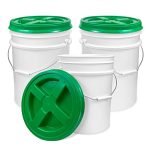
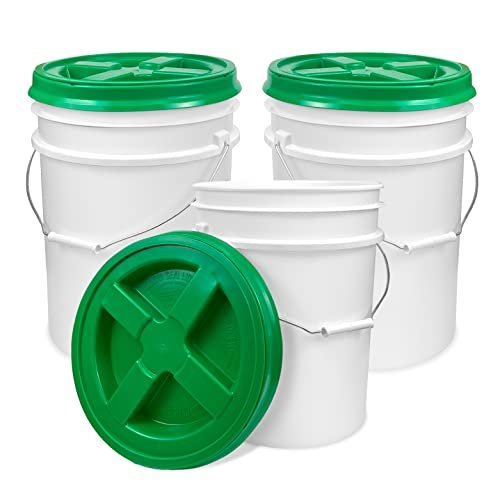
ePackageSupply 5 Gallon White Bucket with Green Gamma Seal Screw On Airtight Lid

Food-grade HPDE bucket with screw-on airtight lid, BPA-free and stackable for long-term dry goods storage.
The ePackageSupply 5 Gallon White Bucket with Green Gamma Seal Screw On Airtight Lid is a top-tier choice for serious food storage. Made in the USA from food-grade HPDE plastic, this 90-mil bucket is built for durability and longevity.
Why it stands out:
- Gamma Seal screw-on lid: Creates a true airtight seal that maintains freshness for 25+ years
- 90-mil thickness: Resists cracking, puncture, and crushing under weight
- BPA-free: No chemical leaching concerns over decades of storage
- Stackable design: Stack 2-3 high without structural concerns
- Made in USA: Quality control standards you can trust
Practical considerations:
- Weight: ~3 pounds empty, 40-50 pounds filled with dry goods
- Green lid provides visual indication that the seal is intact
- Limited color options (green only)
- Slightly heavier than thinner alternatives, but worth the weight for durability
Best for: Bulk dry goods storage (rice, beans, pasta), emergency water storage, long-term preparedness supplies.
To purchase this container, visit the ePackageSupply 5-gallon bucket listing for competitive pricing and availability.
ePackageSupply 5 Gallon White Bucket with Gamma Seal Screw On Airtight Lid (White)

White food-grade bucket with airtight screw lid, heavy-duty 90-mil construction for safe dry food preservation.
This all-white variant of the ePackageSupply 5-gallon bucket offers the same exceptional quality and durability as the green-lid version, with the added benefit of a clean, uniform appearance.
Key features:
- Identical construction: Same 90-mil HPDE plastic, same gamma seal technology
- White finish: Easier to label, less likely to show dirt, professional appearance
- Food-grade and BPA-free: Safe for direct food contact over decades
- Stackable: Maximizes storage space efficiency
When to choose white over green:
- Pantry or visible storage areas where aesthetics matter
- Labeling requirements (white surface shows labels better)
- Commercial or professional food storage settings
Practical notes:
- Weight: 9 pounds per bucket (slightly lighter than green variant due to lid material)
- White color shows dirt and stains more easily—wipes clean but requires more maintenance
- Same airtight performance as all ePackageSupply gamma seal buckets
Browse this white 5-gallon bucket option for a clean, professional storage solution.
Habitual Heart Mylar Bags for Food Storage
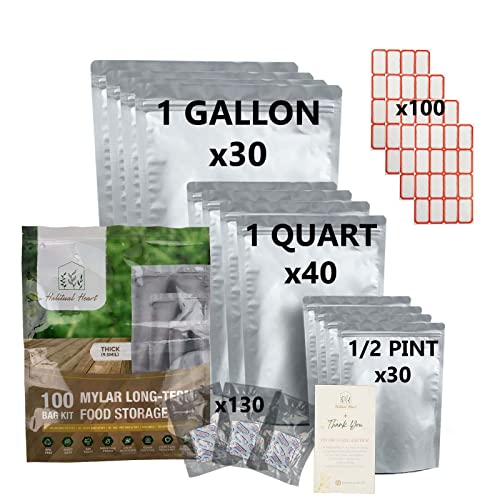
9.5-mil thick Mylar bags with zipper and heat seal, designed for airtight long-term dry food preservation.
The Habitual Heart Mylar Bags are a solid choice for those who need flexible, space-efficient long-term storage. These 9.5-mil thick bags include oxygen absorbers and feature both zipper closure and heat-sealable edges.
Specifications:
- Thickness: 9.5-mil (excellent for 25+ year storage)
- Size: 1 gallon (quart) to 1/2 pint options
- Includes: 130 oxygen absorbers (300cc each)
- Closure: Zipper resealable + heat sealable
Advantages:
- Space-efficient: Stack flat or use in compact storage areas
- Flexible sizing: Choose exact capacity needed for different foods
- Dual closure: Zipper for access, heat seal for long-term
- Oxygen absorbers included: No need to purchase separately
Important considerations:
- Heat sealing required: Zipper alone won't maintain airtightness for long-term storage
- Equipment needed: You'll need a heat sealer or hair straightener for permanent seals
- Silvery appearance: Functional but not aesthetically pleasing for visible storage
Best uses:
- Items accessed occasionally (freeze-dried fruits, dehydrated vegetables)
- Space-constrained storage areas
- Mixed food items requiring separate sealing
Check availability and pricing for these Habitual Heart Mylar bags that include oxygen absorbers.
ePackageSupply White 5-Gallon Bucket with Lid (6-Pack)

Six-pack of white food-grade 5-gallon buckets with lids, heavy-duty and BPA-free for versatile storage needs.
This 6-pack of ePackageSupply white 5-gallon buckets offers excellent value for those building a substantial food storage system. While these come with standard lids rather than gamma seals, they're versatile and durable.
Product details:
- Quantity: 6 buckets with lids
- Material: Food-grade, heavy-duty extra durable plastic
- BPA-free: Safe for food contact
- Stackable: Efficient use of storage space
- Made in USA: Quality assurance
Use cases:
- Short to medium-term food storage (1-5 years)
- Water storage (up to 45 gallons per bucket)
- Non-food supplies (camping gear, emergency supplies)
- Organizing garage or storage areas
Limitation:
- Standard lids aren't airtight—add gamma seals for long-term food storage
- Weight: 18.65 pounds total (3.1 pounds per bucket)
Upgrade path: Purchase separate gamma seal lids to convert these into true long-term storage containers.
Get this 6-pack of 5-gallon buckets for building your storage system on a budget.
House Naturals 5 Gallon Plastic Bucket Pail Food Grade with Blue Screw On Lid

Food-grade 5-gallon bucket with blue screw lid, made in USA for safe dry goods and liquid storage.
The House Naturals 5-gallon bucket with blue screw-on lid is a quality option for those seeking a reliable, made-in-USA food storage solution.
Key specifications:
- Material: Food-grade plastic, BPA-free
- Lid type: Blue screw-on (not gamma seal, but functional)
- Quantity: Pack of 3
- Weight: 10 pounds total (3.3 pounds per bucket)
- Made in USA: Quality and safety standards
Strengths:
- Screw-on lid provides decent seal for short to medium-term storage
- Made in USA with quality control
- Blue color provides good contrast for labeling
- Pack of 3 offers good value
Limitations for long-term storage:
- Screw-on lid isn't as airtight as gamma seal
- Suitable for 1-3 year storage, not 25+ years
- May need gamma seal upgrade for true long-term preservation
Best applications:
- Medium-term storage (1-3 years)
- Items accessed regularly (flour, sugar, baking supplies)
- Organizing pantry staples
Find this House Naturals 5-gallon bucket pack for reliable medium-term storage.
Mumufy 5 Pcs 3.5 Gallon Square Food Grade Bucket with Lid

Square food-grade buckets with handles, ideal for space-efficient dry food and outdoor supply storage.
The Mumufy 3.5-gallon square buckets offer a unique solution for those who value space efficiency and portability.
Dimensions:
- Capacity: 3.5 gallons per bucket
- Height: 8.3 inches
- Width: 9.6 inches
- Length: 11.2 inches
- Quantity: 5 buckets with lids
Advantages:
- Square design: Uses storage space efficiently with no gaps
- Integrated handles: Easy to carry for camping, fishing, or moving
- Food-grade material: Safe for dry food storage
- Secure lids: Protect contents from moisture and pests
Trade-offs:
- Gray color may not suit all storage environments
- Square shape may not fit all storage spaces as easily as round buckets
- Smaller capacity than 5-gallon buckets (need more buckets for same volume)
Best uses:
- Camping and outdoor activities
- Charcoal and fuel storage
- Items requiring frequent access and transport
- Space-constrained storage areas
Explore these Mumufy square buckets for space-efficient and portable storage.
ePackageSupply 3.5 Gallon White Bucket with Red Gamma Screw On Lid

3.5-gallon food-grade bucket with red airtight gamma lid, compact and durable for dry goods storage.
This 3.5-gallon variant from ePackageSupply brings the same quality gamma seal technology to a more compact size.
Specifications:
- Capacity: 3.5 gallons (about 60% of a 5-gallon bucket)
- Material: Premium HPDE plastic, BPA-free
- Thickness: 90-mil (same durability as 5-gallon)
- Lid: Red gamma screw-on airtight seal
- Quantity: Pack of 1
When to choose 3.5-gallon over 5-gallon:
- Storing items that fit better in smaller volumes (spices, nuts, dried fruits)
- Limited storage space
- Items accessed more frequently (easier to handle)
- Mixed storage needs where you want flexibility
Strengths:
- Same airtight gamma seal technology as 5-gallon
- Same 90-mil durability
- More manageable size for regular access
- Made in USA with quality assurance
Considerations:
- Single unit (not a pack)
- Smaller capacity means more containers needed for bulk storage
- Limited color options (red lid only)
Get this ePackageSupply 3.5-gallon bucket for compact, airtight storage.
Ready Hour 120 Serving Entree Bucket

Freeze-dried entree bucket with 120 servings, long shelf life emergency food for preparedness.
The Ready Hour 120 Serving Entree Bucket is a complete food system, not just a container. It includes freeze-dried meals designed for 25-30 year shelf life.
Contents:
- Servings: 120 individual meals
- Type: Freeze-dried entrees
- Preparation: Add hot water (typically 2-3 minutes)
- Shelf life: 25-30 years
- Weight: Approximately 25-30 pounds
Advantages:
- Ready-to-eat: No cooking equipment needed beyond water
- Long shelf life: 25-30 years without spoilage
- Nutritious: Balanced meals with essential nutrients
- Lightweight: Easier to transport than canned alternatives
Limitations:
- Cost: $500-$1,000+ per bucket
- Water requirement: Needs clean water for preparation
- Limited variety: Not as diverse as fresh or varied meals
- Bulk packaging: Not ideal for single servings or rotation
Best for:
- Emergency preparedness (72-hour to 2-week supply)
- Camping and backpacking (when weight matters)
- Areas with limited food access
- Complementing your long-term storage with ready-to-eat meals
Consider this Ready Hour 120-serving bucket as part of your emergency food supply.
100pcs Mylar Bags with 400cc Oxygen Absorbers

100 Mylar bags with oxygen absorbers, 11.8-mil thick for airtight long-term food storage.
This 100-pack of Mylar bags with 400cc oxygen absorbers is ideal for those who need flexible, customizable long-term storage.
Specifications:
- Quantity: 100 bags with 400cc oxygen absorbers
- Thickness: 11.8-mil (premium quality for 25+ year storage)
- Size: Multiple sizes (10×14, 6×9, 4×6 inches)
- Closure: Stand-up zipper + heat sealable
- Oxygen absorbers: 400cc per bag (sufficient for 1-gallon bags)
Key advantages:
- Premium thickness: 11.8-mil resists puncture and provides excellent barrier
- Multiple sizes: Adapt to different food quantities
- High quantity: 100 bags allows for many separate items
- Oxygen absorbers included: No separate purchase needed
Practical considerations:
- Heat sealing required: Zipper is temporary; heat seal for long-term
- Equipment needed: Heat sealer or hair straightener
- Higher initial cost: Premium thickness costs more than 5-6 mil alternatives
- Silver color: Functional but not aesthetically pleasing
Best applications:
- Storing different foods separately (grains, nuts, dehydrated fruits)
- Custom-sized portions
- Space-efficient storage in closets or under beds
- Rotating stock with easy access
Shop this 100-pack Mylar bag set for flexible, premium long-term storage.
5-Gallon White Bucket Pail Container with Metal Handles

5-gallon food-grade bucket with metal handles and lid, heavy-duty for easy carrying and stacking.
This 5-gallon bucket combines food-grade safety with enhanced portability through metal handles with plastic grip.
Features:
- Capacity: 5 gallons
- Material: Food-grade, heavy-duty extra durable plastic
- Handles: Metal with plastic grip for comfortable carrying
- Lid: Standard lid (not gamma seal)
- BPA-free: Safe for food contact
- Stackable: Efficient storage
Advantages:
- Metal handles: More durable than plastic handles, better for heavy loads
- Plastic grip: Comfortable when carrying filled buckets
- Food-grade: Safe for direct food contact
- Heavy-duty construction: Withstands regular use
Limitations:
- Standard lid isn't airtight for long-term storage (add gamma seal for 25+ years)
- Metal handles can become uncomfortable with very heavy loads
- White color shows dirt and stains
Best uses:
- Medium-term storage with gamma seal upgrade
- Water storage (up to 45 gallons)
- Frequent access items (flour, sugar, baking supplies)
- Transport-heavy applications (camping, moving supplies)
Get this 5-gallon bucket with metal handles for enhanced portability.
Best Practices for Long-Term Food Storage
Food Selection and Preparation
Not all foods store well long-term. Here's what works and what doesn't:
Excellent for long-term storage (25+ years with proper containers):
- White rice (unpolished, stored properly)
- Dried beans (kidney, black, pinto)
- Wheat berries
- Oats (rolled or quick)
- Sugar (granulated or powdered)
- Salt
- Honey (raw, unprocessed)
Good for medium-term storage (10-15 years):
- Pasta
- Flour (whole wheat spoils faster)
- Dehydrated fruits and vegetables
- Dried meat (jerky, dehydrated)
- Freeze-dried foods (commercially packaged)
Poor for long-term storage (under 5 years):
- Oils and fats (go rancid)
- Fresh vegetables and fruits
- Dairy products (unless powdered)
- Nuts (high oil content, go rancid)
- Spices (lose potency, though rarely spoil)
Preparation tips:
- Wash and dry all produce thoroughly before dehydrating
- Remove moisture from grains before sealing (dry in low oven)
- Use vacuum-sealed bags within your main container for extra protection
- Avoid metal utensils when filling containers (scratches can harbor bacteria)
Labeling and Rotation
Proper labeling is critical for long-term food storage. Without labels, you'll forget what's inside, lose track of dates, and risk using spoiled food.
Label information to include:
- Food type (e.g., "White Rice, 5 lbs")
- Date stored (month, year)
- Quantity (weight or volume)
- Rotation date (when to use/replace)
- Any special instructions (e.g., "Add 2 cups water per serving")
Rotation strategy:
- FIFO method: First In, First Out (use oldest items first)
- Color-coded labels: Red (use within 1 year), Yellow (1-3 years), Green (3+ years)
- Annual inspection: Check all containers yearly, rotate as needed
- Emergency vs. daily use: Keep separate supplies—emergency food for disasters, daily food for regular cooking
Oxygen Absorber Sizing
Matching oxygen absorber size to container volume is critical. Under-sized absorbers leave residual oxygen, while oversized ones create negative pressure that can collapse containers.
Recommended sizes:
- 1-gallon Mylar bag: 200-300cc absorber
- 3.5-gallon bucket: 500-600cc absorber
- 5-gallon bucket: 600-800cc absorber
- 10-gallon bucket: 1000cc absorber
Important notes:
- Oxygen absorbers work by reacting with oxygen, creating heat
- Allow 24-48 hours for full oxygen removal before considering storage complete
- Don't reuse oxygen absorbers—they're single-use
- Store absorbers in their original packaging until ready to use
- If container bulges after sealing, you used too small an absorber
Pest Control
Even with airtight containers, pests can be a concern during filling, opening, and if seals fail.
Prevention strategies:
- Clean workspace: Sweep and vacuum before filling containers
- Food-grade diatomaceous earth: Sprinkle on container rims before sealing (non-toxic, kills insects)
- Seal check: Inspect all seals before and after filling
- Rodent-proofing: Use metal mesh around storage areas, seal gaps in walls and floors
- Crayfish traps: Place around storage areas to catch any escaping pests
What to avoid:
- Chemical pesticides near food storage
- Plastic storage containers that pests can chew through (use metal or thick plastic)
- Leaving bags or buckets open while working
Storage Environment Considerations
Temperature
Temperature is the single biggest factor affecting long-term food storage success. Heat accelerates chemical reactions that cause spoilage.
Ideal storage temperature: 50-70°F (10-21°C) Acceptable range: 30-80°F (-1 to 27°C) Problematic temperatures: Above 85°F (29°C) significantly reduces shelf life
Where to store:
- Basement: Usually cool, dark, and stable (ideal if not flood-prone)
- Garage: Can work but watch temperature fluctuations
- Attic: Avoid—too hot in summer, too cold in winter
- Crawl space: Good if dry and temperature-stable
- Indoor closet: Works for smaller quantities
What to avoid:
- Direct sunlight (UV degrades containers and food)
- Temperature fluctuations (causes condensation)
- Near heat sources (furnaces, water heaters, ovens)
- Damp areas (mold risk)
Humidity and Moisture
Moisture is the enemy of long-term food storage. Even small amounts of water can cause spoilage, mold, and pest attraction.
Ideal humidity: Below 60% relative humidity Critical threshold: Above 70% creates risk for spoilage
Protection strategies:
- Dehumidifier: Run in storage areas during humid months
- Silica gel packets: Place in containers for extra moisture protection
- Seal inspection: Check all seals quarterly for integrity
- Elevated storage: Keep containers off concrete floors on pallets or shelves
- Vapor barriers: Use plastic sheeting between floor and storage area
Warning signs of moisture:
- Condensation on container surfaces
- Food clumping or caking
- Discoloration or mold growth
- Musty odors when opening containers
Light Protection
While food-grade containers protect against UV light, light can still be an issue if containers are transparent or translucent.
Best practices:
- Store in dark areas: Basements, closets, behind other items
- Use opaque containers: White or colored plastic blocks light better than clear
- Add outer covering: Wrap Mylar bags in opaque plastic or place inside buckets
- Avoid windows: Keep storage away from natural light sources
Light's effects on food:
- Causes vitamins to break down
- Triggers rancidity in fats and oils
- Promotes mold growth
- Reduces color and flavor
Maintenance and Inspection Schedule
Weekly Checks
- Visual inspection: Look for bulging, bulges, or damaged containers
- Seal check: Ensure all lids are tight and gaskets intact
- Temperature monitoring: Check storage area temperature if not climate-controlled
- Pest signs: Look for chew marks, droppings, or unusual activity
Monthly Checks
- Seal integrity test: Listen for hissing sound when opening (indicates pressure change, good sign)
- Container stability: Check stacking stability, especially after moving
- Label verification: Ensure all labels are legible and accurate
- Humidity check: Use hygrometer if available
Quarterly Checks
- Comprehensive inspection: Open and check contents of one container per quarter
- Rotate stock: Move older items to the front, newer to the back
- Seal replacement: Replace any worn or damaged gaskets
- Inventory update: Record current quantities and rotation dates
Annual Checks
- Full inventory: Count and document all stored items
- Quality assessment: Open sample of each food type to check condition
- Equipment review: Check heat sealers, oxygen absorber inventory, replacement supplies
- Storage area assessment: Inspect for moisture, pests, structural issues
- Expiration rotation: Replace any items approaching their shelf life
Cost Considerations and Value Analysis
Initial Investment Breakdown
Building a long-term food storage system requires upfront investment. Here's a realistic budget for different scenarios:
Basic emergency supply (1 week for family of 4):
- 4 freeze-dried food buckets: $2,000-$4,000
- Water storage (50 gallons): $100-$200
- Containers and supplies: $200-$300
- Total: $2,300-$4,500
Medium-term storage (6 months for family of 4):
- 8-12 food-grade buckets with gamma seals: $600-$900
- Bulk dry goods (rice, beans, pasta, flour): $1,500-$2,500
- Oxygen absorbers and supplies: $100-$200
- Storage space setup: $200-$500
- Total: $2,400-$4,100
Long-term storage (2+ years for family of 4):
- 20-30 food-grade buckets with gamma seals: $1,200-$1,800
- Bulk dry goods (2 years supply): $4,000-$6,000
- Mylar bags and additional containers: $300-$500
- Storage infrastructure: $500-$1,000
- Total: $6,000-$9,300
Value Comparison: Homemade vs. Pre-Packaged
Homemade (fill your own buckets):
- Lower per-serving cost ($0.50-$1.00 per meal)
- Customizable food selection
- More control over quality
- Requires more time and effort
- Need to research proper food selection
Pre-packaged (buy freeze-dried buckets):
- Higher per-serving cost ($2.00-$4.00 per meal)
- Convenience and time savings
- Guaranteed nutrition and shelf life
- Limited food variety
- Requires less expertise
Best approach: Mix both. Use pre-packaged meals for immediate emergency access (first week), and fill your own buckets for longer-term storage (weeks to years).
Hidden Costs to Consider
- Storage space: Basement remodeling, shelving, pallets
- Temperature control: Dehumidifiers, insulation
- Pest control: Ongoing maintenance and supplies
- Rotation costs: Replacing expired or compromised items
- Equipment: Heat sealers, labeling supplies, replacement lids
- Energy: Running dehumidifiers and monitoring equipment
Common Mistakes to Avoid
Mistake #1: Using Non-Food-Grade Containers
The error: Using thin-walled plastic containers, old margarine tubs, or repurposed household containers for long-term food storage.
Why it's dangerous: Non-food-grade plastics may leach chemicals into food over time, especially when stored for years. Even if they look fine, you can't guarantee safety.
The fix: Always use containers labeled as "food-grade" and "BPA-free." When in doubt, don't use it for food storage.
Mistake #2: Ignoring Oxygen Absorbers
The error: Sealing food in airtight containers without oxygen absorbers, assuming the seal alone is sufficient.
Why it's problematic: Residual oxygen inside the container will continue to degrade food over time, reducing shelf life from 25+ years to 3-5 years.
The fix: Always include appropriately-sized oxygen absorbers in long-term food storage containers. Allow 24-48 hours for full oxygen removal.
Mistake #3: Storing in Temperature-Fluctuating Areas
The error: Keeping long-term food storage in garages, attics, or uninsulated spaces where temperatures fluctuate significantly.
Why it's problematic: Temperature swings cause condensation inside containers, which can lead to spoilage. Heat accelerates chemical reactions that degrade food.
The fix: Store in temperature-stable areas (basements, climate-controlled storage). Monitor with a thermometer and keep between 50-70°F.
Mistake #4: Not Labeling Properly
The error: Storing food without clear labels, or with incomplete information.
Why it's problematic: Without labels, you can't rotate stock properly, track expiration dates, or know what's inside during an emergency.
The fix: Label every container with food type, quantity, storage date, and rotation date. Use waterproof markers and labels.
Mistake #5: Forgetting to Inspect
The error: Putting food in storage and never checking on it for years.
Why it's problematic: Seals can fail, containers can crack, pests can infest, and temperature/humidity can change. Without inspection, you won't know until it's too late.
The fix: Implement a regular inspection schedule (weekly visual, monthly seal checks, quarterly deep inspection, annual full inventory).
Frequently Asked Questions
What is the benefit of using food-grade buckets?
Food-grade buckets are made from materials certified safe for direct food contact, preventing chemical leaching that can compromise food safety over time. They meet FDA regulations for food storage and are typically BPA-free, ensuring no harmful chemicals migrate into your food. Food-grade buckets often have airtight lids (especially with gamma seals) that help preserve food for 25+ years. Using food-grade buckets gives you confidence that your stored food remains safe to eat throughout its entire shelf life.
How do gamma seal lids work?
Gamma seal lids are screw-on lids designed to create a true airtight seal when tightened onto compatible 5-gallon buckets. The lid features a gasket (usually silicone or rubber) that compresses against the bucket rim when screwed on, creating an airtight barrier. Unlike snap-on or twist-lock lids, gamma seals maintain their airtightness for decades when properly maintained. They're easy to open and close repeatedly without compromising the seal, making them ideal for both filling containers and accessing contents during rotation.
Why are Mylar bags suitable for food storage?
Mylar bags are made from aluminum foil laminate that provides an excellent barrier against light, moisture, and oxygen—three of the primary factors that cause food spoilage. When heat-sealed properly, Mylar bags create an airtight environment that can preserve food for 25+ years. They're space-efficient, lightweight, and can be customized to different sizes. The silver appearance isn't just aesthetic—it actively blocks UV light that would otherwise degrade food quality. Mylar bags are particularly useful for storing different foods separately or in space-constrained environments.
Are BPA-free buckets better for food storage?
Yes, absolutely. BPA (bisphenol A) is a chemical found in some plastics that can leach into food, especially when heated or over extended periods. BPA has been linked to various health concerns, including hormonal disruption. BPA-free buckets eliminate this risk entirely, making them safer for long-term food storage. Most quality food-grade buckets are now BPA-free by default, but always verify the label. For decades of storage, BPA-free is non-negotiable—chemical leaching rates increase over time, making even small amounts potentially problematic.
How do oxygen absorbers help in food storage?
Oxygen absorbers are small packets containing iron powder that reacts with oxygen in the presence of moisture, effectively removing it from the sealed environment. This serves multiple purposes: it prevents oxidation that causes rancidity in fats and oils, inhibits the growth of aerobic bacteria and mold, prevents insect infestation (most pests require oxygen to survive), and extends shelf life from 3-5 years to 25+ years. Oxygen absorbers work within 24-48 hours and create a near-zero oxygen environment. They're single-use and must be matched to container volume—too small leaves residual oxygen, too large creates negative pressure that can collapse containers.
How long can I really store food in these containers?
With proper containers (food-grade, airtight), proper food selection (dry goods, low-fat), proper preparation (dry, clean), proper oxygen absorbers, and proper storage conditions (50-70°F, below 60% humidity), you can safely store food for 25+ years. However, "safe" doesn't always mean "palatable"—some foods may lose flavor or texture over time even if they remain safe to eat. White rice, dried beans, and wheat berries are among the best for 25+ year storage. Oils and fats should be limited to 5-10 years maximum. Always rotate stock and inspect regularly to ensure quality.
Do I need a special heat sealer for Mylar bags?
For long-term storage (1+ years), yes, you need a heat sealer to properly seal Mylar bags. While many Mylar bags come with zipper closures, these are only temporary seals and won't maintain airtightness over extended periods. You can use a dedicated heat sealer (designed for Mylar), a hair straightener (on a flat surface), or even an iron on a cool setting with protective cloth. The key is to create a complete, continuous seal with no gaps. Heat sealing takes 10-15 seconds per bag and creates a permanent, airtight seal that lasts for decades.
Can I reuse food storage containers after emptying?
Yes, with some caveats. Food-grade plastic buckets and Mylar bags can be reused if they're in good condition—no cracks, no warping, no discoloration. Wash thoroughly with hot, soapy water and allow to air-dri completely before refilling. However, don't reuse oxygen absorbers (they're single-use), and inspect gaskets and seals regularly—replace if worn or damaged. Mylar bags can be reused if the heat seal isn't compromised, but inspect for punctures or tears before refilling. Containers with unknown histories (found in attics, used for non-food items) should not be reused for food storage.
What's the difference between HPDE and HDPE plastic?
HPDE (High Performance Durable Plastic) is a thicker, more rigid version of HDPE (High-Density Polyethylene). While both are BPA-free and food-safe, HPDE is engineered for long-term storage with greater durability, puncture resistance, and structural integrity. HPDE is typically 90-mil thickness (0.090 inches), while standard HDPE is often 60-mil or less. HPDE is the preferred choice for 5-gallon food storage buckets intended for 25+ years of use. HDPE is fine for shorter-term storage or items like water jugs. If you see "HDPE" without the "HP" prefix, it's likely not designed for long-term food storage.
How do I know if my food storage containers are airtight?
Perform a simple pressure test: Fill a bucket or bag partially with water, seal it, and turn it upside down. If no water leaks, the seal is holding. For a more thorough test, seal a container with dry food, place it in a bowl of water, and look for bubbles—if bubbles appear, air is escaping. Another method: Open a sealed container slowly. If you hear a slight hiss or feel pressure, the seal is holding (especially with oxygen absorbers, which create negative pressure). For gamma seal buckets, you should feel resistance when opening—easy-twisting indicates a compromised seal.
Conclusion
Choosing the right food storage containers for long-term preservation is about more than just buying buckets or bags—it's about creating a system that keeps your food safe, fresh, and usable for years to come. The key factors are material safety (food-grade, BPA-free), airtight sealing (gamma seals or heat-sealed Mylar), durability (90-mil thickness minimum), and proper storage conditions (50-70°F, low humidity).
For most households, a combination of 5-gallon gamma seal buckets for bulk dry goods and Mylar bags for smaller quantities or frequent access offers the best balance of cost, convenience, and long-term protection. Don't forget oxygen absorbers, proper labeling, and regular inspection—these small steps make the difference between food that lasts 25 years and food that spoils in 3.
Start with your emergency needs (72 hours to 1 week), then build toward longer-term supplies. Quality containers like the ePackageSupply gamma seal buckets, premium Mylar bags, and freeze-dried emergency meals give you the foundation for a resilient food storage system. Remember: your storage is only as good as your weakest link—invest in quality, maintain it properly, and you'll have peace of mind knowing your food will be there when you need it most.

Hi, I’m Daniel Brooks—a food lover and kitchen gear enthusiast. I enjoy testing cookware, utensils, and gadgets to see what really works in everyday cooking. At PlugChef.com, I share honest reviews, comparisons, and simple guides to help you choose the best tools for a safer, smarter, and more enjoyable kitchen.
Similar Posts