
A well-seasoned wooden cutting board is one of the most versatile tools in any kitchen, but even the most careful cooks will eventually face stubborn stains from beets, turmeric, tomato sauce, or red wine. These blemishes aren’t just unsightly: if left untreated, they can harbor bacteria and compromise the board’s structural integrity over time. The good news is that most wood cutting board stains can be lifted safely at home with non-toxic household supplies, no harsh chemicals required. This guide walks through the science of why stains form, step-by-step removal methods for every stain severity, and simple maintenance tips to keep your board looking and performing like new for years.
Why Do Wood Cutting Boards Get Stained?
Wood is a naturally porous material, with open grain that absorbs liquids and pigments from food on contact. End-grain boards, where the cut end of wood fibers faces upward, are far more absorbent than edge-grain boards, so they stain faster and deeper than their flat-grain counterparts. Common stain culprits extend far beyond the usual beets and berries: turmeric, soy sauce, coffee, paprika, and even onion juice leave strong organic pigments that bind tightly to wood fibers if left to sit. Surface stains sit on top of the wood and lift easily with mild cleaning, while set-in stains have penetrated the grain and require more intensive treatment to fully remove. If you’ve noticed common cutting board blemishes appearing on your favorite board, addressing them quickly is key to preventing permanent damage.
Supplies You’ll Need
All the stain removal methods below use food-safe, non-toxic supplies you likely already have in your kitchen, with no special purchases required. For mild to moderate stains, stick to the basic household list; for deep, set-in stains, you may need a few specialized tools.
Basic Household Supplies (Food-Safe)
- Distilled white vinegar (5% acidity)
- Fresh lemon juice
- Coarse kosher salt (fine salt dissolves too quickly to act as an abrasive)
- Baking soda
- 3% hydrogen peroxide (food-grade, no added stabilizers)
- Soft microfiber cloth
- Soft-bristle nylon brush (avoid steel wool or harsh scouring pads)
Optional Specialized Supplies
- 120-grit fine sandpaper (for deep set-in stains)
- Food-grade mineral oil or cutting board conditioner (for post-cleaning treatment) All of these supplies are approved for gentle natural cleaning of food-contact surfaces, and none leave toxic residues when used as directed.
 Common household ingredients that are safe for food-contact wood surfaces
Step-by-Step Stain Removal for Mild to Moderate Stains
These methods work for tough stain lifting on all common wood board types, and are safe for regular use when followed correctly.
Step 1: White Vinegar Pre-Treatment
Vinegar’s mild acidity breaks down organic pigments without damaging wood fibers, making it ideal for surface stains from acidic foods like wine, tomato sauce, and berries. For light stains, mix equal parts distilled white vinegar and warm water, dip a microfiber cloth in the solution, wring out excess liquid (the board should be damp, not soaking), and rub the stain in circular motions for 30 seconds. Let sit 2-3 minutes, then wipe clean with a dry cloth. For tougher stains, pour a small amount of undiluted vinegar directly on the blemish, let sit 5 minutes, then scrub gently before rinsing.
Step 2: Lemon Juice Brightening
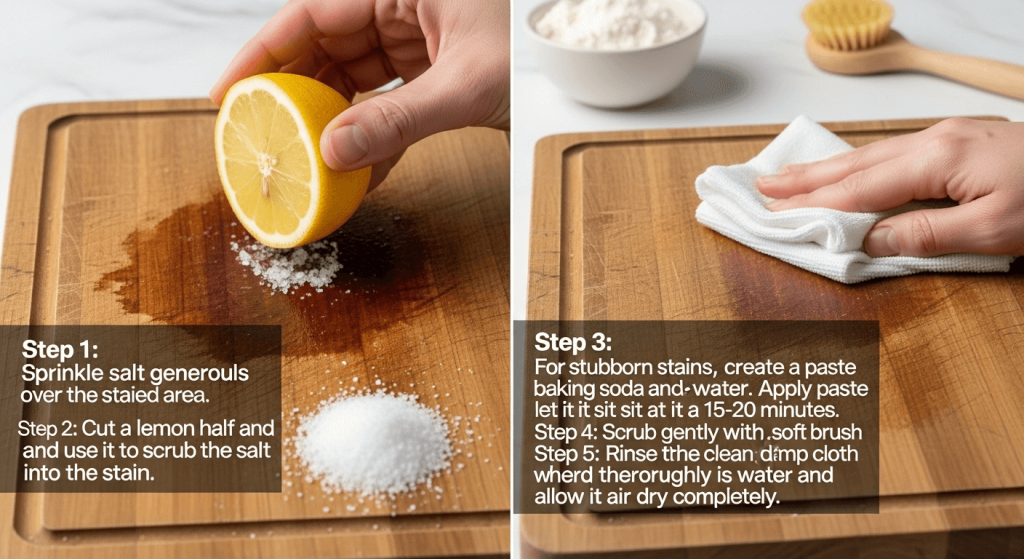
Fresh lemon juice is a natural bleaching agent that lifts pigmented stains and mild disinfects the wood at the same time. For surface stains, saturate a clean cloth with lemon juice, press it to the stain for 5 minutes, then wipe clean. For set-in stains, sprinkle coarse kosher salt over the lemon juice, then scrub with the cut side of a lemon half in circular motions—the salt acts as a gentle abrasive that lifts stains without scratching the wood surface. Rinse thoroughly with a damp cloth, then dry immediately. The citric acid in lemon also helps with natural mold removal if your board has developed small mold spots alongside stains. Avoid leaving lemon juice on the board for more than 30 minutes, as prolonged acid exposure can dry out the wood’s natural oils.
Step 3: Baking Soda Paste for Dark, Oxidized Stains
Baking soda’s mild abrasive and alkaline properties make it ideal for lifting dark stains from onions, garlic, turmeric, and aged food residue. Mix 2 parts baking soda with 1 part warm water to form a thick paste, spread it evenly over the stain, and let sit 10-15 minutes (up to 30 minutes for very dark, set-in blemishes). Scrub gently with a soft-bristle brush, then rinse with a damp cloth. Baking soda also doubles as a gentle deodorizer, making it ideal for odor and grime removal in one step.
Step 4: Hydrogen Peroxide for Discolored Stains
For yellow or brown stains from spices, coffee, or aged food, 3% hydrogen peroxide is a safe, effective option for lighter-colored woods like maple and birch. Pour a small amount directly on the stain, let sit 3-5 minutes (no longer, to avoid bleaching the wood), then wipe with a dry cloth and rinse thoroughly. This method is not recommended for dark woods like walnut, as it can lighten the natural wood tone.
 A step-by-step visual guide to lifting common food stains from wood cutting boards without harsh chemicals
How to Treat Deep, Set-In Stains
If the methods above don’t fully lift a stain, the pigment has penetrated the end-grain of the wood, requiring more intensive treatment. First, clean the board thoroughly with mild unscented dish soap and warm water, then pat it completely dry with a clean towel. Next, use 120-grit sandpaper (or finer 220-grit for soft woods like walnut) and sand along the direction of the wood grain, only sanding the stained area until the discoloration is fully gone. Wipe away all sanding dust with a dry cloth, then apply 2-3 coats of food-grade mineral oil, letting each coat absorb for 30 minutes before wiping off excess. If the stain covers a large portion of the board, sand the entire surface for an even finish rather than just the stained spot. For bamboo board care tips to maintain its finish after sanding, refer to our dedicated guide. Note that if your board is not properly sealed wood, stains will penetrate far more easily, so re-seal after sanding to restore protection.
What to Avoid When Removing Cutting Board Stains
Many common household cleaning products are unsafe for wood cutting boards, as they leave toxic residues or damage the wood’s structure. Avoid these practices to keep your board food-safe and long-lasting:
- Never use undiluted chlorine bleach: it penetrates wood fibers, leaves toxic residues that can leach into food even after rinsing, and causes the wood to dry out and crack over time.
- Avoid steel wool, harsh scouring pads, or abrasive cleaners: they scratch the wood surface, creating tiny grooves where bacteria and mold can grow, and make the board more prone to future stains.
- Don’t soak the board in water or cleaning solution: prolonged exposure to water warps the wood, causes the grain to raise, and leads to cracking. Always use a damp, not soaking, cloth for cleaning.
- Skip antibacterial dish soaps with added fragrances or chemicals: these leave residues on the wood that can transfer to food and affect flavor. Use a mild, unscented dish soap for regular cleaning only.
- Don’t use citrus undiluted for extended periods: while lemon juice is safe for spot stain treatment, leaving it on the board for more than 30 minutes can break down the wood’s natural oils and cause dryness.
Stain Removal Tips for Different Wood Board Types
Wood porosity varies significantly by species, so adjusting your cleaning method for your board’s material will improve results and prevent damage:
- Maple and birch (hard, dense, low porosity): Stains sit on the surface, so mild methods like vinegar and baking soda work 90% of the time. Avoid harsh abrasives, as these softer hardwoods scratch easily.
- Teak (naturally oily, high porosity): Stains penetrate quickly, so pre-treat with vinegar for 10 minutes before scrubbing to allow the solution to lift deep pigments. For regular teak board upkeep to maintain its natural water resistance, follow our dedicated care guide.
- Walnut (softer, dark wood): Stains are less visible on dark wood, but pigmented foods can still leave light marks. Use gentle cleaning methods to avoid scratching the surface, and oil more frequently to maintain its protective barrier.
- Bamboo (hard, dense, low porosity): Stains are rare on bamboo, but when they occur, use baking soda paste for no more than 10 minutes to avoid damaging the material’s natural finish.
Prevent Future Stains With Proper Cutting Board Care
Preventing stains is far easier than removing them, and consistent care will extend your cutting board’s lifespan by 5-10 years with regular use. Follow these evidence-based tips to keep your board stain-free and food-safe:
- Clean after every use: Wipe the board with a damp cloth and mild unscented dish soap immediately after use, especially after cutting acidic or pigmented foods. Never let food residue sit on the board for more than a few hours, as this allows pigments to bind to the wood.
- Dry thoroughly: After cleaning, pat the board dry with a clean towel, then stand it upright to air dry completely for at least 1 hour before storing. Storing a damp board leads to mold, warping, and deeper stain penetration.
- Apply food-safe oil regularly: Wood dries out over time, which makes it more prone to absorbing stains and cracking. Apply food-grade mineral oil consistent food-safe oiling every 3-4 weeks, or whenever the board looks dry and faded. For end-grain boards, apply oil monthly, as they absorb more liquid than edge-grain boards.
- Avoid prolonged water exposure: Never submerge the board in water, run it through the dishwasher, or let it sit in a sink full of water. Dishwasher heat and detergents will warp the wood and strip its natural protective oils.
- Use separate boards for different food groups: Keep one board for raw meat, poultry, and fish, a second for produce, and a third for ready-to-eat foods like bread or charcuterie. This prevents cross-contamination and reduces the risk of staining from raw meat juices. If you’re looking for optimal board thickness for your kitchen, thicker boards (1.5 inches or more) are less prone to warping and deep staining than thin, budget options.
- Store properly: Keep the board in a cool, dry place away from direct sunlight and heat sources (like stovetops), which can dry out the wood and cause fading. Avoid leaning it against walls, as this can warp the surface over time. For more in-depth guides on keeping all your kitchen tools in top shape, browse our full kitchen care library for expert tips on everything from drawer organization to appliance maintenance. If you also use plastic cutting boards for raw meat, our guide to cleaning plastic boards will help you avoid cross-contamination and staining on all your kitchen surfaces.
Frequently Asked Questions
How Do I Remove Dark Stains From A Wood Cutting Board?
Dark stains are usually caused by set-on pigments from foods like beets, turmeric, or soy sauce, or oxidized residue from onions and garlic. For most dark stains, mix 2 parts baking soda with 1 part warm water to form a thick paste, spread it over the stain, let sit 15 minutes, then scrub gently with a soft-bristle nylon brush. Rinse thoroughly, then dry and oil the board immediately. If the stain is still visible, light sanding along the wood grain with 120-grit sandpaper will remove the top layer of stained wood, followed by 2-3 coats of mineral oil to restore the finish. Avoid harsh abrasives like steel wool, as they will scratch the surface and create grooves where bacteria can grow. For regular sterilizing wood boards between uses to kill bacteria and prevent stain-causing grime buildup, follow our step-by-step guide.
Can Lemon Help Clean Stains On Wood Cutting Boards?
Yes, fresh lemon juice is a safe, effective stain remover for most wood types, thanks to its high citric acid content, which breaks down organic pigments and mild disinfects the surface. For surface stains, saturate a cloth with lemon juice, press it to the stain for 5 minutes, then wipe clean. For tougher stains, sprinkle coarse kosher salt over the lemon juice and scrub with the cut side of a lemon half—the salt acts as a gentle abrasive that lifts stains without scratching. Rinse thoroughly after use, and avoid leaving lemon juice on the board for more than 30 minutes, as prolonged exposure to acid can dry out the wood’s natural oils.
What Household Items Remove Stains From Wood Cutting Boards?
The most effective food-safe household supplies for stain removal are distilled white vinegar, fresh lemon juice, coarse kosher salt, baking soda, and 3% hydrogen peroxide. All of these are approved for use on food-contact surfaces by the USDA food safety guidelines for wooden surfaces and are non-toxic when used as directed. Avoid using household bleach, ammonia, or harsh all-purpose cleaners, as these leave toxic residues that can leach into food even after rinsing. All the methods below use organic stain treatment ingredients that are safe for food-contact surfaces.
How Long Should I Soak A Wood Cutting Board?
Never soak a wood cutting board in water or cleaning solution for more than 1-2 minutes, if at all. Prolonged exposure to water causes the wood grain to swell, leading to warping, cracking, and deeper stain penetration as water carries pigments deeper into the porous wood. For regular cleaning, use a damp (not soaking) cloth to wipe the board, then pat dry immediately with a clean towel.
Can I Use Vinegar on All Wood Cutting Board Types?
Yes, diluted white vinegar is safe for all common cutting board woods (maple, teak, walnut, bamboo) when used as directed. For more porous woods like teak, let the vinegar solution sit for up to 5 minutes before scrubbing to allow it to penetrate the grain and lift stains. For softer woods like walnut, use a 1:1 vinegar-to-water mixture and avoid scrubbing too hard to prevent scratching.
Final Thoughts
Most wood cutting board stains are far easier to treat than you might think, especially when caught early. The household methods outlined above are food-safe, non-toxic, and safe for all common cutting board woods when used as directed. For severe, set-in stains that don’t respond to spot treatment, light sanding along the grain followed by a fresh coat of mineral oil will restore your board’s smooth, stain-resistant finish without needing to replace it. In practice, most mild to moderate stains lift with these methods in 10 minutes or less, and consistent care will extend your board’s lifespan by years. For step-by-step guidance on keeping your board food-safe long-term, check out our full care library for all your kitchen maintenance needs.

I’m Abby Lu, a passionate home cook who loves simplifying everyday meals. At PlugChef.com, I share product reviews and cooking guides to help you find the best tools for your kitchen.
Related posts:
 How to Oil Cutting Board Bamboo: Ultimate Guide for Lasting Care
 How to Safely Clean Wooden Cutting Boards Using Vinegar: Expert Guide
 How to Get Fruit Stains Out of Wood Cutting Board: Easy & Fast Tips
 How to Finish Wood Cutting Board: Expert Tips for a Perfect Seal
 Unbleached Vs Bleached Parchment Paper: Which Is Safer & Better?
 Using Vinegar to Mop Floors: Ultimate Guide for a Sparkling Clean

