Under Counter LED Lighting Kitchen: Transform Your Space with Style and Efficiency

Under-counter LED lighting has moved from a luxury add-on to a functional necessity in modern kitchens. Beyond simply brightening up cabinets, these systems eliminate the harsh shadows cast by overhead recessed lighting, creating a uniform, shadow-free workspace for food preparation and cooking. In a fully connected home, the right lighting setup also boosts property value and significantly reduces household energy consumption.
This guide breaks down the specific technologies, installation methods, and top-rated products to help you choose the system that fits your design goals. Whether you are a renter looking for a no-drill solution or a homeowner ready to hardwire a professional-grade system, you will find specific recommendations and expert installation tips to elevate your culinary space. For more on this, see our guide on best blenders for smoothies under 100.
Why Under Counter Lighting Matters
Overhead lighting is great for general room illumination, but it often casts direct shadows from a person standing at the counter, making tasks like chopping vegetables or reading a recipe difficult to see. Under-counter lighting fixes this by providing downward-facing task lighting that illuminates the work surface directly. This creates a layered lighting effect that is both functional and visually appealing.
The Efficiency Difference
LED technology is the backbone of modern under-cabinet lighting. Compared to older halogen or incandescent strip lights, modern LEDs are up to 90% more energy efficient. They generate less heat, which prevents the insulation of your cabinets from getting uncomfortably warm and protects stored items from heat damage. According to the U.S. Department of Energy, switching to LED lighting can save significant amounts on electricity bills over the lifetime of the fixture. For more on this, see our guide on kitchen hood cleaning certification online.
Color Temperature Matters
Choosing the right color temperature is critical for the "feel" of your kitchen.
- 2700K-3000K (Warm White): Best for dining areas or cabinets in cozy, rustic kitchens. It creates a relaxed, inviting atmosphere.
- 4000K (Natural White): The standard for most kitchens. It mimics natural daylight and offers a neutral balance that makes food preparation colors look accurate.
- 5000K-6500K (Daylight/Cool White): Excellent for modern, high-contrast spaces or workbenches where maximum clarity is needed.
Common mistake: Buying RGB (color-changing) lights for everyday kitchen use. While fun for parties, shifting colors can cause visual fatigue during long cooking sessions. Stick to neutral white for the main work areas and save the RGB options for accent lighting on shelves or entertainment centers.
Power Options: Hardwired vs. Plug-in vs. Wireless
Selecting the power source is the first major decision. Each method offers different levels of permanence, convenience, and complexity.
Hardwired Systems
Hardwired lights are integrated into your home's electrical system, usually powered by an existing dimmer switch or a dedicated circuit.
- Pros: Professional look with no visible cords; consistent brightness; compatible with smart dimmers.
- Cons: Requires electrical work; often needs a professional electrician; higher upfront cost.
- Best for: Permanent installations in new construction or major renovations.
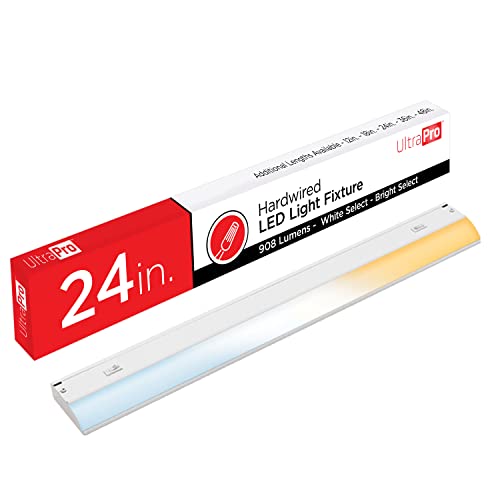 The UltraPro 24-inch hardwired system offers a seamless, permanent solution with three distinct temperature settings.
If you are considering a full lighting overhaul, check our guide on general safety standards to ensure your electrical projects meet basic workplace and home safety guidelines, a principle that applies to any wired installation.
Plug-in and USB Models
These lights come with a power cable that plugs into an outlet or a USB adapter.
- Pros: No electrical work needed; easy to move; low cost.
- Cons: Visible cord drapes along the cabinet (can look messy); dependent on outlet location; cord can snag.
- Best for: Rentals, temporary setups, or areas with accessible outlets.
 Linkable USB designs like the Vovamo model help manage multiple units with a single power source.
Wireless and Rechargeable
Battery-operated strips stick to the underside of cabinets using adhesive or magnets.
- Pros: Total freedom from cords; no drilling; easy to install in minutes.
- Cons: Requires regular recharging; battery life varies (usually 1-3 months on low use); often lower brightness than hardwired.
- Best for: Closets, pantries, under staircases, or as accent lights where outlets are far away.
 Motion-sensor wireless units are perfect for hands-free lighting in pantries or under counters.
Top Under Counter LED Lighting Recommendations
Based on performance, ease of installation, and value, here are the top-rated options for 2026.
1. MYPLUS 16-Inch Under Cabinet Lights
Best For: Touch-free convenience and clear task lighting. The MYPLUS unit is a favorite for homeowners who hate fumbling for switches. Its "hand wave" sensor is a standout feature—wave your hand to turn the light on/off, which is incredibly hygienic when your hands are covered in flour or wet. The 4000K natural white light is crisp and bright, making it ideal for general kitchen tasks.
- Pros: Hand-wave activation; dimmable; plug-and-play setup.
- Cons: Fixed 16-inch length; requires a nearby outlet.
- Verdict: A modern, stylish choice for those who want smart features without a complex app.
 The wave sensor on the MYPLUS model allows for hygienic, touchless control.
2. Gritin 10.2-Inch Rechargeable Under Cabinet Lighting
Best For: Renters and DIY enthusiasts who want zero drilling. The Gritin unit is compact and packs 84 LEDs for impressive brightness. It features a magnetic backing, which means you can slide it onto any metal cabinet surface without damaging your walls with screws or adhesive. The inclusion of three color temperatures and a motion sensor makes it highly versatile for both kitchen counters and laundry room shelves.
- Pros: Magnetic install; rechargeable; 3-color settings; motion sensor.
- Cons: Small size (10.2") limits coverage; silver finish may not match white cabinets.
- Verdict: Excellent "grab-and-go" option for quick lighting upgrades.
 Magnetic mounting allows for tool-free installation on metal surfaces.
3. LNRYY 4-Pack Wireless Motion Sensor Lights
Best For: Covering multiple areas with one package. This 4-pack is a strong value proposition for homeowners who want to light up under-cabinets, a pantry, and a hallway. It operates on three color temperatures and includes dimmable settings. The motion sensors are tuned to prevent false triggers, ensuring the lights stay on while you cook but turn off when you leave the room.
- Pros: 4 lights included; 3 color temps; dimmable; magnetic mounting.
- Cons: Battery life depends on motion frequency; small 7.87" size.
- Verdict: The best all-around battery-powered starter kit.
 A multi-pack setup ensures consistent lighting across multiple small surfaces.
4. DAYBETTER Under Cabinet Lights (6 PCS)
Best For: Customizable ambiance with remote control. This strip light set is perfect for those who want flexibility in color temperature (2700K-6500K). It comes with a remote, allowing you to adjust brightness and color from across the kitchen. The 9.8-foot length means you can cut the strip to size for almost any counter layout.
- Pros: 6 strips included; remote control; wide color range; dimmable.
- Cons: Requires some assembly; color temperature can shift if cut incorrectly.
- Verdict: A top pick for customizable, multi-room lighting.
 Adjustable strips allow for precise coverage of long countertops.
5. Maylit Smart RGB Under Cabinet Lights
Best For: Smart home enthusiasts and mood lighting. For those who want their kitchen to match the tech ecosystem, the Maylit kit integrates with Alexa and Google Assistant. It features "Music Sync," which makes the lights pulse to the beat of your playlist—great for hosting. It’s the only RGB option in this list that truly shines for entertainment purposes.
- Pros: Smart home integration; music sync; timer settings; app control.
- Cons: Requires stable Wi-Fi; not ideal for serious task lighting (colors shift).
- Verdict: The ultimate "showstopper" for open-plan living spaces.
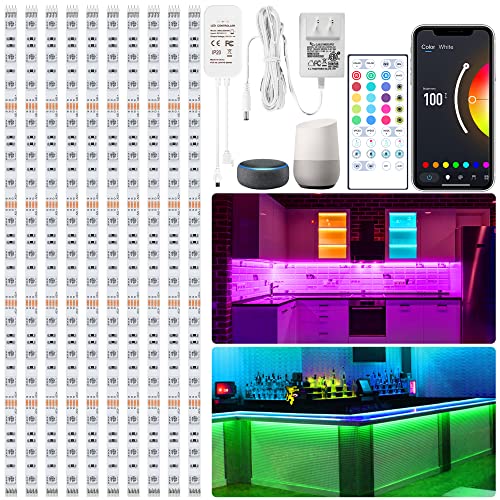 RGB lighting adds a layer of dynamic, mood-based customization to your kitchen.
Installation Best Practices and Expert Tips
Installing under-counter lights is generally straightforward, but small details make the difference between a "DIY weekend project" and a "professional install."
Surface Preparation
The adhesive on most light bars is strong, but it only works on clean, dry surfaces. In practice, we recommend cleaning the underside of the cabinet with rubbing alcohol to remove grease and dust before applying the adhesive. If your cabinets have a textured or painted finish that is peeling, use magnetic mounts or a 3M Command hook system instead of relying on the strip's glue.
 Magnetic sticks are a safe alternative to adhesive on fragile cabinet finishes.
Cable Management
Nothing ruins the look of under-cabinet lighting faster than a messy cable draping down the side of a cabinet.
- Use Cable Clips: Most kits include adhesive-backed cable clips. Use these to fasten the cable flat against the wall above the cabinet.
- Conduit Options: For a high-end look, run the cable through small 1/2-inch PVC conduit. It looks professional and protects the wire from pinching.
- Battery Packs: For wireless models, plan where the battery pack will sit. It should be discreet but accessible for recharging.
Troubleshooting Dimming
If your hardwired lights are flickering when you dim them:
- Check the Dimmer Type: Many older dimmers are designed for incandescent bulbs and will buzz or flicker with LEDs. You need an "LED-compatible" or "Trailing Edge" dimmer.
- Check the Load: Ensure the total wattage of your LEDs matches the dimmer's minimum load requirements.
- Smart Dimmers: For full control, consider replacing a traditional dimmer with a smart dimmer that can be controlled via app or voice.
For more advanced setup guidance or if you are integrating lights into a larger smart home network, refer to our resource on smart device integration which covers basic networking and safety for home setups.
Comparing Power Types at a Glance
To help you decide quickly, here is a comparison of the three main power sources:
| Feature | Hardwired | Plug-in/USB | Wireless/Rechargeable |
|---|---|---|---|
| Installation Difficulty | High (Electrical work) | Medium (Cable routing) | Low (Adhesive/Magnet) |
| Brightness | Highest | High | Moderate |
| Maintenance | None | None | Recharge batteries (1-3 months) |
| Cord Visibility | None | Visible | None |
| Best Use Case | Permanent, high-end | Rentals, quick fixes | Closets, stairs, accents |
| Cost | $$ (plus electrician) | $ | $$ |
Note: Cost varies based on the number of units and length of the strips.
Frequently Asked Questions
How long do rechargeable under cabinet lights last?
Battery life depends on usage. If a light is on for 3 hours a day, most rechargeable models will last 4-6 weeks. If used less frequently (e.g., motion sensors in a pantry), the battery can last 3-4 months. Always keep the lights on their charger for 1-2 hours when you notice the light is dimming.
Can I cut LED strip lights to the desired length?
Yes, most standard LED strips have "cut lines" marked every 5-10 cm. You must cut precisely on these lines to avoid damaging the circuit. After cutting, you usually need to install a wire cap or connector to finish the end cleanly. Warning: Check your specific manufacturer's instructions, as some high-density strips are not cuttable.
Are under counter lights a good way to increase home value?
Yes. Buyers view updated lighting as a sign of a well-maintained home. While it’s not the biggest ticket item, a kitchen with well-lit, shadow-free work surfaces is perceived as more functional and modern, which can positively influence inspection reports and buyer impressions.
What happens if I use a motion sensor in a dark kitchen?
Most motion sensors (PIR) require some ambient light to detect changes in the infrared pattern. In a completely pitch-black kitchen, they may take a few seconds to trigger. We recommend keeping at least one small nightlight in the kitchen or using a model that has a "sensor sensitivity" setting to trigger even in low light.
Is it safe to use under-counter lights in a wet area?
Standard under-cabinet lights are generally IP20 (not waterproof) or IP44 (splash-proof). If you are installing them directly above a sink or range, ensure they are rated IP65 or higher to withstand direct splashes and steam. Never place any electrical component directly in the path of a sprayer nozzle.
Conclusion
Transforming your kitchen with under-counter LED lighting is one of the easiest and highest-impact upgrades you can make. It shifts your space from functional to inviting, eliminating shadows and highlighting the details of your cabinetry and countertops.
For most homeowners, a combination of rechargeable motion-sensor bars for pantries and closets, and dimmable plug-in or hardwired strips for main counters, offers the best balance of convenience and performance. Start with a small area, test the color temperature, and expand from there.
Whether you choose the sleek aesthetic of the MYPLUS wave-sensor lights, the practical flexibility of the Gritin magnetic units, or the smart integration of the Maylit RGB kit, you are investing in a space that works harder for you.
Ready to upgrade your kitchen? Browse our top-rated top kitchen accessories and pair your new lighting with the right small appliances for a fully functional culinary hub.

Hi, I’m Daniel Brooks—a food lover and kitchen gear enthusiast. I enjoy testing cookware, utensils, and gadgets to see what really works in everyday cooking. At PlugChef.com, I share honest reviews, comparisons, and simple guides to help you choose the best tools for a safer, smarter, and more enjoyable kitchen.
Similar Posts