Food Storage Containers With Screw on Lids: The Complete 2026 Kitchen Organization Guide
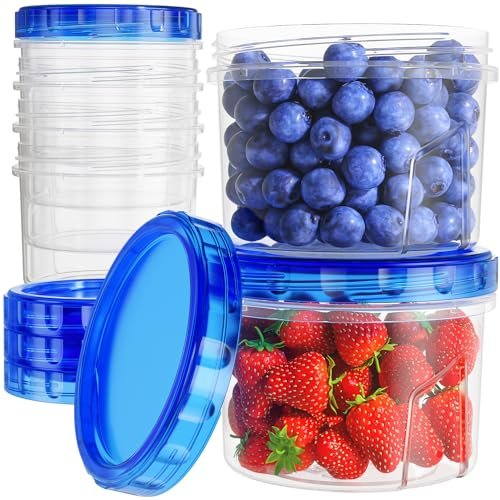
Screw-on lid containers have quietly become the default for serious meal preppers, family kitchens, and anyone who hates finding mystery freezer bags two years deep in the crisper. Unlike snap-on lids that lift off under their own weight, a screw-on lid creates a continuous mechanical seal that holds pressure, blocks odors, and keeps soups and sauces from leaking into your lunch bag.
This guide breaks down what makes a screw-on lid container actually worth buying in 2026, walks through 10 well-reviewed options across different sizes and use cases, and shares the details the product pages usually skip — how to label them, what temperature range they can really handle, and when plastic makes more sense than glass. For more on this, see our guide on kitchen utensils storage containers with lids.
How Screw-on Lids Beat Snap-on Lids for Long-Term Storage
The core mechanical difference is pressure. A snap-on lid relies on friction and a silicone gasket pressed against the container rim. That works fine for a salad in the fridge, but the moment the lid is bumped or you stack another container on top, air leaks in.
A screw-on lid engages threads on the container neck. Turning the lid creates clamping force along the full circumference, which compresses the seal more evenly and holds up under stacking, transport, and slight pressure changes between the fridge and freezer. For more on this, see our guide on metal containers with lids for food storage.

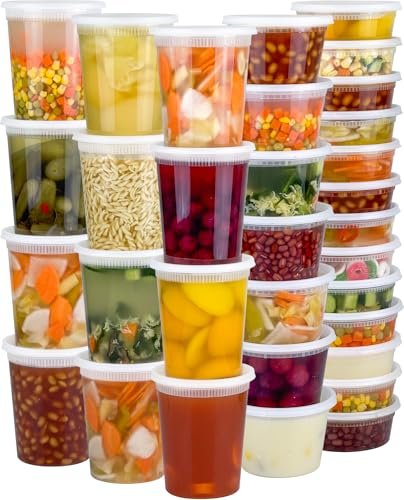
Stackable round containers are the workhorses of any organized freezer — the screw mechanism is what keeps them from shifting when loaded high.
In practice, screw-on lids also handle liquids dramatically better. Soups, curries, and salad dressings in snap-lid containers routinely weep at the rim. Screw-on lids are the standard in deli and catering for exactly that reason.
Snap vs. Screw vs. Vacuum Seal: Which Do You Actually Need?
| Feature | Snap-on Lid | Screw-on Lid | Vacuum Seal |
|---|---|---|---|
| Ease of opening | Very easy | Requires a twist | Requires pump or device |
| Stackability | Moderate | Excellent | Poor |
| Liquid safety | Poor | Excellent | Excellent |
| Long-term freshness | 1–2 weeks | 2–4 weeks refrigerated | 4–8 weeks refrigerated |
| Freezer performance | Adequate | Strong | Strongest (less freezer burn) |
| Reheating without transferring | Yes | Yes | Rarely (needs opening device) |
| Best for | Quick fridge use | Daily meal prep, transport | Bulk long-term freezing |
For most households, a mix of screw-on lids for meal prep and transport plus a few vacuum bags for long-term freezer bulk is the sweet spot. For more on this, see our guide on oxo good grips food storage containers.
The Best Food Storage Containers With Screw on Lids in 2026
Each pick below is chosen for a specific use case. Skip to the one that matches your kitchen situation.
1. Best for Soup and Sauce Meal Prep: HOMETALL 6-Pack, 16 Oz
The HOMETALL 16 oz set is the workhorse for daily lunches. The 16 oz capacity holds a standard portion of soup, a small salad, or a single-serving pasta without being oversized for a commuter bag.
Standout features:
- Leakproof twist-top seal tested against typical lunch-bag tipping and backpack compression.
- BPA-free construction — a baseline expectation in 2026, not a premium feature.
- Microwave-safe with lid off and dishwasher-safe for both body and lid.
- Narrow stackable profile fits most standard fridge and freezer shelves without wasted vertical space.
Trade-offs: The 16 oz size will frustrate anyone meal-prepping family dinners — use it for individual portions. Twist lids also need a firm quarter-turn more than a snap lid, which matters if you're dealing with stiff freezer-stiffened lids on a cold winter morning. For more on this, see our guide on large food storage containers restaurant.
Check the current price for this set.
2. Best for Family Portions: Biuleon 6-Pack, 24 Oz

At 24 oz, the Biuleon mid-size strikes a balance between lunchbox scale and dinner-portion scale. It holds a full serving of stew, chili, or stir-fry with room for a modest side.
Standout features:
- 24 oz capacity works for one adult portion with side, or two small kid portions.
- BPA-free plastic with a clear body that shows contents at a glance.
- Leakproof twist-top seals against spills when transported sideways or upside down.
- Microwave- and dishwasher-safe end to end.
Trade-offs: Some home cooks still prefer glass for long-term refrigerated storage because plastic can absorb strong aromas (garlic, turmeric, curry paste) over weeks of use. If you store heavily spiced dishes weekly, rotate these with glass containers rather than committing a container to one cuisine forever. For more on this, see our guide on large air tight food storage containers.
Check the current price for this set.
3. Best Compact for Small Portions: Biuleon 6-Pack, 17 Oz

The 17 oz Biuleon is a near-twin to the 16 oz HOMETALL but with slightly different proportions — a slightly taller neck and a marginally flatter base that stacks more cleanly in crowded freezer drawers.
Standout features:
- BPA-free, microwave and dishwasher safe — same baseline as the larger Biuleon set.
- Compact footprint designed for tight freezer bays and lunch bags.
- Twist-top seal holds up against typical liquid loads like thin soups and broths.
Trade-offs: Only 17 oz is tight for anything beyond a single-portion meal. If you're prepping for kids, expect to buy extra sets to cover breakfast, lunch, and dinner at the same time.
Check the current price for this set.
4. Best Value Bulk Set: RFAQK 48-Piece (16 oz + 32 oz Mix)

At 48 pieces, this is the set to buy if you want to replace every random plastic tub in your kitchen at once. The mix of 24 sixteen-ounce and 24 thirty-two-ounce containers covers almost every meal portion scenario.
Standout features:
- Mixed sizes — 16 oz for individual portions, 32 oz for family or two-day serving sizes.
- Durable reusable plastic built for repeated freezing and thawing cycles.
- Twist-top lids seal reliably across both sizes.
- Freezer-safe and suited to both refrigerator and pantry organization.
Trade-offs: You get one color and one design language, which can feel generic if you care about aesthetic consistency. Plastic bodies may show yellowing over multi-year use, especially if stored near light.
Check the current price for this set.
5. Best Ultra-Heavy Duty: Atecare 10-Pack, 16 Oz

The Atecare 16 oz set uses noticeably thicker walls than most budget competitors. That extra material translates to less flex when you lift a filled container, less warping after years of freezer cycles, and better protection against punctures from ice crystals and aggressive packing.
Standout features:
- Ultra-thick walls reduce warping over years of freezer use.
- Leakproof twist-top lids designed for soups, oatmeal, ice cream, and similar dense contents.
- BPA-free plastic with stackable square profile for efficient shelf use.
- All-purpose size handles oatmeal, soups, salads, leftovers, and ice cream.
Trade-offs: The thicker walls mean slightly more plastic per container, which matters to some buyers prioritizing reduced plastic volume. The set is uniform in size, so you'll need a complementary larger or smaller set for full meal coverage.
Check the current price for this set.
6. Best Large Portion for Soups and Stews: Tafura 10-Pack, 32 Oz

Thirty-two ounces is the "I made a big pot of soup and want to freeze half of it" size. The Tafura set is the strongest pick for cooks who batch on Sunday and store three to four large portions for the week.
Standout features:
- 32 oz capacity handles full-pot portions of soups, stews, and braised dishes.
- BPA-free plastic suitable for direct food contact.
- Leakproof twist-top seal keeps liquid content contained during transport.
- Reusable and stackable to optimize freezer drawer space.
Trade-offs: Plastic bodies shouldn't be used for direct high-heat cooking or stovetop reheating — only microwave reheating. And for anyone with limited hand strength, twisting off a rigid 32 oz lid can be tiring after the container has been frozen solid.
Check the current price for this set.
7. Best Budget Set: Winproper 6-Pack, 16 Oz

The Winproper set is one of the more affordable ways to add six screw-on containers to a kitchen already stocked with other storage solutions. It's a good "starter" set before committing to a larger bundle.
Standout features:
- Compact stackable design for tight fridge and freezer space.
- Twist-top lids deliver a reliable seal against spills.
- Microwave and dishwasher safe for both container and lid.
- Reusable BPA-free construction at a lower price point than comparable sets.
Trade-offs: The plastic is thinner than the Atecare heavy-duty set, so it won't stand up as long to heavy-duty freezer cycles. Buy it if your usage is light; upgrade if you freeze weekly.
Check the current price for this set.
8. Best for Pantry Dry Goods: Lawei 3-Pack Wide Mouth Square Jars

Square wide-mouth jars change the pantry math. Unlike round containers that waste space in cube-shaped shelf corners, square jars fill space cleanly, and the wide mouth makes scooping nuts, cereal, or rice easy without funneling.
Standout features:
- Wide-mouth opening lets you scoop directly from the jar with no pourer needed.
- Approximately 98 oz capacity holds a full bag of peanut butter, oatmeal, or candy.
- BPA-free PET plastic safe for dry food contact.
- Airtight screw-on lid keeps moisture out and preserves crunch.
Trade-offs: PET plastic is best for dry goods only — it's not built for liquid, freezing, or microwave use. And clear plastic can yellow or stain with strongly colored contents like turmeric, beet powder, or dark chocolate chips over long use.
Check the current price for this set.
9. Best Large Meal Prep System: Bentgo Prep 20-Pack, 32 Oz

If your family meal-preps several days at once, the 20-piece Bentgo Prep set covers a full week's worth of portioned dinners with plenty of spares. It's the set I reach for when building an emergency food buffer or prepping for a family that eats at home daily.
Standout features:
- 20 containers at 32 oz each support whole-family meal prep sessions.
- Leakproof twist-top lids hold up well to liquid-heavy contents like soups and stews.
- BPA-free plastic built for daily reuse.
- Microwave, freezer, and dishwasher safe across the entire set.
Trade-offs: This is a real investment — the volume of plastic is substantial, and if you don't actively meal prep, you'll likely let a third of the set gather dust. Buy it only if you're actually prepping.
Check the current price for this set.
10. Best Assorted-Size Bundle: PlasticPro 24-Pack

The PlasticPro assortment bundles multiple sizes into one purchase, which is useful for kitchens that need both small sauce jars and medium meal-prep containers but don't want to coordinate three separate orders.
Standout features:
- Assorted sizes cover snacks, sides, and full portions from one order.
- Stackable design with blue twist-on lids that seal reliably.
- Reusable construction reduces single-use plastic waste over time.
- Uniform lid color makes it easy to spot missing or swapped lids in a mixed set.
Trade-offs: Sizes are smaller on average than the RFAQK or Bentgo sets, so family-scale prep requires multiple containers per meal. Plastic isn't suitable for high-heat stovetop or oven use.
Check the current price for this set.
Buyer's Guide: What to Check Before You Buy
When you look at a screw-on lid container, five things should be non-negotiable.
1. Lid Mechanism: Check the Threads
Cheap twist lids skip threads in favor of a simple friction fit that mimics a screw without the mechanical advantage. Turn the lid — if it doesn't have at least a quarter rotation of actual thread engagement, it's a snap lid with a threaded look.
2. Material: Not All BPA-Free Is the Same
BPA-free is now the floor, not the ceiling. Pay attention to the material code:
- #1 PET — good for dry goods only, not for freezing, heating, or liquids.
- #2 HDPE — sturdy, freezer-safe, but opaque.
- #4 LDPE — flexible, good for squeeze bottles, not for rigid meal prep.
- #5 PP — the sweet spot for microwave and freezer use. This is what most premium meal prep containers use.
- Tritan — a trademarked copolyester that mimics glass clarity while being microwave-safe.
The U.S. Food and Drug Administration has been tightening rules on plastic food-contact materials, and phthalates were formally banned from food-contact plastic in 2016. In 2026, look for containers that list both BPA-free and the specific resin type so you know exactly what's touching your food. Start with the FDA's food packaging guidance for the current regulatory context.
3. Size Range: Buy Enough Variety
Most kitchens need three size tiers to cover real usage:
| Use Case | Ideal Size | Example Contents |
|---|---|---|
| Snacks, sides, sauces | 6–12 oz | Dip, cut fruit, a side salad |
| Individual meal portion | 16–24 oz | Lunch, a single-serve soup |
| Family portion or batch | 32–40 oz | Stew, large pasta, batch cooking |
| Bulk dry goods | 50–100 oz | Oatmeal, nuts, candy, rice |
Buying only one size forces you to underfill or overfill everything.
4. Leak-Proofing Claim: What Does It Actually Mean?
Manufacturers use "leakproof" and "airtight" interchangeably on product pages, but they're different claims:
- Leakproof means the container holds liquid when tipped or transported.
- Airtight means the container maintains a pressure seal that keeps air out — important for freshness and preventing freezer burn.
A container can be leakproof without being airtight, but not the reverse. For freezer use, prioritize airtight.
5. Stackability: The Real Space Saver
Screw-on lid containers are typically stackable, but stackability only saves space if lids can be nested into the container below. Look for a "nesting lid" design where the lid sits inside the container rim when closed, keeping the stack height uniform.
Freezer Best Practices for Screw-on Containers
Leave Expansion Room
Plastic bodies flex less than you think. Leave about an inch of headspace in liquid-heavy containers before freezing so the contents have room to expand. Overfilled containers are the #1 cause of warping lids and cracked bodies.
Label Every Container
Freezer burn aside, the real enemy of freezer organization is unknown contents. Use a dry-erase marker on a paper label or tape a small label strip on each lid. Include:
- Contents
- Date frozen
- Suggested use-by (typically 2–6 months depending on the food)
Thaw Safely
Follow the USDA's food safety guidance on thawing — refrigerate overnight, use cold water with periodic bag changes, or microwave defrost for immediate cooking. Never thaw frozen cooked meat at room temperature.
Watch for Freezer Burn
Even airtight containers can develop freezer burn over many months. If you're storing items for 4+ months, a vacuum-sealed bag inside the screw-on container is a cheap insurance policy.
Microwave and Dishwasher Safety: The Fine Print
Every screw-on container labeled microwave-safe still requires the lid off before heating. Twist lids trap steam and pressure.
Microwave Rules That Matter
- Remove or loosen the lid before heating.
- Heat for short intervals (30–60 seconds) and stir between.
- Let food sit 30 seconds after microwaving — residual heat finishes the job without extra energy.
- Never microwave containers with visible cracks, warping, or discoloration — these compromise the polymer structure.
Dishwasher Rules That Matter
Most screw-on containers are dishwasher-safe, but plastic degrades faster on the top rack is a myth — the opposite is true. Bottom-rack heat and detergent exposure shorten plastic life more than top-rack gentler cycles. If you want maximum container lifespan, top-rack only or hand wash.
Plastic vs. Glass: An Honest Trade-Off
Neither material is universally better. Here's how the choice actually plays out:
| Factor | Plastic Screw-on | Glass Screw-on |
|---|---|---|
| Weight | Light, easy for kids and elders | Heavy, awkward for lunch bags |
| Freezer tolerance | Excellent | Brittle at deep freeze — avoid impact |
| Stovetop/oven safe | No | Sometimes (Tempered/Pyrex) |
| Scratch resistance | Moderate | Excellent |
| Odor absorption | Absorbs strong flavors | Neutral |
| Breakage risk | Low | High |
| Price | Lower | Higher |
| Environmental profile | Depends on reuse rate | Recyclable, but heavier shipping emissions |
For most people, plastic screw-on containers are the right tool for meal prep, transport, and daily use. Glass wins for long-term pantry dry goods and for cooks who heat directly on the stovetop.
Common Mistakes That Ruin Containers
A few patterns that show up in real kitchens over time:
- Freezing without headspace. Contents expand and warp the lid permanently.
- Microwaving with the lid sealed. Steam builds pressure, lids can pop off at high velocity.
- Putting oily or acidic foods in plastic for weeks. Vinegar, tomato sauce, and citrus oils break down plastic and can leach off-flavors.
- Stacking heavy items on top of lighter ones. A water-filled 32 oz container on top of a 16 oz one with soup will bulge the smaller body's walls.
- Ignoring the date. Plastic containers have a lifespan. Warping, yellowing, or a faint chemical smell is the signal to retire the set.
Caring for Your Containers
Basic maintenance extends the life of a good screw-on set by years:
- Wash after each use. Don't let acidic or fatty residues sit overnight.
- Air-dry lids separately — moisture trapped under a lid is the fastest path to mildew.
- Rotate containers — don't assign a single container to oily or strongly scented foods.
- Retire visibly degraded pieces — warping, cloudiness, or persistent odor means it's time.
Frequently Asked Questions
What makes a screw-on lid better than a snap-on lid?
The threaded mechanism applies clamping force around the entire container rim, which creates a stronger seal against both air and liquids. Snap lids rely on friction and a gasket — they work for light fridge use but fail under stacking pressure, backpack jostling, or temperature changes between freezer and fridge.
Are screw-on lid containers actually BPA-free?
Every reputable brand in this list is. Since 2016, the FDA has banned phthalates from food-contact plastic, and BPA-free labeling is now the baseline. Look for the resin code (5 for PP, or "Tritan" for copolyester) as a more informative marker than BPA-free alone.
Can I stack screw-on containers in the freezer?
Yes — that's one of their core advantages. Look for containers with nesting lids that sit inside the container rim when closed. Without nesting, lids add 1–1.5 inches of wasted height per layer, which quickly fills freezer drawers.
Do screw-on lids hold up over time?
With normal use, most high-quality twist lids last 2–3 years before threads wear slightly loose. If a lid starts to feel "sticky" or doesn't hold a seal after a full quarter-turn, replace that lid rather than the whole set — most brands sell spare lids separately.
What's the ideal size for meal prep?
Most home cooks find 16–24 oz is the daily driver for single-portion lunches, with 32 oz for family-sized soups and stews. Buying only one size forces you to either underfill or overfill most meals — invest in at least two size tiers.
Are plastic containers safer than glass for freezing?
Yes, in terms of breakage risk. Glass can shatter at freezer temperatures, especially if dropped or knocked. Plastic flexes and absorbs impact. The trade-off is that plastic absorbs flavors and odors more than glass — rotate containers to prevent cross-contamination between strong spices.
How long do leftovers stay safe in a screw-on container in the fridge?
Follow USDA food safety guidelines: most cooked leftovers are safe for 3–4 days in the fridge at or below 40°F. Meat and poultry should be at or below 40°F the whole time. Beyond 4 days, freeze the leftovers in your screw-on containers.
Can I use screw-on containers for pantry dry goods?
Absolutely — and the wide-mouth square jars on this list are designed exactly for that. Dry goods like rice, oats, nuts, and flour benefit from an airtight seal to prevent pantry bugs and staleness. Avoid using plastic for long-term storage of strongly flavored items like turmeric or cocoa powder; opaque containers can fade or stain.
The Bottom Line
A well-chosen set of screw-on lid containers removes friction from everyday food storage. They hold soups and sauces without leaking into your lunch bag, stack to fill freezer drawers without gaps, and are durable enough to survive years of repeated freezing and thawing when you pick the right plastic.
For most kitchens, the winning setup is a mix: medium-sized 16–24 oz screw-on containers for daily meal prep, a few 32 oz containers for family portions and soups, and one or two wide-mouth square jars for pantry dry goods. Skip the giant bundles unless you know you'll actually use them — overbuying storage creates clutter, not organization.
Pick your size range, buy a set that fits how you actually cook, and skip the fancy snap lids for anything liquid-heavy. Screw-on has been the right answer for delis and caterers for decades — it's just better for home kitchens too.

Hi, I’m Daniel Brooks—a food lover and kitchen gear enthusiast. I enjoy testing cookware, utensils, and gadgets to see what really works in everyday cooking. At PlugChef.com, I share honest reviews, comparisons, and simple guides to help you choose the best tools for a safer, smarter, and more enjoyable kitchen.
Similar Posts