Kitchen Under Cabinet LED Strip: Transform Your Space with Vibrant Lighting
Under cabinet lighting is one of the most high-impact, low-effort upgrades you can make to your kitchen. It eliminates the dark shadows cast by overhead pendants, improves task visibility for cooking, and adds a layer of architectural depth that makes the space feel more expensive and intentional. Whether you are a renter looking for a no-drill solution or a homeowner planning a long-term renovation, choosing the right LED strip requires balancing color temperature, brightness, and installation method.
This guide breaks down the specific criteria for selecting high-quality under-cabinet strips, compares top-rated products for different budgets and needs, and provides expert installation tips to ensure a clean, professional finish. From understanding the difference between COB and standard SMD LEDs to maximizing energy efficiency, we cover everything you need to know to transform your kitchen with vibrant, functional lighting. For more on this, see our guide on best blenders for smoothies under 100.
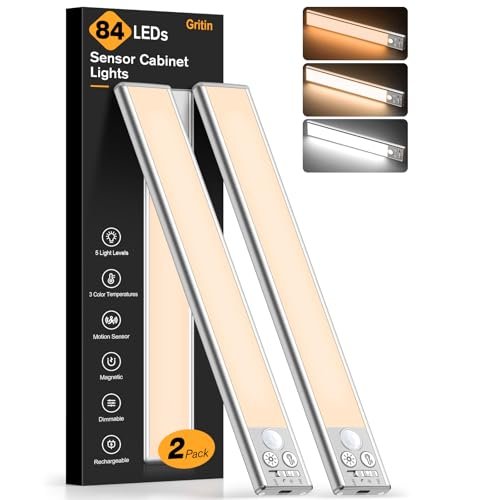
 The Gritin rechargeable strip uses magnetic mounting for tool-free installation, ideal for renters.
Why Upgrade to LED Under-Cabinet Lighting?
Traditional lighting often fails to address the specific needs of a kitchen workspace. Overhead ceiling fixtures can create harsh shadows under your eye level when you stand at the counter, causing eye strain and making it difficult to see cutting boards or stove dials accurately. LED under-cabinet strips solve this by positioning light source exactly where it is needed.
Beyond functionality, modern LED technology offers significant advantages over older incandescent or halogen solutions. LEDs produce heat at the back of the fixture rather than radiating it forward, keeping your workspace cooler and your food safer if the light is positioned near hot surfaces. They are also far more energy-efficient, typically consuming 10–15 watts per meter compared to much higher wattages for equivalent brightness in older technologies.
The Impact on Kitchen Design
In practice, good under-cabinet lighting changes how you interact with your kitchen. It turns the base cabinets from dark boxes into illuminated architectural elements. The light washes down the countertop, highlighting the texture of stone or quartz surfaces. For those interested in interior design fundamentals, understanding how light layers create visual interest is key; you can explore more on the principles of layering lighting to see how ambient, task, and accent lighting work together, though specific to kitchens, the focus is on task and accent.
Safety and Heat Management
While LEDs are cool to the touch, the driver units and high-density LED chips can still generate heat. High-quality strips have built-in heat sinks and IP (Ingress Protection) ratings to ensure durability. For households with specific safety standards, such as those following OSHA guidelines for workplace environments, understanding electrical safety standards is crucial, though residential kitchens typically follow NEC codes. The key takeaway for home users is to buy strips with proper voltage ratings (12V or 24V) and avoid overloading a single driver.
Key Specifications: What to Look For
Not all LED strips are created equal. Before buying, you need to understand three critical metrics: Color Temperature (CCT), Color Rendering Index (CRI), and Density.
Color Temperature (CCT)
Measured in Kelvin (K), CCT determines the "warmth" of the light.
- 2700K (Warm White): Mimics incandescent light. Best for cozy, traditional kitchens or evening relaxation.
- 3000K (Soft White): The industry standard for most residential kitchens. It feels natural and reduces glare.
- 4000K (Neutral/Daylight): Crisp, clean white light. Ideal for modern, high-contrast kitchens or detailed tasks.
- 5000K+ (Bright White): Can feel stark and blue; usually reserved for commercial settings.
- RGB/RGBIC: Multicolor options for dynamic effects. Great for entertainment zones, but less ideal for primary task lighting due to potential color distortion.
Color Rendering Index (CRI)
CRI measures how accurately a light source renders colors compared to natural daylight. A scale of 0-100, where 100 is perfect.
- CRI 80-85: Acceptable for ambient lighting.
- CRI 90-95+: Recommended for kitchens. High CRI ensures that food looks appetizing and ingredients are easily identifiable. If you are displaying items in open shelving, a high CRI strip like the BENLUN model is a strong choice.
LED Density
Measured in LEDs per meter (LPD). Higher density means smoother, more uniform light without visible "dots" or gaps.
- Low Density (100-150 LPD): Visible gaps between LEDs. Best for cove lighting where the light is diffused by a baffle.
- High Density (240-500+ LPD): No visible dots. Ideal for direct under-cabinet mounting where the light hits the counter directly.
- COB (Chip-on-Board): The most advanced type. COB strips have chips mounted directly on the board, creating a continuous line of light with no visible dots. They are the premium choice for seamless aesthetics.
Top Under Cabinet LED Strip Reviews
We have evaluated the current market leaders based on brightness, ease of installation, smart features, and value. Below are the best options for different needs.
Best for Renters & Tool-Free Install: Gritin Rechargeable Strips
The Gritin 10.2-inch Under Cabinet Lighting is a standout for those who cannot drill into cabinets or want a temporary solution. These are battery-powered, rechargeable units with magnetic backing.
- Pros:
- Rechargeable: No constant battery waste; uses USB-C charging.
- Motion Sensor: Hands-free operation; ideal for late-night snacks.
- Magnetic Mounting: Attaches to metal cabinets or magnetic strips; no adhesive residue.
- 3 Color Modes: Warm, cool, and natural white.
- Cons:
- Limited Coverage: Each unit is small (10.2 inches), requiring multiple units for a long counter.
- Battery Life: Requires periodic recharging if used daily.
- Surface Limitation: Magnetic backing only works on metal or with added magnetic tape; it will not stick to wood or laminate directly.
Verdict: Perfect for closets, small pantry nooks, or single cabinet interiors. For a full kitchen run, you’ll need a kit with multiple units. Buy Gritin Lights
Best for Bright Task Lighting: Govee White LED Strip
If you need reliable, bright daylight white light for cooking, the Govee White LED Strip is a top performer. It is a wired solution that plugs into a standard outlet via an adapter.
- Pros:
- 6500K Brightness: Excellent for detailed tasks like chopping vegetables or reading recipes.
- Strong Adhesive: 3M backing holds firmly on smooth surfaces.
- Dimmable: Adjustable via a remote or wall switch.
- 16.4ft Length: Covers most standard kitchen counters in one strip.
- Cons:
- No Color Change: Single color only.
- Indoor Use Only: Not waterproof; keep away from sinks and stoves.
Verdict: The workhorse of kitchen lighting. It provides the clearest visibility for task-oriented work. Buy Govee White Strip
Best for Smart Home & Ambiance: Govee RGBIC LED Strip
For those who want their kitchen to double as an entertainment zone, the Govee RGBIC Strip offers dynamic color control. "RGBIC" means multiple colors can display simultaneously on one strip.
- Pros:
- Music Sync: Lights pulse to the beat of your favorite songs.
- App & Bluetooth Control: Full customization of scenes, timers, and colors.
- DIY Colors: Create gradients and multi-color zones on a single strip.
- Cons:
- Complexity: Requires Wi-Fi or Bluetooth setup; some users find the app clunky.
- Range: Bluetooth range is limited if the kitchen is far from your phone.
Verdict: Ideal for open-plan living areas or for anyone who uses smart home devices. The ability to shift from bright white for cooking to a soft purple for evening relaxation is a luxury feature. Buy Govee RGBIC
Best for Simple Wireless Convenience: MCGOR Rechargeable Kit
The MCGOR Under Cabinet Lighting is a popular middle ground. It offers the wireless convenience of Gritin but in a slightly larger, more affordable kit.
- Pros:
- Motion & Touch: Dual activation modes.
- Rechargeable: Eliminates AA batteries.
- Magnetic & Adhesive: Flexible mounting options.
- Cons:
- White Light Only: No color options.
- Size: Shorter length per unit than wired strips.
Verdict: A solid choice for pantry interiors and small cabinets where wiring is difficult. If you are interested in other types of organized storage solutions, you might also look at efficient storage box setups for keeping your kitchen clutter-free. Buy MCGOR Kit
Best for Adjustable Color Temperature: DAYBETTER Kit
The DAYBETTER Under Cabinet Lights allow you to switch between warm and cool white (2700K-6500K) without buying multiple strips.
- Pros:
- Tunable White: One remote, many temperatures.
- 9.8ft Coverage: Good for mid-sized kitchens.
- Strong Adhesive: Reliable mount.
- Cons:
- Adapter Required: Wired system needs a power supply.
- Length Limit: 9.8ft may be too short for large galley kitchens.
Verdict: Excellent value for those who don’t want to guess the right color temperature. You can adjust it daily based on the time of day. Buy DAYBETTER
Best for Warm Ambient Glow: MYPLUS Warm White Strip
For a cozy, inviting kitchen vibe, the MYPLUS Under Cabinet Lighting focuses on a consistent 3000K warm white output.
- Pros:
- 1050 Lumens: High brightness for its size.
- Dimmer Included: Easy brightness control.
- Warm Aesthetic: Pairs well with wooden cabinets.
- Cons:
- Single Temperature: Cannot switch to cool white.
- Wired: Requires drilling for a wall socket or using a cord.
Verdict: Best for traditional kitchen designs where warm lighting is a priority. Buy MYPLUS
Best for Bulk & Timing Features: WOBANE Kit
The WOBANE Under Cabinet LED Kit includes six strips and a remote with timing functions.
- Pros:
- 6-Piece Kit: Covers large areas quickly.
- Timer Function: Auto-off features save energy.
- Warm White: Consistent cozy glow.
- Cons:
- Cord Management: Multiple strips mean multiple cords to manage.
- No Color Options: Fixed warm white.
Verdict: Good for large kitchens where you want a uniform, set-and-forget lighting solution. Buy WOBANE
Best for Flexible Shelves: LAFULIT Kit
The LAFULIT Under Cabinet Lighting Kit is designed with flexibility in mind, suitable for bookcases and irregular surfaces.
- Pros:
- 8-Piece Kit: High piece count for customization.
- Power Adapter Included: All-in-one box.
- Flexible Strip: Bends easily around curves.
- Cons:
- Dimness: Some users find it better for accent than primary task lighting.
- Short Strips: Requires many pieces for long runs.
Verdict: Ideal for open shelving units, dining room bars, or bedroom closets in addition to the kitchen. Buy LAFULIT
Best for High CRI & Cuttable Design: BENLUN COB Strip
The BENLUN 12V COB LED Strip is a premium option for those who care about color accuracy and seamless light distribution.
- Pros:
- CRI 93: Excellent color rendering.
- COB Technology: No visible dots; smooth, even light.
- Cuttable: Can be cut to exact length at marked intervals.
- 32.8ft Length: Very long roll, efficient for large kitchens.
- Cons:
- Higher Cost: Premium features come at a premium price.
- Wired: Requires a 12V power supply.
Verdict: The best choice for design-conscious homeowners who want a flawless, professional look. High CRI is especially important if you are painting or displaying art in the kitchen area. Buy BENLUN
Best for Voice Control: Maylit Smart RGB Kit
The Maylit 10 PCS Smart RGB Kit integrates with Alexa and Google Assistant.
- Pros:
- Voice Control: "Alexa, turn on the kitchen lights."
- Music Sync: Reactive lighting.
- 10 Strips: Covers very large areas.
- Cons:
- Wi-Fi Dependency: Smart features fail if internet is down.
- Learning Curve: Requires app setup.
Verdict: Best for smart home enthusiasts who want full integration with their existing ecosystem. Buy Maylit
Installation Guide: Best Practices for a Clean Finish
Even the best LED strip looks bad if installed poorly. Here is a step-by-step guide to achieving a professional result.
1. Surface Preparation
The adhesive on LED strips is strong but fails on dirty, oily, or textured surfaces. In practice, a common mistake is skipping the cleaning step.
- Clean: Use rubbing alcohol or a degreaser on the underside of the cabinet. Let it dry completely.
- Smooth: If the wood is rough, sand it lightly. Adhesive needs a flat, smooth bond.
- Prime: For very porous wood, apply a thin layer of primer or a dedicated adhesive promoter.
2. Measuring and Cutting
- Wired Strips: Most high-quality strips have marked cutting lines (usually every 10cm or 20cm). Never cut between marks, or you will break the circuit.
- Wireless/Rechargeable: These usually do not need cutting; you simply mount multiple units end-to-end or side-by-side.
3. Mounting
- Adhesive Strips: Peel the backing and press firmly along the entire length. Do not just stick the ends. Hold for 30 seconds to ensure initial bonding.
- Magnetic Strips: Ensure the cabinet is ferrous metal or use a magnetic adhesive strip if it is wood/laminate.
- Cord Management: This is the most overlooked step. Use zip ties, cable clips, or paintable cord covers to hide the power supply and adapters. A tangled mess of wires ruins the aesthetic.
4. Powering the System
- Wired: Connect the strip to the power supply. If the total length exceeds 10 meters, you may need to power the strip from both ends to prevent voltage drop (dimming at the far end).
- Wireless: Charge the units fully before first use.
 The Govee RGBIC strip allows for multi-color zones, perfect for dynamic entertainment setups.
Maintenance and Longevity
LEDs have a long lifespan, typically 50,000+ hours. However, the power supply (driver) is the weak link in wired systems.
- Heat: Ensure the driver is not trapped in a tight, unventilated box. Overheating causes premature failure.
- Moisture: Avoid installing near the sink or stove. If you must, look for IP44 or IP65 rated strips, which are resistant to water splashes.
- Cleaning: Use a soft, dry cloth. Avoid abrasive cleaners that can scratch the lens cover.
If you are using rechargeable battery units, keep an eye on battery degradation. After 2-3 years of daily use, the runtime per charge will decrease. This is a cost of convenience.
For those interested in maintaining other household items, consider the principles of routine upkeep and storage to keep your organization systems running smoothly, similar to how you maintain your lighting circuits.
Frequently Asked Questions
How far apart should under-cabinet lights be?
For continuous strips, they are mounted end-to-end. For discrete puck lights or small units, a spacing of 1 to 1.5 feet is recommended to eliminate dark spots on the counter. The goal is overlapping light cones so there are no gaps in illumination.
Are LED strips safe for kitchen cabinets?
Yes, provided they are correctly rated. LEDs generate heat at the back of the strip, so they do not radiate heat onto the counter surface like incandescent halogens do. Always use strips with a low voltage (12V or 24V) for safety, as these are considered "safe extra-low voltage" (SELV) by electrical standards.
Can I use one long strip or multiple shorter ones?
One long strip is generally better for a seamless look, as multiple strips will have visible breaks or connectors between them. However, if you have a very long run (over 5 meters), you might need to connect two strips in series to ensure adequate voltage at the end.
Do I need a dimmer switch?
A dimmer is highly recommended. It allows you to adjust brightness for different tasks. You can use a wall dimmer compatible with LED drivers, a remote control, or a smart app. Without a dimmer, the light is often too bright for evening and too dim for detailed tasks if you only have one setting.
How do I hide the power cord?
For wired strips, run the cord up the side of the cabinet and into the cabinetry. Use paintable cord channels to straighten the wire. If the power source is an outlet above the cabinet, you can route the cord down the inside of the upper cabinets or use a cord cover along the baseboard.
Conclusion
Transforming your kitchen with under-cabinet LED lighting is a project that combines practicality with aesthetic appeal. The right choice depends on your specific needs:
- For Renter/Freelancers: Choose Gritin or MCGOR rechargeable magnetic strips for tool-free installation.
- For Task Lighting: Choose Govee White or BENLUN COB for high brightness and color accuracy.
- For Smart/Ambiance: Choose Govee RGBIC or Maylit for voice control and dynamic colors.
- For Simplicity: Choose DAYBETTER or WOBANE for reliable wired kits with remotes.
Start by measuring your cabinets and deciding on a color temperature. 3000K is the safest bet for most kitchens, offering a balance between warmth and clarity. By following the installation best practices above, you will avoid common pitfalls and enjoy a beautifully lit workspace for years to come.
Ready to upgrade your kitchen? Browse the top-rated LED strips on Amazon to find the perfect fit for your space. Always prioritize safety: turn off power at the breaker before installation, and if wiring seems complex, consult a licensed electrician. A well-lit kitchen enhances both function and joy—start your upgrade today.

Hi, I’m Daniel Brooks—a food lover and kitchen gear enthusiast. I enjoy testing cookware, utensils, and gadgets to see what really works in everyday cooking. At PlugChef.com, I share honest reviews, comparisons, and simple guides to help you choose the best tools for a safer, smarter, and more enjoyable kitchen.
Similar Posts