Puto Cheese Tools And Equipment: Essential Gear for Perfect Cheese Making
Making puto cheese at home is both a rewarding culinary tradition and a precise process. The Filipino steamed rice‑and‑cake delicacy, often enriched with cheese, depends on consistent texture, mild flavor, and proper shaping. While the recipe itself is straightforward, the right tools eliminate guesswork and elevate results from uneven to restaurant‑quality. In this guide, we walk through the essential gear every home cheesemaker should have, how to use each item effectively, and common pitfalls to avoid. By the end, you’ll have a clear roadmap to building a toolkit that fits your space, skill level, and cheese preferences.
Selecting a Cheese Mold & Press
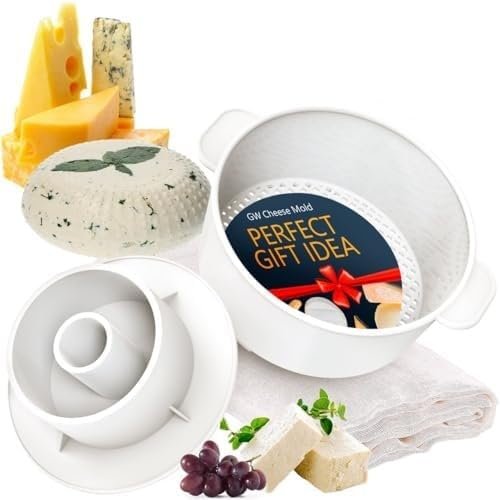
The foundation of any puto cheese lies in a reliable mold and pressing system. The  exemplifies a solid starter kit. This set includes a reusable 100% cotton cheesecloth and a weighted follower that applies uniform pressure during the pressing phase—a critical step for achieving a dense, uniform crumb. In practice, many beginners underestimate pressing time; a steady 10 to 15 minutes at room temperature typically yields the best texture without over‑compacting the curds. The follower prevents the curds from settling unevenly, which can otherwise result in a crumbly or grainy finish. For more on this, see our guide on types of cheese for crackers.
Pressing mold with follower and reusable cheesecloth for straining homemade cheese
Pros:
- Reusable cotton cloth supports sustainability and reduces long‑term cost
- Durable mold material withstands repeated pressing cycles
- Compact dimensions (approximately 5.9 × 5.9 × 2.76 inches) fit most refrigerator shelves
- Follower ensures even pressure, crucial for consistent texture
Cons:
- Smaller capacity limits batch size; larger gatherings may require doubling the mold
- Manual pressing requires physical effort, especially with high‑moisture curds
For those experimenting beyond paneer, this mold’s versatile design accommodates soft and semi‑hard cheese varieties, though the limited volume means it shines brightest in single‑batch or small‑family servings.
Cutting & Slicing Tools for Every Cheese Texture
A good slicer transforms a block of cheese into uniform portions, directly affecting presentation and melt consistency. The market offers several wire and blade designs, each suited to specific textures. Below, we review the most popular options featured in recent home‑maker kits. For more on this, see our guide on browned butter and mizithra cheese.
BOSKA Stainless Steel Cheese Slicer
The  combines durability with a low‑friction surface, making it suitable for everything from soft brie to aged cheddar. Its stainless steel construction resists rust, and the non‑stick coating allows the wire to glide through cheese with minimal resistance. A common mistake is pressing too hard; the tool’s design relies on gentle, consistent tension rather than force. The slicer is also dishwasher safe, which simplifies cleanup after multi‑cheese platters.
Silver non‑stick handheld cheese slicer for smooth slicing
Zulay Kitchen Adjustable Wire Cheese Cutter
If you need versatility, the  delivers. This model features a tension‑adjustment knob that lets you switch between thin ribbons and thicker slices in seconds. It ships with two spare wires, extending the tool’s service life before any replacement becomes necessary. The frosted white finish resists showing fingerprints, a practical detail for those who display their tools on open shelves. Note that very hard, aged cheeses may require a sawing motion rather than a clean shear, so adjust the wire tension accordingly. For more on this, see our guide on kitchenista mac and cheese recipe.
White adjustable wire cheese cutter with extra wires on a kitchen counter
OXO Good Grip Non‑Stick Cheese Slicer
Designed with user comfort in mind, the 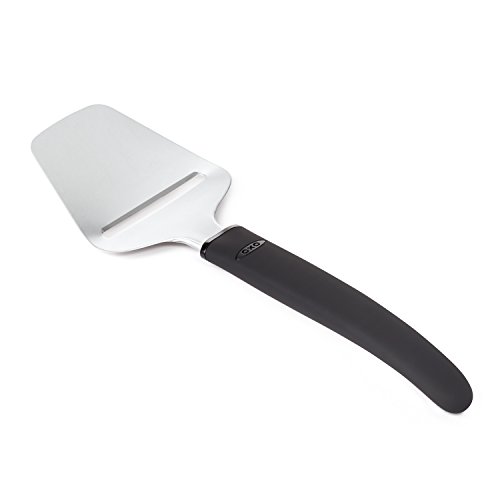 features an oversized, non‑slip handle that reduces hand fatigue during extended use. At 9 inches long and just over 0.15 pounds, it slides easily into most kitchen drawers. The non‑stick surface performs best with cheeses ranging from semi‑soft to firm; extremely hard varieties may still require careful angle adjustment. Its lightweight build makes it a favorite for everyday slicing tasks, from sandwich preparation to charcuterie assembly.
Black and red OXO cheese slicer with ergonomic handle on a wooden board
Aeon Design Cheese Slicer/Cutter
For those who frequently tackle hard or semi‑hard blocks, the 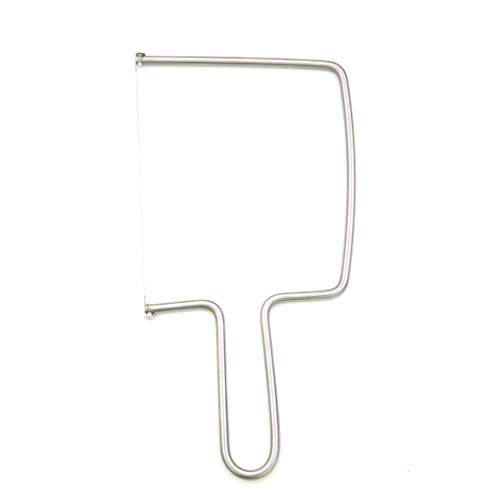 offers a straightforward, long‑lasting solution. Two reinforced wires slide through a stainless steel frame, providing consistent cut depth across the entire cheese length. The wires are user‑replaceable, which many reviewers cite as a key advantage over fixed‑wire models. Storage is uncomplicated—its slim profile fits neatly between other flat tools. Warning: the wires can snap if side‑loaded, so always guide the slicer straight across the cheese surface. For more on this, see our guide on marine first aid kit contents list.
Sleek silver cheese slicer with extra wires laid across a drawer
Fantes Classic Wire Cheese Slicer
A nod to heritage, the  has been in production since 1906. Its 12‑inch stainless steel wire provides generous reach for large wheels, and the simple loop handle gives tactile feedback on wire tension. The wire resists corrosion and can be tensioned by hand for different cheese densities. Because the wire is fixed, replacement requires a full unit swap, but the original build quality means years of service before that becomes necessary.
Polished 12‑inch wire cheese slicer with loop handle resting on a cutting board
Sopito Gold‑Finish Wire Cheese Slicer
The  adds a decorative gold coating to a functional stainless frame. Three spare wires are included, and the compact 5.12‑inch length suits smaller blocks and tight drawers. The gold finish is purely aesthetic; it does not affect cutting performance but may show micro‑scratches over time. Use gentle pressure and avoid twisting the frame to maximize wire life. For more on this, see our guide on empty first aid kit box.
Gold‑finished compact wire slicer with spare wires in a kitchen drawer
Chef’n 2‑in‑1 Cheese Slicer & Storage Container
A hybrid solution, the  integrates a wire slicer into a rectangular container that snaps shut. This design keeps sliced cheese fresh and reduces transfer steps—slice directly into the container, close the lid, and refrigerate. The wire is fixed and best suited for semi‑soft to firm cheeses; very hard varieties may cause the wire to bow. Cleanup is straightforward: the container and slicer separate for dishwasher washing.
White two‑in‑one cheese slicer and storage container on a refrigerator shelf
Ptwola Dual Pack Wire Slicers
Budget‑conscious makers often appreciate the  . Two slicers allow simultaneous prep of different cheeses or a backup when one wire dulls. The ergonomic handles reduce wrist strain, and the wires handle semi‑hard blocks, butter, and even dense cakes. Not recommended for extremely hard cheeses; the wire tension is not adjustable, so performance varies with cheese density.
Pair of stainless steel wire slicers with black handles on a countertop
Specialty Tool: Curd Cutting for Texture Control
Texture in puto cheese hinges on curd size. The  is purpose‑built for this step. Its 3/4‑inch spacing produces uniform curds that release whey evenly, preventing dry pockets or overly moist centers. In practice, cut the curds gently in a vertical‑then‑horizontal grid motion; aggressive chopping shatters curds and yields a grainy final product. The beige polymer handle stays cool during long sessions, and the 0.3‑pound weight minimizes fatigue. This tool is single‑purpose—if you only make fresh cheeses occasionally, a long kitchen knife can substitute, but consistency suffers.
Beige horizontal curd cutter with 3/4‑inch blade on a stainless steel table
Building a Complete Cheesemaking Kit
Beyond molds and slicers, a functional home setup includes:
| Category | Recommended Items | Why It Matters |
|---|---|---|
| Temperature control | Digital probe thermometer (±0.5 °C accuracy) | Precise heating prevents scorching milk proteins |
| Acidification | pH strips or handheld meter (range 4.0–7.0) | Ensures proper coagulation endpoint |
| Straining | Fine‑mesh nylon bag or additional cheesecloth | Captures small curds without loss |
| Sanitation | Food‑grade sanitizer (no‑rinse) | Eliminates off‑flavor bacteria |
| Storage | Vacuum sealer bags or wax paper + airtight containers | Extends shelf life and preserves moisture |
Investing in a reliable thermometer and pH meter early pays off; they are the only tools that directly influence the biochemical success of every batch.
Maintenance & Safety Practices
- Clean immediately after use: cheese proteins harden quickly and become difficult to remove.
- Sanitize wire slicers by soaking in 70% isopropyl alcohol for 60 seconds, then air‑dry; this prevents cross‑contamination between cheese types.
- Inspect wires before each session; a kinked or frayed wire snaps under tension and can cause injury.
- Store molds and presses dry and stacked with a clean cloth between surfaces to avoid scratching.
- Replace cheesecloth when fibers thin or retain odors—typically after 20–30 uses.
Common Mistakes & Quick Fixes
| Symptom | Likely Cause | Adjustment |
|---|---|---|
| Crumbly, dry cheese | Over‑pressing or curds cut too small | Reduce press time 30%; use larger curd cutter |
| Gummy, wet center | Under‑pressing or insufficient whey drainage | Extend press 5 minutes; increase mold drainage holes |
| Uneven slices | Dull or loose wire | Tighten tension knob or replace wire |
| Off flavors | Inadequate sanitation | Sanitize all contact surfaces before each batch |
Frequently Asked Questions
What is included in the Grand Way cheese kit?
The kit contains a cheese mold, a weighted follower, and a reusable 100% cotton cheesecloth—core pieces for pressing paneer‑style cheeses at home.
How do you use the BOSKA cheese slicer?
Hold the slicer at a shallow angle, apply gentle forward pressure, and let the non‑stick wire do the work. No sawing motion is needed for most semi‑hard cheeses.
Can the Zulay cheese slicer adjust for thickness?
Yes. A tension knob on the frame changes wire spacing, allowing slices from paper‑thin to roughly ¼‑inch thick.
Is the Aeon Design cheese slicer durable?
Its stainless steel frame and replaceable wires withstand frequent use; many users report two‑plus years before first wire replacement.
Does the OXO cheese slicer prevent cheese sticking?
The non‑stick coating significantly reduces adhesion on semi‑soft to firm cheeses; very high‑moisture cheeses may still cling slightly.
What is unique about the PetriStor cheese curd cutter?
Its horizontal 3/4‑inch blade creates uniform curd cubes in a single pass, a step that is difficult to replicate with a knife.
Conclusion
Consistent, delicious puto cheese starts with the right equipment. A quality mold and follower set the structure, while a selection of wire and blade slicers handles every texture from soft to aged. Specialty tools like a curd cutter fine‑tune mouthfeel, and basic sanitation plus temperature control safeguard every batch. Begin with the essentials—mold, thermometer, and one versatile slicer—then expand as your repertoire grows. The tools reviewed here cover the full spectrum from novice to enthusiast, each earning its place through durability and practical design. Choose the combination that matches your typical batch size and cheese preferences, and you’ll spend less time troubleshooting and more time enjoying the results.
Ready to equip your kitchen? Pick the mold and slicer that fit your current needs, then add a probe thermometer and pH strips for precision. Your next batch will thank you.

Hi, I’m Daniel Brooks—a food lover and kitchen gear enthusiast. I enjoy testing cookware, utensils, and gadgets to see what really works in everyday cooking. At PlugChef.com, I share honest reviews, comparisons, and simple guides to help you choose the best tools for a safer, smarter, and more enjoyable kitchen.
Similar Posts