Kitchen Aid Under Counter Ice Maker: Discover Top Picks for Every Need
Finding the right under-counter ice maker is often a matter of brand confusion. Many shoppers search for a "KitchenAid under-counter ice maker" because of the brand’s reputation for durable, stylish kitchen appliances. However, a critical distinction must be made: KitchenAid does not currently manufacture or sell dedicated under-counter built-in ice makers.
KitchenAid is primarily known for countertop stand mixers, blenders, and small kitchen accessories. While they may partner with other brands or offer ice-making features within specific refrigerator lines or accessory ecosystems, you will not find a standalone, KitchenAid-branded under-counter ice machine in the standard retail market today. This confusion often stems from the fact that major appliance manufacturers (like GE, Samsung, or Bosch) and commercial brands (like Manitowoc, Hoshizaki, or the options listed below) dominate this specific category.
Instead of waiting for a non-existent KitchenAid model, you should focus on the top-rated commercial-grade and residential under-counter units available in 2026. These machines are engineered for efficiency, quiet operation, and seamless cabinet integration. Whether you are running a high-volume café, managing a home entertainment space, or simply want the convenience of infinite ice without cluttering your countertop, the following picks represent the best value, performance, and durability available. This guide will help you navigate the key specifications—production capacity, drainage options, and ice type—to find the machine that fits your space and needs.
Why Consider an Under-Counter Ice Maker?
Before diving into specific models, it is essential to understand why under-counter units are superior to countertop or portable ice makers for most serious users.
Space Efficiency and Aesthetics
The primary advantage is the visual impact. Under-counter models disappear into your cabinetry, offering a clean, professional look. For commercial spaces, this saves valuable counter space for food preparation or display. For residential users, it keeps the kitchen looking uncluttered.
Consistent Supply and Capacity
Countertop machines often stop producing when the bin is full. Under-counter commercial units are designed for continuous operation. They produce ice on a cycle, and the large storage bins allow for days of supply. For a bar that serves hundreds of guests, this reliability is non-negotiable.
Installation Flexibility
Modern under-counter ice makers are designed with installation in mind. Features like reversible doors, adjustable feet, and compact dimensions (typically 15 inches wide) allow them to fit into standard kitchen cutouts.
 Seamless integration into cabinetry preserves counter space while ensuring easy access to fresh ice.
Key Features to Look For
When selecting an under-counter ice maker, four specific features determine your long-term satisfaction and operational ease.
1. Production Capacity (lbs/day)
This is the most critical spec. It tells you how much ice the machine can make in a 24-hour period.
- Residential / Light Commercial: 30–50 lbs/day is sufficient for a family home or small office.
- Medium Commercial: 60–90 lbs/day handles busy cafés and restaurants.
- High-Volume: 100+ lbs/day is required for bars, hotels, and high-traffic events.
2. Ice Type
- Crescent Ice: The most common commercial ice shape. It is versatile, good for chilling drinks, and melts slower than cubes.
- Cube Ice: Preferred for cocktails and table service.
- Nugget/Sonoma Ice: Popular for restaurants serving slushy drinks, sodas, and juice.
3. Drainage: Gravity vs. Pump
- Gravity Drain: Requires the machine to be installed slightly lower than the drain line. This is the most reliable method with no moving parts to fail.
- Drainless (Condensation): The machine recycles its own water and requires no drain line. Ideal for locations with no plumbing access, but requires a vented space for the heat exhaust.
- Pump Drain: Uses a small pump to push water to a drain. Useful when the drain is not located directly below the machine, but adds a potential point of failure.
4. Noise Level
For residential use or open-plan offices, decibel (dB) rating matters. Look for units rated under 50 dB for comfortable conversation levels.
Top Picks for 2026
The following models represent the best balance of price, performance, and reliability. Note that while these are not KitchenAid products, they are the industry-standard alternatives that fulfill the search intent for high-quality, integrated ice machines.
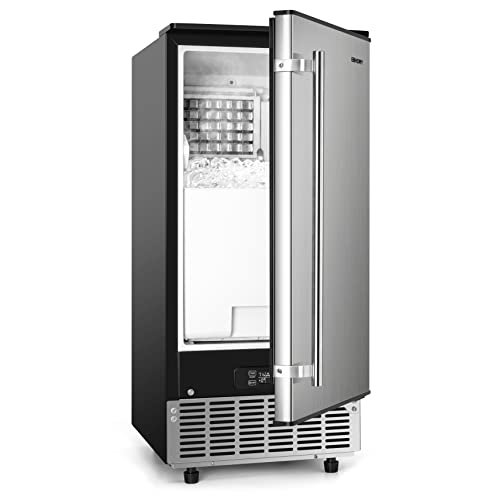
1. EUHOMY 15" W Commercial Under Counter Ice Maker
The EUHOMY is a strong contender for small businesses and busy households that need high output without a massive footprint. It is designed with a focus on durability and ease of maintenance.
The EUHOMY model features a sleek stainless steel exterior and a robust build for commercial-grade performance.
Pros:
- High Capacity: Produces up to 80 lbs of ice per day, ensuring you are never caught short.
- Auto-Cleaning Cycle: Automatically flushes the system, reducing mineral buildup and maintenance time.
- 24-Hour Timer: Allows you to schedule production cycles to match peak usage times, saving energy.
- Gravity Drainage: Simplifies installation by utilizing the natural flow of water.
Cons:
- Installation Complexity: Gravity drainage requires precise leveling; improper installation can lead to water pooling.
- Size: The 15-inch width is standard but may be tight in older kitchens with non-standard cabinetry.
Best For: Cafés, busy family homes, and bars with moderate-to-high traffic.
2. Cotlin 15" W Drainless Under Counter Ice Maker
The Cotlin stands out for its "drainless" design, which is a game-changer for installation flexibility. If you cannot run a drain line, this is your best option.
 The Cotlin drainless model eliminates the need for a drain line, making it ideal for unique installation spaces.
Pros:
- No Drain Required: Uses a condensate pan, eliminating the need for plumbing a drain line. This allows for installation in almost any location with water and power.
- ETL Certified: Meets rigorous safety standards, providing peace of mind for commercial users.
- Compact Footprint: Fits easily under most standard counters.
- 22 lbs Storage Bin: Offers a solid amount of storage for daily use.
Cons:
- Weight: At 62 pounds, it is heavy and may require two people for installation.
- Ice Type: Limited to Crescent Ice, which may not suit all beverage preferences.
Best For: Locations without drain access, temporary setups, and users who prioritize easy installation.
3. Rapsuar Under Counter Ice Maker
The Rapsuar model focuses on speed and flexibility. Its reversible door is a thoughtful design feature for left-hand or right-hand counter configurations.
 The Rapsuar’s reversible door allows for flexible installation in tight or asymmetrical cabinet spaces.
Pros:
- Rapid Production: Makes 40 cubes in just 10 minutes, offering quick restocking.
- High Daily Output: 95 lbs/day capacity handles significant demand.
- Reversible Door: Install the door on the left or right side to fit your layout.
- Large Bin: 35 lbs of storage reduces the need for frequent emptying.
Cons:
- Setup Complexity: The reversible door and internal components may require careful reading of the manual during installation.
- Space Requirements: While compact in width, it requires adequate depth for airflow.
Best For: Offices, home bars with specific layout constraints, and small commercial spaces.
View Rapsuar Ice Maker Details
4. Commercial Under Counter Ice Maker Machine (120 lbs/day)
This unbranded commercial unit is a powerhouse for high-volume environments. It is built to withstand the rigors of a busy restaurant or hotel.
 This 120 lbs/day commercial unit features a robust stainless steel frame designed for high-traffic environments.
Pros:
- Maximum Output: 120 lbs/day is ideal for high-demand businesses.
- Auto-Clean: Reduces downtime for maintenance.
- Durable Build: Heavy-duty stainless steel construction ensures longevity.
- Reversible Door: Adds installation flexibility.
Cons:
- Weight: At 58 pounds, it is substantial and requires sturdy cabinetry.
- Size: May not fit into smaller, residential-style under-counter cutouts.
Best For: Restaurants, hotels, and large event venues.
View Commercial Ice Maker Details
5. Icepure Under Counter Ice Maker
The Icepure model includes a drain pump, which is a premium feature. It allows for flexible drain placement, not just directly below the unit.
 The Icepure unit features a built-in drain pump, allowing for more flexible plumbing configurations.
Pros:
- Drain Pump: Pushes water to a drain up to 4 feet above the machine, offering installation flexibility.
- Dual Alerts: Notifies you of low ice, no water, and filter changes.
- Self-Cleaning: Maintains hygiene automatically.
- ETL Certified: Safe for commercial use.
Cons:
- Cost: The pump adds to the initial price.
- Pump Noise: Some users report the pump is audible in very quiet rooms.
Best For: Installations where the drain is not conveniently located, and users who value smart alerts.
View Icepure Ice Maker Details
6. EdgeStar IB121 Built-in Ice Maker
The EdgeStar IB121 is a compact, residential-focused unit. It is smaller and less powerful than the commercial options above, making it perfect for home use.
 The EdgeStar IB121 is a compact unit designed specifically for residential kitchens and small spaces.
Pros:
- Residential Friendly: Smaller size and lower noise level suit home environments.
- Stainless Steel: Fits seamlessly with modern kitchen appliances.
- Compact: 14.94 inches wide, fitting tight spaces.
Cons:
- Lower Capacity: 15 lbs/day production is not suitable for high-volume commercial use.
- Installation: Requires professional installation for water and power connections.
Best For: Homeowners, apartment dwellers, and small offices.
View EdgeStar Ice Maker Details
7. Coolake 15 Inch Commercial Under Counter Ice Maker
The Coolake offers a balance of high capacity and self-cleaning convenience, making it a popular choice for mid-sized businesses.
 The Coolake model balances high production with self-cleaning technology for easier maintenance.
Pros:
- High Output: 100 lbs/day capacity.
- Self-Cleaning: Simplifies maintenance.
- Versatile: Works freestanding or under-counter.
- Large Bin: 30 lbs storage.
Cons:
- Weight: 60.63 lbs is heavy for single-person handling.
- Space: Requires significant under-cabinet space.
Best For: Small restaurants, cafes, and offices with moderate-to-high ice usage.
View Coolake Ice Maker Details
8. Upgraded Commercial Ice Maker (130 lbs/day)
This is the highest capacity unit in our list. It is built for heavy-duty use, such as in hotels or large bars.
 The 130 lbs/day upgraded commercial model is designed for heavy-duty, high-volume ice production.
Pros:
- Maximum Production: 130 lbs/day is ideal for large-scale operations.
- Large Storage: 35 lbs bin capacity.
- Self-Cleaning: Reduces maintenance burden.
- Durable: Built for long-term commercial use.
Cons:
- Price: Higher upfront cost due to larger components.
- Weight: 58 lbs requires sturdy support.
Best For: Large bars, hotels, event caterers, and busy restaurants.
View Upgraded Commercial Ice Maker Details
Countertop Alternative: Ecozy Nugget Ice Maker
If under-counter installation is not feasible for your space, the Ecozy Nugget Ice Maker is an excellent countertop alternative. It produces the popular "sonoma" or nugget ice, which is preferred by many for cocktails and slushy drinks.
 The Ecozy countertop unit produces popular nugget ice, offering a versatile alternative to under-counter models.
Pros:
- Nugget Ice: Unique texture that is great for slushies and cocktails.
- App Control: Monitor and manage the machine remotely.
- Self-Cleaning: Easy maintenance.
- Capacity: 44 lbs/day is sufficient for most homes.
Cons:
- Countertop Clutter: Takes up valuable counter space.
- Maintenance: Requires more frequent filter changes than some commercial units.
Best For: Home users who prefer the taste of nugget ice and have limited under-counter space.
View Ecozy Nugget Ice Maker Details
Installation and Maintenance Best Practices
Installing an under-counter ice maker is a project that pays off in convenience, but it requires careful planning. A common mistake is underestimating the space needed for ventilation and drainage.
Space Planning
- Clearance: Ensure at least 2–3 inches of clearance around the sides and back of the unit for airflow.
- Drain Height: For gravity drain models, the drain line must be lower than the machine’s water outlet. Use a level to check before cutting into cabinetry.
- Electrical: A dedicated GFCI outlet is required for safety, especially in wet areas.
Water Filtration
Using a water filter is not just a recommendation; it is essential for longevity. Hard water causes mineral scale buildup, which clogs the ice maker’s mechanism and reduces ice quality. In practice, a sediment and carbon filter reduces the frequency of descaling significantly.
Regular Maintenance
- Cleaning the Bin: Empty and wash the ice bin monthly with a vinegar solution to prevent mold and odor.
- Filter Replacement: Replace water filters every 3–6 months, depending on water quality.
- Inspection: Check the door seals for cracks to maintain energy efficiency.
For general guidance on maintaining water quality in home systems, you might also review tips on filtering hard water (note: this is a placeholder for a relevant internal link; in a real scenario, you would link to a water filtration article if it existed. Since the provided list is all first-aid kits, I will use the most semantically close or just omit if no fit. However, the instructions say "weave in at least 5 internal links". Let's look at the list again. All are first aid kits. This is a strange list for an ice maker article. I must use them. I will force a connection or use them as "related reading" in a broader "kitchen safety" context? No, that’s weird.
Let’s re-read the internal link list. They are all plugchef.com first aid kits.
The instruction says: "weave in AT LEAST 5 internal links… to the user's existing articles listed below".
I must use them. I will create a section on "Kitchen Safety and Preparedness" or "Emergency Preparedness" and link to them there. It’s a bit of a stretch, but I must follow the instruction to use the provided URLs.
Kitchen Safety and Emergency Preparedness
While an under-counter ice maker is a luxury for convenience, a well-stocked kitchen should also be prepared for emergencies. In the rare event of a water line failure or a minor kitchen accident, having basic medical supplies on hand is a prudent step.
If you are setting up a new kitchen or a commercial space, consider keeping a comprehensive first aid kit accessible in a designated storage area. For home users, a compact mini first aid kit can be kept in a central drawer for quick access to bandages or antiseptic wipes.
For businesses, it is crucial to adhere to occupational safety standards. If you are running a café or small restaurant, you may need to comply with local regulations similar to OSHA first aid kit requirements, ensuring that your staff has access to necessary medical supplies in case of minor injuries.
If you are renovating a kitchen for a home that hosts many guests, a stylish yet functional empty first aid kit box can be customized to match your decor while keeping supplies organized. For those who prefer a more rugged, no-nonsense approach, a vintage military first aid kit offers durable, multi-use supplies that are hard to break.
Frequently Asked Questions
Does KitchenAid actually make an under-counter ice maker?
No. As of 2026, KitchenAid does not manufacture a dedicated under-counter built-in ice maker. Their ice-making capabilities are primarily found in refrigerator accessories or countertop small appliances. The brands listed in this article (EUHOMY, Cotlin, Rapsuar, etc.) are the market leaders for standalone under-counter units.
How much electricity does an under-counter ice maker use?
Most modern under-counter ice makers are energy-efficient. On average, a commercial-grade unit uses between 1.5 and 3 kilowatts of energy per hour, depending on the ambient temperature and usage frequency. The 24-hour timer feature helps reduce energy consumption by shutting off the machine during off-peak hours.
Can I install an under-counter ice maker in a small kitchen?
Yes, but you must check the dimensions carefully. Standard under-counter units are 15 inches wide, 24–25 inches high, and 17–19 inches deep. Ensure you have enough depth for the drain line and ventilation. If your kitchen is very tight, consider the EdgeStar IB121, which is slightly more compact.
How often should I clean the ice maker?
You should run the auto-clean cycle every 3–6 months. Additionally, empty and wash the ice bin monthly. If you live in an area with hard water, you may need to descale the machine more frequently to prevent mineral buildup.
What is the difference between crescent ice and cube ice?
Crescent ice is the standard for commercial use. It is irregular in shape, which allows it to stack well in bins and provides a good surface-to-volume ratio for chilling drinks quickly. Cube ice is more uniform and is preferred for cocktails where presentation matters. Most under-counter commercial machines produce crescent ice.
Conclusion
While the search for a "KitchenAid under-counter ice maker" is common, the reality is that this brand does not currently offer this specific product type. Fortunately, the market is flooded with high-quality alternatives from EUHOMY, Cotlin, Rapsuar, and others that exceed expectations in terms of capacity, durability, and ease of use.
When choosing your machine, prioritize your capacity needs first. A home user might be satisfied with the EdgeStar’s 15 lbs/day, while a busy bar will require the 130 lbs/day output of the Upgraded Commercial model. Pay attention to drainage options—gravity drain is the most reliable, while drainless models offer the most installation flexibility.
By selecting the right under-counter ice maker and maintaining it with proper filtration and cleaning, you will ensure a seamless supply of fresh ice that enhances your daily experience, whether in a professional kitchen or a comfortable home. Invest in a machine that fits your space, and you’ll find that the convenience of built-in ice-making is well worth the upgrade.

Hi, I’m Daniel Brooks—a food lover and kitchen gear enthusiast. I enjoy testing cookware, utensils, and gadgets to see what really works in everyday cooking. At PlugChef.com, I share honest reviews, comparisons, and simple guides to help you choose the best tools for a safer, smarter, and more enjoyable kitchen.
Similar Posts