Xenon Under Counter Kitchen Lights: Brighten Your Space with Style and Efficiency
Xenon gas-discharge lamps were the industry standard for under-cabinet task lighting until LED technology surged into the market in the early 2010s. While true xenon bulbs are no longer widely manufactured for residential use, the term "Xenon" persists in many product listings and search queries as a descriptor for high-CRI, warm-white gas-discharge light quality. Today, the "Xenon effect" is achieved through advanced LED engineering that mimics the continuous spectrum of xenon arc lighting, offering superior color rendering without the heat and inefficiency of older technology.
If you are searching for "Xenon under counter kitchen lights," you are likely looking for a specific lighting quality: bright, shadow-free, and highly accurate color representation for food preparation. This guide clarifies the current landscape, compares legacy xenon/halogen systems with modern LED alternatives that replicate xenon’s visual fidelity, and provides expert advice on choosing the right fixture for your kitchen. We will cover installation methods, efficiency metrics, and the top-rated fixtures available in 2026 that deliver the style and performance you seek. For more on this, see our guide on best blenders for smoothies under 100.
 High-CRI LED strips providing the warm, xenon-like glow preferred for kitchen task areas.
The Truth About Xenon vs. LED in 2026
To make the best choice, you must understand that true xenon arc lamps are largely obsolete for standard residential under-cabinet use. They are bulky, generate significant heat, and pose explosion risks if mishandled. What remains in the market as "Xenon" is often a mislabeling for high-quality halogen gas-discharge bulbs or premium LEDs that offer a Color Rendering Index (CRI) of 90+.
Here is why the shift to LED has been complete:
- Heat Management: Xenon and halogen fixtures run hot, which can damage food stored directly beneath the cabinet. LEDs run cool to the touch.
- Efficiency: LED systems use roughly 10–20% of the energy required for equivalent gas-discharge brightness.
- Longevity: A xenon/halogen bulb lasts 2,000–4,000 hours; a quality LED fixture lasts 30,000–50,000 hours.
- Color Quality: Modern LEDs with a CRI of 90 or higher mimic the continuous spectrum of xenon, making reds in meat and greens in vegetables appear natural and vibrant.
In practice, if a product is labeled "Xenon" today, verify the technical specifications. If it is a gas-discharge lamp, be cautious of heat and maintenance. If it is an LED, look for the CRI rating—this is the direct proxy for the "Xenon look." For more on this, see our guide on kitchen hood cleaning certification online.
 Comparing legacy gas-discharge technology with modern efficient LED strips.
Key Features to Prioritize: CRI, Color Temperature, and Dimming
When selecting "Xenon-style" lighting, three technical factors determine the quality of your kitchen workspace.
Color Rendering Index (CRI)
The CRI measures how accurately a light source displays colors. Xenon arc lamps naturally have a CRI of 95–100. For your kitchen to look professional, choose fixtures with a CRI of 90 or higher. A common mistake is buying cheap LED strips with a CRI of 70–80; these will make food look dull and unappetizing. If you want that crisp, xenon-like visual clarity, 90+ CRI is non-negotiable.
Color Temperature (Kelvin)
You have two main options to mimic the warmth of xenon:
- 2700K–3000K (Warm White): This is the closest match to traditional xenon glow. It is ideal for dining areas and creating a cozy, inviting atmosphere. It complements wood cabinets and warm stone countertops.
- 4000K–5000K (Neutral/Cool White): Better for high-focus task lighting, such as when chopping vegetables or reading recipes. It feels more energetic but can make food look less appealing if used in dining zones.
Dimming Capability
Dimmable lights allow you to adjust the ambiance without changing the fixture. Ensure your dimmer switch is compatible with the light type. For hardwired LEDs, you must use an LED-compatible dimmer to avoid flickering. For plug-in units, look for integrated dimmers or remote-controlled options that offer smooth, step-free transitions. For more on this, see our guide on kitchen brushes for cleaning.
Installation Methods: Hardwired vs. Plug-In vs. Wireless
Choosing the installation method depends on your kitchen layout, renovation stage, and aesthetic goals.
Hardwired (Permanent)
Hardwired fixtures are integrated into your home’s electrical system.
- Pros: Cleanest look (no visible wires), consistent power, higher wattage capacity.
- Cons: Requires an electrician in most cases, difficult to relocate, requires planning during kitchen renovation.
- Best For: New builds, major kitchen remodels, homeowners who want a seamless, built-in look.
Plug-In (Temporary/Semi-Permanent)
These fixtures have a power cord that plugs into a standard wall outlet or a dedicated under-cabinet outlet.
- Pros: No electrical work required, easy to move if you remodel, easy to upgrade.
- Cons: Cords can be visible if not managed, dependent on outlet availability.
- Best For: Renters, DIY enthusiasts, kitchens with readily available power sources.
Wireless / Rechargeable (Convenience-Focused)
Battery-powered units with motion sensors or manual switches.
- Pros: No wiring at all, flexible placement, great for pantries and secondary spaces.
- Cons: Requires periodic charging, lower power output than hardwired, potential for dead battery during critical moments.
- Best For: Pantries, garages, stairwells, or hard-to-wire areas.
 Wireless solutions offer flexibility for renters or areas without easy access to power outlets.
Top Recommended Fixtures for 2026
Based on durability, light quality, and ease of installation, here are the top contenders that deliver the "Xenon quality" experience.
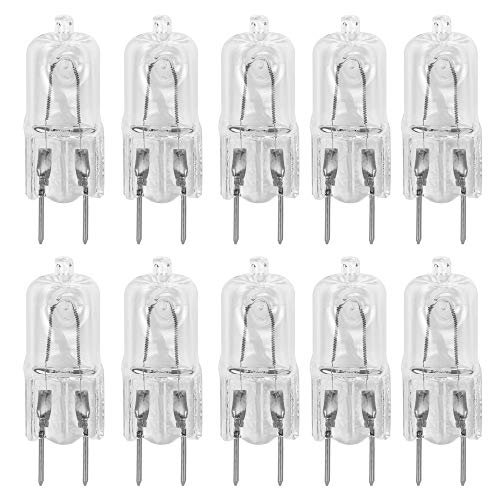
1. For Legacy Replacement: G8 Halogen Bulbs
If you already have a G8 socket under your cabinets, the most direct upgrade is replacing failed bulbs. While not LED, these provide the classic xenon/halogen glow. For more on this, see our guide on commercial kitchen hood cleaner.
- Why it fits: Direct replacement for existing fixtures without rewiring.
- Key Spec: 20W, 120V, Bi-Pin Base.
- Trade-off: Runs hot, short lifespan compared to LEDs.
G8 halogen bulbs provide the classic warm glow but run hotter than modern LEDs.
2. Best Hardwired Option: LED Under Cabinet Lighting (3CCT)
For a permanent, high-quality solution, look for 18-inch fixtures with 3-Color Temperature (3CCT) options.
- Why it fits: Allows you to switch between warm (2700K), neutral (3500K), and cool (5000K) lighting.
- Key Feature: Linkable design allows multiple lights to connect seamlessly for large countertops.
- Best For: Primary kitchen task lighting.
Linkable hardwired strips provide even coverage and a finished look for permanent installs.
3. Best Plug-In Option: Maylit Ultra-Thin LED Strips
Ideal for those who want to avoid electrical work but desire a low-profile look.
- Why it fits: 12-inch length covers standard base cabinet widths. Ultra-thin profile hides well under cabinet overhangs.
- Key Feature: Plug-in with dimmable remote.
- Best For: Renters or kitchens with accessible outlets.
Ultra-thin plug-in strips are ideal for renters and DIY-friendly installations.
4. Best Wireless Option: EZVALO Rechargeable Motion Sensor Lights
Perfect for pantries, closets, or secondary workspaces.
- Why it fits: No wires, no batteries to swap. Recharges via USB.
- Key Feature: Motion sensor activates light when you approach.
- Best For: Convenience and accessibility in dark storage areas.
 Wireless motion sensors provide hands-free lighting for pantries and closets.
5. High-CRI Task Lighting: Hardwired LED with 5000K Daylight
For professional-grade food preparation.
- Why it fits: 5000K daylight temperature provides high contrast for detailed tasks. CRI >90 ensures accurate color.
- Key Feature: Metal base for durability, wide body for even light distribution.
- Best For: Chefs and heavy kitchen users.
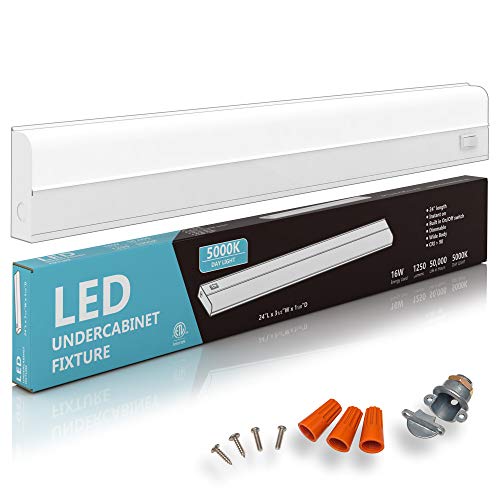 High-CRI task lighting with a metal base ensures durability and accurate color for cooking.
Efficiency and Cost Analysis
Transitioning from xenon/halogen to LED is not just a style upgrade; it is a financial one. While the initial cost of high-CRI LED fixtures is higher than basic halogen bulbs, the long-term savings are significant.
- Energy Savings: LED strips typically consume 4–8 watts for the same perceived brightness as a 20W halogen. Over a year of regular use (2 hours/day), this can save up to $15–$20 per fixture on electricity costs.
- Replacement Costs: Halogen bulbs fail every 1–3 years. LEDs last 5–10 years. You save on labor and parts by not replacing bulbs frequently.
- Heat Reduction: Lower heat output means your kitchen stays cooler, potentially reducing HVAC strain.
When comparing products, look for Energy Star certification or equivalent efficiency ratings. This label ensures the fixture meets strict guidelines for light output per watt (lumens per watt). A fixture with 80+ lumens per watt is considered highly efficient. For more on this, see our guide on industrial kitchen cleaning companies.
Common Installation Mistakes to Avoid
Even with the right fixture, poor installation can ruin the effect. Here are the most common errors we see:
- Ignoring Heat Dissipation: Do not seal LED strips in enclosed, non-ventilated aluminum channels that block heat escape. While aluminum extrusions help dissipate heat, they must be installed with proper spacing from the cabinet.
- Power Supply Mismatch: Many users buy a long LED strip and plug it into a driver that is undersized. Always check the total wattage of the strip against the power supply capacity. The power supply should be at least 1.2 times the strip’s total wattage.
- Cable Management: Loose wires hanging under cabinets are not only unsightly but a fire hazard. Use zip ties or cable clips to secure all wires along the cabinet frame.
- Wrong Dimmer Type: Using a standard incandescent dimmer with an LED driver will cause flickering or prevent the light from turning on. Ensure your dimmer is specifically rated for LED loads.
For a deeper dive into safety protocols and electrical code compliance, you can review [basic electrical safety guidelines] from your local authority or consult a licensed electrician.
 Properly mounting power drivers inside cabinets is key to a clean, safe installation.
Comparing Top Contenders at a Glance
| Feature | G8 Halogen | Hardwired LED (3CCT) | Plug-In LED Strip | Wireless Motion Sensor |
|---|---|---|---|---|
| Installation | Screw-in | Electrical Wiring | Wall Plug | Magnetic/Adhesive |
| Complexity | Low | High | Low | Very Low |
| Lifespan | 2,000 Hrs | 30,000+ Hrs | 30,000+ Hrs | 30,000+ Hrs |
| Heat Output | High | Low | Low | Low |
| Power Source | Mains | Mains | Mains | Battery/Rechargeable |
| Best Use Case | Existing Fixtures | Permanent Remodel | Renter/DIY | Pantries/Closets |
| CRI Potential | 80-85 | 90+ | 85-90 | 80-85 |
Frequently Asked Questions
Are "Xenon" lights still available for purchase?
True xenon arc lamps are rarely sold for residential kitchen use due to safety regulations and the superior efficiency of LEDs. Most products marketed as "Xenon" today are either high-quality halogen gas-discharge bulbs or premium LEDs that mimic the color rendering of xenon. If you see a product explicitly listed as "Xenon," verify the wattage and heat output, as these can be hazardous in enclosed spaces.
Can I use regular household bulbs for under-cabinet lighting?
Standard A-shape bulbs are too large for under-cabinet fixtures. You need specific form factors like G4, G8, or LED strips. Using an incorrect bulb shape can cause fire hazards or physical damage to the fixture. Always check the socket type and maximum wattage rating.
What is the difference between CRI 80 and CRI 90?
CRI (Color Rendering Index) measures how realistic colors look under a light source. A CRI of 80 is acceptable for general illumination but may make food colors look slightly off. A CRI of 90 or higher is recommended for kitchens to ensure accurate color representation, making food look fresh and appetizing. This is the closest metric to the "Xenon" quality.
How many under-cabinet lights do I need?
A general rule of thumb is one fixture every 24–36 inches of counter space. Ensure there is no gap between fixtures to avoid dark spots. For example, a 90-inch run of cabinets might require three 30-inch fixtures or two 45-inch fixtures, depending on your layout.
Do motion sensor lights drain battery quickly?
Modern rechargeable motion sensor lights use low-power PIR (Passive Infrared) sensors that only draw power when detecting motion. In standby mode, the drain is minimal. Most units will last 4–8 hours on a single charge for average use, depending on sensitivity settings and light intensity.
Conclusion
Upgrading your kitchen lighting from traditional xenon/halogen systems to modern high-CRI LED solutions offers a blend of style, efficiency, and precision. While the "Xenon" label persists in marketing, the technology has moved forward. By prioritizing a CRI of 90+, choosing the right color temperature for your tasks, and selecting an installation method that suits your skill level, you can transform your kitchen into a bright, functional, and visually appealing space.
Whether you opt for the convenience of plug-in strips, the permanence of hardwired fixtures, or the flexibility of wireless sensors, the key is to match the light quality to your specific needs. Start by assessing your current setup, identify your preferred installation method, and select a fixture that delivers the color accuracy and energy efficiency you desire. A well-lit kitchen is not just an aesthetic upgrade—it’s a functional investment in your daily living space.
For more tips on maintaining your new lighting system, check out our guide to [routine upkeep of electrical fixtures] to ensure long-term performance.

Hi, I’m Daniel Brooks—a food lover and kitchen gear enthusiast. I enjoy testing cookware, utensils, and gadgets to see what really works in everyday cooking. At PlugChef.com, I share honest reviews, comparisons, and simple guides to help you choose the best tools for a safer, smarter, and more enjoyable kitchen.
Similar Posts