Cooking Utensils Silicone: Discover Heat-Resistant, BPA-Free Kitchen Essentials
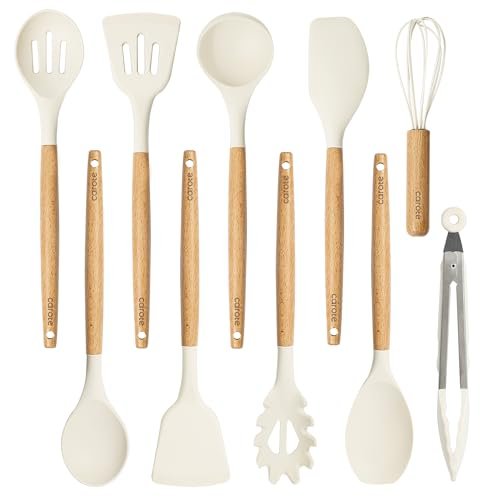
Silicone cooking utensils have quietly become one of the most practical upgrades in modern kitchens — and not just because of the trend. Unlike traditional metal, wood, or plastic tools, food-grade silicone delivers a rare combination: high heat tolerance, nonstick-cookware compatibility, chemical stability, and near-total durability. In practice, once you switch your primary spatulas and spoons to silicone, you rarely want to go back.
This guide goes beyond surface-level features. We break down how silicone actually behaves at different temperatures, what "BPA-free" genuinely means for your food safety, and which sets deliver the best balance of performance, design, and value. Whether you're replacing scratched-up wooden spoons or building a toolkit for nonstick cookware, you'll find concrete comparisons, honest trade-offs, and a curated list of sets worth considering in 2026. For more on this, see our guide on kitchen utensils storage containers with lids.
Why Silicone Has Become the Default Kitchen Material
Silicone's dominance in cookware isn't accidental. Its molecular structure — a polymer of silicon-oxygen bonds — gives it properties that almost no other kitchen material matches. It's non-porous, so it doesn't absorb odors or bacteria. It's chemically inert, meaning it won't react with acidic ingredients like tomato sauce or lemon juice. And its heat tolerance, typically rated between 400°F and 600°F (204–316°C) depending on the specific formulation, covers virtually every stovetop and oven cooking scenario.
What often surprises people is the consistency. Unlike wood, which can warp, crack, or splinter when exposed to moisture and heat cycles, food-grade silicone holds its shape indefinitely — as long as it's genuine food-grade material. Industrial-grade silicone exists, but you want to confirm the "food-grade" designation when shopping. The FDA maintains guidelines for food-contact materials, and reputable silicone utensil manufacturers should comply with those standards. For more on this, see our guide on free first aid kits for nonprofits by mail.
In practice, a good silicone spatula outlasts three or four wooden ones. The material simply doesn't degrade the same way. That said, there are quality differences worth understanding before you buy.
Understanding Heat Resistance in Silicone Utensils
The "heat resistant up to 600°F" claim you'll see on many product listings deserves some context. Most food-grade silicone is rated for continuous exposure at around 400–450°F (204–232°C), with brief excursions up to 600°F (316°C) being tolerable for most formulations. What does that mean in real cooking? For more on this, see our guide on kitchen hood cleaning certification online.
- Sautéing and frying (typically 300–400°F): Well within silicone's comfort zone. The material feels no more than warm to the touch.
- Pan-searing (400–450°F): Still safe, though you'll want a utensil with a handle designed to insulate your hand.
- Deep frying (350–375°F): No issues at all.
- Oven baking (up to 450°F): Silicone is oven-safe, but avoid leaving utensils directly under a broiler or too close to heating elements, where temperatures can exceed ratings.
- Broiling or griddle cooking (500°F+): This approaches the upper limit. Avoid prolonged direct exposure to open flames or extreme heat sources.
A common mistake is assuming that because a utensil is "heat resistant," it can go directly into a very hot pan without consequence. While silicone handles heat well, the wooden or metal components in hybrid utensils may have lower limits. Always check the specific product's temperature rating, not just the marketing claim.
The key difference from plastic utensils — which can melt or deform above 200°F — is substantial. Silicone genuinely won't soften or release chemicals at normal cooking temperatures. This isn't just a durability advantage; it's a food safety one. For more on this, see our guide on kitchen brushes for cleaning.
BPA-Free: What It Actually Means for Your Safety
"BPA-free" has become nearly universal in modern kitchen product labeling, which can make it sound like a given rather than something worth verifying. Here's the nuance: BPA (bisphenol A) is an industrial chemical once widely used in polycarbonate plastics and epoxy resins. Research has linked high BPA exposure to endocrine disruption, though the evidence continues to evolve.
Food-grade silicone is inherently BPA-free — silicone's polymer chain contains no bisphenol compounds. So in principle, any genuine food-grade silicone utensil is already BPA-free by definition. The labeling matters more as a screening step: it helps you distinguish genuine food-grade products from cheap imitations that may use plastic fillers or substandard materials. For more on this, see our guide on commercial kitchen hood cleaner.
When evaluating a product, look for:
- A clear "BPA-free" or "food-grade" designation
- A mention of FDA compliance for food-contact materials
- Absence of a strong chemical smell when new (industrial-grade silicone often smells of rubber or solvents)
- A reputable manufacturer with traceable materials
The FDA's food contact substances program oversees which materials are approved for use with food in the United States. While the FDA doesn't pre-approve every utensil product individually, the underlying silicone materials should meet food-grade standards. If a product makes no mention of safety certifications, treat it as a red flag.
In practice, nearly every silicone utensil set reviewed in this guide is genuinely BPA-free and food-grade. The label serves as confirmation rather than a differentiator among quality products.
Silicone vs. Other Utensil Materials
Choosing between materials depends on what you prioritize — cost, longevity, cookware compatibility, or ease of cleaning. Here's an honest comparison:
| Property | Food-Grade Silicone | Wood | Stainless Steel | Plastic |
|---|---|---|---|---|
| Heat resistance | 400–600°F | ~300°F (can char) | 1000°F+ | ~180–250°F |
| Nonstick pan safety | Excellent | Good (if untreated) | Poor (scratches) | Good (if not melting) |
| Oven safe | Yes (up to 450°F) | No | Yes | No |
| Dishwasher safe | Yes | No (hand wash) | Yes | Limited |
| Odor/food absorption | None | Can absorb oils/odors | None | Can absorb flavors |
| Bacteria resistance | Non-porous | Porous | Non-porous | Semi-porous |
| Typical lifespan | 5–10+ years | 2–5 years | 10+ years | 1–2 years |
| Cost range | Mid | Low–mid | Mid–high | Low |
| Best for | All-round, nonstick cookware | Gentle cooking, rustic feel | Heavy-duty, high-heat | Budget, light use |
Silicone's sweet spot is clear: it combines the gentleness of wood on cookware surfaces with the heat resistance and hygiene of metal, at a mid-range price point. The trade-off is that silicone lacks the structural rigidity of metal for certain tasks — like stirring thick dough , kneading dense bread, or handling extremely hot liquids where you need to grip something heavy and precise. For those tasks, a steel whisk or dough hook still has its place. But for everyday sautéing, flipping, stirring, and serving, silicone is the superior all-around choice for most home cooks.
How to Choose the Right Silicone Utensil Set
With dozens of options on the market, three factors should drive your decision: piece count, handle material, and intended use.
Piece count ranges from compact 3-piece sets to sprawling 33-piece collections. Larger sets cost more and take up storage space, but they cover a broader range of tasks — spatulas for flipping, spoons for stirring, tongs for handling, whisks for mixing, brushes for glazing. If you have limited drawer space, a 5- or 6-piece set covering the essentials is often enough. If you cook frequently and want dedicated tools for specific tasks, a 15-piece or larger set justifies the investment.
Handle material varies between silicone-only, wood-handle, and stainless-steel-core. Each has trade-offs:
- Solid silicone handles: Fully dishwasher safe, no maintenance, but can feel bulky.
- Wood-handled silicone: Warm to the touch, comfortable grip, but require occasional mineral oil treatment to prevent drying and cracking — similar to how you'd care for wooden cutting boards.
- Stainless steel handle cores (with silicone tips): The most durable option, with a metal core reinforced by silicone. Best for heavy-duty use, and structurally more rigid.
Intended use matters more than people realize. A spatula designed for flipping delicate items (like tofu or fish) has a different profile than a rigid turner built for burgers and steaks. Some sets include specialized tools — a thin pastry brush for glazing, a narrow slotted spoon for draining — that expand what you can accomplish without adding more tools to your kitchen.
When evaluating any set, resist the urge to buy based purely on color or aesthetics. Test for weight, handle balance, and how the silicone tip attaches to the handle. Poorly assembled utensils can delaminate at the joints after months of use.
Best Silicone Utensil Sets Worth Considering
CAROTE Silicone Cooking Utensils Set (10 pieces)

CAROTE's 10-piece set pairs cream white silicone heads with heat-resistant wood handles, a popular choice for protecting nonstick cookware.
This set strikes a balance between completeness and restraint. The wood handles give a warm, tactile feel that many users report as more comfortable during extended cooking sessions than all-silicone alternatives. The cream white finish looks clean against most kitchen decors, though it does show staining more readily than darker tones.
Standout features:
- 10-piece range covers the practical essentials without overwhelming storage
- Wood handles provide ergonomic comfort
- Nonstick-cookware safe by design
- BPA-free throughout
Trade-offs: Wood handles need occasional oiling to prevent drying, and the light color means regular cleaning is important to keep them looking new.
Umite Chef Kitchen Utensils Set (33 pieces)

Umite Chef's 33-piece collection offers extensive coverage from spatulas to whisks, ideal for dedicated home cooks.
If you're building out a complete utensil system for a busy kitchen, this is one of the more comprehensive options available. The khaki color works across a wide range of interior styles — modern, farmhouse, minimalist. The nonstick silicone surfaces mean food residue doesn't cling, simplifying cleanup.
Standout features:
- Unmatched tool variety for dedicated cooks
- Wooden handles with ergonomic grip
- Khaki color is versatile across kitchen aesthetics
- Non-stick silicone for easy cleaning
Trade-offs: The volume of pieces can be overkill for smaller kitchens, and the wood components share the same maintenance considerations as other wood-handled sets.
View the Umite Chef collection on Amazon
ChefAide 5-Piece Silicone Spatula Set

ChefAide's compact 5-piece set focuses on spatula variety with 600°F heat resistance and food-grade rubber construction.
A focused, no-frills option for cooks who primarily need reliable spatulas rather than a sprawling set. The 600°F rating puts it among the more heat-tolerant choices available, suitable for higher-heat cooking applications. The ergonomic grip design reduces hand fatigue during longer cooking sessions.
Standout features:
- High 600°F heat resistance rating
- Compact 5-piece set fits easily in most kitchens
- Food-grade rubber construction
- Spatula-focused design for versatile flipping and stirring
Trade-offs: The neutral gray color is functional but not especially distinctive, and the rigid handle design may feel stiff if you prefer the bendable flexibility of softer silicone.
View the ChefAide spatula set on Amazon
Umite Chef Silicone Cooking Utensil Set (15 pieces)

The 15-piece Umite Chef set pairs silicone heads with stainless steel handle cores for added durability and a modern look.
For cooks who want something more durable than wood-handled options, the stainless steel handle core is a meaningful upgrade. It resists moisture damage, requires zero maintenance, and gives the utensils a more polished, professional appearance. The gray finish reads as neutral and contemporary.
Standout features:
- Stainless steel handle cores resist wear and moisture
- 15-piece set balances variety with practicality
- BPA-free, heat-resistant silicone
- Modern aesthetic suited to contemporary kitchens
Trade-offs: Limited to a gray color option, and the set size may still feel crowded in compact drawers.
View the 15-piece Umite Chef set on Amazon
BESTZMWK Kitchen Utensil Set (11 pieces)

The 11-piece BESTZMWK set brings a colorful approach to silicone utensils, adding personality while remaining cookware-safe.
A set that leans into visual appeal without sacrificing function. The colorful design works particularly well in open kitchens or for cooks who want utensils that feel approachable rather than purely utilitarian.
Standout features:
- Vibrant color palette adds personality to kitchen decor
- 11-piece set covers core cooking tasks
- Heat-resistant silicone compatible with nonstick cookware
- Easy to clean and maintain
Trade-offs: The khaki accent color may clash with some kitchen palettes, and the set is slightly heavier than comparable options.
View the BESTZMWK utensil set on Amazon
OXO Good Grips 3-Piece Silicone Utensil Set
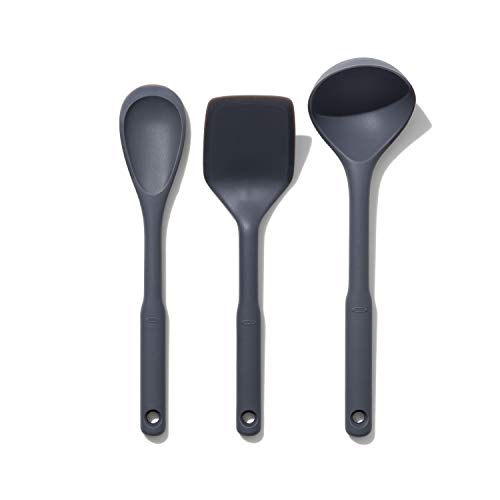
OXO Good Grips brings its signature ergonomic design to a compact 3-piece silicone set, heat-resistant to 600°F.
OXO has spent decades refining ergonomic kitchen design, and that expertise carries through. The 3-piece set is one of the best choices for cooks who want a focused, high-quality starting point — or for kitchens where bulk tool collections simply don't fit the space.
Standout features:
- OXO's signature ergonomic handle design reduces hand fatigue
- 600°F heat resistance for broad cooking applications
- Compact 3-piece set ideal for smaller kitchens
- Dishwasher-safe for effortless cleanup
Trade-offs: Limited to fewer pieces means you'll rely more on multi-use tools, and the gray color is understated.
View the OXO Good Grips set on Amazon
USECANO Silicone Cooking Utensils Set

USECANO's set delivers 600°F heat resistance across spatulas, spoons, whisk, and tongs in a sleek black finish.
A functional, dark-toned set with a straightforward range of tools. The 600°F rating makes it suitable for high-heat cooking, and the included tongs and whisk round out a practical toolkit.
Standout features:
- 600°F heat resistance
- Includes spatulas, spoons, whisk, and tongs
- BPA-free silicone construction
- Dishwasher safe for convenience
Trade-offs: Black can show discoloration and residue buildup more readily than lighter tones, and the set may take more drawer space.
View the USECANO set on Amazon
BUNDLEPRO Pack of 4 Silicone Cooking Utensils

BUNDLEPRO's 4-piece set pairs large solid spatulas with slotted spoons for frying, mixing, and draining.
A minimalist set that covers the most-used utensil types without extras. The pairing of solid spatulas with slotted spoons is genuinely practical — it covers flipping, stirring, and draining in just four tools.
Standout features:
- Compact 4-piece set for minimalist kitchens
- Versatile use across frying, mixing, serving, and draining
- BPA-free, heat-resistant materials
- Cost-effective entry point
Trade-offs: Limited color options, and the basic design won't suit every kitchen aesthetic.
View the BUNDLEPRO set on Amazon
AOTHOD Silicone Cooking Utensils Set
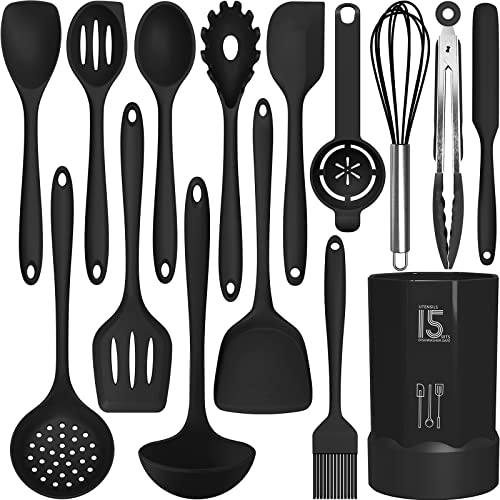
The AOTHOD set features turner tongs, spatula, spoon, brush, and whisk, compatible with nonstick cookware.
A set worth noting for its inclusion of a pastry brush alongside the standard range — a tool that opens up glazing and finishing techniques. The 446°F heat resistance rating is slightly more conservative than 600°F claims on some sets, but still covers virtually all stovetop cooking.
Standout features:
- Includes a pastry brush for glazing and finishing
- 446°F heat resistance suitable for standard cooking
- Dishwasher safe, BPA-free construction
- Nonstick-cookware compatible
Trade-offs: The lower heat rating rules out some high-heat cooking scenarios, and the black color doesn't suit all decors.
Beijiyi Silicone Spatula Turner Set (3 pieces)

Beijiyi's 3-piece spatula set offers 600°F heat resistance and flexible turning for eggs, pancakes, fish, and burgers.
The most focused option on this list — three spatulas specifically designed for flipping and turning. The flexibility in the silicone tips makes it genuinely effective for delicate items like eggs, fish fillets, and tofu, where a rigid metal turner would tear the food apart.
Standout features:
- 600°F heat resistance across the set
- Flexible silicone tips handle delicate foods well
- BPA-free construction
- Large spatulas suitable for varied dishes
Trade-offs: Not designed for heavy-duty mixing, and the limited color palette is black and gray only.
View the Beijiyi spatula set on Amazon
Caring for Your Silicone Utensils
Silicone is remarkably low-maintenance, but a few habits extend its lifespan further.
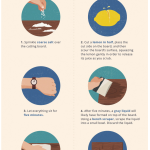
Cleaning: Nearly all silicone utensils are dishwasher safe, though hand-washing with warm soapy water gives wood-handled sets better long-term results. If you notice food residue baked into silicone crevices, a paste of baking soda and water worked in with a soft brush clears it without scratching the surface.
Storage: Hang or store vertically in a utensil crock rather than tossing them into a crowded drawer. Overcrowding can compress silicone tips and degrade their shape over time. For sets with wooden components, store in a dry area — consistent moisture exposure accelerates wood deterioration.
Wood handle care: Sets with wood handles benefit from an annual light application of food-grade mineral oil, just like a wooden cutting board. This prevents drying and cracking. If the wood ever develops a rough patch, gently sand it smooth with fine-grit sandpaper, then re-oil.
What to avoid: Never put silicone utensils in a dishwasher with bleach or chlorine-based detergents — these can degrade the silicone over time. Avoid leaving them directly on a gas flame or under a broiler. And resist the urge to substitute silicone spatulas for metal tools in genuinely heavy-duty tasks like folding stiff dough — the flexibility works against you in those specific scenarios.
Common Mistakes When Buying Silicone Utensils
Even experienced cooks occasionally misjudge silicone utensil sets. Here are the most frequent errors and how to avoid them:
Assuming "heat resistant" means fireproof. Silicone handles cooking heat exceptionally well, but it isn't indestructible. Direct flame contact, broiler proximity, and temperatures consistently above 600°F will eventually degrade the material. Always check the specific temperature rating rather than treating every "heat resistant" label as identical.
Buying large sets you won't use. A 33-piece collection sounds impressive, but if you mostly cook for two and own a single pan, the space cost may outweigh the benefit. Right-size the set to your actual cooking habits, not aspirational ones.
Ignoring handle comfort. A utensil you don't enjoy gripping will get used less. Weight and balance matter more than most shoppers realize. If possible, evaluate the feel of the handle when you can — heavier silicone tools suit those who prefer stability, while lighter options work better for delicate tasks.
Underestimating the value of dishwasher safety. If you routinely hand-wash everything, dishwasher-safe silicone utensils aren't a luxury — they're a genuine time savings. Conversely, if your dishwasher uses harsh detergents, hand-washing may preserve wood-handled sets longer.
Skipping the BPA-free verification. Most reputable brands clearly mark BPA-free status, but with so many low-cost imitations on the market, take a moment to confirm it. It's a two-second check that gives you meaningful peace of mind.
Frequently Asked Questions
What are the real benefits of silicone cooking utensils?
Silicone cooking utensils deliver a genuinely rare combination of heat resistance, nonstick-cookware compatibility, chemical inertness, and durability. Unlike wood, they don't absorb odors, bacteria, or water; unlike plastic, they won't melt or leach at cooking temperatures; unlike metal, they won't scratch your pans. Most are dishwasher safe and last for years without degrading. The flexibility of the silicone tip also makes them effective on delicate foods that a rigid metal tool would damage.
Are silicone utensils truly safe for nonstick pans?
Yes — silicone is one of the safest options for nonstick cookware, provided you're using genuine food-grade silicone. The material is softer than stainless steel and won't scratch or gouge PTFE or ceramic nonstick coatings. In practice, switching from metal to silicone utensils often extends the usable life of a nonstick pan considerably, since coating damage is one of the most common failure modes.
How does silicone compare to wood, metal, and plastic?
Silicone occupies a middle ground that most cooks eventually settle on. It's more durable and hygienic than wood, more cookware-friendly than metal, and more heat-resistant than plastic. Its only consistent disadvantage is flexibility — for heavy-duty mixing or structural tasks, a metal tool still outperforms it. For the vast majority of everyday cooking, silicone is the best all-around choice.
Can silicone utensils handle high-heat cooking?
Most food-grade silicone is rated for continuous use up to 400–450°F, with brief tolerance up to 600°F depending on the specific formulation. This covers virtually all stovetop cooking — sautéing, frying, pan-searing, and even most oven baking. What it doesn't cover is direct flame contact, broiler heat, or prolonged exposure to temperatures above 500°F. Within those bounds, silicone performs reliably.
How do I clean silicone utensils properly?
Silicone utensils are straightforward to clean. Most are dishwasher safe, which is the easiest option. For hand washing, warm water with dish soap is all you need — silicone is non-porous, so residue doesn't get trapped. For stubborn baked-on residue, a baking soda paste worked in with a soft brush works without scratching. Utensils with wood handles should be hand-washed and dried promptly to protect the wood.
How long do quality silicone utensils actually last?
A well-made silicone utensil will last many years — often 5 to 10+ years with normal use — which is longer than most wood or plastic alternatives. The primary failure points are at the joints where the silicone tip meets the handle, and on wood-handled sets, the wood component itself. Quality sets with properly sealed joints and either silicone-only or stainless steel-core handles are essentially maintenance-free and durable indefinitely.
Conclusion
Silicone cooking utensils have earned their reputation as the practical default for modern kitchens, and for good reason. They deliver genuine heat resistance up to cooking-relevant temperatures, safe BPA-free construction, and true nonstick-cookware compatibility — a combination no other common material matches. When you're choosing a set, right-size it to your actual cooking habits, verify the heat rating and BPA-free claims, and pay attention to handle comfort and construction quality.
Whether you're replacing a drawer of scratched wooden spoons or upgrading a small starter set, silicone offers a meaningful step up in both durability and performance. The best set for you depends on how much variety you want, your kitchen's storage constraints, and whether you prefer wood, metal, or all-silicone handles — but any of the options in this guide represent a solid foundation for years of reliable cooking.
Start with a focused 5-piece set if you're unsure; expand when you find which specific tools you actually reach for.

Hi, I’m Daniel Brooks—a food lover and kitchen gear enthusiast. I enjoy testing cookware, utensils, and gadgets to see what really works in everyday cooking. At PlugChef.com, I share honest reviews, comparisons, and simple guides to help you choose the best tools for a safer, smarter, and more enjoyable kitchen.
Similar Posts