LED Lights for Kitchen Under Cabinet: Illuminate Your Space with Style

Under-cabinet LED lighting is one of the most impactful upgrades a kitchen can receive. It eliminates shadows on your cutting board, highlights countertop finishes, and adds layered depth to the room. Unlike overhead recessed lights, which often cast glare and leave dark corners, under-cabinet strips direct light exactly where you work.
In this guide, we break down the buying decisions that matter most, compare ten of the most popular options available in 2026, and walk through installation and layout strategies so you can get results the first time. Whether you're a renter looking for a no-tools solution or a homeowner planning a permanent wiring job, there's an approach that fits. For more on this, see our guide on best blenders for smoothies under 100.
How to Choose: Key Factors Before You Buy
Light Technology and Build Quality
Not all LED under-cabinet lights are created equal. The diode type, heat management, and housing material all affect performance and lifespan. In practice, cheaper units tend to use lower-grade LED chips that dim unevenly over time, while premium options maintain consistent brightness for thousands of hours. Look for products that specify their lumens per watt ratio as an indicator of efficiency. LED products certified by Energy Star meet minimum efficiency benchmarks set by the U.S. Department of Energy, which is a useful shortcut for filtering out subpar models.
Heat is another often-overlooked factor. Under-cabinet spaces trap heat, and LEDs are sensitive to sustained high temperatures. Models with aluminum heat-sinking housings outperform those with thin plastic bodies, especially when run at full brightness for extended periods. For more on this, see our guide on kitchen hood cleaning certification online.
Color Temperature (CCT) Explained
Color temperature is measured in Kelvins and determines the visual "feel" of the light. Here's what each range means in a kitchen context:
- 2700K–3000K (Warm White): Cozy and flattering for evening use. Good for ambient lighting but can make food colors look slightly warm-tinted during prep.
- 3500K–4000K (Neutral White): The sweet spot for most kitchens. It renders food and countertop colors accurately without feeling harsh.
- 5000K–6500K (Daylight/Cool White): Brightest and most clinical. Great for detailed tasks like chopping or reading a recipe but can feel too sterile for long evening sessions.
A common mistake is installing the coolest available light and then finding the kitchen feels like a hospital at dinner. If you cook during both day and night, a dimmable fixture with a 2700K-to-5000K range gives you the best of both worlds.
Lumens: Measuring Real Brightness
Lumens (not watts) tell you how much light you're actually getting. As a general rule of thumb for under-cabinet task lighting:
- 100–200 lumens per linear foot is adequate for moderate task work
- 200–300 lumens per linear foot provides bright, even illumination for detailed prep
A 12-inch light bar producing around 150 lumens covers a small stretch of counter well. If you have a long run of cabinetry, calculate the total linear footage and multiply by your target lumens-per-foot to estimate total output needed.
Power Source Options
The three main power sources each come with trade-offs:
| Power Source | Pros | Cons |
|---|---|---|
| Rechargeable (USB/battery) | No wiring, renter-friendly, portable | Needs periodic charging, may drain during extended use |
| Hardwired | Permanent, no cords, consistent output | Requires electrical work, usually needs a professional |
| Plug-in / USB-powered | Simple setup, steady power, linkable | Cord management, outlet placement matters |
Essential Features to Look For
- Dimming: Adjust brightness for different times of day and tasks. Analog dimmers are more reliable than digital ones in this application.
- Motion sensors: Hands-free convenience, especially when your hands are full of ingredients or covered in batter.
- Remote control: Useful for strips that span long distances where reaching a switch is impractical.
- Magnetic mounting: Enables tool-free installation and easy repositioning. Essential for renters.
- Selectable CCT: Lets you switch between warm and cool without buying separate fixtures.
For safety, always look for products that carry a UL Solutions certification mark. UL evaluates electrical products against standardized safety criteria, and the mark indicates the product has been tested for fire and electrical hazards. This is particularly important for hardwired installations where a fault could affect your home's wiring.
Quick Comparison: All Models at a Glance
| Product | Type | Power | Length | Color Temps | Dimmable | Motion Sensor |
|---|---|---|---|---|---|---|
| Gritin | Light bar | Rechargeable | 10.2" | 3 (2700–6500K) | 5 levels | Yes |
| Daybetter | LED strip | Battery | 9.8 ft | 2700–6500K | Yes | No |
| Rihvy | Light bar | Rechargeable | 8" | 3 (dim) | Yes | Yes |
| UltraPro | Hardwired | Hardwired | 24" | 3 (2700/4000/5000K) | Yes | No |
| Ametheus | Light bar | Rechargeable | 8" | 3 (dim) | Yes | Yes |
| Vovamo | Light bar | Plug-in USB | 12" | 6000K | Yes | No |
| Nicor | Hardwired | Hardwired | 18" | 2700–5000K | Yes | No |
| DiDiSky | Light bar | Rechargeable | — | Multi | Yes | Yes |
| TECOMLIGHT | Puck light | Battery | ~3" | Color-changing | Yes | No |
| MCGOR | Light bar | Rechargeable | 14.7" | Warm white | 5 levels | Yes |
Best Rechargeable & Wireless Under-Cabinet Lights
Rechargeable models are the go-to choice for renters, for cabinets that lack nearby outlets, and for anyone who wants to avoid hiring an electrician. They typically use magnetic or adhesive mounts, so installation takes minutes.
Gritin 10.2-Inch Rechargeable Under-Cabinet Light

Two-pack design with 84 LEDs per unit provides broad coverage for a single counter section.
The Gritin bar packs 84 LEDs into a 10.2-inch housing, which translates to strong output for its size. It offers three color temperatures and five brightness levels, plus a motion sensor that responds quickly to movement under the cabinet. The magnetic base snaps onto metal surfaces or attaches via the included adhesive strip for non-metal areas.
Pros:
- High LED count (84) delivers bright, even coverage
- Three color temperatures plus five brightness settings
- Motion sensor with adjustable sensitivity
- Two-pack gives good value for a single counter run
Cons:
- Battery runtime varies significantly based on brightness level
- Magnetic mount requires a metal mounting plate for non-metal surfaces
The trade-off here is between brightness and battery life. At maximum output, expect to recharge every few days with moderate use. Dropping to the middle brightness setting extends runtime considerably. This is a reasonable compromise for most kitchen use cases.
See current pricing and availability
Rihvy 8-Inch Rechargeable Motion Sensor Light

At 8 inches per bar, the Rihvy is the most compact option in the rechargeable category. You'll need multiple bars to cover a standard counter, but the 3-pack format makes this practical. Each unit features a USB rechargeable battery, three dimmable color settings, and a PIR motion sensor.
Pros:
- Compact 8-inch size fits tight spaces and narrow cabinets
- Three color dimmable settings for versatile use
- Magnetic and adhesive dual mounting options
- Three-pack covers a typical counter run
Cons:
- Requires multiple units for full coverage of longer counters
- Battery life depends heavily on brightness setting
The Rihvy works well as a focused task light for narrow cabinets or as a portable accent light you can move where needed. Its compact size makes it ideal for lighting spice racks or the inside of a glass‑front cabinet where a longer bar would look clumsy.
Pros:
- Compact 8‑inch size fits tight spaces and narrow cabinets
- Three color dimmable settings for versatile use
- Magnetic and adhesive dual mounting options
- Three‑pack covers a typical counter run
Cons:
- Requires multiple units for full coverage of longer counters
- Battery life depends heavily on brightness setting
Add the Rihvy 8‑inch rechargeable light to your setup
UltraPro 24‑Inch Hardwired Under‑Cabinet Light
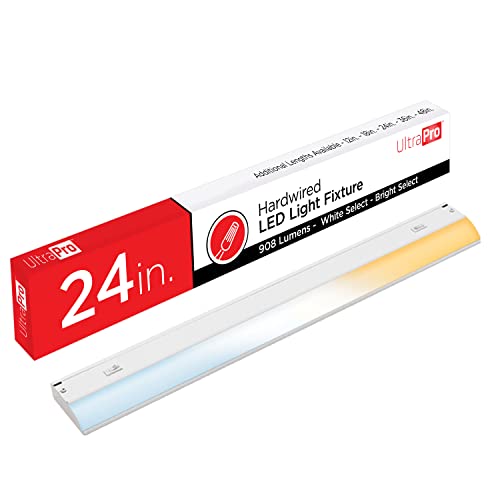
Designed for permanent installation, this bar delivers consistent output across a generous 24‑inch span.
For homeowners who want a set‑and‑forget solution, the UltraPro bars are wired directly into a kitchen circuit. They offer three preset color temperatures—2700K (warm), 4000K (neutral), and 5000K (daylight)—selected via a small slide switch on the fixture. A built‑in dimmer lets you dial the brightness from 10 % to 100 % without a separate controller. The aluminum housing acts as a heat sink, helping the LEDs maintain full output even during long cooking sessions.
Pros:
- Three selectable color temperatures for task‑or‑ambient tuning
- Integrated dimmer with smooth, flicker‑free adjustment
- Sturdy aluminum extrusion resists heat buildup
- Energy‑efficient draw (≈ 8 W) keeps utility costs low
Cons:
- Hardwired installation usually requires an electrician
- Fixed 24‑inch length may need cutting or joining for non‑standard runs
Explore the UltraPro hardwired option
Keeping a backup plan handy
Just as you’d keep a reliable first aid kit on hand for unexpected cuts or burns while cooking, it’s wise to have a spare under‑cabinet light or two stored in a drawer. A compact rechargeable bar like the Rihvy can serve as an emergency backup if your primary hardwired circuit trips. You can find a useful overview of portable safety kits at a durable emergency kit and see what essentials belong in a marine‑grade pack at marine safety essentials.
When planning your lighting layout, think about the total linear footage you need to cover. Measure each cabinet run, add the lengths together, and decide whether a single hardwired bar, a series of rechargeable sticks, or a hybrid approach makes the most sense. For longer spans, consider using a linkable plug‑in system such as the Vovamo bars, which let you daisy‑chain multiple units from a single outlet. If you prefer a completely wireless option, the Ametheus six‑pack offers interchangeable bars that can be repositioned as your storage needs change.
Vovamo Plug‑In Under‑Cabinet Light

Linkable via USB‑C, these bars let you extend illumination across a full counter run without wiring.
The Vovamo solution is ideal for renters who have an outlet nearby but want to avoid drilling or adhesive that could damage finishes. Each 12‑inch bar contains a row of cool‑white (6000K) LEDs and a USB‑C input/output, allowing you to connect up to ten bars in series. A built‑in dimmer responds to a remote control, and the low‑profile clip mounts securely to the cabinet lip.
Pros:
- Linkable USB‑C design simplifies long runs
- Cool white 6000K provides crisp task illumination
- Remote dimmer with ten brightness steps
- Slim clip mounting leaves no visible hardware
Cons:
- Cool white only; no warm‑tone option
- Requires nearby outlet and careful cable management
Hardwired alternatives for larger kitchens
If your renovation includes new wiring, a hardwired approach eliminates the need to manage batteries or cords. The Nicor 18‑inch direct‑wire fixture offers a selectable CCT range from 2700K to 5000K and a dimmer that works with standard wall‑mounted dimmer switches. Its shallow profile (under 1 inch deep) sits flush against the cabinet bottom, minimizing visual intrusion. For a longer run, you can pair two Nicor bars with a short jumper wire supplied in the kit.
See the Nicor selectable CCT model
Choosing the Right Color Temperature for Your Kitchen
A common mistake is picking the brightest daylight setting and then finding the kitchen feels harsh during evening meals. In practice, most cooks prefer a neutral white around 3500K–4000K for food preparation because it renders true colors of vegetables, meats, and spices without adding a yellow or blue cast. For ambient lighting after dinner, shifting to 2700K creates a warm, inviting glow that complements wood tones and stainless steel.
If you opt for a tunable fixture, try this simple workflow: set the light to 4000K while chopping or reading a recipe, then lower it to 2700K when you sit down to eat. Many remotes allow you to save two preset scenes, making the switch a one‑button press.
Installation Tips and Tricks
- Surface preparation: Clean the mounting area with isopropyl alcohol to ensure adhesive bonds last. For magnetic mounts, wipe the cabinet lip dry; any moisture can weaken the hold over time.
- Cable routing: When using plug‑in or linkable bars, run the excess cord along the cabinet’s top edge and secure it with clips designed for low‑voltage wiring. This keeps the countertop clear and prevents snags.
- Testing before final placement: Power the light and hold it in the desired spot for a few minutes. Check for any hot spots on the housing; if it feels unusually warm, consider a model with better heat sinking or reduce the brightness level.
- Future‑proofing: Choose a product that offers a replaceable battery or a modular LED board. That way, if the diodes dim after several years, you can swap the component rather than discard the whole fixture.
Maintenance and Longevity
LED under‑cabinet lights are low‑maintenance, but a few habits extend their life:
- Dust the diffuser monthly with a soft microfiber cloth; built‑up dust can scatter light and make the output appear uneven.
- Avoid spraying cleaning liquids directly onto the lens; instead, apply the cleaner to the cloth first.
- If you notice flickering or uneven brightness, check the connections first—loose USB plugs or corroded terminals are frequent culprits.
- For rechargeable models, store them at about 50 % charge if you won’t use them for a month or more; this preserves battery health.
Link to a helpful guide on maintaining LED fixtures (Energy Star’s lighting maintenance page offers general best‑applies).
Final Thoughts
Under‑cabinet lighting transforms the kitchen from a dim workspace into a well‑lit, inviting hub. Whether you go the rechargeable route for flexibility, choose a plug‑in system for easy expansion, or commit to hardwired fixtures for permanent, flicker‑free performance, the key is matching the light’s characteristics to your actual cooking habits. Measure your runs, think about the color temperature that suits your workflow, and pick a mounting method that matches your DIY comfort level. With the right choice, every chop, stir, and plating session will be lit exactly as you need it.
Ready to brighten your counters? Browse the options above and select the setup that fits your kitchen’s layout and your lighting preferences. A well‑chosen under‑cabinet light not only improves visibility but also adds a layer of sophistication that makes everyday cooking feel a little more special.

Hi, I’m Daniel Brooks—a food lover and kitchen gear enthusiast. I enjoy testing cookware, utensils, and gadgets to see what really works in everyday cooking. At PlugChef.com, I share honest reviews, comparisons, and simple guides to help you choose the best tools for a safer, smarter, and more enjoyable kitchen.
Similar Posts