Under Kitchen Cabinet Power Outlet: Enhance Functionality & Style Effortlessly
Countertop power cords tangled around a blender, a toaster, and a coffee maker create clutter that makes your kitchen feel cramped before you even start cooking. An under-kitchen cabinet power outlet solves this problem at the source — bringing clean, accessible electricity exactly where you need it, without sacrificing a single square inch of countertop real estate.
Whether you're planning a full kitchen renovation or upgrading an existing space, under-cabinet power solutions have evolved well beyond simple wall outlets. Today's options range from hardwired extension boxes to integrated LED lighting bars with USB-C charging ports, dimmable color temperatures, and built-in outlet receptacles. The right setup can transform how you use your kitchen while keeping every cord concealed and every surface clear. For more on this, see our guide on best blenders for smoothies under 100.
This guide covers the major types of under-cabinet power solutions, provides detailed reviews of top-rated products, walks through installation planning, and addresses safety and code compliance so you can make an informed decision with confidence.
Why Under-Cabinet Power Outlets Are Worth Considering
The Problem with Countertop Cords
Standard kitchen outlets are typically mounted on walls at a fixed height, which means cords for countertop appliances — blenders, standing mixers, kettles, rice cookers — drape across work surfaces. In practice, this creates two problems: visual clutter that makes the space feel messy, and genuine safety hazards, especially when cords hang near sinks or stovetops. For more on this, see our guide on kitchen hood cleaning certification online.
Under-cabinet outlets eliminate both issues. Power is delivered directly beneath the cabinet edge where appliances sit, so cords run a few inches rather than several feet. For households where multiple small appliances are used daily, the difference in daily usability is immediate.
Safety and Code Compliance
Electrical installations in kitchens are governed by the National Electrical Code (NEC), published by the National Fire Protection Association. The NEC requires dedicated GFCI-protected outlets for all countertop areas within 6 feet of a sink, specifies minimum circuit ratings, and mandates that all new wiring in kitchens use grounding conductors. For more on this, see our guide on kitchen brushes for cleaning.
When you install an under-cabinet outlet, you are adding a load to an existing circuit. The circuit must be rated for the additional amperage, and the outlet itself must be GFCI-protected if located within the kitchen's wet zone. A licensed electrician can verify that your installation meets local amendments to the NEC, which vary by state and municipality.
Types of Under-Cabinet Power Solutions
Hardwired Outlet Extension Boxes
These are permanent installations connected directly to your home's electrical circuit. They mount inside or beneath the cabinet and route power to a faceplate accessible from the countertop edge. Hardwired extensions are ideal when you need reliable, high-amperage power for dedicated appliances like a stand mixer or espresso machine. For more on this, see our guide on commercial kitchen hood cleaner.
They require a qualified electrician for installation, which means a higher upfront cost, but they deliver a clean, permanent result with no visible cables.
Plug-In Under-Cabinet Lighting with Built-In Outlets
A rapidly growing category that combines task lighting, USB/Type-C charging ports, and standard 3-prong outlet receptacles into a single plug-in unit. These units mount magnetically or with adhesive strips beneath the cabinet and plug into a nearby existing outlet. For more on this, see our guide on industrial kitchen cleaning companies.
They are the most DIY-friendly option, require no electrical work, and can be relocated easily. The trade-off is that the unit itself is visible beneath the cabinet and requires a nearby existing outlet for power.
On-Wall Raceway Systems
Wiremold-style raceway boxes combine a wall-mounted housing with an integrated outlet faceplate. They run along a baseboard or wall below the cabinet and extend a clean, enclosed channel from an existing outlet to the desired location.
These are best suited for kitchens where under-cabinet clearance is limited or where a wall-mounted solution is aesthetically preferable. They cannot route power beneath the cabinet itself.
Integrated Power Strip Track Systems
A newer hybrid category — a 48-inch or longer track mount that holds multiple angled outlet receptacles along its length. These install beneath the cabinet edge and provide power at several points along a long countertop.
They are ideal for kitchens with extensive prep areas where multiple devices need simultaneous access to power.
Top Under-Cabinet Power Outlet Options Reviewed
1. Wiremold Metal Raceway
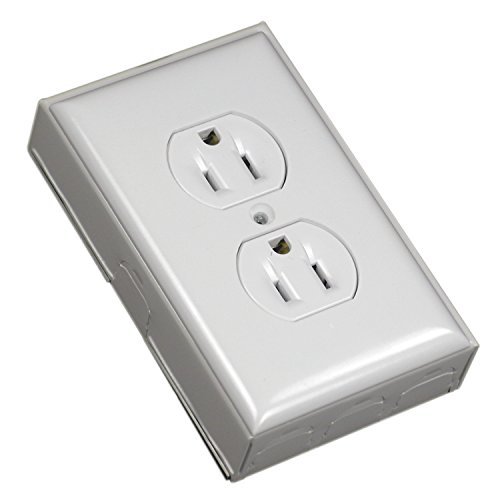
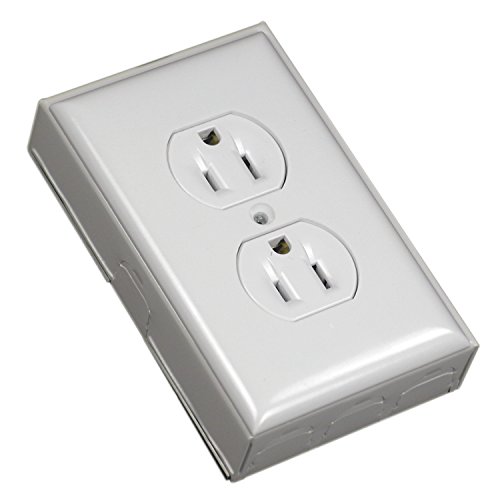
Wiremold Metal Raceway BW2-D — on-wall power extension with integrated outlet box.
Best for: Extending power along walls without opening drywall, especially in older homes where rewiring is impractical.
Specifications:
- White metal construction, wall-mounted
- Houses a standard duplex outlet and junction box
- Fits most standard baseboard heights
What works well: The metal housing is durable and won't flex or deform under the weight of plugs. The white finish blends with most trim and wall colors, so the installation looks intentional rather than improvised. Installation requires only a screwdriver and a drill — no electrical expertise needed if you're mounting to an existing outlet.
Limitations: This is a wall-mounted solution, not an under-cabinet one. It cannot deliver power beneath a cabinet where counter depth limits visibility. It's also not rated for high-draw appliances — if you plan to run a space heater or high-wattage tool from it, you need a dedicated circuit rather than a raceway extension.
Verdict: A practical choice for kitchens where the under-cabinet space is already committed to storage and you need an additional accessible outlet at countertop-adjacent wall height.
View current pricing and availability
2. Legrand Wiremold Outlet Box (NMW2-D)
 Legrand Wiremold NMW2-D — compact 4.75" × 3.0" outlet box for raceway installations.
Best for: Pairing with Wiremold raceway channels to create a complete wall-mounted power extension system.
Specifications:
- Dimensions: 4.75" height × 3.0" width
- Weight: 0.4 lbs
- White finish, designed for use within Wiremold raceway systems
- Compatible with standard 14-12 AWG NM (non-metallic) cable
What works well: At just 0.4 lbs and under 5 inches tall, this box fits comfortably within standard raceway channels without protruding or feeling bulky. The compact form factor means it can be mounted in tight spaces between cabinets and walls. Legrand is a long-established manufacturer in residential electrical components, so the build quality is consistent.
Limitations: Only available in white — if your kitchen trim is painted a color other than white, this box will stand out. It is not compatible with all wire types; it is designed for standard NM cable and may not accommodate armored cable or individual conductors.
Verdict: An excellent companion piece to the Wiremold raceway system. If you're already planning a raceway installation, this is the right box to pair with it.
View current pricing and availability
3. Hikaproligt 18" Plug-In Under Cabinet Lighting with Outlet and USB Ports
 Hikaproligt 18" — plug-in LED bar with 3000K/4000K/5000K dimmable lighting, 2 USB ports, and 3-prong outlet.
Best for: DIY homeowners who want combined lighting, USB charging, and a power outlet under one cabinet in under 30 minutes.
Specifications:
- Length: 18 inches
- Lighting: Dimmable LED, 3000K/4000K/5000K selectable
- Ports: 2 USB + 1 standard 3-prong outlet
- Power: Plug-in, 5 ft cord included
- Installation: No tools required (adhesive or magnetic mount)
What works well: The three selectable color temperatures mean you can warm up the area for cooking tasks and cool down for precision work — all without a separate fixture. The 2 USB ports let you charge a phone and a wireless device simultaneously without pulling a cord from the outlet. At 18 inches, it fits under most standard 24-inch or wider cabinets without overhanging the edge.
Limitations: The 5-foot cord length can be limiting in kitchens where the nearest wall outlet is more than 5 feet from the cabinet. The cord itself becomes visible unless routed behind the cabinet, which requires some planning. The 18-inch length may not cover a long countertop run — you'd need two or three units for full coverage.
Verdict: One of the most practical entry points into under-cabinet power. The lighting, USB ports, and outlet in one compact unit deliver strong value for DIY installers who want results today rather than scheduling an electrician visit.
View current pricing and availability
4. 14" Plug-In Under Cabinet Lighting with USB/Type-C
 14" LED under cabinet bar — 3000K/6000K dimmable, USB + Type-C ports, 5 ft plug-in cord.
Best for: Compact kitchen spaces, closets, and workbenches where full-size under-cabinet bars won't fit.
Specifications:
- Length: 14 inches
- Lighting: Dimmable LED, 3000K/6000K selectable
- Ports: USB + Type-C + standard outlet receptacle
- Power: 5 ft cord, 120V
- Installation: Plug-in or hardwired option
What works well: The inclusion of a USB-C port is a meaningful upgrade — most competing units still rely on legacy USB-A only. The 14-inch length fits under narrower cabinets, in pantry spaces, and around appliance gaps where a full 18" or 24" bar would overhang. The hardwired design option lets you eliminate the cord entirely if you run it through an electrician later.
Limitations: The 6000K cool white setting can feel clinical in a residential kitchen — it's better suited for workshops or utility spaces. The 14-inch coverage is limited; you'd need to pair multiple units for long countertop runs.
Verdict: A strong choice for anyone who uses USB-C devices regularly and needs a compact, effective under-cabinet solution in a small space.
View current pricing and availability
5. 18" Plug-In Under Cabinet Lighting with High/Low Switch
 18" under cabinet bar — 1000LM output, 3000K/4000K/5000K, 2 USB ports, high/low intensity switch.
Best for: Garages, workshops, and kitchen prep zones that demand high task lighting alongside power access.
Specifications:
- Length: 18 inches
- Brightness: 1000 lumens
- Lighting: 3000K/4000K/5000K selectable
- Ports: 2 USB + 1 standard 3-prong outlet
- Power: 5 ft cord, 120V, 3-prong plug
- Switch: High/Low intensity toggle
What works well: 1000 lumens is substantially brighter than most competing 18" under-cabinet bars, which typically output 500–700 lumens. The high/low switch adds a quick way to reduce brightness for tasks where you don't need full task lighting — reading a recipe, inspecting a surface, or setting the mood for dinner preparation. The black finish integrates well with dark cabinetry or workshop settings.
Limitations: The 5-foot cord is the same constraint as other plug-in units. For high-power kitchen appliances like a toaster oven or stand mixer, a dedicated circuit is still preferable to routing through an under-cabinet bar. The cord length may need a power strip extension if the nearest outlet is more than 5 feet away.
Verdict: If your priority is maximum brightness under a cabinet — for workshop use or a well-lit kitchen prep station — this unit delivers.
View current pricing and availability
6. QMTSINEW 14" Plug-In Under Cabinet Lighting
 QMTSINEW 14" — dimmable under cabinet bar with 3000K/6000K, USB + Type-C, 5 ft power cord.
Best for: Cost-conscious buyers who need a reliable, compact under-cabinet bar with modern charging ports.
Specifications:
- Length: 14 inches
- Lighting: Dimmable LED, 3000K/6000K selectable
- Ports: USB + Type-C + 1 standard outlet
- Power: 5 ft cord, 120V
- Installation: Plug-in, adhesive mount
- Finish: White
What works well: At the lower end of the price range for this feature set, the QMTSINEW 14" delivers the same core functionality — dimmable multi-temperature LEDs, USB-C charging, and a standard outlet — in a 14-inch footprint. The white finish blends with most light-colored cabinets. Installation requires no tools and takes minutes.
Limitations: Only available in white, so it won't match dark cabinetry without some visual contrast. The 14-inch length limits coverage for longer countertops. Requires a power outlet within 5 feet of the mounting location.
Verdict: A dependable entry-level option that covers the essentials without premium pricing.
View current pricing and availability
7. Task Lighting Under-Cabinet Angled Power Strip Track (48")
 Task Lighting 48" angled track — 5 outlet receptacles, bronze finish, compact under-cabinet mount.
Best for: Kitchens with long countertop runs that need multiple power access points along their length.
Specifications:
- Length: 48 inches
- Outlets: 5 angled receptacles
- Finish: Bronze
- Installation: Under-cabinet mount
- Manufacturer: Task Lighting Corp.
What works well: Five outlets in a single 48-inch unit is exceptional — no other under-cabinet solution provides that many access points in one installation. The angled receptacles mean plugs sit at a natural angle, reducing strain on cords and making connection easier. The bronze finish adds visual interest and complements kitchens with warm or industrial design elements. At 48 inches, this unit covers a significant portion of a standard kitchen counter in a single pass.
Limitations: Installation may require a licensed electrician for proper circuit connection, especially if the track is hardwired rather than plug-in. The bronze finish is distinctive and may not suit kitchens with all-white or all-neutral palettes. The five-outlet capacity means this unit draws meaningful current — verify your circuit can handle the load before installing.
Verdict: The best option for anyone who wants to consolidate multiple outlets into a single under-cabinet installation. If your kitchen counter runs long and you keep adding extension cords, this is the product that replaces them.
View current pricing and availability
8. ASD LED Under Cabinet Lighting with Power Outlet (24")
 ASD 24" LED under cabinet — 822 lumens, 12W, 3000K/4000K/5000K, ETL listed, one power outlet.
Best for: Kitchen renovations where a permanent, clean install is preferred and professional electrical work is acceptable.
Specifications:
- Length: 24 inches
- Power: 12W, 822 lumens
- Lighting: 3000K/4000K/5000K selectable
- Ports: 1 standard power outlet (no USB)
- Power: Hardwired, ETL listed
- Finish: White
- Note: No on/off switch included
What works well: 24 inches of coverage with 822 lumens at only 12 watts delivers efficient task lighting for a full kitchen cabinet run. The ETL listing means this unit has been independently tested and meets recognized safety standards — a meaningful distinction in the under-cabinet lighting market where many competing products lack third-party verification. The hardwired design produces the cleanest possible visual result: no visible cord, no adapter, no plug.
Limitations: No on/off switch means you need an external wall switch or smart home integration to control the light — a small planning consideration. Hardwired installation requires an electrician for most homeowners. The absence of USB ports means you'd need a separate USB power solution for device charging.
Verdict: For renovation projects where the end result matters and professional installation is already on the table, this unit delivers clean, efficient lighting with a practical outlet — all in a single hardwired fixture.
View current pricing and availability
9. BLS T01L LED Closet/Under-Cabinet Light (Motion Sensing)
 BLS T01L — 20-LED motion-sensing under cabinet light, battery or DC powered, adjustable beam.
Best for: Pantries, closets, and secondary under-cabinet areas where you want hands-free lighting without any electrical work.
Specifications:
- LEDs: 20 super-bright LEDs
- Power: Battery or DC input
- Sensor: Motion sensing + light sensor (ambient auto-off)
- Beam: Adjustable direction and spread
- Control: Auto on/off
- Construction: Plastic housing
What works well: The combination of motion sensing and ambient light detection means this light turns on when you walk into a dark pantry or closet and turns off automatically when you leave — no switches to hunt for. The adjustable beam lets you aim the light exactly where you need it rather than casting it flat across the surface below. Battery power means you can install this anywhere without worrying about circuit proximity.
Limitations: Battery dependency means periodic replacement, especially in high-use areas. The plastic construction doesn't match premium cabinetry aesthetics. Not rated for wet environments — don't install near sinks or outside. The light output is adequate for navigation and basic tasks but not for precision work.
Verdict: A practical, zero-electrical-work solution for secondary spaces. If you need under-cabinet power with a standard outlet, this unit won't provide that — but for ambient lighting in a pantry or closet where a cord isn't practical, it works well.
View current pricing and availability
10. Cantalop Cable Management Box (Rattan)
 Cantalop rattan cable box — 13" × 5.1" × 5.1", 2 open slots, 0.6 lbs, for under-desk cord organization.
Best for: Tidying up the visible cable run between an under-cabinet outlet and nearby appliances or devices.
Specifications:
- Dimensions: 13" × 5.1" × 5.1"
- Weight: 0.6 lbs
- Material: Natural rattan
- Slots: 2 open cord access slots
- Patent: Pending
What works well: A neat cable management box placed under or beside a counter helps route and conceal the cables that connect to your under-cabinet outlets. The natural rattan material adds warmth and texture that softens the visual weight of power cords. The two open slots give you quick access to plug or unplug devices without lifting a lid or opening a box. At 0.6 lbs, it's lightweight and easy to reposition.
Limitations: The 13-inch length may not accommodate longer power strips or multiple bulky adapters. The natural color may not match kitchens with dark or modern cabinetry. This is not an outlet — it's a cable organization accessory that works in conjunction with under-cabinet power solutions.
Verdict: A thoughtful addition if your under-cabinet setup produces visible cords. It doesn't solve the power access problem, but it addresses the aesthetic side of the cable management challenge.
View current pricing and availability
Installation Guide: From Planning to Plug-In
Tools and Materials You'll Need
Before you begin, gather the appropriate tools for your chosen installation type:
For plug-in under-cabinet units:
- The under-cabinet lighting/outlet unit
- Adhesive mount strips or magnetic base (usually included)
- Level (to ensure straight mounting)
- Soft cloth for surface cleaning
For hardwired installations:
- Drill and appropriate bits
- Stud finder
- Wire nuts, electrical tape
- Voltage tester
- Circuit breaker access
- GFCI tester
- Licensed electrician (strongly recommended)
Step-by-Step Installation Process
Step 1: Plan your location. Measure the cabinet base to confirm clearance. Check that your chosen unit's length fits without overhanging. Identify the nearest existing outlet and measure the distance — the cord must reach without running across a stove, sink, or walkway.
Step 2: Identify your circuit. For hardwired installations, have an electrician confirm the circuit has adequate capacity. A kitchen circuit with a refrigerator, dishwasher, and multiple countertop appliances may already be near its 20-amp limit. Adding a dedicated under-cabinet circuit is often the safest approach for hardwired permanent installations.
Step 3: Prepare the mounting surface. Clean the underside of the cabinet base thoroughly. Remove dust, grease, and adhesive residue. Plug-in units rely on adhesive bond strength, and surface contamination is the most common reason mounting strips fail.
Step 4: Mount the unit. Follow the manufacturer's specific instructions. For adhesive mounts, apply strips, press firmly for 30–60 seconds, and allow the adhesive to cure before applying any weight. For hardwired units, an electrician will secure the junction box, connect wiring, and attach the fixture.
Step 5: Route the cord (plug-in units). Guide the cord behind the cabinet back or through a small drilled clearance hole — never across the front face where it's visible. Use a cable management accessory like the rattan organizer above if visible runs remain.
Step 6: Test and secure. Plug in, test all outlets and ports, verify the light switches function, and confirm the unit is firmly mounted before relying on it for daily use.
Common Mistakes to Avoid
A few errors trip up even experienced DIYers:
- Ignoring GFCI requirements. If your under-cabinet outlet is within the kitchen wet zone (typically within 6 feet of a sink), it must be GFCI-protected. Check your local code — some jurisdictions apply this more broadly than the NEC minimum.
- Overloading a circuit. Plugging a stand mixer, toaster oven, and coffee maker into a single under-cabinet outlet that feeds a 15-amp circuit can trip the breaker or create a heat hazard. Calculate total draw before connecting multiple high-wattage appliances.
- Poor cord routing. Cords run across cabinet edges, near stovetops, or through water spray zones create trip and scald hazards. Plan the path before you install.
- Skipping surface preparation. Adhesive mounts fail far more often due to dirty or greasy cabinet bases than due to weak adhesive. Clean with isopropyl alcohol and let dry fully.
Choosing the Right Outlets and Lighting for Your Space
Assessing Your Power Needs
Before you buy, take inventory of the appliances that live on or near your counters:
| Appliance | Typical Wattage | Amperage Draw (120V) |
|---|---|---|
| Coffee maker / espresso machine | 800–1500W | 6.7–12.5A |
| Stand mixer | 300–600W | 2.5–5A |
| Toaster | 800–1000W | 6.7–8.3A |
| Blender | 300–1200W | 2.5–10A |
| Electric kettle | 1000–1500W | 8.3–12.5A |
| Rice cooker | 500–1200W | 4.2–10A |
| Phone/tablet charger (USB) | 5–25W | 0.04–0.21A |
If your total concurrent draw approaches 15 amps, you need a dedicated circuit rather than adding to an existing kitchen circuit. A licensed electrician can evaluate your panel and recommend the correct circuit configuration.
Matching Style to Your Kitchen Design
Under-cabinet power and lighting units come in a limited color palette — mostly white, black, and bronze — so coordinate with your cabinetry:
- Light or white cabinets: White finish under-cabinet units blend seamlessly and disappear into the background.
- Dark or stained wood cabinets: Black finish units complement the cabinetry without visual contrast.
- Industrial or vintage kitchens: Bronze or metallic finishes add visual interest and match hardware finishes.
- All-modern palettes: Matte black or brushed nickel under-cabinet fixtures maintain a clean aesthetic.
LED vs. Traditional Lighting Under Cabinets
LED technology has displaced halogen and fluorescent under-cabinet fixtures for good reasons:
- Longer life: Quality LEDs rated for 25,000–50,000 hours versus 2,000–5,000 hours for halogen
- Lower heat: LEDs emit minimal infrared heat, which matters when mounted near food storage or flammable materials
- Energy efficiency: LEDs consume 60–80% less energy than equivalent halogen outputs
- No warm-up time: LEDs reach full brightness instantly, unlike some fluorescent fixtures
- Dimmability: Most modern LED under-cabinet bars support full or partial dimming, a feature that's inconsistent in older fluorescent or halogen fixtures
If you're considering ENERGY STAR certified products, check that the under-cabinet unit carries the ENERGY STAR mark for lighting — this confirms independently verified energy performance and light output ratings.
Safety Tips and Code Compliance
GFCI Protection
All outlets in kitchens within 6 feet of a sink must be GFCI-protected per NEC 210.8(A)(7). This includes under-cabinet outlets if they fall within that zone. A GFCI trips when it detects current leakage (typically 4–6 mA), cutting power before a dangerous shock occurs. For hardwired under-cabinet outlets, the GFCI is either a dedicated GFCI breaker in your panel or a GFCI receptacle wired into the circuit.
Ground Fault and GFCI Testing
Before relying on any new under-cabinet outlet for daily use, test the GFCI function: press the TEST button on the GFCI receptacle — the outlet should lose power. Press RESET — power should return. If the GFCI doesn't trip or doesn't reset properly, the receptacle or breaker needs replacement.
Circuit Capacity
A typical kitchen countertop circuit is rated at 20 amps. If your under-cabinet outlet shares a circuit with a refrigerator, dishwasher, and other appliances, you may be approaching or exceeding the safe load. Have an electrician verify your circuit capacity before adding a permanent under-cabinet outlet, especially for high-draw appliances like espresso machines or stand mixers.
Clearance and Ventilation
Under-cabinet units with integrated LED lighting must maintain the clearance specified by the manufacturer — typically a few inches from the cabinet base to the surface below. Restricting airflow can cause the electronics to overheat, reducing lifespan or triggering thermal shutdown. Check the product manual for minimum clearances.
Professional Installation for Hardwired Units
Hardwired under-cabinet outlets require electrical work — drilling into cabinets, routing cables, connecting junction boxes, and securing GFCI protection. These tasks are not difficult for trained electricians but carry real risk for untrained homeowners: exposed wiring, incorrect circuit connections, and ungrounded installations can create fire and shock hazards. For hardwired permanent installations, hiring a licensed electrician is the correct choice, not a DIY project.
Maintenance and Longevity
Under-cabinet power and lighting units require minimal maintenance, but a few practices extend their service life:
- Dust and debris accumulation. The narrow gap beneath a cabinet traps grease, dust, and crumbs. Wipe the underside of the cabinet and the top of the under-cabinet unit with a damp cloth every few weeks to prevent buildup that can overheat electronics.
- Cord and plug condition. Inspect power cords every 6 months for fraying, kinking, or heat discoloration. Replace a damaged cord immediately — never tape over a worn cord.
- Adhesive mount check. For plug-in adhesive-mounted units, gently test that the unit is still firmly attached every few months. If you notice movement, remove the unit, clean both surfaces, and reapply fresh adhesive strips.
- LED replacement. Most quality LED under-cabinet bars use integrated LED strips that are not individually replaceable — if the LED output dims significantly over time, the entire unit should be replaced. This typically happens after 10+ years of regular use.
- Outlet testing. Periodically test that each outlet receptacle is delivering power and that the GFCI function still operates correctly. A faulty outlet in an under-cabinet location can go unnoticed for months — a simple outlet tester makes this a 30-second check.
Frequently Asked Questions
How Do Under-Cabinet Power Outlets Work?
Under-cabinet power outlets deliver electricity to a concealed location beneath your kitchen cabinets, bringing power access directly to countertop-level appliances without visible cords stretching across work surfaces. They come in two primary configurations: hardwired units that connect directly to your home's electrical circuit via a junction box inside the cabinet, and plug-in units that mount beneath the cabinet and draw power from a nearby existing wall outlet via a cord. Many modern plug-in units integrate LED task lighting, USB/Type-C charging ports, and standard 3-prong receptacles into a single compact fixture. The electrical fundamentals are the same as any wall outlet — the advantage is purely in placement, routing, and convenience.
What Are the Benefits of a Wiremold Metal Raceway?
Wiremold metal raceway systems extend power along walls using a durable, enclosed metal channel that houses the cable and terminates in an integrated outlet box. Their primary advantage is that they add accessible power to a wall surface without opening drywall or chasing through studs — a critical benefit in older homes where running new wire is impractical. The metal construction is rigid, fire-resistant, and visually clean, and the white finish blends with most trim and wall colors. The main limitation is that they deliver power at wall height, not beneath the cabinet itself. For kitchens where under-cabinet clearance is tight, a wall-mounted raceway can complement (but not replace) a true under-cabinet outlet solution.
Can Under-Cabinet Lights Be Dimmed?
Yes — most modern LED under-cabinet bars offer dimmable lighting that lets you adjust brightness from task-level output down to ambient glow. Many units also support selectable color temperature across 3000K (warm white), 4000K (neutral white), and 5000K (cool white) — or a simpler 3000K/6000K range. The dimming function is typically controlled via a button on the unit itself, a small remote, or an external wall switch. For hardwired installations without an integrated switch, you'll need a dimmer switch wired into the circuit or smart home integration to control brightness. Always verify that the dimmer you use is rated for LED loads — older incandescent dimmers can cause flickering or reduce LED lifespan significantly.
Why Choose Under-Cabinet Outlets With USB Ports?
USB ports integrated into under-cabinet outlets let you charge smartphones, tablets, wireless earbuds, and other USB-powered devices directly from the fixture without pulling a cord from a standard receptacle or adding a separate USB power adapter. USB-C ports — now standard on many newer units — support fast charging protocols that legacy USB-A ports cannot match. The practical benefit is eliminating the plug adapter clutter that accumulates on countertops: instead of two phone chargers taking up two of your three standard outlet receptacles, you plug in two USB cables and free up the receptacles for kitchen appliances.
Are Plug-In Under-Cabinet Lights Easy to Install?
Yes — plug-in under-cabinet units are designed for tool-free or minimal-tool installation. Most use adhesive strips or magnetic mounts that adhere to the cabinet base without drilling. The typical process: clean the mounting surface, apply the adhesive or magnet base, attach the light unit, plug it in, and test. The entire process takes 10–20 minutes for a single unit. The only consideration is cord routing — plan a path for the cord that avoids stovetops, sink spray zones, and visible front faces. For kitchens where the nearest wall outlet is more than 5 feet from the cabinet, the included cord may be insufficient and you'll need a short extension.
What Is the Advantage of Cable Management Boxes?
Cable management boxes organize and conceal the cords that connect under-cabinet outlets to nearby devices. An under-cabinet outlet eliminates long visible cord runs, but the remaining cable segments — between the outlet and a blender, a coffee maker, a router, or a laptop charger — can still look untidy if they trail across the counter or down the cabinet face. A cable management box placed under or beside the counter captures these short runs in a single contained space, typically with open slots for plug access. The result is a visually clean countertop and a tidier under-cabinet area where the power equipment actually sits.
Do I Need an Electrician for Under-Cabinet Outlet Installation?
It depends on the installation type. Plug-in under-cabinet lighting and outlet units do not require an electrician — they mount with adhesive or magnets and plug into an existing wall outlet. Hardwired under-cabinet outlets, however, involve permanent electrical connections: routing cable into the cabinet, connecting a junction box, verifying GFCI protection, and ensuring the circuit has adequate capacity. Hardwired installations should be performed by a licensed electrician. If you're unsure whether your specific installation qualifies as hardwired, check the product's instructions or consult with a local electrician before beginning.
How Many Outlets Do I Need Under My Cabinets?
The answer depends on your counter length and appliance density. A practical guideline: one under-cabinet power access point per 36–48 inches of countertop where small appliances are used regularly. A kitchen with a 10-foot counter that runs a coffee maker, toaster, blender, and kettle simultaneously may need two or three under-cabinet outlet units or a single long multi-outlet track like the 48-inch angled power strip. Always verify total concurrent wattage against your circuit's amperage rating — exceeding it risks breaker trips or heat hazards.
Conclusion
An under-kitchen cabinet power outlet is one of the highest-impact, lowest-cost upgrades you can make to your kitchen's daily usability. By moving power access beneath the cabinet where your appliances actually sit, you eliminate cord clutter, reduce trip and scald hazards near sinks and stovetops, and reclaim precious countertop surface for food preparation.
The choice between plug-in LED-and-outlet combos, hardwired permanent fixtures, on-wall raceway systems, and multi-outlet track systems comes down to your kitchen layout, your appliance load, and whether you're comfortable with a DIY install or prefer a professional electrician. Whichever path you choose, the fundamentals remain the same: plan your circuit capacity first, confirm GFCI compliance for any outlet near a sink, and prioritize clean cord routing from day one.
Start by auditing your current countertop — count the appliances, measure your counter length, and identify the power gaps that create clutter. From there, match the right under-cabinet solution to your specific space. A well-chosen under-cabinet outlet doesn't just solve a cord problem — it changes how your kitchen feels to use, every single day.

Hi, I’m Daniel Brooks—a food lover and kitchen gear enthusiast. I enjoy testing cookware, utensils, and gadgets to see what really works in everyday cooking. At PlugChef.com, I share honest reviews, comparisons, and simple guides to help you choose the best tools for a safer, smarter, and more enjoyable kitchen.
Similar Posts