Under Cabinet Kitchen Lighting Battery Operated: Illuminate Your Space Effortlessly
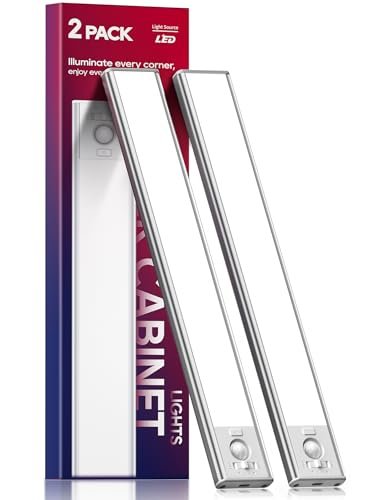
Battery‑operated under‑cabinet lighting has become a go‑to solution for homeowners and renters who want a brighter kitchen without the cost and disruption of new wiring. In 2026, advances in LED efficiency, rechargeable cell chemistry, and motion‑sensor intelligence make these fixtures more practical than ever. This article walks through the key decisions, from power type and brightness to mounting and placement, so you can choose a setup that fits your routine and your space.
Why Battery‑Operated Under Cabinet Lighting Makes Sense in 2026
Hardwired under‑cabinet fixtures still have their place, but battery‑operated models eliminate the need for an electrician, drill holes, or visible conduit. They’re ideal for retrofit projects, rental units, or temporary installations where permanence isn’t an option. LED technology means these lights sip power rather than drain it; a typical 3200 mAh rechargeable cell can deliver 20–30 hours on high brightness and 50+ hours on dimmed settings, according to manufacturer data. Motion‑sensor models further extend battery life by activating only when movement is detected, a feature that can reduce daily usage by 40 % or more in busy kitchens. For anyone who values flexibility—repositioning lights seasonally, moving them to a different cabinet, or stowing them entirely—battery operation is the most pragmatic choice. For more on this, see our guide on best blenders for smoothies under 100.
energy.gov provides official guidance on LED efficiency and the energy‑saving benefits of dimmable, sensor‑activated fixtures, reinforcing why battery‑operated options align with current sustainability goals.
Key Features That Actually Matter
Motion Sensors
Motion‑sensor lights use passive infrared (PIR) detection to trigger illumination when someone enters the beam’s range, typically 6–18 inches from the fixture. Detection angles vary; a 120° arc covers most under‑cabinet widths, while narrower angles avoid false triggers from hallway traffic. Some models include a daylight Harvesting function that keeps the light off when ambient light is already sufficient. In practice, a well‑calibrated sensor turns on as you pull open a cabinet door and fades out 30–60 seconds after you leave, saving battery without sacrificing convenience. For more on this, see our guide on kitchen hood cleaning certification online.
Dimmability & Brightness Control
Dimmable fixtures offer step‑less or 3‑level adjustment, letting you tailor output from 100 lm for ambient glow to 500 lm for task‑oriented food prep. Step‑less dimming, often controlled by a touch strip or rotary dial, provides finer granularity and is preferred by users who transition from bright cooking light to soft evening ambiance without switching fixtures. When shopping, look for a CRI (color rendering index) of 90 or higher; this ensures that whites look crisp and food colors appear natural under the light, which is especially important for tasks like chopping vegetables or reading recipes.
Rechargeable vs Replaceable Power
Rechargeable units typically feature a USB‑C or micro‑USB port, an indicator LED, and a battery life rated between 20 and 80 hours depending on brightness. Many come with a 3200 mAh cell that fully recharges in 3–5 hours. Replaceable‑battery models use AA or AAA cells; they’re easier to “top up” on the spot but generate more waste over time and can become costly if you go through packs frequently. A hybrid approach—rechargeable main units with a spare battery pack for uninterrupted use—is a practical middle ground for households that run lights 8+ hours daily. For more on this, see our guide on kitchen brushes for cleaning.
Color Temperature & CRI
Color temperature is measured in kelvins (K). 2700K produces a warm, incandescent‑like glow that suits relaxed dining; 4000K is neutral and works well for general kitchen tasks; 5000K leans cool and can make spaces feel crisper but may feel harsh for some users. A CRI of 90+ renders reds and greens more accurately, which matters if you frequently check ingredient freshness or food doneness. Many modern fixtures offer switchable color temperatures (e.g., 3000K/4000K/5000K) via a small dial or remote, giving you the flexibility to adapt the light to the time of day or specific activity.
Installation & Placement That Works
Measuring & Surface Prep
Start by measuring the underside of your cabinets from wall to edge, noting any obstructions like range hoods or plumbing. Clean the mounting surface with isopropyl alcohol to remove grease; a dry, grease‑free laminate or wood panel gives adhesive the best bite. For textured surfaces like tile or heavily grained wood, lightly sanding the area and applying a primer‑style adhesive promoter can prevent the light from sagging after a few months. For more on this, see our guide on commercial kitchen hood cleaner.
Positioning Guidelines
Mount lights 2–3 inches from the cabinet front edge. This placement keeps the beam directed onto the countertop while leaving enough room for cabinet doors to close without hitting the fixture. If using a light bar, center it width‑wise and space multiple pucks 12–18 inches apart to avoid shadows. For corner installations, aim the beam diagonally across the counter rather than straight down, which reduces hot spots and provides more even coverage.
Renter‑Friendly Options
Adhesive‑backed strips with industrial‑strength double‑sided tape are the most common no‑drill solution. Look for products rated for at least 1 kg per 10 cm of length. If you’re concerned about residue, choose a removable gel pad that can be reheated with a hair dryer to release without damaging the finish. Some magnetic strip systems allow you to snap lights onto a pre‑installed metal bracket, then pull them off entirely when you move—no adhesive, no patches. For more on this, see our guide on industrial kitchen cleaning companies.
Power Management & Battery Life Expectations
Charging Routines
Most rechargeable fixtures include a built‑in indicator: a red light while charging, green when full. Establish a simple routine—e.g., charge every two weeks if used heavily, monthly for light use. Avoid letting the cell drain to 0 % on a regular basis; lithium‑ion cells hold more cycles when kept between 20 % and 80 % charge. If your model supports pass‑through power, you can leave it plugged in continuously without overcharging, though turning it off during prolonged absences (vacations, work trips) further conserves battery health.
Interchangeable Packs
For kitchens where lights run 4+ hours daily, a spare rechargeable battery pack means you can swap in a fully charged unit while the other charges—no downtime. Some brands sell additional cells separately; others use a proprietary dock that charges up to four lights simultaneously. Weigh the upfront cost against the convenience of never hunting for dead batteries mid‑prep.
Energy‑Saving Modes
Beyond motion activation, many 2026 models include a “dim‑down after delay” feature: the light stays at full brightness for 1 minute, then gradually reduces to 20 % over the next 5 minutes before turning off. This hybrid approach preserves enough light to locate items while dramatically extending battery life. Others offer a “low‑power mode” that caps output at 150 lm, suitable for overnight hallway use or early‑morning risers.
Design, Brightness & Light Quality
Lumens Explained
Lumen output is the most direct measure of perceived brightness. For under‑cabinet task lighting, 200–400 lm per fixture is typical; a 2‑pack with 300 lm each delivers sufficient illumination for chopping and reading without overwhelming the space. Higher outputs (500 lm+) are available but may create glare on glossy countertops. Beam angle also matters: a 120° spread covers a wider area but with less intensity at the edges, while a 60° narrow beam offers brighter concentrated light, ideal for focused prep zones.
Form Factors
Puck lights (≈3‑inch diameter) are discrete and excellent for targeted spots. Light bars (½‑inch wide, 12–24 inches long) provide even wash across longer counters and often include integrated dimmers. Slim strip lights (≈0.3‑inch thick) can be tucked into very tight gaps—under shallow cabinets or along toe kicks—and are frequently bendable to follow curved edges. Choosing a form factor depends on your cabinet height, the depth of your overhang, and whether you prefer a concentrated pool of light or a broad, uniform wash.
Common Design Touches
Magnetic mounting strips let you slide lights on and off a metal rail without tools, a favorite among users who rearrange their kitchen layout seasonally. Timer functions, accessible via a physical dial or Bluetooth app, can be set to turn lights off after 2, 4, or 8 hours—handy for preventing forgotten‑on fixtures. Some models include a “memory” function that recalls your last brightness and color‑temperature setting, so you don’t have to re‑adjust each time.
Common Mistakes & How to Avoid Them
In practice, a common mistake is placing lights too far back against the cabinet wall, which casts shadows directly onto the countertop where you’re working. Position them toward the front edge for even illumination.
Choosing brightness based on lumen equivalent alone without checking CRI can leave food colors looking flat. A 400 lm light with CRI 95 will render tomatoes and greens more vividly than a 500 lm light with CRI 80.
Overlooking recharge intervals in high‑usage households often leads to dim, unreliable lighting right when you need it most. Set a calendar reminder or choose a model with a “low‑battery alert” that flashes when charge drops below 15 %.
Using adhesive on textured laminate without primer is another frequent issue. The bond may hold initially but weaken as the adhesive cures and expands/contracts with kitchen heat. A quick sand and alcohol wipe, or a purpose‑built promoter, prevents peeling after a few months.
Maintenance & Long‑Term Care
Cleaning
Dust and grease can accumulate on the light’s surface, reducing lumen output over time. Use a dry microfiber cloth weekly; for greasy buildup, slightly dampen the cloth with water (avoid spraying directly on the fixture) and wipe gently. Never use abrasive cleaners or solvents on the lens, as they can scratch the diffuser and scatter light unevenly.
Adhesive Refresh
If a light begins to pull away, the adhesive may have lost its grip. Remove the fixture, clean both the mounting surface and the back of the light with isopropyl alcohol, and apply fresh double‑sided tape or a new gel pad. For magnetic systems, check that the metal rail is free of debris; a quick wipe restores full holding strength.
Battery Health
Avoid storing spare batteries in extreme heat (above 35 °C) or cold (below 0 °C) for extended periods, as this degrades capacity. If you won’t use the lights for several months, discharge the cells to roughly 50 % before storing, and check them every three months to top up if needed. Most rechargeable cells retain 80 % of original capacity after 300–500 charge cycles, so plan to replace the internal cell after 2–3 years of regular use.
Frequently Asked Questions
How Do Motion Sensor Lights Work?
Motion sensor lights detect movement using infrared sensors. When motion is detected, the light turns on automatically. This feature is energy efficient and convenient for high‑traffic areas. It ensures hands‑free operation and is ideal for under cabinet lighting in kitchens and closets.
Are Battery‑Operated Lights Reliable?
Battery‑operated lights are highly reliable and versatile. They offer flexibility in placement, without wiring constraints. With rechargeable batteries, these lights are cost‑effective and environmentally friendly. They provide consistent illumination, making them perfect for areas where traditional wiring is challenging.
Can I Adjust Brightness On LED Lights?
Yes, most LED lights have adjustable brightness settings. Dimmable features allow you to customize the light intensity. This is beneficial for creating the desired ambiance. It also helps in conserving battery life, making the lights more efficient for daily use.
How Do Rechargeable Lights Save Energy?
Rechargeable lights save energy by reducing the need for frequent battery replacements. They utilize built‑in rechargeable batteries, which can be charged via USB. This reduces waste and is cost‑effective. It's an eco‑friendly solution for maintaining consistent lighting in kitchens and closets.
What Is The Advantage Of Stick‑On Lights?
Stick‑on lights offer convenience and flexibility. They can be installed anywhere without tools, making them ideal for quick setups. Their adhesive backing ensures easy attachment to surfaces. This feature is perfect for under cabinet lighting, providing illumination where traditional fixtures are impractical.
Conclusion
Choosing the right under cabinet kitchen lighting can enhance your space effectively. Battery‑operated options offer ease and flexibility. They brighten up your kitchen without complex installations. The motion sensor feature saves energy and makes lighting convenient. Rechargeable models mean fewer battery replacements and longer use.
Dimmable lights let you adjust brightness based on needs. Magnetic designs ensure easy attachment and removal. Various options cater to different preferences. Some lights come with remote controls for effortless management. For those needing color variation, certain lights offer adjustable color temperatures.
These lights are suitable for kitchens, closets, and more. With numerous styles available, finding the right fit is simple. Under cabinet lighting can transform your kitchen into a welcoming and functional area. Consider your lighting needs, and select a model that fits your lifestyle.
Enjoy the practical benefits of battery‑operated lighting today. Your kitchen deserves a touch of brightness and elegance. If you're ready to refresh your kitchen, start by measuring your cabinet overhang and noting whether you prefer motion activation or a manual switch — then match the form factor to your daily routine.

Hi, I’m Daniel Brooks—a food lover and kitchen gear enthusiast. I enjoy testing cookware, utensils, and gadgets to see what really works in everyday cooking. At PlugChef.com, I share honest reviews, comparisons, and simple guides to help you choose the best tools for a safer, smarter, and more enjoyable kitchen.
Similar Posts