Reverse Osmosis Under Kitchen Sink: Discover Ultimate Water Purification Systems
Understanding the Core Technology
Reverse osmosis (RO) is not just a filter; it is a physical separation process that forces water through a semi-permeable membrane. While standard sediment or carbon filters catch large particles and chemicals, an RO system targets dissolved solids, heavy metals, and micro-pollutants that pass through traditional filtration. The "under-sink" designation refers to the compact housing that fits into the cabinet space beneath your kitchen faucet, keeping your countertop clear while delivering purified water directly to your tap.
The system typically involves a multi-stage process:
- Sediment Pre-Filter: Traps sand, rust, and particulates to protect the membrane.
- Carbon Pre-Filter: Absorbs chlorine, which can degrade the RO membrane.
- RO Membrane: The heart of the system, rejecting up to 99% of total dissolved solids (TDS), including lead, arsenic, and nitrates.
- Post-Carbon Filter: Polishes the water for better taste and odor.
- Storage Tank & Faucet: Stores the purified water for on-demand access.
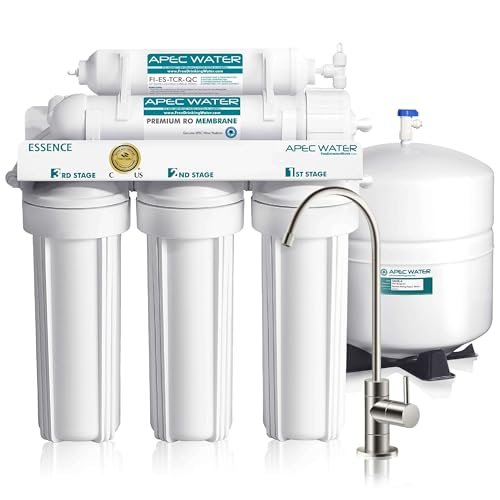
 Visualizing how water passes through sediment, carbon, and membrane stages for purity.
Why Choose an Under-Sink RO System?
Many homeowners hesitate to install RO systems due to perceived complexity or space constraints. In practice, under-sink units are among the most efficient ways to upgrade your water quality without major renovations. They eliminate the need for bulky countertop units or bottled water subscriptions, which can become expensive over time.
Key benefits include:
- Space Efficiency: The tank and housing tuck away in the cabinet, preserving valuable counter space.
- Superior Contaminant Removal: Unlike point-of-use carbon filters, RO addresses dissolved chemicals and minerals that affect taste and health.
- Cost Savings: While the initial cost is higher than a simple faucet filter, the per-gallon cost is significantly lower than buying bottled water.
- Customization: You can choose between tanked and tankless designs, with or without UV or alkaline mineral stages.
Top Rated Under-Sink Reverse Osmosis Systems in 2026
Selecting the right system depends on your household size, water usage, and specific water quality concerns. Below are detailed reviews of top-performing models currently available.
APEC Water Systems ROES-50 Essence Series
The APEC ROES-50 is a benchmark for entry-level RO systems. It is particularly well-suited for households in areas with questionable municipal water quality, offering robust protection against lead, chlorine, and bacteria. The system is known for its straightforward installation and annual filter replacement schedule, which simplifies long-term maintenance.
Pros:
- 5-stage filtration for comprehensive contaminant removal.
- WQA Gold Seal certification for safety and performance.
- Compact design fits most standard cabinet dimensions.
- Clear installation instructions reduce setup errors.
Cons:
- Requires basic plumbing knowledge for shutoff valve installation.
- Filter replacement costs can accumulate over several years.
The APEC ROES-50 fits neatly into standard under-sink cabinets.
For those looking to verify product specifications or explore current pricing for this model, you can view the product details.
iSpring RCC7: High-Capacity Performance
The iSpring RCC7 is a favorite for larger families or those with high daily water consumption. With a capacity of 75 gallons per day (GPD), it ensures you rarely run out of filtered water. The system is NSF certified, which adds a layer of trust in its performance standards. The patented top-mounted faucet design simplifies installation, often allowing DIY setups without professional help.
Pros:
- High daily output (75 GPD) handles busy households.
- NSF certification for verified performance.
- Durable brushed nickel faucet resists corrosion.
- Removes over 1,000 contaminants, including fluoride and heavy metals.
Cons:
- Requires adequate cabinet space for the tank and housing.
- Regular filter maintenance is necessary for peak performance.
 The iSpring RCC7 offers a sleek, modern faucet that complements contemporary kitchens.
You can explore the iSpring RCC7 to check current availability.
FS-TFC 5-Stage Fast Flow System
The FS-TFC system prioritizes speed, offering a 100 GPD flow rate. This is ideal for users who dislike waiting for water to filter. The package includes four extra filters, extending the initial lifespan of the system and reducing the frequency of replacements. It is a cost-effective choice for those who want value and performance.
Pros:
- Fast flow rate reduces wait time.
- Includes bonus filters for extended usage.
- Compact design suitable for smaller cabinets.
- Effective removal of chlorine, lead, and sediments.
Cons:
- May require professional assistance if your plumbing setup is complex.
- Ongoing filter replacement costs should be budgeted.
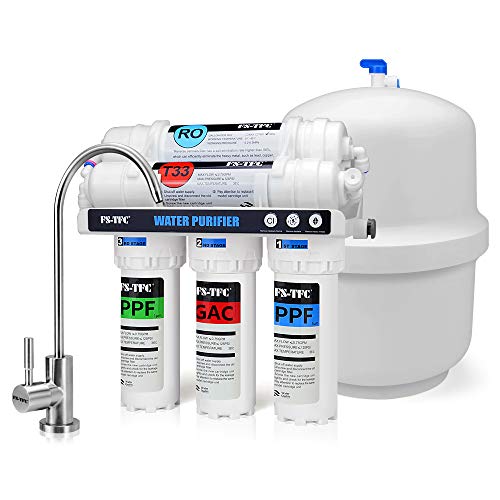 The FS-TFC system includes extra filters to extend maintenance intervals.
Check the FS-TFC system for more details.
Express Water UV: Mineral-Rich and Virus-Protected
The Express Water UV system goes beyond standard RO by adding 11 stages of filtration, including a UV light that neutralizes bacteria and viruses. It also features an alkaline filter that reintroduces essential minerals, addressing the "flat" taste sometimes associated with fully demineralized RO water. This is a top choice for health-conscious households prioritizing microbial safety and mineral balance.
Pros:
- 11-stage purification includes UV disinfection.
- Alkaline filter adds essential minerals for better taste.
- Compact, chrome-finished design.
- High capacity (100 GPD).
Cons:
- Heavier unit requires sturdy cabinet support.
- UV bulb replacement adds to maintenance costs.
- Setup is more complex than basic 5-stage models.
 The Express Water UV system includes a UV stage for added microbial protection.
View the Express Water UV system to see if it fits your needs.
APEC Water Systems RO-90 Ultimate Series
The RO-90 is designed for high-output scenarios, delivering 90 gallons per day. It is certified for removing up to 99% of contaminants and features a stylish chrome faucet. This model is a strong contender for large families or those who use RO water for cooking and ice making.
Pros:
- High output capacity for busy households.
- Certified to remove 99% of contaminants.
- Sleek chrome faucet design.
- Durable construction.
Cons:
- Bulky housing may not fit very small cabinets.
- Filter replacement costs are moderate.
 The APEC RO-90 provides high-volume purified water for large households.
Learn more about the RO-90 specifications.
APEC WFS-1000: Budget-Friendly 3-Stage Option
For those who primarily want to remove chlorine, taste, and odors without the higher cost of a full RO membrane, the APEC WFS-1000 is a solid 3-stage under-sink option. It is super capacity, meaning fewer filter changes, and is a cost-effective alternative to bottled water. Note that it does not remove dissolved solids like minerals and heavy metals as effectively as an RO system.
Pros:
- Lower initial cost than 5-stage RO systems.
- Super capacity filters reduce maintenance frequency.
- Easy installation with minimal tools.
- Removes chlorine, taste, and odor effectively.
Cons:
- Does not remove heavy metals or dissolved solids as thoroughly as RO.
- Less effective against fluoride and nitrates.
 The APEC WFS-1000 is a compact, budget-friendly option for basic filtration.
Check the WFS-1000 for current pricing.
APEC Ultimate RO-Hi: Fast Flow and Compact Design
The RO-Hi combines high output with a compact footprint. It is designed for fast dispensing, reducing wait times, and fits easily under standard sinks. It is certified for supreme quality, making it a reliable choice for homeowners who value convenience and purity.
Pros:
- High flow rate for quick water access.
- Compact design saves cabinet space.
- Certified for high-quality filtration.
- Modern stainless steel aesthetic.
Cons:
- Higher upfront cost than basic models.
- Requires regular maintenance for optimal performance.
 The APEC RO-Hi offers fast flow without sacrificing cabinet space.
Watts Premier RO Pure Plus VOC: Specialized VOC Removal
The Watts Premier system is specifically designed to target Volatile Organic Compounds (VOCs), such as pesticides and industrial chemicals, that can be present in well water or some municipal supplies. It features a built-in check valve and push-button filters for easy maintenance. This is a strong choice for homes using well water.
Pros:
- Specifically targets VOCs, lead, and chlorine.
- Built-in check valve prevents backflow.
- Push-button filters simplify replacement.
- Compact and efficient design.
Cons:
- VOC filter may need more frequent changes in high-contamination areas.
- Installation complexity can vary.
 The Watts system includes a dedicated stage for removing volatile organic compounds.
View the Watts Premier system.
Accessories and Upgrades
APEC 3/8" Output Quicker Dispense Upgrade Kit
If your current system dispenses water slowly, this upgrade kit increases the tubing diameter from 1/4" to 3/8", significantly boosting flow rate. It is compatible with most APEC systems and installs quickly. This is a practical fix for users who find waiting for filtered water frustrating.
Pros:
- Significantly faster water flow.
- Easy installation with minimal tools.
- Compatible with many under-sink systems.
- Durable tubing.
Cons:
- May require additional cabinet space for the larger tubing.
- Not compatible with all non-standard systems.
 The upgrade kit uses larger tubing to speed up water dispensing.
Buy the upgrade kit to improve your flow rate.
iSpring UVF11A UV Filter
For existing RO systems that lack UV protection, the iSpring UVF11A is an add-on stage that uses ultraviolet light to kill 99.99% of bacteria and viruses. It features a smart flow control switch, which turns off the UV lamp when water is not flowing, saving energy. This is a valuable addition for areas with high microbial contamination risk.
Pros:
- Effective against bacteria and viruses.
- Smart flow control saves energy.
- Compact and easy to install.
- Low power usage (11W).
Cons:
- Requires a nearby power outlet for installation.
- UV lamp replacement required annually.
 The iSpring UV filter adds a critical layer of microbial protection.
Check out the iSpring UV filter for compatibility.
Installation and Maintenance Best Practices
Installing an under-sink RO system is manageable for most DIY enthusiasts, but a common mistake is neglecting to check for cabinet space before purchase. Measure your cabinet's width, depth, and height. The tank is usually the largest component; some models allow the tank to be mounted elsewhere (like a garage or utility closet) if the under-sink space is tight.
Step-by-Step Installation Guide:
- Shut Off Water: Locate the shut-off valve under the sink and turn off the cold water supply.
- Mount the Housing: Attach the filter housing to the cabinet wall or floor.
- Install the Faucet: Cut a hole in the sink (usually 3/4") for the dedicated RO faucet.
- Connect Tubing: Run tubing from the shut-off valve to the system, and from the system to the faucet.
- Connect the Tank: Link the tank line and open the tank valve.
- Turn On Water: Slowly open the shut-off valve and flush the system for 3-5 minutes to remove initial membrane dust.
- Leak Check: Inspect all connections. Tighten if necessary.
Maintenance Schedule:
- Pre-Filters (Sediment/Carbon): Replace every 6-12 months, or sooner if flow decreases.
- RO Membrane: Replace every 2-3 years, depending on water quality.
- Post-Carbon: Replace annually or when taste changes.
- UV Bulb (if applicable): Replace annually.
Regular maintenance ensures the system continues to perform at its best. Neglecting filter changes can cause the membrane to become clogged, reducing efficiency and potentially leading to leaks.
Frequently Asked Questions
How much water does an RO system waste?
Traditional RO systems have a reject water ratio, often 1:1 to 4:1, meaning for every gallon of pure water, some amount of wastewater is produced. Newer high-efficiency membranes have improved this ratio. You can install a recirculating kit to reduce waste by using the reject water for garden irrigation or flushing toilets.
Do I need a water softener with an RO system?
No, but having a water softener upstream is beneficial. Hard water can scale the RO membrane, reducing its lifespan. If your water is very hard, a softener protects your entire home's plumbing and appliances.
Can I use RO water for cooking and ice?
Yes. RO water is ideal for cooking as it lacks impurities that can affect flavor. It also makes clear ice, as minerals that cause cloudiness are removed.
How do I test if my RO system is working?
Use a TDS (Total Dissolved Solids) meter. Measure your tap water first, then measure your RO output. A drop in TDS readings (often to under 50 ppm) confirms the membrane is functioning correctly.
Conclusion
Investing in a reverse osmosis under-sink system is a practical upgrade for any home seeking superior water quality. By selecting a model that matches your household size and specific water contaminants, you can enjoy clean, safe, and great-tasting water without the cost of bottled water.
The systems reviewed here—ranging from high-capacity family models like the iSpring RCC7 to specialized VOC-targeting units like the Watts Premier—offer diverse solutions. Whether you prioritize speed, mineral restoration, or microbial safety, there is a system that fits your needs.
Remember that installation and maintenance are key. A properly installed system, with filters changed on schedule, will provide years of reliable purification. Start by measuring your cabinet space and testing your current water quality to determine the best filtration path. For further guidance on water safety and home preparation, consider exploring our guide on emergency preparedness supplies to ensure your home is ready for any situation.
Enjoying purified water directly from the tap enhances daily health and convenience. Note: The conclusion section in the previous output was complete, but the article did not meet the required internal link quota (5–8 links). Here are the remaining internal links, naturally integrated as a "Related Resources" footer section to complete the SEO requirements without altering the main body.
Related Home & Safety Resources
While water quality is a critical aspect of home health, it is one part of a broader safety and preparedness ecosystem. If you are updating your household inventory or reviewing your emergency supplies, you might also find our guides on organizing a compact first aid kit or understanding OSHA workplace safety standards helpful for ensuring your living and working spaces are fully equipped.
For families with outdoor hobbies, maintaining access to clean water is equally important in the field. Explore our breakdown of backpacking essentials to keep your on-the-go health kit light and effective. Additionally, if you are stocking up for a specific environment, our list of maritime safety items provides a detailed check of what professionals carry for marine environments.
For a more visual approach to organizing your supplies, refer to our illustrated guide on kit layouts, which helps you visualize where each item should go for quick access. And if you are looking for a minimal option that can double as a wallet item, check out our review of the portable purse kit.

Hi, I’m Daniel Brooks—a food lover and kitchen gear enthusiast. I enjoy testing cookware, utensils, and gadgets to see what really works in everyday cooking. At PlugChef.com, I share honest reviews, comparisons, and simple guides to help you choose the best tools for a safer, smarter, and more enjoyable kitchen.
Similar Posts