For most homeowners in 2026, kitchen real estate is one of the most limited and valuable resources in the home. Cluttered countertops, overstuffed cabinets, and inefficient workflow during meal prep are common pain points that a well-designed kitchen island with storage on both sides can solve entirely. Unlike single-side models that only use the front face of the island for storage, dual-sided designs leverage the full 24–30 inch depth of the unit to deliver twice the usable storage without increasing the island’s footprint. This layout eliminates wasted space, reduces trips back and forth to upper cabinets, and keeps frequently used items within arm’s reach, whether you’re prepping a weeknight dinner or hosting a holiday gathering. This guide breaks down the key features to prioritize, how to choose the right model for your space, and maintenance tips to keep your island functioning smoothly for years.
Why Dual-Sided Storage Outperforms Single-Side Island Designs
Single-side islands leave the rear face of the unit unused, or only offer shallow shelving that can’t hold bulky cookware and small appliances. Dual-sided models let you customize each side for different needs: for example, open shelves on the side facing your prep area for quick access to spices, cutting boards, and mixing bowls, and closed cabinets on the opposite side for less frequently used items like serving platters, small appliances, or pantry overflow. For homes with limited cabinet space, these islands can even replace standalone storage units like adjacent kitchen storage shelves, freeing up floor space for other uses. This layout is especially useful for open-concept kitchens, where the island is visible from the dining or living area: closed storage hides clutter, while open shelves add visual interest. In practice, many homeowners find that a dual-sided island eliminates the need for extra standalone storage units, reducing visual chaos and cutting down on cooking workflow friction.
Key Features to Prioritize for Maximum Functionality
Flexible Storage Configurations
The right storage mix depends on your existing cabinet space and cooking habits. Closed cabinets are ideal for bulky, heavy items like stock pots, stand mixers, and trash or recycling pull-outs — pull-out trash cabinets are a particularly popular upgrade, as they keep food waste out of sight and make emptying the bin far easier than reaching under the sink; many dual-sided trash storage islands even include separate compartments for recycling and compost. Open shelves work well for frequently accessed items like cookbooks, decorative dishware, or spice jars, while deep, soft-close drawers are perfect for utensils, linens, and small gadgets that would otherwise clutter your countertops. Closed cabinets are also ideal for storing specialty kitchen appliances like stand mixers, air fryers, or ice cream makers that you don’t use every day, keeping countertops clear for daily cooking tasks. Look for models with adjustable interior shelving, which lets you reconfigure the space as your needs change: taller shelves for large appliances, smaller compartments for spice jars, for example. For small kitchens, prioritize a mix of open and closed storage to avoid making the space feel cramped or overwhelming.
Mobility vs. Fixed Build Quality
One of the biggest tradeoffs to consider is whether to choose a wheeled or fixed island. Wheeled models with lockable casters are ideal for renters, galley kitchens, or households that host often and need to move the island to open floor space for gatherings. Folding rolling island carts are especially popular for renters, as they can be taken with you when you move, and don’t require any permanent modifications to your kitchen. Five-wheel bases are more stable than four-wheel designs, especially when the island is fully loaded with cookware and appliances. Most wheeled models have a weight capacity of 200–300 pounds, so factor in the weight of your stored items before purchasing to avoid overloading the casters.
Fixed models, by contrast, are better for large, permanent kitchen layouts: they offer higher weight capacity (up to 500 pounds for solid wood models) and can be anchored to the floor or wall for added stability. The U.S. Consumer Product Safety Commission’s furniture tip-over safety guidance recommends anchoring any fixed island over 100 pounds to wall studs to prevent tip-over injuries, especially in homes with young children.
Integrated Utility Upgrades
Modern 2026 dual-sided islands often include built-in utility features that eliminate the need for extension cords and countertop clutter. Look for models with at least two standard 120V GFCI-protected outlets, which are required by most regional building codes for kitchen use to reduce electric shock risk near water sources. Many premium models also add USB-C ports for charging phones, tablets, or small kitchen gadgets like immersion circulators while you cook. Drop-leaf countertops are another popular upgrade: they extend the island’s surface by 12–18 inches when needed for holiday meal prep, buffet serving, or casual dining, then fold down to save floor space for daily use. Look for models with reinforced hinges that can support the weight of heavy dishes without sagging. Bonus features like built-in towel bars, spice racks, and knife blocks further reduce countertop clutter, keeping your prep area clear for cooking.
How to Choose the Right Dual-Sided Island for Your Kitchen Layout
Measure Twice, Buy Once
Per the National Kitchen and Bath Association’s industry-standard clearance guidelines, leave at least 36 inches of open space between the island and surrounding countertops, cabinets, or appliances for safe, comfortable movement. If you have multiple people cooking regularly, bump that clearance to 42 inches to avoid bumping elbows during meal prep. Dual-sided islands typically range from 36 to 60 inches wide and 24 to 30 inches deep, so start by measuring your kitchen’s available floor space before shopping. For galley kitchens under 10 feet wide, opt for a narrow 36–42 inch wheeled model that can be moved out of the way when not in use. For large open-concept kitchens over 12 feet wide, a 48–60 inch fixed model with ample storage is a better fit. A common mistake many homeowners make is ordering a large island without measuring their front door and hallways: most 60-inch models won’t fit through a standard 32-inch entry door, so confirm delivery access before purchasing.
Match Storage to Your Cooking and Entertaining Habits
Your ideal island configuration depends on how you use your kitchen:
- If you’re a home baker: prioritize deep drawers for mixing bowls, baking sheets, and specialty tools, plus open shelves that can hold a stand mixer if you leave it out on the counter. Look for dedicated pot and pan storage with vertical dividers to keep bakeware from scratching.
- If you entertain often: look for cabinets with adjustable shelving that can fit serving platters, glassware, or even a small under-counter wine cooler. A drop leaf is also useful for expanding serving space during dinner parties.
- If you have young children: opt for models with soft-close drawers and cabinets to prevent pinched fingers, and pair the island with kid-safe cabinet locks to keep sharp utensils and cleaning supplies out of reach.
- For small apartments: a compact 36-inch wheeled model with a mix of open and closed storage works best, as it can be moved to create extra floor space for yoga, homework, or hosting guests. Storage-integrated kitchen tables are also a good option for studios, as they double as a dining surface and prep space.
Best Dual-Sided Kitchen Islands by Common Use Case
To narrow down your options, start with your kitchen’s size and your primary needs. Below is a quick comparison of the most popular model types:
| Use Case | Typical Specs | Key Features | Best For |
|---|---|---|---|
| Small kitchens/renters | 36–42 inch width, lockable 5-wheel base, mix of open/closed storage | Foldable drop leaf, 2–3 deep drawers, soft-close hardware | Apartments, galley kitchens, renters who can’t modify their existing kitchen |
| Home chefs/entertainers | 48–60 inch width, solid wood or water-resistant laminate countertop, GFCI outlets | Trash/recycling pull-outs, adjustable shelves, 200+ lbs weight capacity | Households that cook 4+ nights a week, frequent hosts |
| Multi-functional open layouts | 48–54 inch width, extendable dining leaf, scratch-resistant countertop | Seats 2–4 people, integrated power outlets, ample serving storage | Open-concept homes, families who use the island for dining, homework, or casual gatherings |
 HOSTACK 47-inch rolling island with adjustable shelves and lockable casters, ideal for small spaces
 Compact Ahomly island with a foldable drop leaf and 5 wheels for easy maneuverability in tight kitchens
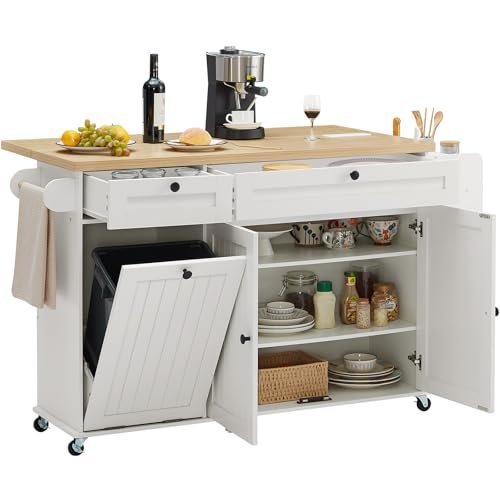
 60-inch dual-sided island with GFCI outlets, trash pull-out, and foldable drop leaf for extra prep space
 Modern VALONDINO island with open side shelves, trash storage cabinet, and lockable wheels
 Solid rubberwood farmhouse-style island with built-in power outlets and open lower shelves
 HLR extendable island that converts from a prep station to a 2-4 person dining table
 Homestyles mobile island with a drop-leaf breakfast bar for casual dining and extra prep space
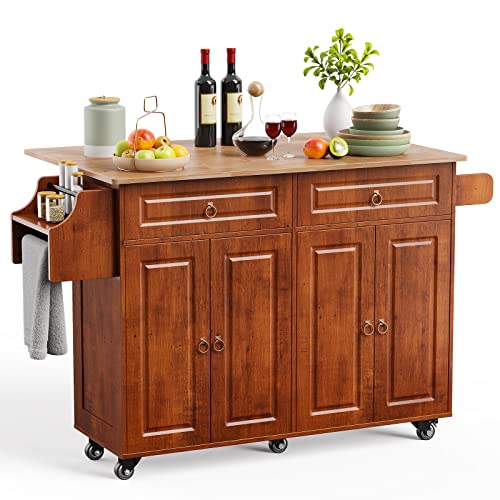 Qsun compact rolling island with a large storage cabinet and spice rack, perfect for small open layouts
 FINETONES rolling island with a wood drop leaf and built-in spice/towel racks for added convenience
 Compact ASTRONAPE island with a built-in power socket and 5-wheel base for easy movement
For homes that prioritize high-end aesthetics, marble-top rolling islands offer a durable, elegant surface that can withstand heavy use, though they require regular sealing to prevent staining. For those who need extra storage for bulky items, wheeled kitchen storage cabinets on wheels can be tucked into a corner when not in use, then rolled out to add extra prep space during cooking. Pot rack-equipped islands are another great option for home chefs, as they let you store frequently used pots and pans within arm’s reach, eliminating the need to dig through deep cabinets. If you use your island for prepping charcuterie boards, our cheese slicing tips can help you get clean, uniform cuts without wasting product. Store leftover ingredients in glass food storage containers in the island’s lower cabinets for easy access during meal prep. Mobile storage island carts are also a great investment for renters, as they can be disassembled and taken with you to your next home. If your island has a built-in trash pull-out, opt for a trash-integrated kitchen island model with a separate compost compartment to make sorting waste easier while cooking. Wipe down closed-door storage cabinets interior monthly to prevent dust and food crumb buildup, which can attract pests.
Maintaining Your Dual-Sided Kitchen Island for Long-Term Use
A high-quality dual-sided island will last 10+ years with proper care. Follow these simple steps to keep it looking and functioning like new:
- Wipe down countertops after each use with a mild dish soap and a sturdy cleaning brush to prevent stains from food, wine, oil, or coffee spills. For stubborn grease, use a non-abrasive scrub brush to avoid scratching the surface.
- For solid wood countertops, apply a food-safe mineral oil every 3–6 months to prevent cracking, water damage, and warping from heat or moisture.
- Check wheel locks and mounting hardware every 6 months to ensure they’re tight, especially for wheeled models that are moved frequently. Lubricate soft-close drawer hinges annually to keep them functioning smoothly.
- Avoid overloading shelves: most islands have a weight capacity of 20–30 pounds per shelf, so store heavy items like cast iron skillets in lower cabinets or drawers to prevent sagging.
- For models with built-in trash pull-outs, clean the bin and interior cabinet monthly with a gentle green cleaning brush to prevent odors and bacterial buildup.
Frequently Asked Questions
What features do dual-sided kitchen islands include?
Most dual-sided islands include a mix of closed cabinets, open shelves, and deep drawers for storage. Common upgrades include lockable casters for mobility, GFCI-protected power outlets, drop-leaf countertops for extra prep space, and built-in organizers like spice racks, towel bars, and trash pull-outs.
Are dual-sided islands suitable for small kitchens?
Yes, as long as you choose a narrow (36–42 inch) wheeled model with a foldable drop leaf. Look for units with a mix of open and closed storage to avoid making the space feel cramped, and leave at least 36 inches of clearance between the island and surrounding countertops to maintain easy movement.
Are wheeled kitchen islands safe for everyday use?
Yes, as long as you choose models with lockable casters. Always engage the wheel locks when the island is in use for prep or dining to prevent accidental rolling. For households with young children, pair the island with soft-close drawer stops to prevent pinched fingers, and follow the manufacturer’s guidance for anchoring heavy items stored on the island.
Can I add power outlets to an existing kitchen island?
Yes, but this requires a licensed electrician to ensure the wiring meets local building codes and is GFCI-protected. For renters or homeowners who don’t want to modify their existing kitchen, a pre-built island with integrated power outlets is a simpler, code-compliant option.
How do I clean and maintain my kitchen island?
Wipe down countertops after each use with mild soap and a soft brush to prevent stains. For wooden surfaces, apply a food-safe mineral oil every 3–6 months to prevent warping. Check wheel locks and drawer hinges every 6 months to ensure they’re functioning smoothly, and avoid overloading shelves to prevent sagging.
Do dual-sided islands add value to a home?
Yes, well-designed kitchen islands are a highly sought-after feature for homebuyers, as they add flexible workspace and storage to a kitchen. A dual-sided model with useful features like power outlets and ample storage is particularly appealing, as it signals a modern, functional kitchen layout.
Conclusion
A kitchen island with storage on both sides is one of the most impactful upgrades you can make to your kitchen, regardless of its size or layout. By leveraging the full depth of the unit, you get double the storage of a single-side model without sacrificing floor space, cutting down on clutter and making meal prep faster and more efficient. When choosing a model, prioritize features that align with your specific needs: a compact wheeled unit for small apartments, a large fixed model with power outlets for home chefs, or an extendable design for open-concept homes that doubles as a dining space. With proper maintenance, a high-quality dual-sided island will pay for itself in daily convenience for years, while also adding long-term value to your home. Ready to transform your kitchen? Start by measuring your available space and prioritizing features that match your daily cooking and entertaining routine to find the perfect dual-sided island for your space.

Hi, I’m Daniel Brooks—a food lover and kitchen gear enthusiast. I enjoy testing cookware, utensils, and gadgets to see what really works in everyday cooking. At PlugChef.com, I share honest reviews, comparisons, and simple guides to help you choose the best tools for a safer, smarter, and more enjoyable kitchen.
Related posts:
 Glass Pet Food Storage Containers: Keep Your Pet’s Food Fresh and Safe
 Glass Jar Food Storage Containers: Organize Your Pantry Efficiently
 Kitchen Fruit And Vegetable Storage: Revolutionize Your Space with Stylish Baskets
 Kitchen Island Cart Granite Top: Enhance Style and Functionality Effortlessly
 Kitchen Island With Pot Rack: Transform Your Space with Style & Storage
 Best Cutting Board for Meat: Durable, Easy-Clean, and Versatile Choices