Eco-Friendly Kitchen Gadgets: Elevate Your Cooking with Sustainable Tools
Creating a greener kitchen starts with the tools you use every day. Sustainable utensils, sponges, brushes, and gadgets reduce waste, limit exposure to questionable chemicals, and often last longer than their disposable counterparts. This guide walks through the materials, categories, selection criteria, and care practices that make eco‑friendly kitchen tools a smart investment for both the planet and your pantry.
Why Eco-Friendly Kitchen Gadgets Matter
Every year, millions of tons of plastic cutlery, synthetic sponges, and single‑use kitchenware end up in landfills or oceans. Choosing tools made from renewable resources—such as FSC‑certified wood, bamboo, or food‑grade silicone—cuts that waste stream while often delivering better performance. Wooden and bamboo utensils resist heat and won’t scratch non‑stick pans, while biodegradable sponges break down naturally after use. Beyond environmental benefits, many sustainable options are free of BPA, phthalates, and other additives that can leach into food, offering a healthier cooking experience. In practice, a well‑chosen eco‑friendly gadget can replace several disposable items, saving money over time and simplifying kitchen routines. For further reading, see fsc.org.
Materials Overview
Understanding the raw materials behind each gadget helps you weigh durability, care needs, and ecological impact.
- Wood (teak, sheesham, pakkawood, olive): Naturally antibacterial, heat‑resistant, and biodegradable when untreated. Requires occasional oiling to prevent cracking.
- Bamboo: Fast‑growing, pesticide‑free, and strong. Similar care to wood but often lighter.
- Silicone (food‑grade, BPA‑free): Flexible, heat‑stable up to 230 °C, non‑scratching, and dishwasher safe. Not biodegradable but recyclable in specialized facilities.
- Stainless steel: Extremely durable, recyclable, and inert. Best for tools that need rigidity (e.g., whisks, peelers).
- Compostable fibers (cellulose, coconut, sisal hef): Used in sponges and scrubbers; break down in home compost within months.
According to the EPA’s sustainable materials management program, choosing rapidly renewable resources like bamboo can lower a product’s carbon footprint by up to 40 % compared with conventional plastics.
Categories of Sustainable Kitchen Tools
Cooking Utensils
Spoons, spatulas, ladles, and turners made from wood, bamboo, or silicone form the backbone of any eco‑conscious kitchen.
 Ergonomic pakkawood handles reduce wrist strain during long stovetop sessions.
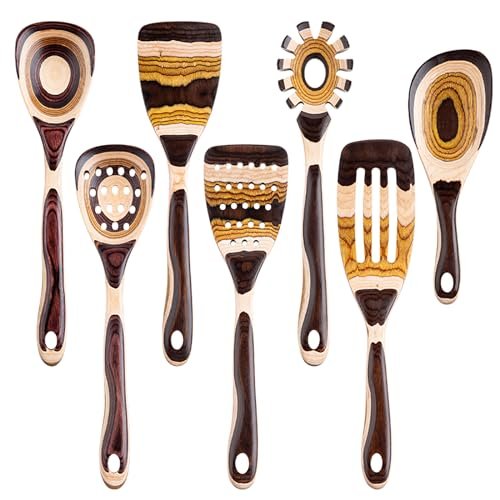
The Gudamaye set offers seven essential pieces crafted from pakkawood—a composite of wood veneer and resin that resists moisture and heat. Its smooth finish prevents snagging on delicate foods, while the natural wood look adds warmth to any countertop.
 Teak’s natural oils provide water resistance and a rich grain.
Forestroot’s teak utensils are naturally non‑stick and heat‑tolerant, making them ideal for high‑heat searing or stir‑frying. Regular hand‑washing and occasional mineral oil keep the grain from drying out.
 Sheesham’s interlocking grain resists warping under heat.
Sheesham (Indian rosewood) delivers excellent durability and a subtle fragrance. The set includes a slotted spoon, solid spoon, spatula, ladle, strainer, and serving fork—covering most stovetop tasks.
 Wooden grips give a comfortable hold while silicone heads protect cookware.
Cookward’s hybrid design pairs BPA‑free silicone with acacia handles. The silicone tips are non‑scratching and safe for acidic sauces, while the wood adds aesthetic appeal.
 Each juicer shows unique grain patterns from hand‑carved olive wood.
Olive wood’s density makes this juicer both sturdy and resistant to staining. A quick rinse after use prevents pulp buildup, and occasional oiling preserves the finish.
Cleaning Tools
Sponges, brushes, and scrubbers keep surfaces clean without contributing to microplastic pollution.
 Natural fibers provide gentle abrasion for dishes and countertops.
Isshah’s sponges combine sisal hef and cellulose, offering a scrubbing side and a softer side. They are compostable after roughly 30 uses, depending on water hardness.
 Coconut fibers add scrubbing power while cellulose holds moisture.
Airnex’s dual‑texture sponge tackles stuck‑on food with the coconut side and wipes surfaces with the cellulose side. It breaks down in home compost within 2‑3 months.
 Stiff bristles reach corners of pots and bottles without scratching enamel.
The DEBETOOL set pairs a bamboo handle with sisal‑palm fiber bristles and a replaceable coconut sponge. The brush resists odor buildup and can be sterilized by boiling the bristles for 2 minutes.
 Lightweight design makes daily scrubbing less tiring.
Tieralia’s brush features a smooth bamboo shaft and a sponge that disintegrates in compost after about 20 uses. The set includes a small detail brush for hard‑to‑reach spots.
How to Choose the Right Eco-Friendly Gadgets
- Match material to use – Wood and bamboo excel for high‑heat stirring; silicone is best for flexible tasks like scraping bowls; stainless steel suits whisks and peelers.
- Check certifications – Look for FSC or PEFC for wood, PETA‑approved for sponges, FDA‑compliant for food‑contact silicone, and BPA‑free labels.
- Assess maintenance – Wooden tools need periodic oiling; silicone is dishwasher safe; natural sponges require thorough drying to avoid mildew.
- Consider lifespan – A well‑ cared‑for wooden spoon can last 5‑10 years, while a biodegradable sponge may need replacement every month. Weigh upfront cost against longevity.
- Think about ergonomics – Handles should fit comfortably in your grip; offset or angled designs reduce wrist strain during repetitive tasks.
Care & Maintenance Tips
Proper care extends the life of sustainable tools and maintains food safety.
- Wooden utensils: Hand‑wash with mild soap, dry immediately, and rub with food‑grade mineral oil every few weeks. Avoid soaking or dishwasher use, which can cause cracking.
- Bamboo tools: Similar to wood; occasional oiling prevents splitting.
- Silicone: Dishwasher safe or wash with warm soapy water; resist temperatures above 230 °C.
- Natural sponges: Rinse thoroughly after each use, squeeze out excess water, and allow to air‑dry in a well‑ventilated spot. Replace when they develop a persistent odor or lose elasticity.
- Brushes: Remove debris, wash bristles with soap, and sanitize by boiling for 2 minutes if needed. Keep the bamboo handle dry to avoid mold.
Keeping a basic first aid kit nearby is prudent when handling sharp blades or hot pans. For example, you might store essential marine supplies in your kitchen drawer for quick access to bandages and antiseptic wipes. If you prefer a reusable container, consider a spare box for kits that fits neatly under the sink. Those who travel with camping gear often follow vehicle kit guidelines to ensure their kit meets road‑safety standards. Anglers can reference angler kit provisions for specialized items like waterproof adhesives. Finally, regularly check refill items for kits to keep gauze, tape, and antiseptic pads stocked.
Cost vs Longevity: Making a Smart Investment
Eco‑friendly gadgets often carry a higher upfront price than plastic alternatives, but their durability can deliver savings over time. A high‑quality teak spoon priced at $15 may outlast five disposable plastic spoons costing $3 each, breaking even after roughly five months of regular use. Similarly, a set of biodegradable sponges at $12 for 12 units replaces a monthly purchase of synthetic sponges at $4 per pack, saving $36 annually. When evaluating cost, factor in the reduced need for replacement, the avoidance of potential health hazards from chemical leaching, and the positive environmental impact of lower landfill contributions.
Top Picks
| Gadget | Key Strength | Ideal For |
|---|---|---|
| Gudamaye 7‑Piece Pakkawood Set | Heat‑resistant, moisture‑stable pakkawood | Daily stirring, sautéing, serving |
| Forestroot 6‑Piece Teak Set | Naturally non‑stick, rich grain | High‑heat searing, grill work |
| Isshah Plant‑Based Sponges (12‑pk) | FSC‑certified, PETA‑approved, compostable | Everyday dishwashing, countertop cleaning |
| Airnex Natural Sponge (12‑pk) | Cellulose + coconut scrubber, home‑compostable | Stubborn pots, gentle surface wipes |
| DEBETOOL Bamboo Brush Set | Sisal‑palm bristles, replaceable coconut sponge | Pots, bottles, vegetable scrubbing |
| Tieralia Bamboo Brush Set | Lightweight, compostable wood‑pulp sponge | Quick clean‑ups, delicate cookware |
| Cookward Silicone Utensils | BPA‑free, non‑scratching, wood‑acacia handles | Sauces, baking, non‑stick pan protection |
| Handcrafted Olive Wood Juicer | Durable, unique grain, ergonomic lever | Fresh citrus juices, cocktail prep |
Each product links directly to its purchase page; clicking the image or title takes you to the retailer where you can verify current pricing and availability.
Frequently Asked Questions
Are wooden utensils safe for non‑stick cookware?
Yes. Wood is softer than most non‑stick coatings and will not scratch when used with moderate pressure. Avoid dragging the utensil aggressively across the surface.
How often should I replace a biodegradable sponge?
Typical lifespan ranges from 2‑4 weeks with daily use, depending on water hardness and how well it dries between uses. Replace when it smells sour or falls apart.
Can bamboo utensils go in the dishwasher?
Most manufacturers advise hand‑washing to prevent prolonged exposure to high heat and detergents, which can cause splitting. A quick rinse and air‑dry is sufficient.
Is silicone truly eco‑friendly if it isn’t biodegradable?
Silicone’s longevity reduces the frequency of replacement, and it is recyclable in specialized facilities. Its inert nature also means it won’t leach chemicals into food, offering a safety advantage over some plastics.
Do I need to oil my wooden utensils if I only use them occasionally?
Even infrequent use benefits from a light oil coating every month to maintain moisture balance and prevent cracking when the wood does encounter moisture.
Conclusion
Eco‑friendly kitchen gadgets blend practical performance with environmental stewardship. By selecting tools made from renewable, non‑toxic materials and caring for them properly, you reduce waste, limit exposure to questionable substances, and often enjoy a longer‑lasting, more pleasant cooking experience. Start with a versatile wooden spoon set or a compostable sponge, then expand your collection as you identify specific tasks where sustainable alternatives shine. A greener kitchen is within reach—one thoughtful utensil at a time.
To further equip your space, consider checking out marine safety essentials for onboard preparedness, a compact emergency box for quick access, and vehicle first‑aid guidelines if you often cater outdoor events. These resources complement your sustainable kitchen by ensuring safety stays as green as your tools. For authoritative guidance on choosing biobased products, see the EPA’s sustainable materials management overview. Anglers might also value angler aid recommendations, while students heading off campus can review a college kit checklist. Finally, take the next step: pick one gadget from the list above, try it for a week, and notice the difference in both performance and peace of mind.

I’m Abby Lu, a passionate home cook who loves simplifying everyday meals. At PlugChef.com, I share product reviews and cooking guides to help you find the best tools for your kitchen.
Similar Posts