Sustainable Kitchen Utensils: Elevate Your Eco-Friendly Cooking Experience Today
Switching to sustainable kitchen utensils is one of the simplest changes a home cook can make to reduce household plastic waste while improving daily cooking performance. Unlike conventional plastic tools that leach microplastics, scratch nonstick surfaces, and eventually crack under heat, well-chosen wood and bamboo alternatives last years, protect expensive cookware, and bring a natural warmth to the kitchen. This guide covers the materials that actually perform, the maintenance habits that extend their lifespan, and ten sets worth considering — each tested against real-world cooking demands.
Why Sustainable Utensils Outperform Plastic
Plastic spatulas and spoons dominate big-box store aisles because they're cheap, not because they work well. A 2022 study from the University of Newcastle estimated the average person ingests roughly five grams of microplastics weekly — equivalent to a credit card — with kitchen tools and food packaging as primary vectors. Wood and bamboo eliminate that exposure entirely. For more on this, see our guide on kitchen utensils storage containers with lids.
Beyond health, sustainable materials protect your investment in cookware. Metal utensils gouge nonstick coatings; plastic melts or warps at high heat. Hardwood and bamboo tolerate temperatures up to 400°F (204°C) without degrading, and their slightly textured surface grips food better than slick plastic — try scraping fond from a pan with a nylon spoon versus a beech spatula and the difference is immediate.
Durability tells the same story. A quality bamboo set withstands daily use for three to five years with basic care. Plastic utensils typically show stress fractures, staining, or melted edges within twelve months. The upfront cost difference — often $15–25 versus $8–12 — pays for itself in replacement cycles alone. For more on this, see our guide on kitchen hood cleaning certification online.
Material Breakdown: Bamboo, Hardwood, and Compostable Options
| Material | Heat Resistance | Nonstick Safe | Lifespan (Daily Use) | Maintenance | Best For |
|---|---|---|---|---|---|
| Moso Bamboo | 400°F / 204°C | Yes | 3–5 years | Hand wash, monthly oil | General cooking, high-heat searing |
| Beech / Maple / Olive Wood | 350–400°F / 177–204°C | Yes | 5–10+ years | Hand wash, monthly oil | Heavy stirring, scraping, long-term keepers |
| Plant-fiber Compostable (PLA/CPLA) | 185–200°F / 85–93°C | Yes | Single-use to weeks | None (disposable) | Events, takeout, zero-waste transitions |
| Acacia / Teak | 350°F / 177°C | Yes | 5–8 years | Hand wash, quarterly oil | Serving, salad tossing, aesthetic priority |
Bamboo grows to harvest maturity in three to five years without pesticides, making it the most renewable option. Hardwoods like beech and maple grow slower but produce denser, heavier tools that resist cracking and absorb less moisture — critical if you occasionally forget a spoon in a simmering pot. Compostable cutlery serves a different niche: large gatherings where washing isn't practical. Look for BPI or TÜV Austria certification confirming industrial compostability; backyard compost piles rarely reach the sustained temperatures these materials need to break down fully.
Practical note: In practice, the most common mistake is treating all wood the same. Olive wood's high oil content makes it naturally water-resistant but prone to drying out in arid climates — oil it more often. Bamboo's grass structure means it splits along grain lines if soaked; never leave it submerged.
Choosing the Right Set for Your Cooking Style
Before buying, audit what you actually reach for. A minimalist home cook needs three tools: a wide spatula for flipping, a pointed spoon for scraping corners, and a slotted spoon for draining. Bakers add a sturdy mixing spoon; soup makers want a deep ladle. Sets with six to twelve pieces often include redundancies (multiple spatulas, tiny tasting spoons) that clutter drawers. For more on this, see our guide on kitchen brushes for cleaning.
Match the utensil to your cookware. If you run all-clad stainless, any material works. If you rely on ceramic or PTFE nonstick, avoid metal and rigid plastic edges — bamboo's rounded profiles and wood's gentle taper are safest. Induction cooktops don't change utensil requirements, but the faster heat ramp means tools sit in hotter pans; prioritize higher heat ratings.
Check handle ergonomics. Flat, wide handles distribute pressure across the palm during vigorous stirring; round handles roll. Length matters too: 11–13 inches keeps hands clear of splatter on deep sauté pans, while 8–9 inches suits shallow skillets and serving. For more on this, see our guide on commercial kitchen hood cleaner.
Top Sustainable Utensil Picks for 2026
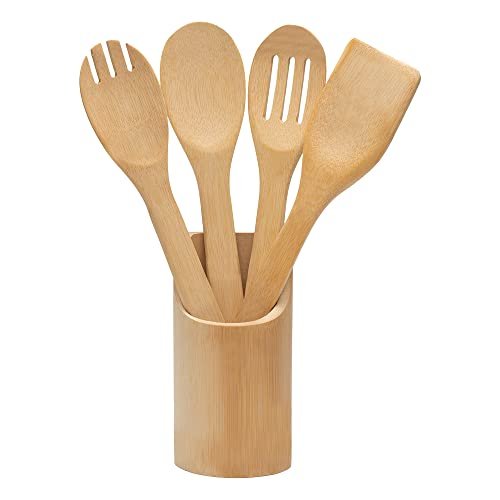
Mimo Style 5-Piece Ecokitchen Bamboo Set
 Compact five-piece bamboo set with integrated holder — ideal for small kitchens
This entry-level set covers the basics: spatula, spoon, slotted spoon, tongs, and a countertop holder. Moso bamboo construction handles high-heat searing without warping, and the rounded edges glide over nonstick coatings. The beige tone neutralizes over time to a honey patina. Hand-wash only — dishwasher cycles accelerate splitting at the handle junction. At this price point, it's the most practical starter kit for someone replacing their first plastic drawer.
View current price and availability
Ecosall 6-Piece Healthy Cooking Utensils Set
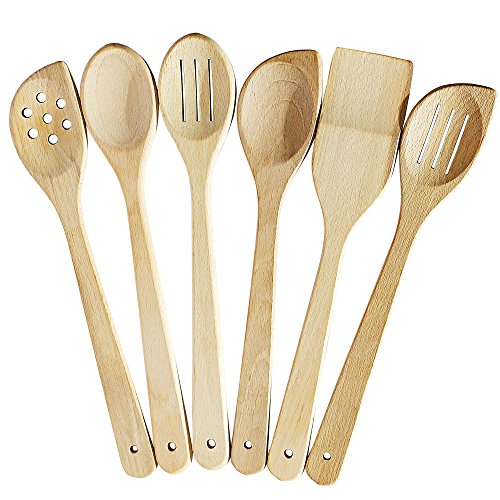 Uncoated, unglued hardwood set — no adhesives or finishes to degrade
Ecosall uses solid beech and maple with no glues, lacquers, or mineral oil coatings. That means zero off-gassing and no finish to wear through to bare wood. The spatula's thin leading edge (2mm) slides under delicate fish fillets better than thicker bamboo alternatives. Expect 30 minutes of initial seasoning (food-grade mineral oil, three coats) before first use — a step many skip, leading to early roughness. The set omits tongs; add a separate pair if you grill frequently. For more on this, see our guide on industrial kitchen cleaning companies.
View current price and availability
HEFILD 7-Piece Small Wooden Spoons for Eating & Condiments
 Petite ellipse-shaped spoons sized for spice jars, honey pots, and tasting portions
These 5.78-inch spoons solve a specific problem: reaching into narrow jars without knuckle-deep mess. The ellipse bowl shape scrapes curved jar shoulders clean. They're too short and light for stovetop cooking — treat them as table and pantry tools. The plant-wood blend (unspecified species) feels lighter than beech; oil weekly for the first month to stabilize moisture content. Excellent gift item; the presentation box is gift-ready.
View current price and availability
JB Home Collection 4566 Double Ladle Set
 Two deep-bowl ladles (10.35″) for stock pots, chili, and batch cooking
Each ladle holds 4.5 oz — enough for a hearty bowl without multiple dips. The 10.35-inch handle reaches the bottom of 8-quart stock pots. Wood species isn't specified; density suggests acacia or rubberwood. Finish is smooth but unsealed; oil before first use. Two-pack format suits households that run parallel pots (soup + sauce) or want a backup. Not a general-purpose set — buy alongside a spatula/spoon collection.
View current price and availability
EKKO 380-Piece Compostable Cutlery Combo
 Industrial-compostable 380-count set (forks, knives, spoons) for events and food service
CPLA (crystallized PLA) handles 200°F / 93°C — hot soup won't warp them. BPI-certified for commercial composting facilities; they will not break down in home bins within any reasonable timeframe. Cost per piece runs 3–4× conventional plastic, so reserve for weddings, catering, or zero-waste commitments where washing 380 utensils isn't feasible. Store in a dry, cool place; humidity triggers premature brittleness.
View current price and availability
Hamilton Beach 5-Piece Utensil Set with Stand
 Modern gray nylon set with rotating stand — not wood or bamboo, included for comparison
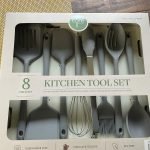
This set is not a sustainable wood/bamboo option — it's glass-filled nylon rated to 400°F. Included here because shoppers often confuse "durable nylon" with eco-materials. The stand rotates smoothly and the gray aesthetic fits contemporary kitchens. If your priority is reducing plastic, skip this. If you need dishwasher-safe, high-heat tools today and plan to transition later, it's a functional bridge.
View current price and availability
HEFILD 6-Piece Premium Wooden Spoon Set with Rest
 Six utensils plus matching spoon rest — complete countertop solution
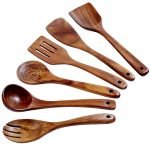
Whole-wood construction (single-piece, no glue joints) eliminates the failure point where handles separate from heads. The included spoon rest is the same species and finish — no mismatched aesthetics. Slightly thicker profiles than Ecosall (3mm spatula edge) trade finesse for durability. Spoon rest footprint is 7″ × 3″; verify counter space. Excellent value for a cohesive, gift-worthy package.
View current price and availability
Bamboni 6-Piece Organic Bamboo Utensil Set
 Organic-certified bamboo set with fabric storage sleeve — travel and gift friendly
USDA Organic certification on the bamboo itself — rare in this category. The fabric sleeve replaces plastic packaging and doubles as drawer organization. Utensil profiles mirror the Mimo set but with a smoother, more polished hand-feel. Organic status doesn't change performance; it verifies agricultural practices. Price premium is ~20% over conventional bamboo sets.
View current price and availability
KitchenAid 2-Piece Universal Bamboo Tools
 Brand-name two-piece starter pair — turner and spoon only
KitchenAid's entry is minimal: a wide turner (3.5″ head) and a mixing spoon. The turner's beveled edge slides under burgers and pancakes cleanly. At 11.81″, handle length suits deep pans. Water-resistant finish (food-safe polymer) reduces oiling frequency to quarterly. Two pieces won't replace a full drawer — treat as a supplement or a test before committing to a larger set.
View current price and availability
Lipper International 826 6-Piece Bamboo Set in Mesh Bag
 Six-piece bamboo set with breathable mesh storage bag for air-drying
The mesh bag is the standout feature — hang it inside a cabinet door for drip-dry storage that prevents the countertop water rings and mold risk of upright holders. Bamboo grade is standard Moso; performance matches Mimo and Bamboni. The bag's drawstring closure keeps utensils contained during moves or camping trips. Best pick if storage airflow is a priority.
View current price and availability
Care & Maintenance: The Habits That Decide Lifespan
Daily: Hand-wash with hot water and mild dish soap. Scrub with a soft brush or chainmail scrubber — never steel wool. Rinse thoroughly; soap residue dries wood out. Stand upright to air-dry completely before storing. A damp utensil in a closed drawer develops surface mold in 24 hours.
Monthly (bamboo) / Quarterly (dense hardwoods): Apply food-grade mineral oil or a beeswax-mineral oil blend (1:4 ratio). Flood the surface, let absorb 20 minutes, wipe excess. This prevents checking (fine surface cracks) and maintains water resistance. Skip vegetable oils — they polymerize into a sticky, rancid film.
Annually: Light sanding with 220-grit paper removes raised grain and surface stains. Re-oil immediately after. Deep cracks, splintering, or persistent odor (indicating bacterial colonization in fissures) mean replacement time. A well-maintained beech spoon lasts a decade; bamboo typically shows fatigue at year four.
Storage: Avoid sealed containers. Breathable holders (ceramic crocks, mesh bags, slotted blocks) prevent moisture traps. Keep away from direct sunlight and heat vents — both accelerate drying and warping.
Common Mistakes That Ruin Good Utensils
- Dishwasher "just this once." The combination of 150°F+ water, harsh detergents, and prolonged moisture swells wood fibers, then rapid drying cracks them. One cycle can ruin a $30 spoon.
- Soaking in the sink. Bamboo's grass structure absorbs water axially; 30 minutes submerged = permanent warp.
- Using as a pry bar. Wood has high compressive strength but low tensile strength. Levering frozen food blocks or prying lids snaps handles.
- Skipping initial seasoning. New utensils ship dry. Three oil coats before first use creates the hydrophobic baseline that daily washing erodes.
- Storing wet in a drawer. The single fastest path to mold and cross-contamination.
Frequently Asked Questions
Are bamboo utensils naturally antibacterial?
Bamboo contains bamboo kun, an antimicrobial compound, but its concentration in processed utensils is too low to rely on for food safety. Wash thoroughly after each use — same as any material. The EPA notes that proper cleaning, not material choice, prevents cross-contamination.
Can I compost bamboo utensils at home?
Technically yes, but they take 12–24 months in a hot, managed pile (130–150°F sustained). Most home composts run cooler. Municipal yard-waste programs that accept "clean wood" are faster. Remove any metal ferrules or screws first.
Do wooden utensils harbor bacteria in knife marks?
Deep grooves from aggressive scraping can trap moisture and bacteria. Sand them out annually. If a utensil develops grooves deeper than 1mm that don't sand clean, replace it. The USDA Food Safety and Inspection Service recommends replacing any food-contact surface with deep, uncleanable scratches.
What's the difference between "organic bamboo" and regular bamboo?
Organic certification (USDA, EU Organic, JAS) verifies the bamboo was grown without synthetic pesticides, herbicides, or fertilizers. The finished utensil performs identically. Choose organic if agricultural practices matter to you; don't expect better heat resistance or durability.
How do I remove stubborn stains (turmeric, tomato, berry)?
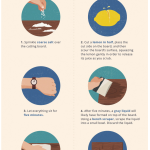
Make a paste of baking soda and lemon juice. Scrub gently with a soft cloth, rinse, dry, then oil. For persistent stains, a 1:10 vinegar-water soak for 5 minutes (no longer) followed by immediate drying and oiling lifts most pigment without damaging fibers.
Conclusion
Sustainable kitchen utensils aren't a compromise — they're an upgrade. The right wood or bamboo set outperforms plastic on heat tolerance, cookware protection, food release, and tactile control, all while keeping microplastics out of your food and single-use waste out of landfills. Start with a three-piece core (spatula, spoon, slotted spoon) in beech or Moso bamboo, build the oiling habit, and replace pieces individually as they wear. Your cookware lasts longer, your food tastes cleaner, and the drawer feels intentional instead of disposable.
Ready to switch? Pick the set that matches your cooking style above, order a bottle of food-grade mineral oil alongside it, and season everything before the first meal. The first stir in a hot pan with a properly oiled wooden spoon tells you everything you need to know.

I’m Abby Lu, a passionate home cook who loves simplifying everyday meals. At PlugChef.com, I share product reviews and cooking guides to help you find the best tools for your kitchen.
Similar Posts