As of 2026, commercial kitchens face stricter enforcement of FDA Food Code and OSHA sanitation standards, with critical health code violations resulting in four-figure fines, temporary closure, and lasting damage to customer trust. The right cleaning supplies don’t just help you pass inspections—they reduce cross-contamination risk, cut deep cleaning time for high-volume operations, and extend the life of costly equipment like grills, fryers, and stainless steel prep surfaces. This guide breaks down the essential, regulation-compliant tools every restaurant needs to maintain spotless hygiene, with honest trade-offs and practical use cases for back-of-house teams.
Why Commercial Kitchen Cleaning Supplies Differ From Household Options
Household cleaning products are not formulated for the heavy grease, high traffic, and strict sanitization requirements of food service. Food contact surfaces require EPA-registered cleaners that leave no harmful residues, while tools need to withstand repeated high-temperature washing and harsh chemical exposure. A common mistake is using abrasive scrubbers on stainless steel, which creates micro-scratches that harbor bacteria and corrode surfaces over time, leading to costly equipment replacements.
Core Cleaning Supply Categories for Commercial Kitchens
Heavy-Duty Degreasers & Surface Cleaners
Built-up grease from fryers, grills, and exhaust hoods is a top fire hazard and breeding ground for bacteria like salmonella and E. coli. Look for concentrated, biodegradable formulas that cut through grease without harsh fumes that irritate staff. For food contact surfaces, prioritize EPA-registered options that meet FDA Food Code requirements for residue-free cleaning.
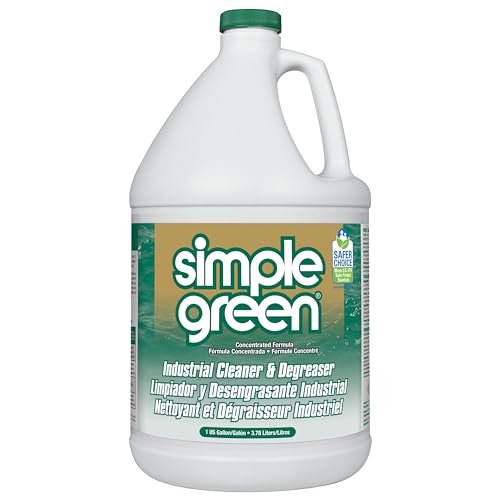
 Concentrated formula dilutes for cost-effective heavy-duty grease cutting
The Simple Green 13005CT Industrial Cleaner and Degreaser is a staple for commercial kitchens, with a highly concentrated formula that delivers 10+ gallons of cleaning solution per bottle to reduce long-term supply costs. It cuts through heavy fryer and grill grease without harsh chemical fumes, and its non-toxic, biodegradable formulation meets sustainability goals for eco-conscious operations. It works on metal, concrete, plastic, and food contact surfaces when diluted to the correct ratio. Pros:
- Cost-effective concentrated formula for high-volume use
- Cuts through heavy grease without irritating staff
- Non-toxic and biodegradable, EPA Safer Choice certified
- Versatile for use on all kitchen surfaces Cons:
- Requires staff training to measure dilution ratios correctly to avoid residue on food prep surfaces
- Strong degreasing power can damage delicate surfaces like painted metal or sealed wood if used undiluted
- 128-ounce bulk size may be cumbersome for small kitchens with limited storage To order the concentrated Simple Green Industrial Degreaser for your kitchen, view pricing and bulk shipping options on Amazon.
For eco-friendly daily cleaning of countertops and appliance exteriors, Seventh Generation’s Free & Clear All-Purpose Cleaner is a reliable, EPA-registered option. Its fragrance-free, dye-free formula is safe for staff with chemical sensitivities, and it meets most health department requirements for residue-free cleaning on food contact surfaces.
 Free of dyes and fragrances, safe for use around staff with chemical sensitivities
Pros:
Free of dyes and fragrances, safe for use around staff with chemical sensitivities
Pros:
- Biodegradable, EPA Safer Choice certified formulation
- Free of dyes and fragrances for sensitive staff
- Multipurpose use on countertops, glass, and appliance exteriors
- Pack of 4 reduces frequent repurchasing Cons:
- Requires more elbow grease for set-in grease compared to heavy-duty degreasers
- Bulk packaging may take up extra storage space in small kitchens To order Seventh Generation’s Free & Clear All-Purpose Cleaner in bulk, view options on Amazon.
For the toughest commercial grease buildup, P&G Professional’s Dawn Kitchen Surface Degreaser is engineered specifically for food service environments. Its fast-acting formula cuts through fryer and grill grease in seconds, and its distinct purple color makes it easy to see full coverage on surfaces. The case of 6 32-ounce bottles is ideal for high-volume kitchens.
 Fast-acting formula cuts through fryer and grill grease without harsh fumes
Pros:
Fast-acting formula cuts through fryer and grill grease without harsh fumes
Pros:
- Fast-acting formula reduces scrubbing time for heavy grease
- Trusted by commercial food service operations nationwide
- Case of 6 offers bulk value for high-volume kitchens
- Purple tint ensures full surface coverage during application Cons:
- Strong cleaning agents require gloves and proper ventilation during use
- Not ideal for delicate surfaces like sealed wood or painted metal
- Packaging may vary slightly between orders To order P&G Professional Dawn Degreaser in bulk, view options on Amazon.
Floor-Specific Cleaning Solutions
Restaurant floors face unique challenges: grease splatters, food spills, foot traffic, and slip hazards. Enzyme-based formulas break down organic grease that mops can’t lift, while deodorizing properties eliminate lingering odors from fryer grease and food waste. Avoid acidic cleaners on sealed concrete or hardwood, as they can degrade finishes over time.
The Restaurant Bio-Deodorizing Floor Cleaner uses a concentrated enzyme-based formula to penetrate and break down tough grease and food residue at the molecular level, eliminating odors rather than masking them. It’s safe for use on tile, laminate, and sealed hardwood without damaging finishes, making it a versatile option for mixed-floor commercial kitchens.
 Breaks down organic grease and food residue to eliminate lingering kitchen odors
Pros:
Breaks down organic grease and food residue to eliminate lingering kitchen odors
Pros:
- Enzyme formula breaks down grease at the source to eliminate odors
- Safe for tile, laminate, and sealed hardwood floors
- Heavy-duty commercial strength for high-traffic spaces
- Concentrated formula dilutes for cost-effective use Cons:
- Requires careful dilution to avoid residue that causes slips
- Overkill for small home kitchens or low-traffic food service spaces To order the Restaurant Bio-Deodorizing Floor Cleaner, view pricing and bulk options on Amazon.
Scrubbing & Abrasive Tools
The right tool for the job prevents surface damage and reduces cleaning time. For cookware and stovetops, non-scratch abrasive cloths remove stuck-on food without damaging non-stick or stainless steel finishes. For hard-to-reach areas like exhaust hood vents, faucet crevices, and utensil gaps, small-bristle brush sets provide precision cleaning without excessive scrubbing. For high-volume prep areas, multi-pack brushes reduce the need for frequent replacement.
The Navona 12-Piece Steel Wire Dishcloth Set features a triple-layer non-scratch design that removes stuck-on food from cookware, sinks, and stovetops without damaging non-stick, stainless steel, or ceramic surfaces. Unlike steel wool, it leaves no metal shards that can contaminate food, and it’s dishwasher-safe for repeated sanitization. In practice, these cloths last 3–5x longer than standard cotton dishcloths with regular use.
 Non-abrasive design removes stuck-on food without scratching stainless steel or non-stick surfaces
Pros:
Non-abrasive design removes stuck-on food without scratching stainless steel or non-stick surfaces
Pros:
- Triple-layer design removes stuck-on food without scratching surfaces
- Dishwasher-safe for easy sanitization between uses
- Durable construction lasts 3–5x longer than cotton dishcloths
- Versatile for cookware, sinks, stovetops, and prep surfaces Cons:
- May require extra effort for extremely set-on, baked-on food
- Not suitable for delicate surfaces like glass or polished stone To order the Navona Steel Wire Dishcloth Set, view options on Amazon.
For hard-to-reach areas like exhaust hood vents, faucet crevices, and utensil gaps, the OXO Good Grips Deep Clean Brush Set offers precision cleaning without damaging surfaces. Its ergonomic non-slip handles reduce hand fatigue during extended cleaning shifts, and the set includes multiple bristle sizes to tackle everything from grout lines to grill grates. The compact design fits easily in cleaning caddies or under prep tables for quick access.
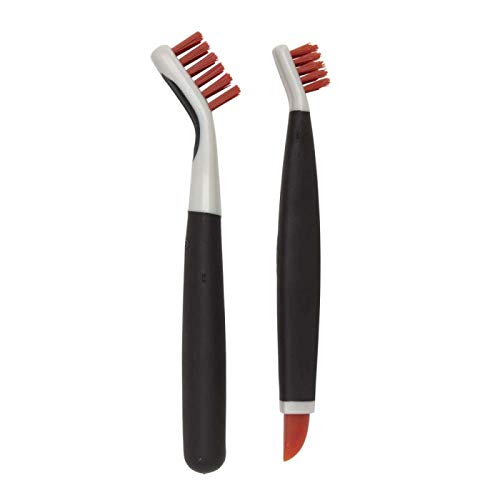 Compact bristle heads reach into exhaust hood vents, faucet gaps, and utensil crevices
Pros:
Compact bristle heads reach into exhaust hood vents, faucet gaps, and utensil crevices
Pros:
- Ergonomic Good Grips handles reduce hand fatigue during long shifts
- Multiple bristle sizes for every kitchen cleaning task
- Stiff bristles remove grime without scratching stainless steel
- Compact, lightweight design for easy storage Cons:
- Small brush heads are not ideal for large surface areas like prep tables
- Only available in orange, which may not match color-coded cleaning systems To order the OXO Good Grips Deep Clean Brush Set, view options on Amazon.
For tight-space scrubbing tools that reach into exhaust hood vents without scratching, tight-space scrubbing tools are a staple in most commercial kitchens. High-volume kitchens often rely on heavy-duty multi-pack brushes to tackle stuck-on food on cookware and prep surfaces without frequent replacement. For extended cleaning shifts, comfort-grip brush sets reduce hand fatigue with cushioned non-slip handles. For built-up grease on large equipment, electric scrubbing brushes cut down on manual labor and improve cleaning consistency.
Sanitizing Solutions & Compliance Equipment
Sanitizing is separate from cleaning: cleaning removes dirt and grease, while sanitizing kills disease-causing bacteria to meet health department requirements. Per the FDA Food Code sanitizer standards, most health departments require sanitizer concentrations of 50–200 ppm for quaternary ammonium compounds or 50–100 ppm for chlorine bleach for food contact surfaces. The CDC notes that improper sanitation of food contact surfaces is a leading contributor to foodborne illness outbreaks in food service settings, making consistent, compliant sanitization a non-negotiable part of kitchen operations. Color-coded buckets and test strips are required to ensure consistent concentration and prevent cross-contamination between raw meat, ready-to-eat foods, and produce.
The Steramine Sanitizer Tablet 150-Count Pack includes 15 QT-10 test strips to verify sanitizer concentration meets health department requirements, eliminating the guesswork of manual mixing. The tablets dissolve quickly in water with no harsh fumes, making them safe for use in occupied kitchen spaces during service.
 Test strips ensure sanitizer concentration meets health department requirements
Pros:
Test strips ensure sanitizer concentration meets health department requirements
Pros:
- Pre-measured tablets eliminate dilution errors for consistent sanitizer concentration
- Includes QT-10 test strips for easy compliance verification
- No harsh fumes, safe for use during service hours
- 150-count pack lasts 2–3 months for most mid-sized restaurants Cons:
- Requires careful storage in a cool, dry place to maintain effectiveness
- Not suitable for non-food contact surfaces like floors or restrooms To order Steramine Sanitizer Tablets with test strips, view options on Amazon.
The San Jamar Kleen-Pail Pro 6-Quart Sanitizer Pail is designed for high-traffic commercial kitchens, with a high-visibility red color that helps staff quickly identify it as a sanitizer-only bucket to avoid cross-contamination. Its sturdy bail handle makes it easy to transport between prep stations, and its compact size fits under most prep tables for convenient storage.
 High-visibility color reduces cross-contamination risk in busy back-of-house spaces
Pros:
High-visibility color reduces cross-contamination risk in busy back-of-house spaces
Pros:
- Durable plastic construction withstands frequent high-temperature washing
- 6-quart capacity is ideal for station-specific sanitizer mixing
- High-visibility red color reduces cross-contamination risk
- Lightweight design reduces staff fatigue during transport Cons:
- Limited capacity may require frequent refilling for very high-volume kitchens
- Plastic is less heat-resistant than metal alternatives for hot sanitizer solutions To order the San Jamar Kleen-Pail Pro, view options on Amazon.
For kitchens required to follow color-coded sanitation protocols, the Matthew 3-Bucket Color-Coded Cleaning Set simplifies wash, rinse, and sanitize workflows to prevent cross-contamination. The set includes red, green, and blue 3-quart buckets with built-in spouts to reduce spills when transferring solutions, plus 3 microfiber cloths for surface cleaning. Most local health departments require color-coding to separate raw meat (red), ready-to-eat foods (blue), and produce (green) cleaning tasks.
 Built-in spouts reduce spills when transferring cleaning solutions between stations
Pros:
Built-in spouts reduce spills when transferring cleaning solutions between stations
Pros:
- Color-coded design meets most health department cross-contamination requirements
- Built-in spouts reduce spills and mess during solution transfer
- Compact 3-quart size fits easily in tight kitchen spaces
- Includes microfiber cloths for immediate use Cons:
- 3-quart capacity may require frequent refilling for large kitchens
- Square shape may not fit standard round bucket holders To order the Matthew Color-Coded Bucket Set, view options on Amazon.
Reusable Cleaning Textiles
Disposable paper towels generate significant waste and high long-term costs for high-volume kitchens. Reusable microfiber cloths trap far more bacteria and dirt than standard cotton, and can be washed in high-temperature industrial washers to sanitize between uses. Look for color-coded cloths to match your bucket system, preventing cross-contamination between tasks.
The Atitifope 50-Pack Heavy Duty Reusable Wipes offers large 11.8×15.7 inch coverage for fast cleaning of prep tables, countertops, and equipment exteriors. Their heavy-duty fabric resists tearing, even when scrubbing tough grease, and they’re machine-washable for repeated sanitization. In practice, a 50-pack replaces hundreds of disposable paper towels per month, cutting supply costs and waste.
 Machine-washable design replaces disposable paper towels to reduce waste and long-term costs
Pros:
Machine-washable design replaces disposable paper towels to reduce waste and long-term costs
Pros:
- Large size covers more surface area per wipe for faster cleaning
- Heavy-duty fabric resists tearing during scrubbing
- Machine-washable for repeated sanitization
- Eco-friendly alternative to disposable paper towels Cons:
- Only available in green, which may not match color-coded cleaning systems
- Requires regular washing to maintain effectiveness and avoid bacterial growth To order the Atitifope Heavy Duty Reusable Wipes, view options on Amazon.
Pro Tips for Maintaining Cleaning Supply Hygiene
Proper maintenance of your cleaning supplies is just as important as choosing the right tools to ensure consistent hygiene:
- Store cleaning supplies away from food prep and storage areas to avoid accidental contamination. For home-based or small food service operations, kitchen safety locks for kids can keep cleaning chemicals out of reach of children and untrained staff.
- Replace scrub brushes and cloths every 3–6 months, or sooner if bristles fray or cloths develop permanent stains, as worn tools harbor harmful bacteria.
- Label all cleaning solution bottles with dilution ratios and use dates to ensure staff use the correct concentration for every task.
- Post a daily cleaning checklist in your back-of-house area to ensure all sanitization steps are completed consistently. For a customizable routine cleaning workflow, reference our step-by-step guide to avoid missed steps during busy service periods.
- For large commercial kitchens, electric scrubbing brushes can cut down on manual labor for floor and equipment cleaning, improving consistency across large areas.
Frequently Asked Questions
What is the best degreaser for restaurant kitchens?
For most commercial kitchens, a concentrated, EPA-registered degreaser like P&G Professional Dawn or Simple Green Industrial Cleaner is ideal. Concentrated formulas are cost-effective for high-volume use, and fast-acting options cut through fryer and grill grease without requiring excessive scrubbing. Avoid homemade degreaser mixes, as they often fail to meet health department residue requirements for food contact surfaces.
How do steel wire dishcloths improve cleaning?
Triple-layer steel wire dishcloths, like the Navona option, remove stuck-on food from cookware, sinks, and stovetops without scratching non-stick, stainless steel, or ceramic surfaces. Unlike steel wool, they don’t leave behind metal shards that can contaminate food, and they’re dishwasher-safe for repeated sanitization. They’re far more durable than standard cotton dishcloths, lasting 3–5x longer with regular use.
Which brush set cleans deep kitchen areas efficiently?
For hard-to-reach areas like exhaust hood vents, faucet crevices, and utensil gaps, a precision deep-clean brush set with small, stiff bristles and an ergonomic grip is most effective. The OXO Good Grips set, for example, includes multiple bristle sizes to tackle everything from grout lines to grill grates without damaging surfaces. For larger tasks, a multi-pack of heavy-duty scrubbing brushes can cover prep tables and cookware faster.
Are biodegradable cleaners safe for restaurant use?
Yes, as long as they are EPA-registered for food contact surfaces. Options like Seventh Generation’s Free & Clear All-Purpose Cleaner are free of dyes and fragrances, making them safe for staff with chemical sensitivities, and they meet most health department requirements for residue-free cleaning. Look for the EPA Safer Choice label to confirm the product meets safety standards for food service use.
What sanitizing buckets are best for restaurants?
Color-coded 3–6 quart buckets with built-in spouts are the gold standard for commercial kitchens. The Matthew 3-bucket set, for example, uses red, green, and blue buckets to designate wash, rinse, and sanitize steps, reducing cross-contamination risk. High-visibility colors like red also help staff quickly identify sanitizer buckets in busy back-of-house spaces, avoiding accidental misuse.
How do enzyme degreasers help floor cleaning?
Enzyme-based floor cleaners break down organic grease and food residue at a molecular level, rather than just lifting dirt to the surface. This eliminates the root cause of lingering kitchen odors, and they’re safe for use on tile, laminate, and sealed hardwood without damaging finishes. For large open kitchen spaces, pairing these cleaners with a large-area floor cleaning machine reduces manual labor and ensures even coverage.
How often should I replace kitchen cleaning supplies?
Scrub brushes should be replaced every 3–6 months, or sooner if bristles fray, as worn bristles harbor bacteria and scratch surfaces. Microfiber cloths and steel wire dishcloths can last 6–12 months with regular high-temperature washing. Sanitizer tablets should be stored in a cool, dry place and replaced according to the manufacturer’s expiration date to ensure consistent effectiveness.
Can I use the same cloths for raw meat and ready-to-eat surfaces?
No. Cross-contamination from raw meat bacteria is a leading cause of foodborne illness, so you should use separate, color-coded cloths for each task. For example, red cloths for raw meat prep surfaces, blue for ready-to-eat foods, and green for produce. Always wash cloths in hot water (at least 160°F) between uses to sanitize them.
Conclusion
Investing in the right commercial kitchen cleaning supplies isn’t just about passing health inspections—it’s about protecting your customers, your staff, and your business’s reputation. The tools outlined above, from EPA-registered degreasers to color-coded sanitizing buckets, work together to eliminate grease, kill harmful bacteria, and reduce cross-contamination risk. For small kitchens, start with the core categories of degreaser, sanitizer, and scrubbing tools, then add floor-specific solutions and textiles as your service volume grows. Consistent sink and surface sanitation is one of the most impactful steps you can take to reduce foodborne illness risk, and the right supplies make that process faster, safer, and more cost-effective. To build a customized cleaning supply kit tailored to your restaurant’s size and volume, browse our full range of vetted commercial kitchen tools and hygiene products today.

I’m Abby Lu, a passionate home cook who loves simplifying everyday meals. At PlugChef.com, I share product reviews and cooking guides to help you find the best tools for your kitchen.
Related posts:
 Kitchen LED Lights Under Cabinet: Illuminate Your Space with Style
 Best Kitchen Knife Set Under 100: Top Affordable Picks for Every Chef
 Led Lights for Kitchen under Cabinet: Illuminate Your Space with Style
 Best Kitchen Drawer Organizers: Transform Clutter into Functional Elegance
 Best Wood Cleaner for Kitchen Cabinets to Restore Shine and Cleanliness
 Hope’S Perfect Kitchen Cleaner Reviews: Ultimate Streak-Free Multi-Surface Solution