

Beef bone broth has earned its place as a staple in modern kitchens, and for good reason: this rich, savory liquid adds depth of flavor to almost any dish, while packing a serious nutritional punch that fits perfectly with 2026’s focus on nutrient-dense, low-waste cooking. Unlike plain water or standard stock, beef bone broth is brewed slow and low from roasted bones, connective tissue, and aromatics, releasing collagen, gelatin, minerals, and natural umami that transform even the simplest meals into satisfying, nourishing fare. Whether you’re looking to boost the protein content of weeknight dinners, soothe digestive discomfort, or just add a cozy, meaty richness to your cooking, the recipes below are tested for flavor, ease, and maximum benefit from this versatile ingredient. If you’re cooking with little helpers in the kitchen, taking a few seconds to secure no-drill child safety locks can keep curious hands away from hot pots and sharp utensils.
Why Beef Bone Broth Deserves a Spot in Your Kitchen
Far more than just a soup base, beef bone broth offers unique benefits that set it apart from other cooking liquids. Its natural umami flavor lets you cut back on added salt and artificial seasonings, while its nutrient profile supports overall wellness with every serving. For context, per USDA’s FoodData Central, a standard 1-cup serving of homemade unsalted beef bone broth contains roughly 7 grams of protein, trace fat, and meaningful amounts of calcium, magnesium, and phosphorus, alongside collagen and gelatin released during long simmering. These nutrients support joint flexibility, gut lining health, and skin elasticity, making it a functional addition to almost any meal. For more on this, see our guide on 1 1 2 lbs potatoes easy recipes for.
A common misconception is that all bone broth is created equal: store-bought versions are often thin, high in sodium, and lack the collagen content of homemade batches, as many are made with meat scraps rather than bone and connective tissue. Homemade broth also lets you control every ingredient, avoiding preservatives and excess additives common in commercial products. If you’re short on time, look for store-bought options labeled “bone broth” (not just “beef stock,” which is typically just flavored water) with a gelatinous texture when chilled, a sign of high collagen content.
How to Make Foolproof Beef Bone Broth at Home
Making beef bone broth at home is simpler than it sounds, and the payoff is a far more flavorful, nutrient-dense base for all your recipes. The process requires minimal active time, just patience for the long simmer. For more on this, see our guide on recipes that use bone broth.
Choosing and Prepping Bones
For the deepest flavor and highest collagen yield, use a mix of bone cuts: marrow bones add rich, buttery notes, knuckle bones release gelatin for a thick, silty texture, and oxtail adds extra savory depth. Ask your butcher for “soup bones” or beef knuckles if you can’t find individual cuts, and opt for bones from grass-fed beef if possible, as they tend to have a higher nutrient profile. Before simmering, toss the bones on a baking sheet and roast at 400°F for 30 minutes to trigger the Maillard reaction, which deepens the broth’s color and eliminates any raw meat taste—this step is optional but makes a huge difference in final flavor.
Core Ingredients and Method
You only need a handful of ingredients for a basic batch:
- 3–4 pounds of mixed beef bones
- Cold water, enough to cover the bones by 2 inches
- 2 tablespoons apple cider vinegar (helps break down connective tissue to extract minerals; don’t skip this)
- 1 roughly chopped onion, 2 chopped carrots, 2 chopped celery stalks
- 2 bay leaves, 1 teaspoon dried thyme, salt and pepper to taste
Place the roasted bones in a large stockpot or slow cooker, cover with cold water and apple cider vinegar, and let sit for 30 minutes to allow the vinegar to start breaking down the bones. Add the aromatics and herbs, then bring to a bare simmer (tiny, occasional bubbles, not a rolling boil) and cook for 12–24 hours: longer simmering yields more collagen and deeper flavor, but 12 hours is sufficient for a tasty, nutrient-rich batch. Skim off any foam or impurities that rise to the surface in the first 30 minutes of simmering to avoid off-flavors, and add the vegetables in the last 2 hours of cooking if you don’t want them to turn mushy. Use a sharp, well-maintained cutting board to dice your mirepoix evenly; if you’re looking to upgrade your prep space, custom engraved cutting boards offer a durable, personalized option for frequent cooks. For more on this, see our guide on recipes using chicken bone broth.
Per FDA food safety guidelines, always cool homemade broth to room temperature within 2 hours of cooking to prevent bacterial growth, then store in airtight containers.
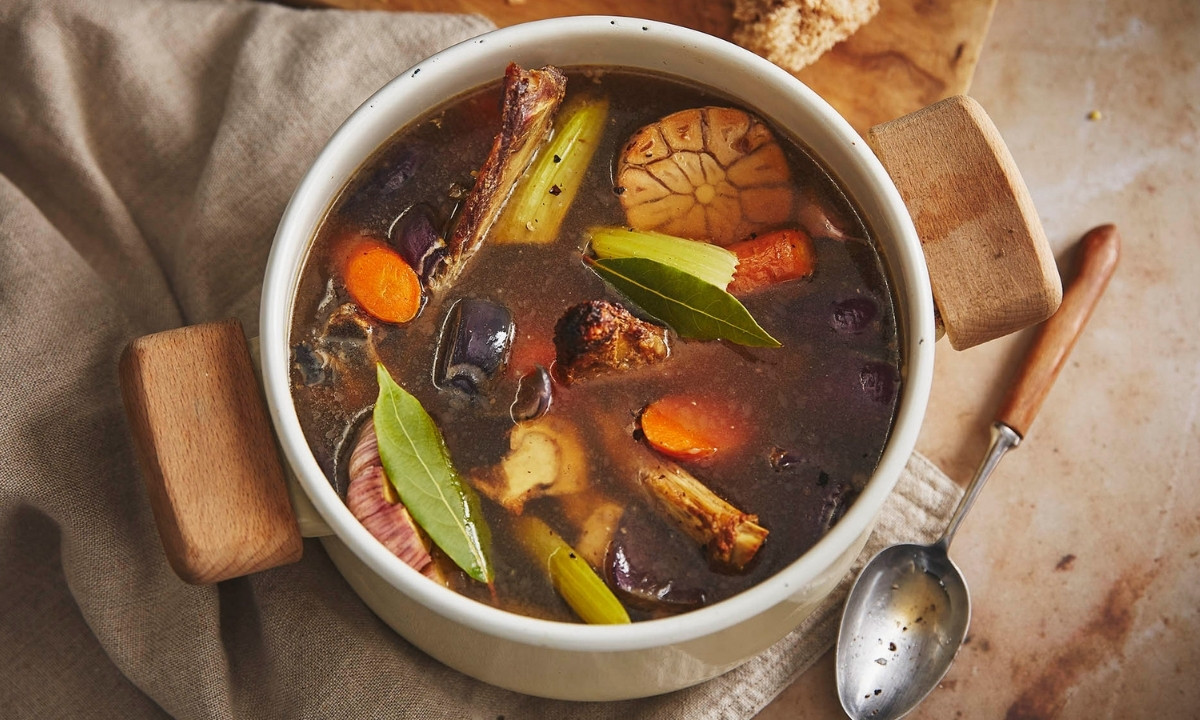 Freshly strained homemade beef bone broth, ready to use in soups, stews, and sauces
Credit: originalsin.com.sg
Freshly strained homemade beef bone broth, ready to use in soups, stews, and sauces
Credit: originalsin.com.sg
Easy, Tested Recipes With Beef Bone Broth
Once you have a batch of homemade (or quality store-bought) bone broth, these tested recipes highlight its versatility across meal types, all requiring minimal hands-on time and common ingredients. For more on this, see our guide on easy vegetarian crock pot recipes.
Cozy Soups and Stews
Beef bone broth is the ultimate base for cold-weather comfort food, adding depth that water or standard stock can’t match.
- Classic Beef Stew: Sear 1.5 pounds of cubed chuck roast in a Dutch oven, then add 4 cups of bone broth, 2 cups diced carrots, 1.5 cups diced potatoes, 1 chopped onion, 2 tablespoons of tomato paste, 1 teaspoon of thyme, and a splash of red wine for extra depth. Simmer on low for 1.5 hours, or 45 minutes in an Instant Pot, until the beef is tender. A common mistake is overcooking the vegetables; add them halfway through cooking to keep them crisp.
- Hearty Vegetable Soup: Sauté 1 chopped onion and 2 cloves of minced garlic, then add 4 cups of bone broth, 2 cups diced seasonal vegetables (zucchini, green beans, carrots), 1 can of drained white beans, and 1 teaspoon of dried oregano. Simmer for 20 minutes until veggies are tender, then finish with a handful of fresh parsley. This soup is packed with fiber and protein, and the bone broth adds a savory richness that makes it feel indulgent without heavy cream.
- Spicy Vietnamese Pho: Toast 2 star anise, 1 cinnamon stick, and 1 teaspoon of cloves in a dry pan for 2 minutes to release their aroma, then add to 4 cups of bone broth and simmer for 30 minutes to infuse. Strain the broth, then add rice noodles, thinly sliced sirloin, fresh basil, lime wedges, and sriracha to taste. For tender, rare beef, drop the raw slices directly into the hot broth just before serving.
 Long, slow simmering in a crockpot extracts maximum collagen and flavor from beef bones
Credit: www.simplysuwanee.com
Long, slow simmering in a crockpot extracts maximum collagen and flavor from beef bones
Credit: www.simplysuwanee.com
Hearty Main Dishes
Bone broth adds moisture and depth to main courses that rely on slow cooking or rich sauces.
- Braised Short Ribs: Sear 4 pounds of bone-in short ribs on all sides, then deglaze the pan with 1 cup of red wine, scraping up any browned bits. Add 3 cups of bone broth, 1 chopped onion, 2 chopped carrots, and 2 tablespoons of Worcestershire sauce, then cover and braise at 325°F for 3 hours, or 1 hour in an Instant Pot, until the meat falls off the bone. The bone broth creates a glossy, thick sauce without needing extra cornstarch or flour, and the collagen from the broth makes the meat impossibly tender.
- Beef Stroganoff: Sear 1 pound of sirloin strips, then set aside. In the same pan, sauté 8 ounces of sliced mushrooms, then add 1.5 cups of bone broth, 1 teaspoon of paprika, and 1 tablespoon of Dijon mustard. Simmer for 5 minutes, then return the beef to the pan and stir in ½ cup of sour cream off heat to prevent curdling. Serve over egg noodles for a creamy, protein-packed dinner.
- Bone Broth Risotto: Toast 1.5 cups of arborio rice in a pan with 1 tablespoon of butter for 2 minutes, then add 1 cup of bone broth at a time, stirring constantly and waiting for the liquid to absorb before adding more, for a total of 4–5 cups of broth. Finish with ½ cup of grated parmesan, 2 tablespoons of butter, and sautéed wild mushrooms. The bone broth adds a deeper, earthier umami than chicken or vegetable broth, making this dish perfect for cold nights.
 Creamy beef bone broth risotto, a quick weeknight main dish packed with umami
Credit: www.bakedbymelissa.com
Creamy beef bone broth risotto, a quick weeknight main dish packed with umami
Credit: www.bakedbymelissa.com
Quick Weeknight Meals
For busy nights when you don’t have hours to simmer a stew, these recipes come together in 30 minutes or less, no advanced skills required. These recipes are perfect for busy families, and pairing them with kitchen safety essentials for families can keep curious toddlers from accessing sharp utensils or hot dishes while you cook. For more on this, see our guide on easy salmon recipes from frozen.
- Savory Bone Broth Smoothie: It may sound unusual, but chilled beef bone broth makes a fantastic savory smoothie base. Blend 1 cup of chilled bone broth, 1 cup of spinach, ½ frozen banana, 1 scoop of vanilla protein powder, and 1 tablespoon of almond butter for a filling, nutrient-dense breakfast or post-workout snack that avoids the sugary aftertaste of fruit-heavy smoothies.
- Instant Pot Beef and Barley Stew: Brown 1 pound of ground beef in an Instant Pot, then add 3 cups of bone broth, 1 cup of pearl barley, 1 cup of diced carrots, 1 chopped onion, 1 teaspoon of garlic powder, and salt and pepper to taste. Cook on high pressure for 25 minutes, then let the pressure release naturally for 10 minutes. This hearty, fiber-rich meal requires minimal prep and cleanup.
- One-Pot Beef and Rice: Brown 1 pound of ground beef in a large pot, then add 1 cup of white rice, 2 cups of bone broth, 1 cup of frozen peas and carrots, 1 teaspoon of dried oregano, and salt and pepper to taste. Bring to a boil, then cover and simmer on low for 20 minutes until the rice is tender and liquid is absorbed. No draining required, just one pot to wash.
Creative, Unexpected Uses for Beef Bone Broth
Beyond soups and stews, beef bone broth shines as a secret ingredient in sauces, marinades, and even baked goods, adding moisture and umami without extra effort.
- Pan Sauces and Gravies: After roasting a chicken, steak, or pork roast, deglaze the hot pan with ½ cup of bone broth, scraping up all the browned, flavorful bits stuck to the bottom. Simmer with a splash of Worcestershire sauce and a cornstarch slurry for a rich, no-waste gravy that pairs perfectly with mashed potatoes or roasted vegetables.
- Meat Marinades: Mix 1 part bone broth, 1 part low-sodium soy sauce, 2 cloves of minced garlic, 1 tablespoon of grated ginger, and 1 teaspoon of honey for a tenderizing, flavor-packed marinade for steak, ribs, or pork chops. Marinate for 4–6 hours before cooking for juicy, flavorful results.
- Savory Baked Goods: Replace the water or milk in your favorite savory biscuit or cornbread recipe with 1 cup of beef bone broth for a moist, umami-rich side that pairs perfectly with stews or roasted meats. You can also add ¼ cup of bone broth to meatloaf or meatball mixes to keep them juicy without extra fat. For easy cleanup after prepping marinade ingredients, versatile brush sets for prep can help scrub dirt off root veggies and herbs in seconds.
Storage and Safety Best Practices
Proper storage keeps your beef bone broth fresh, safe, and full of flavor for weeks. Per FDA guidelines, always cool homemade broth to room temperature within 2 hours of cooking to avoid bacterial growth, then transfer to airtight glass containers (plastic can absorb odors and leach chemicals over time, especially when reheating). Refrigerated broth will stay fresh for 3–4 days, while frozen broth keeps for up to 6 months. When reheating, only warm the portion you plan to use, and bring it to a rolling boil for at least 1 minute to kill any bacteria that may have developed during storage. Never reheat broth multiple times, as each cooling and reheating cycle increases the risk of contamination. If your broth develops a sour smell, cloudy appearance, or mold growth, discard it immediately—don’t taste test to check for spoilage. After cooking and storing your broth, use sturdy scrubbers for cookware to lift any leftover bone bits or stained residue from your pots and storage containers.
Frequently Asked Questions
What are the most popular recipes with beef bone broth?
The most crowd-pleasing options include slow-braised short ribs, classic beef stew, Vietnamese pho, creamy beef stroganoff, and umami-rich risotto. For quick meals, try one-pot beef and barley stew, savory bone broth smoothies, or using it as a base for pan gravies and meat marinades. All of these highlight the broth’s deep, savory flavor without requiring advanced cooking skills.
Does cooking with beef bone broth add significant nutrition?
Yes, especially when using homemade broth with no added preservatives or excess sodium. Each 1-cup serving adds 5–7 grams of protein, plus collagen, gelatin, and minerals like calcium, magnesium, and phosphorus that support joint, gut, and skin health. It also boosts natural umami, so you can reduce added salt in recipes by up to 30% without sacrificing flavor.
Can I use store-bought beef bone broth instead of homemade?
Yes, but opt for options with no added preservatives, low sodium, and a gelatinous texture when chilled (a sign of high collagen content). Avoid products labeled “beef stock,” which are typically just flavored water with no bone-derived nutrients. For the best results, choose a low-sodium variety so you can control the seasoning in your recipes.
How long do I need to simmer beef bone broth for recipes?
For maximum flavor and nutrient extraction, simmer for 12–24 hours on low heat. If you’re short on time, 4–6 hours will still produce a flavorful broth, though it will have less collagen. Never boil the broth, as this creates a cloudy, greasy texture and breaks down delicate collagen proteins.
Is beef bone broth safe for people with dietary restrictions?
Unsalted, homemade beef bone broth is naturally gluten-free, dairy-free, and compatible with paleo, keto, and Whole30 diets (as long as no non-compliant ingredients are added during cooking). Always check labels of store-bought versions for hidden additives like gluten, soy, or excess sodium if you have dietary restrictions.
Conclusion
Beef bone broth is one of the most versatile, nutrient-dense ingredients you can keep in your kitchen, elevating everything from quick weeknight smoothies to slow-braised weekend feasts with minimal effort. Its deep, savory flavor eliminates the need for excess salt or artificial seasonings, while its collagen and mineral content add functional benefits to every meal. If you’ve never cooked with it before, start with a small batch of homemade broth this weekend, then test one of the quick weeknight recipes for a fast, satisfying meal that feels like a hug in a bowl. For more easy kitchen tips and tools to simplify your cooking routine, browse our full library of guides and products.

I’m Abby Lu, a passionate home cook who loves simplifying everyday meals. At PlugChef.com, I share product reviews and cooking guides to help you find the best tools for your kitchen.
Related posts:
 Kitchen Sink Mats at Target: Enhance Your Kitchen Space
 Pinks Rose Print under Sink Mat: Elevate Your Kitchen Decor
 Oxo Good Grips Silicone Sink Mat: Ultimate Protection
 3 Shelf Hanging Closet Organizer: Maximize Your Space
 Do It Yourself Pantry Organizers: Transform Your Space
 How Many Coats of Mineral Oil on Cutting Board: Expert Guide

