Industrial kitchen exhaust hoods—Type 1 units for grease-laden vapors and Type 2 units for heat and steam—are critical for maintaining air quality, preventing fire hazards, and staying compliant with local health and safety codes. Grease buildup is the leading cause of commercial kitchen fires, per NFPA 96 commercial cooking ventilation standards, and even thin layers of grime can reduce exhaust efficiency by 30% or more, increasing energy costs and trapping cooking fumes that cause respiratory irritation for staff. Using purpose-built tools makes daily maintenance quick and deep quarterly cleans effective, cutting down on labor costs and preventing costly downtime from code violations or fire damage. This guide covers the essential tools for every stage of industrial hood cleaning, plus safety protocols and use-case recommendations to fit your kitchen’s unique needs.
Consistent cleaning is a core part of overall commercial kitchen best practices, reducing cross-contamination risk and extending the lifespan of expensive kitchen equipment.
Why Regular Industrial Hood Cleaning Is Non-Negotiable
Grease and grime buildup in exhaust hoods and ductwork is not just a nuisance—it is a serious safety and operational risk. Polymerized grease, the hardened, baked-on residue that forms when hot cooking vapors condense on cool metal surfaces, is highly flammable; a single spark from cooking equipment can ignite a full kitchen fire in seconds. The NFPA reports that greasy exhaust systems are a factor in 1 in 5 restaurant fire incidents annually, making regular cleaning a legal requirement in most jurisdictions.
Beyond fire risk, clogged exhaust filters reduce airflow, trapping smoke, heat, and airborne grease particles that settle on food prep surfaces, including fresh produce storage areas, increasing cross-contamination risk. Built-up grime also weighs down exhaust fans, causing premature motor wear and leading to costly repairs or full system replacement. Most local health departments enforce NFPA 96 guidelines, which require quarterly deep cleaning for most commercial kitchens, with high-volume operations needing monthly service to remain compliant.
Essential Tool Categories for Grease and Grime Removal
The right tools for industrial hood cleaning depend on the stage of cleaning and the type of buildup you are addressing. Below are the core tool categories, with recommendations for heavy-duty, commercial-grade options that hold up to repeated use in high-volume environments.
Heavy-Duty Degreasing Solutions
For daily post-shift wipe-downs and pre-clean pretreatment of heavy buildup, industrial degreasing wipes and sprays are the first line of defense. Unlike standard dish soap, commercial degreasers are formulated to break down polymerized grease without leaving soapy residue that can attract more dirt over time. A common mistake in many commercial kitchens is using household all-purpose cleaners for hood maintenance, which cut through light grease but fail to lift the baked-on residue that accumulates on exhaust fans and filter surfaces.
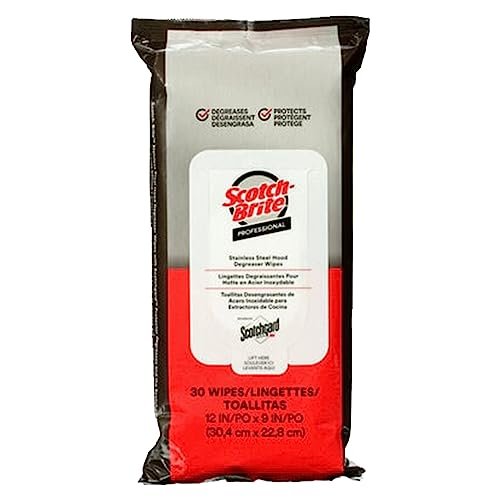
For quick, mess-free daily cleaning, pre-moistened degreasing wipes are a convenient option. The Scotch-Brite Kitchen Cleaner and Degreaser Wipes with Scotchgard Protector are formulated for stainless steel, coated metal, and plastic hood components, and the included Scotchgard barrier reduces grease re-adhesion between deep cleans, cutting down on daily labor. They are scratch-safe, making them suitable for polished hood finishes and delicate vent edges. The only trade-off is that they are single-use, which creates more waste than reusable cloths; for high-volume kitchens, pair them with reusable microfiber cloths for light messes, and reserve disposable wipes for heavy grease to avoid cross-contamination of food-contact surfaces. Always choose degreasers that meet EPA safer cleaning product guidelines for food service to avoid toxic chemical exposure for staff.
 Pre-moistened degreasing wipes are ideal for quick post-shift wipe-downs of hood exteriors and grease traps.
Image source: Amazon
Pre-moistened degreasing wipes are ideal for quick post-shift wipe-downs of hood exteriors and grease traps.
Image source: Amazon
Pros:
- Powerful degreasing formula lifts baked-on grease without scrubbing
- Scotchgard Protector reduces smudge and grease re-adhesion between cleans
- Scratch-safe for all stainless steel and coated hood surfaces
- Pre-moistened, no mixing or messy sprays required
- Compact 9×12 inch size works for both small vent edges and large flat hood surfaces
Cons:
- Single-use design creates more waste than reusable cleaning cloths
- May require multiple wipes for extremely heavy, caked-on grease buildup
Precision Scrapers for Baked-On Grime
Scrapers are designed to lift thick, caked-on grease that degreaser alone cannot remove, from vent edges, filter frames, and metal hood seams. The two most common materials are brass and stainless steel: brass is softer than stainless steel, so it will not scratch polished hood finishes, while stainless steel scrapers are durable enough for uncoated metal surfaces and extremely tough, baked-on deposits.
The Leuapl Kitchen Stove Cleaning Brush Set includes both a durable stainless steel scraper and brass wire brushes, making it a versatile all-in-one option for precision cleaning. The scraper is rigid enough to pry off thick grease without bending, and the brass brushes are perfect for scrubbing around tight vent seams and gas burner edges where grease hardens into stubborn deposits. The compact, lightweight design (1 pound total) makes it easy to maneuver in narrow hood vent slots that larger brushes cannot reach, a common pain point for kitchen staff. Brass is also non-sparking, a key safety feature for kitchens with gas cooking appliances. The only limitation is its small size, which makes it less efficient for cleaning large flat surfaces; for those areas, pair it with a larger scrub brush or drill attachment.
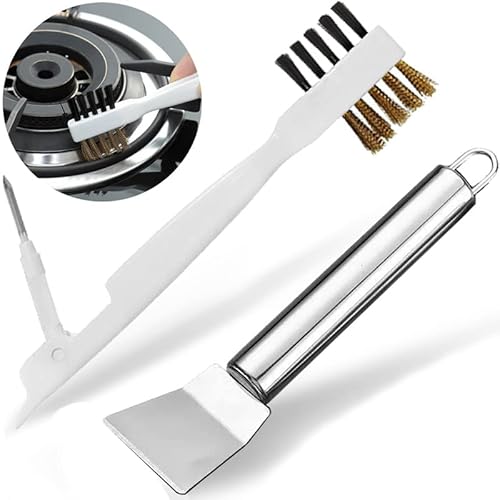 Brass wire brushes are non-scratching and non-sparking, making them safe for use on stainless steel hood surfaces near gas appliances.
Image source: Amazon
Brass wire brushes are non-scratching and non-sparking, making them safe for use on stainless steel hood surfaces near gas appliances.
Image source: Amazon
Pros:
- Durable brass bristles lift grease without scratching stainless steel
- Included stainless steel scraper removes baked-on residue from metal edges
- Compact, lightweight design for reaching tight vent crevices
- Non-sparking brass for safe use near gas appliances
- Versatile for cleaning cooktops, grill grates, and cooking utensils in addition to hoods
Cons:
- Small size requires more effort for large flat surface cleaning
- Not suitable for non-stick cookware or painted surfaces
Abrasive Brushes for Heavy, Stubborn Buildup
For deep quarterly cleans, abrasive brushes cut down on scrubbing labor by agitating hardened grease and lifting it from rough, porous surfaces. Drill-compatible options are especially useful for large commercial hoods with extensive surface area, as they reduce manual labor time significantly.
The stainless steel wire brush with TPR handle is designed for heavy-duty use, with stiff stainless steel bristles that rust and remove stuck-on grime from uncoated metal hood surfaces, exhaust fans, and outdoor grill hoods. Its drill-compatible design lets staff clean large surfaces in a fraction of the time of hand scrubbing, and the heat-resistant TPR handle provides a secure, comfortable grip even when working near warm exhaust ducts. The only trade-off is its abrasiveness: only use it on uncoated metal surfaces, never on polished stainless steel or painted hood exteriors to avoid scratching. The sharp bristles also require careful handling, so always wear cut-resistant gloves when using this tool.
 Attaching this brush to a drill cuts down on labor time for large commercial hoods with extensive surface area.
Image source: Amazon
Attaching this brush to a drill cuts down on labor time for large commercial hoods with extensive surface area.
Image source: Amazon
Pros:
- Stiff stainless steel bristles remove rust and baked-on grime quickly
- Drill-compatible design reduces labor time for large surfaces
- Heat-resistant TPR handle for safe use near warm exhaust ducts
- Versatile for cleaning grills, range hoods, and industrial metal surfaces
- Durable construction holds up to repeated heavy-duty use
Cons:
- Too abrasive for polished stainless steel or painted surfaces
- Requires cut-resistant gloves to avoid injury from sharp bristles
- Not compatible with all drill models without separate attachments
For hand scrubbing of tight spaces and filter mesh, the 2pcs Kitchen Cleaning Scrub Brush Set with stiff brass bristles and integrated cooktop scraper is a practical choice. The stiff brass bristles penetrate deep into hood vent crevices and filter gaps to lift hardened grease, while the built-in scraper pries off thick, caked deposits without damaging delicate filter mesh. The compact, lightweight design prevents hand fatigue during extended cleaning sessions, and the set is versatile enough for cleaning gas stove grates, pots, pans, and other kitchen equipment in addition to hoods. Like all wire brushes, avoid using on non-stick surfaces, but this is not a limiting factor for industrial hood cleaning, where surfaces are almost always uncoated metal.
 Stiff brass bristles reach deep into hood vent crevices and filter gaps to lift hardened grease deposits.
Image source: Amazon
Stiff brass bristles reach deep into hood vent crevices and filter gaps to lift hardened grease deposits.
Image source: Amazon
Pros:
- Stiff brass bristles scrub deep into crevices and filter gaps
- Integrated scraper removes thick grease without damaging filter mesh
- Lightweight, compact design for comfortable extended use
- Versatile for cleaning cooktops, grill grates, and cookware
- Affordable two-piece set for small commercial kitchens
Cons:
- Abrasive bristles can damage non-stick or painted surfaces
- Small size requires more effort for large flat surface cleaning
Industrial-Grade Wiping and Absorbency
After scrubbing and degreasing, durable wiping cloths are used to remove residue, dry surfaces, and clean up spills without tearing. The Tork 520337 Industrial Cleaning Cloth is a top choice for commercial kitchens, with a centerfeed design that lets staff pull single cloths without touching the rest of the roll, reducing cross-contamination risk. The 1-ply construction is more durable than thicker cloths for industrial use, as it will not tear when scrubbing rough vent surfaces or wiping concentrated degreaser. Its gray color lets staff easily see when a cloth is saturated with grease, so they do not spread old residue around clean surfaces. The 12.6-inch width and 416.7-foot roll length minimize roll changes during long cleaning sessions, and the 9.84-inch roll diameter fits standard industrial dispensers for easy integration into existing kitchen supply setups. The only trade-off is lower absorbency for heavy liquid spills; for those cases, pair with a separate absorbent pad, but for wiping degreaser and lifting grease residue, the 1-ply design is sufficient and reduces waste by letting staff use only what they need.
 Centerfeed design lets staff pull single cloths without touching the roll, reducing cross-contamination risk in busy kitchens.
Image source: Amazon
Centerfeed design lets staff pull single cloths without touching the roll, reducing cross-contamination risk in busy kitchens.
Image source: Amazon
Pros:
- Durable 1-ply construction resists tearing during heavy scrubbing
- Centerfeed design reduces cross-contamination and waste
- Large roll size minimizes frequent replacements during long cleans
- Gray color hides stains, making it easy to spot saturated cloths
- Fits standard industrial dispensers for easy integration
Cons:
- Lower absorbency than thicker cloths for heavy liquid spills
- Single roll packaging may not be sufficient for extremely high-volume kitchens
Safety Protocols for Industrial Hood Cleaning
Cleaning industrial exhaust hoods involves working with harsh chemicals, sharp tools, and hot metal surfaces, so following safety protocols is non-negotiable to avoid injury or damage. Always wear chemical-resistant gloves, non-slip closed-toe shoes, and safety goggles when cleaning, especially when using degreasers or wire brushes. Turn off the exhaust fan and let the hood and exhaust ducts cool completely before starting work to avoid burns from hot metal surfaces. Use degreasers in well-ventilated areas, and never mix cleaning products (especially bleach and ammonia-based cleaners), as this can release toxic fumes. Soak grease-laden rags and cloths in sealed metal containers before disposal, as accumulated grease can spontaneously combust if left in open trash bins. For additional kitchen maintenance guides on safety compliance, refer to local health department and OSHA workplace safety standards.
Matching Tools to Your Kitchen’s Use Case
The best toolset for your kitchen depends on your operation’s size, volume, and cooking style. High-volume restaurants with 100+ daily covers should prioritize drill-compatible brushes, bulk rolls of industrial wiping cloths, and concentrated degreasers to cut down on labor time for frequent cleaning. Hoods over high-heat pizza operations accumulate grease significantly faster than standard stovetop hoods, so prioritize durable brass scrapers and heavy-duty degreasing wipes for more frequent maintenance. Small commercial kitchens, including cafes and food trucks, can get by with hand-held brush sets and disposable wipes, with no need for expensive drill attachments. For mixed-use kitchens with outdoor cooking areas, the same tools work for outdoor grill hoods, but prioritize rust-resistant stainless steel brushes to avoid corrosion from outdoor elements. Always rinse degreaser residue thoroughly from hood surfaces to avoid transfer to food, especially when selecting cooking oil varieties for your kitchen.
Frequently Asked Questions
What is the required frequency for industrial kitchen hood deep cleaning?
Most jurisdictions follow NFPA 96 standards, which require quarterly deep cleaning for most commercial kitchens. High-volume operations, including restaurants with 100+ daily covers or hoods over high-heat cooking equipment like wok stations or pizza ovens, require monthly deep cleaning to remain compliant with fire safety codes.
Are brass brushes safe for stainless steel kitchen hood surfaces?
Yes, brass is a soft metal that is harder than grease but softer than stainless steel, so it will not scratch or damage polished hood finishes. It is also non-sparking, making it a safe choice for kitchens with gas cooking appliances.
Can I use household cleaning tools for industrial hood cleaning?
Household scrub brushes and all-purpose cleaners are not formulated to break down the thick, polymerized grease that builds up in industrial exhaust hoods. Industrial-grade tools and degreasers are designed to cut through this buildup without damaging heavy-duty hood surfaces, and they hold up to repeated use in high-volume environments.
How do I dispose of grease waste from hood cleaning?
Scrape solidified grease into a sealed, leak-proof container and dispose of it with your kitchen’s regular grease waste, following local waste management guidelines. Never pour large amounts of grease down the drain, as it can cause severe plumbing blockages.
Do I need to remove hood filters for cleaning?
Yes, filters are the primary catch for grease, so they should be removed and soaked in degreaser during every deep clean. Use a brass brush to scrub away buildup from filter mesh before reinstalling to ensure optimal airflow and exhaust performance.
What PPE is required for industrial hood cleaning?
Always wear chemical-resistant gloves, non-slip closed-toe shoes, and safety goggles when cleaning hoods. For jobs involving wire brushes or concentrated degreasers, add a face shield and long-sleeved clothing to protect against chemical splashes and bristle-related injuries.
Maintaining Your Cleaning Tools for Long-Term Use
Proper tool maintenance extends the lifespan of your cleaning equipment and ensures consistent performance. After each use, rinse brushes, scrapers, and cloths with hot water to remove grease residue, then air dry completely to avoid rust and corrosion. Store degreasing wipes in a cool, dry place away from direct sunlight to prevent the formula from drying out. Replace wire brushes when bristles become frayed, as worn bristles are less effective at lifting grease and can leave metal fragments on hood surfaces. For drill attachments, wipe down the chuck and connection point after each use to avoid grease buildup that can damage the drill over time.
Conclusion
Investing in purpose-built tools for industrial kitchen hood cleaning reduces long-term labor costs, minimizes fire risk, and keeps your commercial kitchen compliant with local safety codes. Daily wipe-downs with degreasing wipes, combined with quarterly deep cleans using scrapers, abrasive brushes, and industrial wiping cloths, will keep even the toughest grease and grime at bay. Consistent cleaning of all kitchen surfaces, including small appliances used for streamlined cooking workflows, reduces overall grease accumulation and improves air quality for staff and customers alike.
Don’t wait for heavy buildup to cause costly damage or code violations: build a core set of durable, commercial-grade cleaning tools and stick to a regular cleaning schedule. A well-maintained exhaust hood protects your staff, your equipment, and your business’s bottom line.

I’m Abby Lu, a passionate home cook who loves simplifying everyday meals. At PlugChef.com, I share product reviews and cooking guides to help you find the best tools for your kitchen.
Related posts:
 Rubber Feet for Kitchen Appliances: Enhance Stability & Protect Surfaces
 Best Way to Pack Kitchen Appliances: Tips for Space-Saving Solutions
 Best Single Serve Coffee Makers: Discover Top Picks for Quick Brews
 Best Vegetable Chopping Tools for Effortless and Precise Kitchen Prep
 Best Spinner for Northern Pike: Top Lures to Catch Trophy Fish
 Best Non Toxic Kitchen Utensil Set for Safe and Stylish Cooking