
If you’ve ever worried about toxins leaching from your non-stick pans into your weeknight stir-fry, or cringed at the cost of replacing cheap, warped cookware every year, you’re not alone. In 2026, growing awareness of PFAS chemicals in conventional cookware and the environmental impact of disposable kitchenware has made eco-friendly kitchen cookware a top priority for home cooks who want to protect their health and the planet without sacrificing performance. This guide breaks down exactly what makes cookware sustainable, what to avoid, and how to build a toxin-free kitchen that fits your budget and cooking style.
Key Benefits of Switching to Non-Toxic, Sustainable Cookware
Eco-friendly cookware isn’t just a marketing buzzword: it delivers tangible benefits for your health, your wallet, and the environment, from reducing daily toxin exposure to cutting down on household waste.
Eliminates Harmful Chemical Exposure
Traditional non-stick cookware often uses PFAS (per- and polyfluoroalkyl substances) coatings that can leach into food when heated above 400°F, with potential long-term health implications. Even cookware labeled "PFOA-free" may contain unstudied replacement PFAS chemicals, per 2026 FDA guidance. Eco-friendly options made from uncoated stainless steel, cast iron, or pure ceramic contain no synthetic non-stick coatings, so you never have to worry about ingesting hidden toxins while cooking. For small swaps to reduce overall kitchen chemical exposure, check out eco-friendly kitchen waste reduction tips.
Cuts Long-Term Energy Costs
Sustainable cookware is designed for optimal heat conductivity, meaning it heats up faster and retains heat more evenly than cheap, thin Alternatives. This reduces cooking time by 10-15% on average, lowering your gas or electric bills over time. Induction-compatible eco-friendly cookware is especially efficient, as induction cooktops heat cookware directly via magnetic fields with almost no wasted heat. Pairing induction-ready pieces with regular kitchen hood upkeep also improves ventilation and reduces indoor air pollutants from cooking.
Reduces Household Waste
The average U.S. household throws away 2-3 pounds of cookware per year, as cheap non-stick pans warp, scratch, and peel after 1-2 years of use. Eco-friendly cookware made from durable materials like cast iron, stainless steel, or recycled metal lasts 10+ years, often generations, keeping pieces out of landfills. Many brands also use post-consumer recycled materials in their manufacturing, reducing the need for virgin resource extraction and cutting production carbon emissions by up to 30% per U.S. Environmental Protection Agency data EPA sustainable materials guidance.
Delivers Long-Term Cost Savings
While eco-friendly cookware often has a higher upfront cost than disposable non-stick options, it pays for itself quickly. A $30 stainless steel saucepan will last 15+ years, compared to a $15 non-stick pan that needs replacing every 1-2 years, saving you $200+ over the pan’s lifetime. Energy savings from faster cooking times add up to an extra $50-$100 in annual utility bill reductions for most households. For affordable waste-reduction swaps to pair with your cookware, look into compostable trash bag options to divert kitchen waste from landfills.
Top Sustainable Materials for Healthy Cookware
Not all eco-friendly cookware is created equal: the material your cookware is made from determines its durability, safety, and suitability for different cooking methods.
Recycled Aluminum and Steel
Post-consumer recycled aluminum and steel are growing staples in sustainable cookware, cutting the need for virgin metal mining and reducing manufacturing waste. When shopping, look for brands that disclose the exact percentage of recycled content in their products, and ensure pieces are tested for heavy metal leaching to avoid any health risks. Many recycled metal lines also feature even heat distribution, making them a versatile choice for everything from sautéing to simmering. For utensils that won’t scratch these durable surfaces, check out safe cooking utensil pairings.
Ceramic and Glass
100% ceramic and borosilicate glass are completely non-toxic, with no PTFE, PFOA, lead, or cadmium leaching risks. Glazed ceramic cookware is chip-resistant and ideal for low-heat cooking, while glass bakeware is oven-safe up to 450°F, freezer-safe, and non-porous so it won’t retain flavors or stains from acidic foods like tomato sauce. A common mistake buyers make is assuming all "ceramic" cookware is created equal: lower-cost options often have a thin synthetic coating that wears off after 1-2 years, so look for brands that offer multi-year warranties to verify quality.
Cast Iron and Stainless Steel
Cast iron and stainless steel are the most durable, long-lasting eco-friendly cookware options on the market. Uncoated cast iron is naturally non-stick when properly seasoned, adds small amounts of dietary iron to food (a benefit for people with iron deficiency, per USDA guidelines), and can last 100+ years with proper care. For home cooks who want sustainable cookware with a pop of personality, fun colored cast iron options are a popular 2026 trend that doesn’t sacrifice performance. Stainless steel (look for 18/8 or 18/10 food-grade) is rust and corrosion-resistant, dishwasher-safe, and compatible with all cooktop types, including induction. It’s the most versatile option for searing, boiling, and making sauces, and never leaches chemicals into food, even when cooking acidic dishes. For high-quality stainless steel pieces that pair well with your existing kitchen setup, check out utensil guides for stainless steel.
Toxic Coatings to Avoid at All Costs
Not all cookware marketed as "eco-friendly" is actually safe: many conventional non-stick options contain hidden chemicals that can harm your health and the environment.
Common Harmful Chemicals in Conventional Cookware
The most common toxic ingredients to avoid are:
- PFAS (including PTFE, the base of most Teflon coatings): linked to hormonal disruption and increased cancer risk, per FDA research.
- PFOA: a "forever chemical" that persists in the environment and the human body, still used in some imported cookware as of 2026.
- Lead and cadmium: often found in low-cost glazed ceramic or enameled cookware made in unregulated manufacturing facilities. These chemicals leach into food most often when cookware is scratched, heated above 450°F, or used to cook acidic foods for long periods. If your current non-stick pans have peeling or scratched coatings, replace them immediately to avoid exposure.
Safe, Non-Toxic Coating Alternatives
The safest non-toxic coating options include:
- Uncoated cast iron, which builds a natural non-stick patina with regular seasoning.
- 100% pure ceramic glaze, free of synthetic coatings.
- Enameled cast iron with a lead-free, chip-resistant glaze (no seasoning required).
- Uncoated stainless steel, which needs no coating at all for safe, non-stick cooking when used correctly. Be wary of "PFAS-free" labels: many replacement PFAS chemicals used in new non-stick coatings have not been fully studied for long-term health effects, per recent FDA updates. Always look for third-party certifications like GreenGuard Gold to verify safety claims.
2026 Buyer’s Guide: How to Choose the Right Eco-Friendly Cookware
With dozens of options on the market, it’s easy to overspend on cookware that doesn’t fit your needs. Use these guidelines to pick pieces that will last for years:
Match Cookware to Your Cooktop
If you have an induction cooktop, look for magnetic stainless steel or cast iron pieces, as these are the only materials that work with induction’s magnetic heating technology. Gas and electric ranges work with almost all cookware materials, so you can prioritize non-toxic coatings and durability over compatibility.
Look for Third-Party Safety Certifications
Reputable eco-friendly cookware will have certifications from independent labs verifying that it is free from harmful chemicals and made with sustainable practices. Look for labels like GreenGuard Gold, Cradle to Cradle, or USDA Certified Biobased to confirm claims.
Prioritize Pieces That Fit Your Cooking Routine
You don’t need to buy a full 10-piece set at once: start with the 2-3 pieces you use most often. If you make stir-fries weekly, invest in a carbon steel wok; if you bake often, get a glass or ceramic bakeware set; if you make stews and soups regularly, pick up a cast iron Dutch oven. This gradual approach spreads out costs and ensures you don’t waste money on unused pieces.
Consider Maintenance Requirements
Be honest about how much time you want to spend caring for your cookware:
- Cast iron requires regular seasoning and hand-washing to prevent rust.
- Stainless steel and glass are dishwasher-safe and require almost no maintenance.
- Ceramic non-stick is easy to wipe clean but can chip if dropped or scraped with metal utensils. Choose materials that fit your lifestyle to ensure you’ll actually use and care for your new cookware.
Top-Rated Eco-Friendly Cookware Picks for Every Budget
These 2026 tested picks balance safety, performance, and sustainability for every cooking need:
Best Overall Non-Toxic Non-Stick: GreenPan Lima Ceramic Non-Stick Set
This set uses Thermolon, a ceramic coating certified free of PFAS, PFOA, lead, and cadmium, bonded to a body made from 70% recycled aluminum for even heating. It’s oven-safe up to 400°F, dishwasher-safe, and comes with a 10-year warranty, making it a reliable pick for everyday cooking. It pairs perfectly with sustainable kitchen design principles for a fully green kitchen.
Best Budget Pick: Amazon Basics Recycled Stainless Steel Cookware Set
Made from 60% recycled 18/8 stainless steel, this affordable set is induction-compatible, dishwasher-safe, and free of all synthetic coatings. It’s perfect for first-time eco-friendly cookware buyers or renters who want durable, non-toxic pieces without breaking the bank.
Best for Durability: Lodge Pre-Seasoned Cast Iron Skillet Set
These heirloom-quality skillets are pre-seasoned with organic oil, so they’re ready to use right out of the box. They last for generations with proper care, add small amounts of dietary iron to food, and are oven-safe up to 500°F. Cast iron is perfect for slow-cooked plant-based meals; pair your skillet with easy plant-based slow cooker recipes for low-effort, healthy weeknight dinners.
Best for Baking: Pyrex Borosilicate Glass Bakeware Set
Made from non-porous, lead-free borosilicate glass, this set is oven-safe up to 450°F, freezer-safe, and won’t retain flavors or stains from acidic foods like lemon bars or tomato sauce. It’s also microwave-safe for reheating leftovers without transferring chemicals.
Best Innovative Pick: Ecolution Bliss Hydrolon Non-Stick Set
This set uses a water-based Hydrolon coating that’s certified PFAS-free, bonded to a recycled aluminum body. It’s dishwasher-safe, scratch-resistant, and comes with a 5-year warranty, making it a great middle ground between low-maintenance ceramic non-stick and ultra-durable stainless steel.
How to Transition Your Kitchen to Sustainable Cookware
You don’t have to replace all your cookware at once to make a difference: follow these simple steps to transition your kitchen without overspending.
Audit Your Current Cookware First
Go through all your pots, pans, and bakeware and toss any pieces with scratched, peeling, or unknown non-stick coatings, as these are the biggest sources of toxin exposure. Keep any intact stainless steel, cast iron, or glass pieces you already own, as these are already sustainable options that just need to be used until they wear out.
Replace High-Use Items First
Start with the 2-3 pieces you use most often (usually a frying pan, a saucepan, and a baking sheet) instead of buying a full set at once. This spreads out costs over time and ensures you’re investing in pieces you’ll actually use regularly.
Shop Secondhand for High-Quality Pieces
Vintage cast iron, stainless steel, and enameled cast iron are widely available at thrift stores and flea markets for $5-$20 per piece, a fraction of the retail price of new mass-produced cookware. These older pieces are often more durable than modern options, as they were made with thicker materials and fewer synthetic coatings.
Pair with Sustainable Kitchen Tools
Complement your eco-friendly cookware with reusable silicone lids, wooden utensils, and a handmade wooden cutting board to reduce single-use plastic waste in your kitchen. For tips on keeping wooden tools in good shape, check out stain removal for wooden boards to avoid harsh chemical cleaners.
Follow Simple Maintenance Practices
Proper care can extend the lifespan of your eco-friendly cookware by 2-3 times: avoid metal utensils on non-stick and ceramic surfaces, hand-wash cast iron and carbon steel, season cast iron regularly with a thin layer of cooking oil, and store pieces with felt pan protectors to avoid chipping. For non-toxic cleaning hacks for your entire kitchen, check out natural drain cleaning tips to avoid harsh chemical products.
Cost Considerations: Upfront Cost vs Long-Term Value
Many home cooks assume eco-friendly cookware is out of reach, but there are options for every budget, and the long-term savings far outweigh the initial investment.
Budget-Friendly Options for Every Price Point
You don’t need to spend $500 on a full set to make the switch: thrifted cast iron skillets cost $5-$10, recycled stainless steel saucepans cost $20-$30 each, and ceramic bakeware sets start at $30. Many brands also offer 20-30% off discounts around Earth Day (April 2026) and Black Friday, making it easy to stock up on high-quality pieces for less. For small kitchen swaps that fit tight budgets, check out small kitchen organization strategies to maximize your existing space without extra purchases.
Long-Term Savings You Can Expect
Over 10 years, a set of durable eco-friendly cookware will save you $300-$500 compared to replacing cheap non-stick pieces every 1-2 years. Energy savings from faster, more even cooking will add another $50-$100 to your annual utility bill savings, and avoiding toxin exposure may reduce long-term healthcare costs associated with chemical exposure.
Is Eco-Friendly Cookware Worth the Investment?
Absolutely: the upfront cost is offset by years of reliable use, no replacement costs, lower energy bills, and peace of mind from knowing your food is cooked in safe, non-toxic materials. Even swapping just one or two high-use pieces for eco-friendly options will deliver meaningful benefits over time.
Maintenance Tips to Extend Your Cookware’s Lifespan
Proper care is the key to making your eco-friendly cookware last for decades, reducing waste and saving you money over time.
Cast Iron Care
After each use, rinse cast iron with warm water and a soft brush (avoid soap, which can break down the seasoning layer), dry immediately with a towel, and coat with a thin layer of cooking oil to prevent rust. A well-seasoned cast iron skillet can be passed down for generations if cared for properly.
Stainless Steel Care
Hand-wash stainless steel with mild soap and a non-abrasive sponge to avoid scratching. For stuck-on food, soak the piece in warm soapy water for 10 minutes before scrubbing. Most stainless steel cookware is dishwasher-safe, but hand-washing will extend its lifespan and keep it looking new.
Ceramic and Glass Care
Avoid metal utensils and abrasive cleaners that can chip the ceramic coating or scratch glass. Let ceramic and glass pieces cool completely before washing to avoid thermal shock that can cause cracking. Stack pieces with felt pan protectors between them to prevent chipping.
Storage Best Practices
Hang pots and pans from a ceiling or wall pot rack to save cabinet space and avoid scratching. Store lids separately in a lid organizer to prevent them from banging against cookware surfaces. For tips on keeping your kitchen clean and organized, check out kitchen sink cleaning tips to avoid grime buildup on your cookware.
Frequently Asked Questions
What is the most environmentally friendly cookware?
Cast iron, stainless steel, and 100% ceramic are the most eco-friendly options, as they are made from abundant, recyclable materials, last 10+ years (often generations), and have no toxic coatings. Avoid cookware with PFAS coatings, even if labeled "PFOA-free," as many replacement PFAS chemicals have unstudied long-term environmental impacts. Look for brands that disclose their manufacturing carbon footprint and use recycled materials to further reduce your impact.
Which cookware is 100% non-toxic?
Uncoated stainless steel (18/8 or 18/10 grade), uncoated cast iron, pure ceramic (no synthetic coating), and lead-free enameled cast iron are 100% non-toxic when purchased from reputable brands. Always look for third-party safety certifications to verify claims, and avoid cookware with peeling or scratched non-stick coatings, which can leach chemicals into food even if they were originally non-toxic.
What’s the healthiest cookware to cook with?
Stainless steel is the most versatile option for all cooking methods, as it never leaches chemicals even when cooking acidic foods. Cast iron adds small amounts of dietary iron, which is beneficial for people with iron deficiency, per USDA guidelines. Ceramic is ideal for low-heat cooking and baking without chemical leaching. Avoid cooking highly acidic foods (tomatoes, vinegar, citrus) in uncoated cast iron for long periods, as this can break down the seasoning layer and impart a metallic taste to your food.
Is GreenPan really non-toxic?
Yes, GreenPan’s Thermolon ceramic coating is independently certified PFAS, PFOA, lead, and cadmium-free by third-party labs, making it a safe choice for everyday cooking. That said, no non-stick coating is indestructible: avoid heating GreenPan above 400°F, as high heat can degrade the coating over time and release fumes. With proper care, a GreenPan set will last 3-5 years, after which it can be recycled at most metal recycling facilities to reduce waste.
Final Thoughts
Switching to eco-friendly kitchen cookware is one of the easiest, most impactful sustainable swaps you can make for your home. You don’t have to replace every pan and pot at once: start with one high-use piece, pair it with the sustainable kitchen tools you already own, and build your collection gradually over time. The benefits go far beyond reducing your carbon footprint: you’ll cut your energy bills, reduce household waste, and cook meals free of harmful chemicals for you and your family. Ready to build a healthier, more sustainable kitchen? Browse our collection of sustainable kitchen essentials to find cookware, utensils, and tools that align with your values and cooking needs.
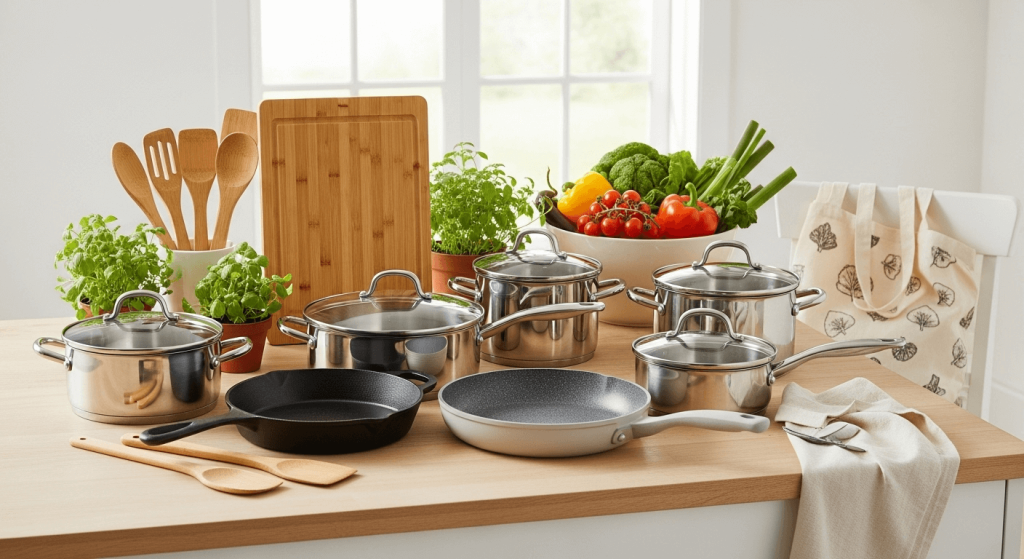
 This set includes ceramic non-stick pans, cast iron skillets, and bamboo utensils for a zero-waste kitchen.
 Credit: www.amazon.com
A high-quality ceramic non-stick set is a versatile pick for everyday cooking, from sautéing veggies to making pancakes.
Credit: www.amazon.com
A high-quality ceramic non-stick set is a versatile pick for everyday cooking, from sautéing veggies to making pancakes.
 Stainless steel is a durable, non-toxic option compatible with all cooktop types, including induction. https://www.youtube.com/watch?v=WAubBTE-sL4 Quick visual guide to selecting, using, and maintaining non-toxic eco-friendly cookware for your kitchen. Tap the link above for step-by-step video guides on cookware care, seasoning cast iron, and selecting pieces that match your cooking routine.

I’m Abby Lu, a passionate home cook who loves simplifying everyday meals. At PlugChef.com, I share product reviews and cooking guides to help you find the best tools for your kitchen.
Related posts:
 Eco-Friendly Kitchen Ideas to Reduce Waste and Save Energy
 Safest Cooking Utensils: Top Non-Toxic Wooden & Silicone Sets Reviewed
 Top 10 Best Non-Toxic Cooking Utensils – Safe & Durable Choices for Healthy Homes
 How to Grow Organic Kitchen Garden: Expert Tips
 How to Cut PCB Circuit Board: Easy Steps for Precise Results
 How Do You Make a Butcher Block Cutting Board: Easy DIY Guide

