Best Crock Pot Vegetarian Recipes: Easy, Delicious & Healthy Ideas

If you’re tired of scrambling to cook healthy vegetarian meals after a long day, your crock pot is about to become your most valuable kitchen tool. These set-it-and-forget-it devices turn simple vegetables, legumes, and spices into warm, flavorful dishes with zero active cooking time, so you can focus on work, family, or relaxation while your meal cooks itself.

In practice, many home cooks avoid vegetarian crock pot recipes because they’ve ended up with mushy vegetables, bland flavors, or unevenly cooked ingredients—but that’s easily avoidable with the right techniques. All the recipes below are tested for consistent results, use easy-to-find ingredients, and work for beginners and experienced cooks alike. We’ve also included customization tips for gluten-free, low-sodium, and high-protein diets, plus serving ideas to turn simple meals into satisfying feasts.

Crock pot cooked butternut squash shakshuka with fresh herbs A vibrant, protein-packed brunch or dinner option that cooks entirely hands-free Credit: food52.com

Why Vegetarian Crock Pot Meals Are A 2026 Kitchen Staple

Crock pot cooking has exploded in popularity over the last few years, and for good reason: it eliminates the stress of weeknight cooking, reduces food waste by using up leftover produce, and cuts down on active kitchen time to as little as 10 minutes of prep. For vegetarians, it’s especially useful for drawing out deep, sweet flavors from vegetables and legumes that are hard to replicate on the stovetop.

The USDA’s guidance on plant-based eating patterns notes that regularly incorporating vegetarian meals is linked to lower risks of heart disease, type 2 diabetes, and certain cancers, making crock pot recipes a simple way to hit those nutritional goals without extra effort USDA plant-based dietary guidance. Slow cooking also preserves more heat-sensitive vitamins (like vitamin C and B vitamins) than boiling or high-heat sautéing, so you get more nutritional bang for your buck from every ingredient.

For food safety, the FDA recommends keeping slow cookers on the low setting when unattended, and never leaving cooked food at room temperature for more than 2 hours to avoid bacterial growth FDA food safety guidelines for slow cookers. As long as you follow basic food safety rules, crock pot vegetarian meals are a safe, healthy, and convenient option for busy households.

6 Tested, Crowd-Pleasing Vegetarian Crock Pot Recipes

All recipes below are scaled for a 6-quart crock pot, the most common size for home use. Cook times are listed for both low (6-8 hours) and high (3-4 hours) settings, and each includes a pro tip for customizing to your taste.

Hearty Root Vegetable Stew

This cozy, nutrient-dense stew is perfect for chilly evenings, and tastes even better the next day as leftovers. It’s packed with sweet root vegetables, aromatic herbs, and a rich, savory broth that requires no last-minute adjustments.

Ingredients

  • 2 tbsp olive oil
  • 1 large yellow onion, diced
  • 3 cloves garlic, minced
  • 2 carrots, peeled and chopped into 1-inch pieces
  • 2 parsnips, peeled and chopped into 1-inch pieces
  • 2 medium potatoes, peeled and chopped into 1-inch pieces
  • 1 can (14.5 oz) diced tomatoes, undrained
  • 4 cups low-sodium vegetable broth
  • 2 bay leaves
  • 1 tsp dried thyme
  • 1 tsp smoked paprika
  • Salt and black pepper to taste
  • 2 cups chopped kale (added in the last 30 minutes of cooking)

Instructions

  1. If you want deeper flavor, heat the olive oil in a skillet over medium heat, then sauté the onion and garlic for 5 minutes until soft and fragrant. Transfer to the crock pot (this step is optional for a fully hands-off prep).
  2. Add the chopped carrots, parsnips, potatoes, diced tomatoes, vegetable broth, bay leaves, thyme, smoked paprika, salt, and pepper to the crock pot. Stir to combine.
  3. Cover and cook on low for 7-8 hours or high for 3-4 hours, until the root vegetables are tender when pierced with a fork.
  4. Stir in the chopped kale during the last 30 minutes of cooking, until wilted. Remove the bay leaves before serving.

Pro Tip: If you prefer a thicker stew, mash a few of the cooked potato pieces against the side of the crock pot and stir them in during the last 15 minutes of cooking. For extra umami, add a splash of soy sauce or a Parmesan rind (if not vegan) to the pot at the start of cooking.

Creamy Coconut Lentil Curry

This rich, dairy-free curry is packed with plant-based protein and has a warm, aromatic flavor that works for weeknight dinners or meal prep. The coconut milk keeps it creamy without any dairy, and the spices come together beautifully after hours of slow cooking.

Ingredients

  • 1 tbsp coconut oil
  • 1 large yellow onion, diced
  • 3 cloves garlic, minced
  • 1 tbsp fresh grated ginger
  • 1 tsp ground cumin
  • 1 tsp ground turmeric
  • 1 tsp garam masala
  • 1 cup dry brown or green lentils, rinsed
  • 1 can (14.5 oz) diced tomatoes, undrained
  • 1 can (13.5 oz) full-fat coconut milk
  • 2 cups low-sodium vegetable broth
  • 1 cup chopped spinach (added in the last 15 minutes of cooking)
  • Salt and lime juice to taste

Instructions

  1. Optional: Heat the coconut oil in a skillet over medium heat, then sauté the onion, garlic, and ginger for 5 minutes until soft. Add the cumin, turmeric, and garam masala and cook for 30 seconds until fragrant. Transfer to the crock pot.
  2. Add the rinsed lentils, diced tomatoes, coconut milk, and vegetable broth to the crock pot. Stir to combine.
  3. Cover and cook on low for 7-8 hours or high for 3-4 hours, until the lentils are tender but not mushy.
  4. Stir in the spinach during the last 15 minutes of cooking, until wilted. Season with salt and a squeeze of fresh lime juice before serving.

Pro Tip: A common mistake with lentil curry is adding the coconut milk at the start of cooking, which can cause the curry to separate. If this happens, stir in a slurry of 1 tsp cornstarch mixed with 1 tbsp cold water during the last 10 minutes of cooking to thicken it back up. Serve over jasmine rice or with naan for dipping.

Quinoa & Black Bean Chili

This protein-packed chili is a favorite for meal prep, as its flavors deepen overnight in the fridge. It’s smoky, slightly spicy, and filling enough to satisfy even meat-eaters, with no processed meat substitutes required.

Ingredients

  • 1 tbsp olive oil
  • 1 large yellow onion, diced
  • 1 bell pepper (any color), diced
  • 3 cloves garlic, minced
  • 1 jalapeño, seeded and minced (optional, for heat)
  • 1 can (15 oz) black beans, rinsed and drained
  • 1 can (14.5 oz) diced tomatoes, undrained
  • 1 can (6 oz) tomato paste
  • 1 cup dry quinoa, rinsed
  • 2 cups low-sodium vegetable broth
  • 1 tsp ground cumin
  • 1 tsp smoked paprika
  • 1 tsp chili powder
  • Salt and pepper to taste
  • Optional toppings: diced avocado, cilantro, lime, vegan sour cream

Instructions

  1. Optional: Heat the olive oil in a skillet over medium heat, then sauté the onion, bell pepper, garlic, and jalapeño for 5 minutes until soft. Transfer to the crock pot.
  2. Add the rinsed black beans, diced tomatoes, tomato paste, quinoa, vegetable broth, cumin, smoked paprika, chili powder, salt, and pepper to the crock pot. Stir to combine.
  3. Cover and cook on low for 6-7 hours or high for 2.5-3 hours, until the quinoa is tender and the chili has thickened.
  4. Serve with your choice of toppings. If you need to ripen avocados quickly for topping, ripening avocados overnight with a brown bag and apple works perfectly for same-day use.

Pro Tip: If you don’t have time to rinse the quinoa before cooking, you can add it directly to the pot, but rinsing removes the bitter saponin coating for a milder flavor. For extra heartiness, add a cup of frozen corn in the last hour of cooking.

Sweet Potato & Chickpea Tagine

This North African-inspired dish has a warm, slightly sweet flavor profile that’s perfect for mixing up your usual dinner rotation. The slow cooking melds the spices and sweet potatoes into a rich, fragrant stew that pairs perfectly with couscous or flatbread.

Ingredients

  • 1 tbsp olive oil
  • 1 large yellow onion, diced
  • 3 cloves garlic, minced
  • 1 tsp ground cumin
  • 1 tsp ground cinnamon
  • 1 tsp smoked paprika
  • 1/2 tsp ground ginger
  • 2 medium sweet potatoes, peeled and chopped into 1-inch pieces
  • 1 can (15 oz) chickpeas, rinsed and drained
  • 1 can (14.5 oz) diced tomatoes, undrained
  • 1 cup low-sodium vegetable broth
  • 1/2 cup dried apricots, chopped (optional, for extra sweetness)
  • Salt and pepper to taste
  • Fresh cilantro for garnish

Instructions

  1. Optional: Heat the olive oil in a skillet over medium heat, then sauté the onion and garlic for 5 minutes until soft. Add the cumin, cinnamon, smoked paprika, and ginger and cook for 30 seconds until fragrant. Transfer to the crock pot.
  2. Add the chopped sweet potatoes, rinsed chickpeas, diced tomatoes, vegetable broth, and dried apricots (if using) to the crock pot. Stir to combine.
  3. Cover and cook on low for 7-8 hours or high for 3-4 hours, until the sweet potatoes are tender.
  4. Season with salt and pepper to taste, and garnish with fresh cilantro before serving.

Pro Tip: For a complete meal, serve over fluffy couscous or with warm flatbread for dipping. If you want to add a crispy, smoky side, try roasting shishito peppers as a side to pair with the tagine for extra texture and flavor.

Creamy Mushroom & Barley Stew

This earthy, umami-packed stew is a great option for anyone looking for a heartier, grain-based vegetarian meal. The barley adds a chewy, nutty texture, and the mushrooms bring deep, savory flavor that feels just as satisfying as meat-based stews.

Ingredients

  • 1 tbsp olive oil
  • 1 large yellow onion, diced
  • 3 cloves garlic, minced
  • 8 oz cremini mushrooms, sliced
  • 1 cup pearl barley, rinsed
  • 4 cups low-sodium vegetable broth
  • 2 carrots, peeled and chopped into 1-inch pieces
  • 2 celery stalks, chopped into 1-inch pieces
  • 2 bay leaves
  • 1 tsp dried thyme
  • Salt and pepper to taste
  • 1/2 cup heavy cream or full-fat coconut cream (added in the last 15 minutes of cooking, optional)
  • Fresh parsley for garnish

Instructions

  1. Optional: Heat the olive oil in a skillet over medium heat, then sauté the onion, garlic, and mushrooms for 7 minutes until the mushrooms are golden and tender. Transfer to the crock pot.
  2. Add the rinsed barley, vegetable broth, carrots, celery, bay leaves, thyme, salt, and pepper to the crock pot. Stir to combine.
  3. Cover and cook on low for 7-8 hours or high for 3-4 hours, until the barley and vegetables are tender.
  4. Stir in the heavy cream or coconut cream (if using) during the last 15 minutes of cooking, and adjust seasoning as needed. Garnish with fresh parsley before serving.

Pro Tip: If you’re using dried barley, you can skip the rinsing step, but rinsing removes excess starch for a clearer, less gummy stew. For a gluten-free version, swap the barley for wild rice.

Spiced Apple & Sweet Potato Breakfast Porridge

This sweet, warming porridge is perfect for busy mornings, and cooks entirely while you sleep. It’s naturally sweetened with apples and cinnamon, and can be customized with nuts, seeds, or plant-based milk for extra creaminess.

Ingredients

  • 2 medium sweet potatoes, peeled and chopped into 1-inch pieces
  • 1 apple, cored and chopped (leave the skin on for extra fiber)
  • 1 cup rolled oats
  • 3 cups water or unsweetened almond milk
  • 1 tsp ground cinnamon
  • 1/4 tsp ground nutmeg
  • 1 tsp vanilla extract
  • Pinch of salt
  • Optional toppings: chopped nuts, chia seeds, maple syrup, plant-based yogurt

Instructions

  1. Add all ingredients except the optional toppings to the crock pot. Stir to combine.
  2. Cover and cook on low for 7-8 hours or high for 3-4 hours, until the sweet potatoes are completely tender.
  3. Mash the sweet potatoes against the side of the pot to thicken the porridge, and stir well. Serve with your choice of toppings.

Pro Tip: For a creamier texture, stir in 1/2 cup of full-fat coconut milk during the last 15 minutes of cooking. If you prep this the night before, you can store the dry ingredients in the crock pot in the fridge, then add the liquid in the morning for an even faster start.

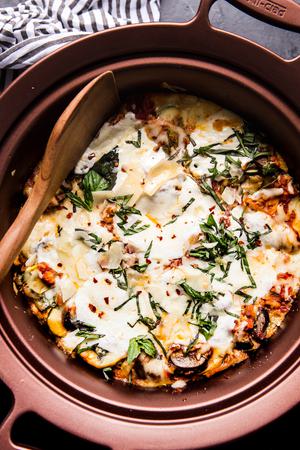
Layered vegetarian crock pot lasagna with melted cheese and basil A hearty, make-ahead meal perfect for feeding a crowd or meal prepping Credit: themodernproper.com

Essential Pantry & Fresh Ingredients To Keep On Hand

Stocking your pantry and fridge with slow-cooker-friendly ingredients means you can throw together a meal in 10 minutes flat, no last-minute grocery runs required. Focus on ingredients that hold up to long cooking times without turning mushy, and that blend well with a range of spices and flavor profiles.

Shelf-Stable Staples

These non-perishable items form the base of almost every vegetarian crock pot recipe, and are affordable to buy in bulk:

  • Low-sodium vegetable broth: The foundation of stews, curries, and chili, avoid high-sodium versions to control your salt intake.
  • Canned beans (black, chickpeas, lentils, borlotti): Rinsed and drained, they add protein and fiber without requiring pre-soaking.
  • Canned diced tomatoes and tomato paste: Add acidity, depth, and richness to sauces and stews.
  • Whole grains (quinoa, barley, farro, brown rice): Add chewy texture and extra fiber, and cook perfectly in the crock pot.
  • Spices (cumin, smoked paprika, turmeric, garam masala, thyme, oregano): A well-stocked spice rack lets you customize flavors to suit any cuisine, from Mexican to North African to Mediterranean.
  • Coconut milk: Adds creaminess to curries and porridge without dairy, and works for vegan diets.

Fresh Vegetables That Hold Up To Slow Cooking

These veggies stay tender but not mushy after 6+ hours of cooking, making them ideal for long-simmer dishes:

  • Root vegetables (carrots, parsnips, potatoes, sweet potatoes): Add natural sweetness and heartiness, and form the base of most stews and tagines.
  • Alliums (onions, garlic, shallots): Provide a rich, aromatic base flavor for almost every savory dish.
  • Bell peppers and celery: Add mild crunch and depth, and hold their shape well during long cooks.
  • Mushrooms: Add deep umami flavor, and work well in stews, curries, and grain-based dishes.
  • Tomatoes: Add acidity to balance rich, creamy dishes, and break down into a thick, flavorful sauce.

Protein Boosters

If you want to make your crock pot meals more filling, these plant-based proteins add extra nutrition without much extra prep:

  • Lentils and split peas: Cook quickly in the crock pot, and absorb flavors beautifully.
  • Tofu and tempeh: Add firm tofu or tempeh cubes in the last hour of cooking to keep their texture, and they’ll soak up any sauce or spice blend.
  • Nuts and seeds: Stir in chopped nuts or seeds during the last 10 minutes of cooking for extra crunch and healthy fats.
  • Plant-based meat substitutes: Many slow-cooker-friendly options work well in chili, stews, and tagines for a meat-like texture.

To keep all these pantry staples organized and easy to access, store non-perishables in labeled bins under your kitchen sink. For tips on maximizing that space, check out our guide to organizing under-kitchen-sink storage to keep your kitchen running smoothly.

Slow-cooked borlotti beans with sweet and sour agrodolce sauce Creamy borlotti beans make a versatile side, protein boost, or light main dish Credit: food52.com

Pro Tips For Perfect Crock Pot Vegetarian Meals Every Time

Even the best recipes can turn out poorly if you don’t follow a few basic crock pot rules. These tips are based on years of testing, and will help you avoid mushy vegetables, bland flavors, and uneven cooking every time.

Layering Ingredients For Even Cooking

How you arrange ingredients in the crock pot has a huge impact on the final texture. A common mistake I see new users make is layering delicate greens and soft vegetables on the bottom, where the heat is highest, leading to mushy, overcooked produce by dinner time.

  • Place dense, hard ingredients (root vegetables, whole grains, dried beans) on the bottom of the pot, where the heat is most consistent.
  • Add medium-density ingredients (onions, carrots, celery) in the middle layer.
  • Place delicate ingredients (leafy greens, fresh herbs, dairy, soft fruit) in the top layer, and add them in the final 15-30 minutes of cooking to prevent mushiness.
  • Avoid stirring the pot more than once during cooking, as this releases heat and extends cook time.

Timing & Temperature Guidelines

Most vegetarian crock pot recipes perform best on the low setting for 6-8 hours, as this gentle heat breaks down tough fibers in vegetables and legumes without turning them to mush. The high setting (3-4 hours) works well for last-minute meals, but can lead to overcooked soft vegetables if you’re not careful.

  • Always follow the recommended cook time for your specific recipe, and check for doneness 30 minutes before the timer goes off.
  • Never leave cooked food on the “warm” setting for more than 2 hours, per FDA food safety guidelines, to avoid bacterial growth.
  • If you’re cooking at high altitude (above 3,000 feet), add 15-30 minutes to the recommended cook time, as lower air pressure slows down the cooking process.

Avoiding Common Texture & Flavor Mistakes

Small errors can make a big difference in the final dish:

  • Don’t lift the lid more than once during cooking: each time you open the pot, you release 15-20 minutes of heat and moisture, extending the total cook time.
  • Avoid overfilling the crock pot: fill it no more than 2/3 full to allow for proper air circulation and even cooking.
  • Don’t add too much liquid: vegetables release moisture as they cook, so start with 1/4 less liquid than the recipe calls for, and add more if needed during cooking.
  • Add dairy and fresh herbs at the end: high heat for long periods can cause dairy to curdle and fresh herbs to lose their flavor, so stir them in during the final 15-30 minutes of cooking.

When prepping your vegetables for these recipes, make sure to use properly sanitized cutting boards to avoid cross-contamination. Our guide to proper cutting board sanitization walks you through the best practices for keeping your prep surfaces clean and safe.

Customizing Recipes For Dietary Needs & Preferences

All the recipes above can be easily modified to fit gluten-free, low-sodium, vegan, or high-protein diets, with minimal changes to flavor or texture.

Gluten-Free Modifications

Many vegetarian crock pot recipes rely on soy sauce, regular vegetable broth, or pasta that may contain hidden gluten. To make any recipe gluten-free:

  • Swap regular soy sauce for tamari or coconut aminos, which are certified gluten-free.
  • Use certified gluten-free vegetable broth, as some brands add wheat-based thickeners.
  • Swap regular pasta, barley, or farro for gluten-free grains like quinoa, rice, or gluten-free oats.
  • Always check labels on canned beans, tomato paste, and seasoning blends to ensure they don’t contain hidden gluten.

Low-Sodium Adjustments

Crock pot recipes can easily become high in sodium from canned beans, store-bought broth, and seasoning blends. To cut sodium without losing flavor:

  • Use no-salt-added canned beans and tomatoes, and rinse them thoroughly before use to remove excess sodium.
  • Swap regular vegetable broth for low-sodium or no-salt-added versions, or make your own by simmering vegetable scraps in water for 30 minutes.
  • Rely on fresh herbs, garlic, ginger, citrus juice, and spices to add flavor instead of salt. A splash of apple cider vinegar or lemon juice at the end of cooking can brighten flavors without adding sodium.
  • Avoid pre-made seasoning mixes, which often contain high amounts of hidden salt.

Boosting Protein & Healthy Fats

If you want to make your crock pot meals more filling and balanced, add these protein and healthy fat boosters:

  • Add a cup of rinsed lentils, chickpeas, or black beans to any stew, curry, or chili for 10-15g of extra plant-based protein per serving.
  • Stir in firm tofu or tempeh cubes during the last hour of cooking to keep their texture, and they’ll absorb any sauce or spice blend.
  • Add a dollop of nut butter (peanut, almond, cashew) to curries or stews during the last 15 minutes of cooking for extra creaminess and healthy fats.
  • Top meals with sliced avocado, toasted nuts, or seeds for extra crunch and nutrition. If your avocados aren’t ripe yet, ripening avocados overnight with a paper bag and apple will get them ready for same-day use.

Vegan & Dairy-Free Adjustments

Most vegetarian crock pot recipes are already vegan or can be easily modified:

  • Swap dairy milk, cream, or cheese for full-fat coconut milk, cashew cream, or store-bought vegan alternatives.
  • Use nutritional yeast instead of Parmesan cheese for a cheesy, umami flavor.
  • Skip butter and use olive oil or coconut oil for sautéing.
  • Avoid adding honey; use maple syrup or agave nectar as a sweetener instead.

Serving Suggestions & Pairings

The right sides and toppings can turn a simple crock pot meal into a restaurant-worthy feast, without any extra work. These pairings are designed to complement the flavors and textures of the recipes above.

Complementary Side Dishes

Choose sides that add texture and flavor contrast to warm, soft stews and curries:

  • Crisp green salad with lemon vinaigrette: Bright, acidic flavors cut through rich, creamy curries and stews.
  • Roasted vegetables: Carrots, Brussels sprouts, or roasting shishito peppers as a side add smoky, crispy texture to mild dishes like tagines and lentil curries.
  • Steamed greens: Garlic sautéed kale or broccoli adds extra fiber and freshness to heavy meals.
  • Light soup: A small cup of miso soup or gazpacho works as a light appetizer before hearty chili or stew.

Bread & Grain Pairings

Warm bread or fluffy grains are perfect for soaking up sauces and rounding out meals:

  • Crusty sourdough or whole-grain baguette: Ideal for dipping into curry, stew, or tagine sauce.
  • Fluffy jasmine or basmati rice: A neutral base that pairs well with spicy chili and coconut curries.
  • Couscous or quinoa: Light, quick-cooking grains that work well with tagines and grain-based stews.
  • Cornbread: A classic pairing for chili, with a slightly sweet, crumbly texture that balances spicy flavors.

Beverage Pairings

Light, refreshing drinks complement the warm, savory flavors of crock pot meals:

  • Herbal iced tea (mint, hibiscus, or chamomile): Cuts through rich, creamy dishes without adding extra sugar.
  • Sparkling water with citrus slices: A light, refreshing option that cleanses the palate between bites.
  • Dry white wine (like Sauvignon Blanc or Pinot Grigio): Pairs perfectly with herb-heavy stews and curries.
  • Cold cucumber water: A hydrating, low-calorie option for hot days when serving spicy chili or tagine.

For easy cleanup after your meal, make sure to keep your kitchen sink and surrounding area well-maintained. Our guide to kitchen sink maintenance has simple tips to keep your sink sparkling with minimal effort.

Frequently Asked Questions

We’ve answered the most common questions about vegetarian crock pot cooking below, to help you avoid common pitfalls and get the best results from your recipes.

What are the best vegetables for crock pot recipes?

Root vegetables (carrots, parsnips, potatoes, sweet potatoes) are the most reliable for long cooking times, as they stay tender but not mushy after 6+ hours of cooking. Other great options include onions, garlic, bell peppers, celery, mushrooms, and tomatoes, which add depth and flavor to stews, curries, and chili. Delicate vegetables like zucchini, spinach, and kale should be added in the final 15-30 minutes of cooking to prevent them from turning to mush.

How long should vegetarian crock pot meals cook?

Most recipes cook best on the low setting for 6-8 hours, which provides gentle, even heat that breaks down tough fibers without overcooking soft ingredients. The high setting works for last-minute meals, with a cook time of 3-4 hours, but may lead to mushy vegetables if you’re not careful. Always check for doneness 30 minutes before the recommended cook time ends, and adjust based on your specific crock pot model, as older models may cook slower than newer ones.

Can I use canned beans in crock pot recipes?

Yes, canned beans are a great time-saver for slow cooker meals, as they’re already cooked and only need to be heated through. Always rinse canned beans thoroughly before use to remove excess sodium and the starchy liquid that can make dishes gummy. Add canned beans in the final hour of cooking to prevent them from turning mushy. If you prefer to use dried beans, you’ll need to pre-soak them for 8 hours (or use a quick-soak method) before adding them to the crock pot, unless your slow cooker has a pressure-cooking function.

Are crock pot vegetarian meals healthy?

Yes, crock pot vegetarian meals are an incredibly healthy option, as they rely on whole, unprocessed ingredients like vegetables, legumes, and whole grains, with minimal added fat or sodium. Slow cooking preserves more heat-sensitive vitamins (like vitamin C and B vitamins) than boiling or high-heat cooking, and the gentle heat breaks down fiber in legumes and vegetables, making them easier to digest. You have full control over the amount of salt, oil, and added sugars in your meals, so they’re often healthier than store-bought takeout or pre-made frozen meals.

Can I freeze crock pot vegetarian meals?

Yes, most crock pot vegetarian meals (stews, curries, chili, tagines) freeze perfectly for up to 3 months. Avoid freezing dishes with dairy, fresh herbs, potatoes, or delicate leafy greens, as these ingredients may separate or turn mushy when thawed. Let leftovers cool completely before portioning them into airtight containers, and thaw in the fridge overnight before reheating on the stovetop or in the microwave.

Do I need to brown vegetables before adding them to the crock pot?

Browning onions, garlic, and mushrooms in a skillet for 5-7 minutes before adding them to the crock pot adds deep, rich, caramelized flavor that you can’t get from raw ingredients. However, this step is entirely optional for a truly hands-off prep—raw ingredients will still cook perfectly, just with a milder, less complex flavor. If you’re short on time, you can skip the browning step without sacrificing the quality of the final dish.

If you run out of can openers while prepping canned beans or tomatoes for your recipes, you can still get the job done with our guide to opening cans without a standard opener.

Conclusion

Crock pot vegetarian cooking takes the stress out of weeknight meals, making healthy, delicious eating accessible even for total beginners. With the recipes and tips above, you can throw together a satisfying meal in 10 minutes of prep, and come home to a warm, flavorful dish waiting for you at the end of the day.

Start with a simple recipe like the Hearty Root Vegetable Stew if you’re new to crock pot cooking, or experiment with the Creamy Coconut Lentil Curry if you’re looking for something with bolder, global flavors. The best part of crock pot cooking is how flexible it is: swap ingredients, adjust spices, and customize recipes to fit your taste and dietary needs.

For more easy, weeknight-friendly meal inspiration, browse our full library of tested kitchen guides and recipes.