Must-Have Baking Tools for Beginners: Elevate Your Cake Decorating Skills
Starting your baking journey is exciting, but the sheer number of specialized tools can be overwhelming. Many beginners buy expensive equipment they never use or overlook the specific tools that make cake decorating actually achievable. This guide focuses on the essential hardware that transforms a flat, unadorned cake into a professional-looking centerpiece.
We will break down the core categories of decorating tools—from piping systems to smoothing implements—explaining exactly what you need, what to avoid, and how to choose high-quality items that last. We will also address critical preparation tools that support the decorating process, ensuring you have a workflow that minimizes mess and maximizes success. For more on this, see our guide on easy banana pudding cake recipe.
Why Specialized Tools Matter in Cake Decorating
Baking a cake is chemistry; decorating a cake is art applied to a moist, perishable medium. Without the right tools, icing slides, patterns smear, and precision drops. A common mistake beginners make is trying to pipe with cheap, flimsy disposable bags that split under pressure. This leads to icing exploding out the seams, ruining both the cake and the counter.
Investing in durable, well-engineered tools pays off in two ways: consistency and confidence. When you trust your tools, you spend less time worrying about the equipment and more time focusing on your design. Furthermore, the right tools allow you to achieve effects that are impossible with makeshift household items. For instance, the distinct ridges of a star tip or the smooth finish of a silicone scraper cannot be replicated effectively with a knife or spoon. For more on this, see our guide on sides to have with pizza.
The Piping System: Bags, Tips, and Couplers
The heart of cake decorating is the piping system. This assembly allows you to control the flow of frosting, buttercream, or ganache to create specific shapes.
Reusable Pastry Bags vs. Disposable
While disposable bags are convenient for one-off projects, reusable latex or silicone bags are the standard for serious beginners. Reusable bags are thick, preventing splits when piping hard buttercreams or stiff ganache. They can be stretched over various tips, allowing you to change your design without opening the bag. For more on this, see our guide on apple cranberry upside down cake.
Pro Tip: Always use a coupler with reusable bags. A coupler is a two-part plastic adapter that sits inside the bag and attaches to the tip. This allows you to switch tips quickly by unscrewing the top cap, saving you from having to empty and refill the bag for every new design.
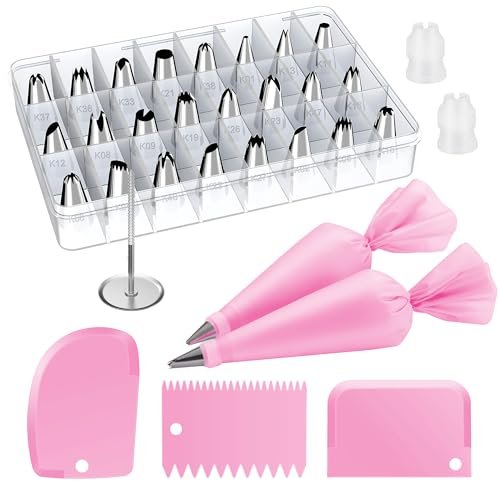
 The Kootek 32-piece set includes reusable bags and a variety of tips, providing a solid starting point for diverse piping techniques.
Essential Piping Tips for Beginners
You do not need a set with 100 tips. Start with a curated selection of 5–10 versatile tips.
- Round Tips (e.g., #2, #5, #7): The workhorses of decorating. Use #5 or #7 for beaded borders, writing, and basic swirls.
- Open Star Tips (e.g., #1M, #6B, #15): These create textured shells, rosettes, and ruffles. The #1M is a classic for piping roses.
- Petal Tips (e.g., #100, #234): Shaped like a petal, these are essential for creating leaves and simple flower petals.
- Leaf Tips (e.g., #352, #356): Designed to pipe realistic foliage in one pull.
Smoothing and Finishing Tools
Piping is only half the battle. The base of your cake needs to be smooth, and your decorations need to be placed precisely. For more on this, see our guide on chocolate molten lava bundt cake.
Offset Spatulas and Bench Scrapers
An offset spatula (angled or "duck-footed") is superior to a straight spatula for applying frosting to the sides of a cake. The offset design allows your wrist to hang naturally at your side, reducing fatigue and giving you better leverage to push icing against the cake board.
A bench scraper (or acetone scraper) is a flat, metal or plastic tool with a handle. It is used to scrape clean icing from your work surface and to level the top of a frosted cake. Keeping your surface clean is critical; stray crumbs on the counter will get mixed into your icing, ruining the finish.
The Cake Turntable
A cake turntable is a motorized or manual rotating platform. It allows you to rotate the cake while keeping your hands steady on the decorating tools. This is crucial for:
- Applying even pressure around the circumference of the cake.
- Piping borders consistently.
- Placing multiple flowers or decorations without crowding one side.
For beginners, a non-motorized turntable with a weighted base is sufficient and more affordable. Look for one with a secure grip so it doesn’t spin on its own.
 The Kootek 71-piece kit includes a turntable, spatulas, and scrapers, offering a complete setup for smoothing and decorating.
Preparation and Measurement Essentials
Before you can decorate, you must measure accurately. Baking is scientific; a small error in ratios can change the texture of your frosting or the rise of your cake.
Digital Scales
Cups are a unit of volume, not weight. Flour can be packed tightly or aerated, leading to significant weight variations. For consistent results, use a digital scale to weigh dry ingredients in grams or ounces. Most modern recipes provide both. A scale with a "tare" function allows you to zero out the weight of your bowl between ingredients.
Conversion Charts
If you are working with older recipes that use cups and tablespoons, or international recipes that use milliliters, a kitchen conversion chart is indispensable. Magnetic charts that stick to the refrigerator are the most accessible option, allowing you to reference them while your hands are busy.
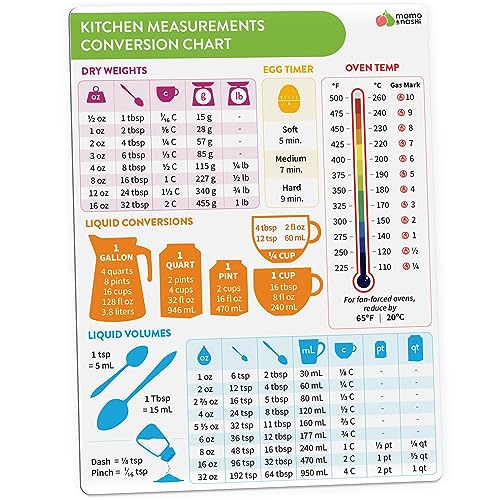 A magnet like this from Momo & Nashi keeps conversion data within arm's reach, reducing errors when scaling recipes.
Silicone Baking Mats
While primarily a baking tool, silicone mats are useful in decorating. They provide a non-slip surface for rolling out fondant or gum paste. A large silicone mat (26×16 inches or larger) gives you enough room to work without the material sliding. The non-stick surface means you don’t need to dust as much with flour or cornstarch, which can affect the final texture of rolled fondant.
 The Mimekitchen silicone mat offers a large, stable surface for rolling out decorative elements without sticking.
Recommended Tool Kits for Beginners
Buying individual tools can be time-consuming. Curated kits offer convenience, especially for those who want to start with a comprehensive set. Here are three types of kits to consider based on your specific goals.
The All-Rounder Decorating Kit
These kits typically include a turntable, spatulas, scrapers, and a selection of tips. They are the best "starter pack" for someone who wants to learn both frosting and piping.
Key Features to Look For:
- Inclusion of a leveler for cutting cakes into flat layers.
- Numbered tips for easy identification.
- A storage case to keep components organized.
The Kootek 71-piece kit is popular for its inclusion of educational materials like video tutorials and booklets.
The Advanced/Professional Kit
If you plan to take this hobby seriously, look for kits with higher piece counts (200+) that include a wider variety of tips, including petal and leaf shapes, and more robust tools. These often come with storage cases that label every tool.
 For those ready to expand their repertoire, a large kit like this 236-piece set covers advanced techniques.
The Precision Baking & Piping Set
Some kits focus more on the piping bags and tips themselves, rather than the smoothing tools. These are ideal if you already have a turntable and spatula but need better bags.
The Kootek 32-piece set is a cost-effective way to test different tip styles without buying individual tips.
Don't Forget the Bread Basics (If You Bake Sourdough)
While this article focuses on cake decorating, many bakers also enjoy sourdough. If your "baking journey" includes bread, you will need specific tools that differ from cake decorating.
Proofing Baskets (Bannetons)
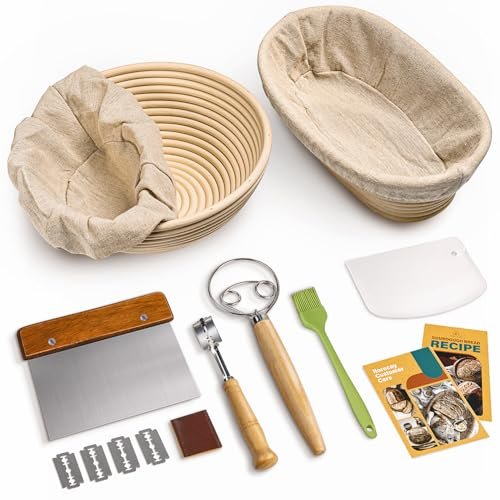
A banneton is a coiled basket made of raffia or wood shavings. It supports the dough during final proofing, helping it hold its shape. The natural fibers wick away moisture, creating the signature crust on sourdough.
 The Superbaking banneton is a durable option for shaping round loaves.
Sourdough Starter Kits
If you are new to fermentation, a starter kit provides the flour and water balance needed to begin cultivating your own yeast and bacteria. It typically includes a jar, a rubber band for marking levels, and a spoon.
 This comprehensive sourdough kit includes a basket and tools to guide you through the entire baking process.
How to Choose Quality Tools
Not all tools are created equal. Here is how to spot high-quality items before you buy:
- Material: For tips, look for stainless steel with a smooth finish. Plastic tips can tear when piping stiff frostings. For spatulas, polypropylene or stainless steel are best; avoid flexible plastic that bends when pressure is applied.
- Fit: Tips should fit securely into couplers. If they wobble, they will come off mid-pipe. Check user reviews for mentions of "fit" or "wobbling."
- Grip: Turntables should have a non-slip base and a comfortable handle. A cheap turntable that spins freely is frustrating to use.
- Cleaning: Ensure your tools are dishwasher safe or easy to hand wash. Piping tips with small nozzles are hard to clean; look for kits that include a tip cleaner (a small wire tool) to remove clogs.
Common Mistakes to Avoid
- Using Wrong Temperature: If your frosting is too soft, it will slide off the cake. Use a calibrated thermometer to check your oven temperature and ensure your buttercream is stable (usually around 70–75°F / 21–24°C for buttercream).
- Piping Too Thick or Thin: Practice on a parchment paper sheet first. Adjust your distance from the cake to control the height of your swirls.
- Ignoring the Leveler: A cake with uneven layers is impossible to frost evenly. Always use a cake leveler or wire saw to create flat layers.
- Buying Too Many Tips at Once: Start with 5–6. You can always buy more later. A box of 100 tips is overwhelming and encourages storage clutter.
Frequently Asked Questions
What is the difference between a coupler and a direct fit tip?
A coupler is an adapter that allows you to use a single piping bag with multiple tips. It consists of a base that goes into the bag and a top cap that secures the tip. This saves the time of changing bags for every design. Direct fit tips screw directly into the bag, which is less flexible but requires no extra parts.
Can I use ziplock bags for piping?
Technically, yes, but it is not recommended for beginners. Ziplock bags are thin and prone to splitting, especially when piping stiff frostings. They also lack the flexibility of reusable pastry bags, making it harder to control the flow. If you must use them, use large, gallon-size bags and avoid overfilling.
How do I clean clogged piping tips?
Soak the tip in warm soapy water for 15 minutes. Use the included tip cleaner or a needle to gently clear the opening. Never use a fork, which can deform the tip’s pattern. Dry tips thoroughly before storing to prevent rust.
Is a cake turntable necessary for small cakes?
For very small cakes (like cupcakes or 4-inch cakes), a turntable is helpful but not strictly required if you have a stable surface. For layer cakes, a turntable is highly recommended to maintain even pressure and consistent border spacing.
How do I store my piping tips?
Store them in a labeled container or drawer. Group them by size and type (round, star, leaf). Keep the storage area dry to prevent rust on stainless steel tips. A tip cleaner kit is also a good place to store your cleaning tools.
Conclusion
Elevating your cake decorating skills is less about innate talent and more about having the right tools for the job. Start with a durable piping bag set, a few versatile tips, an offset spatula, and a cake turntable. Add a digital scale for precision and a conversion chart for flexibility.
As you gain confidence, you can expand your collection with specialized tips and larger kits. Whether you choose a comprehensive kit like the 71-piece Kootek set or build your toolkit piece by piece, the key is to use your tools consistently. Practice on parchment paper, clean your equipment thoroughly, and don’t be afraid to experiment. With the right foundation, your cakes will transform from simple desserts into impressive, edible art.
Ready to start your decorating journey? Browse our selection of essential baking tools to find the perfect setup for your kitchen.

Hi, I’m Daniel Brooks—a food lover and kitchen gear enthusiast. I enjoy testing cookware, utensils, and gadgets to see what really works in everyday cooking. At PlugChef.com, I share honest reviews, comparisons, and simple guides to help you choose the best tools for a safer, smarter, and more enjoyable kitchen.
Similar Posts