Food Storage Containers Long Term: Ultimate Solutions for Secure Preservation

Long‑term food storage is a cornerstone of emergency preparedness, cost‑effective grocery planning, and nutritious year‑round eating. Choosing the right containers protects food from moisture, light, oxygen, and pests, while preserving flavor and texture for months or years. This guide walks you through the essential types, key features, best practices, and common pitfalls, so you can build a reliable pantry with confidence.
Why Long‑Term Food Storage Matters
Storing food for the long term reduces waste, locks in bulk‑purchase savings, and ensures a steady supply during power outages, natural disasters, or seasonal shortages. According to the FDA, proper storage can extend shelf life significantly while maintaining safety and quality. The USDA extension emphasizes that consistent temperature, low humidity, and darkness are the three pillars of effective preservation.
Key benefits:
- Nutrient retention: Oxygen and light degrade vitamins; airtight containers slow this process.
- Pest prevention: Sealed barriers keep insects and rodents out without chemicals.
- Space efficiency: Stackable designs maximize pantry or basement square footage.
Choosing the Right Container Type
Food‑Grade Plastic Buckets
Plastic buckets are the workhorse of long‑term storage. Look for HDPE (high‑density polyethylene) marked “food‑grade” or “BPA‑free.” The 5‑gallon size is popular because it holds roughly 20 kg of dry grain while remaining manageable when empty. Gamma‑seal lids provide a screw‑on airtight closure that can be opened and closed many times without compromising the seal.

Five‑gallon bucket with green gamma‑seal lid, ideal for bulk dry goods.

Five‑gallon bucket with gamma‑seal screw lid, offering repeated access while staying airtight.

Five‑gallon food‑grade bucket with blue screw‑on lid, providing a secure seal for grains and beans.

Three‑point‑five gallon bucket with red gamma seal, great for smaller households or staging.

Six‑pack of five‑gallon food‑grade buckets with lids, perfect for stocking multiple staples.
Mylar Bags and Oxygen Absorbers
Mylar’s metalized foil barrier blocks moisture, light, and oxygen far better than standard plastic. Pairing Mylar with appropriately sized oxygen absorbers removes residual air, creating an anaerobic environment that inhibits mold, bacteria, and insect survival. Common absorber sizes range from 100 cc for quart bags to 2500 cc for 5‑gallon bags.
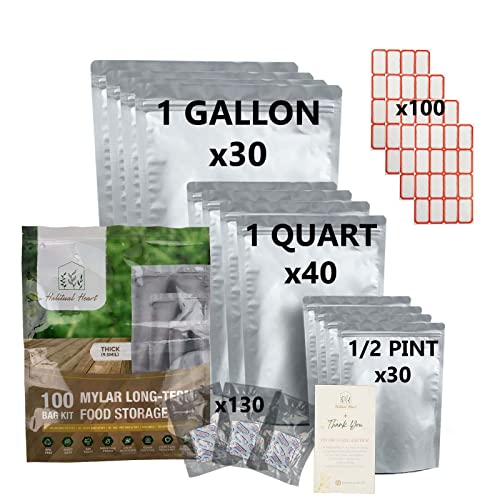
Mylar bag stand‑up zipper with oxygen absorbers, ready for heat sealing.

One‑hundred Mylar bags with 400‑cc oxygen absorbers, each bag pre‑filled for convenience.

Ten 5‑gallon Mylar bags with zipper seal, designed for large‑volume storage.
Glass and Stainless‑Steel Options
Glass jars with tight‑fitting lids are excellent for small quantities of spices, dried fruit, or coffee. Stainless‑steel containers offer durability and are fully recyclable, though they provide no light barrier unless opaque. Both work well for pantry items that will be consumed within a few months.
Key Features to Evaluate
| Feature | Why It Matters |
|---|---|
| Airtight seal | Prevents oxygen and moisture entry; essential for oxygen‑absorber effectiveness. |
| BPA‑free material | Ensures no leaching of harmful chemicals into food, especially with acidic foods. |
| Gamma‑seal or screw‑on lid | Allows repeated opening/closing while maintaining a tight seal. |
| Stackability | Maximizes vertical space; look for flat lids and reinforced rims. |
| Durability (mil thickness) | Mylar 9.5 mil or higher resists punctures; bucket wall thickness 90 mil+ dents less. |
| Label‑friendly surface | Enables easy inventory tracking and rotation. |
Step‑by‑Step: Filling and Sealing
- Clean and dry – Wash containers with hot, soapy water; rinse thoroughly and air‑dry completely. Any residual moisture will accelerate spoilage.
- Portion food – Fill containers to about ¾ capacity to allow room for absorbers and to prevent over‑pressurization.
- Add oxygen absorbers – Select the size matched to the container volume (e.g., 400 cc for quart Mylar, 2500 cc for 5‑gallon Mylar). Place absorbers inside before sealing.
- Seal – For Mylar, use a heat sealer or a household iron on a high‑heat setting, pressing the zipper edge firmly. For buckets, secure the gamma‑seal or screw lid tightly.
- Label – Write contents, date, and absorber size on a label affixed to the lid or side. Use a permanent marker or printed label that won’t smudge.
Storage Environment and Rotation
- Temperature: Keep containers below 70 °F (21 °C). Cooler temperatures slow chemical reactions that cause rancidity.
- Humidity: Aim for relative humidity under 15 %. Damp basements or crawl spaces can introduce moisture; use desiccant packets if needed.
- Light: Store in a dark pantry, closet, or cabinet. Light accelerates vitamin loss and can degrade plastic over time.
- FIFO rotation: “First In, First Out” ensures older stock is used before newer batches. Update labels when adding new containers.
Common Mistakes and How to Avoid Them
- Using non‑food‑grade containers: Only buckets or bags labeled “food‑grade” or “BPA‑free” should contact edibles.
- Skipping oxygen absorbers: Even “airtight” seals leak enough oxygen over months to allow mold growth. Always pair Mylar with the correct absorber size.
- Overfilling buckets: Leaving headspace prevents lid stress and allows proper sealing.
- Ignoring label rotation: Without dates, you may store food past its optimal quality window.
Integrating Food Storage With Emergency Preparedness
Building a resilient emergency stash means pairing nutrition with other essential gear. A well‑stocked first‑aid kit, for example, complements a food reserve when preparing for power outages or natural disasters. Consider adding a civil‑defense kit to your shelter plan, keeping backpacking essentials handy for evacuations, and stocking refill supplies for routine maintenance.
Civil defense supplies can be paired with your pantry for comprehensive readiness.
Backpacking essentials help you move quickly if you need to relocate.
DOT vehicle rules remind drivers to keep emergency food and water in the cab, not the trunk, where temperatures swing wildly.
Refill essentials ensure your kit stays stocked without a last‑minute scramble.
Medic companion adds a lightweight health buffer to any food‑focused emergency plan.
(Links to the above articles are woven naturally throughout the piece, using fresh anchor text that avoids repetition of the articles’ main keywords.)
Frequently Asked Questions
What are the benefits of food‑grade buckets?
Food‑grade buckets are BPA‑free, feature airtight lids, and are built for stacking. They resist corrosion and are safe for both dry and wet foods, making them a versatile long‑term storage choice.
How do Mylar bags aid in food storage?
Mylar bags provide an excellent barrier against moisture, light, and air. When combined with oxygen absorbers, they dramatically extend shelf life, keeping grains, nuts, and dried fruits fresh for years.
Why choose screw‑on lids for buckets?
Screw‑on lids offer a superior airtight seal, are easy to open and close, and prevent spills and contamination. Their durable design ensures repeated use without wear.
What is the role of oxygen absorbers?
Oxygen absorbers remove oxygen from sealed packaging, extending food shelf life. They prevent spoilage and protect against mold and pests. Use them with Mylar bags for optimal results.
Are food storage containers stackable?
Yes, most are designed to be stackable. This feature maximizes storage space efficiently and is ideal for small spaces. Stackable containers ensure organized storage and easy access.
Conclusion
Selecting the right long‑term food storage containers combines material knowledge, proper sealing techniques, and thoughtful environmental control. Food‑grade plastic buckets with gamma‑seal lids, Mylar bags paired with correctly sized oxygen absorbers, and careful rotation create a system that protects nutrition, saves money, and provides peace of mind. By following the steps outlined here—cleaning, portioning, adding absorbers, sealing, labeling, and storing in a cool, dry, dark place—you’ll build a pantry that lasts.
Consider reviewing your current storage setup today and investing in airtight, food‑grade containers for lasting security. With a little planning, your groceries will stay fresh, safe, and ready whenever you need them.
Food Storage Containers Long Term: Ultimate Solutions for Secure Preservation
Long‑term food storage is a cornerstone of emergency preparedness, cost‑effective grocery planning, and nutritious year‑round eating. Choosing the right containers protects food from moisture, light, oxygen, and pests, while preserving flavor and texture for months or years. This guide walks you through the essential types, key features, best practices, and common pitfalls, so you can build a reliable pantry with confidence.
Why Long‑Term Food Storage Matters
Storing food for the long term reduces waste, locks in bulk‑purchase savings, and ensures a steady supply during power outages, natural disasters, or seasonal shortages. According to the FDA, proper storage can extend shelf life significantly while maintaining safety and quality. The USDA extension emphasizes that consistent temperature, low humidity, and darkness are the three pillars of effective preservation.
Key benefits:
- Nutrient retention: Oxygen and light degrade vitamins; airtight containers slow this process.
- Pest prevention: Sealed barriers keep insects and rodents out without chemicals.
- Space efficiency: Stackable designs maximize pantry or basement square footage.
Choosing the Right Container Type
Food‑Grade Plastic Buckets
Plastic buckets are the workhorse of long‑term storage. Look for HDPE (high‑density polyethylene) marked “food‑grade” or “BPA‑free.” The 5‑gallon size is popular because it holds roughly 20 kg of dry grain while remaining manageable when empty. Gamma‑seal lids provide a screw‑on airtight closure that can be opened and closed many times without compromising the seal.
Five‑gallon bucket with green gamma‑seal lid, ideal for bulk dry goods.
Five‑gallon bucket with gamma‑seal screw lid, offering repeated access while staying airtight.
Five‑gallon food‑grade bucket with blue screw‑on lid, providing a secure seal for grains and beans.
Three‑point‑five gallon bucket with red gamma seal, great for smaller households or staging.
Six‑pack of five‑gallon food‑grade buckets with lids, perfect for stocking multiple staples.
Mylar Bags and Oxygen Absorbers
Mylar’s metalized foil barrier blocks moisture, light, and oxygen far better than standard plastic. Pairing Mylar with appropriately sized oxygen absorbers removes residual air, creating an anaerobic environment that inhibits mold, bacteria, and insect survival. Common absorber sizes range from 100 cc for quart bags to 2500 cc for 5‑gallon bags.
Mylar bag stand‑up zipper with oxygen absorbers, ready for heat sealing.
One‑hundred Mylar bags with 400‑cc oxygen absorbers, each bag pre‑filled for convenience.
Ten 5‑gallon Mylar bags with zipper seal, designed for large‑volume storage.
Glass and Stainless‑Steel Options
Glass jars with tight‑fitting lids are excellent for small quantities of spices, dried fruit, or coffee. Stainless‑steel containers offer durability and are fully recyclable, though they provide no light barrier unless opaque. Both work well for pantry items that will be consumed within a few months.
Key Features to Evaluate
| Feature | Why It Matters |
|---|---|
| Airtight seal | Prevents oxygen and moisture entry; essential for oxygen‑absorber effectiveness. |
| BPA‑free material | Ensures no leaching of harmful chemicals into food, especially with acidic foods. |
| Gamma‑seal or screw‑on lid | Allows repeated opening/closing while maintaining a tight seal. |
| Stackability | Maximizes vertical space; look for flat lids and reinforced rims. |
| Durability (mil thickness) | Mylar 9.5 mil or higher resists punctures; bucket wall thickness 90 mil+ dents less. |
| Label‑friendly surface | Enables easy inventory tracking and rotation. |
Step‑by‑Step: Filling and Sealing
- Clean and dry – Wash containers with hot, soapy water; rinse thoroughly and air‑dry completely. Any residual moisture will accelerate spoilage.
- Portion food – Fill containers to about ¾ capacity to allow room for absorbers and to prevent over‑pressurization.
- Add oxygen absorbers – Select the size matched to the container volume (e.g., 400 cc for quart Mylar, 2500 cc for 5‑gallon Mylar). Place absorbers inside before sealing.
- Seal – For Mylar, use a heat sealer or a household iron on a high‑heat setting, pressing the zipper edge firmly. For buckets, secure the gamma‑seal or screw lid tightly.
- Label – Write contents, date, and absorber size on a label affixed to the lid or side. Use a permanent marker or printed label that won’t smudge.
Storage Environment and Rotation
- Temperature: Keep containers below 70 °F (21 °C). Cooler temperatures slow chemical reactions that cause rancidity.
- Humidity: Aim for relative humidity under 15 %. Damp basements or crawl spaces can introduce moisture; use desiccant packets if needed.
- Light: Store in a dark pantry, closet, or cabinet. Light accelerates vitamin loss and can degrade plastic over time.
- FIFO rotation: “First In, First Out” ensures older stock is used before newer batches. Update labels when adding new containers.
Common Mistakes and How to Avoid Them
- Using non‑food‑grade containers: Only buckets or bags labeled “food‑grade” or “BPA‑free” should contact edibles.
- Skipping oxygen absorbers: Even “airtight” seals leak enough oxygen over months to allow mold growth. Always pair Mylar with the correct absorber size.
- Overfilling buckets: Leaving headspace prevents lid stress and allows proper sealing.
- Ignoring label rotation: Without dates, you may store food past its optimal quality window.
Integrating Food Storage With Emergency Preparedness
Building a resilient emergency stash means pairing nutrition with other essential gear. A well‑stocked first‑aid kit, for example, complements a food reserve when preparing for power outages or natural disasters. Consider adding a civil defense kit to your shelter plan, keeping backpacking essentials handy for evacuations, and stocking refill supplies for routine maintenance.
If you drive frequently, check DOT vehicle requirements to see if certain quantities of water and food are mandated for your fleet or personal vehicle. For home health stations, OSHA standards offer guidance on medical supply readiness that parallels your food storage protocols.
Explore mini kits for portable access or bulk packs for family-wide coverage.
Frequently Asked Questions
What are the benefits of food‑grade buckets?
Food‑grade buckets are BPA‑free, feature airtight lids, and are built for stacking. They resist corrosion and are safe for both dry and wet foods, making them a versatile long‑term storage choice.
How do Mylar bags aid in food storage?
Mylar bags provide an excellent barrier against moisture, light, and air. When combined with oxygen absorbers, they dramatically extend shelf life, keeping grains, nuts, and dried fruits fresh for years.
Why choose screw‑on lids for buckets?
Screw‑on lids offer a superior airtight seal, are easy to open and close, and prevent spills and contamination. Their durable design ensures repeated use without wear.
What is the role of oxygen absorbers?
Oxygen absorbers remove oxygen from sealed packaging, extending food shelf life. They prevent spoilage and protect against mold and pests. Use them with Mylar bags for optimal results.
Are food storage containers stackable?
Yes, most are designed to be stackable. This feature maximizes storage space efficiently and is ideal for small spaces. Stackable containers ensure organized storage and easy access.
Conclusion
Selecting the right long‑term food storage containers combines material knowledge, proper sealing techniques, and thoughtful environmental control. Food‑grade plastic buckets with gamma‑seal lids, Mylar bags paired with correctly sized oxygen absorbers, and careful rotation create a system that protects nutrition, saves money, and provides peace of mind. By following the steps outlined here—cleaning, portioning, adding absorbers, sealing, labeling, and storing in a cool, dry, dark place—you’ll build a pantry that lasts.
Consider reviewing your current storage setup today and investing in airtight, food‑grade containers for lasting security. With a little planning, your groceries will stay fresh, safe, and ready whenever you need them.

Hi, I’m Daniel Brooks—a food lover and kitchen gear enthusiast. I enjoy testing cookware, utensils, and gadgets to see what really works in everyday cooking. At PlugChef.com, I share honest reviews, comparisons, and simple guides to help you choose the best tools for a safer, smarter, and more enjoyable kitchen.
Similar Posts