
A clean wooden cutting board protects your food and prolongs the life of the board. Wood is porous and needs different care than plastic: the right cleaning, sanitizing, repair, and conditioning keep bacteria from hiding in grooves while preserving the wood’s structure. This guide gives practical, evidence‑based steps you can use immediately—daily routines, sanitizing after raw proteins, deep restoration, safe products to use (and avoid), plus troubleshooting and FAQs.
Why proper sanitation matters
Raw meat, poultry, and some produce can carry pathogens such as Salmonella or E. coli. If those microbes get trapped in cuts or left in moisture, they can transfer to other foods. In practice, cross‑contamination most often happens when a board is reused without a full clean and adequate drying.
Authoritative bodies recommend cleaning then sanitizing food‑contact surfaces when they’ve been used for raw proteins or are visibly contaminated. For official guidance on food‑contact sanitation and food safety practices, see the USDA and FDA pages for food safety and sanitizers. Following their general recommendations, combined with wood‑specific care below, balances safety and board longevity.
Quick decision guide: clean vs. sanitize vs. restore
- Clean (every use): hot, soapy water + rinse + dry. Removes food debris and most microbes.
- Sanitize (after raw meat, fish, or poultry; after illness in household; or when odors persist): apply an appropriate sanitizer with correct contact time, then rinse and dry.
- Deep restore (monthly or when grooves accumulate): sanding, deodorizing, then reconditioning with food‑grade oil or board cream.
Treat sanitizing as the step after effective cleaning. Sanitizers are only effective on a surface free of grease and visible food.
Daily cleaning: reliable 5‑step routine
- Scrape: remove large debris with a bench scraper or spatula.
- Wash: scrub with a soft brush or nonabrasive pad, a few drops of dish soap, and hot water. Work along the grain to dislodge particles from cuts.
- Rinse: flush all soap and residue with warm water.
- Dry: stand the board upright on its thin edge so both faces can air‑dry quickly.
- Inspect: look for deep cuts, discoloration, or lingering odor—these indicate a need for sanitizing or repair.
Why this works: mechanical action plus surfactant removes soils; prompt drying prevents moisture from soaking into the wood and reduces microbial survival.
:max_bytes(150000):strip_icc()/clean-wooden-cutting-board-4772583_05-6782ac2cc4784073ab3769537ed1da34.jpg)
Credit: www.thespruce.com
Sanitizing wooden cutting boards: ranked, practical methods
Below are safe methods ordered by balance of antimicrobial effectiveness and gentleness on wood. Use only after you have washed and rinsed the board.
Recommended — 3% hydrogen peroxide (household)
- How: Pour or spray 3% hydrogen peroxide over the cleaned surface so it is visibly wet.
- Contact time: 2–5 minutes.
- Finish: Rinse with warm water, dry upright.
- Why: Hydrogen peroxide is an oxidizer that inactivates microbes, and is less likely than concentrated chlorine to damage wood when used briefly.
In practice: peroxide is my go‑to after raw chicken or fish because it’s accessible and gentle.
Everyday option — undiluted white vinegar
- How: Spray or wipe undiluted distilled white vinegar across the surface after cleaning.
- Contact time: 5 minutes.
- Finish: Rinse and dry.
- Why: Vinegar is mildly antimicrobial and deodorizing. It’s a convenient routine sanitizer for lower‑risk uses (produce, light odor).
Note: vinegar does not reliably kill all pathogens at short contact times; use peroxide or a labeled sanitizer after high‑risk uses.
Commercial food‑contact sanitizers (for compliance or heavy use)
- How: Use products labeled for food‑contact surfaces and follow label dilution and dwell‑time instructions.
- Finish: Rinse if the label requires.
- Why: Commercial sanitizers are formulated and tested for effectiveness and are often required in commercial kitchens for regulatory compliance.
Caution: many commercial sanitizers are optimized for nonporous surfaces; confirm the label allows use on porous wood or follow manufacturer guidance.
What about bleach?
- Short answer: avoid routine bleach use on wood.
- Why: Sodium hypochlorite (bleach) is highly oxidative and can discolor, dry, or weaken wood fibers. For nonporous surfaces, dilute bleach solutions are commonly used; wood is a different material. If you must use chlorine, consult label guidance and consider using it only on nonwood cutting surfaces.
Practical safety rule: choose a sanitizer labeled for food contact and be conservative with harsh oxidizers on wood.
Step‑by‑step: sanitize after raw meat (example workflow)
- Scrape and wash the board as described in Daily cleaning.
- Apply 3% hydrogen peroxide evenly over the board.
- Let it sit for at least 2 minutes (5 minutes if heavily soiled).
- Rinse thoroughly with warm water.
- Dry upright and allow full air drying (at least 1–2 hours in a ventilated spot).
If you prefer vinegar: follow the same steps with undiluted white vinegar, but use longer contact time (about 5 minutes).
Deep cleaning and restoration (for gouges, persistent odors, or heavy staining)
Signs you need deep work:
- Food sticks or sits in grooves after routine cleaning.
- Persistent odor after sanitizing.
- Surface roughness or discoloration.
Restore steps (detailed):
- Clean and dry the board thoroughly.
- Sand:
- Start with 80–120 grit for deep grooves.
- Progress to 180–220 grit for a smooth finish.
- Sand with the grain, not across it, to avoid visible scratches.
- Wipe away dust with a damp cloth and let the board dry completely (24 hours if possible).
- Recondition: apply food‑grade mineral oil liberally (see next section). Let absorb for several hours to overnight, then wipe excess.
- Optional: top with a beeswax + mineral oil cream for extra water resistance.
In practice: sanding restores the surface so conditioning penetrates evenly. Take care near glued joints on laminated boards—excessive sanding can weaken the bond.
Oiling and conditioning: product choices and timing
What to use:
- Food‑grade mineral oil (liquid paraffin) or a commercial board cream that combines mineral oil and beeswax.
- Avoid vegetable oils (olive, canola) because they can go rancid and produce sticky, smelly surfaces. Avoid nut oils if allergy risk exists.
How to apply:
- Warm the board slightly (room temperature) and apply a generous, even coat using a lint‑free cloth.
- Let oil soak in for several hours or overnight.
- Wipe off excess and buff the surface.
How often:
- Test: sprinkle a few drops of water on the surface. If the water beads, the finish is sufficient; if it soaks in, re‑oil.
- Typical schedule: once a month for frequent home use, and every 1–3 months for moderate use. Heavy commercial use requires more frequent attention.
Practical note: over‑oiling doesn’t disinfect — always clean and sanitize before oiling.
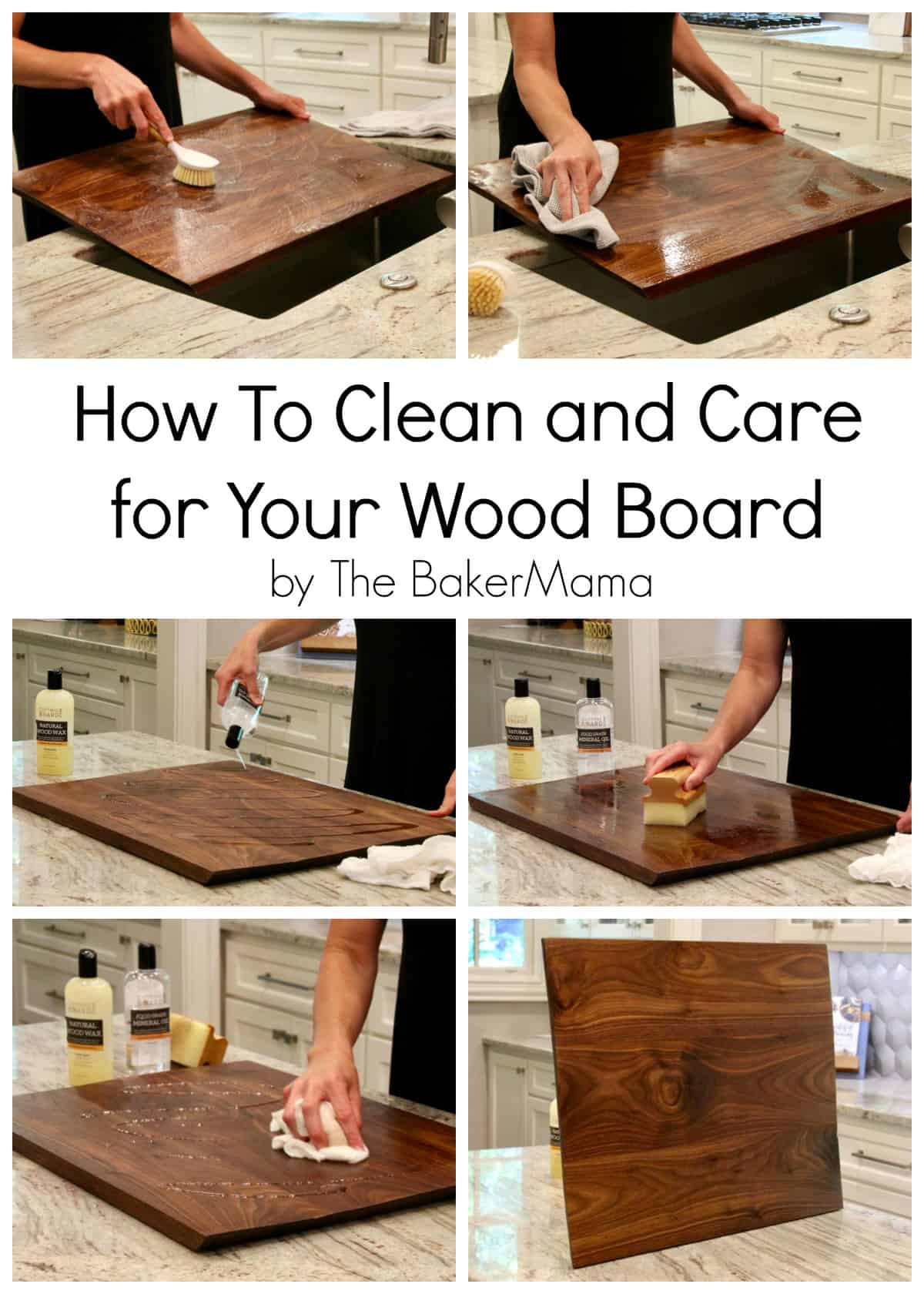
Credit: thebakermama.com
Rubbing with lemon and coarse salt lifts stains and odors.
Deodorizing and stain removal (safe, effective techniques)
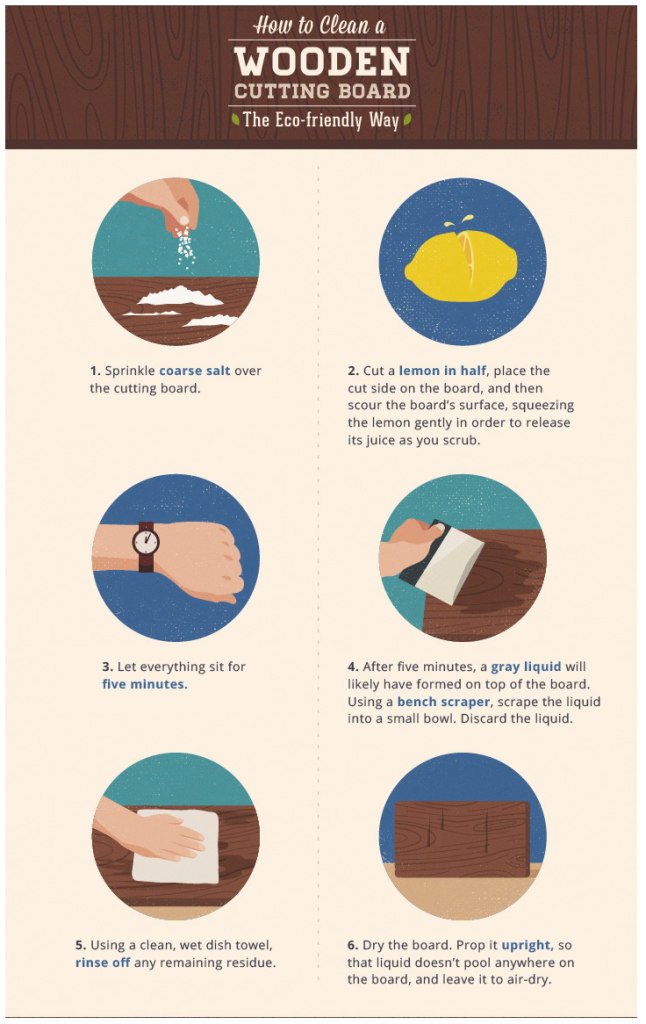
- Lemon + coarse salt: sprinkle salt, rub with a cut lemon (acid + abrasion) for 1–2 minutes, rinse, and dry. Good for light stains and odor.
- Baking soda paste: mix baking soda with water to a paste, scrub into stains, rinse, dry.
- Sanding: for deep trapped odors or stains, sanding followed by re‑oiling removes the stained layer.
- Mold or white bloom: if visible mold is only on the surface, clean thoroughly and sand the affected area. If mold penetrates deeply or the board is heavily compromised, replace it.
In practice: avoid trying to mask odors with oils or fragrances—address the underlying stain or groove.
Preventive habits to reduce contamination risk
- Use separate boards (or color‑coded boards) for raw meat, produce, and ready‑to‑eat foods.
- Clean immediately after handling raw proteins.
- Stand boards on edge or use a drying rack to speed drying.
- Rotate faces of the board if manufacturer allows, spreading wear.
- Inspect weekly for deep cuts; sand or replace if grooves cannot be removed.
These habits reduce the workload of deep cleaning and keep the board safer between uses.
When to replace a wooden cutting board
Consider replacement if:
- Deep grooves and cuts remain after sanding.
- The board is cracked, split, or delaminating.
- Persistent odors or discoloration that resist deep cleaning.
- Structural damage that traps food despite restoration.
A well‑maintained hardwood board can last many years, but safety and ability to clean are the deciding factors.
Common mistakes and practical corrections
- Mistake: soaking the board to “clean better.” Correction: soak weakens wood and glue—scrub, rinse, and dry instead.
- Mistake: oiling with olive or vegetable oils. Correction: use food‑grade mineral oil or certified board creams.
- Mistake: assuming vinegar fully sterilizes. Correction: use vinegar for routine odor control; use peroxide or labeled sanitizers after high‑risk uses.
- Mistake: putting wood boards in the dishwasher. Correction: dishwashers cause warping and cracking—hand wash only.
In practice: small routine actions (drying upright, prompt cleaning) prevent most problems.
Practical notes for commercial kitchens and vulnerable households
If you operate a food service establishment or have immunocompromised family members, follow local health code and manufacturer instructions for sanitizers and use products labeled for porous surfaces. Regulatory guidance (and required contact times or concentrations) can vary—consult appropriate local public health resources and the USDA and FDA for general federal guidance.
FAQ — Fast answers
- Can I use bleach on a wooden cutting board?
- Generally avoid it. Bleach can damage wood. Prefer hydrogen peroxide or a labeled food‑contact sanitizer for wood. Use bleach only on nonporous surfaces per label instructions.
- How long should a sanitizer sit?
- Follow product instructions. For household 3% hydrogen peroxide, 2–5 minutes is typical; for vinegar allow ~5 minutes.
- Does oiling kill bacteria?
- No. Oiling preserves the wood and reduces cracks but does not disinfect. Clean and sanitize before oiling.
- Is wood safer than plastic?
- When both are properly maintained, both can be safe. Wood may self‑repair small cuts and has natural properties that can be less hospitable to bacteria in some cases, but porous structure demands proper cleaning and conditioning.
Conclusion
Sanitizing a wooden cutting board is a repeatable routine: clean with hot, soapy water every use, sanitize after raw proteins (3% hydrogen peroxide or a labeled food‑contact sanitizer is preferred), repair deep cuts with sanding, and maintain the board with food‑grade mineral oil. Preventive habits—separating boards for raw and ready‑to‑eat foods, drying upright, and inspecting for damage—keep the board safe and extend its life.
Next step: choose one sanitizing method (I recommend 3% hydrogen peroxide for home use), add it to your post‑raw‑meat routine this week, and schedule a monthly check of your board’s surface for sanding and re‑oiling.
For official food‑safety standards and labeling guidance on sanitizers, consult the USDA and the FDA.

I’m Abby Lu, a passionate home cook who loves simplifying everyday meals. At PlugChef.com, I share product reviews and cooking guides to help you find the best tools for your kitchen.
Related posts:
 How to Make a Fruit Basket for a Gift: Easy DIY Guide
 Do You Need a Basket? Essential Guide for Air Fryers
 How to Choose Kitchen Appliances: Expert Tips Revealed
 Kitchen Cabinets With Black Stainless Steel Appliances: Modern Elegance
 White Kitchen Cabinets Stainless Steel Appliances: Timeless Elegance
 Top 10 Best Non-Toxic Cooking Utensils – Safe & Durable Choices for Healthy Homes

