
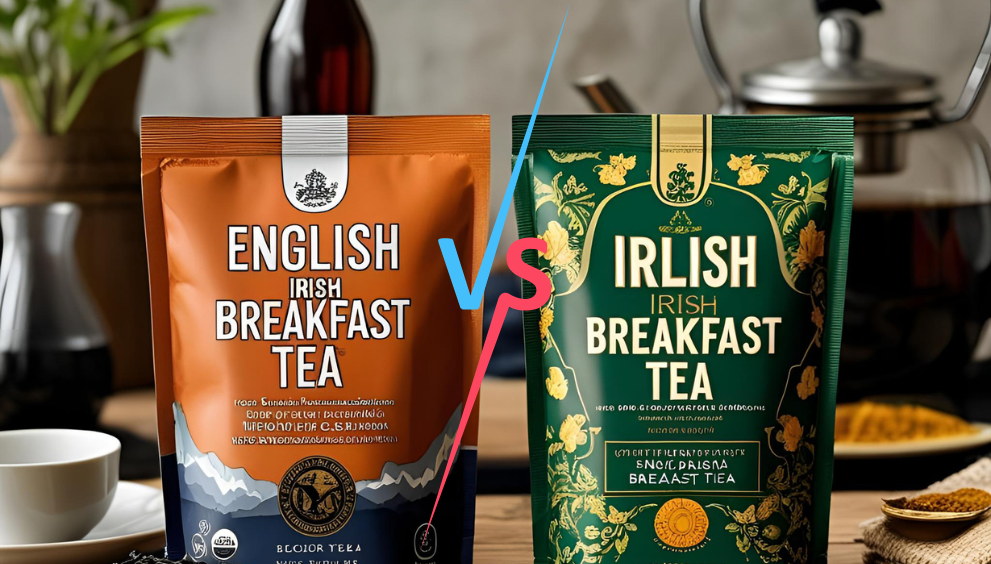
There’s a quiet debate that unfolds in kitchens and cafes every morning: Irish vs English breakfast tea, two iconic black tea blends that look nearly identical in the mug but offer wildly different flavor experiences. If you’ve ever wondered why one tea feels like a hearty, energizing kick to start the day while the other feels like a gentle, comforting sip for a quiet moment, you’re in the right place. As of 2026, both blends remain global household staples, but their distinct histories, ingredient ratios, and brewing methods set them apart for every type of tea drinker. By the end of this guide, you’ll know exactly which blend fits your taste, routine, and food pairings, plus how to brew each perfectly every time.
Origins & Cultural Context
Understanding the roots of these two blends adds depth to every sip, as each was shaped by the cultural and practical needs of its home country. Tea was first introduced to Ireland in the early 1800s, where it quickly replaced coffee as the dominant hot drink due to its lower cost and longer shelf life. Irish breakfast tea was developed in the 19th century to pair with the country’s traditional hearty, fatty full Irish breakfast, with blenders leaning heavily into high-Assam leaves to create a brew strong enough to cut through rich foods and stand up to generous amounts of milk. For Irish households, offering a guest a cup of tea is a core sign of hospitality, and refusing is considered deeply rude—Irish breakfast tea remains the default offering for visitors to this day.
English breakfast tea has a similarly working-class origin, popularized during the Victorian era as a strong, affordable blend to fuel laborers through long days of work. It was named for its pairing with the full English breakfast, a meal designed to provide sustained energy for manual workers, and quickly became the default “builder’s tea” across the UK. The tradition of afternoon tea, where English breakfast is often served as a base, was formalized in the 1840s by Anna, the Duchess of Bedford, who began serving light meals with tea in the afternoon to curb hunger between lunch and late dinner. Unlike Irish tea, which is almost exclusively consumed in the morning in its home country, English breakfast tea is popular all day, from early morning to late afternoon.
If you’re prepping a traditional full Irish breakfast at home, make sure your food prep surfaces are properly sanitized first to avoid cross-contamination.
Core Blend Composition & Ingredient Differences
The biggest differentiator between the two teas is their ingredient ratio, which drives every other distinction in flavor, caffeine, and brewing needs. Both are black tea blends, but the specific leaves used and their proportions create vastly different final products.
The UK Tea & Infusions Association notes that traditional English breakfast blends typically contain 30-40% Assam tea, with the remainder split between Ceylon (from Sri Lanka) and Kenyan tea. This mix creates a balanced, complex flavor: Assam provides a malty base, Ceylon adds bright citrus and floral notes, and Kenyan tea contributes a brisk, fruity finish. Irish breakfast tea, by contrast, is usually made with 70% or more Assam tea, sometimes with a small amount of Kenyan tea added for extra briskness, with little to no Ceylon included. This heavy Assam content is what gives Irish breakfast its signature bold, earthy, malty punch.
Terroir also plays a role: Assam tea is grown in the tropical lowlands of northeast India, where high humidity and heat produce leaves with high tannin and malt content. Ceylon tea is grown in the cooler highlands of Sri Lanka, resulting in lighter, brighter leaves with lower tannin levels. Kenyan tea is grown in the Rift Valley, where volcanic soil produces leaves with a unique fruity, brisk profile. Most commercial blends use a mix of these regional teas to achieve consistent flavor year-over-year, though small-batch artisan blenders may use single-origin leaves for more nuanced, seasonal flavor.
Flavor, Aroma & Mouthfeel Breakdown
The difference in blend composition translates directly to distinct, easily recognizable flavor profiles. For a quick side-by-side look at the core differences, refer to the comparison below:
| Metric | Irish Breakfast Tea | English Breakfast Tea |
|---|---|---|
| Dominant flavor notes | Malty, earthy, robust, slightly smoky | Bright, brisk, citrusy, subtly sweet |
| Aroma | Rich, malty, with hints of wood and earth | Floral, with light citrus and honey notes |
| Mouthfeel | Full-bodied, heavy, low astringency when brewed correctly | Light, smooth, mild astringency if steeped too long |
| Ideal serving | With a generous splash of whole milk, optional sugar | With a splash of milk, plain, or with lemon |
| Color when brewed | Deep amber, almost red | Golden amber, lighter hue |
Irish breakfast tea’s high Assam content gives it a deep, malty backbone with earthy, almost smoky undertones. It has a heavy, coating mouthfeel that feels substantial on the palate, with very little astringency if brewed correctly. Its aroma is intense and malty, with hints of wood and earth that fill the room as it steeps. English breakfast tea, by contrast, has a lighter, more layered flavor: the Ceylon leaves add bright citrus and floral notes, while the Kenyan tea contributes a subtle fruity briskness. Its mouthfeel is much smoother and lighter, with only mild astringency if oversteeped, and its aroma is soft and floral, with hints of honey and lemon.
A common mistake new tea drinkers make is assuming the two teas are interchangeable, but their flavor differences are stark enough that swapping one for the other in a recipe or pairing will drastically change the final result.
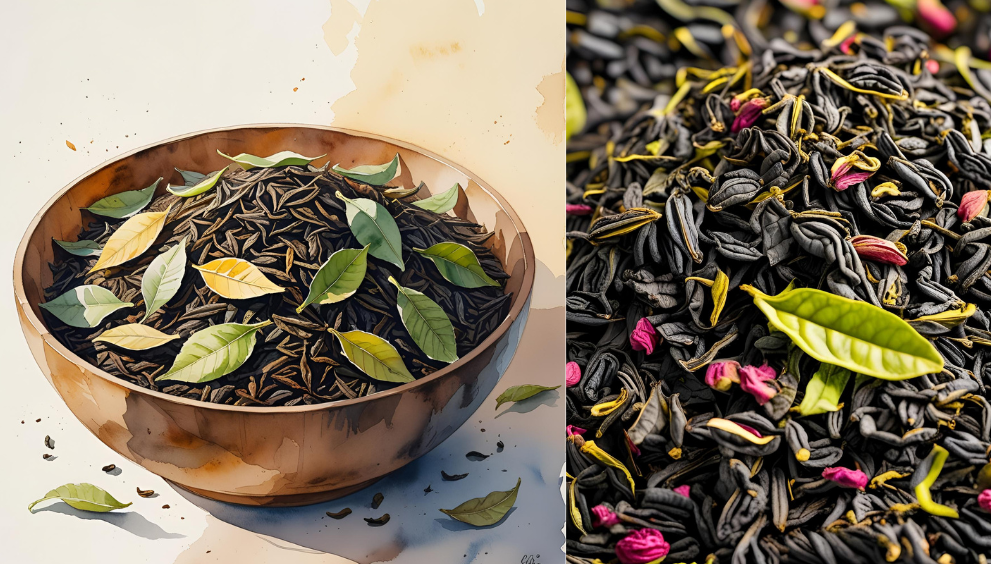 Side-by-side visual of the two brews, highlighting Irish’s deeper amber color vs English’s lighter golden hue.
Credit: teauniverses.com
Side-by-side visual of the two brews, highlighting Irish’s deeper amber color vs English’s lighter golden hue.
Credit: teauniverses.com
Brewing Techniques For Perfect Results
The differences between the two teas extend to brewing, as their distinct leaf compositions require slightly different temperatures, steep times, and techniques to unlock their best flavor. A small adjustment to your usual brewing routine can make the difference between a bitter, weak cup and a perfectly balanced brew.
Traditional Brewing Methods
Both teas work well brewed in a teapot or a mug, but a pre-warmed teapot is ideal for loose-leaf blends, as it maintains consistent water temperature and allows leaves to circulate freely for even extraction. For Irish breakfast tea, use 1 teaspoon of loose leaf (or 1 standard tea bag) per 8oz of water. For English breakfast tea, use 1 teaspoon per 8oz of water as well, though you can reduce to ¾ teaspoon if you prefer a milder flavor.
Water Temperature And Steeping Time
Water temperature is the most critical variable for avoiding bitterness. For Irish breakfast tea, use water heated to 98-100°C (208-212°F), just off a rolling boil, and steep for 4-5 minutes. A common mistake is steeping for less than 4 minutes, which results in a weak, watery cup that can’t stand up to milk. For English breakfast tea, use slightly cooler water, 95-98°C (203-208°F), and steep for 3-4 minutes. Using fully boiling water will scald the delicate Ceylon leaves, releasing excess tannins and creating a harsh, astringent flavor.
Enhancements With Milk And Sugar
Both teas pair beautifully with milk, but traditional serving styles differ slightly. In Ireland, milk is almost always added to the cup before the tea to prevent scalding and create a smooth, creamy texture that softens the tea’s boldness. A generous splash of whole milk is standard, with sugar added to taste. In England, milk is often added after brewing to let the drinker control the strength of the cup, with only a small splash needed to mellow the tea’s briskness. Both teas work well plain, but milk enhances their natural flavors for most drinkers.
If you’re using a vintage cast-iron or metal teapot, follow our rust removal for kitchen tools guide to keep it free of corrosion that could impact your tea’s flavor.
Storing Your Tea For Freshness
To keep your tea tasting its best, store loose-leaf or bagged tea in an airtight container in a cool, dark, dry place, away from strong-smelling foods like spices or coffee. Avoid storing tea in the fridge, as condensation can cause it to go stale faster. For organized, moisture-free storage of loose-leaf tea and brewing accessories, our under-sink organization tips can help you create a dedicated space that protects your tea from light and humidity. Properly stored, both teas will stay fresh for 1-2 years, though they will be at their peak flavor within 6 months of opening.
Keeping your tea station tidy and functional makes morning routines smoother; check our kitchen sink upkeep tips to avoid leaks or clogs that could disrupt your brew process.
Caffeine Content & Nutritional Profile
Beyond flavor, many tea drinkers choose between the two blends based on caffeine content and health benefits. Both are low-calorie, unsweetened options, but they have small but meaningful differences in their nutritional profiles.
Irish breakfast tea typically contains 60-80mg of caffeine per 8oz cup, while English breakfast tea contains 40-60mg per 8oz cup. Exact caffeine content varies by brand, brew time, and leaf quality, so check packaging for precise numbers if you’re monitoring your intake. Both teas also contain L-theanine, an amino acid that promotes calm, focused energy without the jitters common with coffee, making them a popular choice for morning productivity.
Both teas are calorie-free when consumed unsweetened and un milked, and contain small amounts of manganese, potassium, and fluoride. Per research from the Harvard T.H. Chan School of Public Health, both black tea varieties are rich in polyphenol antioxidants that support cardiovascular health and may reduce risk of chronic disease when consumed without added sugars. The higher tannin content in Irish breakfast tea can inhibit non-heme iron absorption if consumed with iron-rich meals, so it’s best drunk between meals if you have iron deficiency. English breakfast tea has lower tannin levels, making it a gentler option for people with sensitive stomachs or iron deficiencies.
Top Commercial & Artisan Brands To Try
While homemade blends are an option, most tea drinkers opt for commercial brands, which offer consistent flavor and easy availability. Below are the most popular options for each blend, as of 2026:
Leading Irish Breakfast Teas
- Barry’s Tea Gold Blend: The undisputed king of Irish breakfast tea, made with 100% Assam leaves, it’s bold, malty, and designed to stand up to even the heaviest splash of milk. It’s a staple in 90% of Irish households, and its bright red packaging is instantly recognizable.
- Bewley’s Original Irish Breakfast: A blend of Assam and Kenyan teas, slightly less intense than Barry’s, with a smooth, brisk finish that appeals to drinkers who find pure Assam too strong. It’s widely available in Ireland and the UK.
- Thompson’s Irish Breakfast: A budget-friendly, no-frills option with a strong, classic flavor, widely available in Irish supermarkets and convenience stores.
 Barry’s Tea Gold Blend, one of Ireland’s most popular mass-market Irish breakfast options.
Credit: www.teawithtae.com
Barry’s Tea Gold Blend, one of Ireland’s most popular mass-market Irish breakfast options.
Credit: www.teawithtae.com
Top English Breakfast Teas
- Twinings English Breakfast: A classic, globally available blend of Assam, Ceylon, and Kenyan teas, known for its smooth, consistent, balanced flavor. It’s a great entry-point for new tea drinkers.
- PG Tips: A British household staple, known for its unique pyramid tea bags that allow for better water circulation and fuller flavor extraction. It has a strong, smooth taste that works well with milk.
- Yorkshire Tea: A popular UK brand with a robust, full-bodied flavor that’s slightly bolder than Twinings, making it a favorite for working-class Brits who prefer a strong cup with milk.
- Fortnum & Mason Royal Blend: A premium, gift-worthy English breakfast blend with a higher proportion of Ceylon for a bright, citrusy flavor, packaged in decorative tins.
Specialty And Artisan Options
If you want to move beyond mass-market blends, small-batch artisan roasters offer single-origin and small-batch blended options with more nuanced flavor. Look for organic, fair-trade certified blends from brands like Rishi Tea, Art of Tea, or Vahdam Teas for higher-quality leaves and more complex flavor profiles.
Food Pairings For Every Occasion
The distinct flavors of Irish and English breakfast teas make them ideal for different food pairings, from traditional breakfasts to modern snacks and desserts.
Traditional Breakfast Pairings
Irish breakfast tea’s bold, malty flavor is built to cut through rich, fatty, savory foods. It’s the classic pairing for a full Irish breakfast (soda bread, black pudding, fried eggs, bacon, baked beans) and works equally well with sharp cheddar, dark chocolate, and spiced baked goods like cinnamon rolls. The tea’s strong flavor stands up to heavy, flavorful dishes without being overpowered.
English breakfast tea’s balanced, bright flavor is the traditional pairing for a full English breakfast (eggs, bacon, sausages, baked beans, mushrooms, toast). Its subtle citrus and floral notes complement savory foods without overwhelming them, and it’s also the standard base for classic afternoon tea pairings like scones, clotted cream, and jam.
Modern & Light Pairings
For lighter, modern meals, English breakfast tea is the more versatile option. It pairs beautifully with avocado toast, smoked salmon bagels, fruit salad, and cucumber sandwiches, its bright notes balancing fresh, light flavors. For a quick modern pairing, top whole-grain toast with overnight avocado prep for a creamy, fiber-rich side that balances the tea’s briskness.
Irish breakfast tea shines with spicy or rich modern dishes: try it with Thai curry, chili, or Mexican street food, as its bold flavor stands up to heat and strong spices. It also pairs well with rich desserts like chocolate cake, brownies, or caramel slices.
Seasonal & Iced Pairings
In colder months, Irish breakfast tea is the ideal pairing for hearty stews, roasted meats, and warm baked goods, its strong flavor matching the richness of winter meals. For spring and summer, English breakfast tea pairs nicely with light salads, fresh fruit, and yogurt parfaits.
For iced tea, English breakfast is the better choice, as its lighter, brighter flavor doesn’t get muted by ice. Brew it at double strength, then pour over ice and add a slice of lemon or a splash of milk for a refreshing summer drink. Irish breakfast can be used for iced tea, but use 25% less leaf and steep for 2 minutes less to avoid an overly strong, bitter brew.
If you’re hosting a brunch and serving other beverages alongside tea, a handy bottle-opening trick can save the day for sparkling water or juice servings.
How To Choose The Right Blend For You
At the end of the day, the Irish vs English breakfast tea showdown comes down to personal preference, mood, and use case. Use this quick checklist to pick the right blend for your needs:
- Choose Irish breakfast tea if you prefer bold, malty, full-bodied flavor, want a strong caffeine kick to start your day, plan to pair it with rich, savory, or spicy foods, or enjoy a generous splash of milk with your tea.
- Choose English breakfast tea if you prefer a smooth, balanced, versatile flavor, want a gentler caffeine boost, plan to drink it plain, with lemon, or with light foods, or want a tea that works well for iced tea or afternoon sipping.
Many tea drinkers keep both blends on hand for different times of day: Irish for busy mornings when they need a strong pick-me-up, and English for lazy afternoons or when hosting guests. There’s no “right” choice—experimenting with both is the best way to find your perfect match.
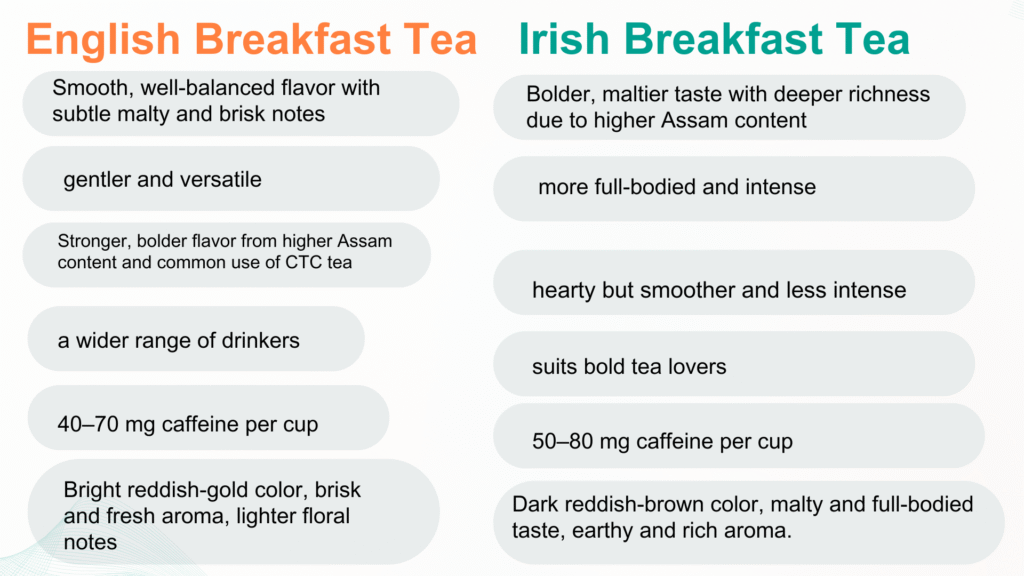 Quick-reference infographic breaking down blend, flavor, caffeine, and pairing differences at a glance.
Credit: teauniverses.com
Quick-reference infographic breaking down blend, flavor, caffeine, and pairing differences at a glance.
Credit: teauniverses.com
Frequently Asked Questions
What is the main difference between Irish and English breakfast tea?
The core difference is their blend composition: Irish breakfast tea is made with 70% or more Assam tea leaves, giving it a bold, malty, full-bodied flavor, while English breakfast tea is a balanced blend of 30-40% Assam, plus Ceylon and Kenyan teas, resulting in a smoother, brighter, more versatile taste.
Which breakfast tea has more caffeine?
Irish breakfast tea typically has 20-30% more caffeine than English breakfast tea, with 60-80mg per 8oz cup vs 40-60mg for English. Exact caffeine content varies by brand and brew time, so check packaging for precise numbers if you’re monitoring intake.
Can I use milk with both teas?
Yes, both teas pair beautifully with milk. Traditional Irish service adds milk first to create a creamy, uniform texture that softens the tea’s boldness, while English service often adds milk after brewing to control strength. You can adjust the amount of milk to taste: Irish breakfast can handle a generous splash, while English breakfast only needs a small amount to mellow its flavor.
Are these teas interchangeable in recipes?
Yes, but keep in mind the flavor difference: Irish breakfast will add a stronger, maltier, earthier note to recipes like tea-infused baked goods or marinades, while English breakfast will add a lighter, brighter, citrusy note. If swapping, use 25% less Irish breakfast than the recipe calls for English to avoid overpowering other flavors.
Is one tea better for iced tea?
English breakfast tea is the better choice for iced tea, as its lighter, brighter flavor doesn’t get muted by ice. For Irish breakfast iced tea, use less leaf and steep for a shorter time to avoid a bitter, overly strong brew.
Are there any health differences between the two?
Both teas have similar core health benefits, including antioxidant content and L-theanine for calm focus. The main difference is that Irish breakfast has higher tannin content, which can inhibit non-heme iron absorption if consumed with iron-rich meals, so it’s best drunk between meals if you have iron deficiency.
Conclusion
Irish and English breakfast teas each offer a unique, culturally rooted flavor experience that fits different tastes, routines, and occasions. Irish breakfast is the bold, energizing pick for people who love rich, malty flavors and a strong caffeine kick to start the day, while English breakfast is the smooth, versatile option perfect for casual sipping, afternoon breaks, and pairing with light meals. Both have deep historical roots and offer unique benefits that can elevate your daily tea routine.
Ready to find your perfect match? Grab a sampler of both blends this week, brew them side-by-side using the tips above, and pair each with your favorite breakfast dish to see which one wins your taste test. No matter which you pick, a warm cup of breakfast tea is a small, daily luxury worth savoring.

Hi, I’m Daniel Brooks—a food lover and kitchen gear enthusiast. I enjoy testing cookware, utensils, and gadgets to see what really works in everyday cooking. At PlugChef.com, I share honest reviews, comparisons, and simple guides to help you choose the best tools for a safer, smarter, and more enjoyable kitchen.
Related posts:
 5 Drawer Organizer for Clothes: Maximize Your Space
 Bamboo Dish Rack With Drain Tray: Ultimate Kitchen Organizer
 Side Dish for Rack of Lamb: Perfect Pairings Unveiled
 Yamazaki Home 2608 Dish Drainer: Sleek Kitchen Essential
 Hidden Dish Drying Rack Ideas: Space-Saving Solutions
 Kraus Roll Up Dish Drying Rack: Space-Saving Kitchen Essential

