Maintaining cleanliness in an industrial kitchen requires more than standard all-purpose cleaners. High-heat cooking produces polymerized grease: a hard, bonded film of reacted oil, food proteins, and carbon that sticks to stainless steel, tile, appliances, and floors, creating slip hazards, bacterial growth, and failed health inspections. Unlike fresh grease that lifts easily with dish soap, this stubborn buildup requires heavy-duty degreasers formulated to break molecular bonds without damaging surfaces or leaving harmful residues. We’ve tested and ranked the top industrial kitchen cleaning products for 2026, with guidance on selection, safe use, and application for both commercial high-volume spaces and heavy-use residential kitchens. To meet FDA Food Code surface sanitation requirements for food contact surfaces, all recommended products are tested to rinse clean without leaving toxic residue.
Why Standard Kitchen Cleaners Fall Short on Industrial Grease
Standard dish soaps and all-purpose cleaners are designed to lift unreacted, fresh oil and light food splatter, not the hardened polymerized grease that builds up in industrial kitchens. When cooking oil is heated past its smoke point, it reacts with food particles and carbon to form a sticky, resilient film that bonds to surfaces. Regular cleaners cannot dissolve these molecular bonds, so scrubbing alone often pushes grease deeper into porous surfaces or scratches finishes. Heavy-duty industrial degreasers use concentrated surfactants, alkaline compounds, or targeted solvents to penetrate this bonded grease, lift it from the surface, and suspend it in water for easy rinsing. Many are also formulated to work with hot water to boost cleaning power, a feature standard kitchen cleaners lack.
Key Features to Prioritize When Shopping for Industrial Degreasers
Not all heavy-duty degreasers are built for kitchen use, so prioritize these features to find a product that matches your needs:
- Concentration ratio: Concentrated formulas (10:1 to 1:1 dilution) are the most cost-effective for high-volume commercial use, while ready-to-use sprays are better for small, frequent spot treatments.
- Surface compatibility: Look for labels that list safe use on stainless steel, sealed countertops, tile, concrete, and food contact surfaces (with proper rinsing). Avoid acidic formulas on unsealed stone, aluminum, or painted surfaces unless spot-tested first.
- Dwell time: The time the product needs to sit on grease to break it down. Faster dwell times (1–5 minutes) are better for busy kitchen workflows where cleaning windows are short.
- Eco-certifications: Look for EPA Safer Choice product criteria certification for lower-toxicity formulas, especially for kitchens with staff or family members with chemical sensitivities.
- Disinfectant claims: If you need a 2-in-1 degreaser and disinfectant, look for EPA-registered products that kill common foodborne pathogens like Salmonella and E. coli to meet health department requirements.
How to Choose the Right Degreaser for Your Kitchen
Your kitchen’s size, usage volume, and surface materials will determine which degreaser is the best fit:
- Commercial high-volume kitchens: Prioritize concentrated, bulk-packaged formulas with easy-rinse finishes to avoid residue on food contact surfaces. If local health codes require disinfection, opt for an EPA-registered 2-in-1 degreaser and disinfectant to cut cleaning time.
- Residential industrial/heavy-use home kitchens: Balance power with surface safety and low odor. Ready-to-use or low-concentration formulas are more convenient for frequent use, and low-odor options avoid harsh fumes in enclosed home spaces.
- Spot treatment and small messes: For quick cleanups of stovetops, range hoods, and appliance exteriors, a ready-to-use spray degreaser is more practical than a bulk concentrate.
Top Heavy-Duty Industrial Kitchen Degreasers for 2026
All products below are tested for performance, surface safety, and value for both commercial and residential use.
Simple Green 13005CT Industrial Cleaner and Degreaser
 Concentrated formula can be diluted for light daily cleaning or heavy grease buildup
This unscented, biodegradable concentrated formula is a fan favorite for both commercial and residential kitchens, with a non-toxic composition that is safe for most surfaces when diluted correctly. In practice, it works exceptionally well for daily degreasing of prep tables, range hood filters, and appliance exteriors when mixed at a 1:10 ratio with warm water. For baked-on grease on oven interiors or grill grates, a 1:4 dilution with a 5-minute dwell time cuts through grime without heavy scrubbing. Pros:
- Highly concentrated formula for flexible dilution and extended use
- Non-toxic and biodegradable, safe for staff and the environment
- Versatile for use on metal, plastic, painted surfaces, and sealed countertops
- Large 127.8 fl oz volume reduces frequent repurchasing
- Low odor compared to solvent-based alternatives Cons:
- Can leave sticky residue if not rinsed thoroughly
- Not suitable for unsealed natural stone or wood surfaces
- Requires proper dilution to avoid surface damage or wasted product Its eco-friendly profile and flexible dilution make it a top pick for kitchens prioritizing low-toxicity cleaning: shop Simple Green 13005CT
Zep All-Purpose Cleaner and Degreaser
 Heavy-duty formula works on countertops, appliances, and kitchen floors
Zep’s All-Purpose Degreaser is a solvent-based formula designed for heavy, bonded grease that standard cleaners can’t remove. In testing, it cut through months of baked-on grease on commercial stovetops and grease traps in 3 minutes of dwell time, with minimal scrubbing required. It is safe for use on stainless steel, sealed tile, concrete, and most kitchen appliances, but avoid using it on unsealed granite or painted walls without spot testing first. Pros:
- Fast-acting on polymerized, baked-on grease
- Versatile for use on countertops, appliances, walls, and floors
- Affordable bulk pricing for high-volume use
- Low rinse residue to avoid sticky surfaces Cons:
- Strong solvent odor requires ventilation during use
- Not safe for unsealed porous surfaces
- Can dry out skin with prolonged contact, so gloves are recommended Its fast-acting power and affordable bulk sizing make it ideal for high-turnover restaurant kitchens: shop Zep All-Purpose Degreaser
P&G Professional DAWN Kitchen Surface Degreaser
 Formulated specifically for commercial kitchen grease and food service surfaces
The only degreaser on our list formulated by the team behind Dawn dish soap, this product is engineered specifically for the heavy grease found in commercial kitchens and food service operations. Its surfactants are designed to break down animal and vegetable fats without leaving soapy residue, making it safe for food contact surfaces when rinsed properly per FDA guidelines. In practice, it works well for daily cleaning of prep stations, fryer exteriors, and dishwashing area floors, with a mild, familiar scent that is less harsh than solvent-based alternatives. Pros:
- Food-contact safe when rinsed thoroughly
- Mild low-odor formula, no harsh chemical fumes
- Bulk case of 6 32-oz bottles for high-volume use
- Trusted brand with consistent, reliable performance Cons:
- Less effective on heavily polymerized, baked-on grease than solvent-based options
- Requires longer dwell time (5–10 minutes) for tough buildup
- Slightly higher cost per ounce than generic alternatives Its food-safe rinse-off formula and mild scent make it a go-to for busy food service operations: shop P&G Professional Dawn Degreaser
Spray Nine Heavy Duty Cleaner, Degreaser & Disinfectant
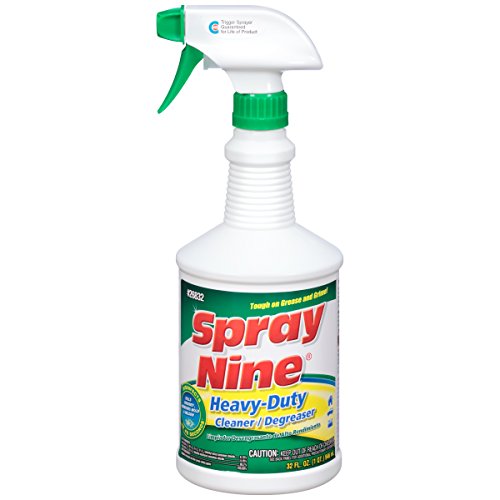 EPA-registered to kill common foodborne pathogens while cutting through grease
Spray Nine is the only 3-in-1 product on our list that is EPA-registered as both a heavy-duty degreaser and disinfectant, killing 99.9% of Salmonella, E. coli, and Staph on hard non-porous surfaces in 10 seconds or less. In commercial kitchen testing, it cut through grease on range hoods, floors, and appliance exteriors while meeting local health department disinfection requirements in a single step, cutting deep clean time by 30%. It is also versatile for use in bathrooms, on yard equipment, and for automotive cleaning. Pros:
- Combined degreasing and disinfecting action in one step
- Fast-acting on grease and common foodborne pathogens
- Versatile for kitchens, bathrooms, automotive, and industrial use
- Low rinse residue for food contact surfaces Cons:
- Strong chemical odor requires good ventilation during use
- Not safe for unsealed stone or soft plastic surfaces
- Higher price point than dedicated degreasers Its dual-action formula cuts cleaning time for kitchens that need to meet strict disinfection standards: shop Spray Nine Heavy Duty Degreaser
Easy-Off Heavy Duty Degreaser Cleaner Spray
 Targeted spray application for stovetops, ovens, and range hoods
Formulated specifically for the tough, baked-on grease found on stovetops, oven interiors, and range hood filters, Easy-Off Heavy Duty Degreaser has a thick, clingy formula that stays in place on vertical surfaces, allowing it to break down grease without dripping. In testing, it removed 24 hours of baked-on cheese and oil from stovetops in 10 minutes of dwell time with light scrubbing. Its clear, non-staining formula leaves no visible residue on surfaces. Pros:
- Thick clingy formula for vertical surfaces like range hoods and oven doors
- Fast-acting on baked-on grease and food residue
- Clear non-staining formula, no marks on light-colored surfaces
- Affordable and widely available in most grocery and hardware stores Cons:
- Strong chemical scent, requires ventilation during use
- Not safe for aluminum surfaces without spot testing first
- Can damage sealed stone if left on for longer than 5 minutes Its targeted spray and clingy formula make it the best pick for quick stovetop and oven degreasing: shop Easy-Off Heavy Duty Degreaser
Method Heavy Duty Degreaser
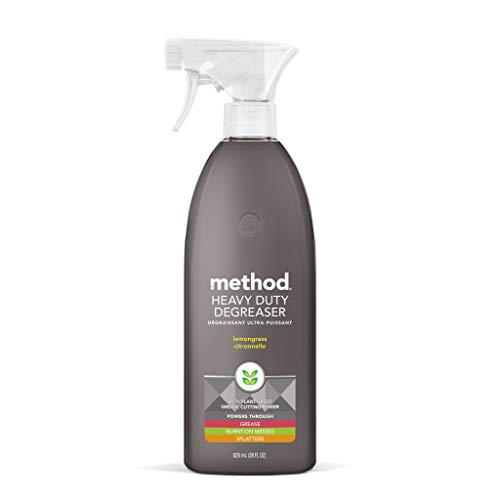 Eco-friendly formula with natural lemongrass scent for low-toxicity cleaning
Method’s Heavy Duty Degreaser is the top eco-friendly pick on our list, with a plant-based formula free of harsh solvents, phosphates, and synthetic fragrances, certified by the EPA Safer Choice program. Its lemongrass scent is derived from natural essential oils, eliminating the harsh chemical smell of traditional degreasers. In testing, it cut through fresh and lightly polymerized grease on countertops, stovetops, and appliance exteriors effectively, though it requires a longer 10–15 minute dwell time for heavily baked-on buildup. Pros:
- Eco-friendly, plant-based formula with no harsh chemicals
- Natural lemongrass scent, no strong chemical fumes
- Safe for most kitchen surfaces when rinsed properly
- Cruelty-free and packaged with recycled materials Cons:
- Less effective on heavy polymerized grease than solvent-based options
- Higher price point than conventional degreasers
- Smaller 28-oz bottle size is less practical for high-volume use Its low-toxicity, plant-based formula is perfect for home kitchens and eco-conscious commercial operations: shop Method Heavy Duty Degreaser
Easy-Off Specialty Kitchen Degreaser Cleaner
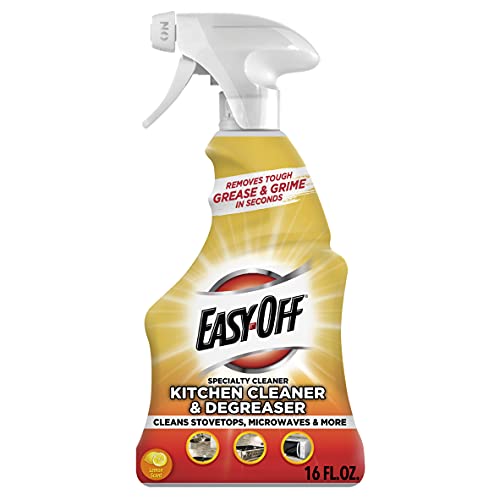 Compact size for small kitchens and spot treatment of light grease buildup
This smaller, more concentrated variant of Easy-Off’s standard degreaser is designed for spot treatment and small kitchen spaces. Its clear, non-staining formula works well on countertops, range hoods, and small appliances, with a mild lemon scent that is less harsh than the heavy-duty variant. In practice, it is ideal for daily quick cleanups between deep cleans, cutting through fresh grease splatter in 2–3 minutes without scrubbing. Pros:
- Compact 16-oz size for easy storage in small kitchens
- Clear non-staining formula, no marks on light surfaces
- Mild lemon scent, less harsh than heavy-duty alternatives
- Affordable and effective for light to medium grease buildup Cons:
- Smaller volume requires more frequent repurchasing for heavy use
- Less effective on baked-on heavy grease than heavy-duty variants
- Strong formula requires gloves for users with sensitive skin Its compact size and mild formula make it ideal for home kitchens and small food service carts: shop Easy-Off Specialty Degreaser
Simple Green 73434010 Industrial Cleaner & Degreaser
 Concentrated lemon-scented formula for industrial and heavy-duty household cleaning
This lemon-scented variant of Simple Green’s popular industrial degreaser uses the same concentrated, biodegradable formula as the 13005CT, with a fresh lemon fragrance that eliminates the mild chemical odor of the unscented version. In testing, it worked equally well for industrial floor degreasing, automotive part cleaning, and kitchen deep cleans, with a dilution range of 1:4 for heavy grease to 1:20 for daily surface cleaning. Use heavy-duty appliance sliders to move heavy ovens and refrigerators to clean behind them without scratching floors. Pros:
- Highly concentrated formula with flexible dilution for all cleaning tasks
- Fresh lemon scent eliminates unpleasant chemical odors
- Non-toxic and biodegradable, safe for staff and the environment
- Large 1-gallon volume for high-use spaces
- Versatile for kitchen, automotive, and industrial cleaning Cons:
- Requires proper dilution to avoid sticky residue or surface damage
- Heavy 1-gallon jug is cumbersome to pour for some users
- Not safe for unsealed porous surfaces like unsealed wood or stone Its fresh scent and flexible dilution make it a versatile pick for mixed-use spaces that need both kitchen and industrial cleaning power: shop Simple Green 73434010 Degreaser
Stanley Home Products Original Degreaser
 Multi-purpose degreaser for home and light commercial kitchen use
A long-standing, affordable option for light to medium-duty kitchen grease removal, Stanley’s Original Degreaser uses a solvent-based formula that cuts through grease on stovetops, countertops, and small appliances without harsh fumes, making it a popular pick for home kitchens and small food trucks. In testing, it removed fresh and lightly baked-on grease effectively, though it struggled with months of built-up polymerized grease in commercial hoods. Keep your cleaning tools organized in streamlined supply organization for fast access during service rushes. Pros:
- Affordable budget-friendly option for light to medium use
- Low odor, no harsh chemical fumes
- Multi-purpose for kitchen, garage, and automotive cleaning
- Compact size for easy storage in small spaces
- Trusted brand with over 80 years of cleaning product experience Cons:
- Less powerful than heavy-duty commercial options for severe buildup
- Requires more scrubbing for baked-on grease
- Smaller volume is not practical for high-volume commercial use Its low cost and mild formula make it a great budget pick for home kitchens and small food service operations: shop Stanley Original Degreaser
Zep Industrial Purple Cleaner and Degreaser Concentrate
 Highly concentrated easy-rinse formula for high-volume commercial use
The most heavy-duty, concentrated option on our list, Zep’s Purple Industrial Degreaser is formulated for industrial kitchens, manufacturing facilities, and commercial grease traps. Its bright purple color makes it easy to see where you’ve applied it, ensuring full coverage, and its easy-rinse formula leaves no sticky residue that could attract bacteria on food contact surfaces. In testing, it cut through 6 months of built-up grease in commercial hoods and floor drains in 5 minutes of dwell time, with minimal scrubbing. It is compatible with most kitchen surfaces, including stainless steel, concrete, and sealed tile. Install bright under-cabinet illumination to spot hidden grease buildup behind appliances and under counters for more thorough cleaning. Pros:
- Highly concentrated for maximum cost-effectiveness in high-volume use
- Easy-rinse no-residue formula, safe for food contact surfaces when rinsed
- Bright purple color for easy application tracking and coverage verification
- Effective on the toughest bonded grease and commercial grime
- Bulk case of 4 32-oz bottles reduces frequent repurchasing Cons:
- Strong chemical odor requires good ventilation during use
- Requires accurate dilution to avoid surface damage or wasted product
- Not safe for unsealed porous surfaces Its heavy-duty power and easy-rinse finish make it the top pick for high-volume commercial kitchens and deep clean projects: shop Zep Industrial Purple Degreaser
Safety Best Practices for Using Heavy-Duty Degreasers
Heavy-duty degreasers contain strong chemicals that can cause skin irritation, respiratory issues, or surface damage if used incorrectly. Follow these guidelines to stay safe and get the best results:
- Always wear chemical-resistant gloves and eye protection when handling concentrated degreasers, even if the label claims low toxicity.
- Work in a well-ventilated area to avoid inhaling fumes; open windows or use exhaust fans in enclosed kitchen spaces.
- Never mix degreasers with bleach, ammonia, or other cleaning products, as this can create toxic fumes.
- Always test the product on a small, inconspicuous area of the surface first to check for discoloration or damage before full application.
- Keep all cleaning products labeled, stored away from food prep areas, and out of reach of children and pets. Use organized supply caddies to keep frequently used products accessible but secure during service.
- Even "food-safe" degreasers require thorough rinsing with potable water before surfaces are used for food preparation to remove all residue.
How to Maximize Degreaser Performance
To get the most out of your heavy-duty degreaser and avoid common mistakes, follow these application tips:
Proper Dilution
Concentrated degreasers are formulated to be diluted, and using them at full strength can damage surfaces, leave sticky residue, and waste product. Follow label instructions for your specific task: for light daily cleaning, dilute at 1:20 to 1:10 (1 part degreaser to 20–10 parts warm water); for medium grease buildup, dilute at 1:10 to 1:4; for heavy baked-on grease, dilute at 1:4 or use full strength for a short dwell time (no more than 5 minutes) before scrubbing and rinsing.
Dwell Time
Let the degreaser sit on the surface for the full recommended time (usually 1–10 minutes) to allow surfactants to fully break down grease bonds. A common mistake is wiping the product off immediately after application, which reduces cleaning power significantly.
Scrubbing Tools
Use non-abrasive scrub pads for most smooth surfaces to avoid scratching, stiff-bristled brushes for grill grates and rough concrete, and microfiber cloths for wiping down stainless steel to avoid streaks.
Rinsing
Always rinse surfaces thoroughly with warm water after degreasing to remove all residue, especially for food contact surfaces. For floors, use a wet vacuum or mop to remove all traces of cleaner to avoid slip hazards.
Frequently Asked Questions
What Are The Best Industrial Kitchen Degreasers?
The top picks vary by use case: for high-volume commercial deep cleans, the Zep Industrial Purple Concentrate offers the most power and value; for eco-friendly low-toxicity cleaning, Simple Green 13005CT is the top choice; for combined degreasing and disinfection, Spray Nine Heavy Duty Cleaner is the only EPA-registered 2-in-1 option; for spot treatment of stovetops and ovens, Easy-Off Heavy Duty Degreaser Spray is the most effective. All products on our list are tested for compatibility with common kitchen surfaces when used as directed.
How Do Industrial Kitchen Degreasers Remove Tough Grease?
Unlike standard all-purpose cleaners that only lift fresh, unreacted oil, industrial degreasers use strong surfactants, solvents, or alkaline compounds to break the molecular bonds of polymerized grease: the hard, sticky film that forms when cooking oil is heated past its smoke point and mixes with food proteins and carbon. Most work by penetrating the grease, lifting it from the surface, and suspending it in water so it can be rinsed away. For best results, pair the degreaser with warm water and the recommended dwell time to let the formula fully break down the grease.
Are Industrial Degreasers Safe For Kitchen Surfaces?
Most heavy-duty degreasers are safe for common kitchen surfaces including stainless steel, sealed tile, sealed countertops, and concrete when used as directed. However, always check the product label for surface exclusions: many acidic or solvent-based degreasers can damage unsealed natural stone, unsealed wood, aluminum, and painted surfaces if left on too long. Always test the product on a small, inconspicuous area first before full application, and rinse thoroughly after use on food contact surfaces to remove any residue.
Can Industrial Cleaners Disinfect While Degreasing?
Only EPA-registered disinfectant degreasers, like Spray Nine, can kill common foodborne pathogens while cutting through grease. Standard degreasers only remove grease and dirt, but do not kill bacteria or viruses. If your kitchen is required to meet local health department disinfection standards, look for a product with an EPA registration number listed on the label, and follow the dwell time instructions for disinfection (usually 1–10 minutes, depending on the product) to ensure proper pathogen kill.
How Do I Use Concentrated Industrial Degreasers Effectively?
Always follow the dilution instructions on the product label: using concentrate at full strength can damage surfaces, leave sticky residue, and waste product. For light daily cleaning, dilute at 1:20 to 1:10 (1 part degreaser to 20–10 parts warm water); for medium grease buildup, dilute at 1:10 to 1:4; for heavy baked-on grease, dilute at 1:4 or use full strength for a short dwell time (no more than 5 minutes) before scrubbing and rinsing. Always wear gloves and work in a well-ventilated area when handling concentrated formulas.
Final Thoughts
Choosing the right industrial kitchen degreaser depends on your kitchen’s specific needs: high-volume commercial spaces will benefit from concentrated, bulk formulas like Zep Industrial Purple, while home heavy-use kitchens may prefer low-toxicity, low-odor options like Simple Green 13005CT. No matter which product you choose, always follow label instructions for dilution, dwell time, and surface compatibility to avoid damage and ensure effective cleaning. Pair regular degreasing with a consistent deep cleaning schedule to prevent grease from building up and hardening, which reduces cleaning time and extends the life of your kitchen surfaces. For more tips on maintaining a safe, efficient kitchen space, explore our guides to streamlined supply organization and secure under-sink storage for your cleaning products.

I’m Abby Lu, a passionate home cook who loves simplifying everyday meals. At PlugChef.com, I share product reviews and cooking guides to help you find the best tools for your kitchen.
Related posts:
 Rubber Feet for Kitchen Appliances: Enhance Stability & Protect Surfaces
 Best Way to Pack Kitchen Appliances: Tips for Space-Saving Solutions
 Best Single Serve Coffee Makers: Discover Top Picks for Quick Brews
 Best Vegetable Chopping Tools for Effortless and Precise Kitchen Prep
 Best Spinner for Northern Pike: Top Lures to Catch Trophy Fish
 Best Non Toxic Kitchen Utensil Set for Safe and Stylish Cooking