Good Inexpensive Kitchen Knives: Discover Top Sets for Every Kitchen
A sharp, reliable knife is the workhorse of any kitchen, yet quality tools don’t have to carry a premium price tag. In 2026, many budget‑friendly sets deliver stainless‑steel blades, comfortable handles, and thoughtful safety features that rival far more expensive options. This guide breaks down what to look for, how to care for your knives, and which inexpensive sets genuinely earn a place in your drawer—so you can slice, dice, and chop with confidence without overspending.
What Defines a Good Inexpensive Kitchen Knife
Blade material is the first clue to performance. Look for high‑carbon stainless steel (≥0.5 % carbon) or German X50CrMoV15 steel; both hold an edge well and resist corrosion. A Rockwell hardness rating between 55‑58 HRC offers a balance of sharpness and toughness—too soft and the edge rolls, too brittle and it chips. Full‑tang construction, where the metal runs the full length of the handle, adds strength and balance, reducing wrist fatigue during repetitive tasks. Handles should be ergonomic (contoured to fit the palm) and made from durable polymers like polypropylene or Pakkawood; avoid slick finishes that become hazardous when wet. Finally, a sharp edge out of the box (usually 15‑20° per side) means you can start cooking right away, though occasional honing will keep it that way. For more on this, see our guide on kitchen hood cleaning certification online.
How to Choose the Right Set for Your Cooking Style
Match the knife assortment to the meals you prepare most often. A versatile chef’s knife (8‑10 in) handles chopping, slicing, and mincing for vegetables, herbs, and proteins. If you frequently peel fruit or devein shrimp, a paring set (3‑4 in) is indispensable. For breads or tomatoes with tough skins, a serrated utility knife prevents crushing. Many budget blocks include a santoku (5‑7 in)—its flatter edge excels at push‑cutting thin slices of fish or Asian‑style vegetables. Consider storage: a universal block accommodates varied blade widths, while a magnetic strip saves counter space and keeps knives visible. If you have limited drawer space, opt for a set with sheath guards that protect edges when stacked.
Maintenance & Care to Extend Life
Proper care doubles a knife’s lifespan and maintains safety. Always hand‑wash blades with mild detergent; dishwashers can cause micro‑chips and dull the edge over time. Dry immediately with a soft towel to prevent water spots. Honing with a ceramic or steel rod before each major use realigns the microscopic edge—do this 2‑3 times per week for daily cooks. When the blade feels dull (typically after 2‑3 months of regular use), sharpen on a whetstone (1000/3000 grit) or use a guided pull‑through sharpener set to the manufacturer’s angle. Store knives in a block, sheath, or magnetic rack; never toss them loose in a drawer where they can nick each other. Periodically inspect handles for cracks; replace any damaged piece to avoid slips. For more on this, see our guide on kitchen brushes for cleaning.
Safety Tips When Using Kitchen Knives
A sharp knife is actually safer than a dull one because it requires less force, reducing the chance of slipping. Always use a stable cutting board (wood or plastic) and keep the tip of the blade on the board while you rock the knife for mincing. Curl your fingertips under and guide the knife with your knuckles—a technique known as the “claw grip.” Store knives blade‑down in a block or with sheaths covering the edge. In case of a nick or cut, having a well‑stocked first aid kit nearby makes a difference; you can review a marine first aid kit contents list for ideas on what to keep handy, or check the empty kit box to see how to organize supplies. Remember to replace used items regularly—consult the first aid kit refill supplies guide for a simple restocking checklist.
Top Budget Knife Sets Reviewed (2026)
Below are ten inexpensive sets that consistently earn high marks for durability, comfort, and value. Prices reflect typical online listings (USD) as of September 2026 and may vary by retailer. For more on this, see our guide on commercial kitchen hood cleaner.
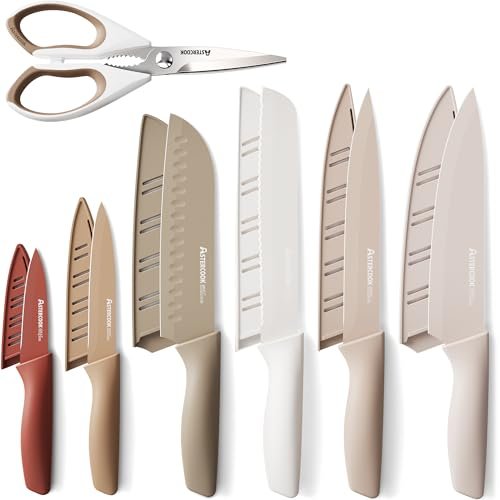
Astercook 13‑Piece Kitchen Knife Set
 Astercook 13‑piece set with blade guards and anti‑rust coating
This set balances breadth and affordability. It includes an 8‑inch chef’s knife, 8‑inch bread knife, 7‑inch santoku, 5‑inch utility, 3.5‑inch paring, and 3.5‑inch serrated paring, plus six matching blade guards, a kitchen shear, and a peeler. Blades are high‑carbon stainless steel with a healthy anti‑rust coating that resists staining even after repeated dishwasher cycles (the set is marked dishwasher‑safe, though hand washing extends edge life). Handles are ergonomic polypropylene with a textured grip. At roughly $35‑$40, it offers a full range for under a dollar per piece.
Pros: anti‑rust coating, dishwasher safety, six blade guards for secure storage.
Cons: white finish shows stains over time; slightly heavier than ultra‑light alternatives.
Get this set on Amazon today
VITUER 4‑Piece Paring Knife Set
 VITUER four paring knives with colored covers
Ideal for precision work, each 4‑inch blade is made from German X50CrMoV15 steel honed to a 15‑degree edge. The PP plastic handles are molded for a comfortable grip and come with matching blade covers that double as color identifiers (red, green, blue, yellow). The set costs around $12‑$15, making it a low‑risk addition for anyone who frequently peels apples or trims herbs. For more on this, see our guide on industrial kitchen cleaning companies.
Pros: ultra‑sharp German steel, ergonomic PP handles, protective covers, vibrant color coding.
Cons: plastic handles may feel less premium; 4‑inch length limits larger tasks.
Add these paring knives to your cart
Zyliss 3‑Piece Knife Value Set
 Zyliss paring, serrated paring, and utility knives with sheaths
Zyliss focuses on essentials: a 3.5‑inch paring knife, a 3.5‑inch serrated paring (perfect for tomatoes and citrus), and a 5‑inch utility knife. Blades are stainless steel with a full tang for balanced handling. Each knife slides into a plastic sheath that protects the edge and keeps the drawer tidy. Priced near $18‑$22, it’s a compact starter set for small kitchens or college dorms.
Pros: sheath covers for safety, full‑tang durability, versatile three‑knife combo.
Cons: limited to three pieces; assorted colors may not match every décor.
Pick up the Zyliss value set
Brewin Professional 3‑Piece Chef Knife Set
 Brewin three‑piece set in a gift box
This set steps up the material with high‑carbon stainless steel (approx. 0.6 % carbon) and a Japanese‑inspired grind for smooth slicing. The 8‑inch chef’s knife, 8‑inch bread knife, and 6‑inch santoku arrive in a sleek gift box, making it a solid present. Handles are Pakkawood‑style polymer with a contoured shape. Expect to pay $45‑$55. Hand washing is recommended to preserve the edge; the set is not dishwasher‑safe. For more on this, see our guide on kitchen hood cleaner spray.
Pros: high‑carbon steel for lasting sharpness, Japanese edge geometry, gift‑ready packaging.
Cons: requires regular honing; not dishwasher safe; higher price than basic sets.
Shop the Brewin professional set
Wiztoynia 6‑Piece Black Kitchen Knife Set
 Wiztoynia six‑piece black set with universal block
All blades feature a non‑stick stainless steel coating that reduces food drag and simplifies cleaning. The kit includes an 8‑inch chef’s knife, 8‑inch bread knife, 7‑inch santoku, 5‑inch utility, 3.5‑inch paring, and a 3.5‑inch serrated paring, plus a universal wood‑tone block that accommodates varying blade widths. The black handles are ergonomic polypropylene with a soft‑touch finish. Price ranges from $30‑$35.
Pros: non‑stick coating for easy release, universal block fits all knives, ergonomic handles.
Cons: only black finish; slight weight increase due to coating.
Grab the Wiztoynia block set
DDF iohEF 7‑Inch Santoku Chef’s Knife
 DDF iohEF santoku with non‑slip handle
A single‑piece option for those who prefer a versatile santoku over a full block. The 7‑inch blade is Japanese VG‑10 stainless steel (high carbon, high chromium) ground to a 16‑degree angle, delivering razor‑thin slices of fish, vegetables, and boneless meats. The handle combines PP rubber overlays for a non‑slip grip, even when wet. At roughly $22‑$27, it’s a cost‑ effective way to add a high‑performance blade to an existing collection. For further reading, see ams.com.
Pros: VG‑10 steel for edge retention, ergonomic non‑slip handle, versatile santoku shape.
Cons: requires periodic sharpening; heavier than some lighter alternatives.
Get the DDF iohEF santoku
Cuisinart C55-01-12PCKS 12‑Piece Collection
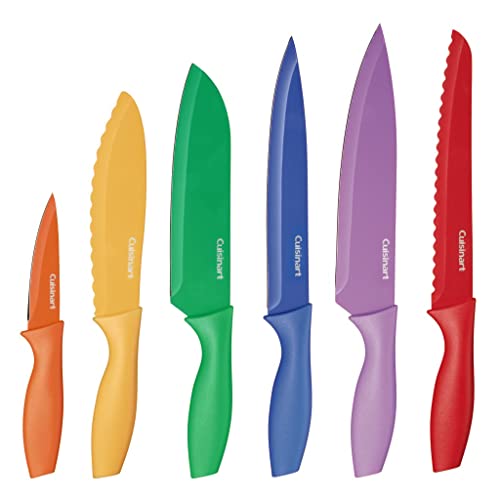 Cuisinart twelve‑piece multicolor set
Cuisinart’s budget line offers twelve color‑coded pieces to help avoid cross‑contamination: chef’s, bread, santoku, utility, two paring knives, a boning knife, a fillet knife, a carving fork, tongs, and a peeler. Blades are stainless steel with ergonomic polypropylene handles in bright hues. The set is lightweight, making it easy to maneuver for extended prep sessions. Expect to pay $28‑$33. While the plastic handles are comfortable, they may not appeal to those preferring wood or metal.
Pros: color‑coding for safety, twelve‑piece versatility, lightweight design.
Cons: plastic handles less premium; frequent honing needed to keep edges sharp.
Order the Cuisinart 12‑piece set
imarku 8‑Inch Chef Knife
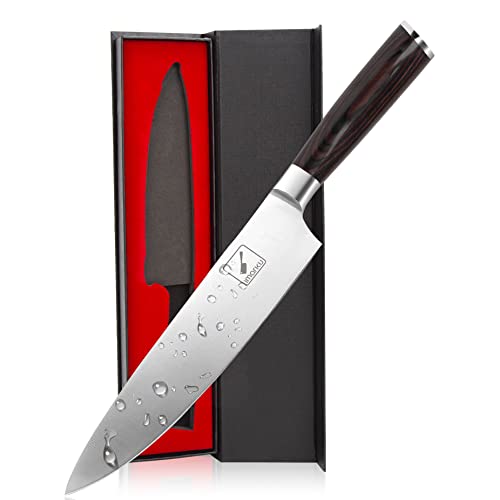 imarku chef’s knife in a gift box
This solo chef’s knife features high‑carbon steel (approx. 0.6 % C) with a Japanese V‑edge for smooth rocking cuts. The Pakkawood‑style handle is shaped for a natural grip, and the knife arrives in a premium gift box—ideal for weddings or housewarmings. Priced around $35‑$40, it offers pro‑level performance without a full set. Hand washing and regular honing are advised to maintain the edge.
Pros: high‑carbon steel for lasting sharpness, comfortable Pakkawood handle, gift‑ready packaging.
Cons: not dishwasher safe; requires consistent honing.
Purchase the imarku chef’s knife
PAUDIN 8‑Inch Chef Knife
 PAUDIN chef’s knife with gift box
PAUDIN’s offering mirrors many pro‑line traits at a budget price. The blade is high‑carbon stainless steel (0.55 % C) with a full tang for strength and balance. The handle is ergonomic polypropylene with a subtle finger groove, reducing slip during prolonged use. A gift box makes it a ready‑to‑give option. Expect to pay $22‑$28. Routine hand washing and honing keep the edge crisp; the knife is not dishwasher safe.
Pros: full‑tang durability, ergonomic handle, gift box included.
Cons: requires regular maintenance; some users find the weight slightly front‑heavy.
Add the PAUDIN knife to your kitchen
Brewin CHEFILOSOPHI 5‑Piece Japanese Set
 Brewin CHEFILOSOPHI five‑piece set with red Pakkawood handles
This set delivers a Japanese‑style blade geometry (8‑inch chef’s, 8‑inch bread, 7‑inch santoku, 5‑inch utility, 3.5‑inch paring) forged from high‑carbon stainless steel. Handles are red Pakkawood‑infused polymer, offering a warm look and a secure grip. Each knife includes a plastic sheath for safe storage. Priced near $50‑$55, it sits at the upper end of budget kits but justifies the cost with refined edge geometry and attractive aesthetics.
Pros: Japanese edge precision, attractive red Pakkawood handles, sheaths for safety.
Cons: higher price point; requires hand washing and periodic honing.
Explore the Brewin CHEFILOSOPHI set
Frequently Asked Questions
What makes a kitchen knife “inexpensive” yet still good?
An inexpensive knife delivers solid performance through proven materials (high‑carbon stainless or German steel), full‑tang construction, and ergonomic handling—without premium branding or exotic handle woods. Price points under $50 for a set or under $30 for a single chef’s knife typically meet these criteria.
How often should I hone versus sharpen my knives?
Hone before each major cooking session (2‑3 times per week for regular home cooks). Sharpen only when the blade fails to bite into a tomato skin or feels dull during slicing—usually every 2‑3 months with average use.
Are dishwasher‑safe knives really safe to put in the machine?
Many budget sets advertise dishwasher safety, but the high heat and abrasive detergents can micro‑chip edges over time. For longest life, hand wash and dry immediately; reserve the dishwasher for occasional convenience only.
Do I need a knife block if I have a magnetic strip?
A magnetic strip offers visible, accessible storage and saves counter space, but a block protects blades from knocking together and can accommodate odd‑shaped tools like shears. Choose based on your kitchen layout and aesthetic preference.
Can I use these knives for meat and fish?
Yes—most of the blades listed are stainless steel with sufficient hardness to handle boneless meats and fish. For tasks requiring frequent bone contact (e.g., splitting poultry), consider a dedicated boning or cleaver, which may fall outside the “inexpensive” range but is worth the investment for heavy‑duty work.
Conclusion
Good kitchen knives needn’t drain your wallet. By focusing on blade composition, handle comfort, and proper care, you can assemble a reliable set that stays sharp, safe, and enjoyable to use for years. Whether you opt for the all‑purpose Astercook 13‑piece collection, the precise VITUER paring quartet, or a single high‑carbon chef’s knife like the PAUDIN or imarku, each option delivers tangible value without the premium price tag. Equip your kitchen wisely, keep your edges honed, and enjoy smoother, more confident cooking every day.

Hi, I’m Daniel Brooks—a food lover and kitchen gear enthusiast. I enjoy testing cookware, utensils, and gadgets to see what really works in everyday cooking. At PlugChef.com, I share honest reviews, comparisons, and simple guides to help you choose the best tools for a safer, smarter, and more enjoyable kitchen.
Similar Posts