Open any average kitchen fridge, and you’ll likely find a jumble of stained plastic containers, cracked disposable takeout boxes, and mismatched lids – half of which will end up in the trash after a few months of use. Food packaging makes up nearly 30% of municipal solid waste in the U.S., per the U.S. Environmental Protection Agency’s sustainable packaging guidance, and single-use plastic food storage is a major contributor to this problem. Switching to environmentally friendly food storage containers is a simple, high-impact way to cut household waste, reduce exposure to harmful chemicals, and keep food fresher for longer.
But not every product labeled “eco-friendly” lives up to the claim. This guide breaks down the most sustainable materials, top use cases, how to spot greenwashing, and care tips to extend the life of your containers – no marketing fluff, just practical, evidence-based advice for every kitchen.
What Actually Makes a Food Storage Container Sustainable?
A truly sustainable container goes beyond a vague “green” label. It meets four core criteria:
- Responsible material sourcing: Made from renewable resources (like bamboo or sugarcane byproducts), post-consumer recycled materials, or infinitely recyclable substances like glass and stainless steel, rather than virgin fossil-fuel plastic.
- Long-term durability: Designed to last for years of repeated use, as a container that lasts a decade has a far lower environmental footprint than a disposable option, even if it’s made from recycled plastic.
- Non-toxic composition: Free of harmful chemicals like BPA, phthalates, and PFAS (forever chemicals) that can leach into food and persist in ecosystems for hundreds of years after disposal.
- Clear end-of-life guidance: Either fully compostable in accessible local facilities, or widely accepted in curbside recycling programs, with clear instructions for proper disposal.
A common mistake shoppers make is prioritizing “compostable” labels without checking if their local waste system accepts the material. Most compostable plastics require industrial composting facilities that reach temperatures of 140°F (60°C) or higher to break down fully, and these facilities are only available in roughly 15% of U.S. municipalities as of 2026. Always verify local waste guidelines before purchasing compostable containers to avoid sending them to landfills anyway.
Top Sustainable Materials for Food Storage, Ranked by Versatility
Not all sustainable materials are right for every use case. Below is a breakdown of the most common options, with their pros, cons, and ideal use cases:
Tempered Glass
- Pros: Infinitely recyclable, non-porous (won’t stain or absorb odors), microwave, oven, and dishwasher safe, zero risk of chemical leaching. Keeps food fresh 2–3x longer than plastic containers due to its airtight seal when paired with a silicone gasket.
- Cons: Heavier than plastic or stainless steel, breakable if dropped, higher upfront cost.
- Best for: Everyday leftovers, meal prep, pantry storage of dry goods, and households prioritizing non-toxic storage.
Food-Grade Stainless Steel
- Pros: Extremely durable, rust-resistant, infinitely recyclable, lightweight compared to glass, often insulated to keep food hot or cold for 4–6 hours. Airtight options are available for dry pantry storage.
- Cons: Not microwave safe, can dent if mishandled, higher cost than basic plastic containers.
- Best for: On-the-go meals, camping, pantry storage of grains and snacks, and households with young kids (shatterproof).
Bamboo and Wood Fiber Composites
- Pros: Made from fast-growing, renewable resources, fully biodegradable in home compost bins, lightweight, often paired with silicone seals for airtight storage.
- Cons: Not dishwasher safe (requires hand washing), may degrade over time with repeated exposure to high heat or moisture, not suitable for liquid-heavy foods.
- Best for: Dry snack storage, pantry organization, and light meal prep of fresh produce and sandwiches.
Bagasse (Sugarcane Pulp) Compostable Containers
- Pros: Made from a waste byproduct of sugar production, fully compostable in industrial facilities, leak-resistant, microwave safe, sturdy enough to hold hot and cold foods without warping.
- Cons: Single-use only, higher cost than conventional plastic, not accepted in most home compost bins, may leak if holding very liquid-heavy foods for extended periods.
- Best for: Takeout, catering, events, and meal prep for people who want to avoid single-use plastic but don’t want to wash reusable containers.
Recycled BPA-Free Plastic
- Pros: Made from 50–100% post-consumer recycled materials, shatterproof, lightweight, affordable, dishwasher and microwave safe, widely accepted in curbside recycling programs.
- Cons: Still a plastic material, can stain over time, may degrade after 5–7 years of repeated use, lower-quality options may still leach microplastics.
- Best for: Families with kids, on-the-go meals, and budget-friendly reusable storage for everyday use.
Eco-Friendly Containers for Every Kitchen Need
The right container depends on your specific use case. Below are recommendations for every common kitchen scenario, including top-reviewed options aligned with sustainability criteria:
Reusable Everyday and Meal Prep Containers
For frequent, repeated use, reusable containers offer the lowest long-term environmental impact. Top options include:
- Oruwvwuro 4-Pack BPA-Free Shatterproof Containers: Made from recycled BPA-free plastic, these stackable, shatterproof containers are leakproof, dishwasher safe, and freezeable, making them ideal for households with kids and busy meal preppers. The clear design lets you easily identify contents without opening the lid, and the 4-pack fits neatly in most fridge shelves.
 Image source: Amazon
Stackable shatterproof containers ideal for households with kids and busy meal preppers
Pros: Shatterproof for safe use around kids, BPA-free, freezer and dishwasher safe, affordable bulk pack. Cons: Only available in clear, may be too large for very small fridge spaces. Shop the Oruwvwuro 4-pack on Amazon for everyday reusable storage.
Image source: Amazon
Stackable shatterproof containers ideal for households with kids and busy meal preppers
Pros: Shatterproof for safe use around kids, BPA-free, freezer and dishwasher safe, affordable bulk pack. Cons: Only available in clear, may be too large for very small fridge spaces. Shop the Oruwvwuro 4-pack on Amazon for everyday reusable storage. - PrepNaturals 50-Pack 25oz BPA-Free Meal Prep Containers: This budget-friendly bulk pack of BPA-free plastic containers is perfect for weekly meal prep, with a compact 25oz size that fits easily in lunch bags and gym bags. The clear design eliminates guesswork when grabbing a meal on the go, and they’re fully dishwasher safe for easy cleanup.
 Image source: Amazon
Bulk pack of stackable meal prep containers for weekly lunch planning
Pros: Affordable 50-pack, stackable for easy storage, BPA-free, microwave and dishwasher safe. Cons: 25oz capacity may be too small for large portions, not oven safe. Shop the PrepNaturals 50-pack on Amazon for bulk meal prep storage.
Image source: Amazon
Bulk pack of stackable meal prep containers for weekly lunch planning
Pros: Affordable 50-pack, stackable for easy storage, BPA-free, microwave and dishwasher safe. Cons: 25oz capacity may be too small for large portions, not oven safe. Shop the PrepNaturals 50-pack on Amazon for bulk meal prep storage. - BiuLeon 6-Pack 24oz Leakproof Freezer Containers: Designed specifically for liquid-heavy foods like soups, stews, and sauces, these BPA-free containers feature twist-top airtight lids that prevent leaks during transport. They’re freezer, microwave, and dishwasher safe, making them a versatile pick for meal prepping bulk batches.
 Image source: Amazon
Airtight twist-top containers designed for leakproof storage of soups and liquid-heavy meals
Pros: 100% leakproof, BPA-free, twist lids are easy to open, freezer safe. Cons: Twist lids may be challenging for people with limited hand strength, only available in one color pack. Shop the BiuLeon 6-pack on Amazon for liquid food storage.
Image source: Amazon
Airtight twist-top containers designed for leakproof storage of soups and liquid-heavy meals
Pros: 100% leakproof, BPA-free, twist lids are easy to open, freezer safe. Cons: Twist lids may be challenging for people with limited hand strength, only available in one color pack. Shop the BiuLeon 6-pack on Amazon for liquid food storage. - HOMETALL 6-Pack 16oz Stackable Freezer Containers: These compact 16oz containers are perfect for single servings of soup, sauce, or leftovers, with a stackable design that saves space in small freezers and fridges. The airtight twist-top lids prevent spills, and they’re fully dishwasher and microwave safe.
 Image source: Amazon
Compact stackable containers ideal for single servings of soups, sauces, and leftovers
Pros: Compact size for small spaces, stackable, BPA-free, affordable. Cons: 16oz capacity is too small for full meals, twist lids can be stiff for some users. Shop the HOMETALL 6-pack on Amazon for single-serve storage.
Image source: Amazon
Compact stackable containers ideal for single servings of soups, sauces, and leftovers
Pros: Compact size for small spaces, stackable, BPA-free, affordable. Cons: 16oz capacity is too small for full meals, twist lids can be stiff for some users. Shop the HOMETALL 6-pack on Amazon for single-serve storage.
Disposable Compostable Containers for Takeout and Events
If you need single-use containers for takeout, catering, or events, compostable bagasse options are a far more sustainable alternative to conventional plastic:
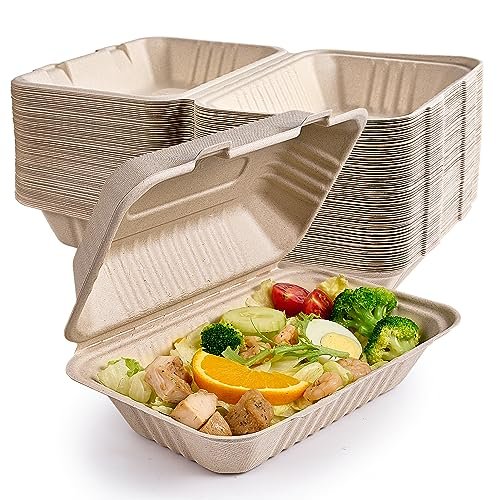
- ECOLipak 75-Pack 9×6 Inch Compostable Clamshells: Made from 100% bagasse (sugarcane pulp), these heavy-duty clamshells are leak-resistant, compostable in industrial facilities, and sturdy enough to hold everything from sandwiches to pasta without crushing. The 9×6 inch size fits most standard takeout meals, making them ideal for both home use and small food businesses.
 Image source: Amazon
Heavy-duty compostable clamshells ideal for takeout, catering, and on-the-go meals
Pros: 100% compostable, heavy-duty leak-resistant construction, 9×6 size fits most meals, made from renewable sugarcane byproduct. Cons: Single-compartment design, not suitable for very liquid-heavy foods, higher cost than plastic clamshells. Shop the ECOLipak 75-pack on Amazon for compostable takeout containers.
Image source: Amazon
Heavy-duty compostable clamshells ideal for takeout, catering, and on-the-go meals
Pros: 100% compostable, heavy-duty leak-resistant construction, 9×6 size fits most meals, made from renewable sugarcane byproduct. Cons: Single-compartment design, not suitable for very liquid-heavy foods, higher cost than plastic clamshells. Shop the ECOLipak 75-pack on Amazon for compostable takeout containers. - 6×6 Inch 100% Compostable Clamshells: These smaller bagasse clamshells are perfect for individual meals, snack portions, or sample servings at events. They’re fully compostable, leak-resistant, and made from unbleached sugarcane fibers for a natural, eco-friendly aesthetic.
 Image source: Amazon
Small compostable clamshells ideal for individual meals and snack portions
Pros: Small size for single servings, 100% compostable, natural unbleached material. Cons: Not microwave safe, limited size options. Shop these 6×6 compostable clamshells on Amazon for individual portions.
Image source: Amazon
Small compostable clamshells ideal for individual meals and snack portions
Pros: Small size for single servings, 100% compostable, natural unbleached material. Cons: Not microwave safe, limited size options. Shop these 6×6 compostable clamshells on Amazon for individual portions. - Perfectware 9×9 Inch 3-Compartment Compostable Containers: Made from bagasse, these large 3-compartment containers are perfect for catering, meal prep with separate sides and mains, or family-style takeout. The heavy-duty construction prevents leaks, and they’re fully compostable in industrial facilities.
 Image source: Amazon
Three-compartment compostable containers ideal for separating mains, sides, and snacks
Pros: 3 compartments keep foods separate, 9×9 size fits full meals, heavy-duty leak-resistant construction, compostable. Cons: Only 40 count per pack, larger size may not fit in small bags. Shop the Perfectware 3-compartment containers on Amazon for multi-component meals.
Image source: Amazon
Three-compartment compostable containers ideal for separating mains, sides, and snacks
Pros: 3 compartments keep foods separate, 9×9 size fits full meals, heavy-duty leak-resistant construction, compostable. Cons: Only 40 count per pack, larger size may not fit in small bags. Shop the Perfectware 3-compartment containers on Amazon for multi-component meals. - Yesland 50-Pack 33oz 2-Compartment Compostable Containers with Lids: These microwave-safe bagasse containers feature two compartments to keep dressings separate from greens, or sides separate from mains. The 33oz capacity fits full meals, and they’re fully compostable in industrial facilities.
 Image source: Amazon
Microwave-safe compostable containers with two compartments for separating meal components
Pros: Microwave safe, 2 compartments for separating foods, 33oz capacity fits full meals, leak-resistant. Cons: Single-use only, natural color may not suit all preferences. Shop the Yesland 2-compartment containers on Amazon for meal prep and takeout.
Image source: Amazon
Microwave-safe compostable containers with two compartments for separating meal components
Pros: Microwave safe, 2 compartments for separating foods, 33oz capacity fits full meals, leak-resistant. Cons: Single-use only, natural color may not suit all preferences. Shop the Yesland 2-compartment containers on Amazon for meal prep and takeout. - HorizonNest 50-Pack 34oz Compostable Containers with Lids: Made from renewable sugarcane pulp, these large 34oz containers are microwave safe, compostable, and perfect for meal prep, cafe takeout, or storing large leftovers. The included lids create an airtight seal to keep food fresh.
 Image source: Amazon
Large-capacity microwave-safe compostable containers ideal for meal prep and cafe takeout
Pros: Microwave safe, 34oz capacity for large portions, compostable, included airtight lids. Cons: Only available in light gray, limited size options. Shop the HorizonNest 34oz containers on Amazon for large-portion storage.
Image source: Amazon
Large-capacity microwave-safe compostable containers ideal for meal prep and cafe takeout
Pros: Microwave safe, 34oz capacity for large portions, compostable, included airtight lids. Cons: Only available in light gray, limited size options. Shop the HorizonNest 34oz containers on Amazon for large-portion storage.
Glass Containers for Long-Term Non-Toxic Storage
For households prioritizing zero plastic and long-term durability, tempered glass containers are the gold standard:
- 4-Pack 36oz Glass Containers with Bamboo Lids: Made from shatter-resistant tempered glass, these containers feature bamboo lids with silicone seals for an airtight fit that keeps food fresh for up to 2 weeks. They’re BPA-free, plastic-free, and safe for use in the microwave, oven, and dishwasher, making them a versatile pick for meal prep, leftovers, and pantry storage.
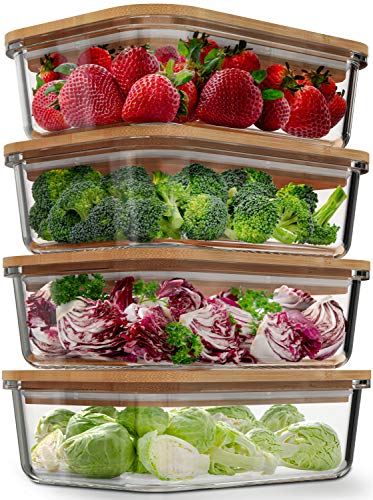 Image source: Amazon
Plastic-free glass containers with bamboo lids, ideal for long-term meal prep and leftover storage
Pros: Infinitely recyclable, non-toxic, airtight seal, oven and microwave safe, plastic-free. Cons: Heavier than plastic, breakable if dropped, bamboo lids require hand washing to avoid warping. Shop the 4-pack glass container set on Amazon for non-toxic long-term storage.
Image source: Amazon
Plastic-free glass containers with bamboo lids, ideal for long-term meal prep and leftover storage
Pros: Infinitely recyclable, non-toxic, airtight seal, oven and microwave safe, plastic-free. Cons: Heavier than plastic, breakable if dropped, bamboo lids require hand washing to avoid warping. Shop the 4-pack glass container set on Amazon for non-toxic long-term storage.
How to Spot Greenwashing When Shopping for Eco-Friendly Containers
Many brands use vague, unregulated terms like “eco-friendly”, “green”, or “all-natural” to market products that have little to no actual sustainability benefit. To avoid falling for greenwashing, look for these key signs:
- Third-party certifications: Trust labels like USDA Certified Biobased, BPI Compostable, NSF International Food Safety, and Recycled Content certification, which are verified by independent organizations.
- Clear material disclosure: Reputable brands will list the exact material composition of their containers, including the percentage of post-consumer recycled content, rather than using vague terms like “plant-based” without details.
- Transparent end-of-life guidance: Brands that truly care about sustainability will tell you exactly how to dispose of their containers (e.g., “industrial compost only”, “curbside recyclable in #5 plastic streams”) rather than leaving you to guess.
Red flags to avoid: claims of “100% biodegradable” without specifying home vs. industrial compostability, vague “BPA-free” claims without listing other potentially harmful chemicals, and no information on material sourcing or manufacturing emissions.
Extend the Life of Your Containers with Proper Care
The most sustainable container is the one you already own, so proper care is key to reducing waste and getting the most value from your purchase. Follow these tips to make your containers last for years:
- For reusable plastic and glass containers: Avoid abrasive scrubbers that scratch surfaces, which can harbor bacteria and cause staining. Use a sturdy scrub brush for stuck-on food, and a soap-dispensing scrub brush for quick, mess-free cleaning without overusing dish soap.
- For glass containers: Avoid sudden temperature changes (don’t move directly from the freezer to the oven) to prevent cracking.
- For bamboo lids: Hand wash only, and avoid prolonged exposure to water to prevent warping and mold growth.
- For compostable containers: Only use them for their intended single use, as reusing them can cause them to break down and harbor harmful bacteria.
- For households with young children: Install child-safe cabinet locks near cleaning supply storage to keep harsh chemicals away from food preparation surfaces, and use cabinet safety latches on lower cabinets to keep stored containers organized and out of reach of kids.
- To reduce food waste (a core part of sustainable storage): Use engraved cutting boards to label prepped meals with dates and contents, so you never forget about leftovers and have to throw them away. For portion-controlled on-the-go meals, cut snacks and cheeses on a round charcuterie board to pack balanced servings without overpreparing.
End-of-Life Disposal and Composting Guidance
When your containers reach the end of their life, proper disposal ensures they don’t contribute to unnecessary waste:
- Glass and stainless steel: Accepted in curbside recycling programs in most areas. Even if broken, these materials can be recycled endlessly without loss of quality.
- Recycled BPA-free plastic: Check the resin identification code (usually #5 or #7) to confirm your local curbside program accepts it. If not, many grocery stores have plastic film drop-off locations that accept these containers.
- Bagasse compostable containers: Only dispose of these in industrial composting facilities – most home compost bins don’t get hot enough to break them down fully. If industrial composting isn’t available in your area, dispose of them in the trash (they break down far faster than plastic in landfills, making them a better alternative even in this scenario). Never put compostable containers in curbside recycling, as they contaminate the plastic recycling stream.
- Bamboo lids: 100% bamboo lids can be home composted; lids with silicone seals should be disposed of in the trash if the silicone cannot be separated.
Frequently Asked Questions
Are all eco-friendly food storage containers microwave safe?
No, microwave safety depends entirely on the material. Tempered glass, bagasse compostable containers, and most BPA-free recycled plastics are microwave safe. Bamboo and stainless steel containers are not microwave safe, as they can spark or heat unevenly. Always check the manufacturer’s guidelines before microwaving, and avoid heating containers with metal parts or non-microwave-safe seals.
Can I compost all compostable food storage containers at home?
No, most compostable food storage containers made from bagasse or sugarcane pulp require industrial composting facilities that reach temperatures of 140°F (60°C) or higher to break down fully. Most home compost bins do not reach these temperatures, so these containers will not decompose properly in home compost. Check with your local waste management provider to see if industrial composting is available in your area. If not, dispose of them in the trash – they are still a better alternative to conventional plastic, as they are made from renewable resources and break down much faster in landfills than plastic.
How do I know if a container is truly BPA-free?
Look for clear labeling that states “BPA-free” and third-party certifications from organizations like the FDA or NSF International. Avoid containers that only say “BPA-free” without listing other potentially harmful chemicals like phthalates, PFAS, or BPS, which are often used as BPA substitutes and may have similar health risks. Reputable brands will list full material composition on their packaging or product pages.
Are reusable plastic containers better for the environment than compostable single-use ones?
In most cases, yes, if you use the reusable container at least 10–15 times. A 2023 study from the University of Michigan School for the Environment and Sustainability found that reusable containers made from recycled plastic have a 75% lower carbon footprint than single-use compostable containers after 10 uses. However, if you only need a container once or twice a year (e.g., for a big catering event), compostable single-use containers are a more sustainable choice than buying a reusable container you’ll rarely use.
How can I make my sustainable food storage last longer?
Follow manufacturer care instructions: avoid abrasive cleaners for glass and plastic containers, hand wash bamboo lids, avoid sudden temperature changes for glass, and store containers in a cool, dry place to prevent warping or cracking. For plastic containers, avoid heating them to high temperatures (above 212°F / 100°C) to prevent chemical leaching and degradation. With proper care, high-quality reusable containers can last 10 years or more, drastically reducing your household waste.
Are compostable containers safe for hot foods?
Yes, most bagasse and sugarcane pulp compostable containers are certified safe for hot foods up to 200°F (93°C), making them suitable for hot takeout, soups, and freshly cooked meals. However, avoid putting them in the oven or on the stovetop, as they can burn or degrade at higher temperatures. Always check the manufacturer’s temperature guidelines before use.
Conclusion
Switching to environmentally friendly food storage containers doesn’t require a full overhaul of your kitchen. Start small: swap one set of single-use plastic containers for a reusable option for meal prep, choose compostable clamshells for takeout when you don’t want to wash dishes, and follow proper care and disposal guidelines to maximize the lifespan of every container you own.
Small, consistent choices add up. If every household in the U.S. replaced 10 single-use plastic containers a year with reusable or compostable options, we could divert nearly 1 billion pounds of plastic from landfills annually, per EPA estimates. By making mindful swaps, you can cut your household waste, reduce your exposure to harmful chemicals, and contribute to a healthier planet for future generations.
Ready to build a more sustainable kitchen? Start by swapping one set of single-use plastic containers for a reusable option this week, and explore our guide to zero-waste meal prep for more simple, high-impact swaps to cut your household waste.

Hi, I’m Daniel Brooks—a food lover and kitchen gear enthusiast. I enjoy testing cookware, utensils, and gadgets to see what really works in everyday cooking. At PlugChef.com, I share honest reviews, comparisons, and simple guides to help you choose the best tools for a safer, smarter, and more enjoyable kitchen.
Related posts:
 Best Rated Electric Fondue Pots: Elevate Your Cheese and Chocolate Experience
 Best Burr Coffee Grinder Under 100: Top Affordable Options for Coffee Lovers
 Best Mug for Coffee Warmer: Top Picks to Keep Drinks Hot
 Best Ice Cream Maker for Kids: Fun, Easy Homemade Desserts
 Best Fluffy Shaved Ice Machine: Top Picks for Perfect Summer Treats
 White Kitchen Appliance Package Deals: Elevate Your Culinary Space Effortlessly