The U.S. Environmental Protection Agency identifies plastic food packaging as one of the largest sources of non-biodegradable waste in U.S. households, with the average family discarding hundreds of pounds of single-use plastic containers and bags annually. For homeowners looking to cut waste, avoid harmful chemical exposure from heated plastic, and simplify meal prep, eco-friendly food storage containers offer a practical, sustainable alternative that fits every kitchen need and budget.
Gone are the days when sustainable storage meant overpriced, low-quality options: 2026 material innovations have made eco-friendly containers as durable, convenient, and affordable as traditional plastic, with options for daily home use, single-use takeout, and everything in between. This guide breaks down the top sustainable food storage solutions, their unique benefits and tradeoffs, and how to choose the right option for your household.
Why Switch to Eco-Friendly Food Storage Containers?
Before diving into product picks, it’s helpful to understand the core benefits of ditching single-use and low-quality plastic storage:
- Reduced environmental impact: Most eco-friendly containers are made from renewable, compostable materials that break down in months rather than centuries, cutting the amount of plastic waste sent to U.S. landfills each year. Reusable options also eliminate the need for repeated purchases of single-use plastic bags and containers.
- Improved food safety: Cheap plastic containers can leach harmful chemicals like BPA and phthalates into food, especially when heated in the microwave or oven. Eco-friendly options made from glass, bamboo, or certified compostable materials are non-toxic and free of these contaminants.
- Long-term cost savings: While reusable glass and bamboo containers have a higher upfront cost than disposable plastic, they last for years with proper care, eliminating the need to repurchase single-use options repeatedly. Compostable containers are also often priced competitively with traditional plastic takeout containers for small businesses and home use.
Top Eco-Friendly Food Storage Container Options for Every Use Case
Eco-friendly containers fall into two core categories: reusable options for daily home use, and compostable disposable options for single-use needs. Below are the top picks for each use case, with honest pros, cons, and practical usage tips.
Reusable Eco-Friendly Food Storage Containers
Reusable containers are the most sustainable choice for households that cook at home regularly, as they eliminate single-use plastic waste entirely. Look for options that are dishwasher safe (where applicable), leak-proof for transport, and made from non-toxic, durable materials.
Glass Containers with Bamboo Lids
Glass paired with renewable bamboo lids is the most popular reusable eco-friendly storage option, thanks to glass’s non-porous, stain and odor-resistant construction, and bamboo’s natural, airtight sealing properties. These containers are safe for microwave, oven, freezer, and dishwasher use (with the lid removed for high-heat applications), making them ideal for everything from meal prep to storing leftovers.
Best Overall for Meal Prep: 4-Pack 36oz Glass Containers with Bamboo Lids
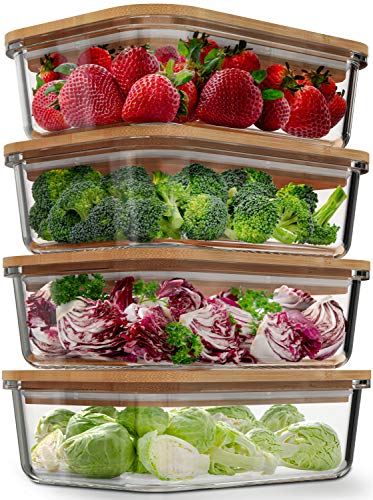 Tempered glass construction resists stains and odors, and is safe for microwave and oven use (with the lid removed).
This versatile 4-pack includes 36oz containers perfect for single-serve meals, salads, and leftovers. The airtight bamboo seal keeps produce and cooked meals fresh 3–5 days longer than standard plastic storage, reducing food waste in the process. The clear glass lets you identify contents at a glance, no need to open multiple containers to find what you’re looking for.
Tempered glass construction resists stains and odors, and is safe for microwave and oven use (with the lid removed).
This versatile 4-pack includes 36oz containers perfect for single-serve meals, salads, and leftovers. The airtight bamboo seal keeps produce and cooked meals fresh 3–5 days longer than standard plastic storage, reducing food waste in the process. The clear glass lets you identify contents at a glance, no need to open multiple containers to find what you’re looking for.
- Pros: Plastic-free, BPA-free, microwave and oven safe (up to 450°F), airtight seal, stain and odor resistant
- Cons: Bamboo lids require hand washing to avoid warping, glass is heavier than plastic, not fully leak-proof for thin liquids
Best for Oven-to-Table Use: EcoPreps 4-Pack Glass Container Set
 Tempered glass withstands oven temperatures up to 450°F, so you can bake, store, and reheat meals in a single vessel.
This 100% plastic-free set is designed for users who want to skip the step of transferring food from oven-safe bakeware to storage containers. The tempered glass can withstand temperatures up to 450°F, so you can bake casseroles, roasted veggies, or meats directly in the container, pop the lid on for storage, and reheat in the microwave later without transferring food.
Tempered glass withstands oven temperatures up to 450°F, so you can bake, store, and reheat meals in a single vessel.
This 100% plastic-free set is designed for users who want to skip the step of transferring food from oven-safe bakeware to storage containers. The tempered glass can withstand temperatures up to 450°F, so you can bake casseroles, roasted veggies, or meats directly in the container, pop the lid on for storage, and reheat in the microwave later without transferring food.
- Pros: 100% plastic-free, oven safe up to 450°F, microwave and freezer safe, airtight bamboo seal
- Cons: Bamboo lids are not dishwasher safe, glass is heavier than reusable plastic options
Best for Organized Storage: Vtopmart 4-Pack Stackable Glass Containers
 Stackable design saves fridge and pantry space, while clear glass makes identifying contents fast and easy.
These stackable glass containers are ideal for users with limited fridge or pantry space. The uniform square shape stacks securely without sliding, and the clear glass lets you see contents at a glance to reduce forgotten, wasted food. They are safe for microwave, oven, freezer, and dishwasher use (with the lid removed for high heat).
Stackable design saves fridge and pantry space, while clear glass makes identifying contents fast and easy.
These stackable glass containers are ideal for users with limited fridge or pantry space. The uniform square shape stacks securely without sliding, and the clear glass lets you see contents at a glance to reduce forgotten, wasted food. They are safe for microwave, oven, freezer, and dishwasher use (with the lid removed for high heat).
- Pros: Stackable design, BPA-free, microwave/oven/freezer/dishwasher safe, clear glass for easy identification
- Cons: Not fully leak-proof for thin liquids, bamboo lids require hand washing
BPA-Free Reusable Plastic Containers
For users who prioritize lightweight, drop-resistant containers for lunchboxes, travel, or kids’ use, BPA-free reusable plastic is a durable, affordable eco-friendly alternative to traditional single-use plastic.
Best for Portion Control: Bentgo 20-Piece 3-Compartment Container Set
 The lightweight, drop-resistant design is ideal for packed lunches, travel, and portion-controlled meal plans.
This 20-piece set includes 3-compartment containers perfect for balanced meals, portion control for fitness goals, and kids’ school lunches. The BPA-free plastic is lightweight, drop-resistant, and safe for microwave, freezer, and dishwasher use, making it a low-fuss option for busy households. The divided design keeps proteins, carbs, and vegetables separate without mixing.
The lightweight, drop-resistant design is ideal for packed lunches, travel, and portion-controlled meal plans.
This 20-piece set includes 3-compartment containers perfect for balanced meals, portion control for fitness goals, and kids’ school lunches. The BPA-free plastic is lightweight, drop-resistant, and safe for microwave, freezer, and dishwasher use, making it a low-fuss option for busy households. The divided design keeps proteins, carbs, and vegetables separate without mixing.
- Pros: Lightweight, drop-resistant, BPA-free, microwave/freezer/dishwasher safe, 3-compartment design for portion control
- Cons: Only available in stone gray, not as stain-resistant as glass over time
Best Budget Reusable Option: Simplify 6-Piece Eco Wheat Plastic Container Set
Made from renewable wheat plastic (a plant-based alternative to petroleum-based traditional plastic), this 6-piece set is an affordable entry point to reusable sustainable storage. It includes three sizes (small, medium, large) with clear lids for easy content identification, making it perfect for storing leftovers, snacks, and meal prep ingredients.
- Pros: Made from renewable plant-based materials, affordable, 3 versatile sizes, clear lids for easy identification
- Cons: Limited to natural color, not all wheat plastic is microwave safe (check manufacturer specs before heating)
Compostable Disposable Eco-Friendly Food Storage Containers
For single-use needs — takeout, catering, large gatherings, or days you don’t want to wash containers — BPI-certified compostable containers offer the same convenience as plastic without the centuries-long landfill lifespan. Look for the BPI certification mark to ensure the product will break down properly in commercial composting facilities; uncertified "biodegradable" claims often refer to materials that only break down under very specific, rare conditions.
Sugarcane Pulp & Bagasse Compostable Containers
These containers are made from the fibrous byproduct of sugarcane processing (bagasse), a rapidly renewable resource that would otherwise be agricultural waste. They are sturdy enough for hot and cold foods, and most are microwave and freezer safe.
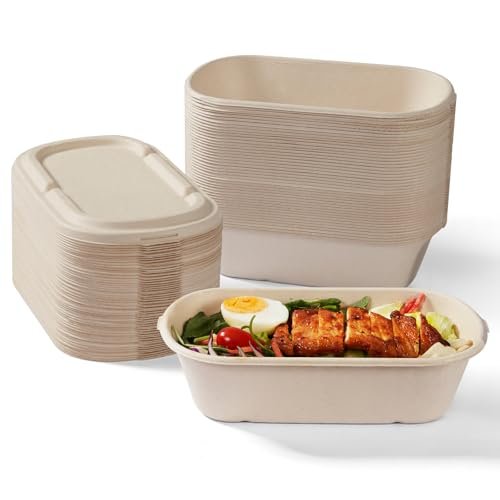
Best for Meal Prep & Takeout: HorizonNest 50-Pack 34oz Sugarcane Pulp Containers
 Made from renewable sugarcane byproduct, these containers are a plastic-free alternative for meal prep and takeout.
This 50-pack of 34oz containers is perfect for meal prep enthusiasts, small cafes, and catering services looking for a plastic-free takeout solution. The sturdy sugarcane pulp construction holds up to hot entrees, salads, and wet foods without leaking, and the containers are microwave safe for quick reheating. They are BPI-certified compostable, breaking down in 6–12 months in industrial facilities, compared to 400+ years for traditional plastic.
Made from renewable sugarcane byproduct, these containers are a plastic-free alternative for meal prep and takeout.
This 50-pack of 34oz containers is perfect for meal prep enthusiasts, small cafes, and catering services looking for a plastic-free takeout solution. The sturdy sugarcane pulp construction holds up to hot entrees, salads, and wet foods without leaking, and the containers are microwave safe for quick reheating. They are BPI-certified compostable, breaking down in 6–12 months in industrial facilities, compared to 400+ years for traditional plastic.
- Pros: Made from renewable sugarcane byproduct, microwave safe, BPI-certified compostable, sturdy for hot and cold foods
- Cons: Only available in light gray, bulkier than plastic so takes up more storage space
Best for Separated Meals: Yesland 50-Pack 2-Compartment Bagasse Containers
 The divided design keeps dressings, sauces, and wet foods separate from dry ingredients for mess-free meals.
The two-compartment design of these 33oz containers is ideal for separating dressings from salads, snacks from main dishes, or wet foods from dry sides, eliminating the need for separate packaging. They are microwave and freezer safe, and BPI-certified compostable for responsible disposal after use.
The divided design keeps dressings, sauces, and wet foods separate from dry ingredients for mess-free meals.
The two-compartment design of these 33oz containers is ideal for separating dressings from salads, snacks from main dishes, or wet foods from dry sides, eliminating the need for separate packaging. They are microwave and freezer safe, and BPI-certified compostable for responsible disposal after use.
- Pros: 2-compartment design for separated meals, microwave and freezer safe, BPI-certified compostable
- Cons: 33oz capacity is ideal for single servings, not large family portions
Best PFAS-Free Option: Harvest Pack 50-Count Clamshell Containers
 PFAS-free construction ensures no harmful forever chemicals leach into hot or cold food during storage.
PFAS (per- and polyfluoroalkyl substances) are "forever chemicals" sometimes added to disposable food containers to make them grease and water-resistant, but they have been linked to negative health effects with long-term exposure. These PFAS-free clamshell containers are made from bagasse, with a hinged design that keeps food secure during transport. They are sturdy enough for hot soups, cold deli items, and dry snacks, and BPI-certified compostable.
PFAS-free construction ensures no harmful forever chemicals leach into hot or cold food during storage.
PFAS (per- and polyfluoroalkyl substances) are "forever chemicals" sometimes added to disposable food containers to make them grease and water-resistant, but they have been linked to negative health effects with long-term exposure. These PFAS-free clamshell containers are made from bagasse, with a hinged design that keeps food secure during transport. They are sturdy enough for hot soups, cold deli items, and dry snacks, and BPI-certified compostable.
- Pros: PFAS-free for safer food contact, hinged design for secure closure, sturdy for hot and cold foods, BPI-certified compostable
- Cons: Not fully leak-proof for liquid-heavy dishes, slightly higher cost than traditional foam containers
Bamboo & Kraft Paper Disposable Options
Made from fast-growing, highly renewable bamboo or unbleached kraft paper, these disposable options are lightweight, compostable, and safe for most single-use needs.
Best for Large Servings: 50-Pack 37oz Bamboo Disposable Containers
 Made from fast-growing renewable bamboo, these containers are safe for both microwave and oven use up to 350°F.
These heavy-duty bamboo containers are perfect for meal prep, catering, or large family gatherings where you need sturdy, leak-resistant disposable containers. They are microwave and oven safe up to 350°F, so you can reheat meals directly in the container without transferring, and the 37oz capacity fits full meals including pasta, stir-fry, and salads.
Made from fast-growing renewable bamboo, these containers are safe for both microwave and oven use up to 350°F.
These heavy-duty bamboo containers are perfect for meal prep, catering, or large family gatherings where you need sturdy, leak-resistant disposable containers. They are microwave and oven safe up to 350°F, so you can reheat meals directly in the container without transferring, and the 37oz capacity fits full meals including pasta, stir-fry, and salads.
- Pros: Made from renewable bamboo, microwave and oven safe up to 350°F, heavy-duty construction, compostable
- Cons: Natural brown color has no vibrant design options, slightly larger size may not fit in compact lunch bags
Best for Picnics & Office Lunches: Yesland 50-Pack 25oz Kraft Paper Bowls
 Rectangular stackable design makes these bowls easy to transport for picnics, office lunches, and group events.
These rectangular kraft paper bowls are perfect for single servings of soup, salad, or snacks for office lunches, picnics, or group events. They are microwave and freezer safe, and can be gently washed and reused a few times if needed. They are BPI-certified compostable for responsible disposal.
Rectangular stackable design makes these bowls easy to transport for picnics, office lunches, and group events.
These rectangular kraft paper bowls are perfect for single servings of soup, salad, or snacks for office lunches, picnics, or group events. They are microwave and freezer safe, and can be gently washed and reused a few times if needed. They are BPI-certified compostable for responsible disposal.
- Pros: Stackable rectangular design for easy transport, microwave and freezer safe, reusable if washed gently, BPI-certified compostable
- Cons: 25oz capacity is ideal for single servings, not large meals, natural brown color may not suit event aesthetics
How to Choose the Right Eco-Friendly Food Storage Containers for Your Needs
With dozens of options on the market, narrowing down your choice comes down to your primary use case, kitchen habits, and budget. Below are tailored recommendations for common household needs:
For Daily Home Meal Prep & Leftovers
If you cook at home regularly and store leftovers 3+ times a week, prioritize reusable options. Glass containers with bamboo or silicone lids are the top pick: they don’t hold odors, are safe for reheating in the microwave or oven, and last for years with proper care. A 4-pack of mixed sizes (16oz, 36oz, 64oz) will cover most meal prep needs from snacks to full family meals. If you regularly prep charcuterie or snack boards for gatherings, pairing your storage containers with proper portioning techniques keeps ingredients fresh; learn proper cheese portioning for charcuterie for perfect, waste-free servings.
For Single-Use Needs & Takeout
If you host events, run a small food business, or prefer disposable options for convenience, choose BPI-certified compostable containers made from sugarcane pulp or bagasse. Avoid uncertified "biodegradable" claims, as many of these products only break down in industrial composting facilities, not home bins or landfills, negating their environmental benefit.
For Families with Young Kids
Prioritize BPA-free, drop-resistant options that are lightweight and leak-proof for lunchboxes. Reusable BPA-free plastic containers with divided sections are ideal for packing school lunches, while compostable options work for playdates or events where washing containers isn’t convenient. For extra safety, store these containers in lower cabinets equipped with cabinet locks for young kids to keep them out of reach of curious toddlers.
For Office & On-The-Go Use
Lightweight, stackable containers that fit in standard lunch bags and backpacks are key. Reusable BPA-free plastic or stainless steel options are durable for daily transport, while compostable kraft paper bowls work for office lunches if you don’t want to carry a reusable container. Look for leak-proof lids to avoid spills in bags or backpacks.
Care & Maintenance Tips to Extend the Life of Your Eco-Friendly Containers
Proper care not only extends the life of your containers to reduce waste, but also keeps them safe for food storage:
- Avoid abrasive cleaners: For glass and bamboo lids, a kitchen brush with a comfortable handle works better than steel wool or harsh scouring pads, which can scratch glass and damage bamboo seals over time.
- Hand wash bamboo lids: Even if the glass portion is dishwasher safe, hand washing bamboo lids with mild soap prevents warping and cracking, which can compromise their airtight seal. Dry them fully before storing to avoid mold growth in the porous wood grain.
- Tackle tough residue gently: For stuck-on food from hearty meals, a sturdy cleaning brush for tough grime can remove debris without scratching container surfaces.
- Clean on the go easily: For quick cleanup of lunch containers at work or school, a soap-dispensing scrub brush makes washing easy without extra tools or harsh chemicals.
- Keep storage spaces tidy: To keep your pantry and fridge organized alongside your new sustainable containers, a multi-surface kitchen brush set can tackle shelf spills and grime without harsh chemical cleaners.
- Check local composting guidelines: Most compostable food containers require the high temperatures of industrial composting facilities to break down fully. Home compost bins typically don’t reach these temperatures, so these containers may take 1–2 years to break down, or not fully decompose at all. Check with your local waste management department to see if industrial composting drop-off is available in your area before purchasing compostable containers for regular use.
Frequently Asked Questions
What are eco-friendly food storage containers?
Eco-friendly food storage containers are made from sustainable, non-toxic, renewable or compostable materials, including glass, bamboo, sugarcane pulp, bagasse, wheat plastic, and certified compostable kraft paper. Unlike traditional plastic containers, they avoid harmful chemicals like BPA and phthalates, and most are designed to break down safely at the end of their life rather than persisting in landfills for centuries.
Are bamboo lids safe for food storage?
Yes, high-quality bamboo lids are completely safe for food storage. Bamboo is a naturally antimicrobial, non-toxic material that doesn’t leach chemicals into food, even when in contact with acidic or hot items. For best results, look for bamboo lids that are certified food-safe by a third-party testing body, and hand wash them regularly to prevent mold growth in the porous wood grain.
Can I microwave biodegradable disposable containers?
Most BPI-certified compostable containers made from sugarcane pulp or bagasse are microwave safe for reheating, as they are designed to withstand moderate temperatures without leaching chemicals. Always check the manufacturer’s instructions first, as some containers with plastic linings or printed designs may not be safe for microwave use. Avoid heating them for extended periods, as high heat can degrade the compostable material faster.
How do compostable food containers benefit the environment?
Compostable containers break down into organic matter in 6–12 months in industrial composting facilities, compared to 400+ years for traditional plastic containers. They are made from renewable plant byproducts (like sugarcane pulp) that would otherwise be agricultural waste, reducing the need for petroleum-based plastic production, which is a major source of greenhouse gas emissions.
Are glass containers with bamboo lids oven-safe?
Most high-tempered glass containers with bamboo lids are oven-safe up to 450°F, but you must remove the bamboo lid before placing the container in the oven, as high heat will warp or crack the wood. Always check the manufacturer’s specifications for exact temperature limits, as some lower-quality glass may not withstand high oven heat.
Do compostable containers work for home composting?
Most commercial compostable food containers require the high temperatures (130°F+) of industrial composting facilities to break down fully. Home compost bins typically don’t reach these temperatures, so these containers may take 1–2 years to break down, or not fully decompose at all. Check with your local waste management department to see if industrial composting is available in your area before purchasing compostable containers for regular use.
Conclusion
Switching to eco-friendly food storage containers is one of the simplest, most impactful changes you can make to reduce your household’s environmental footprint without sacrificing convenience or food safety. Reusable glass and bamboo options are ideal for daily meal prep and leftovers, offering years of use and eliminating the need for single-use plastic bags and containers. For single-use needs like takeout, catering, or large gatherings, BPI-certified compostable containers made from sugarcane pulp or bagasse provide the same functionality as plastic without the centuries-long landfill lifespan.
Every small swap adds up: replacing one set of plastic containers with a durable glass set, or choosing compostable takeout containers once a week, cuts down on plastic waste and reduces exposure to harmful chemicals that can leach from low-quality plastic when heated. The options on the market today cater to every budget, kitchen size, and use case, making sustainable storage accessible for every household.
Ready to build a more sustainable kitchen? Start by replacing your most frequently used plastic storage containers with a durable reusable set this month, and keep a pack of compostable takeout containers on hand for days you don’t want to wash dishes. Consistent, small changes are the foundation of a greener, healthier kitchen for you and the planet.

Hi, I’m Daniel Brooks—a food lover and kitchen gear enthusiast. I enjoy testing cookware, utensils, and gadgets to see what really works in everyday cooking. At PlugChef.com, I share honest reviews, comparisons, and simple guides to help you choose the best tools for a safer, smarter, and more enjoyable kitchen.
Related posts:
 Best Water Filter for Pod Coffee Maker: Enhance Your Coffee Experience
 Best Kitchen Counter Compost Bin: Top Picks for Odor-Free Recycling
 Best Mason Jar for Cold Brew: Discover Top Picks for Iced Coffee
 Best Can Opener $50 To $100: Top Manual Options for Every Kitchen
 Best Kitchen Knives Set for Precision and Durability in Cooking
 Best Cutting Boards for Health: Discover Titanium’s Safe Kitchen Solutions