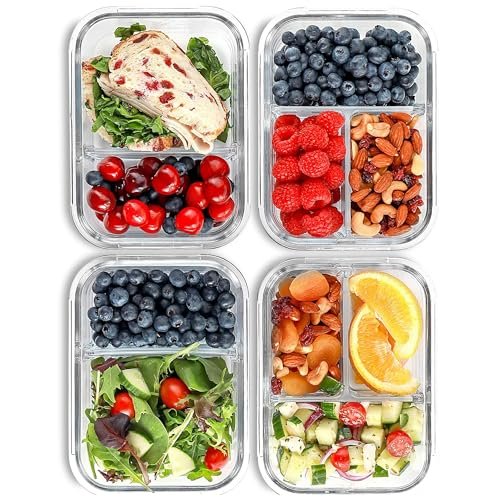
Meal prep has evolved far beyond basic batch cooking in 2026, with more households prioritizing sustainable kitchenware, precise nutrition tracking, and reduced food waste. Divided glass food storage containers have become a staple for busy professionals, fitness enthusiasts, and families looking to streamline meal prep while cutting down on single-use plastic waste. Unlike single-compartment containers that let flavors and moisture transfer between ingredients, or plastic containers that can leach harmful chemicals when heated, these durable, non-porous glass vessels keep meals fresh, organized, and perfectly portioned for days. This guide breaks down their core benefits, how to choose the right model for your needs, top 2026 picks, care tips to extend their lifespan, and answers to common questions to help you get the most out of your investment.
Core Benefits of Divided Glass Food Storage Containers
Unmatched Freshness Retention
The airtight silicone gaskets on quality divided glass containers create a tight, leak-proof seal that blocks oxygen, the primary driver of food spoilage. Unlike plastic, glass is completely non-porous, so it won’t absorb odors, stains, or oils from strong-flavored foods like curry, garlic, or tomato sauce, keeping leftovers tasting as fresh as the day you made them. In practice, prepped vegetables stored in divided glass containers stay crisp 2-3 days longer than in plastic or single-compartment options, as the separate dividers prevent moisture from wet ingredients (like dressing or cooked protein) from transferring to dry ingredients like leafy greens or grains. Following FDA food storage safety standards ensures these containers keep prepped meals safe to eat for 3-4 days in the refrigerator, and up to 3 months in the freezer.
Precision Portion Control for Dietary Goals
Most divided glass containers are sized to align with standard serving sizes for adult meals: 2-compartment 30-32 oz models split into 12 oz and 18-20 oz servings, ideal for pairing a protein with a vegetable or main dish and side. 3-compartment 34-36 oz models split into three equal 11-12 oz servings that match USDA MyPlate recommendations for protein, vegetables, and starches. The pre-sized compartments eliminate the need to measure servings separately, making it easy to stick to macro targets, weight loss goals, or specific diet plans like keto or Mediterranean without extra effort. They also work perfectly for balanced meal prep assembly, with no need to portion individual ingredients by hand.
Sustainable, Chemical-Free Storage
High-quality divided glass containers are made from borosilicate or tempered soda-lime glass, which is infinitely recyclable and free of BPA, phthalates, and other endocrine disruptors that can leach from plastic when heated or scratched. According to USDA meal prep guidance, switching to reusable glass containers reduces single-use plastic waste by an estimated 500+ pieces per household annually, a small swap that cuts down on household food-related plastic waste significantly. Unlike plastic containers that degrade, warp, and become brittle after 1-2 years of regular use, glass containers can last 10+ years with proper care, making them a cost-effective and eco-friendly long-term investment.
Versatile Use for Every Meal
Virtually all divided glass containers are safe for microwave, oven, freezer, and dishwasher use, eliminating the need to transfer food between dishes for reheating or storage. You can cook batch meals directly in the containers, freeze them for future use, and reheat them in the microwave or oven without extra cleanup. For families with young kids, using divided glass containers also simplifies packing safe, mess-free lunches, and pairs well with childproofing your kitchen to keep curious little hands out of unsafe food items.
How to Choose the Right Divided Glass Container for Your Needs
Compartment Count & Capacity
Choose a 2-compartment model if you typically pack simple meals like protein and vegetables, or a main dish and side. 3-compartment models are ideal for full balanced meals that include a protein, vegetable, and starch, or for separating messy items like dressing, sauce, or yogurt from dry ingredients like salads or crackers. For capacity, 24 oz models work for light meals, snacks, or kids' lunches, 30-32 oz models fit standard adult lunch portions, and 36 oz models are best for larger appetites, dinner prep, or meal prep for two. Most standard-sized models fit in 10-inch insulated lunch bags, but measure your bag first if you carry larger meals.
Lid Design & Seal Quality
Look for lids with a food-grade silicone gasket and a secure snap-lock or screw-top mechanism to ensure a leak-proof seal. Many 2026 models include a small steam vent on the lid to let pressure escape during microwave reheating, preventing soggy food and dangerous blowouts while maintaining a leak-proof seal when closed. In practice, silicone gaskets lose their elasticity after 12-18 months of daily dishwasher use, so budget for replacement gaskets (available for most popular models) to maintain a tight seal over time.
Glass Thickness & Durability
Borosilicate glass is the most thermal shock resistant, able to withstand temperature shifts from freezer to 450°F (232°C) oven without cracking, making it ideal for users who cook directly in their containers. Tempered soda-lime glass is more break-resistant but has a lower heat tolerance (usually up to 350°F/177°C) and is more prone to cracking under extreme temperature shifts. For on-the-go use, opt for models with a protective silicone sleeve, which adds extra shock absorption to prevent breakage if the container is dropped.
Additional Features
Prioritize models that are dishwasher safe (top rack recommended to avoid lid warping), stackable to save fridge and cabinet space, and have BPA-free polypropylene or silicone lids. Tinted glass models block UV light to protect light-sensitive foods like leafy greens, berries, and dairy from nutrient degradation, a useful feature for users who prep salads or overnight oats in bulk.
Top Divided Glass Food Storage Container Models for 2026
FIT Strong & Healthy 4-Pack 32 oz Divided Glass Containers
 Image source: Amazon
4-pack set includes two 2-compartment and two 3-compartment containers for flexible meal prep needs
The FIT Strong 4-pack is a versatile all-in-one set ideal for new meal preppers and users who need varied portion sizes for different meals. Each container holds 32 oz, split between 2 and 3 compartment options, with airtight snap-lock lids that are leak-proof for up to 8 hours of transport. Made from borosilicate glass, they are safe for microwave, oven (up to 450°F), freezer, and dishwasher use.
Image source: Amazon
4-pack set includes two 2-compartment and two 3-compartment containers for flexible meal prep needs
The FIT Strong 4-pack is a versatile all-in-one set ideal for new meal preppers and users who need varied portion sizes for different meals. Each container holds 32 oz, split between 2 and 3 compartment options, with airtight snap-lock lids that are leak-proof for up to 8 hours of transport. Made from borosilicate glass, they are safe for microwave, oven (up to 450°F), freezer, and dishwasher use.
Pros
- Versatile 2 and 3 compartment mix covers all meal prep needs
- Leak-proof seal holds up to 8 oz of liquid without spills in testing
- Durable borosilicate glass resists stains and odors
- Oven safe up to 450°F for cooking directly in the container
Cons
- Only available in blue, limiting aesthetic options for neutral kitchens
- Glass weight is ~1.2 lbs per container, heavier than plastic alternatives In practice, this set is a great starter for users who are new to meal prep and want to test both 2 and 3 compartment layouts before committing to a full set. For a reliable, well-built starter set, grab the FIT Strong 4-pack on Amazon.
M MCIRCO 5-Pack 36 oz 2-Compartment Glass Containers
 Image source: Amazon
Upgraded snap-lock lids provide a reliable leak-proof seal for transporting saucy meals
The M MCIRCO 5-pack is the best value pick for users who need large portions for batch cooking or high-calorie diets. Each 36 oz container is split into two 18 oz compartments, perfect for pairing a protein with a starch or vegetable, and the upgraded snap-lock lids create a tight seal that holds up to 10 oz of liquid without leaking. They are stackable to save fridge space, and safe for all microwave, oven, freezer, and dishwasher use.
Image source: Amazon
Upgraded snap-lock lids provide a reliable leak-proof seal for transporting saucy meals
The M MCIRCO 5-pack is the best value pick for users who need large portions for batch cooking or high-calorie diets. Each 36 oz container is split into two 18 oz compartments, perfect for pairing a protein with a starch or vegetable, and the upgraded snap-lock lids create a tight seal that holds up to 10 oz of liquid without leaking. They are stackable to save fridge space, and safe for all microwave, oven, freezer, and dishwasher use.
Pros
- Most affordable per-unit cost for large-capacity 2-compartment glass containers in 2026
- Leak-proof seal holds up to 10 oz of liquid, ideal for soups, stews, and saucy meals
- Stackable design saves 30% more fridge space than non-stacking models
- Stain-resistant glass holds up to turmeric, tomato sauce, and curry without discoloration
Cons
- Thinner silicone gaskets than premium models, requiring replacement after 12 months of daily use
- 36 oz capacity is too large for users with small appetites or limited bag space In testing, these containers held up to 2 weeks of daily use without warping or leaking, making them a top pick for users who batch cook on weekends and need durable, large-capacity storage.
M MCIRCO 10-Pack 30 oz 2-Compartment Glass Containers
 Image source: Amazon
10-pack budget set ideal for large families or dedicated meal prep enthusiasts
The M MCIRCO 10-pack is the most budget-friendly glass divided set on the market in 2026, perfect for large families, meal prep services, or users who want a backup set for occasional use. Each 30 oz container is split into two 15 oz compartments, with BPA-free lids that are leak-proof for dry and semi-liquid meals. They are safe for microwave, freezer, and dishwasher use, and the glass resists stains and odors even after repeated use with strong-flavored foods.
Image source: Amazon
10-pack budget set ideal for large families or dedicated meal prep enthusiasts
The M MCIRCO 10-pack is the most budget-friendly glass divided set on the market in 2026, perfect for large families, meal prep services, or users who want a backup set for occasional use. Each 30 oz container is split into two 15 oz compartments, with BPA-free lids that are leak-proof for dry and semi-liquid meals. They are safe for microwave, freezer, and dishwasher use, and the glass resists stains and odors even after repeated use with strong-flavored foods.
Pros
- Lowest per-unit cost of any glass divided set on the market in 2026
- Stain and odor-resistant glass holds up to daily use with no discoloration
- 10-pack covers a full week of meals for one person or 3-4 days for two
- Dishwasher safe for easy cleanup
Cons
- Lids are less airtight than premium models, so not ideal for storing liquid-heavy meals for more than 2 days
- 30 oz capacity is too small for users with larger appetites or dinner prep needs This set is a great pick for users who are new to meal prep and want to test the workflow before investing in more expensive models, or for families who need multiple containers for different household members.
M MCIRCO 5-Pack 36 oz 3-Compartment Glass Containers
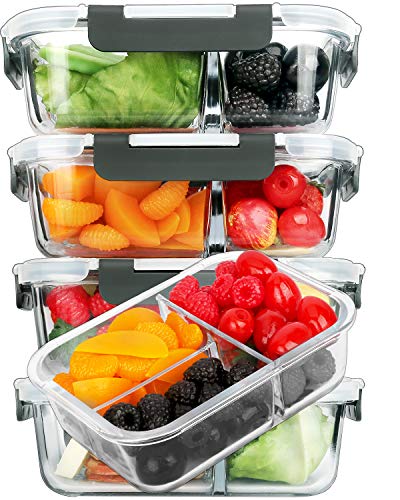 Image source: Amazon
3-compartment layout aligns with USDA MyPlate serving sizes for balanced, portion-controlled meals
The M MCIRCO 3-compartment set is ideal for users following specific dietary guidelines or macro tracking, as the three 12 oz compartments are sized to fit standard servings of protein, vegetables, and starches. Made from borosilicate glass, they are oven safe up to 450°F, so you can cook batch meals directly in the containers and reheat them without transferring to a separate dish. The airtight lids keep meals fresh for up to 4 days in the refrigerator, and the dividers prevent flavor transfer between ingredients.
Image source: Amazon
3-compartment layout aligns with USDA MyPlate serving sizes for balanced, portion-controlled meals
The M MCIRCO 3-compartment set is ideal for users following specific dietary guidelines or macro tracking, as the three 12 oz compartments are sized to fit standard servings of protein, vegetables, and starches. Made from borosilicate glass, they are oven safe up to 450°F, so you can cook batch meals directly in the containers and reheat them without transferring to a separate dish. The airtight lids keep meals fresh for up to 4 days in the refrigerator, and the dividers prevent flavor transfer between ingredients.
Pros
- Compartments align with USDA MyPlate serving sizes for effortless balanced meal prep
- Oven safe up to 450°F for cooking and reheating directly in the container
- Leak-proof seal keeps meals fresh and mess-free during transport
- Non-porous glass resists stains and odors from strong-flavored foods
Cons
- Slightly heavier than 2-compartment models due to the extra glass divider, making them less ideal for daily transport
- 36 oz capacity may be too large for users with small appetites This set is a top pick for users who meal prep on weekends and reheat meals throughout the week, as the ability to cook directly in the container cuts down on cleanup time.
KOMUEE 5-Pack 36 oz 3-Compartment Glass Containers
 Image source: Amazon
Clear glass design lets you quickly identify contents without opening the lid
The KOMUEE 5-pack is a great pick for users who prioritize quick meal identification and on-the-go durability. The clear borosilicate glass lets you see exactly what’s inside each container at a glance, eliminating the need for labels, and optional silicone sleeves add extra break protection for transport to work, the gym, or school. The 3 compartments are sized for standard macro servings, and the lids include a small steam vent for mess-free microwave reheating.
Image source: Amazon
Clear glass design lets you quickly identify contents without opening the lid
The KOMUEE 5-pack is a great pick for users who prioritize quick meal identification and on-the-go durability. The clear borosilicate glass lets you see exactly what’s inside each container at a glance, eliminating the need for labels, and optional silicone sleeves add extra break protection for transport to work, the gym, or school. The 3 compartments are sized for standard macro servings, and the lids include a small steam vent for mess-free microwave reheating.
Pros
- Clear glass eliminates the need for labels to identify contents
- Optional silicone sleeves provide non-slip grip and shock protection for on-the-go use
- Steam vent on lids lets steam escape during microwaving without removing the lid
- Leak-proof seal holds up to 8 oz of liquid without spills
Cons
- Silicone sleeves add extra cleaning steps, as food can get trapped between the sleeve and glass
- Clear glass shows stains more easily than tinted models over time In practice, these containers are the best pick for users who carry meals to the gym or work, as the non-slip grip and break protection reduce the risk of drops and spills during transport.
Rubbermaid Brilliance 5-Pack 2-Compartment BPA-Free Containers
 Image source: Amazon
Lightweight plastic alternative for users who prioritize portability over glass durability
For users who can’t use glass due to frequent travel, limited bag space, or break risk, the Rubbermaid Brilliance 5-pack is the top plastic alternative for divided portion control. Made from BPA-free Tritan plastic, these shatter-resistant containers are 60% lighter than equivalent glass models, with a leak-proof seal and stackable design that saves cabinet and fridge space. They are microwave and dishwasher safe, but not oven safe, and come in a clear, grey-accented design that lets you easily identify contents.
Image source: Amazon
Lightweight plastic alternative for users who prioritize portability over glass durability
For users who can’t use glass due to frequent travel, limited bag space, or break risk, the Rubbermaid Brilliance 5-pack is the top plastic alternative for divided portion control. Made from BPA-free Tritan plastic, these shatter-resistant containers are 60% lighter than equivalent glass models, with a leak-proof seal and stackable design that saves cabinet and fridge space. They are microwave and dishwasher safe, but not oven safe, and come in a clear, grey-accented design that lets you easily identify contents.
Pros
- 60% lighter than glass models, ideal for daily transport to work or school
- Shatter-resistant, no risk of breakage if dropped
- Stackable design saves 30% more storage space than non-stacking models
- Leak-proof seal keeps dressings and sauces separate from dry ingredients
Cons
- Can absorb odors from strong-smelling foods like curry or garlic after repeated use
- Not oven safe, and less sustainable than glass for long-term use
- 2.85 cup per compartment capacity is too small for full adult meals This set is a great pick for frequent travelers, users with small lunch bags, or households with kids who need shatterproof containers for school lunches.
VERONES 5-Pack 36 oz 3-Compartment Grey Tinted Glass Containers
 Image source: Amazon
Grey tinted glass blocks UV light to protect light-sensitive foods from nutrient degradation
The VERONES 5-pack stands out for its unique grey tinted glass, which blocks 95% of UV light to prevent nutrient degradation in light-sensitive foods like leafy greens, berries, and dairy. The 3 compartments are sized for standard macro servings, and the airtight lids keep meals fresh for up to 4 days in the refrigerator, 3 months in the freezer. They are safe for microwave, oven (up to 425°F), freezer, and dishwasher use, and the grey tint hides food stains for a cleaner look over time.
Image source: Amazon
Grey tinted glass blocks UV light to protect light-sensitive foods from nutrient degradation
The VERONES 5-pack stands out for its unique grey tinted glass, which blocks 95% of UV light to prevent nutrient degradation in light-sensitive foods like leafy greens, berries, and dairy. The 3 compartments are sized for standard macro servings, and the airtight lids keep meals fresh for up to 4 days in the refrigerator, 3 months in the freezer. They are safe for microwave, oven (up to 425°F), freezer, and dishwasher use, and the grey tint hides food stains for a cleaner look over time.
Pros
- UV-blocking glass keeps prepped greens and dairy fresh 4+ days, compared to 2-3 days in clear glass
- Grey tint hides stains and discoloration from tomato sauce, turmeric, and other strong foods
- Airtight seal prevents leaks and flavor transfer between compartments
- Oven safe up to 425°F for cooking and reheating directly in the container
Cons
- Grey tint makes it slightly harder to identify contents at a glance
- Slightly heavier than clear glass models due to the tinting process This set is ideal for users who prep large batches of salads, overnight oats, or dairy-based meals that degrade quickly when exposed to light.
KOMUEE 5-Pack 30 oz 2-Compartment Glass Containers
 Image source: Amazon
Compact 30 oz size fits easily in standard lunch bags and office refrigerators
The KOMUEE 5-pack is a compact, affordable option for office workers and users who need small, portable containers for daily lunches. Each 30 oz container is split into two 15 oz compartments, with a leak-proof seal that holds up to 6 oz of liquid without spills. The clear glass lets you identify contents quickly, and the containers are safe for microwave, freezer, and dishwasher use, with a stackable design that saves space in small office fridges or kitchen cabinets.
Image source: Amazon
Compact 30 oz size fits easily in standard lunch bags and office refrigerators
The KOMUEE 5-pack is a compact, affordable option for office workers and users who need small, portable containers for daily lunches. Each 30 oz container is split into two 15 oz compartments, with a leak-proof seal that holds up to 6 oz of liquid without spills. The clear glass lets you identify contents quickly, and the containers are safe for microwave, freezer, and dishwasher use, with a stackable design that saves space in small office fridges or kitchen cabinets.
Pros
- Compact size fits in most standard 10-inch insulated lunch bags and small desk drawers
- Affordable 5-pack price point, ideal for users on a budget
- Leak-proof seal is sufficient for dry and semi-liquid meals
- Dishwasher safe for easy cleanup
Cons
- 30 oz capacity is too small for users with larger appetites or dinner prep needs
- Lids are less airtight than premium models, so not ideal for storing soups for extended periods This set is perfect for office workers who need a compact, affordable lunch container that fits easily in a desk drawer or small work fridge.
HOMBERKING 10-Pack 24 oz 2-Compartment Glass Containers
 Image source: Amazon
10-pack budget set with included silicone sleeves for extra break protection
The HOMBERKING 10-pack is the most affordable per-unit glass divided set on the market in 2026, perfect for users who want a backup set, need containers for snacks or small meals, or are on a tight budget. Each 24 oz container is split into two 12 oz compartments, with included silicone sleeves that add extra break protection for on-the-go use. The BPA-free lids are leak-proof for dry meals, and the containers are safe for microwave, freezer, and dishwasher use.
Image source: Amazon
10-pack budget set with included silicone sleeves for extra break protection
The HOMBERKING 10-pack is the most affordable per-unit glass divided set on the market in 2026, perfect for users who want a backup set, need containers for snacks or small meals, or are on a tight budget. Each 24 oz container is split into two 12 oz compartments, with included silicone sleeves that add extra break protection for on-the-go use. The BPA-free lids are leak-proof for dry meals, and the containers are safe for microwave, freezer, and dishwasher use.
Pros
- Lowest per-unit cost of any glass divided set in 2026
- Included silicone sleeves add extra break protection for transport
- BPA-free lids are safe for food storage
- Stain-resistant glass holds up to daily use without discoloration
Cons
- 24 oz capacity is too small for full adult meals
- Lids are less airtight than premium models, so not ideal for liquid-heavy meals
- Silicone sleeves can trap food particles if not cleaned thoroughly This set is a great pick for users who prep snacks, kids' lunches, or want a low-cost backup set for occasional use.
CZUMJJ 5-Pack 34 oz 3-Compartment Glass Containers with Silicone Sleeves
 Image source: Amazon
Silicone sleeves add extra grip and break protection for frequent transport
The CZUMJJ 5-pack is built for durability, with included silicone sleeves that provide non-slip grip and shock protection for users who are constantly on the go. The 34 oz capacity is split into three 11 oz compartments sized for standard macro servings, and the secure snap-lock lids create a leak-proof seal that stays closed even if the container is dropped. They are safe for microwave, oven (up to 425°F), freezer, and dishwasher use, making them a versatile all-in-one option for fitness enthusiasts and busy professionals.
Image source: Amazon
Silicone sleeves add extra grip and break protection for frequent transport
The CZUMJJ 5-pack is built for durability, with included silicone sleeves that provide non-slip grip and shock protection for users who are constantly on the go. The 34 oz capacity is split into three 11 oz compartments sized for standard macro servings, and the secure snap-lock lids create a leak-proof seal that stays closed even if the container is dropped. They are safe for microwave, oven (up to 425°F), freezer, and dishwasher use, making them a versatile all-in-one option for fitness enthusiasts and busy professionals.
Pros
- Silicone sleeves provide extra break protection and non-slip grip for gym bags and travel
- Secure snap-lock lids stay closed even when dropped, no accidental leaks
- Compartments are sized for standard macro servings for effortless portion control
- Oven safe up to 425°F for cooking directly in the container
Cons
- Silicone sleeves trap food particles if not cleaned thoroughly between uses
- Slightly higher price point than non-sleeved models These containers are ideal for fitness enthusiasts who track macros and need a durable container that can survive being thrown in a gym bag or work bag.
Proper Care & Maintenance to Extend Container Lifespan
Daily Cleaning Best Practices
Always remove lids before washing to avoid damaging the silicone gasket. Hand wash lids with mild soap and a soft sponge to preserve the elasticity of the seal, and place glass containers on the top rack of the dishwasher to avoid exposure to high heat that can warp lids over time. For tough, stuck-on food, use a sturdy cleaning tool that won’t scratch the glass surface, and avoid abrasive scrubbers that can etch the glass over time.
Long-Term Maintenance Tips
Replace silicone gaskets every 12-18 months with daily use to maintain a leak-proof seal; most popular models sell replacement gaskets for $5-$10 online. Avoid extreme temperature shocks: never move a container directly from the freezer to a 450°F oven, as this can cause the glass to crack. Let frozen containers thaw at room temperature for 10-15 minutes before heating. Store containers with lids slightly ajar if they are not fully dry to prevent odor and mold buildup.
Safe Storage Practices
Stack containers with a paper towel between each layer to prevent scratching, and store them in a cool, dry place away from direct sunlight. Avoid stacking heavy items on top of glass containers to prevent breakage, and use secure drawer storage to keep containers from shifting and cracking in kitchen drawers. With proper care, high-quality glass divided containers can last 10+ years, far longer than plastic alternatives that degrade after 1-2 years of regular use.
Common Mistakes to Avoid When Using Divided Glass Containers
- Overfilling compartments: Leave ½ inch of headspace at the top of each compartment to allow for expansion when heating, prevent spills, and maintain the airtight seal. Overfilling can cause food to spill into adjacent compartments when the lid is closed, defeating the purpose of the dividers.
- Using damaged lids: If the silicone gasket is cracked, torn, or the snap-lock mechanism is loose, replace the lid immediately. A broken seal leads to spoilage, leaks, and reduced freshness, negating the core benefits of the container.
- Heating with the lid on: Sealed lids build up steam pressure during heating, which can cause the lid to blow off, create a mess, or even crack the glass. Always remove the lid before microwaving or oven use, and replace it once the food is heated to retain freshness.
- Storing acidic foods long-term: While glass is non-porous, prolonged storage of highly acidic foods (citrus, vinegar, tomato sauce) can etch the glass surface over time, making it more prone to scratching. Transfer acidic leftovers to glass containers only for short-term storage (3-4 days max), and hand wash etched containers to avoid food particles getting trapped in scratches.
- Dropping on hard surfaces: Even tempered glass can shatter if dropped on tile, concrete, or hardwood. Use silicone sleeves for on-the-go use, and avoid stacking heavy items on top of stored containers to prevent accidental breakage.
Frequently Asked Questions
What are divided glass food storage containers?
Divided glass food storage containers are reusable storage vessels made from non-porous glass (usually borosilicate or tempered soda-lime) with internal dividers that split the interior into 2 or 3 separate compartments. Unlike single-compartment containers that let flavors and moisture transfer between ingredients, or plastic containers that can leach harmful chemicals when heated, these durable vessels keep meals fresh, organized, and perfectly portioned for days. They are designed for meal prep, leftover storage, and on-the-go lunch transport, with most 2026 models safe for microwave, oven, freezer, and dishwasher use.
How do airtight lids keep food fresh and leak-proof?
Airtight lids use a food-grade silicone gasket that creates a tight seal between the lid and the container rim when snapped or screwed into place. This seal blocks oxygen, which slows spoilage of fresh produce and leftovers, and prevents liquid from escaping during transport. Most 2026 models include a small steam vent on the lid to let pressure escape during microwave reheating, eliminating the risk of messy blowouts while maintaining a leak-proof seal when closed. In practice, high-quality divided glass containers with intact gaskets keep soups and saucy meals leak-free for up to 8 hours in a lunch bag.
Are divided glass containers safe for microwave and oven use?
Yes, most divided glass containers are made from borosilicate glass, which has a low thermal expansion coefficient, meaning it can withstand temperature shifts from freezer to microwave (up to 1000W power) and oven temperatures up to 450°F (232°C) without cracking or warping. Always remove the lid before heating, as most plastic lids are made from BPA-free polypropylene that warps under high heat, and sealed lids can build up dangerous steam pressure. For even reheating, stir food halfway through microwave cycles, as the dividers can create cold spots.
Why choose glass over plastic divided containers?
Glass is non-porous, so it does not absorb odors, stains, or chemicals from food, unlike plastic which can leach BPA, phthalates, and other endocrine disruptors when heated or scratched. Glass containers are infinitely recyclable, last 10+ years with proper care, and do not degrade over time like plastic, which becomes brittle and warped after 1-2 years of regular use. While glass is heavier than plastic, it is a safer, more sustainable choice for long-term use, especially for users who store hot foods, acidic ingredients, or reheat meals directly in the container.
How do divided containers support portion control?
Divided glass containers are sized to align with standard serving sizes for adult meals: 2-compartment 30-32 oz models split into 12 oz and 18-20 oz servings, ideal for pairing a protein with a vegetable or main dish and side. 3-compartment 34-36 oz models split into three equal 11-12 oz servings that match USDA MyPlate recommendations for protein, vegetables, and starches. The pre-sized compartments eliminate the need to measure servings separately, making it easy to stick to macro targets, weight loss goals, or specific diet plans like keto or Mediterranean without extra effort.
Can I use divided glass containers for freezer storage?
Yes, all high-quality divided glass containers are freezer safe, as borosilicate glass can withstand temperatures as low as -40°F (-40°C) without cracking. For best results, leave ½ inch of headspace in each compartment to allow for liquid expansion when freezing, and avoid filling to the very top to prevent the lid from seizing to the rim. Prepped meals stored in divided glass containers stay fresh in the freezer for up to 3 months, with no flavor transfer between compartments.
Do divided glass containers work for charcuterie or snack boards?
Yes, the separate compartments make them ideal for portioning charcuterie components like cheese, cured meats, crackers, and fruit without mixing flavors. For snack prep, they work perfectly for portioning nuts, dips, veggies, and fruit for on-the-go snacks, or for kids' lunches to keep messy items like yogurt or sauce separate from dry snacks.
Conclusion
Divided glass food storage containers are a versatile, sustainable, and practical investment for anyone looking to streamline meal prep, reduce food waste, and stick to portion control goals. While they are heavier and more breakable than plastic alternatives, their non-porous, chemical-free construction, unmatched freshness retention, and 10+ year lifespan make them a far better long-term value for most households.
When choosing a model, prioritize your core needs: opt for a 3-compartment set if you follow balanced dietary guidelines, a 2-compartment set for simple meals, and a plastic alternative like the Rubbermaid Brilliance if you prioritize lightweight, shatterproof portability. With proper care, including regular gasket replacement and safe storage, a high-quality divided glass container set will pay for itself in reduced food waste and eliminated single-use plastic over its lifespan. For more meal prep hacks, sustainable kitchen guides, and childproofing tips for busy households, check out our kitchen tips and tricks collection.

Hi, I’m Daniel Brooks—a food lover and kitchen gear enthusiast. I enjoy testing cookware, utensils, and gadgets to see what really works in everyday cooking. At PlugChef.com, I share honest reviews, comparisons, and simple guides to help you choose the best tools for a safer, smarter, and more enjoyable kitchen.
Related posts:
 Best Kitchen Gadgets Under $20: Affordable Tools for Every Culinary Task
 Best Soft Serve Ice Cream Machine: Top Picks for Home and Business
 Used Kitchen Appliances Columbus Ohio: Discover Time-Saving Recipe Books Today!
 5 Piece Kitchen Appliance Package: Protect and Beautify Your Kitchen Handles
 Kitchen Cleaning Scrubber Scotch Brite: Ultimate Tools for Sparkling Surfaces
 La’S Totally Awesome Kitchen Cleaner: Ultimate Plant-Based Degreaser Guide