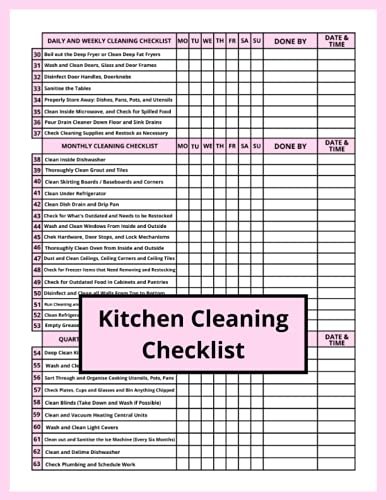
A consistent daily kitchen cleaning routine is the foundation of a safe, efficient, and welcoming kitchen space, whether you’re running a high-volume restaurant or managing a busy household. For commercial food service operations, lapses in daily cleaning can lead to costly health code violations, temporary shutdowns, and reputational damage that drives away customers. For home kitchens, unaddressed food residue and grime are a leading cause of cross-contamination, pest infestations, and avoidable foodborne illness. A daily kitchen cleaning checklist paired with a dedicated logbook transforms ad-hoc cleaning into a structured, accountable system that ensures no task is missed, supports compliance with safety standards, and saves time by preventing buildup of stubborn grime over time.
Why a Daily Kitchen Cleaning Checklist Is Non-Negotiable
Many kitchen managers and home cooks view daily cleaning as a low-priority chore, but consistent adherence to a checklist delivers measurable benefits for both commercial and residential spaces. For commercial kitchens, the FDA Food Code requires all food contact surfaces to be sanitized after each use to prevent cross-contamination, a standard enforced by local health departments nationwide, per official FDA Food Code sanitization standards; failure to comply can result in fines of $1,000 or more per violation, plus temporary closure until issues are resolved. For home kitchens, daily cleaning removes food residue that attracts pests like cockroaches and rodents; follow EPA guidance on kitchen sanitation and pest prevention to reduce infestation risk and minimize foodborne illness from cross-contaminated surfaces. Beyond safety, a daily routine prevents grime and grease from building up, reducing the time spent on deep cleaning tasks later in the week and extending the lifespan of kitchen appliances and surfaces. For more on this, see our guide on 7 steps in cleaning the kitchen.
Core Daily Cleaning Tasks: Home vs. Commercial Kitchens
Daily cleaning tasks differ significantly between home and commercial spaces due to varying safety risks, usage volume, and regulatory requirements. Below are tailored task lists for each setting, aligned with industry best practices.
Home Kitchen Daily Tasks (5-10 Minute Routine)
Home daily cleaning focuses on preventing cross-contamination and removing visible grime without requiring heavy-duty equipment or chemicals:
- Wipe down all food prep surfaces (counters, islands, cutting boards) after each use with hot, soapy water, especially after handling raw meat, poultry, or eggs.
- Sweep and spot-mop kitchen floors to remove crumbs, spills, and food debris that attract pests.
- Disinfect high-touch surfaces: fridge handles, sink faucets, cabinet knobs, and appliance controls with a food-safe disinfectant.
- Take out trash and recycling to eliminate food odors and pest attractants.
- Load or hand-wash dishes used during the day, and wipe down dishwasher surfaces to prevent mildew.
- Wipe down appliance exteriors (stove, microwave, toaster) to remove grease and food splatters before they harden.
Commercial Kitchen Daily Tasks (Health Code Compliant)
Commercial daily cleaning is far more rigorous, with tasks designed to meet strict food safety standards and prevent cross-contamination in high-volume environments:
- Sanitize all food contact surfaces (prep tables, cutting boards, equipment surfaces) to a minimum of 200ppm chlorine or equivalent sanitizer after each use, per FDA guidelines.
- Clean and degrease stove tops, griddles, and fryers after each service to prevent grease fires and bacterial growth.
- Empty all trash and recycling bins, replace liners, and sanitize bin exteriors to eliminate odors and pest attractants.
- Mop floors with a commercial-grade sanitizer, paying special attention to high-traffic areas, under equipment, and around sink stations where moisture accumulates; for tough sink grime and mold, use a top-rated stainless steel sink cleaner to avoid scratching and deep clean without damaging finishes.
- Clean and sanitize sink areas, including faucets, drain covers, and splash guards, to remove food residue and bacteria.
- Wipe down all high-touch surfaces (door handles, equipment controls, POS terminals) to reduce pathogen spread between staff and customers.
- Clean grease traps to prevent clogs, backups, and fire hazards.
Building Your Daily Kitchen Cleaning Logbook
A checklist is only effective if it’s tracked consistently, which is where a dedicated logbook comes in. A well-designed logbook turns a simple to-do list into a documented system that builds accountability, supports compliance, and helps you identify recurring issues before they become costly problems. For more on this, see our guide on kitchen hood cleaning spray.
What to Include in Every Log Entry
Every log entry, whether for a home or commercial kitchen, should include the following fields to ensure consistent tracking:
- Date and time of cleaning
- Name/initials of the person completing the tasks (for commercial, include shift assignment)
- Checkbox for each daily task, with space to mark tasks as complete or note issues
- A notes section for reporting broken equipment, pest sightings, low cleaning supply inventory, or other concerns
- A sign-off field for a supervisor or head of household to verify completion
For commercial kitchens, add fields for temperature logs of refrigerators and freezers, as most local health departments require this documentation for inspections.
Customizing Your Logbook for Your Space
The best logbook is one that fits your kitchen’s unique workflow and needs:
- Home kitchens: Add sections for assigning chores to family members, tracking cleaning supply levels, and tying cleaning tasks to meal prep routines (e.g., "prepped raw chicken, sanitized counter and cutting board after"). Digital spreadsheets or apps work well for home use if you want automated reminders and shared access for all household members. A common pitfall for home cooks is saving deep cleaning tasks for the weekend, leading to overwhelming to-do lists; breaking tasks into 5-10 minute daily routines prevents buildup and makes cleaning feel far less daunting.
- Commercial kitchens: Add health code compliance checkboxes, space for inspector notes, and task assignments by shift. Physical, water-resistant logbooks are ideal for commercial settings, as digital devices are at high risk of damage from water, grease, and heat during busy shifts. Pair your cleaning routine with regular kitchen organization, like streamlining drawer storage to keep sanitized tools separate from raw food prep items to reduce cross-contamination risk.
Weekly and Monthly Deep Cleaning Add-Ons for Your Logbook
Daily cleaning handles surface-level grime, but weekly and monthly deep cleaning tasks prevent long-term buildup that can damage surfaces, create fire hazards, and harbor bacteria. Add these tasks to your logbook on a recurring schedule:
Weekly Deep Cleaning Tasks
For home kitchens:
- Degrease the stove hood, backsplash, and stovetop burners to remove baked-on grease.
- Clean out refrigerator shelves, discard expired items, and wipe down interior surfaces with a food-safe cleaner.
- Scrub sink drains and garbage disposals with baking soda and vinegar to eliminate odors and clogs.
- Wipe down cabinet fronts and handles to remove grease and fingerprint smudges.
- Clean the microwave interior and turntable to remove splattered food and odors.
- Sanitize small wares like cutting boards; for wooden boards, follow our guide to removing stubborn cutting board stains to restore lighter wood finishes and eliminate bacteria trapped in grain.
- Mop floors with a deeper cleaning solution to remove embedded grime.
For commercial kitchens:
- Degrease exhaust hoods and ventilation systems to reduce fire risk and improve air quality.
- Deep clean and sanitize refrigerators, freezers, and walk-in coolers, including coils, to maintain energy efficiency and prevent bacterial growth.
- Scrub floor drains and sanitize garbage disposal units to eliminate clogs and odors.
- Clean and sanitize all small wares (cutting boards, utensils, mixing bowls) to prevent cross-contamination.
- Wipe down walls and baseboards to remove accumulated grease splatter.
- Restock all cleaning supplies and sanitizers to ensure staff have access to required materials.
Monthly/Quarterly Deep Cleaning Tasks
For home kitchens:
- Deep clean the oven and stovetop burners with an oven-safe cleaner to remove baked-on grime.
- Descale kettles, coffee makers, and dishwashers to remove mineral buildup and improve efficiency.
- Clean pantry shelves, discard expired dry goods, and wipe down storage containers to prevent pest infestations.
- Inspect for pest entry points (under sinks, behind appliances) and seal gaps to avoid infestations.
- Clean light fixtures and exhaust fan covers to remove dust and grease.
For commercial kitchens:
- Deep clean vent hoods and exhaust ducts to meet fire code requirements and reduce grease fire risk.
- Scrub floor grout and tile to remove embedded grease and bacteria that regular mopping misses.
- Deep clean ovens, grills, and fryers to remove baked-on food residue and grease.
- Descaling ice makers, coffee machines, and other water-using appliances to maintain performance and prevent bacterial growth.
- Inspect for pest damage and schedule professional pest control if needed to maintain health code compliance.
Customizing Your Logbook for Restaurants vs. Home Kitchens
While the core goal of a kitchen cleaning logbook is the same for both settings—tracking completed tasks to maintain hygiene—the requirements and features differ significantly based on use case. For more on this, see our guide on commercial kitchen ventilation cleaning.
For commercial restaurants and food service operations, logbooks must align with local health department regulations. Most jurisdictions require documented proof of daily sanitization, temperature logs for cold and hot holding units, and staff sign-offs for all cleaning tasks. A well-maintained logbook creates an audit trail that simplifies health inspections and reduces the risk of fines or shutdowns. Proper tool maintenance, like selecting the right cutting board thickness, reduces wear and makes cleaning easier over time.
For home kitchens, logbooks can be far more flexible. Many home cooks benefit from including chore assignments for family members, space to track cleaning supply inventory, and even notes tied to meal prep (e.g., "baked cookies, wiped down counter and oven after"). Digital logbooks with automated reminders work well for busy households, as they reduce the mental load of remembering to clean. For homes with wooden cutting boards, regular oiling with food-safe mineral oil for cutting board care keeps wood from drying out and cracking, making cleaning faster and more effective over time. For low-effort deep cleaning of small appliances, explore blenders with self-cleaning functions that use hot water and soap to sanitize in minutes, no scrubbing required. For more on this, see our guide on commercial kitchen hood vent cleaning.
Frequently Asked Questions
We’ve compiled answers to the most common questions about daily kitchen cleaning checklists and logbooks to help you implement a routine that works for your space.
What is the difference between cleaning and sanitizing for daily kitchen tasks?
Cleaning removes visible dirt, grease, and food residue using soap and water. Sanitizing kills remaining bacteria and pathogens on surfaces, which is required for all food contact surfaces in commercial kitchens and recommended for high-touch areas in home kitchens after handling raw meat, poultry, or eggs. For more on this, see our guide on kitchen cleaning scrubber scotch brite.
How long do I need to keep kitchen cleaning logs for health inspections?
Most local health departments require commercial kitchens to keep cleaning logs for a minimum of 6 months to 1 year; check your local jurisdiction’s specific requirements. For home kitchens, keeping logs for 3-6 months can help you identify patterns of missed tasks or early signs of pest issues.
Can I use a home kitchen cleaning logbook for a small home-based food business?
Yes, but you will need to add additional fields for food safety compliance, such as temperature logs for refrigerators, allergen cleaning checklists, and staff sign-offs, to meet local cottage food laws and health department requirements.
Do I need a separate logbook for front of house and back of house in a restaurant?
It is recommended to keep separate logbooks for front of house (dining areas, restrooms, service stations) and back of house (kitchen, prep areas, storage) to track cleaning for both customer-facing and food prep spaces, as health inspectors often audit both areas separately.
What’s the best way to ensure staff follow the daily cleaning checklist?
Assign clear ownership of tasks by shift, require sign-offs for each completed task, and review the logbook at the start of each shift to address any issues noted the previous day. Adding a small reward for consistent compliance can also improve adherence.
Pre-Made Logbook Options for Every Kitchen Type
If building a custom logbook feels overwhelming, pre-formatted options take the guesswork out of tracking your cleaning routine. Below are top-rated options tailored to both commercial and residential needs:
For Commercial Kitchens
 Structured logbook helps commercial kitchens track daily and quarterly sanitation tasks for health code compliance
This commercial kitchen logbook includes pre-printed daily, weekly, and quarterly checklists aligned with FDA Food Code standards, plus space for staff sign-offs, temperature logs, and inspector notes. Its compact 11×8.5 inch format fits easily in kitchen offices or supply closets for quick access during shifts. Get this health code-aligned logbook
Structured logbook helps commercial kitchens track daily and quarterly sanitation tasks for health code compliance
This commercial kitchen logbook includes pre-printed daily, weekly, and quarterly checklists aligned with FDA Food Code standards, plus space for staff sign-offs, temperature logs, and inspector notes. Its compact 11×8.5 inch format fits easily in kitchen offices or supply closets for quick access during shifts. Get this health code-aligned logbook
 Consistent log use creates an audit trail for health inspections and staff accountability
Designed specifically for restaurants, cafes, and catering businesses, this logbook breaks down tasks by shift to avoid missed duties, with 110 pages of structured tracking for extended use. Shop this shift-aligned commercial logbook
Consistent log use creates an audit trail for health inspections and staff accountability
Designed specifically for restaurants, cafes, and catering businesses, this logbook breaks down tasks by shift to avoid missed duties, with 110 pages of structured tracking for extended use. Shop this shift-aligned commercial logbook
 Including front of house tasks ensures entire dining spaces meet hygiene standards for guests
This unique combined logbook covers both back-of-house kitchen tasks and front-of-house dining area, restroom, and service station cleaning, making it ideal for full-service restaurants that need to track all sanitation efforts in one place. View this combined front/back of house logbook
Including front of house tasks ensures entire dining spaces meet hygiene standards for guests
This unique combined logbook covers both back-of-house kitchen tasks and front-of-house dining area, restroom, and service station cleaning, making it ideal for full-service restaurants that need to track all sanitation efforts in one place. View this combined front/back of house logbook
 Clear task segmentation reduces missed cleaning duties in high-volume food service environments
With 120 pages of structured daily and weekly tasks, this logbook is built for high-volume kitchens that need to avoid overlooked cleaning duties during busy shifts. Get this high-volume kitchen logbook
Clear task segmentation reduces missed cleaning duties in high-volume food service environments
With 120 pages of structured daily and weekly tasks, this logbook is built for high-volume kitchens that need to avoid overlooked cleaning duties during busy shifts. Get this high-volume kitchen logbook
 Extra-large pages provide ample space for detailed notes and staff sign-offs during busy shifts
The large A4 format of this logbook gives staff plenty of space to write detailed notes about equipment issues or supply needs, reducing miscommunication during fast-paced shifts. Shop this large-format commercial logbook
Extra-large pages provide ample space for detailed notes and staff sign-offs during busy shifts
The large A4 format of this logbook gives staff plenty of space to write detailed notes about equipment issues or supply needs, reducing miscommunication during fast-paced shifts. Shop this large-format commercial logbook
For Home and Mixed-Use Kitchens
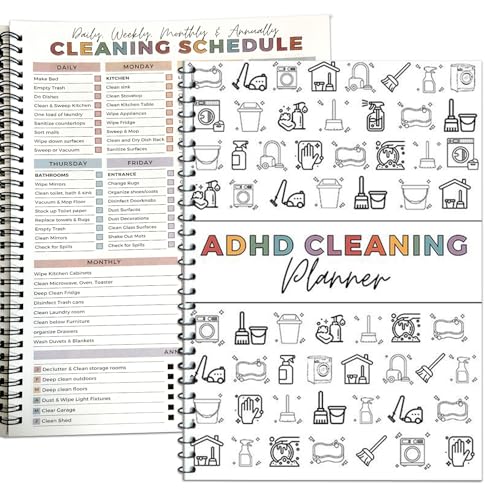 Customizable planners help home cooks assign chores and track kitchen cleaning progress across timeframes
This editable household planner includes kitchen-specific daily, weekly, and monthly schedules, plus sections for assigning chores to family members and tracking cleaning supply inventory, so you can customize your routine to fit your household’s needs. Get this customizable home cleaning planner
Customizable planners help home cooks assign chores and track kitchen cleaning progress across timeframes
This editable household planner includes kitchen-specific daily, weekly, and monthly schedules, plus sections for assigning chores to family members and tracking cleaning supply inventory, so you can customize your routine to fit your household’s needs. Get this customizable home cleaning planner
 Versatile logbooks work for both restaurant teams and household cleaning routines
This flexible logbook works for both small home kitchens and small commercial operations like food trucks or cottage food businesses, with 120 pages of daily and weekly task tracking that can be customized to your space. Shop this dual-use kitchen logbook
Versatile logbooks work for both restaurant teams and household cleaning routines
This flexible logbook works for both small home kitchens and small commercial operations like food trucks or cottage food businesses, with 120 pages of daily and weekly task tracking that can be customized to your space. Shop this dual-use kitchen logbook
 Cross-industry logbooks support compliance for hospitality, healthcare, and residential cleaning routines
This multi-use logbook includes daily checklists for kitchens, restrooms, and common areas, making it a versatile option for small home-based food businesses or multi-use commercial spaces. Get this multi-use cleaning logbook
Cross-industry logbooks support compliance for hospitality, healthcare, and residential cleaning routines
This multi-use logbook includes daily checklists for kitchens, restrooms, and common areas, making it a versatile option for small home-based food businesses or multi-use commercial spaces. Get this multi-use cleaning logbook
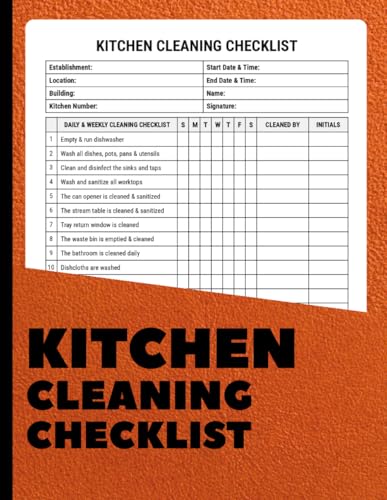 Sanitation record books help kitchens demonstrate compliance during health inspections and audits
This large-format logbook includes dedicated sections for daily cleaning tasks, weekly deep cleaning, and sanitation records, making it easy to document compliance for both home and commercial use. Shop this large-format kitchen logbook
Sanitation record books help kitchens demonstrate compliance during health inspections and audits
This large-format logbook includes dedicated sections for daily cleaning tasks, weekly deep cleaning, and sanitation records, making it easy to document compliance for both home and commercial use. Shop this large-format kitchen logbook
Conclusion
A daily kitchen cleaning checklist paired with a dedicated logbook is one of the simplest, most cost-effective ways to maintain a safe, efficient, and welcoming kitchen space, whether you’re running a commercial restaurant or managing a busy home. For commercial kitchens, this system supports health code compliance, reduces the risk of costly fines and shutdowns, and builds a culture of accountability among staff. For home kitchens, it prevents cross-contamination, reduces pest risk, and eliminates the overwhelming mental load of remembering to clean every surface. Consistency is key: small daily efforts add up to prevent stubborn grime buildup, extend the lifespan of your appliances and surfaces, and create a space where cooking is enjoyable rather than a chore. Whether you build a custom logbook or choose a pre-formatted option tailored to your space, implementing this routine today will deliver measurable improvements in hygiene, efficiency, and peace of mind within the first week.

I’m Abby Lu, a passionate home cook who loves simplifying everyday meals. At PlugChef.com, I share product reviews and cooking guides to help you find the best tools for your kitchen.
Related posts:
 Kitchen Sink Maintenance: Top Drain Cleaners to Prevent Clogs and Odors
 Black Stainless Steel Kitchen Appliance Packages: Elevate Your Culinary Experience
 Frigidaire Gallery Kitchen Appliance Packages: Elevate Your Culinary Experience
 Whirlpool Kitchen Appliance Package Deals: Transform Your Cooking Space Today!
 Best Microwave Egg Cooker: Quick, Delicious Breakfasts Made Easy
 Best Beginner Espresso Machine: Top Picks for Perfect Home Brews