Battery Lights for Under Kitchen Cabinets: Illuminate Your Space Effortlessly
Upgrading your kitchen lighting does not require drilling into cabinets or hiring an electrician. Battery-powered under-cabinet lights offer a plug-and-play solution that transforms dark countertops into safe, functional workspaces while adding a modern aesthetic touch. Whether you are a renter who cannot alter your lease or a homeowner seeking a quick, low-cost refresh, these wireless solutions deliver immediate impact with minimal effort.
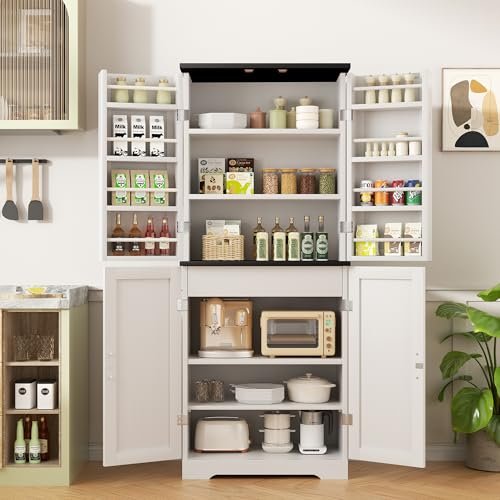
In this guide, we break down the top-rated battery and rechargeable options for 2026, explaining exactly when to choose motion sensors over touch-activated pucks, how to maximize battery life, and which color temperatures suit your specific kitchen layout. We also address common installation mistakes to ensure your lights stay put and look professional. For more on this, see our guide on kitchen storage cabinets for small spaces.

How to Choose the Right Battery Light for Your Kitchen
Selecting the right lighting depends on three factors: your activity level, your surface material, and your desired light quality. In practice, the "best" light is the one that fits your specific workflow.
Motion Sensors vs. Touch-Activated Pucks
The most common mistake is choosing a touch-activated light for a busy cooking zone. If your hands are wet or holding a knife, you cannot touch the light to turn it off; you have to fumble for it or leave it on, draining the battery.
- Choose Motion Sensors: For sinks, stovetops, and walkways. They activate automatically when you approach and turn off when you leave, saving energy and keeping your hands free.
- Choose Touch/Tap Lights: For reading nooks, display shelves, or areas where you want constant, dim light. These are ideal for ambiance where you don’t need task lighting.
Surface Material and Mounting
Magnetic mounts are convenient but have a critical limitation: they only work on ferrous metals (steel, iron). Most modern cabinet doors and countertops are made of wood, laminate, glass, or aluminum, which are not magnetic.
- Magnetic Lights: Only attach securely to steel cabinet bases or metal shelves.
- Adhesive/Putty Mounts: Work on virtually any surface. These are the standard for under-cabinet use because cabinets are rarely made of magnetically receptive metal.
For a deeper dive into organizing your workspace before you light it up, check out our guide on effective kitchen organization tips.
Top Battery-Powered Under-Cabinet Lighting Options for 2026
We have reviewed the current market leaders based on brightness, battery life, and ease of installation. Here are the top picks that balance performance with affordability.
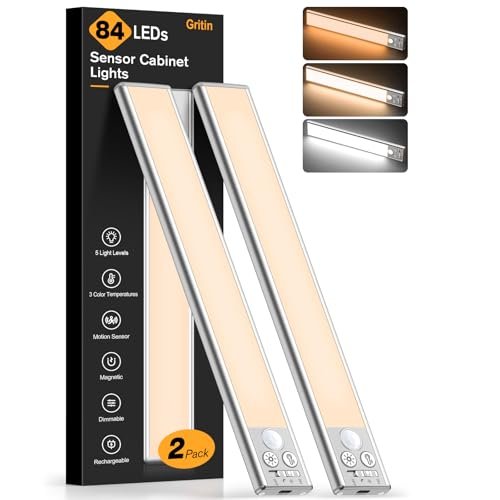
1. Gritin 10.2-Inch Rechargeable Motion Sensor Light
This is our top recommendation for kitchens with metal bases or when used in conjunction with adhesive tabs. It features a high-density 84 LED array that provides significantly more light than standard pucks.
- Key Features: 3 color temperatures (warm, neutral, cool), 5 brightness levels, USB-C rechargeable.
- Best For: Large task areas needing high illumination.
- Trade-off: The magnetic back may require 3M command strips for non-metal surfaces.

2. MCGOR 14.7-Inch Rechargeable Strip Light
Ideal for longer counters where you want continuous light rather than spot illumination. The strip format reduces shadows between bulbs, creating a seamless glow along the cabinet edge.
- Key Features: Dimmable, wireless motion sensor, compact profile.
- Best For: L-shaped counters or islands where a linear light source is needed.
- Note: Ensure the cabinet depth accommodates the 14.7-inch length without obstructing access to the back panel for charging.
3. Amazon Basics LED Puck Lights (50 Lumens)
The budget-friendly, entry-level choice. These are discrete, small, and easy to replace if one dies. They are perfect for closets or small accent areas.
- Key Features: 50 lumens output, simple tap-on/tap-off, no wiring.
- Best For: Closets, pantries, or accent lighting under open shelves.
- Cons: Requires frequent battery swaps (AAA or CR2032 coin cells) unless you buy the specific rechargeable version.

4. EZVALO 6-Pack Rechargeable Motion Sensor Set
A comprehensive kit for those who want to light multiple areas (kitchen, stairs, closet) with one purchase. The inclusion of a remote control allows you to adjust settings without crawling under cabinets.
- Key Features: 2000mAh battery, 3 color temps, timer function, remote control.
- Best For: Multi-room households wanting a unified lighting system.
Understanding Color Temperature: Setting the Mood
Color temperature (measured in Kelvin) dramatically changes how your kitchen feels. Here is a quick reference to help you choose the right light:
| Kelvin | Color | Best Use Case |
|---|---|---|
| 2700K – 3000K | Warm White | Dining areas, living spaces. Creates a cozy, inviting atmosphere. |
| 4000K – 4500K | Neutral White | Primary task lighting (countertops, sinks). Best for seeing color accurately when cooking. |
| 5000K – 6500K | Cool White | High-energy spaces, garages, workshops. Can feel clinical in a kitchen; use sparingly. |
Pro Tip: If you are unsure, start with 4000K Neutral White. It offers the best balance of task visibility and aesthetic warmth. Avoid pure cool white (5000K+) for dining areas, as it can make food look less appealing.
Installation Best Practices for Longevity
Even the best lights fail if installed incorrectly. Follow these steps to ensure your under-cabinet lights last for years.
1. Clean and Dry Surfaces
Adhesive fails on grease, dust, or moisture. Before applying any mount, wipe the cabinet underside with isopropyl alcohol and let it dry completely. This is the most common reason for lights falling off.
2. Charge Before Installing
Never install a rechargeable light until it is fully charged. This ensures you know the light is functional and avoids the frustration of trying to mount a dead unit.
3. Use Adhesive Tabs for Non-Metal Surfaces
If your light has a magnetic back but your cabinet is wood or laminate, do not force the magnet. Instead, purchase a small roll of 3M Command Strips or double-sided mounting tape. Stick the strip to the cabinet, then magnetize the light to the strip. This provides a secure, removable hold.
4. Position for Maximum Effect
Place lights 1–2 inches below the cabinet bottom. This angle prevents glare directly in your eyes while illuminating the countertop surface. For stairs, place the light on the riser rather than the tread to avoid tripping hazards.
Maintenance and Battery Life
Battery lights require minimal maintenance, but regular care extends their life.
- Rechargeable Units: Recharge every 1–3 months depending on usage. Use a USB-C charger if possible; it is more efficient and safer than older USB-A cables.
- Disposal: When lithium-ion batteries in rechargeable lights are no longer holding a charge (typically after 500+ cycles), recycle them properly. Do not throw them in household waste. Check your local waste management guidelines for electronic battery disposal.
- Cleaning: Use a dry microfiber cloth to clean the plastic housing. Avoid getting water into the seams, especially around the motion sensor lenses.
For general home safety and kit readiness, you might also want to explore our guide on essential emergency supplies.
Frequently Asked Questions
How long do rechargeable battery lights last on a single charge?
Most modern rechargeable under-cabinet lights with 2000mAh batteries last between 1 to 3 months on a single charge, depending on whether you use motion sensors or keep them on constantly. Motion sensor models last longer because they only activate when you are present.
Can I use battery lights in a small kitchen?
Yes, battery lights are actually ideal for small kitchens. They are compact and can be positioned precisely where needed without blocking valuable counter space. However, avoid overcrowding; two or three well-placed lights are often better than five dim ones.
What if my cabinet is not metal and the magnet doesn’t work?
Use adhesive mounting tape or 3M Command Strips. Apply the adhesive to the cabinet surface, then attach the light to the adhesive using its magnetic back or standard adhesive pads. This creates a strong bond that holds the light in place.
Are motion sensor lights accurate enough for under-cabinet use?
Modern PIR (Passive Infrared) motion sensors are very accurate. They detect body heat and movement. In a kitchen, they typically detect motion within a 120-degree arc and up to 15 feet. This is sufficient to trigger when you walk up to the counter. You can adjust sensitivity via the button on the light if it triggers too easily.
How many lumens do I need for task lighting?
For under-cabinet task lighting, aim for 30–50 lumens per foot of counter space. A standard 48-inch counter requires about 150–250 lumens. Most rechargeable strips and multi-puck kits fall within this range. If you are doing detailed work like sewing or jewelry repair, consider higher lumen options or wired LED strips.
Conclusion
Battery-powered under-cabinet lights are one of the simplest ways to upgrade your home’s functionality and style. By choosing the right color temperature and mounting method, you can eliminate dark corners, improve safety, and add a modern touch to your kitchen.
Start by assessing your surfaces. If you have metal cabinets, magnetic options offer quick repositioning. For wood or laminate, use adhesive tabs for a secure hold. Prioritize motion sensors for task areas to save battery life and enhance convenience. Whether you choose a compact puck light for a closet or a long strip for a large island, the result is the same: a brighter, safer, and more inviting space, installed in minutes without tools or contractors.
Take the next step in your home improvement journey by exploring our complete guide to kitchen organization hacks to maximize your newly lit space.
- Check Local Electrical Codes: While battery lights are exempt from most electrical permitting, ensure you understand home safety guidelines if you are combining these with wired fixtures to maintain a safe environment.
- Review Your Lighting Plan: Reassess your setup every six months. Move lights if your counter layout changes and replace adhesive tabs if they have lost their grip.
By following these steps, you ensure that your lighting remains not just a decorative element, but a reliable part of your daily routine.
Additional Battery-Powered Lighting Options for Every Space
Beyond the top-tier choices above, several other models offer unique features for specific needs—budget-friendly entry points, remote-controlled convenience, or compact portability for travel-sized kitchens.
Star-SPANGLED Push Tap Lights (5-Pack)
For those who want affordable, no-fuss illumination in multiple spots, this 5-pack covers five different areas with one purchase. The 2.8-inch puck size is ideal for tight corners, narrow shelves, or the inside of drawers. Warm white light creates a soft, welcoming glow rather than harsh task lighting.
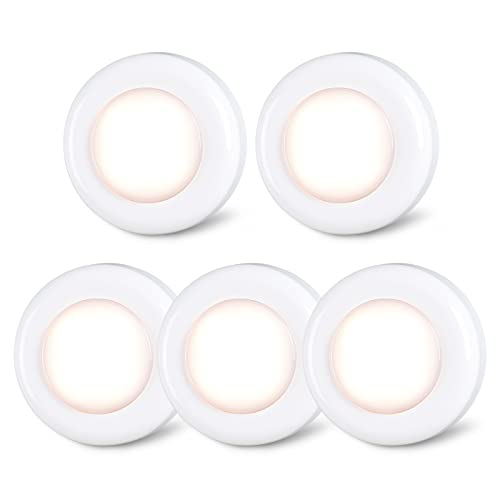
Compact 2.8-inch pucks fit into tight spaces like shallow drawers and narrow closet corners.
While these run on AAA batteries rather than rechargeable cells, they offer a low-upfront-cost entry point. Swap out the batteries every few months, and they will continue working for years. The touch activation is simple and intuitive—no learning curve, no sensors to confuse.
GE Wireless LED Tap Lights
A trusted name in lighting, GE's tap lights provide reliable performance with a focus on consistency. At 20 lumens per unit, they are better suited for accent lighting or low-light navigation rather than bright task illumination.

Discreet GE tap lights blend seamlessly with white cabinetry for unobtrusive nighttime guidance.
The stick-on adhesive holds well on smooth surfaces, and the compact 3-inch footprint means you can place them without crowding your counter space. Battery replacement is straightforward, and the white casing blends into most kitchen finishes.
DiDiSky 2-Pack Motion Sensor Light
This 2200mAh rechargeable option stands out for its large battery capacity, which translates to longer intervals between charges. The USB-C charging port is a welcome upgrade over older micro-USB models, making it compatible with modern cables and chargers.

The 2200mAh battery capacity means fewer charging interruptions for daily kitchen use.
The dimmable feature lets you adjust brightness levels directly on the unit, without a remote. Motion sensor sensitivity can also be tuned to your preference—useful if you have pets that might trigger false activations.
Rihvy 8-Inch Rechargeable 3-Pack
For multi-zone lighting on a budget, this 3-pack at 8 inches per strip covers more area than standard pucks. The three color temperature options give you flexibility to match your kitchen's existing lighting scheme.

An 8-inch strip length covers larger counter sections without requiring multiple smaller units.
The USB rechargeable design reduces long-term battery waste, and the magnetic mounting allows quick repositioning if your kitchen layout changes.
TECOMLIGHT LED Puck Lights (6-Pack with Remote)
This 6-pack with a remote control is the most feature-rich option for those who want to adjust settings without crawling under cabinets. The color-changing capability makes them unique among under-cabinet lights—useful for accent lighting, holiday décor, or mood-setting during dinner parties.

Remote-controlled color-changing pucks add decorative flexibility beyond standard task lighting.
While color-changing lights are not ideal for serious task illumination (the warm/cool spectrum shifts affect color accuracy), they are a creative option for entertaining or accent lighting in open shelving.
STAR-SPANGLED 7-Inch Motion Sensor 3-Pack
These 7-inch strips offer a middle ground between the compact pucks and longer strips. Cool white light is energizing and clear, making them suitable for kitchens where you want a brighter, more focused task light.

Cool white illumination enhances detail visibility for chopping, mixing, and other fine kitchen tasks.
The stick-on adhesive makes them easy to install and reposition, and the motion sensor feature saves battery life compared to always-on models.
Energy Efficiency and Safety Considerations
Choosing battery-powered lighting already eliminates the need for hardwiring, but energy efficiency and safety still matter.
Energy Star® Certified LEDs use up to 90% less energy than incandescent bulbs, and most LED puck lights and strips meet or exceed this threshold. You can verify a product's efficiency rating through Energy Star, the U.S. Department of Energy's official efficiency certification program. Look for the Energy Star label on packaging or product descriptions to confirm compliance.
UL Certification is another important safety marker. Lights that carry the UL mark have been tested for electrical safety, including fire resistance and proper insulation. While battery-powered lights are generally low-risk, cheap or uncertified products can have defective batteries that overheat or swell.
Before purchasing, verify that the product lists UL, ETL, or equivalent certification. If the product page is silent on safety certifications, that is a red flag—especially for products with rechargeable lithium-ion batteries, which carry inherent thermal risks if manufactured poorly. The Consumer Product Safety Commission maintains a database of recalled electronics and batteries, so you can check for any safety advisories before installing.
Troubleshooting Common Issues
Even well-chosen lights can encounter problems. Here are the most frequent issues and how to resolve them.
Light Not Turning On: First, verify the battery is charged or has fresh cells. Second, check that the adhesive mount has not shifted, potentially disconnecting a contact. Third, test the motion sensor or touch pad—sometimes a layer of dust or grime blocks the sensor lens. Wipe gently with a dry cloth.
Light Flickering or Dimming: This usually indicates a low battery or a failing LED driver. Recharge or replace the battery first. If the issue persists with a fresh charge, the unit may have a manufacturing defect, and manufacturer warranty replacement is your next step.
Adhesive Failing to Hold: Heat, humidity, and grease degrade adhesive over time. Replace the adhesive pads every 6–12 months, or switch to a more durable double-sided mounting tape rated for kitchens. Ensure the surface is clean, dry, and free of oil before reapplication.
Motion Sensor False Triggers: If the light turns on when no one is present, adjust the sensitivity setting (most units have a low/medium/high dial). Reduce sensitivity, or reposition the light to avoid detection zones that include hallways, windows, or pet traffic paths.
Final Thoughts on Battery Lighting for Kitchens
Battery-powered under-cabinet lights represent the intersection of practicality and design—a way to improve your kitchen without commitment, cost, or construction. The options have never been more diverse: from budget-friendly pucks to feature-rich rechargeable strips with remotes and color customization, there is a solution for every kitchen, every budget, and every skill level.
The key is matching the light to the task. Motion sensors for busy work zones. Touch-activated pucks for accent and ambiance. Longer strips for continuous coverage along extended counters. And color temperature tuned to your activity—neutral white for cooking precision, warm white for dining and relaxation.
Take inventory of your kitchen's dark corners today. Identify the two or three spots that matter most for safety and usability, select the appropriate light for each, and install them this weekend. Your kitchen will be brighter, safer, and more functional within an hour—and the difference will be noticeable every time you step into the space.
For ongoing home maintenance guidance and to keep your space organized and safe, explore our complete library of practical home improvement resources.

Hi, I’m Daniel Brooks—a food lover and kitchen gear enthusiast. I enjoy testing cookware, utensils, and gadgets to see what really works in everyday cooking. At PlugChef.com, I share honest reviews, comparisons, and simple guides to help you choose the best tools for a safer, smarter, and more enjoyable kitchen.
Similar Posts