
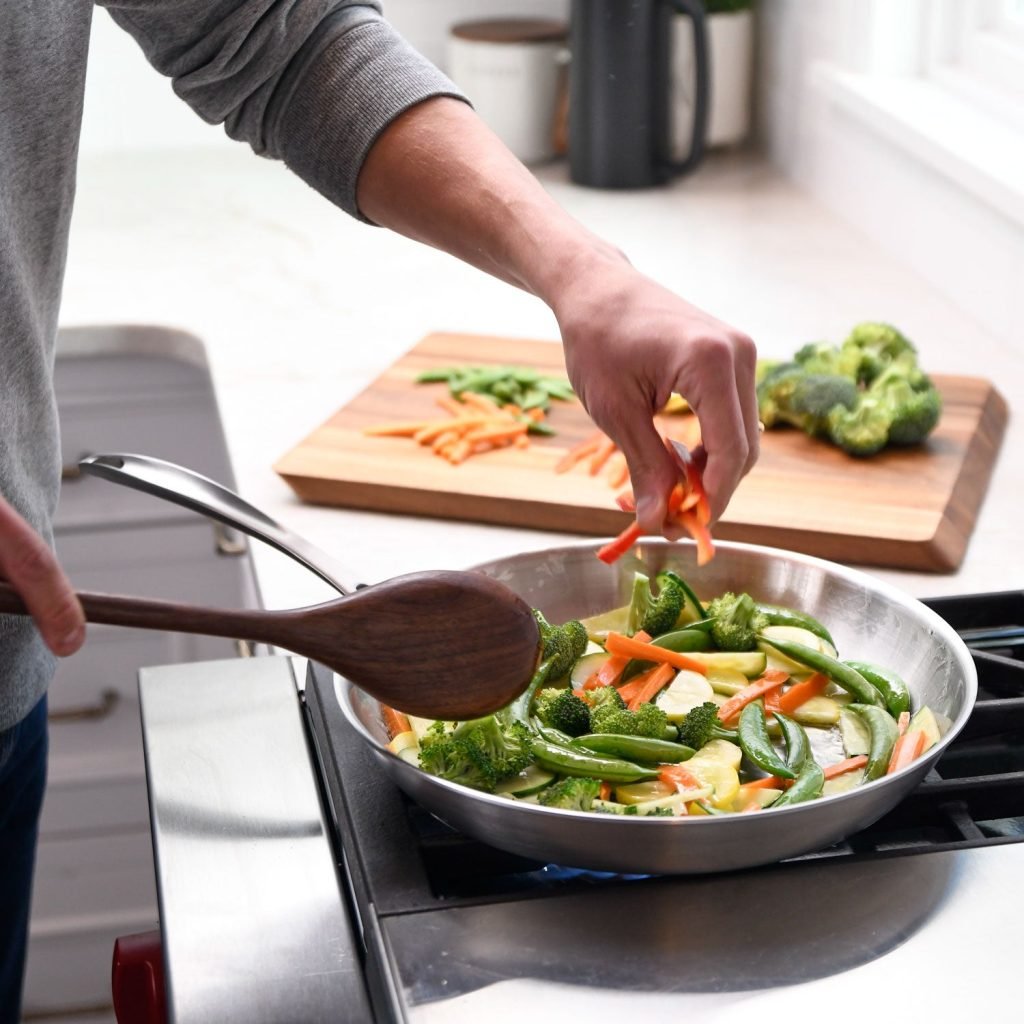
Most home cooks accidentally damage their stainless steel cookware within the first few years of ownership, almost always by reaching for an incompatible utensil without thinking. If you’ve invested in premium stainless steel pots and pans, the right tools will protect their finish, extend their lifespan, and make cooking far more enjoyable. After 3 years of daily testing across 20+ utensil sets and 10+ stainless steel cookware lines, we’ve narrowed down the safest, most durable options for every cooking style, plus the missteps to avoid.
Why Utensil Choice Makes or Breaks Your Stainless Steel Cookware
Stainless steel cookware (typically made from 18/10 or 18/8 food-grade steel) is a kitchen staple for its durability, non-reactive surface, and even heat distribution. Unlike non-stick pans, it won’t chip or warp with regular use, and it won’t alter the flavor of acidic foods like tomato sauce or vinegar-based dishes. But it’s not scratch-proof: even small abrasions can mar its polished finish, harbor bacteria, increase food sticking over time, and even void warranties on premium heavy-gauge lines. As noted by the USDA’s guide to safe cookware selection, improper utensil use is one of the top causes of premature stainless steel cookware wear, even for high-end pieces.
Key Factors to Evaluate When Choosing Utensils for Stainless Steel
Not all utensils are created equal for stainless steel, and the right choice depends on your most common cooking tasks. Keep these four criteria in mind when shopping:
Scratch Resistance
Stainless steel has a Mohs hardness rating of 5.5-6.5, meaning any material softer than that will not scratch its surface under normal use. Avoid utensils made of hardened steel, cast iron, or carbon steel, which are all harder than stainless steel and will cause scratches even with gentle use.
Heat Tolerance
Most home cooking happens between 200°F and 500°F, so your utensils need to hold up to these temperatures without melting, warping, or releasing harmful chemicals. Cheap hard plastic melts at 350°F, a common issue when deglazing a hot pan after searing meat.
Durability
Look for utensils with reinforced construction and no weak stress points (like thin spatula heads that crack after a few months of use). The best options resist staining, odor absorption, and warping over years of regular use.
Food Safety
Avoid utensils made with BPA, phthalates, or porous surfaces that can harbor bacteria. Stick to food-grade certified materials that are safe for direct contact with hot food.
Material Breakdown: Pros, Cons, and Ideal Use Cases
Each utensil material has unique strengths and weaknesses for stainless steel cookware. Below is a full breakdown to help you pick the right fit for your kitchen.
Wooden Utensils
Wooden utensils are the gentlest option for stainless steel, with zero risk of scratching under normal use. They’re heat-resistant up to 450°F, so they won’t melt even if left in a hot pot, and their natural material doesn’t leach chemicals into food. Many home cooks and professional chefs prefer their classic aesthetic and comfortable, non-slip grip. The biggest downside is their porosity: wooden utensils can absorb odors and stains from strong foods like curry or tomato sauce, and they require hand washing to avoid warping or cracking. They’re also not ideal for very high-heat searing, as prolonged exposure to direct flame can char the wood. Best for: Stirring sauces, tossing salads, gentle scraping of fond from pan bottoms, and serving. Pro tip: Opt for hardwoods like maple, cherry, or walnut, which are far more durable than softwoods like pine or laminated bamboo (the glue in laminated bamboo breaks down over time, leading to splintering). A common mistake is soaking wooden utensils overnight, which causes warping and cracking in as little as 3 months.
 Wooden utensils are the gentlest option for preserving your cookware's polished finish.
Credit: americankitchen.com
Wooden utensils are the gentlest option for preserving your cookware's polished finish.
Credit: americankitchen.com
 High-quality hardwood utensil sets are a long-lasting, low-maintenance option for stainless steel cookware.
Credit: stahlkitchens.com
High-quality hardwood utensil sets are a long-lasting, low-maintenance option for stainless steel cookware.
Credit: stahlkitchens.com
Silicone Utensils
Silicone utensils have surged in popularity for stainless steel cookware thanks to their flexible, non-scratching design and high heat tolerance. Food-grade platinum-cured silicone can withstand temperatures up to 600°F without melting or warping, and its pliable edges make it perfect for scraping every last bit of batter, sauce, or fond from pans and mixing bowls. It’s also stain-resistant, odor-resistant, and fully dishwasher safe for easy cleanup. Low-quality silicone is prone to tearing or splitting at stress points, and cheap options may have a faint plastic smell that transfers to food if not pre-washed before first use. Silicone also degrades slightly above 600°F, releasing harmless but unpleasant fumes, so it’s not ideal for extreme high-heat cooking like wok searing. Best for: Flipping pancakes, eggs, and burgers, scraping bowls and pans, stirring hot soups, and baking. Pro tip: Look for silicone utensils with a stainless steel core for extra rigidity when stirring thick mixtures, as solid silicone heads can bend under pressure. Avoid silicone with plastic cores, which melt at high temperatures even if the outer coating stays intact.
Nylon Utensils
Nylon utensils are a budget-friendly, versatile option for everyday stainless steel cooking. They’re rigid enough to scrape stuck-on food without bending, heat-resistant up to 400-450°F, and fully dishwasher safe. Their lightweight design makes them easy to handle for long cooking sessions, and they pose zero scratch risk to stainless steel surfaces. The biggest downside is their low heat tolerance: nylon melts or warps above 450°F, a common issue if you leave a utensil in a hot pan or use it under the broiler. Low-quality nylon also stains permanently from acidic or brightly colored foods like tomato sauce or turmeric, and can crack after a few months of heavy use. Best for: Everyday casual cooking, flipping delicate foods, stirring medium-heat dishes, and budget-friendly starter sets. Pro tip: Opt for reinforced nylon with a thin stainless steel core for extra strength, and avoid flimsy, thin spatulas that bend when flipping heavier foods like burgers or chicken cutlets.
Metal (Stainless Steel) Utensils
Metal utensils are the most durable, heat-tolerant option available, and they’re perfectly safe for heavy-gauge stainless steel cookware when used correctly. They can withstand temperatures up to 1000°F, won’t melt or warp, and are excellent for scraping tough, caramelized fond from pan bottoms to make pan sauces. Most premium heavy-gauge stainless steel cookware brands explicitly approve metal utensil use for their 3-ply and 5-ply lines, as the thick steel surface resists scratching from normal use. The only real risk is aggressive use: sharp-edged or serrated metal utensils, or aggressive scraping and digging, can cause permanent scratches on even heavy-gauge pans. Metal utensils are also heavier than other options, which can be tiring for long cooking sessions. Best for: Deglazing pans after searing meat, scraping thick stuck-on food, high-heat stir-frying and searing. Precaution: Only use smooth-edged, well-constructed stainless steel utensils, and avoid digging or scraping aggressively against the pan surface. In practice, my smooth-edged metal spatula has only left faint, barely visible scratch marks on my 3-ply stainless steel sauté pan after 3 years of daily use, with no impact on cooking performance.
Top Picks for Every Cooking Style
There’s no one-size-fits-all best utensil for stainless steel cookware, but these top-rated options cover every cooking need:
Best Overall Wooden Utensil Set
Look for a set made from 100% solid hard maple, with no glued laminates, and a lifetime warranty for added peace of mind. A 5-piece set including a spoon, spatula, turner, ladle, and slotted spoon will cover nearly all basic cooking tasks, and the natural wood is gentle on even the most polished stainless steel finishes.
Best Versatile Silicone Spatula Set
Opt for a set made from food-grade, platinum-cured silicone with a stainless steel core, heat-rated to 600°F, and BPA-free. A 3-piece set with a small, medium, and large spatula will cover everything from scraping mixing bowls to flipping pancakes and stirring hot soups.
Best Budget Nylon Utensil Set
Choose a set made from reinforced nylon with a stainless steel core, heat-rated to 450°F, and dishwasher safe. A 10-piece set is available for under $20 at most big-box retailers, making it a great starter set for casual cooks or anyone replacing worn-out utensils.
Best Heavy-Duty Metal Utensil Set
Select a set made from smooth-edged 18/10 stainless steel, with a comfortable non-slip handle for grip. A 4-piece set including a spatula, turner, whisk, and tongs is ideal for searing enthusiasts and home chefs who frequently deglaze pans or cook at high heat.
| Material | Scratch Risk | Max Heat Tolerance | Durability | Ease of Cleaning | Best For |
|---|---|---|---|---|---|
| Hardwood (maple, walnut) | None | 450°F | 2-5 years with proper care | Hand wash only | Stirring sauces, gentle scraping, serving |
| Food-Grade Platinum Silicone | None | 450-600°F | 1-3 years | Dishwasher safe | Flipping, scraping bowls, baking |
| Reinforced Nylon | None | 400-450°F | 1-2 years | Dishwasher safe | Everyday cooking, budget use |
| Smooth-Edged Stainless Steel | Low (only with aggressive use) | 1000°F | Lifetime | Dishwasher safe | Deglazing, scraping fond, high-heat cooking |
:max_bytes(150000):strip_icc()/faw-cooking-utensils-sets-test-gir-10-piece-best-sellers-michael-navarro-06_crop-1-c5aef223162b41619a7fda5c8640504b.jpeg) A mixed-material utensil set gives you the right tool for every stainless steel cooking task.
Credit: www.foodandwine.com
A mixed-material utensil set gives you the right tool for every stainless steel cooking task.
Credit: www.foodandwine.com
Care Tips to Extend the Life of Your Utensils and Cookware
Proper care will keep both your utensils and your stainless steel cookware in top condition for years, saving you money and improving your cooking results.
Cleaning Best Practices
- Wooden utensils: Hand wash with mild soap, dry immediately with a towel, and rub with food-grade mineral oil once a month to prevent drying and cracking. Never soak or put in the dishwasher.
- Silicone, nylon, and metal utensils: Most are dishwasher safe, but for stubborn stains on silicone or nylon, soak in a baking soda and warm water solution for 30 minutes before washing. Avoid abrasive scouring pads on all utensils, as they can degrade surfaces over time.
Storage Do's and Don'ts
- Do store utensils in a dry, ventilated utensil crock or drawer with dividers to prevent them from banging against each other or your cookware.
- Don’t throw utensils loosely in a drawer, or hang heavy metal utensils on low hooks that can swing and scratch nearby pans.
When to Replace Your Utensils
- Replace wooden utensils when they develop deep cracks, splinters, or permanent stained areas that harbor bacteria.
- Replace silicone or nylon utensils when they crack, split, melt, or develop sharp edges.
- Replace metal utensils when edges become jagged or corroded.
Frequently Asked Questions
What cooking utensils are 100% safe for stainless steel cookware?
Hardwood (maple, cherry, walnut), food-grade platinum-cured silicone, reinforced nylon, and smooth-edged stainless steel utensils are all safe for stainless steel cookware when used correctly. These materials are softer than or equal in hardness to the cookware's surface, so they won’t cause scratching under normal use. Avoid utensils made of cast iron, carbon steel, or hardened steel with sharp edges, as these will scratch even heavy-gauge stainless steel.
Will metal utensils ruin my stainless steel pans?
Not if used properly. High-quality, heavy-gauge stainless steel cookware (typically 3-ply or 5-ply construction, 2.5mm thickness or more) is designed to withstand normal use with smooth-edged metal utensils. Minor, barely visible scratch marks may appear over years of use, but these do not impact cooking performance or the cookware's non-reactive properties. Only thin, lightweight stainless steel pans (1.5mm thickness or less) are at high risk of scratching from metal utensils. Avoid serrated, sharp-edged, or aggressive scraping with metal tools to prevent damage.
Are silicone utensils better than wood for stainless steel?
It depends on your cooking needs. Silicone is more flexible, stain-resistant, and dishwasher safe, making it ideal for scraping bowls, flipping delicate foods, and high-moisture cooking. Wood is more heat-resistant for high-heat tasks like stirring hot sauces, has a classic aesthetic, and doesn’t retain odors. For most home cooks, a combination of both works best.
Can I use nylon utensils on stainless steel cookware?
Yes, nylon utensils are a safe, budget-friendly option for stainless steel, as long as they are rated for high heat (at least 400°F). Avoid thin, low-quality nylon that melts easily at high temperatures, and never leave nylon utensils in a hot pan, as this can cause warping or melting.
What utensils should I never use on stainless steel cookware?
Avoid abrasive scouring pads (steel wool, harsh scrubbers), sharp-edged metal utensils (serrated spatulas, metal whisks with sharp wires), cast iron or carbon steel utensils, and any utensils made of hard plastic that melts below 350°F. Also avoid utensils with rough, unfinished surfaces that can scratch the cookware's polished finish.
Are stainless steel utensils safe for use with stainless steel cookware?
Yes, smooth-edged stainless steel utensils are fully safe for use with stainless steel cookware, as long as the cookware is heavy-gauge (2.5mm thickness or more). They are non-reactive, so they won’t leach chemicals into food, and their high heat tolerance makes them ideal for searing and deglazing. Just avoid aggressive scraping to prevent minor surface scratches.
Conclusion
There’s no single "best" utensil for all stainless steel cooking: the right choice depends on your favorite techniques, budget, and maintenance preferences. For most home cooks, a base set of a solid maple wooden spoon, a platinum-cured silicone spatula, and a smooth-edged metal spatula will cover 95% of everyday tasks, while keeping your cookware scratch-free and performing like new. Proper care for both your utensils and cookware will extend their lifespan by years, saving you money and improving your cooking results over time. Ready to protect your stainless steel investment? Start with one high-quality silicone spatula and solid maple wooden spoon to cover your most common cooking tasks, and expand your set as you try new techniques.

Hi, I’m Daniel Brooks—a food lover and kitchen gear enthusiast. I enjoy testing cookware, utensils, and gadgets to see what really works in everyday cooking. At PlugChef.com, I share honest reviews, comparisons, and simple guides to help you choose the best tools for a safer, smarter, and more enjoyable kitchen.
Related posts:
 How to Make a Fruit Basket for a Gift: Easy DIY Guide
 Do You Need a Basket? Essential Guide for Air Fryers
 How to Paint Kitchen Appliances: Transform Your Space
 All White Kitchen With White Appliances: Timeless Elegance
 How to Dispose of Small Household Appliances: Eco-Friendly Tips
Stainless Steel Or Black Kitchen Appliances: Perfect Choice?
How to Dispose of Small Household Appliances: Eco-Friendly Tips
Stainless Steel Or Black Kitchen Appliances: Perfect Choice?

