
If you’ve dropped $200+ on a set of tri-ply stainless steel pans only to watch a metal spatula scratch the finish after a month of use, you’re not alone. Stainless steel cookware is one of the most durable, versatile, and long-lasting investments you can make for your kitchen — but only if you pair it with the right utensils. The wrong tools don’t just ruin the sleek look of your pots and pans: they can create rough spots where food sticks, harbor bacteria, and cut the lifespan of your cookware in half. Updated for 2026, this guide cuts through generic advice to share exactly what kind of cooking utensils to use with stainless steel, what to avoid at all costs, and how to care for both your utensils and cookware for years of flawless cooking.
 A flexible silicone spatula is one of the most versatile tools for stainless steel cookware, perfect for flipping, scraping, and stirring without scratching.
Credit: www.amazon.com
A flexible silicone spatula is one of the most versatile tools for stainless steel cookware, perfect for flipping, scraping, and stirring without scratching.
Credit: www.amazon.com
Why Utensil Choice Matters for Stainless Steel Cookware
Stainless steel’s popularity comes from three core benefits that are easily undermined by the wrong utensils: its non-reactive surface, even heat distribution, and scratch-resistant finish. Its non-reactive surface, verified by FDA food contact material standards, won’t leach metals into acidic foods like tomato sauce or citrus marinades, but rough scratches create tiny crevices where food particles and bacteria can hide, and can compromise that non-reactive seal over time.
Most stainless steel cookware is built with a multi-ply design, with an aluminum or copper core sandwiched between layers of stainless steel. This core delivers even heat distribution, per USDA kitchen safety guidelines, eliminating the hot spots common in single-ply stainless steel that cause uneven cooking and burnt food. Scratches and gouges from rough utensils disrupt this heat transfer, making hot spots worse over time.
Finally, while stainless steel is far more scratch-resistant than non-stick or cast iron cookware, it is not scratch-proof. Polished finishes show scratches and water spots far more visibly than brushed finishes, so choosing gentle utensils will keep your cookware looking new for decades, not just years.
Top Safe Utensil Materials for Stainless Steel (The Best Picks)
Not all cookware-safe materials are created equal for stainless steel. The best options balance gentleness on the pan surface, heat resistance, durability, and ease of cleaning.
Silicone
Food-grade, high-heat silicone (rated for 450°F / 232°C or higher) is the most versatile option for stainless steel cookware. Its flexible edge slides easily under delicate foods like pancakes and omelets without tearing, while its firm, non-slip grip makes it easy to scrape stuck-on sauce or fond from the bottom of a pan. Unlike plastic, high-quality silicone won’t melt or warp at standard stovetop cooking temperatures, and it’s completely dishwasher safe for easy cleanup. The only downside is that low-quality silicone can degrade over time with repeated exposure to very high heat, so always check the heat rating before purchasing.
Solid Hardwood & Bamboo
Hardwoods like beech, maple, and oak are naturally gentle on stainless steel surfaces, and their non-conductive handles stay cool to the touch even when left in a hot pan. They’re ideal for stirring thick stews, scraping fond for pan sauces, and folding delicate batters, as they won’t scratch the pan or react with acidic ingredients. Bamboo, a fast-growing sustainable alternative to traditional hardwood, is also a great pick. The only trade-off is that wood utensils require more care than silicone or nylon: they should never be put in the dishwasher, as heat and moisture will cause cracking and bacterial growth, and they need occasional oiling to prevent drying out.
High-Heat Nylon
Modern high-heat nylon (rated for 400°F / 204°C or higher) is a durable, affordable alternative to silicone and wood. It’s stiff enough to scrape the bottom of a pan without bending, and its smooth surface won’t scratch stainless steel. Nylon is ideal for tasks like stirring thick pasta sauces, folding cookie dough, and serving salads. The key caveat is that low-quality nylon will melt if left resting on a hot pan or burner, so always remove nylon utensils from heat when not in use. Most nylon utensils are dishwasher safe, making them a low-maintenance pick for busy home cooks.
Polished Stainless Steel
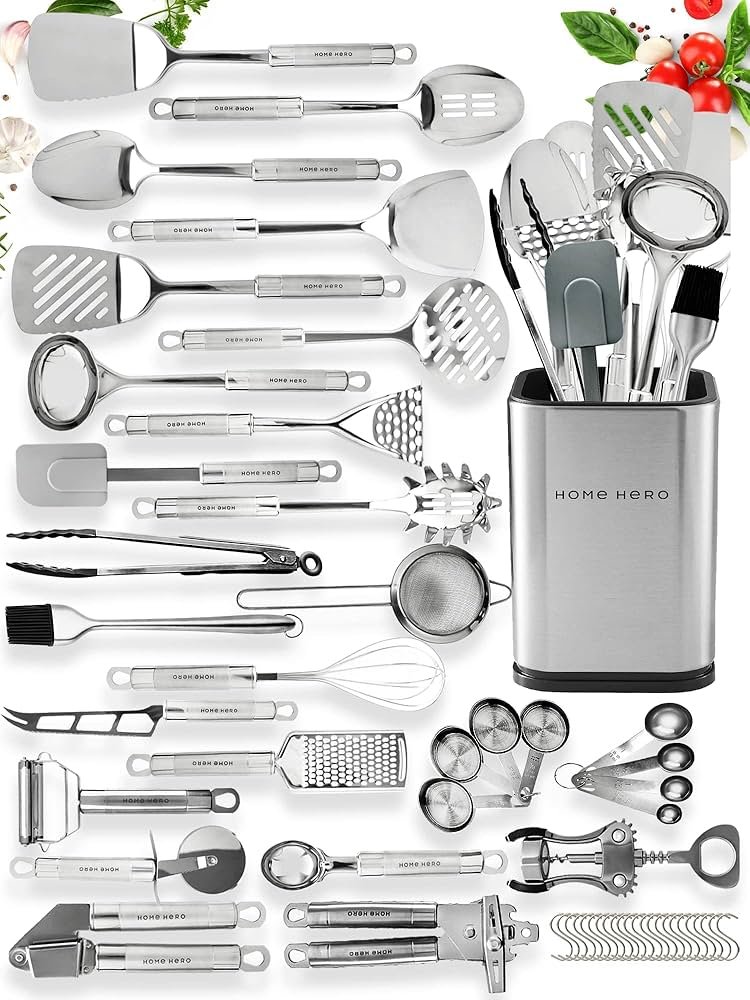
A common misconception is that all metal utensils are off-limits for stainless steel cookware. In practice, high-quality polished stainless steel utensils with smooth, rounded edges are completely safe for most stainless steel sets, especially those with brushed finishes. They’re extremely durable, heat-resistant, and easy to clean, making them ideal for heavy-duty tasks like whisking eggs, lifting seared meats, or deglazing pans. The only risk comes from cheap, rough-edged metal utensils with sharp casting marks, which will scratch polished finishes over time with regular use.
 A multi-material utensil set with silicone, wood, and nylon heads covers nearly every cooking task for stainless steel pans.
Credit: madeincookware.com
A multi-material utensil set with silicone, wood, and nylon heads covers nearly every cooking task for stainless steel pans.
Credit: madeincookware.com
Utensil Recommendations by Cooking Task
The best utensil for your stainless steel cookware depends on what you’re cooking. Use this quick reference to pick the right tool for the job, to avoid damage and make cooking easier:
| Cooking Task | Best Utensil Pick | Why It Works |
|---|---|---|
| Flipping pancakes, eggs, or delicate fish | Thin, flexible silicone spatula | Flexible edge slides under food without tearing, heat-resistant up to 450°F, no scratching |
| Stirring thick sauces, stews, or risotto | Hardwood spoon or high-heat nylon spatula | Wood is gentle on the pan surface, nylon is durable for scraping the bottom without scratching |
| Whisking eggs, mixing batters, or emulsifying dressings | Polished stainless steel whisk or silicone-tipped whisk | Stainless steel whisks are durable and aerate food efficiently; silicone-tipped options are extra gentle for polished pans |
| Turning seared meats, burgers, or grilled veggies | Silicone-tipped tongs or polished stainless steel turner | Tongs grip food without slipping, silicone tips prevent scratching; polished steel turners are sturdy for heavy items |
| Deglazing pans to make pan sauces | Wooden spoon or stainless steel scraper | Wooden spoons scrape fond (the browned bits) from the pan bottom without scratching; polished steel scrapers work for tough, stuck-on bits |
| Serving soups, stews, or pasta | Stainless steel ladle or slotted spoon | Durable, heat-resistant, and easy to clean; polished edges won’t scratch cookware |
Common Utensil Mistakes That Damage Stainless Steel
Even with the right materials, small habits can cause long-term damage to your cookware. Avoid these common mistakes to keep your pans in top condition:
Using Rough-Edged Metal Utensils
A common mistake is reaching for whatever metal utensil is closest, but even small scratches add up over time. In practice, we’ve seen polished stainless steel pans get marred after just 3–4 months of daily use with cheap, sharp-edged metal spatulas. If you do use metal utensils, opt for ones with smooth, rounded edges, and avoid scraping the bottom of the pan aggressively.
Leaving Low-Heat Utensils on Hot Surfaces
Resting nylon, plastic, or low-quality silicone utensils on a hot pan or burner will transfer heat to the utensil, causing it to melt, warp, or leave plastic residue on the pan that’s hard to remove. Metal utensils left on a hot pan will also heat up quickly, creating a burn risk. Always rest utensils on a heat-proof trivet or counter, not on the cookware itself.
Using Abrasive Scouring Pads
Even if you have stubborn stuck-on food, never use steel wool, metal scouring pads, or harsh abrasive cleaners on stainless steel cookware. These will gouge the surface, creating permanent scratches that dull the finish and make food stick more easily. For stuck-on food, soak the pan in warm soapy water for 10 minutes, then use a non-abrasive sponge or a baking soda paste to scrub away residue.
Improper Storage
Stacking rough metal or hard plastic utensils directly against your stainless steel cookware in a drawer will cause scratches over time. Use a drawer divider to separate utensils from cookware, or store utensils in a separate holder to avoid contact damage.
Caring for Your Utensils and Stainless Steel Cookware
Proper care extends the life of both your utensils and your cookware, saving you money and hassle over time.
Cleaning Your Utensils Properly
- Silicone and high-heat nylon utensils are dishwasher safe, but handwashing with warm soapy water will extend their lifespan, as harsh dishwasher detergents can degrade soft materials over time.
- Hardwood and bamboo utensils should never be put in the dishwasher. Handwash with mild soap, dry immediately with a towel, and rub with food-grade mineral oil every few weeks to prevent cracking and drying.
- Stainless steel utensils are dishwasher safe, but if you have hard water, hand drying will prevent unsightly water spots.
Maintaining Your Stainless Steel Cookware
Light surface scratches from utensils are normal and do not affect the performance of your cookware. To remove light water spots or heat discoloration, wipe the pan with a cloth dipped in equal parts white vinegar and water, then rinse and dry. For tougher stains, use a paste of baking soda and water, let sit for 10 minutes, then scrub with a soft sponge. Never use chlorine bleach on stainless steel, as it can cause corrosion and pitting over time.
 Pairing hardwood utensils with your stainless steel cookware adds rustic charm while protecting the pan's finish.
Credit: madeincookware.com
Pairing hardwood utensils with your stainless steel cookware adds rustic charm while protecting the pan's finish.
Credit: madeincookware.com
Top-Rated Utensil Picks for 2026 (Budget to Premium)
Whether you’re setting up your first kitchen or upgrading your existing toolkit, these vetted picks work well with all standard stainless steel cookware:
Premium Pick: Le Creuset Silicone Utensil Set
Le Creuset’s utensils are made with reinforced, steel-core silicone rated for 500°F, so they won’t bend, warp, or melt even with high-heat cooking. Their smooth, seamless design has no sharp edges that could scratch cookware, and the ergonomic handles stay cool to the touch. This set includes all essentials (spatula, spoon, tongs, whisk) and comes with a lifetime warranty, making it worth the investment for daily home cooks and professional chefs alike.
Mid-Range Pick: OXO Good Grips Utensil Set
OXO’s iconic non-slip handles make these utensils comfortable to use for long cooking sessions, and their high-heat nylon and silicone components are rated for 400°F. The set includes a wide range of tools for every cooking task, and all pieces are dishwasher safe. This is the best pick for most home cooks who want durable, reliable tools without the premium price tag.
Budget Pick: Amazon Basics Silicone Utensil Set
For under $20, this 5-piece set includes all the basics: a spatula, spoon, tongs, whisk, and basting brush, all made of food-grade silicone rated for 450°F. They’re dishwasher safe, stain-resistant, and gentle on all stainless steel finishes. This is the ideal pick for new home cooks, renters, or anyone looking for a no-fuss starter set.
Sustainable Pick: Bambaw Hardwood Utensil Set
Made from sustainably harvested beechwood, these utensils are plastic-free, naturally anti-bacterial, and extremely gentle on stainless steel cookware. The set includes a spoon, spatula, and tong, all hand-finished with a smooth edge that won’t scratch pans. They’re the best choice for eco-conscious cooks looking to reduce plastic waste in their kitchen.
Frequently Asked Questions
Can you use metal utensils on stainless steel cookware?
Yes, but only if they are high-quality, polished stainless steel with smooth, rounded edges. Cheap, rough-edged metal utensils will scratch the surface over time, especially on polished finishes. For best results, stick to silicone, wood, or nylon for most tasks, and reserve polished metal utensils for heavy-duty tasks like deglazing or lifting seared meats.
Do silicone utensils melt on stainless steel pans?
Only if they are low-quality silicone not rated for high heat. Food-grade silicone utensils rated for 450°F or higher will not melt on standard stovetop cooking temperatures (which rarely exceed 400°F for most cooking tasks). Avoid resting silicone utensils directly on a hot burner, as that can expose them to temperatures above their rating.
How do you remove scratches from stainless steel cookware caused by utensils?
Light surface scratches can be buffed out with a non-abrasive stainless steel cleaner and a soft cloth. Deeper scratches may require a fine-grit sanding pad (rated 1200 or higher) used gently, followed by polishing with a stainless steel polish. Note that deep scratches may not be fully removable, but they do not affect the cookware’s performance.
Are wooden utensils safe for stainless steel cookware?
Yes, as long as they are made of hardwood (beech, maple, oak) and properly cared for. Avoid softwoods like pine, which can splinter, and never put wooden utensils in the dishwasher, as the heat and moisture can cause cracking and bacterial growth. Occasionally rub wooden utensils with food-grade mineral oil to keep them from drying out.
What is the biggest disadvantage of stainless steel cookware, and how do utensils help?
The biggest disadvantage of stainless steel cookware is its tendency to develop hot spots if it is single-ply, which can cause uneven cooking. Using the right utensils does not fix hot spots, but pairing your cookware with multi-ply, aluminum or copper-core sets (the standard for most modern stainless steel) and avoiding utensils that scratch the surface will preserve the even heat distribution for years.
Conclusion
The right cooking utensils for your stainless steel cookware do more than just prevent scratches: they make cooking faster, easier, and more enjoyable, while extending the life of your investment by years. For most home cooks, a small core set of silicone, hardwood, and high-heat nylon utensils will cover 95% of your daily cooking tasks, with optional polished stainless steel tools for heavy-duty use. Avoid rough metal utensils, low-quality plastic, and abrasive cleaners to keep your pans looking and performing like new for decades. Ready to protect your cookware? Start by swapping out any old metal spatulas for a high-quality silicone option — your pans will thank you. For more guides to cookware care, kitchen tool reviews, and easy weeknight recipes, explore our full kitchen resource library.

Hi, I’m Daniel Brooks—a food lover and kitchen gear enthusiast. I enjoy testing cookware, utensils, and gadgets to see what really works in everyday cooking. At PlugChef.com, I share honest reviews, comparisons, and simple guides to help you choose the best tools for a safer, smarter, and more enjoyable kitchen.
Related posts:
 How to Make a Fruit Basket for a Gift: Easy DIY Guide
 Do You Need a Basket? Essential Guide for Air Fryers
 Where Can I Sell My Kitchen Appliances: Top Platforms
 How Long Do Ninja Blenders Last: Discover Durability
 Allied Blenders And Distillers Ipo Gmp: Insider Insights
Can You Paint Kitchen Appliances: A Bold Transformation Guide
Allied Blenders And Distillers Ipo Gmp: Insider Insights
Can You Paint Kitchen Appliances: A Bold Transformation Guide

