According to the Occupational Safety and Health Administration (OSHA), thousands of work-related eye injuries occur annually in the U.S. alone, the vast majority of which are preventable with proper personal protective equipment (PPE). The choice between safety goggles and safety glasses is one of the most impactful safety decisions you can make for tasks ranging from DIY home projects to professional lab or construction work. While both options are designed to shield your eyes from harm, their structural differences make them suited for entirely different hazards and use cases. This guide breaks down the key differences, performance by task, top product picks, and frequently asked questions to help you select the right eye protection for your specific needs, as part of a broader set of preventable workshop safety practices you can adopt today.
Key Structural & Performance Differences
The core distinction between the two styles comes down to coverage, seal, and intended hazard protection.
How Safety Glasses Are Built
Safety glasses use a half or frameless design that rests on the nose bridge and ears, with open gaps at the top and sides to allow consistent airflow. Most include wrap-around lenses to extend peripheral impact protection, but they do not form a seal against the face. They are lightweight, low-profile, and compatible with hard hats, face shields, and other PPE. Standard safety glasses are rated for impact resistance but offer no protection against fine dust, liquid splashes, or fumes that can enter through the open sides. They are best suited for low-hazard environments with only low-velocity flying debris risks, such as general warehouse work, light landscaping, or indoor construction with no dust or chemical exposure.
How Safety Goggles Are Built
Safety goggles feature a full frame that forms a tight seal against the orbital bone around the entire eye socket, blocking all airborne hazards, liquids, and fine particulates from entering the eye area. They come in three venting types to balance airflow and protection:
- Non-vented: No air holes, used for high-splash chemical handling to eliminate any risk of liquid entry.
- Indirect vented: Vents are covered with a baffle that blocks liquid while allowing air flow, ideal for lab work, paint spraying, or tasks with moderate splash risk.
- Direct vented: Small holes around the frame for maximum airflow, used for dust-heavy tasks like woodworking or grain handling where splash risk is low. Most goggles are also designed to fit over standard prescription glasses, eliminating the need for expensive custom corrective safety eyewear for many users.
Head-To-Head Comparison By Use Case
The right choice depends entirely on the hazards of your task. The table below breaks down performance by common use case:
| Use Case | Safety Glasses Performance | Safety Goggles Performance | Recommended Pick |
|---|---|---|---|
| General construction/warehouse work (low-velocity debris, no splash/dust risks) | Adequate for frontal and side impacts; breathable for all-day wear | Overkill for low-risk tasks; may cause discomfort during long shifts | Safety glasses |
| Chemical handling, lab work, paint spraying | Completely ineffective; open sides allow splashes to enter eyes | Full seal blocks 100% of liquid splashes; indirect venting allows airflow without liquid entry | Safety goggles |
| Woodworking, metalworking, machining (fine dust/debris) | Gaps allow fine dust and small chips to enter eyes, causing irritation or injury | Full seal blocks all fine particulates and high-velocity debris from all angles | Safety goggles |
| Outdoor landscaping/construction | Lightweight, often include UV protection for sun exposure | Bulkier, but offer full UV protection if sealed; tinted lenses reduce glare | Safety glasses (for low-dust tasks) / Goggles (for chemical/fertilizer use) |
| Prescription eyewear users | Most standard styles do not fit over prescription glasses; custom prescription safety glasses are expensive | Most over-glasses goggles fit standard prescription frames; no need for costly custom eyewear | Over-glasses safety goggles |
| Healthcare, nursing (splash risk from bodily fluids) | Inadequate for splash protection | Required for full coverage against blood, bodily fluid, and chemical splashes | Safety goggles |
Impact Resistance Performance
Both safety glasses and goggles that carry the ANSI Z87.1 marking have been tested to withstand impacts from flying objects traveling at 300 feet per second, per standards outlined in CDC workplace eye safety guidance for high-risk industries. For tasks with high-velocity debris (such as grinding metal, using nail guns, or working with a table saw), goggles are the safer choice, as their full seal prevents chips or fragments from entering from the sides or top, where safety glasses have inherent gaps.
Chemical & Liquid Splash Protection
A common mistake DIYers and new workers make is using standard safety glasses for chemical handling, which leaves the eyes completely exposed to splashes that can cause permanent damage, burns, or blindness in seconds. Safety glasses’ open sides make them entirely unsuitable for any task with splash risk. OSHA’s eye and face protection guidelines explicitly require sealed goggles for any task involving chemical splash risks, as even small amounts of corrosive liquid can cause permanent eye damage in seconds. You can review full OSHA chemical eye protection requirements for your industry.
Dust & Fine Particulate Protection
Fine dust from sanding, drywall, or grain handling can cause chronic eye irritation or even long-term conditions like conjunctivitis if not blocked. For tasks that produce this type of respirable debris, goggles are the only safe option, just as you would use proper rust removal techniques to avoid creating sharp metal particles that can damage eyes. Safety glasses’ side gaps allow fine particles to enter freely, making them a poor choice for dust-heavy work.
Comfort & Practicality Tradeoffs
All-Day Wearability
Safety glasses are far lighter and less bulky than goggles, with no pressure against the orbital bone, making them the more comfortable option for 8+ hour shifts in low-hazard environments. Goggles can cause discomfort, pressure points, or skin irritation for users with small faces, sensitive skin, or facial hair that breaks the seal. For high-hazard tasks where protection is non-negotiable, the minor discomfort of goggles is a small tradeoff for injury prevention.
Prescription Eyewear Compatibility
Most standard safety glasses do not fit over prescription glasses, and custom prescription safety eyewear can cost hundreds of dollars. Most over-glasses goggles are designed with extra internal space to fit the vast majority of standard prescription frames, making them a cost-effective alternative. For prescription glasses wearers, over-glasses goggles eliminate the need to switch between eyewear, a convenience that pairs well with organized under-sink storage to keep spare PPE and supplies easily accessible in your workspace. Note that very oversized or thick prescription frames may not fit comfortably in standard over-glasses goggles, so always check sizing specs before purchasing.
Fogging & Ventilation
Fogging is the top reason workers remove their PPE mid-task, which drastically increases injury risk. Safety glasses have better inherent airflow, so they fog less in low-exertion, low-humidity environments. Goggles have less airflow by design, so anti-fog coating is a non-negotiable feature for high-exertion or humid tasks (such as lab work with fume hoods, summer construction, or manufacturing). High-quality anti-fog coatings reduce surface tension on the lens so condensation spreads into a thin, clear layer instead of forming opaque droplets.
How To Choose The Right Option For Your Needs
Follow these steps to select the best eye protection for your task:
- Assess your hazards first: If you work with chemicals, fine dust, or liquid splashes, goggles are non-negotiable. If you only face low-velocity flying debris with no splash or fine dust risks, safety glasses may suffice.
- Verify certification: Always look for the ANSI Z87.1 stamp on the frame or lens to ensure the eyewear meets impact and performance standards. For chemical use, confirm goggles are rated for splash resistance.
- Test for comfort: For tasks longer than 2 hours, try on both styles to check for pressure points, slippage, and compatibility with other PPE (hard hats, respirators, face shields).
- Factor in prescription needs: If you wear corrective lenses, prioritize over-glasses goggles with adjustable straps, or invest in custom prescription safety glasses for daily long-term use.
- Consider outdoor conditions: For outdoor work, choose tinted lenses or UV-protective clear lenses to reduce glare and prevent long-term sun damage to your eyes.
Top Recommended Products By Use Case
All products below meet ANSI Z87.1 standards and are suited for specific use cases:
Best Over-Prescription Goggles: NoCry Safety Goggles Over Glasses
 NoCry goggles are designed to fit comfortably over most standard prescription frames for full eye coverage
ANSI Z87.1 certified with anti-fog, anti-scratch, and UV380 protection, these goggles fit over most prescription glasses with an adjustable strap for a secure fit. They are ideal for lab workers, DIYers, and students who need full splash and impact protection without giving up their corrective eyewear.
NoCry goggles are designed to fit comfortably over most standard prescription frames for full eye coverage
ANSI Z87.1 certified with anti-fog, anti-scratch, and UV380 protection, these goggles fit over most prescription glasses with an adjustable strap for a secure fit. They are ideal for lab workers, DIYers, and students who need full splash and impact protection without giving up their corrective eyewear.
- Pros: Certified for impact and splash protection, anti-fog coating, UV protection, adjustable fit
- Cons: Bulky for users with small faces, shows fingerprints easily Check current pricing and availability for the NoCry over-glasses goggles on Amazon.
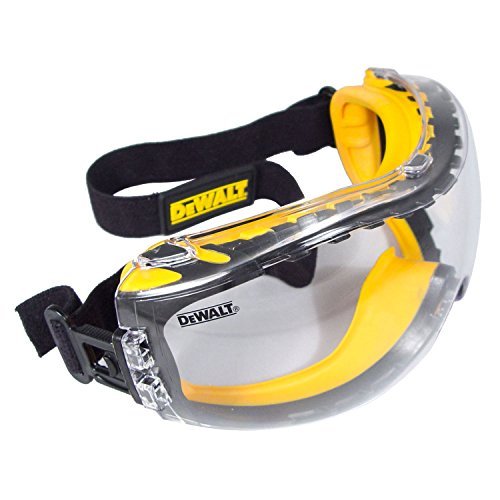
Best All-Around Goggle: DEWALT DPG82-11 Concealer
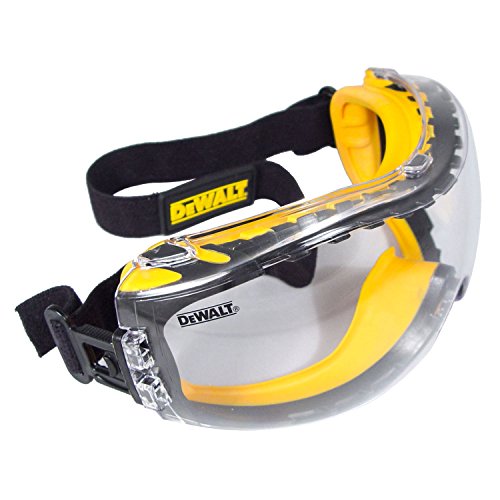 DEWALT's dual-mold frame combines a soft inner seal for comfort and a durable outer shell for impact resistance
This dual-mold goggle pairs a soft, flexible inner seal for comfort with a durable outer shell for impact resistance. Its anti-fog clear lens works over prescription glasses, making it a versatile pick for construction, woodworking, and general hazardous tasks.
DEWALT's dual-mold frame combines a soft inner seal for comfort and a durable outer shell for impact resistance
This dual-mold goggle pairs a soft, flexible inner seal for comfort with a durable outer shell for impact resistance. Its anti-fog clear lens works over prescription glasses, making it a versatile pick for construction, woodworking, and general hazardous tasks.
- Pros: Snug seal blocks dust and debris, anti-fog coating, lightweight (0.1 lbs), fits over prescription glasses
- Cons: Clear lens not tinted for bright outdoor sun, one-size-fits-most design may not fit small faces Check current pricing and availability for the DEWALT DPG82-11 on Amazon.
Best Wide-Vision Over-Glasses Goggles: HPYNPES Safety Glasses
 HPYNPES goggles feature a wide-vision design to maximize peripheral awareness for high-risk tasks
These industrial-approved goggles feature a wide-vision design to maximize peripheral awareness, with anti-fog coating and a fit designed for standard prescription glasses. They are ideal for machining, lab work, and large-scale construction where situational awareness is critical.
HPYNPES goggles feature a wide-vision design to maximize peripheral awareness for high-risk tasks
These industrial-approved goggles feature a wide-vision design to maximize peripheral awareness, with anti-fog coating and a fit designed for standard prescription glasses. They are ideal for machining, lab work, and large-scale construction where situational awareness is critical.
- Pros: Wide-vision lenses for maximum peripheral sight, anti-fog coating, fits over prescription glasses, industrial approved
- Cons: Bulky design, only available in white Check current pricing and availability for the HPYNPES safety glasses on Amazon.
Best Lab-Grade Goggles: Honmein 2-Pack Safety Goggles
 Honmein goggles are designed for chemical splash protection and fit comfortably over most prescription frames
This 2-pack of ANSI Z87.1 certified goggles features an anti-fog coating and a sealed design for chemical splash protection, with a fit that works over most prescription glasses. They are perfect for chemistry labs, painting, and cleaning with harsh chemicals.
Honmein goggles are designed for chemical splash protection and fit comfortably over most prescription frames
This 2-pack of ANSI Z87.1 certified goggles features an anti-fog coating and a sealed design for chemical splash protection, with a fit that works over most prescription glasses. They are perfect for chemistry labs, painting, and cleaning with harsh chemicals.
- Pros: Chemical splash resistant, anti-fog coating, fits over prescription glasses, 2-pack value
- Cons: Bulky for small faces, limited color options (black only) Check current pricing and availability for the Honmein 2-pack goggles on Amazon.
Best Chemical Splash Goggles: Super More Anti-Fog Protective Safety Goggles
 Super More goggles are designed for chemical splash protection with a soft, lightweight frame for all-day comfort
These ANSI Z87.1 certified goggles feature a wide-vision design, adjustable strap, and anti-fog coating, with a sealed frame built to resist chemical splashes. Their soft, lightweight design makes them comfortable for long lab or industrial shifts.
Super More goggles are designed for chemical splash protection with a soft, lightweight frame for all-day comfort
These ANSI Z87.1 certified goggles feature a wide-vision design, adjustable strap, and anti-fog coating, with a sealed frame built to resist chemical splashes. Their soft, lightweight design makes them comfortable for long lab or industrial shifts.
- Pros: Chemical splash resistant, anti-fog coating, adjustable fit, wide-vision design
- Cons: Shows smudges easily, may not fit over large prescription glasses, bulky for minimal use Check current pricing and availability for the Super More goggles on Amazon.
Best Everyday Safety Glasses: TICONN Single-Pack Anti-Fog Safety Glasses
 TICONN's single-pack safety glasses are designed for everyday impact protection with added UV defense for outdoor use
ANSI Z87.1 certified with anti-fog, scratch-proof, and UV-protective clear lenses, these adjustable safety glasses are ideal for general DIY, light construction, and outdoor work where splash and dust risks are low.
TICONN's single-pack safety glasses are designed for everyday impact protection with added UV defense for outdoor use
ANSI Z87.1 certified with anti-fog, scratch-proof, and UV-protective clear lenses, these adjustable safety glasses are ideal for general DIY, light construction, and outdoor work where splash and dust risks are low.
- Pros: Certified for impact resistance, anti-fog and scratch-proof coating, UV protection, adjustable arms
- Cons: Clear lens only, does not fit over large prescription glasses, single pack less cost-effective for teams Check current pricing and availability for the TICONN single-pack safety glasses on Amazon.
Best Bulk Safety Glasses: TICONN 12-Pack Clear Safety Glasses
 Bulk pack of TICONN safety glasses ideal for job sites or shared workspaces
This 12-pack of ANSI Z87.1 certified safety glasses features scratch and impact-resistant clear lenses, making them a cost-effective pick for job sites, teams, or households that need multiple pairs for frequent use.
Bulk pack of TICONN safety glasses ideal for job sites or shared workspaces
This 12-pack of ANSI Z87.1 certified safety glasses features scratch and impact-resistant clear lenses, making them a cost-effective pick for job sites, teams, or households that need multiple pairs for frequent use.
- Pros: Cost-effective bulk pack, scratch and impact resistant, lightweight for all-day wear
- Cons: No tinted lens options, marketed for men so may not fit all face shapes, no prescription fit Check current pricing and availability for the TICONN 12-pack safety glasses on Amazon.
Best Industrial Safety Glasses: PACIFIC PPE 2-Pack Safety Glasses
 PACIFIC PPE safety glasses feature no-slip grips for secure wear during dynamic industrial tasks
These ANSI Z87.1 certified safety glasses feature wraparound scratch-resistant lenses, no-slip grips, and anti-fog coating. They are ideal for dynamic industrial settings, construction, and tasks where secure fit and wide peripheral vision are critical.
PACIFIC PPE safety glasses feature no-slip grips for secure wear during dynamic industrial tasks
These ANSI Z87.1 certified safety glasses feature wraparound scratch-resistant lenses, no-slip grips, and anti-fog coating. They are ideal for dynamic industrial settings, construction, and tasks where secure fit and wide peripheral vision are critical.
- Pros: No-slip grips for secure wear, wraparound lenses for full peripheral protection, scratch-resistant, lightweight (0.24 lbs)
- Cons: Not suitable for heavy chemical splashes, clear lenses for indoor use only Check current pricing and availability for the PACIFIC PPE 2-pack safety glasses on Amazon.
Best Budget Over-Glasses Goggles: UNCO Safety Goggles Over Glasses
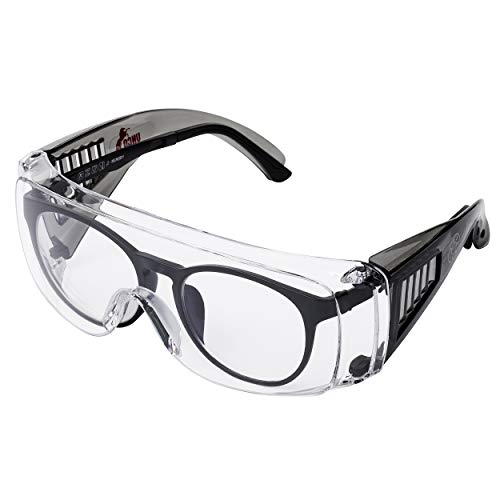 UNCO goggles provide a budget-friendly full-seal option for prescription glasses wearers
These lightweight ANSI Z87.1 certified goggles feature an anti-fog coating and adjustable strap, designed to fit over most prescription glasses. They are a budget-friendly pick for DIYers, students, and occasional users who need full coverage without a high price tag.
UNCO goggles provide a budget-friendly full-seal option for prescription glasses wearers
These lightweight ANSI Z87.1 certified goggles feature an anti-fog coating and adjustable strap, designed to fit over most prescription glasses. They are a budget-friendly pick for DIYers, students, and occasional users who need full coverage without a high price tag.
- Pros: Affordable, anti-fog coating, fits over prescription glasses, lightweight (0.22 lbs)
- Cons: Bulky for small faces, limited color options (black only) Check current pricing and availability for the UNCO over-glasses goggles on Amazon.
Best Value Bulk Goggles: Safety Anti-Fog Goggles 3-Pack
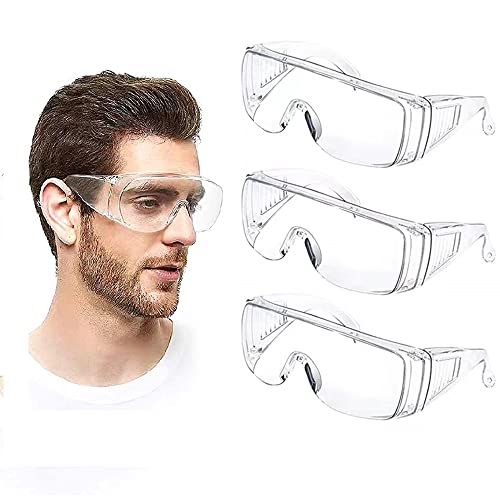 3-pack of wrap-around goggles ideal for shared workspaces like labs or healthcare facilities
This 3-pack of ANSI Z87.1 certified goggles features anti-fog, scratch-resistant wrap-around lenses and a fit designed for over-glasses use. They are perfect for shared workspaces like labs, healthcare facilities, or teams that need multiple pairs of splash-proof eyewear.
3-pack of wrap-around goggles ideal for shared workspaces like labs or healthcare facilities
This 3-pack of ANSI Z87.1 certified goggles features anti-fog, scratch-resistant wrap-around lenses and a fit designed for over-glasses use. They are perfect for shared workspaces like labs, healthcare facilities, or teams that need multiple pairs of splash-proof eyewear.
- Pros: ANSI certified, fits over prescription glasses, 3-pack value, wrap-around protection
- Cons: May not fit all face shapes, clear lenses only, no tinted options for outdoor use Check current pricing and availability for the 3-pack anti-fog goggles on Amazon.
Frequently Asked Questions
What are the main differences between safety goggles and safety glasses?
The core difference is coverage and seal. Safety glasses are open-framed, sitting on the nose and ears, with gaps at the top and sides to allow airflow. They protect against frontal and peripheral low-velocity impacts but allow fine dust, splashes, and fumes to enter. Safety goggles form a full seal around the orbital bone, blocking all airborne hazards, liquids, and fine particulates from entering the eye area. Goggles also often include features like over-prescription fit, indirect venting for chemical use, and wider peripheral coverage.
Are safety goggles better for chemical splash protection?
Yes, absolutely. Safety glasses' open sides make them completely ineffective at blocking chemical splashes, which can cause permanent eye damage, burns, or blindness in seconds. ANSI Z87.1-certified safety goggles with a sealed perimeter and indirect venting (which allows air flow while blocking liquid) are required for any task involving chemicals, from lab experiments to paint spraying to industrial cleaning. Even small, accidental splashes are fully blocked by the goggle seal, making them the only safe choice for these environments.
Can you wear safety goggles over prescription glasses?
Most over-glasses safety goggles are designed with extra internal space to fit the vast majority of standard prescription frames, eliminating the need for expensive custom prescription safety eyewear. Look for goggles with adjustable straps to accommodate different frame sizes, and check the product dimensions to ensure they fit your specific glasses. Note that very oversized or thick prescription frames may not fit comfortably in standard over-glasses goggles, so always check sizing specs before purchasing.
Do safety glasses offer UV protection?
Many high-quality ANSI Z87.1-certified safety glasses include UV-absorbing coatings that block 99%+ of UVA and UVB rays, making them suitable for outdoor work like landscaping, construction, or farming. However, not all safety glasses have UV protection, so always check the product specs if you need sun protection for outdoor tasks. Goggles with clear lenses also often include UV protection, but tinted lenses are better for bright outdoor conditions to reduce glare and eye strain.
How important is anti-fog technology in safety eyewear?
Extremely important. Fogging is the top reason workers remove their PPE mid-task, which drastically increases injury risk. Anti-fog coatings work by reducing surface tension on the lens so condensation spreads into a thin, clear layer instead of forming opaque droplets. For safety glasses, anti-fog is a nice-to-have for low-exertion tasks, but for goggles (which have less airflow by design) and high-exertion or humid environments (like labs, summer construction, or manufacturing), anti-fog coating is a non-negotiable feature to maintain clear vision and safety.
Are safety goggles or glasses better for woodworking?
Safety goggles are the better choice for most woodworking tasks. Woodworking produces fine sawdust, wood chips, and debris that can fly from all directions, including the sides and top, where safety glasses have gaps. Goggles' full seal blocks all of this debris, preventing irritation, splinters, and more serious eye injuries. For tasks like sawing, sanding, or using a wood lathe, opt for indirect-vented goggles to allow airflow while blocking dust. For very light woodworking (like using a hand saw for small projects), safety glasses may suffice if there is no fine dust production.
Final Verdict: Which Offers Better Eye Protection?
There is no universal "better" option between safety goggles and safety glasses — the right choice depends entirely on the hazards of your specific task. If you work with chemicals, fine dust, or high-velocity debris that can fly from all angles, safety goggles offer superior, comprehensive protection with their full orbital seal and splash-resistant design. For low-hazard tasks with only low-velocity frontal or side impacts, such as general warehouse work or light landscaping, safety glasses are a more breathable, comfortable option for all-day wear.
Regardless of which style you choose, always prioritize eyewear with an ANSI Z87.1 certification to ensure it meets rigorous impact and performance standards. For prescription glasses wearers, over-glasses goggles are a cost-effective, convenient alternative to expensive custom prescription safety eyewear. Pair your chosen eye protection with other safe work habits, like keeping your workspace tidy with organized under-sink storage for tools and supplies, to reduce trip and hazard risks.
Your eyes are irreplaceable — investing in the right PPE for your task is a small step that can prevent life-altering injuries. If you handle frequent cleaning tasks as part of your work or DIY routine, check out our guide to sanitizing wooden cutting boards for safe handling practices to avoid cross-contamination and splash risks.

Hi, I’m Daniel Brooks—a food lover and kitchen gear enthusiast. I enjoy testing cookware, utensils, and gadgets to see what really works in everyday cooking. At PlugChef.com, I share honest reviews, comparisons, and simple guides to help you choose the best tools for a safer, smarter, and more enjoyable kitchen.
Related posts:
 French Food Posters Vintage: Timeless Culinary Art for Kitchen Decor
 Appliance Lock Child Safety: Secure Your Home with Easy-to-Use Locks
 Buck Knife 112 Sheath: Top Durable Holsters for Your Pocket Knife
 Western Knife With Leather Sheath: Durable, Stylish, and Perfect for Outdoor Adventures
 Child Safety Locks for Cabinets: Easy, Secure Baby Proofing Solutions
 Safety Latches for Cabinets: Secure Your Home with Easy No-Drill Locks