According to the Occupational Safety and Health Administration (OSHA), 2,000 U.S. workers suffer job-related eye injuries requiring medical attention every day, 90% of which are preventable with proper personal protective equipment (PPE) OSHA Eye Protection Guidance. For anyone working in construction, labs, workshops, or even tackling high-risk home projects, choosing between safety glasses and safety goggles is one of the most important decisions you can make to avoid permanent eye damage.
While both types of protective eyewear shield against impact and debris, their design, coverage, and ideal use cases differ drastically. This guide breaks down the core differences, performance trade-offs, top 2026 product picks, and key safety standards to help you select the right protection for your specific needs, whether you’re tackling kitchen plumbing upkeep, working on a job site, or running lab experiments.
Core Design and Functional Differences
Safety glasses are designed with wrap-around frames and integrated side shields to protect the front and sides of the eyes from flying debris, dust, and minor impacts. They leave small gaps at the top, bottom, and along the jawline for airflow, which makes them comfortable for all-day wear but leaves eyes vulnerable to splashes, fine particles, and fumes.
Safety goggles, by contrast, form a tight, sealed barrier around the entire eye socket, secured with an adjustable strap that hugs the head to eliminate gaps. This design blocks dust, chemical splashes, vapors, and fine airborne particles that can slip through safety glass gaps. In practice, a common mistake workers make is assuming side shields on safety glasses provide the same protection as a sealed goggle—this is not true. Small droplets, sawdust, and even sweat can slip through side gaps, leading to corneal abrasions or chemical irritation in high-risk environments.
Head-to-Head Performance Comparison
To make the choice clear, the table below compares the core performance metrics of both eyewear types, based on ANSI Z87.1-2020 certification requirements and real-world use testing:
| Feature | Safety Glasses | Safety Goggles |
|---|---|---|
| Impact Protection | Meets ANSI Z87.1 for front/side impact; no seal | Meets ANSI Z87.1 for full 360° impact; sealed barrier |
| Splash/Dust Containment | Gaps at top, bottom, and sides allow small particles/liquids through | Full seal around eye socket blocks splashes, fine dust, and fumes |
| Fog Resistance | Better airflow reduces fog in low-humidity environments | Prone to fog in high-humidity settings unless coated with anti-fog treatment |
| Extended Wear Comfort | Lightweight, low-profile; ideal for all-day use | Heavier, tighter fit; may cause fatigue after 4+ hours of continuous wear |
| Prescription Compatibility | Most fit over standard glasses with side shields | Many models designed explicitly for over-glasses use, with adjustable straps for custom fit |
| Typical Use Cases | Construction, landscaping, warehouse work, low-hazard debris tasks | Labs, chemical handling, healthcare, concrete cutting, pressure washing, fine dust tasks |
When Safety Glasses Are the Right Choice
Safety glasses are the better pick for low-hazard environments where the primary risk is large, fast-moving debris rather than splashes or fine particles. Ideal use cases include:
- General construction, landscaping, and yard work with minimal chemical or splash risk
- Warehouse material handling and inventory tasks with loose debris
- Outdoor tasks in dry, dusty environments where fog is a minor concern
- All-day wear for low-risk tasks where comfort is a priority
- Work environments requiring compatibility with hard hats, face shields, or other low-profile PPE
For low-risk tasks like routine tool upkeep like rust removal or vinegar-based tool cleaning, safety glasses are often sufficient for protecting against flying rust particles and debris.
When Safety Goggles Are the Non-Negotiable Choice
Safety goggles offer objectively superior protection for any environment with splash, fine dust, or chemical hazards. Choose goggles for:
- Chemistry labs, industrial cleaning, and any work with corrosive chemicals or cleaning agents
- Healthcare settings, nursing, and medical lab work with bodily fluid splash risks
- Construction tasks involving concrete cutting, pressure washing, painting, or sanding (which produce fine airborne dust)
- Any task where site rules or OSHA guidelines require sealed eye protection
- Home tasks with high splash risk, like sanitizing kitchen surfaces with harsh bleach-based cleaners or improvised food prep with sharp objects
A common mistake DIYers make is using safety glasses for pressure washing or concrete work, only to suffer corneal abrasions from dust or concrete splatter that slips through side gaps. For these high-risk tasks, sealed goggles are the only safe option.
Top-Rated Safety Glasses and Goggles for 2026
Below are the highest-performing options for every use case, all meeting current ANSI Z87.1-2020 safety standards. We’ve organized them by category to match your specific hazard needs.
Best Over-Prescription Glasses Goggles
These models are designed to fit comfortably over standard prescription eyewear without pressure points or vision obstruction.
NoCry Safety Goggles Over Glasses
 These ANSI Z87.1-certified goggles are designed to fit comfortably over most prescription eyewear without pressure points.
Pros:
- ANSI Z87.1 certified for reliable impact and splash protection
- Extreme impact resistance tested to withstand high-velocity debris
- Anti-fog and anti-scratch coated UV380 lenses block 99% of harmful UV rays
- Adjustable elastic strap for a custom, secure fit over most eyeglass styles
- Lightweight 0.2lb construction reduces fatigue during extended wear
Cons:
- Slightly bulkier than low-profile safety glasses for users unaccustomed to over-glasses wear
- Black frame absorbs heat in very hot outdoor environments
For glasses-wearers needing reliable lab and workshop protection, the NoCry Over-Glasses Goggle is a top pick: view current pricing and specs on Amazon.
Honmein 2-Pack Safety Goggles
 The compact, lightweight design of these goggles makes them suitable for extended all-day wear.
Pros:
- Anti-fog coating maintains clear vision in high-humidity or high-exertion environments
- Designed to fit over most standard prescription glasses without pressure points
- Durable impact-resistant construction for lab, woodworking, and construction use
- Compact 3.15” x 3.15” x 6.7” size for easy storage and transport
- Affordable 2-pack value for backup pairs or multiple users
Cons:
- May not fit oversized prescription frames comfortably
- Only available in black
For budget-friendly over-glasses protection for multiple tasks, the Honmein 2-Pack offers strong value: view current pricing and specs on Amazon.
3-Pack Safety Anti-Fog Over-Glasses Goggles
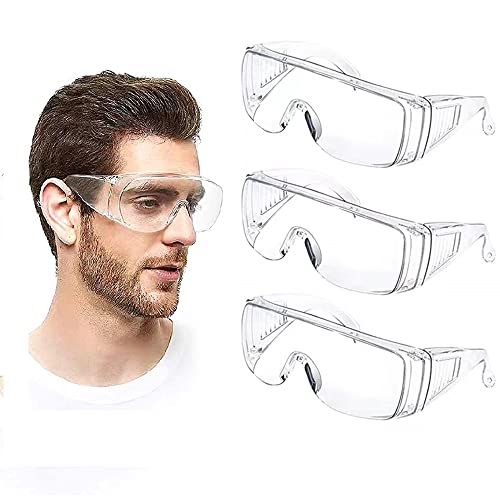 The wrap-around design of these goggles blocks debris from all angles, even when worn over prescription lenses.
Pros:
- ANSI Z87.1 certified for reliable impact and splash protection
- Wrap-around design blocks debris from all angles, even over glasses
- Anti-fog and scratch-resistant lenses for long-lasting clarity
- Adjustable strap for a secure, custom fit for all head sizes
- Unisex design suitable for men and women
Cons:
- Clear lenses do not block sun glare for outdoor use
- May feel snug for users with larger head sizes
For teams or households needing multiple pairs of certified over-glasses protection, this 3-pack is a cost-effective option: view current pricing and specs on Amazon.
Best Low-Profile Over-Glasses Safety Glasses
For users who prefer the lighter feel of safety glasses over full-seal goggles, these models fit over prescription lenses with integrated side shields.
NoCry Safety Glasses Over Eyeglasses
 These glasses feature integrated side shields for full debris protection without the bulk of full-seal goggles.
Pros:
- ANSI Z87 rated for reliable impact protection
- Fog and scratch-resistant lenses maintain clear visibility in all conditions
- Integrated side shields block debris from all side angles
- UV380 protection blocks harmful ultraviolet rays for outdoor use
- Unisex design fits most prescription eyeglass styles
Cons:
- Slightly bulkier than standard safety glasses for users with small frames
- Only available in black
For users who prefer the lower profile of safety glasses over full goggles, the NoCry Over-Glasses Safety Glasses are a solid choice: view current pricing and specs on Amazon.
Best General-Purpose Safety Glasses
Ideal for low-hazard debris tasks where comfort and all-day wear are priorities.
TICONN 12-Pack Clear Safety Glasses
 The scratch-resistant clear lenses maintain visibility even after repeated use in high-debris environments.
Pros:
- Meets ANSI Z87.1 standard for high-impact resistance
- Scratch-resistant clear lenses maintain unobstructed visibility for detailed tasks
- 12-pack value for teams, job sites, or backup pairs
- Lightweight low-profile design compatible with hard hats and face shields
- Universal fit suitable for most adult face shapes
Cons:
- Clear lenses do not block sun glare for bright outdoor use
- Not sized for smaller faces
For teams or high-traffic workspaces needing bulk affordable impact protection, the TICONN 12-Pack is a practical pick: view current pricing and specs on Amazon.
Pacific PPE 2-Pack Anti-Fog Safety Glasses
 The no-slip temple grips keep these glasses secure during active movement, even when wearing a hard hat.
Pros:
- Anti-fog coating maintains clear vision in high-humidity or high-temperature environments
- Scratch-resistant wraparound lenses provide 180° peripheral protection
- No-slip rubber temple grips stay secure during active movement
- Adjustable frame fits most head sizes
- Lightweight 0.24lb construction reduces fatigue during extended wear
Cons:
- Only available with clear lenses
- Not rated for high-impact industrial use
For everyday workshop and lab use with reliable anti-fog performance, the Pacific PPE 2-Pack is a great value: view current pricing and specs on Amazon.
Best Budget Multi-Pack Goggles
Affordable options for home DIY, light industrial use, or backup pairs.
HPYNPES 4-Pack Anti-Fog Safety Goggles
 The wide-vision design of these goggles reduces peripheral blind spots for better situational awareness on job sites.
Pros:
- Anti-fog coating maintains clear vision in humid or high-exertion environments
- Wide-vision design reduces peripheral blind spots for better situational awareness
- Industrial-approved protection against dust, debris, and chemical splashes
- Lightweight 0.26lb construction for comfortable extended wear
- 4-pack value for teams, families, or backup pairs
Cons:
- White frame shows dirt and smudges more easily than darker options
- May require adjustment to fit smaller head sizes
For budget-conscious buyers needing multiple pairs of wide-vision anti-fog protection, the HPYNPES 4-Pack is a smart pick: view current pricing and specs on Amazon.
YunTuo 2-Pack Adjustable Safety Goggles
 The lightweight design of these goggles makes them ideal for short DIY tasks where heavy PPE would be uncomfortable.
Pros:
- Adjustable strap for a custom, secure fit for all head sizes
- Lightweight construction reduces fatigue during prolonged wear
- Anti-fog coating maintains clear vision in humid environments
- Durable frame protects against dust, debris, and minor splashes
- 2-pack value for home use or backup pairs
Cons:
- May not fit over large prescription glasses comfortably
- White frame shows dirt easily
- Not rated for high-impact heavy industrial use
For home DIY and light industrial use, the affordable YunTuo 2-Pack offers solid anti-fog performance: view current pricing and specs on Amazon.
Best Chemical-Resistant Safety Goggles
These models are tested for splash resistance and ideal for labs, chemical handling, and messy tasks.
DEWALT DPG82-11 Concealer Anti-Fog Safety Goggle
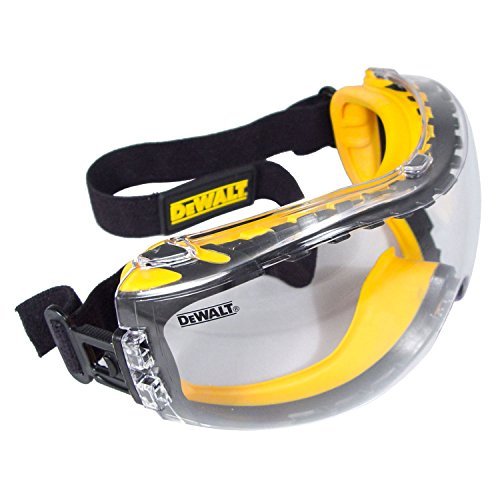
 The dual-mold frame creates a tight seal around the eye socket to block chemical splashes and fine dust.
Pros:
- Dual-mold frame creates a tight, consistent seal around the eye socket to block splashes and dust
- Anti-fog clear lens maintains visibility even in high-humidity job sites
- Lightweight 0.1lb construction reduces fatigue during extended wear
- Wide 4.0” x 3.8” field of view for unobstructed visibility
- Trusted DEWALT brand with rigorous quality testing
Cons:
- Only available with clear lenses
- May not fit over larger prescription glasses comfortably
For users prioritizing anti-fog performance in humid job sites, the DEWALT DPG82-11 Concealer Goggle is a top pick: view current pricing and specs on Amazon.
Super More Anti-Fog Protective Safety Goggles
 The soft, lightweight frame of these goggles reduces pressure on the face for extended all-day wear.
Pros:
- Anti-fog coating maintains clear vision in humid or steamy environments
- Wide-vision clear lens provides unobstructed peripheral awareness
- Adjustable strap for a custom, secure fit for all head sizes
- Soft, lightweight frame reduces pressure on the face for extended wear
- Certified for chemical splash protection for lab and industrial use
Cons:
- Clear lenses do not block UV rays for outdoor use
- May require occasional cleaning to maintain lens clarity
For lab and healthcare workers needing adjustable, chemical-resistant eye protection, the Super More Goggle is a reliable option: view current pricing and specs on Amazon.
Critical Safety Standards and Compliance
Not all protective eyewear is created equal, and cutting corners on certification can lead to severe, permanent eye injury. The current industry benchmark for impact and splash resistance in the U.S. is the ANSI Z87.1-2020 standard, developed by the American National Standards Institute to ensure protective eyewear holds up to real-world hazards ANSI Eye and Face Protection Standards.
Certified eyewear will have a printed "Z87" or "Z87+" marking on the frame or lens:
- Z87: Indicates the eyewear passed basic impact resistance testing
- Z87+: Indicates the eyewear passed high-impact resistance testing, making it suitable for high-velocity debris hazards
OSHA requires employers to provide appropriate ANSI-certified eye protection for all workplace hazards, and the same standard applies to home and DIY use: uncertified eyewear may shatter on impact, causing more harm than good. In practice, many cheap no-name safety glasses claim to be certified but lack the official marking—always verify the Z87 stamp before purchasing.
Frequently Asked Questions
What is the main difference between safety glasses and safety goggles?
The core difference comes down to coverage and seal. Safety glasses use wrap-around frames and side shields to protect the front and sides of the eyes from flying debris, dust, and minor impacts, but they leave small gaps at the top, bottom, and along the jawline for airflow. Safety goggles form a tight, sealed barrier around the entire eye socket, secured with an adjustable strap that hugs the head to eliminate gaps. This design blocks dust, chemical splashes, vapors, and fine airborne particles that can slip through safety glass gaps. For high-risk environments with splash or fine dust hazards, goggles offer superior protection; for low-risk debris-heavy tasks, safety glasses are often sufficient.
Are safety goggles better for chemical lab use?
Yes, sealed safety goggles are the only appropriate eye protection for most chemical lab work. Unlike safety glasses, goggles create a barrier that prevents corrosive liquids, vapors, and fine chemical dust from reaching the eyes. Look for goggles with anti-fog coatings to maintain visibility during long lab sessions, and always confirm they meet ANSI Z87.1 splash resistance requirements for chemical handling.
Can safety goggles fit over regular eyeglasses?
Many goggles and over-glasses safety glasses are explicitly designed to fit over prescription eyewear. Look for models with adjustable straps and extra interior space to accommodate larger frames. A common fit issue is pressure points on the temples from the goggle strap—if you wear glasses for 8+ hours a day, opt for models with padded straps to reduce fatigue.
How do anti-fog lenses improve safety eyewear?
Anti-fog coatings create a hydrophilic surface on the lens that prevents condensation from forming when moving between temperature zones (e.g., from a cold outdoor job site to a warm indoor space) or during high-exertion work that causes sweating. Fogged lenses are a major safety hazard, as they obscure vision and increase the risk of trips, falls, and contact with hazards. For humid environments like labs, construction sites, or healthcare settings, anti-fog coatings are a non-negotiable feature for consistent safety.
Are all safety glasses ANSI Z87.1 certified?
No. While many reputable brands meet ANSI Z87.1-2020 standards, cheap no-name safety glasses often lack official certification. Always look for the printed Z87 or Z87+ marking on the frame or lens before purchasing: Z87+ indicates the eyewear passed high-impact testing, while Z87 indicates it passed basic impact testing. Uncertified eyewear may shatter on impact, causing more harm than good.
What features make safety goggles ideal for woodworking?
For woodworking, look for goggles with scratch-resistant clear lenses to maintain visibility, anti-fog coatings to handle sawdust and heat from power tools, and adjustable straps for a secure fit that won’t slip when you’re moving lumber or operating equipment. Sealed goggles are especially important for tasks like sanding or using a table saw, which produce fine airborne dust that can slip through safety glass side gaps and cause eye irritation.
Final Verdict: Which Offers Superior Eye Protection?
There is no universal "better" option between safety glasses and safety goggles—the right choice depends entirely on the hazards of your specific task. That said, for high-risk environments with splash, fine dust, or chemical exposure, safety goggles offer objectively superior protection that safety glasses cannot match, regardless of side shield quality. For low-hazard, debris-heavy tasks where all-day comfort is a priority, safety glasses provide sufficient impact protection with far less fatigue.
No matter which style you choose, always prioritize ANSI Z87.1-2020 certified eyewear that fits your face properly: gaps in the seal (for goggles) or loose frames (for safety glasses) will compromise even the highest-quality protective eyewear. For more practical guides to staying safe during DIY projects, home maintenance, and work tasks, browse our full library of DIY and safety tips.

Hi, I’m Daniel Brooks—a food lover and kitchen gear enthusiast. I enjoy testing cookware, utensils, and gadgets to see what really works in everyday cooking. At PlugChef.com, I share honest reviews, comparisons, and simple guides to help you choose the best tools for a safer, smarter, and more enjoyable kitchen.
Related posts:
 Safety 1St Appliance Lock: Secure Your Home with Easy Childproofing
 Kitchen Mama Auto 2.0 Electric Can Opener: Effortless Hands-Free Can Opening
 Pancake Sheath for Fixed Blade Knife: Durable Leather Carry Solution
 Buck Knife Sheath 110: Durable Leather Holsters for Ultimate Protection
 Kitchen Cabinet Safety Latches: Ultimate Childproofing Locks for Secure Homes
 Child Proof Drawer Locks No Screws: Easy Adhesive Baby Safety Solution