Per the USDA’s 2024 food waste report, restaurants lose an average of 4–10% of their annual food inventory to improper storage— a preventable cost that cuts directly into profit margins for independent operations USDA food loss and waste guidance. Beyond waste, poorly chosen storage solutions slow prep times, increase cross-contamination risks, and lead to failed health inspections. The right large food storage containers for restaurants solve all these pain points: they cut spoilage, streamline walk-in organization, and keep ingredients accessible for busy kitchen staff. This guide breaks down the must-have features, top 2026 commercial options, and workflow hacks to get the most out of your storage investment.
Why Large Food Storage Containers Are a Non-Negotiable Investment for Commercial Kitchens
In 2026, commercial kitchens face tighter labor margins, stricter health codes, and rising ingredient costs than ever before. The FDA’s 2022 Food Code, still the national standard for food safety, requires all food contact materials to be non-porous, easy to sanitize, and free of harmful chemicals like BPA—requirements many off-the-shelf storage containers fail to meet. Beyond compliance, the right large containers eliminate the 15–20 minutes per shift staff spend searching for ingredients in unorganized walk-ins, reduce spoilage of high-cost items like flour, produce, and prepped proteins, and cut down on cross-contamination risks for top allergens. A common mistake new restaurant owners make is buying mismatched container sizes, which leads to wasted shelving space and inefficient stacking. In practice, sticking to a uniform size system (e.g., 4qt, 8qt, 12.5gal) simplifies inventory and reduces the number of different lid types you need to keep on hand.
Key Features to Prioritize When Shopping for Restaurant-Grade Large Storage Containers
Not all food storage containers are built for commercial use. Prioritize these evidence-based features to ensure your investment delivers long-term value:
Material Durability & Food Safety
Commercial containers are most often made from three materials: polycarbonate, polyethylene, and acrylic. Polycarbonate is the most impact-resistant, rated for temperatures from -40°F to 210°F, making it safe for both cold walk-in storage and hot holding applications. Polyethylene is more affordable and resistant to staining, but it is less clear, so you cannot identify contents without opening the lid. Acrylic is scratch-resistant and crystal clear, ideal for front-of-house buffet storage, but it is not heat-safe and can crack if dropped from height. All commercial containers must be BPA-free, a non-negotiable standard for food safety in 2026.
Airtight Seal Performance for Freshness
Not all "airtight" claims are equal. Look for containers with silicone gasket seals that create a true vacuum-like barrier, rather than just tight-fitting lids. Proper airtight seals reduce exposure to oxygen and moisture, extending the shelf life of dry goods like flour and sugar by 6–12 months, per USDA storage guidelines. For produce storage, look for containers with vented lids that allow for ethylene gas release to prevent premature spoilage.
Space-Saving & Workflow-Friendly Design
Uniform sizing is critical for maximizing vertical space in walk-ins and on shelving. Look for containers rated to stack 3–5 high without warping, and choose options with built-in handles for easy transport between storage and prep stations. Color-coded lids are a small feature that drastically reduces cross-contamination risk, letting staff separate allergens, produce, and proteins at a glance.
Regulatory Compliance & Certification
Always prioritize containers certified to NSF/ANSI 2-2022 standards, the nationally recognized benchmark for food contact materials in commercial kitchens, required for health inspection compliance in all 50 states NSF food safety certification. Avoid uncertified containers, as they may leach harmful chemicals into food or harbor bacteria in porous surfaces.
Top 10 Large Food Storage Containers for Restaurants (2026)
Below are the highest-rated commercial options, selected for durability, freshness performance, and restaurant-specific use cases:
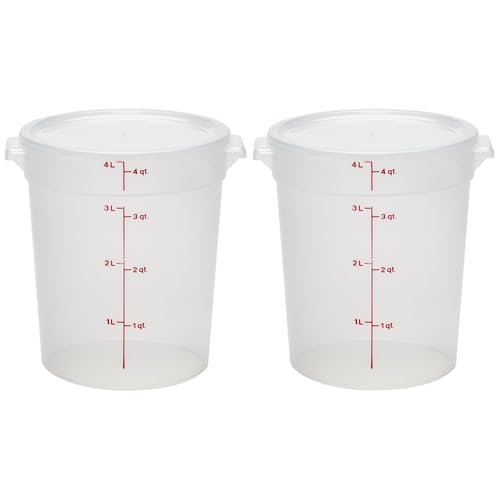
1. Cambro 4-Quart BPA-Free Stackable Food Storage Containers (2-Pack)
 4-quart Cambro containers are the industry standard for mise en place storage of prepped vegetables, proteins, and portioned ingredients.
The 4-quart Cambro container is a staple in professional kitchens for small-batch ingredient storage. Its BPA-free polycarbonate construction is impact-resistant, and the translucent walls let staff identify contents at a glance without opening the lid. It is NSF certified, stackable, and compatible with Cambro’s color-coded lid system for allergen separation.
Pros: BPA-free, NSF certified, stackable, compatible with color-coded lids
Cons: Translucent material scratches over time, reducing content visibility; 4-quart capacity is too small for bulk dry goods
Shop the 2-pack Cambro 4-quart containers with color-coded lids here.
4-quart Cambro containers are the industry standard for mise en place storage of prepped vegetables, proteins, and portioned ingredients.
The 4-quart Cambro container is a staple in professional kitchens for small-batch ingredient storage. Its BPA-free polycarbonate construction is impact-resistant, and the translucent walls let staff identify contents at a glance without opening the lid. It is NSF certified, stackable, and compatible with Cambro’s color-coded lid system for allergen separation.
Pros: BPA-free, NSF certified, stackable, compatible with color-coded lids
Cons: Translucent material scratches over time, reducing content visibility; 4-quart capacity is too small for bulk dry goods
Shop the 2-pack Cambro 4-quart containers with color-coded lids here.
2. Rubbermaid Commercial 3.5-Gallon Polycarbonate Food Storage Tote
 3.5-gallon Rubbermaid polycarbonate totes are rated for temperatures from -40°F to 210°F, safe for both cold walk-in storage and hot holding applications.
This mid-capacity tote is ideal for storing prepped soups, sauces, or bulk dry goods. Its polycarbonate construction is stain and odor resistant, so it will not absorb the smell of strong ingredients like garlic or curry over time. The clear walls and 6-inch height fit standard under-counter shelving, and it is NSF certified for commercial use.
Pros: Impact and stain resistant, wide temperature rating, NSF certified, fits standard shelving
Cons: 3.5-gallon capacity is awkward for both small and bulk items; 2-pound empty weight is heavier than polyethylene equivalents
Shop the Rubbermaid 3.5-gallon polycarbonate tote here.
3.5-gallon Rubbermaid polycarbonate totes are rated for temperatures from -40°F to 210°F, safe for both cold walk-in storage and hot holding applications.
This mid-capacity tote is ideal for storing prepped soups, sauces, or bulk dry goods. Its polycarbonate construction is stain and odor resistant, so it will not absorb the smell of strong ingredients like garlic or curry over time. The clear walls and 6-inch height fit standard under-counter shelving, and it is NSF certified for commercial use.
Pros: Impact and stain resistant, wide temperature rating, NSF certified, fits standard shelving
Cons: 3.5-gallon capacity is awkward for both small and bulk items; 2-pound empty weight is heavier than polyethylene equivalents
Shop the Rubbermaid 3.5-gallon polycarbonate tote here.
3. SVKLHY 8-Pack 4-Quart NSF-Certified Clear Food Storage Containers
![4QT NSF Food Storage Containers: 8 PCS [Food Grade][Hot&Cold Resistant] Commercial Clear Food Storage Containers with Lids for Restaurant Kitchen Proof Dough, Measuring Spoons Included(BPA FREE)](https://m.media-amazon.com/images/I/51cdAy5qI2L._SL500_.jpg) This 8-pack of NSF-certified 4-quart containers includes portioning spoons, ideal for batch cooking and dough proofing stations.
This value 8-pack is perfect for high-volume prep stations that need multiple identical containers for batch cooking, dough proofing, or portioned ingredient storage. Each container is rated for -20°F to 200°F, BPA-free, and comes with airtight lids and included measuring spoons for consistent portioning.
Pros: NSF certified, hot and cold resistant, includes portioning tools, value 8-pack
Cons: Red tint may clash with kitchen color schemes; lids are not interchangeable with other 4-quart container brands
Shop the 8-pack SVKLHY 4-quart NSF-certified containers here.
This 8-pack of NSF-certified 4-quart containers includes portioning spoons, ideal for batch cooking and dough proofing stations.
This value 8-pack is perfect for high-volume prep stations that need multiple identical containers for batch cooking, dough proofing, or portioned ingredient storage. Each container is rated for -20°F to 200°F, BPA-free, and comes with airtight lids and included measuring spoons for consistent portioning.
Pros: NSF certified, hot and cold resistant, includes portioning tools, value 8-pack
Cons: Red tint may clash with kitchen color schemes; lids are not interchangeable with other 4-quart container brands
Shop the 8-pack SVKLHY 4-quart NSF-certified containers here.
4. Carlisle StorPlus 12.5-Gallon Stackable Polyethylene Food Storage Container
 12.5-gallon Carlisle StorPlus containers are designed to stack up to 5 high, maximizing vertical space in dry storage and walk-in coolers.
This large-capacity container is built for bulk dry goods storage (flour, rice, sugar, pasta) or staging large batches of prepped ingredients in walk-in coolers. Its polyethylene construction is crack-resistant and easy to sanitize, and it is rated to stack 5 high without warping, maximizing vertical storage space.
Pros: 12.5-gallon bulk capacity, stackable up to 5 high, crack-resistant, NSF certified
Cons: White material stains easily with heavily colored ingredients; large footprint requires dedicated storage space
Shop the Carlisle 12.5-gallon StorPlus container here.
12.5-gallon Carlisle StorPlus containers are designed to stack up to 5 high, maximizing vertical space in dry storage and walk-in coolers.
This large-capacity container is built for bulk dry goods storage (flour, rice, sugar, pasta) or staging large batches of prepped ingredients in walk-in coolers. Its polyethylene construction is crack-resistant and easy to sanitize, and it is rated to stack 5 high without warping, maximizing vertical storage space.
Pros: 12.5-gallon bulk capacity, stackable up to 5 high, crack-resistant, NSF certified
Cons: White material stains easily with heavily colored ingredients; large footprint requires dedicated storage space
Shop the Carlisle 12.5-gallon StorPlus container here.
5. Winco Commercial Polypropylene Food Storage Tote
 Winco commercial totes feature a smooth, non-porous interior that resists staining and is easy to sanitize between uses.
This general-purpose tote is a reliable choice for restaurants that need a durable, no-fuss option for storing dry goods, produce, or transporting prepped items between the kitchen and service areas. Its polypropylene construction is impact-resistant, and the smooth interior is easy to scrub sanitized between uses.
Pros: Durable construction, smooth non-porous interior, stackable, NSF certified
Cons: Limited color options (only white); no built-in measurement markings
Shop the Winco commercial food storage tote here.
Winco commercial totes feature a smooth, non-porous interior that resists staining and is easy to sanitize between uses.
This general-purpose tote is a reliable choice for restaurants that need a durable, no-fuss option for storing dry goods, produce, or transporting prepped items between the kitchen and service areas. Its polypropylene construction is impact-resistant, and the smooth interior is easy to scrub sanitized between uses.
Pros: Durable construction, smooth non-porous interior, stackable, NSF certified
Cons: Limited color options (only white); no built-in measurement markings
Shop the Winco commercial food storage tote here.
6. Pekky 13-Liter Commercial Food Service Bus Tubs with Lids (3-Pack)
 13-liter bus tubs are commonly used for staging prepped ingredients near prep stations or transporting soiled dishes to the dish pit.
Bus tubs are a versatile tool for high-volume kitchens, used for staging prepped ingredients near prep stations, transporting soiled dishes to the dish pit, or holding non-food supplies like cleaning tools. This 3-pack comes with secure lids to prevent spills during transport, and the stackable design saves space when not in use.
Pros: Durable construction, included lids, stackable, compatible with standard bus tub carts
Cons: Black interior makes it hard to spot residue during cleaning; full tubs are heavy to lift for short staff
Shop the 3-pack Pekky 13-liter bus tubs here.
13-liter bus tubs are commonly used for staging prepped ingredients near prep stations or transporting soiled dishes to the dish pit.
Bus tubs are a versatile tool for high-volume kitchens, used for staging prepped ingredients near prep stations, transporting soiled dishes to the dish pit, or holding non-food supplies like cleaning tools. This 3-pack comes with secure lids to prevent spills during transport, and the stackable design saves space when not in use.
Pros: Durable construction, included lids, stackable, compatible with standard bus tub carts
Cons: Black interior makes it hard to spot residue during cleaning; full tubs are heavy to lift for short staff
Shop the 3-pack Pekky 13-liter bus tubs here.
7. Yungyan 6-Pack 4-Quart Acrylic Airtight Food Storage Containers
 Acrylic airtight containers are ideal for front-of-house buffet storage, where visible, attractive ingredient displays are required.
These crystal-clear acrylic containers are perfect for front-of-house buffets, coffee stations, or pantry storage where aesthetic matters as much as function. The silicone gasket lids create an airtight seal to keep dry goods fresh, and the scratch-resistant acrylic will not cloud over time like polycarbonate.
Pros: Airtight gasket seal, scratch-resistant acrylic, stackable, attractive design for front-of-house use
Cons: Not microwave or dishwasher safe; acrylic can crack if dropped from height
Shop the 6-pack Yungyan 4-quart acrylic containers here.
Acrylic airtight containers are ideal for front-of-house buffet storage, where visible, attractive ingredient displays are required.
These crystal-clear acrylic containers are perfect for front-of-house buffets, coffee stations, or pantry storage where aesthetic matters as much as function. The silicone gasket lids create an airtight seal to keep dry goods fresh, and the scratch-resistant acrylic will not cloud over time like polycarbonate.
Pros: Airtight gasket seal, scratch-resistant acrylic, stackable, attractive design for front-of-house use
Cons: Not microwave or dishwasher safe; acrylic can crack if dropped from height
Shop the 6-pack Yungyan 4-quart acrylic containers here.
8. VEVOR 5.2-Gallon Wheeled Ingredient Storage Bins (3-Pack)
 Wheeled ingredient bins eliminate the need to lift heavy 50-pound bags of flour or grain, reducing staff injury risk.
These wheeled bins are a game-changer for bakeries, pizzerias, or any restaurant that handles large volumes of dry goods. The 5.2-gallon capacity fits standard 50-pound bags of flour or grain, the sliding lid allows for quick access without full removal, and the included scoop eliminates the need for separate measuring tools. The caster wheels lock in place to prevent accidental movement.
Pros: 5.2-gallon bulk capacity, included scoop, sliding lid for easy access, lockable caster wheels
Cons: Only available in white; bins are not stackable when loaded
Shop the 3-pack VEVOR wheeled ingredient bins here.
Wheeled ingredient bins eliminate the need to lift heavy 50-pound bags of flour or grain, reducing staff injury risk.
These wheeled bins are a game-changer for bakeries, pizzerias, or any restaurant that handles large volumes of dry goods. The 5.2-gallon capacity fits standard 50-pound bags of flour or grain, the sliding lid allows for quick access without full removal, and the included scoop eliminates the need for separate measuring tools. The caster wheels lock in place to prevent accidental movement.
Pros: 5.2-gallon bulk capacity, included scoop, sliding lid for easy access, lockable caster wheels
Cons: Only available in white; bins are not stackable when loaded
Shop the 3-pack VEVOR wheeled ingredient bins here.
9. Lallisa 6-Piece 2/4/6-Quart Polycarbonate Food Storage Set
 The 3-size, 3-color Lallisa set makes it easy to categorize ingredients by type (dry goods, produce, proteins) at a glance.
This mixed-size set is ideal for restaurants that need versatile storage for small batches of ingredients, leftovers, and prep items. The set includes 2-quart, 4-quart, and 6-quart containers in three colors, making it easy to categorize ingredients by type or allergen status at a glance. All containers are BPA-free and NSF certified.
Pros: 3 size options for versatile use, color-coded exteriors, BPA-free, NSF certified
Cons: Lids are not fully airtight; colored exteriors can fade with repeated dishwasher use
Shop the Lallisa 6-piece food storage set here.
The 3-size, 3-color Lallisa set makes it easy to categorize ingredients by type (dry goods, produce, proteins) at a glance.
This mixed-size set is ideal for restaurants that need versatile storage for small batches of ingredients, leftovers, and prep items. The set includes 2-quart, 4-quart, and 6-quart containers in three colors, making it easy to categorize ingredients by type or allergen status at a glance. All containers are BPA-free and NSF certified.
Pros: 3 size options for versatile use, color-coded exteriors, BPA-free, NSF certified
Cons: Lids are not fully airtight; colored exteriors can fade with repeated dishwasher use
Shop the Lallisa 6-piece food storage set here.
10. Lallisa 8-Pack 8-Quart Clear Polycarbonate Food Storage Containers with Handles
 8-quart containers with built-in handles are perfect for transporting large batches of prepped items between the walk-in and prep line.
These large 8-quart containers are built for high-volume operations that need to store large batches of prepped ingredients, dough, or produce. The built-in handles make them easy to lift and transport, even when full, and the stackable design maximizes vertical storage space. The clear walls let staff identify contents without opening the lid.
Pros: 8-quart large capacity, built-in handles for easy transport, stackable, clear design for quick ID
Cons: Large footprint requires wide shelving; handles can crack if overloaded above 20 pounds
Shop the 8-pack Lallisa 8-quart containers here.
8-quart containers with built-in handles are perfect for transporting large batches of prepped items between the walk-in and prep line.
These large 8-quart containers are built for high-volume operations that need to store large batches of prepped ingredients, dough, or produce. The built-in handles make them easy to lift and transport, even when full, and the stackable design maximizes vertical storage space. The clear walls let staff identify contents without opening the lid.
Pros: 8-quart large capacity, built-in handles for easy transport, stackable, clear design for quick ID
Cons: Large footprint requires wide shelving; handles can crack if overloaded above 20 pounds
Shop the 8-pack Lallisa 8-quart containers here.
Optimizing Large Food Storage Containers for Restaurant Workflow & Freshness
Buying high-quality containers is only half the battle. Follow these industry-backed best practices to maximize their value and extend their lifespan:
Walk-In Cooler & Dry Storage Organization Best Practices
- Group containers by ingredient type (produce, proteins, dry goods) to reduce search time during busy service.
- Label all containers with waterproof use-by dates and ingredient names to avoid spoilage from forgotten items.
- Store heaviest containers at waist level to reduce staff injury risk from lifting, per OSHA workplace safety guidelines.
- Leave 6 inches of space between containers and walls for proper air circulation, per FDA Food Code recommendations.
Allergen & Cross-Contamination Prevention
- Dedicate specific container sets to the 9 major allergens (milk, eggs, fish, shellfish, tree nuts, peanuts, wheat, soy, sesame) per FDA guidance.
- Use color-coded lids to separate allergen and non-allergen ingredients, and store allergen containers on lower shelves to prevent drips onto other items.
- Sanitize all containers thoroughly between uses, especially after handling allergens, using a stiff-bristled kitchen brush to scrub gaskets and corners where bacteria can hide.
Extending Container Lifespan in High-Volume Kitchens
- Avoid abrasive scrubbers that scratch polycarbonate and acrylic surfaces; use a heavy-duty scrub brush for regular cleaning to maintain clarity and seal integrity.
- Inspect lid gaskets monthly for cracks or warping, replacing them as needed to maintain airtight seals.
- Do not expose containers to temperatures outside their rated range (most commercial polycarbonate is rated for -40°F to 210°F) to prevent warping or chemical leaching.
- For family-run restaurants or operations that employ underage staff, install no-drill childproof locks on walk-in storage doors and supply cabinets to restrict unsupervised access to food storage areas.
- Most commercial-grade containers are top-rack dishwasher safe, but for stubborn stains on polycarbonate surfaces, a non-abrasive cleaning brush will restore clarity without scratching.
Frequently Asked Questions
How often should restaurants replace commercial food storage containers?
Most high-quality polycarbonate and polyethylene containers last 3–5 years with proper care. Replace containers immediately if they show deep scratches, cracked lids, warped gaskets, or persistent staining that can harbor bacteria, per NSF food safety guidelines.
Are large commercial food storage containers dishwasher safe?
Yes, most NSF-certified commercial containers are top-rack dishwasher safe. Avoid high-heat sanitizing cycles for acrylic containers, as extreme heat can cause warping or cracking.
Do airtight containers really extend ingredient shelf life?
Yes, properly sealed airtight containers reduce exposure to oxygen and moisture, which are the primary causes of spoilage for dry goods, flour, sugar, and prepped produce. For example, flour stored in an airtight container stays fresh 6–12 months longer than flour stored in a paper bag, per USDA storage guidelines.
What is the difference between NSF 2 and NSF 3 certified food containers?
NSF 2 certification covers food contact materials and storage containers, ensuring they meet safety and sanitation standards for commercial use. NSF 3 certification is for food preparation equipment, not storage containers, so always look for NSF 2 certification for storage use.
Can large food storage containers be used for hot food storage?
Yes, most commercial polycarbonate and polyethylene containers are rated for temperatures up to 210°F, making them safe for hot holding, soup storage, and transporting hot ingredients. Avoid using acrylic containers for hot food, as they can warp or release harmful chemicals at high temperatures.
Are stackable containers safe for commercial use?
Yes, commercial stackable containers are rated for a specific weight limit and stack height (usually 3–5 containers high). Always follow the manufacturer's stack limit to prevent containers from tipping or cracking under weight.
Conclusion
The right large food storage containers for restaurants are more than just storage bins: they are a tool to cut food waste, speed up prep, pass health inspections, and reduce staff frustration. Prioritize NSF-certified, BPA-free containers with airtight seals and uniform sizing to maximize space and freshness in your kitchen. Pair them with clear organization systems and regular maintenance to extend their lifespan and get the highest return on your investment. For long-term operational efficiency, pair your storage containers with routine kitchen maintenance practices to keep your entire kitchen running smoothly.
Invest in restaurant-grade large food storage containers tailored to your kitchen’s specific workflow today to cut waste, speed up prep, and streamline your operations for years to come.

Hi, I’m Daniel Brooks—a food lover and kitchen gear enthusiast. I enjoy testing cookware, utensils, and gadgets to see what really works in everyday cooking. At PlugChef.com, I share honest reviews, comparisons, and simple guides to help you choose the best tools for a safer, smarter, and more enjoyable kitchen.
Related posts:
 Kitchen LED Lights Under Cabinet: Illuminate Your Space with Style
 Best Kitchen Knife Set Under 100: Top Affordable Picks for Every Chef
 Led Lights for Kitchen under Cabinet: Illuminate Your Space with Style
 Best Kitchen Drawer Organizers: Transform Clutter into Functional Elegance
 Kitchen Aid Ice Maker Cleaner: Remove Mineral Buildup for Pure Ice
 Kitchen Stove Top Cleaner: Top Kits for Sparkling, Streak-Free Cooktops