
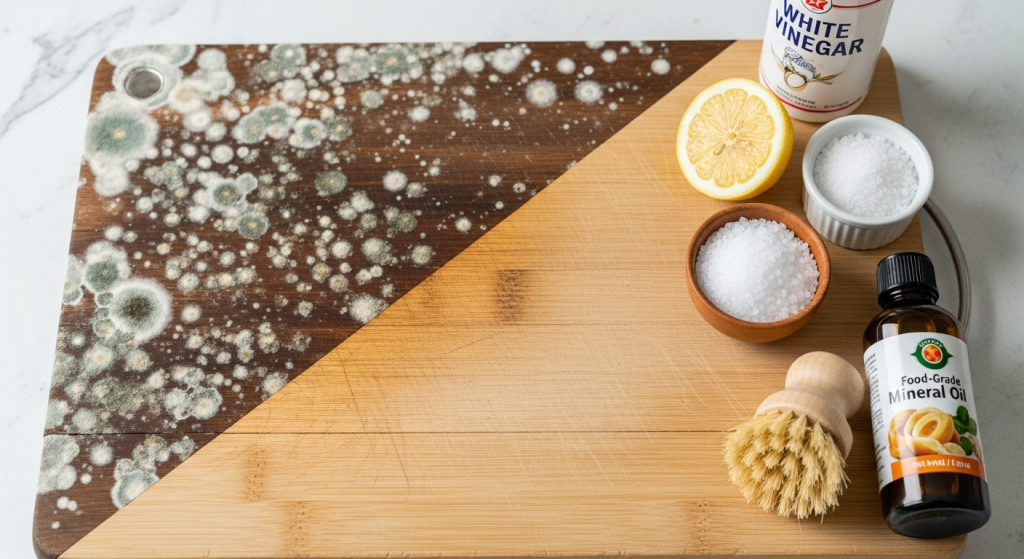
You pull out your favorite hardwood cutting board to prep dinner, and spot fuzzy green or black spots dotting the surface. Mold on wood cutting boards is an extremely common kitchen woe, thanks to wood’s porous, organic makeup that absorbs moisture and food particles easily. If left unaddressed, surface mold can penetrate deep into the wood, ruin your board, and even contaminate your food. This 2026-updated guide covers safe, effective removal methods, proven prevention tips, and clear signs it’s time to replace your board, all using affordable household supplies.
Why Mold Grows on Wood Cutting Boards
Mold spores are constantly present in the air, and they only need three conditions to grow: warmth, moisture, and an organic food source. Wood cutting boards check all three boxes: they stay damp after washing, sit at stable room temperature, and trap tiny bits of food residue in their natural pores. End-grain boards are especially prone to mold, as their open, porous surface absorbs far more moisture than edge-grain or composite boards. Dark, enclosed storage spaces like under-sink cabinets or closed pantry shelves accelerate growth by trapping humidity around the board. For more on this, see our guide on best pod coffee maker for easy cleaning.
 Fuzzy black mold growth on a porous wood cutting board, which requires prompt removal to avoid food contamination
Is Mold on a Cutting Board Dangerous?
Not all household mold is toxic, but it is impossible to distinguish between harmless and harmful species (like mycotoxin-producing Stachybotrys or Aspergillus) with the naked eye. As official food safety guidance on moldy food contact surfaces from the USDA notes, even small amounts of mold on a surface that touches ready-to-eat food can transfer harmful spores to your meals, causing allergic reactions, respiratory issues (especially for people with asthma or compromised immune systems), or gastrointestinal upset. Because wood is porous, mold that grows deeper than the surface layer cannot be fully removed, making severely affected boards a food safety risk.
What You’ll Need to Remove Mold Safely
All supplies for this process are non-toxic and safe for food contact surfaces when used as directed:
- Undiluted 5% white vinegar (avoid flavored vinegars like apple cider, which contain sugars that feed mold)
- Baking soda
- Coarse sea salt
- 3% hydrogen peroxide (standard pharmacy grade)
- Soft-bristle brush (an old clean toothbrush works for small spots; avoid steel wool, which scratches wood)
- Lint-free cleaning cloths
- Food-grade mineral oil (do not use cooking oils like olive oil, which go rancid over time)
- Rubber gloves and a mask (optional, for people with mold allergies)
Bleach is not recommended for wood cutting boards, as it degrades the wood’s natural fibers, creates more porous space for future mold growth, and can leave toxic chemical residues that transfer to food, per University of Minnesota Extension research on cutting board care. For more on this, see our guide on best eco friendly cutting boards.
Step-by-Step Guide to Remove Mold from Wood Cutting Boards
Follow these steps in order for the best results, and avoid common mistakes that can worsen mold growth or damage your board:
- Dry the board first: Pat the board completely dry with a lint-free cloth, then let it air dry for 15 minutes. Cleaning a damp board will spread mold spores deeper into the wood’s pores.
- Brush off loose mold: Take the board outside or over a sink lined with paper towels, and gently brush off all visible mold with a soft-bristle brush, working in the direction of the wood grain to avoid scratching. Wear a mask if you have allergies to avoid inhaling spores.
- Apply white vinegar: Pour or spray undiluted white vinegar directly onto mold spots, and let it sit for 10–15 minutes. The acetic acid in vinegar penetrates the wood surface to kill mold at the root, and also neutralizes musty odors.
- Scrub with baking soda and salt paste: Mix 2 parts baking soda and 1 part coarse sea salt, adding just enough warm water to make a thick paste (runny paste will seep into wood pores and cause swelling). Scrub the paste into the board in circular motions along the grain, focusing on stained areas. The salt acts as a gentle abrasive to lift mold and stains, while baking soda inhibits future mold growth.
- Rinse and dry thoroughly: Wipe the board with a damp cloth to remove all paste residue, then pat it completely dry with a clean towel. Do not submerge the board in water, as this will warp the wood. Stand the board upright on a drying rack to air dry for 2–3 hours, allowing air circulation on all sides.
- Treat stubborn mold with hydrogen peroxide (optional): If mold spots remain after the vinegar and baking soda scrub, pour 3% hydrogen peroxide directly onto the spot, let it sit for 10 minutes, then wipe clean. Hydrogen peroxide breaks down into water and oxygen, leaving no toxic residues when rinsed. Test on a small, inconspicuous area first if your board is stained or has a finish, as it can lighten dark wood.
- Reseal with mineral oil: Once the board is 100% dry, apply a thin, even layer of food-grade mineral oil, rubbing it into the wood with a clean cloth. Let it soak in for 4–6 hours (overnight is ideal), then wipe off any excess oil. This reseals the wood’s pores to prevent future moisture and mold absorption. For long-term care, learning correct board oiling methods will extend your board’s lifespan by years.
Example of a well-maintained, mold-free wood cutting board after proper cleaning and oiling
How to Prevent Mold From Coming Back
Preventing mold is far easier than removing it, and these small habits will keep your board in great shape for years:
- Clean immediately after each use: Wash with warm, soapy water and a soft sponge right after use, scrubbing away all food particles. Never let meat juice, produce residue, or other organic matter sit on the board, as it feeds mold.
- Dry thoroughly and immediately: Pat dry with a lint-free cloth right after washing, then stand the board upright to air dry completely before storing. Never store a damp board.
- Store in a dry, well-ventilated space: Avoid closed, damp cabinets, under-sink areas, or spaces near the dishwasher where humidity is high. If you do store your board in a cabinet, use moisture-controlling under-sink cabinet organizers to keep the area dry. For countertop storage, a smart appliance countertop caddy keeps the board elevated away from sink splashes. If you store your board in a lower cabinet, installing under-cabinet LED lighting will help you spot early, faint mold growth before it spreads.
- Reseal the board monthly: Apply a thin layer of food-grade mineral oil every 4 weeks (every 6–8 weeks for occasional use) to keep the wood sealed. You’ll know it’s time to oil when the wood looks dull, dry, or when water no longer beads on the surface.
- Avoid cross-contamination: Use separate boards for raw meat, produce, and cooked foods to minimize organic residue that can feed mold.
- Deep clean weekly: Even with no visible mold, wipe the board down with undiluted white vinegar once a week to kill hidden spores and prevent buildup. Storing your board care supplies (vinegar, oil, brush) in a dedicated kitchen drawer set makes this routine easy to stick to.
What to Do If Mold Keeps Recurring
If mold returns within a few weeks of a thorough cleaning, it has likely penetrated deep into the wood’s pores, where household cleaners cannot reach. At this point, cleaning will only mask the problem, not fix it: deep mold will continue to grow and contaminate food even if it is not visible on the surface. Stop cleaning and replace the board immediately to avoid food safety risks. You can also sanitize the area where you stored the old board with a vinegar solution to kill any lingering spores that could spread to a new board.
When to Replace Your Wood Cutting Board
Even with perfect care, wood cutting boards have a finite lifespan. Replace your board immediately if you notice any of these signs:
- Mold that penetrates deeper than 1/8 inch into the wood, or that returns after multiple thorough cleanings
- Deep cracks, splits, or gouges that trap food particles and moisture, making thorough cleaning impossible
- Warped or uneven surfaces that harbor bacteria and mold
- Significant wear after 5+ years of regular use, where the wood’s natural seal is fully broken
If you’re replacing an old board, affordable budget kitchen cabinet upgrades can give you extra sealed, dry storage space for your new board and other kitchen tools. For more on this, see our guide on best hair cutting shears for home use.
Quick Reference: Mold Removal Timeline & Common Mistakes
| Step | Action | Time Required | Common Mistake to Avoid |
|---|---|---|---|
| 1 | Pat board dry with a lint-free cloth, then air dry for 15 minutes | 15–20 minutes | Cleaning a damp board, which spreads mold spores deeper into wood |
| 2 | Brush off loose mold with a soft-bristle brush, working in the direction of the grain | 5 minutes | Using steel wool or abrasive scrubbers, which scratch wood and create more pores for future mold |
| 3 | Apply undiluted white vinegar directly to mold spots, let sit | 10–15 minutes | Using flavored vinegars (apple cider, balsamic) which contain sugars that feed mold |
| 4 | Scrub with baking soda and coarse salt paste | 10 minutes | Using a runny paste, which seeps into wood pores and causes swelling |
| 5 | Wipe with a damp cloth, pat dry, then air dry upright for 2–3 hours | 2.5–3 hours total | Submerging the board in water, which warps wood and pushes moisture into pores |
| 6 | Apply 3% hydrogen peroxide to remaining spots, let sit, then rinse (optional) | 10 minutes | Skipping a spot test on stained or finished boards, which can lighten wood |
| 7 | Apply a thin layer of food-grade mineral oil, let soak, wipe excess | 4–6 hours (overnight ideal) | Using cooking oils (olive, vegetable) which go rancid and attract mold over time |
Frequently Asked Questions
How long does it take to remove mold from a wood cutting board?
For minor surface mold, the full cleaning process takes roughly 4–5 hours total, including drying and oiling time. Severe mold that requires repeated hydrogen peroxide treatments may take 24 hours or more. If mold persists after two full cleaning cycles, the board likely needs to be replaced for food safety.
Can I put my wood cutting board in the dishwasher to remove mold?
No. Dishwashers use high heat and excessive water, which will warp, crack, and severely damage wood cutting boards, making them even more prone to future mold growth. Always hand wash wood boards with warm, soapy water. For more on this, see our guide on wood storage cabinets for kitchen.
Is mold on a cutting board always toxic?
Not all mold is toxic, but it’s impossible to tell the difference between harmless and harmful mold species with the naked eye. As official food safety guidance on moldy food contact surfaces states, any mold on a surface that touches food poses a contamination risk, so it should be removed immediately or the board replaced if the mold is deep.
How do I sterilize my wood cutting board for raw meat?
For full sanitization beyond mold removal, use a diluted bleach solution (1 tablespoon unscented bleach per gallon of water), wipe the board, and let it air dry completely. For a non-toxic alternative, spray with undiluted white vinegar and let sit for 10 minutes before rinsing. For detailed steps, check out our guide to sterilizing wood cutting boards for high-risk food prep.
How often should I replace my wood cutting board?
With regular care and monthly oiling, a high-quality hardwood cutting board can last 5–10 years. Replace it sooner if you notice deep cracks, persistent mold, or warping that makes cleaning difficult.
Final Thoughts
Mold on wood cutting boards is a common but easily manageable issue if you act quickly on surface growth. The best long-term strategy is prevention: dry your board immediately after use, reseal it monthly, and store it in a dry, ventilated space away from sink splashes. If mold penetrates deep into the wood, replacement is the only safe option to avoid food contamination. A well-cared-for wood cutting board is a durable, sustainable kitchen tool that will last for years with simple, consistent maintenance. For non-toxic ways to keep other small kitchen appliances mold-free, see our guide to plant-based coffee maker cleaners. If you’re prepping a charcuterie board with your clean surface, our guide to cutting goat cheese for boards will help you get perfect slices every time.

Hi, I’m Daniel Brooks—a food lover and kitchen gear enthusiast. I enjoy testing cookware, utensils, and gadgets to see what really works in everyday cooking. At PlugChef.com, I share honest reviews, comparisons, and simple guides to help you choose the best tools for a safer, smarter, and more enjoyable kitchen.
Related posts:
 Pull Down Under Cabinet Spice Rack: Maximize Your Space
 How to Organize T Shirts on a Shelf: Expert Tips
 Navy Bean And Ham Recipes: Delicious Comfort Food Ideas
 Cherry Pistachio Chocolate Ice Cream: Irresistible Summer Delight
 How to Freeze Bacon Strips: Easy Tips for Freshness & Flavor
Iced Coffee With French Press: Ultimate Guide for Bold Refreshment
How to Freeze Bacon Strips: Easy Tips for Freshness & Flavor
Iced Coffee With French Press: Ultimate Guide for Bold Refreshment

