
Traditional fluffy pancakes are a weekend breakfast staple, but they’re often loaded with refined sugar and low in protein, leaving you hit with a mid-morning energy crash and no fuel for muscle growth. If you’re tired of choosing between a tasty breakfast and a meal that supports your fitness goals, high protein cottage cheese pancakes are the perfect solution. Packed with slow-digesting casein, essential micronutrients, and zero weird aftertaste when prepared correctly, this recipe delivers 28g of protein per serving for muscle repair, sustained energy, and long-lasting fullness—no fancy equipment or hard-to-find ingredients required.
Why Cottage Cheese Is The Secret To High-Protein, Muscle-Supporting Pancakes
Cottage cheese is the star ingredient of this recipe for good reason: it outperforms milk, yogurt, and protein powder as a pancake add-in for both nutrition and texture, with none of the chalky aftertaste common in commercial protein pancake mixes.
The Casein Advantage For Sustained Muscle Recovery
Cottage cheese’s primary protein is casein, a slow-digesting complete protein that releases amino acids gradually over 6–8 hours, rather than spiking blood sugar like fast-digesting whey protein. The International Society of Sports Nutrition confirms this sustained amino acid release makes casein ideal for overnight muscle recovery or post-workout refueling when immediate protein intake isn’t possible ISSN. Unlike sugary pancakes that cause a sharp energy spike followed by a crash, cottage cheese pancakes provide steady, long-lasting fuel to power you through busy mornings or long training sessions.
A common myth about cottage cheese pancakes is that they have a lumpy, curdled texture, but blending the cottage cheese fully before combining it with other ingredients eliminates that issue entirely. In practice, 30 seconds of blending with an immersion blender creates a smooth, creamy batter that tastes identical to traditional pancake batter.
Additional Nutrients That Support Fitness Goals
Per USDA FoodData Central, 1/2 cup of low-fat cottage cheese contains 14g of high-quality complete protein, including 2.3g of leucine—the threshold most research identifies as necessary to trigger muscle protein synthesis for muscle growth and repair USDA. Beyond protein, cottage cheese is rich in calcium for healthy muscle contraction, B12 for energy metabolism, and phosphorus for bone health—all critical nutrients for people following regular strength training routines. It’s also naturally low in carbohydrates, making it compatible with low-carb, keto, and weight management diets without sacrificing flavor or texture.
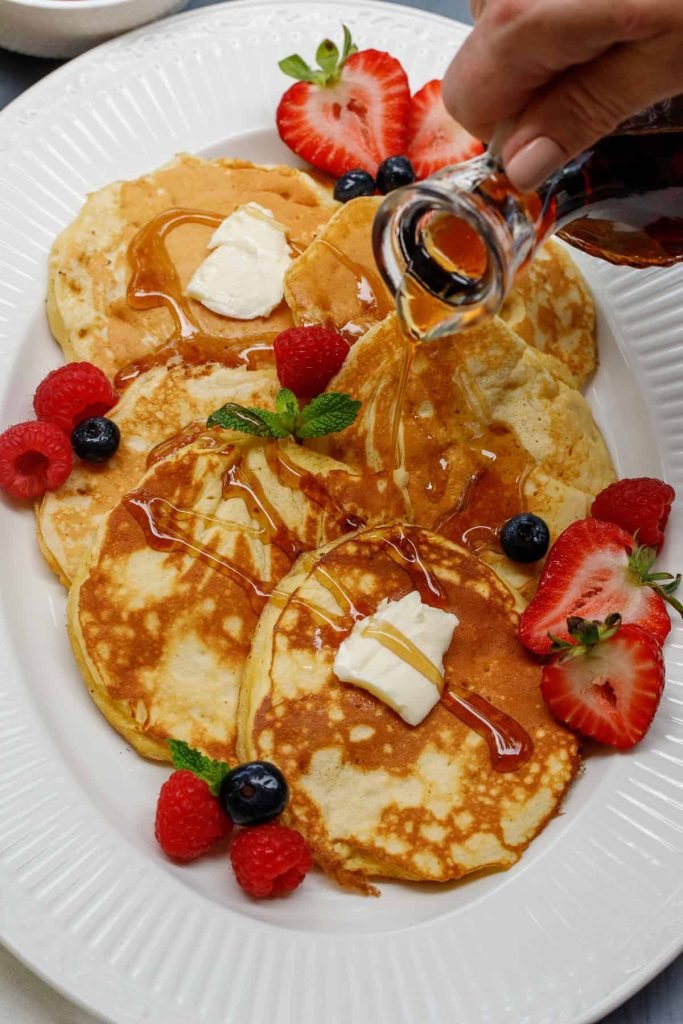
 Credit: pandapantry.co
These pancakes deliver 28g of protein per serving with no detectable cottage cheese aftertaste when blended fully.
Credit: pandapantry.co
These pancakes deliver 28g of protein per serving with no detectable cottage cheese aftertaste when blended fully.
Ultimate Muscle-Building Cottage Cheese Pancake Recipe
This recipe is designed to be flexible, with exact measurements for consistent results every time, plus swap options for every dietary need. It yields 4 servings of 2 pancakes each, with minimal prep and cleanup.
Ingredient Checklist (With Functional Breakdown)
| Ingredient | Amount (4 servings) | Functional Purpose |
|---|---|---|
| Low-fat or full-fat cottage cheese | 1.5 cups | Primary protein source, adds creaminess and moisture |
| Large eggs | 2 | Binds ingredients, adds structure and fluffiness |
| Rolled oats (blended into fine flour) | 1 cup | Provides complex carbs and fiber, gives pancakes a hearty, filling texture |
| Baking powder | 1 tsp | Leavening agent for light, fluffy pancakes |
| Vanilla extract | 1 tsp | Enhances sweetness, masks any subtle cottage cheese flavor |
| Ground cinnamon | 1/2 tsp | Adds warm, comforting flavor, no added sugar needed |
| Fine sea salt | Pinch | Balances sweetness, enhances overall flavor profile |
| Optional: Unflavored whey or plant-based protein powder | 1 scoop | Boosts protein content by 10–15g per serving for bulking or post-workout meals |
Step-By-Step Instructions For Lump-Free, Fluffy Pancakes
- Prep the oat flour: Add rolled oats to a food processor and blend for 10–15 seconds until they reach a fine, flour-like consistency. Avoid over-blending, as this can create a gummy texture in the final pancakes.
- Mix wet ingredients: Add cottage cheese, eggs, vanilla extract, cinnamon, and salt to a large bowl. Use an immersion blender for 30 seconds until the mixture is completely smooth, with no visible lumps of cottage cheese.
- Combine batter: Add the blended oat flour and baking powder to the wet mixture, stirring gently until just combined. Overmixing activates excess starch in the oats, leading to dense, chewy pancakes, so stop stirring as soon as no dry flour remains.
- Cook the pancakes: Heat a non-stick griddle or cast-iron skillet to 375°F (medium heat; if you don’t have a thermometer, flick a few drops of water on the surface—they should sizzle and evaporate immediately). Lightly grease with coconut oil or non-stick cooking spray. Pour 1/4 cup of batter per pancake, leaving 2 inches of space between each to avoid spreading. Cook for 2–3 minutes, until bubbles form on the surface and the edges look set. Flip gently and cook for 1–2 more minutes, until the underside is golden brown. A common mistake is pressing down on pancakes with a spatula while cooking—this releases air pockets and leads to dense, flat pancakes, so resist the urge to press.
A clean, well-maintained cooking surface ensures even browning, so give your griddle a quick scrub with a sturdy kitchen brush before heating to avoid burnt spots.
Exact Nutritional Breakdown For Fitness Tracking
Understanding the exact nutrient profile of these pancakes makes it easy to fit them into your macro goals, whether you’re bulking, cutting, or maintaining.
Macronutrient Profile Per Serving
Per serving (2 pancakes, 1/4 cup batter each), these pancakes contain:
- 280 calories
- 28g of complete protein
- 22g of net carbohydrates
- 6g of fat
This balance provides enough complex carbs to fuel your workout or workday, plus enough protein to keep you full for 3–4 hours without triggering insulin spikes.
Comparison To Traditional Pancake Options
| Pancake Type | Protein Per Serving | Calories Per Serving | Key Benefit |
|---|---|---|---|
| Classic buttermilk pancakes (2 medium) | 6–8g | 220 | Traditional flavor, low effort |
| High protein cottage cheese pancakes | 28g | 280 | Sustained energy, muscle support, no blood sugar spike |
| Commercial protein powder pancakes | 20–25g | 310 | Higher protein, but often chalky texture and artificial sweeteners |
Unlike many plant-based pancake options, the combination of cottage cheese and eggs provides all 9 essential amino acids your body cannot produce on its own, making the protein in this recipe far more bioavailable for muscle repair.
Customization Options For Every Diet And Taste Preference
The base recipe is designed to be adaptable, so you can tweak it to match your dietary needs and flavor preferences without sacrificing protein content.
Low-Carb And Keto Adjustments
For a low-carb, keto-friendly version, swap the 1 cup of blended rolled oats for 3/4 cup almond flour and 1/4 cup coconut flour, and reduce the baking powder to 1/2 tsp. This cuts the net carbs per serving to 8g while keeping the pancakes fluffy. For extra fat to meet keto macro goals, add 2 tablespoons of melted coconut oil to the batter.
Vegan And Lactose-Free Swaps
For lactose intolerance, use lactose-free cottage cheese or 1 cup of blended silken tofu mixed with 1/4 cup nutritional yeast for a similar creamy texture and protein boost. Replace regular eggs with 2 flax eggs (1 tablespoon ground flaxseed + 3 tablespoons water per egg, mixed and left to thicken for 5 minutes) and use plant-based protein powder if desired.
Savory And Sweet Flavor Boosters
For sweet pancakes, add 1/2 cup of fresh blueberries or mashed banana to the batter, and top with sugar-free maple syrup, Greek yogurt, or nut butter. For a savory, high-protein option, skip the cinnamon and vanilla, and top pancakes with avocado, a fried egg, and hot sauce—perfect for meal prep. If you’re building a full breakfast spread, check out our guide to prepping round cheese for boards for an extra protein-rich side.
Meal Prep And Storage Tips To Simplify Your Week
Batch cooking these pancakes can cut your weekday breakfast prep time to under 2 minutes per morning, and proper storage ensures they retain their fluffy texture for days.
Batch Cooking Best Practices
Cook a full batch of 16 pancakes (4 servings) on Sunday to cover your breakfast needs for the work or school week. Let pancakes cool completely on a wire rack before storing to avoid steam making them soggy. If you’re prepping ingredients ahead of time, blend the oat flour and mix the wet ingredients separately, storing them in airtight containers in the fridge for up to 3 days before cooking.
Freezing And Reheating For Optimal Texture
Store prepped pancakes in an airtight container in the fridge for up to 4 days, or freeze for 3 months—if you have young kids in the home, secure your freezer and fridge with child-safe cabinet locks to avoid accidental messes. To freeze, layer pancakes between small squares of parchment paper in a zip-top bag, and add a slice of plain white bread to the top of the bag to absorb excess moisture and prevent freezer burn. To reheat, pop frozen pancakes in a toaster on medium for 1–2 minutes for crisp edges, or warm refrigerated pancakes in the oven at 350°F for 3 minutes. Avoid microwaving for longer than 20 seconds, as high heat will make the cottage cheese rubbery.
Frequently Asked Questions
Do cottage cheese pancakes actually taste like cottage cheese?
When blended fully and paired with warm spices like cinnamon and vanilla, the cottage cheese flavor is completely undetectable. The end result has the same light, fluffy texture as traditional buttermilk pancakes, with a subtle creamy note that pairs perfectly with sweet or savory toppings.
Can I use fat-free cottage cheese for this recipe?
Yes, but low-fat or full-fat cottage cheese yields a much creamier, moister pancake. Fat-free varieties can make the pancakes dry and crumbly, so if you choose fat-free, add 1 tablespoon of unsweetened almond milk to the batter to adjust the consistency.
Are these pancakes good for post-workout meals?
Absolutely. With 28g of complete protein and 3.2g of leucine per serving, these pancakes hit the threshold needed to trigger muscle protein synthesis, making them ideal for consumption within 1–2 hours of strength training. Pair with a serving of fruit for fast-acting carbs to replenish glycogen stores.
Can I make these pancakes without oats for a low-carb diet?
Yes. Substitute the 1 cup of blended rolled oats with 3/4 cup almond flour and 1/4 cup coconut flour, and reduce the baking powder to 1/2 tsp. This swaps the complex carbs for low-carb, high-fiber alternatives while keeping the pancakes fluffy.
Are these pancakes safe for people with lactose intolerance?
Most people with mild lactose intolerance can tolerate the small amount of lactose in 1.5 cups of cottage cheese per batch, especially when paired with other ingredients. For severe intolerance, swap cottage cheese for lactose-free cottage cheese or 1 cup of blended silken tofu mixed with 1/4 cup nutritional yeast for a similar creamy texture and protein boost.
Final Thoughts: Make This Recipe A Staple In Your Muscle-Building Meal Plan
High protein cottage cheese pancakes are more than just a trendy health food—they’re a simple, delicious, and evidence-backed way to support your muscle-building goals, avoid energy crashes, and cut down on meal prep time. With endless customization options and a nutrient profile that outperforms traditional pancakes, they deserve a spot in your regular breakfast rotation. Whip up a batch this weekend and taste the difference for yourself. For more high-protein, easy meal prep recipes and fitness nutrition tips, explore our full blog library to keep your nutrition on track without sacrificing flavor.
For a fun, personalized serving touch, learn the basics of engraving kitchen woodware to make a custom serving board for your pancakes. When prepping ingredients, make sure your blender is fully clean with a thoroughly cleaned blender to avoid old residue altering the flavor of your batter.
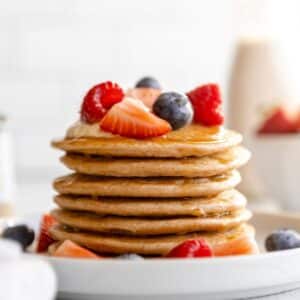 Credit: skinnyfitalicious.com
Blending the cottage cheese for 30 seconds until completely smooth is the key to avoiding lumps in the final pancakes.
Credit: skinnyfitalicious.com
Blending the cottage cheese for 30 seconds until completely smooth is the key to avoiding lumps in the final pancakes.
 Credit: callascleaneats.com
Customize your toppings to match your dietary needs, from sweet fruit and nut butter to savory avocado and fried egg.
Credit: callascleaneats.com
Customize your toppings to match your dietary needs, from sweet fruit and nut butter to savory avocado and fried egg.
Troubleshooting Common Preparation And Cooking Errors
Even experienced home cooks run into small issues when adjusting to a new pancake recipe. These evidence-based fixes address the most frequent problems reported by readers making cottage cheese pancakes, so you can get consistent, fluffy results every time:
Dense, Heavy Pancakes
This is almost always caused by overmixing the batter, which overdevelops gluten in the oats and eggs, or using expired baking powder that has lost its leavening power. To fix it: mix the batter only until no dry flour remains, even if small lumps are visible—these will cook out fully during cooking. Test your baking powder by dropping 1/2 teaspoon into hot water; if it does not fizz vigorously, replace it before cooking to ensure proper rise.
Visible Cottage Cheese Curds In Finished Pancakes
If your batter has lumpy cottage cheese curds after mixing, you did not blend the wet ingredients long enough. Return the cottage cheese, eggs, and flavorings to a blender or use an immersion blender for an extra 10–15 seconds until completely smooth. Using full-fat cottage cheese (instead of fat-free) also reduces curdling, as the higher fat content creates a smoother, more cohesive batter.
Burnt Exteriors With Raw, Undercooked Centers
This signals your cooking surface is too hot. Reduce heat to low-medium and let your griddle or skillet preheat for an extra 2 minutes before pouring batter. If you prefer thicker pancakes (using 1/3 cup batter per serving instead of 1/4 cup), extend cooking time to 3–4 minutes per side to ensure the center cooks through evenly.
Pancakes Sticking To The Pan
Ensure your non-stick cookware is properly preheated and lightly greased with a small amount of neutral oil or butter before each batch. If using a cast-iron skillet, confirm it is fully seasoned—a well-seasoned surface requires minimal grease and prevents sticking almost entirely, while also promoting even browning.
If you’re prepping ingredients for a week of pancakes, keep your workspace tidy with a dedicated kitchen cleaning brush to wipe up batter splatters quickly between cooking batches.
Final Call To Action
High protein cottage cheese pancakes are a low-effort, high-reward addition to any muscle-building or healthy eating routine, with no chalky aftertaste, no expensive ingredients, and endless customization options to keep breakfast exciting. Batch cook a batch this weekend to cut down on weekday morning prep, and experiment with sweet and savory toppings to find your perfect combination. For more evidence-based nutrition tips, easy meal prep recipes, and kitchen hacks to simplify your cooking routine, browse our full blog library for fresh ideas every week.

I’m Abby Lu, a passionate home cook who loves simplifying everyday meals. At PlugChef.com, I share product reviews and cooking guides to help you find the best tools for your kitchen.
Related posts:
 How to Make a Fruit Basket for a Gift: Easy DIY Guide
 Do You Need a Basket? Essential Guide for Air Fryers
 What Blenders Do Tropical Smoothie Use: Expert Insights
Stainless Steel Vs White Kitchen Appliances: Ultimate Showdown
What Blenders Do Tropical Smoothie Use: Expert Insights
Stainless Steel Vs White Kitchen Appliances: Ultimate Showdown
 Kitchen Appliances for Wedding Registry: Must-Have Essentials
 Top 10 Best Non-Toxic Cooking Utensils – Safe & Durable Choices for Healthy Homes

