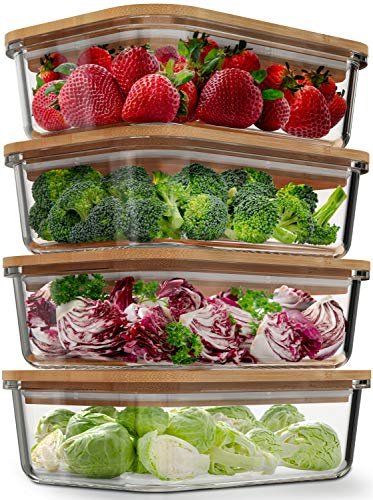
Every week, you open your fridge to wilted spinach, stale leftovers, and a pile of crumpled single-use plastic bags and disposable containers bound for the trash. For most households, food storage is a hidden source of both plastic waste and unnecessary food waste: the average U.S. household throws away an estimated 30-40% of the food it buys annually, much of it due to poor storage that speeds spoilage. Eco-friendly food storage containers solve both problems at once: they cut reliance on single-use plastics, keep food fresher for longer, and often save you money over time despite a higher upfront cost.
Unlike generic plastic containers, sustainable options are made from non-toxic, renewable, or fully recyclable materials that don’t leach harmful chemicals into your food, even when heated. With so many materials, styles, and price points on the market, choosing the right container for your needs can feel overwhelming. This guide breaks down the pros, cons, and best use cases for every popular sustainable storage option, shares practical care tips to extend their lifespan, and answers common questions to help you make the choice that fits your kitchen and lifestyle.
Why Sustainable Food Storage Matters
The environmental impact of traditional plastic food storage goes far beyond the single-use ziplock bags and disposable takeout containers most people think of. Durable plastic storage containers made from low-quality polyethylene or polypropylene can crack, stain, and leach microplastics into food over time, eventually ending up in landfills where they take 400+ years to decompose. At the same time, poor storage is one of the top drivers of household food waste: USDA data shows that food waste is the single largest component of U.S. municipal solid waste, making up 24% of landfill volume and generating 170 million metric tons of greenhouse gas emissions annually.
Switching to eco-friendly containers addresses both issues: durable materials like glass and stainless steel last for decades, eliminating the need for frequent replacement, while airtight seals keep produce, leftovers, and dry goods fresh 2-3x longer than flimsy plastic options. For most households, the higher upfront cost of sustainable containers pays for itself in reduced food waste and eliminated single-use plastic purchases within 1-2 years.
Key Materials for Eco Friendly Food Storage Containers
Not all sustainable containers are created equal: the best material for your kitchen depends on your most frequent use cases, storage space, and maintenance preferences. Below is a breakdown of the most popular eco-friendly materials, with honest tradeoffs to help you decide.
Glass
Glass is the top pick for many eco-conscious households, and for good reason. High-quality borosilicate glass is non-porous, so it never absorbs food odors, stains, or flavors, even when storing acidic foods like tomato sauce or citrus curries. It is completely safe for microwave, oven, freezer, and dishwasher use, and is 100% recyclable at end of life with no downgrading in quality. The only real downsides are its weight (it is significantly heavier than plastic or silicone) and fragility if dropped from a height.
For best results, look for borosilicate glass over cheaper soda-lime glass, as it is far more resistant to thermal shock (cracking when moved from freezer to oven). Glass containers are ideal for meal prep, leftovers, and pantry storage of dry goods like grains, spices, and pasta.
Top Glass Picks
The original guide featured several high-performing glass options, each suited to different needs:
- 4-pack 36oz glass with bamboo lids: Perfect for small households or single meal prep portions, the 36oz capacity fits standard leftovers and single-serve lunches. The airtight bamboo seal keeps food fresh without plastic, though the lids require hand washing to avoid warping.
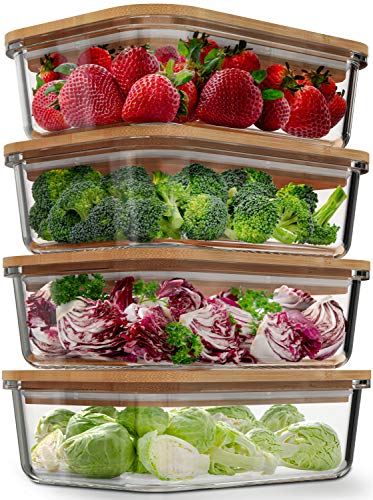 Ideal for single-serve meal prep and leftovers, with a plastic-free bamboo airtight seal
 - Vtopmart 8-pack glass with airtight locking lids: A great choice for larger families, this set includes multiple sizes for different food types, and the locking lids are leak-proof enough to transport in a lunch bag or purse.
 Multiple sizes suit full family meal prep, safe for microwave and oven
 - Magic Mill 24-piece glass set: The most comprehensive option for full kitchen overhauls, this set includes small containers for spices and condiments up to large 50oz containers for batch cooking, with secure locking lids that prevent freezer burn.
 Comprehensive set for full kitchen organization, includes small and large sizes
 - Vtopmart 5-pack 35oz glass containers: With a larger 35oz capacity, these are ideal for bulk meal prep or storing family-sized leftovers, and the stackable design saves cabinet space.
 Large 35oz capacity perfect for bulk meal prep portions
Stainless Steel
Food-grade 18/8 or 304 stainless steel is a durable, non-reactive option that never leaches chemicals, even when storing acidic foods like lemon juice, vinaigrettes, or tomato sauce. It is lightweight compared to glass, dent-resistant, and infinitely recyclable at end of life, making it one of the most sustainable long-term storage options. The main downsides are that it is not microwave safe (it reflects microwave radiation, which can cause sparks and damage your appliance) and can scratch over time with heavy use.
Stainless steel is ideal for pantry storage of dry goods, lunch boxes for work or school, camping, and transporting meals. It is also naturally odor- and stain-resistant, so it won’t hold onto the smell of garlic, curry, or other pungent foods. All the eco-friendly containers covered in this guide are BPA-free, aligning with current FDA guidance that recommends limiting BPA exposure from food contact materials due to potential health risks, including hormonal disruption.
Top Stainless Steel Pick
- Giuoiduo 10-piece stainless steel set: This versatile set includes 10 sizes ranging from small spice containers to large batch cooking pots, all with airtight lids that keep pantry moths and moisture out of dry goods. The non-reactive steel is safe for all food types, and the set is dishwasher safe for easy cleaning.
 Durable, non-reactive steel ideal for pantry storage and transport
Silicone
Food-grade platinum-cured silicone is a flexible, lightweight option that is safe for microwave, freezer, oven (up to 400°F/204°C), and dishwasher use. It is collapsible, so it takes up minimal cabinet or bag space when not in use, and it is shatter-resistant, making it a great pick for kids’ lunches or camping. The main downsides are that low-quality silicone can leach chemicals at high temperatures, and even high-quality silicone can absorb strong odors (like curry, garlic, or coffee) if not cleaned properly. Silicone is recyclable in specialized facilities, but not curbside in most areas, so check local recycling rules before disposing of old containers.
Silicone is ideal for portable snacks, freezing baby food or portioned meals, marinating meats, and travel. Look for platinum-cured silicone over low-grade options, as it is more durable and heat-resistant. To clean stubborn residue from silicone lids, use a heavy-duty kitchen scrub brush to avoid tearing the thin material.
Top Silicone Pick
- Wyglhlf 3-piece nesting silicone set: This set includes three nested sizes (6.7oz, 10oz, 20oz) that fit together to save space, with airtight lids that are leak-proof enough to transport in a lunch bag. The BPA-free material is safe for all heating and freezing uses, and the set is dishwasher safe for easy cleaning. The only downsides are limited color options and the potential for odor retention with pungent foods.
 Collapsible design saves cabinet space, perfect for packed lunches and snacks
Reusable PEVA Food Storage Bags
PEVA (polyethylene vinyl acetate) is a BPA-free, chlorine-free alternative to single-use plastic ziplock bags, designed to be reused hundreds of times. They are leak-proof, dishwasher safe, and flexible enough to store everything from marinated meats and produce to travel toiletries and small hardware. The main downsides are that they take up more drawer space than flat disposable bags, and they need to be dried thoroughly before storage to prevent mold growth. Most PEVA bags are not recyclable curbside, but some brands offer take-back programs for responsible disposal.
These bags are ideal for storing produce, marinating meats, packing snacks for travel, and organizing small items around the kitchen.
Top PEVA Bag Pick
- 10-pack dishwasher safe PEVA bags: This set includes 10 reusable bags in a standard size, with leak-proof seals that are safe for storing liquids and semi-liquid foods like salad dressing, cut fruit, and leftovers. The BPA-free material is safe for all food types, and the dishwasher-safe design makes cleaning effortless.
 Leak-proof, dishwasher safe alternative to single-use ziplock bags
Bamboo & Plant-Based Composites
Bamboo is a fast-growing, renewable resource that requires minimal water and no pesticides to grow, making it a popular sustainable choice for storage lids and dry goods canisters. Most bamboo storage containers are bound with a small amount of food-safe resin to improve durability, so they are not 100% compostable at home, and they are not heat-resistant enough for microwave or oven use. Bamboo lids and containers also require hand washing to avoid warping or mold growth from excess moisture.
These are ideal for countertop canisters for dry goods like pasta, rice, and spices, or for lids paired with glass containers for a plastic-free storage solution.
Compostable & Biodegradable Disposables
For times when reusable containers aren’t practical (takeout, catering, large events), compostable disposables made from sugarcane bagasse, bamboo, or corn-based PLA are a low-waste alternative to traditional plastic. It is important to note that most compostable containers are only certified for commercial composting facilities, where they break down in 90-180 days; they will not decompose in a landfill, and most are not suitable for home compost bins. Look for BPI-certified compostable labels to ensure the product meets rigorous breakdown standards, rather than unregulated "biodegradable" claims that often end up in landfills anyway.
Compostable containers are ideal for takeout, catering, meal prep services, and events. They are safe for microwave use and can hold both hot and cold foods, though they are not designed for repeated use or heavy, greasy foods like deep-fried items, which can cause them to break down faster.
Top Compostable Picks
- 50-pack 8×8 sugarcane clamshells: Made from 100% renewable sugarcane fibers, these BPI-certified clamshells are heavy-duty enough to hold hot and cold foods without leaking, making them perfect for restaurants, caterers, or large family gatherings.
 BPI-certified compostable, ideal for takeout and catering
 - 34oz sugarcane pulp containers with lids: These larger containers are microwave safe for on-the-go reheating, and the sturdy sugarcane pulp construction holds up to heavy, saucy foods without leaking. They are a great pick for meal prep services or packed work lunches when reusable containers aren’t an option.
 Microwave safe, ideal for bulk meal prep and takeout
How to Choose the Right Container for Your Needs
With so many materials and styles available, the best eco-friendly container for you depends on your most frequent use cases. Below are targeted recommendations for common household needs:
For Weekly Meal Prep
Prioritize stackable, airtight glass or stainless steel containers with compartments for portioning proteins, grains, and vegetables. Borosilicate glass is the best pick if you plan to reheat meals directly in the container, while stainless steel is ideal if you prefer to transfer food to a plate before eating. For balanced meal prep, portion proteins, grains, and produce separately, or use compartmentalized containers alongside tips for prepping charcuterie and snack boards to reduce prep time and food waste.
For Pantry Storage
Airtight glass jars or stainless steel canisters are the best choice for dry goods like pasta, grains, spices, and nuts, as they block moisture and pests while letting you see contents at a glance to avoid forgetting about hidden items. Clear glass is ideal for small pantries, as it eliminates the need to label every container. For added child safety, use drawer and cabinet safety latches on lower pantry shelves to prevent access to small or heavy containers.
For On-the-Go Lunches & Travel
Collapsible silicone or lightweight stainless steel containers with leak-proof lids are the most portable options, as they won’t break if dropped and fit easily in lunch bags or backpacks. Silicone bags are also a great pick for packing snacks, fruit, or sandwiches, as they take up minimal space when empty.
For Disposable Takeout & Events
If you need single-use containers for takeout, catering, or large gatherings, opt for BPI-certified compostable options made from sugarcane bagasse. Avoid unregulated "biodegradable" claims, as these products often contain plastic and will not break down in commercial composting facilities. For event cleanup, pair these containers with an automatic kitchen cleaning brush to quickly scrub greasy residue before composting.
For Households with Young Kids
Opt for shatter-resistant borosilicate glass or dent-proof stainless steel to avoid breakage risks, and choose containers with easy-open lids that small hands can manage. Pair these storage options with childproof cabinet locks for kitchens to keep heavy storage items and cleaning supplies out of reach.
Care & Maintenance Tips to Extend Container Lifespan
Eco-friendly containers are an investment, and proper care can extend their lifespan by 5-10 years, maximizing their sustainability and cost savings. Follow these simple tips to keep your containers in top condition:
- Avoid abrasive scouring pads on glass, bamboo, or silicone lids, as they can scratch surfaces or degrade material over time. Instead, use a sturdy non-abrasive cleaning brush to scrub off stuck-on food without damage.
- Hand wash bamboo lids and silicone containers with strong odors (like garlic, curry, or coffee) to prevent mold growth and smell retention. Dishwashers can degrade bamboo’s natural finish over time, and high heat can warp silicone seals.
- For glass containers with plastic lids, check the lid gaskets regularly for warping or cracks. Damaged gaskets break the airtight seal, leading to faster food spoilage and freezer burn. Most manufacturers sell replacement gaskets for a fraction of the cost of a new container.
- Store glass containers with a layer of padding between them if stacking, to prevent chipping. Avoid stacking heavy items on top of glass containers in the pantry to prevent cracks.
- For compostable disposables, store in a cool, dry place away from direct sunlight to prevent them from breaking down prematurely before use.
Frequently Asked Questions
Are all glass food storage containers microwave safe?
Most high-borosilicate glass containers are microwave safe, as they can withstand rapid temperature changes without cracking. Always check the manufacturer’s guidelines first, and avoid containers with metal trim or plastic lids in the microwave, as these can melt or spark.
Do bamboo lids really break down in compost?
Pure, unbonded bamboo is compostable, but most storage container bamboo lids are bound with food-safe resin to improve durability, so they only break down in commercial composting facilities, not home compost bins. Check the manufacturer’s end-of-life instructions for specific guidance.
Is silicone really a sustainable food storage material?
Food-grade platinum-cured silicone is far more sustainable than single-use plastic, as it can last 5+ years with proper care and is recyclable in specialized facilities. However, it is not biodegradable, so it will end up in landfills if not recycled properly.
Can I use stainless steel food containers in the microwave?
No, stainless steel is not microwave safe, as it reflects microwave radiation, which can cause sparks and damage your appliance. Use glass or silicone containers for reheating, and transfer food to stainless steel for cold storage or transport.
Are compostable takeout containers as sturdy as plastic?
BPI-certified compostable containers made from sugarcane bagasse are just as sturdy as plastic for hot and cold foods, but they are not designed for repeated use or heavy, greasy foods like deep-fried items, which can cause them to break down faster.
How do I remove odors from silicone food containers?
Soak the container in a solution of warm water and baking soda for 2-3 hours, then wash with mild dish soap. Avoid using bleach or harsh abrasives, which can degrade the silicone material over time.
Conclusion
Eco-friendly food storage containers are one of the simplest, most impactful swaps you can make to reduce household waste, cut down on food waste, and limit your exposure to harmful chemicals. There is no one-size-fits-all option: most sustainable households use a mix of materials to fit different needs—glass for meal prep and leftovers, stainless steel for pantry storage and transport, silicone for on-the-go snacks, and compostable disposables for takeout and events.
Even small swaps add up: replacing single-use ziplock bags with reusable PEVA bags, or switching from disposable takeout containers to a personal stainless steel lunch box, can eliminate hundreds of pounds of plastic waste per year. When shopping for new containers, prioritize durability and material transparency over trendy designs: a high-quality glass or stainless steel set will last for decades, making it a far more sustainable choice than cheap, low-quality "eco-friendly" options that need frequent replacement.
Ready to build a sustainable, low-waste kitchen? Start with one container type that fits your most frequent use case, and expand your collection over time to cut plastic waste and keep food fresher for longer.

Hi, I’m Daniel Brooks—a food lover and kitchen gear enthusiast. I enjoy testing cookware, utensils, and gadgets to see what really works in everyday cooking. At PlugChef.com, I share honest reviews, comparisons, and simple guides to help you choose the best tools for a safer, smarter, and more enjoyable kitchen.
Related posts:
 Best Kitchen Gadgets Under $20: Affordable Tools for Every Culinary Task
 Under Cabinet Hidden Kitchen Outlets: Revolutionize Your Space-Saving Solutions
 Shelf for Under Kitchen Sink: Maximize Space with Pull-Out Organizers
 Best Beeswax Wraps for Zero Waste Kitchen: Eco-Friendly Food Storage Solution
 Best Water Filter for Pod Coffee Maker: Enhance Your Coffee Experience
 Best Kitchen Counter Compost Bin: Top Picks for Odor-Free Recycling