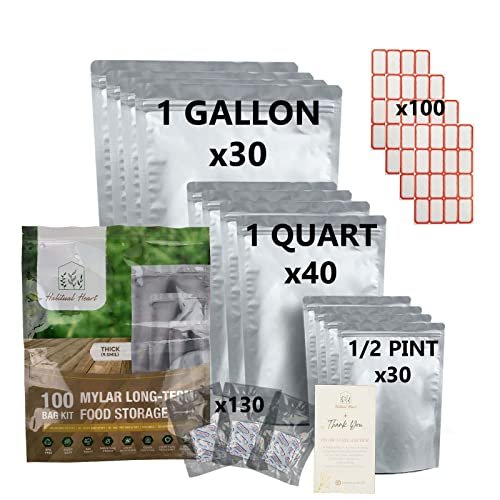
Long-term food storage is a cornerstone of emergency preparedness, bulk shopping efficiency, and reducing household food waste. According to USDA data, the average U.S. household wastes nearly 30% of the food it purchases annually, much of it due to poor storage that exposes food to oxygen, moisture, light, and pests. The right container doesn’t just keep food fresh — it extends shelf life from months to decades, protects your investment in bulk goods, and ensures your emergency supply is safe to eat when you need it most. This guide breaks down the most effective, food-safe container options for long-term storage, how to choose the right one for your needs, and actionable best practices to maximize freshness, all aligned with FDA and USDA food safety standards.
What Makes a Container Safe for Long-Term Food Storage?
Not all storage containers are created equal for food use. Non-food-grade plastics, unsealed lids, and porous materials can leach harmful chemicals, let in pests, or trap moisture that causes mold and spoilage. When selecting a container for long-term food storage, prioritize these non-negotiable features:
- FDA food contact certification: Look for containers made from HDPE plastic marked with resin code #2, which is approved by the FDA food contact safety standards for direct food contact and won’t leach BPA or other harmful chemicals over time.
- Airtight seal integrity: Test any lid by closing it fully, then trying to pull it open. A proper airtight seal will resist pulling, with no gaps where air or moisture can enter.
- Pest resistance: Opt for thick, rigid plastic or Mylar material that rodents and insects cannot chew through. Avoid thin plastic containers or bags with weak seals that pests can easily breach.
- Opaque or UV-protective construction: Light degrades nutrients and speeds up spoilage, so choose opaque containers or keep clear containers in a dark storage space.
A common mistake many new preppers make is repurposing non-food-grade buckets (such as those that previously held cleaning chemicals, paints, or construction materials) for food storage. Even thorough washing cannot remove all residual chemicals, which can seep into stored food over time and cause health risks.
Top Container Types for Long-Term Food Storage, Ranked by Use Case
The best container for your needs depends on what you’re storing, how much space you have, and how often you’ll access your supply. Below are the top tested options, organized by use case:
Mylar Bags: Best for Dry Goods and Portability
Mylar is a layered polyester and aluminum film that blocks 100% of light, oxygen, and moisture when sealed correctly, making it the gold standard for storing dry, shelf-stable goods like grains, beans, flour, sugar, dehydrated produce, coffee, and spices. When paired with oxygen absorbers, Mylar bags can extend the shelf life of dry goods to 10–25 years, far longer than standard plastic containers. Key specs to look for: Minimum 5mil thickness (10mil+ for storage over 5 years), stand-up zipper for frequent access, heat-sealable edges for fully airtight long-term closure, and included oxygen absorbers sized for the bag’s capacity (400cc for 1-gallon bags, 2000cc for 5-gallon bags).
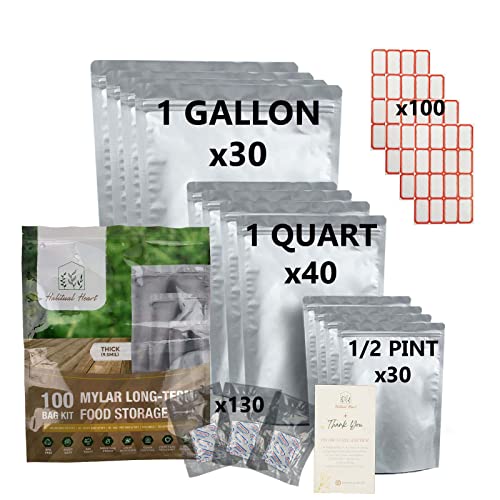 Stand-up Mylar bags are ideal for portioning grains, beans, and dehydrated produce for long-term storage.
Habitual Heart 1-Gallon Mylar Bags with Oxygen Absorbers These 9.5mil thick stand-up bags are a reliable pick for preppers and bulk shoppers storing portioned dry goods.
- Pros: 9.5mil thickness resists punctures from sharp dry goods like dried corn, includes 130 300cc oxygen absorbers for 1-gallon portions, dual seal (zipper + heat seal) lets you access small amounts of food without re-sealing the entire bag.
- Cons: Opaque silver material requires labeling to identify contents, 1-gallon size is too large for single-serving portioning.
 5-gallon Mylar bags fit perfectly inside standard 5-gallon buckets for extra pest and moisture protection.
10-Pack 5-Gallon Mylar Bags with Oxygen Absorbers Ideal for large families or homesteaders storing bulk 25–50lb bags of dry goods.
- Pros: 10mil extra-thick material resists tears during transport, 2500cc oxygen absorbers are pre-sized for 5-gallon capacity, zipper resealable for easy access.
- Cons: Too large for standard pantry shelf storage, zipper alone is not enough for 2+ year storage — a heat sealer is required for a fully airtight closure.
 Multi-size Mylar bags let you portion goods for different use cases, from single servings to bulk storage.
100-Pack Multi-Size Mylar Bags with 400cc Oxygen Absorbers A cost-effective pick for anyone building a large long-term food supply with varied portion sizes.
- Pros: 11.8mil extra-thick material resists punctures, includes 4 size options (4×6, 6×9, 1-gallon) for portioning different food types, 400cc absorbers are pre-sized for 1-gallon bags so no measuring is required.
- Cons: Stand-up design takes up more shelf space than flat Mylar bags, zipper can wear out after 10+ open/close cycles, so heat sealing is recommended for storage over 1 year.
5-Gallon Food-Grade Buckets with Airtight Lids: Best for Bulk Storage
Food-grade HDPE buckets with airtight gamma seal lids are the go-to for storing large quantities of bulk dry goods, canning supplies, or even liquid items like water or honey. Look for 90mil thickness for durability, BPA-free construction, and gamma seal lids (screw-on, with a built-in rubber gasket) instead of standard snap lids, which warp and lose their seal after 1–2 years of use.
 Gamma seal lids create an airtight, leak-proof seal that outperforms standard bucket lids for food storage.
ePackageSupply 5-Gallon Buckets with Gamma Seal Lids (3-Pack, Green Lids) A durable, food-safe option for homesteaders and preppers storing large bulk supplies.
- Pros: 90mil HDPE construction resists cracking if dropped, gamma seal lid is 100% airtight and leak-proof even when stored in damp basements or garages, BPA-free and food-grade certified for direct food contact, stackable rims let you stack up to 4 buckets high to save space.
- Cons: 3-pack is excessive for single households with small storage needs, a full 5-gallon bucket of dry goods weighs ~45lbs, which can be hard to lift for some users.
 Made-in-USA buckets adhere to strict quality and safety standards for food storage.
ePackageSupply 5-Gallon Buckets with Gamma Seal Lids (3-Pack, White Lids) A made-in-USA option for users who prioritize strict quality control for food storage.
- Pros: Manufactured in the U.S. with regulated quality standards, gamma seal gasket maintains its airtight seal for 5+ years, BPA-free plastic won’t absorb odors from strong-smelling foods like garlic or onions.
- Cons: White plastic shows stains from spilled flour or sugar, standard 5-gallon size may not fit in all standard pantry shelves.
 Bulk 6-packs are cost-effective for homesteaders or small businesses storing large quantities of food.
ePackageSupply 5-Gallon Buckets with Lids (6-Pack) A bulk option for homesteaders, small businesses, or community food banks storing large volumes of goods.
- Pros: 6-pack is cost-effective for high-volume storage, stackable rims are designed to hold up to 4 stacked buckets without slipping, heavy-duty plastic resists sun damage for outdoor storage in sheds or garages.
- Cons: 6-pack requires significant storage space, a full 6-pack of dry goods weighs ~270lbs, which is not feasible for most home pantries.
 Smaller 3.5-gallon buckets are ideal for single households storing 10–25lb bags of bulk goods.
ePackageSupply 3.5-Gallon Bucket with Red Gamma Lid A compact option for single households or small pantries with limited space.
- Pros: 3.5-gallon capacity fits standard 10–25lb bulk food bag sizes, red gamma lid is easy to identify for food storage (vs. non-food storage like cleaning supplies), made in USA with food-grade HDPE plastic.
- Cons: Smaller capacity means more buckets are needed for large bulk purchases, red lid is not compatible with standard gamma seal gaskets if you want to mix and match lids later.
 Metal handles with plastic grips reduce strain when carrying full 5-gallon buckets.
ePackageSupply 5-Gallon Bucket with Metal Handles A heavy-duty option for users who frequently transport full buckets of food or supplies.
- Pros: Metal handles with plastic grips reduce hand strain when carrying full ~45lb buckets, food-grade HDPE construction is BPA-free and safe for food contact, stackable design saves space in pantries or garages.
- Cons: White plastic shows stains from spilled food, standard 5-gallon size may not fit in all pantry shelves.
Square Food-Grade Buckets: Best for Small-Space and Multi-Use Storage
Square buckets have flat sides that stack with no gaps between them, saving up to 30% more storage space than round buckets. They also sit flush against walls, shelf edges, and cabinet doors, making them ideal for urban pantries, RVs, camping, and garages. Many come with built-in handles for easy transport.
 Square buckets stack with no wasted space, making them ideal for small pantries and RVs.
Mumufy 5-Pack 3.5-Gallon Square Food-Grade Buckets A versatile, space-saving option for campers, RV owners, and urban preppers.
- Pros: Square design stacks with no wasted space between buckets, built-in plastic handles make them easy to carry to campsites or garages, gray plastic hides stains and scratches for a longer-lasting look, food-grade HDPE is safe for both food and non-food storage (like charcoal or pet food).
- Cons: 3.5-gallon capacity is too small for large bulk purchases, plastic handles can crack if overloaded with heavy items like canned goods.
 5-gallon square buckets fit standard bulk food bags and separate food types for easy organization.
House Naturals 5-Gallon Square Buckets with Screw-On Lids (3-Pack) A durable option for home canners and meal prep enthusiasts who need to store large quantities of ingredients.
- Pros: 5-gallon capacity fits standard bulk food bag sizes, screw-on lid creates a tighter seal than standard snap-on bucket lids, made in USA with food-grade BPA-free plastic, 3-pack lets you separate different food types (grains, beans, sugars) for easy organization.
- Cons: White plastic shows stains from spilled food, a full 5-gallon bucket weighs ~50lbs, which is heavy for frequent transport.
How to Choose the Right Container for Your Needs
Use this quick reference to match your use case to the best container option:
| Use Case | Recommended Container Type | Key Feature to Prioritize | Ideal Capacity |
|---|---|---|---|
| Emergency pantry bulk storage (1+ year supply) | 5-gallon HDPE bucket with gamma seal lid | Airtight gasket, pest-resistant construction | 5 gallons per food type |
| Frequent access dry goods (weekly meal prep) | Stand-up Mylar bag with resealable zipper | Dual seal (zipper + heat seal), portion sizing | 1 quart to 1 gallon |
| Small-space urban pantry | Square food-grade bucket | Stackable flat-sided design, compact footprint | 3.5 gallons |
| Camping, RV, or outdoor storage | Square food-grade bucket with carrying handles | Durable, leak-proof, lightweight when empty | 3.5 gallons |
| Canning and preserving | 5-gallon HDPE bucket with screw-on lid | Food-grade certification, stain-resistant plastic | 5 gallons |
Critical Best Practices for Long-Term Food Storage
Even the highest-quality container will fail if used incorrectly. Follow these guidelines to maximize shelf life and safety:
- Clean containers thoroughly before use: Scrub all containers with a dedicated pantry cleaning brush and let them dry completely before filling to eliminate dust, residue, and moisture that cause mold and spoilage. Pair properly stored food with cabinet safety hardware to keep hazardous items out of reach of children and pets.
- Use oxygen absorbers correctly: For Mylar bags, add the correct size absorber for your bag’s capacity (400cc for 1-gallon bags, 2000cc for 5-gallon bags) before sealing. Never touch absorbers with wet hands, as they activate immediately on contact with oxygen. Replace any absorber that has been exposed to air for more than 30 minutes.
- Store in optimal conditions: Keep containers in a cool (50–70°F), dark, dry space with humidity below 60%. Avoid storing near exterior walls, garages, or attics where temperature fluctuations degrade plastic and accelerate food spoilage.
- Label every container: Mark the contents, date stored, and any special preparation instructions on the outside of every container. For opaque Mylar bags, use a permanent marker directly on the bag surface.
- Rotate your stock regularly: Every 6–12 months, use the oldest stored food first and replace it with new stock to avoid spoilage. Follow a first-in, first-out system to keep your supply fresh.
- Separate food and non-food storage: Never store cleaning supplies, chemicals, or non-food items in the same containers as food, even if washed thoroughly. Use dedicated, clearly labeled containers for non-food items to avoid cross-contamination. For storing cleaning supplies in your pantry or garage, use heavy-duty scrubbing tools to clean containers thoroughly before repurposing them for non-food use. For households with young children, pair your storage containers with child-safe kitchen fixtures to keep stored supplies out of reach.
Frequently Asked Questions
What Are Mylar Bags Used For?
Mylar bags are the top choice for storing dry, shelf-stable goods like grains, beans, flour, sugar, dehydrated fruits and vegetables, coffee, spices, and emergency ration bars. Their layered polyester and aluminum construction blocks 100% of light, oxygen, and moisture, extending the shelf life of dry goods from 1 year (in standard plastic containers) to 10–25 years when sealed with oxygen absorbers. They’re also compact and lightweight, making them ideal for bug-out bags and small pantries with limited space.
How Do Gamma Seal Lids Work?
Gamma seal lids are screw-on airtight lids designed to fit standard 5-gallon and 3.5-gallon bucket rims. They use a built-in rubber gasket that compresses when screwed on, creating an airtight, leak-proof seal that outperforms standard snap-on bucket lids, which often warp and lose their seal after 1–2 years of use. They’re easy to open and close by hand with no special tools required, and are compatible with most food-grade HDPE buckets.
Are 5-Gallon Buckets Food Safe?
Yes, 5-gallon buckets are food safe only if they are made from food-grade HDPE plastic (marked with resin code #2 on the bottom) and are BPA-free. Never use repurposed buckets that previously held cleaning chemicals, paints, or other non-food substances, as residual chemicals can leach into food even after washing. Always verify the bucket is labeled food-grade before use, per USDA food storage guidelines.
Why Choose Square Buckets For Storage?
Square buckets have flat sides that stack with no gaps between them, saving up to 30% more storage space than round buckets. They also sit flush against walls, shelf edges, and cabinet doors, making them ideal for small urban pantries, RVs, and camping setups. Many also come with built-in handles for easy transport, and their flat sides make labeling contents simple without extra tags.
What Are Oxygen Absorbers?
Oxygen absorbers are small, airtight packets that remove oxygen from sealed packaging to slow spoilage and extend food shelf life. They work by reacting with oxygen in the container to form iron oxide, reducing oxygen levels to less than 0.1% — low enough to stop mold, bacteria, and pest growth. For long-term storage, use absorbers sized for your container: 400cc for 1-gallon Mylar bags, 2000cc for 5-gallon buckets or Mylar bags. Always replace absorbers if they have been exposed to air for more than 30 minutes before use.
Conclusion
The right container for long-term food storage depends entirely on your specific needs: Mylar bags are unbeatable for portioned dry goods and portability, 5-gallon gamma seal buckets are ideal for bulk emergency supplies, and square buckets are perfect for small-space and multi-use storage. No matter which option you choose, following food safety best practices — using certified food-grade materials, sealing correctly, and storing in optimal conditions — will keep your food fresh, safe, and ready for years. If you’re building out a safe, organized kitchen and pantry space for your family, explore our range of no-drill cabinet locks to keep cleaning supplies and small appliances out of reach while you stock your long-term food supply.

Hi, I’m Daniel Brooks—a food lover and kitchen gear enthusiast. I enjoy testing cookware, utensils, and gadgets to see what really works in everyday cooking. At PlugChef.com, I share honest reviews, comparisons, and simple guides to help you choose the best tools for a safer, smarter, and more enjoyable kitchen.
Related posts:
 Best Kitchen Gadgets Under $20: Affordable Tools for Every Culinary Task
 Under Cabinet Hidden Kitchen Outlets: Revolutionize Your Space-Saving Solutions
 Shelf for Under Kitchen Sink: Maximize Space with Pull-Out Organizers
 Best Beeswax Wraps for Zero Waste Kitchen: Eco-Friendly Food Storage Solution
 Restaurant Kitchen Hood Cleaning: Top Products for Powerful Grease Removal
 Best Drain Cleaner for Kitchen Sink Grease: Top Picks to Clear Clogs Fast