
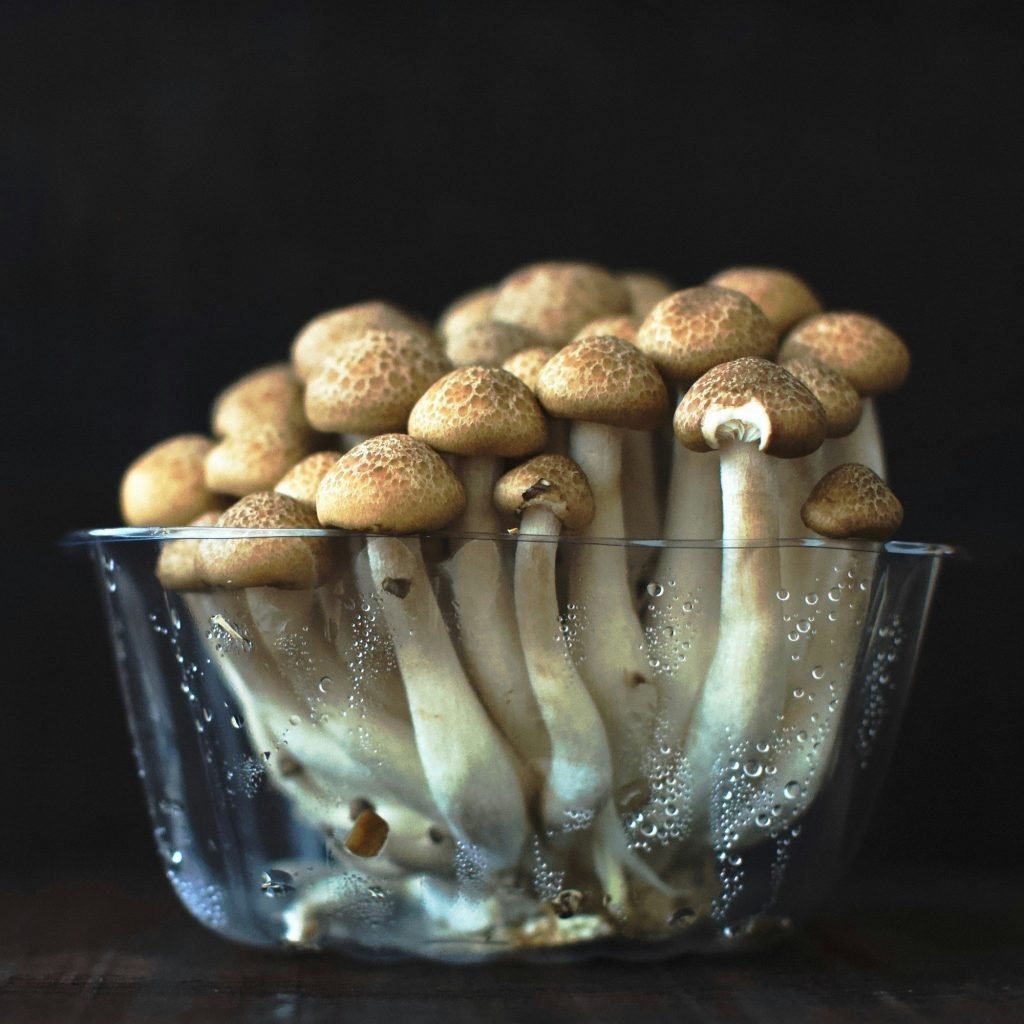
You foraged a great haul — now what? Proper storage preserves flavor, texture and safety. This guide shows practical, experience-backed methods for immediate field handling, short-term refrigeration, and long-term preservation (freezing, drying, pickling). You’ll find step-by-step instructions, common mistakes to avoid, a quick-reference shelf-life chart, and precise checks for spoilage.
Quick summary
- Fresh mushrooms: keep cool, dry and ventilated; use within 3–7 days.
- For longer storage: blanch + freeze or dry in a dehydrator for best results.
- When in doubt about identification or safety, consult extension resources and never eat uncertain specimens.
Field handling: what to do right after picking
Correct handling in the field preserves quality and reduces contamination.
- Use a basket or breathable container. Avoid plastic bags that trap moisture and accelerate spoilage.
- Cut or twist mushrooms at the base rather than yanking them; this reduces dirt and damage.
- Remove obviously rotten or insect-infested specimens immediately.
- Keep different species separate in the basket — some will color or stain others.
- Delay extensive washing until you’re ready to store or cook; mushrooms absorb water and can become soggy.
For species-specific safety and identification guidance, check your local extension resources like those offered by Penn State Extension for workshops and ID help.
Cleaning wild mushrooms (gentle, effective)
Cleaning is about removing grit without adding water.
- Dry-brushing: Use a soft mushroom or pastry brush to remove soil and debris. Clean each mushroom individually to avoid breaking delicate caps.
- Trimming: Trim discolored or dried stem ends with a small knife. For large specimens, slice to inspect for insects or internal damage.
- When to rinse: Rinse briefly only if very sandy. Use a fast, cold-water rinse and immediately pat dry with paper towels. Never soak.
- For delicate species (morels, chanterelles): many foragers shake or blow out debris and use a quick rinse at the sink only when necessary.
If you want recommendations for brushes and tools, see this practical mushroom brush guide.
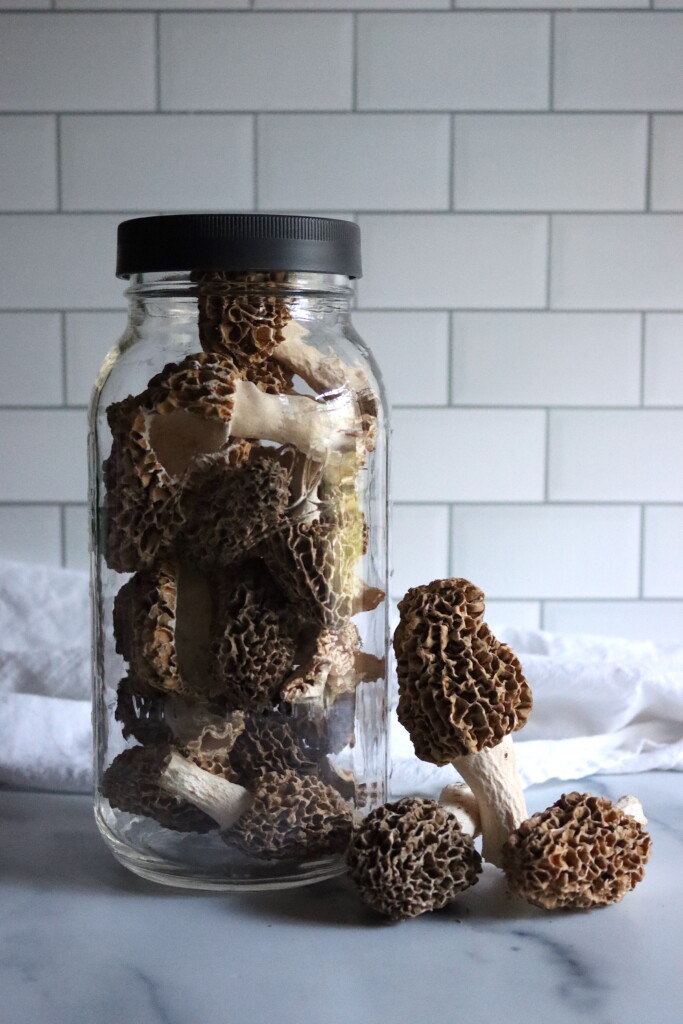
Brushing morels removes grit without soaking the fruiting body.
Credit: practicalselfreliance.com
Short-term storage (3–7 days): best tactics for fridge freshness
Short-term means you plan to use mushrooms within days — store them to preserve texture and flavor.
Practical steps
- Paper bag method: Place unwashed or gently brushed mushrooms in a paper bag with the top loosely folded. The paper wicks moisture and allows airflow.
- Container method: Line a shallow container with a dry paper towel, arrange mushrooms in a single layer, cover loosely with another towel or the container lid ajar.
- Temperature: Keep the refrigerator at 34–38°F (1–3°C). Avoid the crisper drawer if it traps moisture — the main fridge shelf is better. (For general fridge organization and food-safety tips, see advice on how to organize your fridge.)
Tips from experience
- Check daily and remove any slimy or darkened pieces to prevent spread.
- Keep mushrooms away from strongly scented foods — they absorb odors easily.
- Don’t stack them tightly; compressed caps bruise and spoil faster.
Long-term preservation: freeze, dry, pickle, or confit
Choose a method based on how you plan to use mushrooms later.
Freezing (best for cooked dishes)
- Why blanch: Blanching (brief boiling) stabilizes texture and color by inactivating enzymes.
- Rough blanching times (adjust by size): delicate slices 1–2 minutes; thicker pieces 3–4 minutes. Immediately cool in an ice bath, drain and pat dry.
- Freeze flat on a sheet tray, then transfer to labeled airtight freezer bags or vacuum-seal. Thaw directly into hot pans; avoid refreezing.
- Pro tip: Blanched then sautéed mushrooms freeze with better texture than raw-frozen. For advice on freezing methods for prepared foods, see these practical freezing tips.
Drying (best for long shelf life and concentrated flavor)
- Tools and temperatures: A food dehydrator is safest and most even; set 125°F (52°C) for mushrooms. Oven drying is possible at the lowest safe setting with the door cracked; avoid high heat that cooks rather than dries.
- Preparation: Clean, then slice evenly (1/8–1/4 inch). Arrange slices in a single layer with air gaps.
- Finished test: Dry until brittle and breaking easily, not just leathery.
- Storage: Store in airtight, light‑block containers (glass jars or mylar bags) with a desiccant packet. Rehydrate in warm water or stock before use.
- For sun-drying and other low-tech methods, you may find general sun-drying technique tips helpful, for example this sun-drying guide.
Pickling, confit and other options
- Pickling preserves flavor in a vinegar brine and is shelf-stable after proper processing.
- Confit: slow-cook mushrooms in oil; store refrigerated and use within a few weeks, or freeze for longer storage.
- Both methods add new flavor profiles — treat them like preserved vegetables rather than fresh produce.
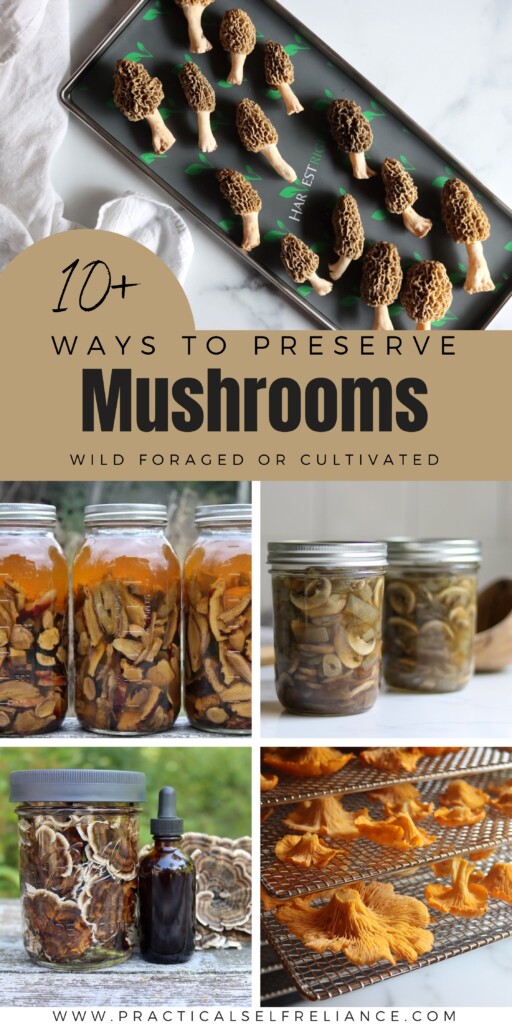
Thinly sliced mushrooms dry quickly and store compactly.
Credit: practicalselfreliance.com
Vacuum sealing and sous-vide considerations
- Vacuum sealing reduces freezer burn and extends frozen storage life, but compresses delicate caps. Freeze first on a tray, then vacuum-seal.
- Sous-vide cooked mushrooms can be chilled and refrigerated for several days or frozen in vacuum bags; follow safe cooling practices to limit bacterial growth.
Signs of spoilage and food-safety checklist
Always inspect before use: storage delays and poor handling raise food-safety risks.
Look for these clear signs to discard:
- Sliminess across cap or stem (not just dampness).
- Sour, pungent or fermented odor.
- Visible mold (white that fuzzes, green, black or colored spots) — discard entire mushroom and any adjacent stored mushrooms.
- Dark, watery patches or collapsed caps.
If you’re uncertain about edible vs. toxic species, consult a trusted local expert or extension service. When safety matters, rely on authoritative food-safety guidance such as the USDA’s resources on safe food handling (USDA food safety guidance).
Common storage mistakes (and how to avoid them)
- Storing in plastic bags: traps moisture → sliminess and mold. Solution: use paper or breathable containers.
- Washing too early: mushrooms soak up water. Solution: brush off dirt and rinse only when necessary.
- Crowding containers: bruising accelerates spoilage. Solution: single layer when possible.
- Freezing raw without blanching: leads to mushy texture. Solution: blanch or sauté before freezing.
In practice, the biggest mistake is assuming all mushrooms behave the same — thin chanterelles and dense boletes need different treatment. Learn the quirks of the species you collect.
Quick-reference shelf-life chart
| Storage method | Typical quality window | Notes |
|---|---|---|
| Fresh, room temp (breathable bag) | 1–2 days | Use within day if warm; best transported home fast |
| Refrigerator, paper bag or single-layer container | 3–7 days | Check daily; remove bad pieces |
| Frozen (blanched/sauteed) | 6–12 months best | Vacuum-seal extends life; use directly in cooking |
| Dried (sealed jar) | 6 months–2 years | Keep cool and dark; rehydrate before use |
| Pickled (properly canned) | Months–years | Follow tested canning recipes and processing |
How to rehydrate and use dried mushrooms
- Soak in warm water (cover completely) for 20–30 minutes, or simmer gently for 10–20 minutes for faster rehydration.
- Save and strain the soaking liquid (use as stock) after removing grit by pouring through a fine sieve lined with paper towel.
- Use rehydrated mushrooms in soups, risottos and sauces; they’re more intense in flavor than fresh.
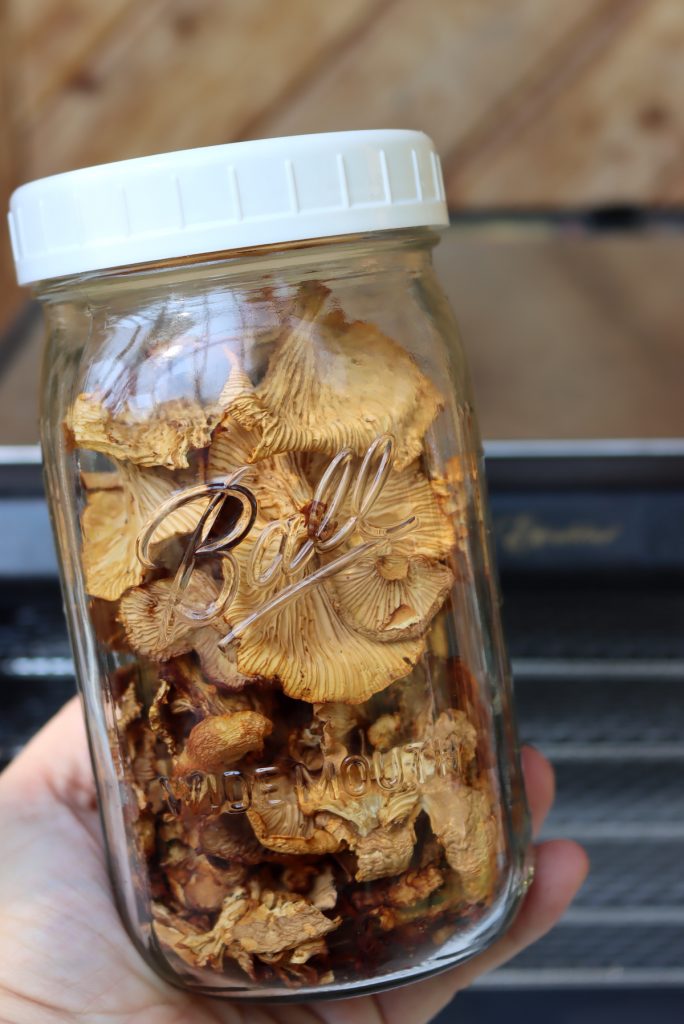
Dried chanterelles stored in a jar for pantry use.
Credit: practicalselfreliance.com
Frequently asked questions
Q: Should I wash mushrooms before storing?
A: Only if very dirty. Prefer dry-brushing. If rinsed, dry immediately with paper towels and use a breathable storage method so they don’t sit wet.
Q: How long will wild mushrooms last in the fridge?
A: When stored dry and ventilated, most species keep 3–7 days. Denser species like porcini can sometimes go longer; check quality daily.
Q: Is it safe to eat frozen wild mushrooms?
A: Yes if they were cleaned and blanched or cooked before freezing. Thaw and heat thoroughly before eating.
Q: What’s the best way to keep mushrooms from getting slimy?
A: Minimize moisture from the start: dry-brush, refrigerate in breathable containers, don’t wash early, and separate damaged pieces.
Q: Where can I get species-specific storage or identification help?
A: Reach out to your state or university extension service or local mycological society; many offer classes and forays. Penn State Extension and similar programs are good starting points (Extension mushroom resources).
Conclusion — next steps
Good storage starts in the field and continues through gentle cleaning, ventilated short-term storage, and the right long-term preservation method for your planned use. Keep a simple routine: brush, separate, cool, and choose freeze or dry based on how you’ll cook them.
Action you can take now: bookmark this page and, if you forage regularly, sign up for a local extension ID workshop to improve safety and species-specific handling.

I’m Abby Lu, a passionate home cook who loves simplifying everyday meals. At PlugChef.com, I share product reviews and cooking guides to help you find the best tools for your kitchen.
Related posts:
 How to Make a Fruit Basket for a Gift: Easy DIY Guide
 Do You Need a Basket? Essential Guide for Air Fryers
 How to Adjust Syrup Dispenser Pressure: Expert Tips
 Kitchen Cabinets With Black Appliances: Trendy Design Tips
 White Kitchen And Stainless Steel Appliances: A Perfect Duo
 Kitchen Colors With White Cabinets And White Appliances: Vibrant Ideas

