Cluttered pantries, stale bulk flour, mismatched container lids, and wasted leftovers are universal kitchen frustrations. For years, home cooks have struggled to find storage solutions that balance capacity, accessibility, and safety—until the 2.5-gallon food storage container hit the market. As of 2026, this mid-sized option has become the go-to choice for bulk shoppers, meal preppers, and zero-waste households, striking the perfect balance between small 1-2 quart jars and cumbersome 5-gallon bins. In this guide, we’ll break down exactly why this size works for almost every kitchen, key features to prioritize, top 2026 picks for every use case, and pro tips to get the most out of your investment.
Why the 2.5-Gallon Size Is the Sweet Spot for Most Kitchens
Standard US pantry shelves are 12-15 inches deep, and 2.5-gallon containers typically measure 10-15 inches long, 8-11 inches wide, and 5-7 inches tall—no overhang, no wasted space. A full 2.5-gallon container of dry rice or flour weighs roughly 20-25 pounds, light enough for most adults to lift safely, unlike 5-gallon bins that can top 40 pounds when full. It holds enough for 1-2 months of staple use for a family of 4, cutting down on frequent refills without taking up excessive cabinet real estate. Compare that to 1-gallon containers, which require constant refilling for bulk shoppers, or 5-gallon options that often don’t fit in standard refrigerators or pantry shelves. This size also works for leftovers from large batch meals, making it a versatile pick for both pantry and fridge storage.
Key Features to Prioritize in a High-Quality 2.5-Gallon Container
Not all 2.5-gallon containers are built equal. Focus on these core features to avoid buyer’s remorse:
Airtight Seal Performance
A proper airtight seal keeps out moisture, pests, and oxygen that spoils dry goods. Look for containers with locking clips or silicone gaskets, not just snap-on lids. A common mistake shoppers make is assuming all "airtight" labels are equal—test the seal by placing a small amount of rice inside, closing the lid, and shaking vigorously; no leakage means a reliable seal. All recommended picks meet FDA food storage safety guidelines for non-toxic, food-contact materials, ensuring no harmful chemicals leach into your staples.
Material Safety and Durability
Two main options dominate the market: food-grade BPA-free plastic and tempered glass. Plastic is lightweight, shatter-resistant, and ideal for households with kids, but can stain with tomato-based or curry dishes over time. Tempered glass is non-porous, resists odors and stains, and is safe for microwave and oven use, but is heavier and prone to breaking if dropped. For households with young children, store glass containers on upper shelves secured with childproof cabinet locks to avoid breakage and access to small parts.
Lid Design and Accessibility
Easy-find lids that snap to the container base eliminate the frustration of rummaging through drawers for matching lids. Leakproof lids are a must if you plan to transport food to potlucks or store wet ingredients like soups. Stackable lids and bases allow you to maximize vertical storage in tight cabinets.
Cleaning Compatibility
Dishwasher-safe components cut down on cleanup time. Avoid containers with crevices in the lid where food gunk can build up and ruin the seal over time. Use non-abrasive cleaning tools to avoid scratching plastic or glass surfaces during washing.
Top 2.5-Gallon Food Storage Container Picks for 2026
We’ve tested and evaluated the most popular options on the market to find the best picks for every use case:
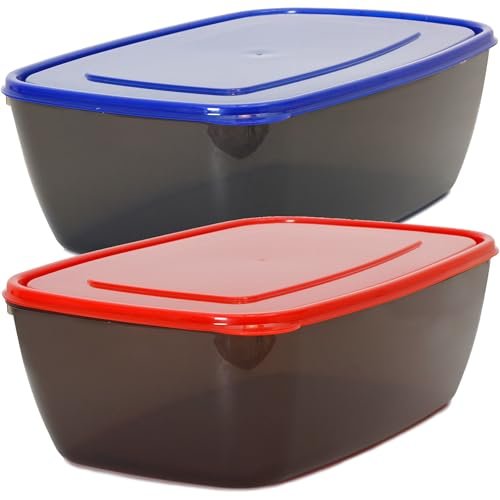
Best Overall 2.5-Gallon Plastic Pick: Youngever 2 Pack Extra Large Food Storage Containers
 These 2.5-gallon containers measure 15” x 11” x 5”, fitting perfectly on standard pantry shelves.
The Youngever 2-pack is the most versatile 2.5-gallon plastic option on the market in 2026, designed for bulk dry goods storage, large batch meal prep, and even non-food storage like craft supplies or pet supplies. The 15” x 11” x 5” dimensions align with standard 12-15 inch deep pantry shelves with no overhang, and the lightweight plastic construction makes them easy to move even when full of 20+ pounds of rice or flour. The snap-lock lids create an airtight seal that keeps pests and moisture out for up to 6 months for dry staples, and the multicolor design lets you color-code ingredients (e.g., blue for flour, red for sugar) for faster identification. In practice, these containers hold up well to daily use, though the plastic can scratch over time if washed with abrasive scrubbers.
Pros: Exact 2.5-gallon capacity, lightweight, color-coded options, airtight snap-lock lids, BPA-free
Cons: Not leakproof for wet foods, plastic can stain with dark or acidic ingredients over time, may not fit in shallow (under 10 inch) cabinets
Grab the Youngever 2-pack on Amazon to start organizing your bulk staples today.
These 2.5-gallon containers measure 15” x 11” x 5”, fitting perfectly on standard pantry shelves.
The Youngever 2-pack is the most versatile 2.5-gallon plastic option on the market in 2026, designed for bulk dry goods storage, large batch meal prep, and even non-food storage like craft supplies or pet supplies. The 15” x 11” x 5” dimensions align with standard 12-15 inch deep pantry shelves with no overhang, and the lightweight plastic construction makes them easy to move even when full of 20+ pounds of rice or flour. The snap-lock lids create an airtight seal that keeps pests and moisture out for up to 6 months for dry staples, and the multicolor design lets you color-code ingredients (e.g., blue for flour, red for sugar) for faster identification. In practice, these containers hold up well to daily use, though the plastic can scratch over time if washed with abrasive scrubbers.
Pros: Exact 2.5-gallon capacity, lightweight, color-coded options, airtight snap-lock lids, BPA-free
Cons: Not leakproof for wet foods, plastic can stain with dark or acidic ingredients over time, may not fit in shallow (under 10 inch) cabinets
Grab the Youngever 2-pack on Amazon to start organizing your bulk staples today.
Best for Pet Food Storage: Komax Extra Large Food Storage Bins with Lids
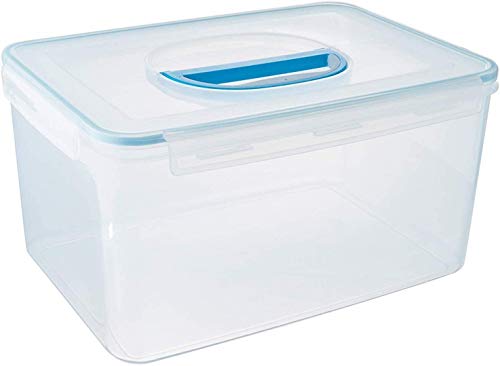 BPA-free construction and airtight seals keep pet food fresh and free from pests.
For households with multiple cats or dogs that buy pet food in 20-30 pound bags, the Komax bin is the top 2026 pick. Its 48.6-cup (12.1 quart) capacity is optimized for pet food storage with a dual-seal lid that locks out moisture and pests, extending the shelf life of dry kibble by up to 3 months compared to storing it in the original bag. The built-in handles make it easy to lift and carry to feeding stations, and the BPA-free construction is safe for pets if they chew on the edge of the bin. A common mistake pet owners make is leaving pet food in its original bag, which is not pest-proof and often leads to stale, rancid food—this bin eliminates that problem entirely.
Pros: Airtight dual-seal lid, built-in handles, BPA-free, clear body for quick food level checks
Cons: 12-quart capacity is slightly smaller than 2.5 gallons, full bin can be heavy for smaller adults to lift
Shop the Komax pet food bin on Amazon here.
BPA-free construction and airtight seals keep pet food fresh and free from pests.
For households with multiple cats or dogs that buy pet food in 20-30 pound bags, the Komax bin is the top 2026 pick. Its 48.6-cup (12.1 quart) capacity is optimized for pet food storage with a dual-seal lid that locks out moisture and pests, extending the shelf life of dry kibble by up to 3 months compared to storing it in the original bag. The built-in handles make it easy to lift and carry to feeding stations, and the BPA-free construction is safe for pets if they chew on the edge of the bin. A common mistake pet owners make is leaving pet food in its original bag, which is not pest-proof and often leads to stale, rancid food—this bin eliminates that problem entirely.
Pros: Airtight dual-seal lid, built-in handles, BPA-free, clear body for quick food level checks
Cons: 12-quart capacity is slightly smaller than 2.5 gallons, full bin can be heavy for smaller adults to lift
Shop the Komax pet food bin on Amazon here.
Best Glass 2.5-Gallon Pick: Anchor Hocking Montana Glass Jar with Lid
 Tempered glass and a wide mouth make this jar ideal for flour, sugar, and cereal storage.
For households that prioritize non-porous, stain-resistant storage, the Anchor Hocking Montana jar is the only 2.5-gallon glass option widely available in 2026. The tempered glass construction won’t absorb odors or stains from curry, tomato sauce, or strongly spiced dry goods, making it perfect for bakers who store large quantities of flour, sugar, and cocoa powder. The black metal lid creates a tight seal that keeps out moisture and pests, and the wide 9.2-inch mouth makes it easy to scoop out ingredients with a measuring cup without spills. The only trade-offs are its weight (14 pounds when empty, 30+ when full of flour) and fragility—it’s not ideal for households with toddlers or high-traffic kitchens where it could be knocked off a shelf.
Pros: Exact 2.5-gallon capacity, non-porous stain-resistant glass, tight-sealing metal lid, wide mouth for easy access
Cons: Heavy and fragile, not suitable for households with young children, not leakproof for wet foods
Shop the Anchor Hocking glass jar on Amazon here.
Tempered glass and a wide mouth make this jar ideal for flour, sugar, and cereal storage.
For households that prioritize non-porous, stain-resistant storage, the Anchor Hocking Montana jar is the only 2.5-gallon glass option widely available in 2026. The tempered glass construction won’t absorb odors or stains from curry, tomato sauce, or strongly spiced dry goods, making it perfect for bakers who store large quantities of flour, sugar, and cocoa powder. The black metal lid creates a tight seal that keeps out moisture and pests, and the wide 9.2-inch mouth makes it easy to scoop out ingredients with a measuring cup without spills. The only trade-offs are its weight (14 pounds when empty, 30+ when full of flour) and fragility—it’s not ideal for households with toddlers or high-traffic kitchens where it could be knocked off a shelf.
Pros: Exact 2.5-gallon capacity, non-porous stain-resistant glass, tight-sealing metal lid, wide mouth for easy access
Cons: Heavy and fragile, not suitable for households with young children, not leakproof for wet foods
Shop the Anchor Hocking glass jar on Amazon here.
Best Stackable Plastic Pick: Rubbermaid Commercial Space Saving Square Food Storage Container
 Square shape maximizes shelf space, and the durable plastic resists cracks and stains.
While technically 12 quarts (3 gallons), this Rubbermaid commercial-grade container is a top pick for meal preppers and sous vide enthusiasts who need a slightly larger option that still fits in standard refrigerators. The square shape eliminates wasted space between round containers, letting you fit 30% more storage in the same cabinet footprint. The durable, crack-resistant plastic is safe for temperatures from -40°F to 180°F, making it suitable for freezer, fridge, microwave, and sous vide cooking. The clear body lets you see contents at a glance, and the secure lid prevents leaks when transporting meals to work or potlucks. In practice, these containers hold up to heavy daily use for years without cracking, making them a cost-effective long-term investment.
Pros: Durable commercial-grade plastic, sous vide and microwave safe, stackable, leakproof lid
Cons: 12-quart capacity is larger than 2.5 gallons, may be too big for small households
Shop the Rubbermaid commercial container on Amazon here.
Square shape maximizes shelf space, and the durable plastic resists cracks and stains.
While technically 12 quarts (3 gallons), this Rubbermaid commercial-grade container is a top pick for meal preppers and sous vide enthusiasts who need a slightly larger option that still fits in standard refrigerators. The square shape eliminates wasted space between round containers, letting you fit 30% more storage in the same cabinet footprint. The durable, crack-resistant plastic is safe for temperatures from -40°F to 180°F, making it suitable for freezer, fridge, microwave, and sous vide cooking. The clear body lets you see contents at a glance, and the secure lid prevents leaks when transporting meals to work or potlucks. In practice, these containers hold up to heavy daily use for years without cracking, making them a cost-effective long-term investment.
Pros: Durable commercial-grade plastic, sous vide and microwave safe, stackable, leakproof lid
Cons: 12-quart capacity is larger than 2.5 gallons, may be too big for small households
Shop the Rubbermaid commercial container on Amazon here.
Best Budget BPA-Free Pick: Sistema KLIP IT Food Storage Container
 Secure clip lids create an airtight seal for dry goods and baked items.
The Sistema 5-liter (1.32 gallon) container is a budget-friendly option for households that want to test out airtight storage before investing in larger 2.5-gallon picks. The secure blue clips create an airtight seal that keeps baked goods, pasta, and cereal fresh for weeks, and the BPA-free clear plastic lets you see contents at a glance. It’s stackable, dishwasher safe, and fits easily in standard cabinets and refrigerators. While smaller than 2.5 gallons, it’s a great starter pick for small households or for storing smaller staple items alongside larger 2.5-gallon containers.
Pros: Affordable, airtight clip seal, BPA-free, stackable, dishwasher safe
Cons: 5-liter capacity is smaller than 2.5 gallons, clips can break if forced open incorrectly
Shop the Sistema KLIP IT container on Amazon here.
Secure clip lids create an airtight seal for dry goods and baked items.
The Sistema 5-liter (1.32 gallon) container is a budget-friendly option for households that want to test out airtight storage before investing in larger 2.5-gallon picks. The secure blue clips create an airtight seal that keeps baked goods, pasta, and cereal fresh for weeks, and the BPA-free clear plastic lets you see contents at a glance. It’s stackable, dishwasher safe, and fits easily in standard cabinets and refrigerators. While smaller than 2.5 gallons, it’s a great starter pick for small households or for storing smaller staple items alongside larger 2.5-gallon containers.
Pros: Affordable, airtight clip seal, BPA-free, stackable, dishwasher safe
Cons: 5-liter capacity is smaller than 2.5 gallons, clips can break if forced open incorrectly
Shop the Sistema KLIP IT container on Amazon here.
Common Mistakes to Avoid With 2.5-Gallon Food Storage Containers
Even the highest-quality container will underperform if used incorrectly. Avoid these common pitfalls:
- Overfilling containers: Leave 1-2 inches of headspace at the top to ensure the lid seals properly. Overfilled containers can pop open, spill, and let air and moisture in that spoils food.
- Storing acidic or oily foods in plastic containers: Over time, acids from tomato sauce, citrus, or vinegar, and oils from dressings or cooked meats, can stain and degrade plastic containers. Use glass containers for these items, or line plastic containers with a reusable silicone liner.
- Skipping lid cleaning: Food residue and gunk buildup around the lid seal can break the airtight seal over time. Disassemble lids after each use and wash them thoroughly with warm soapy water and a sturdy scrubbing brush to remove stuck-on bits.
- Storing containers in direct sunlight: UV rays degrade plastic over time, causing it to become brittle and crack, and can fade glass containers. Store all food storage containers in a cool, dark pantry or cabinet away from direct heat and light.
- Using cracked or warped containers: Cracked plastic or chipped glass can harbor bacteria, and warped lids won’t create a proper seal. Replace damaged containers immediately to avoid food spoilage and waste.
How to Clean and Maintain Your 2.5-Gallon Containers for Longevity
Proper maintenance will extend the life of your containers by years:
- Disassemble all lid components (gaskets, clips, seals) before washing to remove trapped food particles.
- Wash containers and lids with warm, soapy water using a non-abrasive sponge or kitchen cleaning brush to avoid scratching plastic or glass surfaces. For stuck-on residue, soak the container in warm soapy water for 10-15 minutes before scrubbing.
- Rinse thoroughly to remove all soap residue, which can leave a film on food and degrade seals over time.
- Air dry all components completely on a drying rack before reassembling. Trapped moisture under the lid can lead to mold and mildew growth, which will ruin stored food.
- For plastic containers with persistent stains, make a paste of baking soda and water, scrub with a soft brush, and rinse. Avoid using bleach or harsh abrasive cleaners, which can degrade plastic and leave harmful residues.
- For glass containers, you can run them through the dishwasher on the top rack for easy cleaning, but hand wash metal lids to prevent rust.
Integrating 2.5-Gallon Containers Into a Full Kitchen Organization System
These containers work best as part of a larger, cohesive kitchen organization setup. For households with young children, store bulk containers on upper pantry shelves out of reach, and use drawer safety latches on lower drawers to keep smaller containers and snacks out of reach. For a fully clutter-free pantry, pair 2.5-gallon bulk containers with smaller 1-2 cup containers for daily use items, and label all containers with large, easy-to-read stickers for quick identification. For more comprehensive kitchen organization tips, check out the Plug Chef blog for guides on pantry zoning, meal prep systems, and decluttering strategies that work for every kitchen size.
Frequently Asked Questions
What are the standard dimensions of a 2.5-gallon food storage container?
Most 2.5-gallon containers measure between 10-15 inches long, 8-11 inches wide, and 5-7 inches tall, designed to fit standard 12-15 inch deep pantry shelves with no overhang. Exact dimensions vary by brand and shape, so always check product specs before purchasing to ensure they fit your storage space.
Can I store liquids in a 2.5-gallon plastic food storage container?
Only containers labeled as leakproof are safe for liquid storage. Standard 2.5-gallon containers for dry goods are not designed to hold liquids, as their seals are not rated to prevent leaks. If you need to store soups, broths, or other liquids, look for containers with silicone gaskets and locking clips explicitly labeled as leakproof.
Are 2.5-gallon glass food storage containers freezer safe?
Tempered glass 2.5-gallon containers, like the Anchor Hocking Montana jar, are safe for freezer storage as long as you leave 1-2 inches of headspace at the top to account for liquid expansion. Avoid sudden temperature changes (e.g., moving a frozen jar directly to the oven) to prevent cracking.
How do I prevent pest infestations in my bulk food storage containers?
Always store dry goods in airtight containers with secure seals, never in original paper or plastic packaging. Wipe the outside of containers clean after filling to remove any spilled food that could attract pests, and store containers in a cool, dry pantry away from exterior walls where pests are more likely to enter.
Can I use 2.5-gallon containers for sous vide cooking?
Commercial-grade plastic 2.5-gallon containers, like the Rubbermaid Space Saving option, are rated for sous vide temperatures (up to 180°F) and are a popular alternative to dedicated sous vide water baths, as their larger volume maintains temperature more consistently than smaller containers.
Final Thoughts
The 2.5-gallon food storage container is a versatile, long-term investment that solves nearly every common kitchen storage pain point, from stale bulk staples to cluttered pantries and wasted leftovers. By prioritizing the right features for your use case—whether that’s airtight seals for dry goods, shatter-resistant glass for baking staples, or leakproof lids for meal prep—you can cut down on food waste, save time on meal prep, and keep your kitchen running smoothly. As a mid-sized option that fits almost every standard kitchen layout, it’s no surprise this size has become the top choice for home cooks in 2026. Ready to upgrade your storage? Browse our top picks above to find the perfect 2.5-gallon container for your kitchen’s unique needs.

I’m Abby Lu, a passionate home cook who loves simplifying everyday meals. At PlugChef.com, I share product reviews and cooking guides to help you find the best tools for your kitchen.
Related posts:
 Best Kitchen Gadgets Under $20: Affordable Tools for Every Culinary Task
 Under Cabinet Hidden Kitchen Outlets: Revolutionize Your Space-Saving Solutions
 Shelf for Under Kitchen Sink: Maximize Space with Pull-Out Organizers
 Best Beeswax Wraps for Zero Waste Kitchen: Eco-Friendly Food Storage Solution
 10 Portable Kitchen Air Cleaner: Powerful, Quiet Range Hoods for Smoke-Free Cooking
 Mr Muscle Kitchen Cleaner: Ultimate Solution for Sparkling Clean Surfaces