
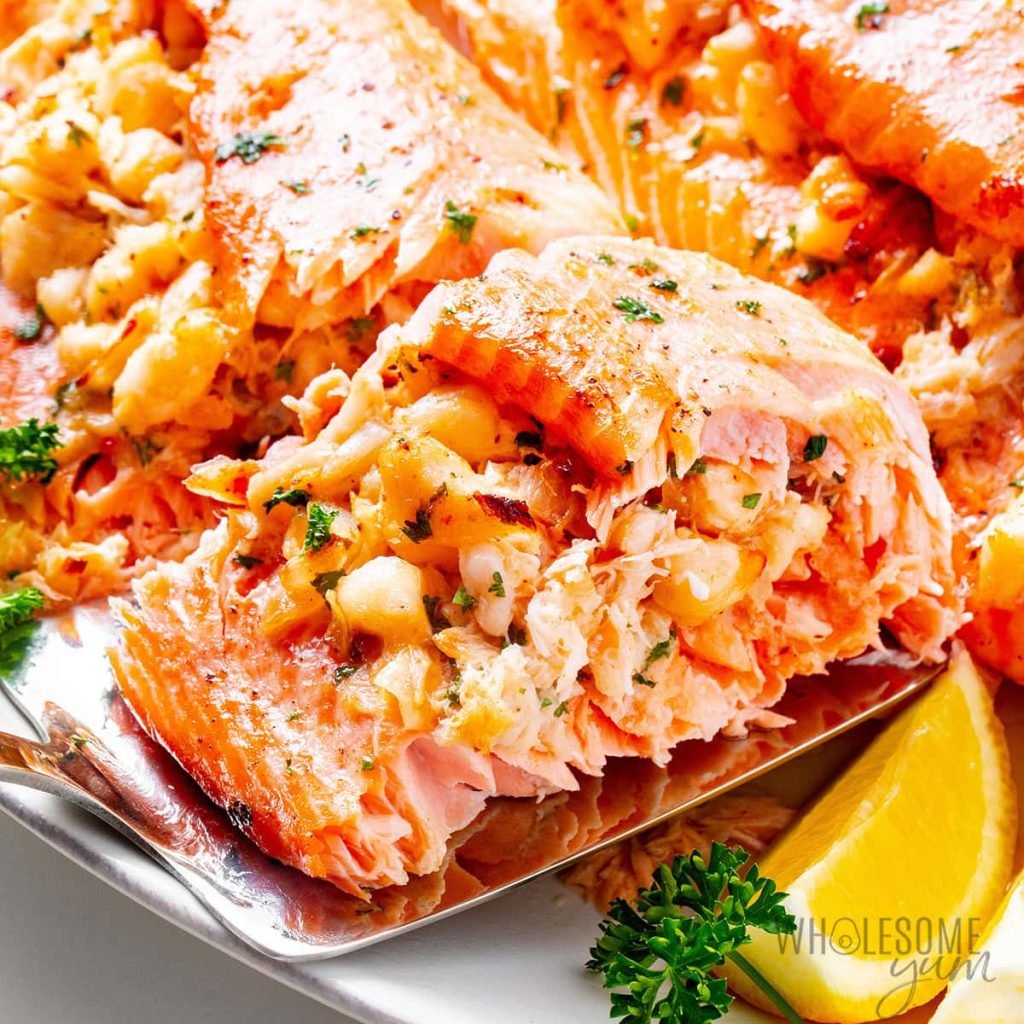
Stuffed salmon with crab meat is the ultimate crowd-pleasing gourmet dish that feels far more impressive than it is to make. Tender, flaky salmon cradles a rich, sweet filling of lump crab meat, creamy binder, and bright herbs, creating a perfect balance of textures and flavors that rivals any restaurant seafood entree. Whether you’re prepping a special occasion dinner for guests, a romantic date night meal, or a quick yet elegant weeknight dinner, this recipe delivers consistent, delicious results with minimal hands-on time. We’ll walk you through every step, from selecting the best ingredients to avoiding common cooking mistakes, so you can master this dish on your first try. Your taste buds will thank you!
Why This Stuffed Salmon With Crab Meat Recipe Stands Out
Unlike basic baked salmon, this recipe elevates a simple weeknight staple into a restaurant-quality centerpiece. The natural sweetness of lump crab meat cuts through the salmon’s rich, buttery flavor, while the creamy herbed filling keeps the fish moist and juicy even if you slightly overcook it. It’s also incredibly versatile: you can adapt the seasoning profile to match your preferences, make it ahead of time for meal prep or dinner parties, and pair it with almost any side dish to fit your dietary needs. Even people who don’t usually love seafood tend to love this recipe, as the familiar, approachable crab filling makes the dish feel far less “fishy” than plain salmon.
Ingredients For Stuffed Salmon With Crab Meat
Choosing the right components is the foundation of a flawless dish, with each ingredient playing a specific role in balancing flavor and texture.
Fresh Salmon Selection
For the best results, choose a 1.5 to 2-inch thick salmon fillet, skin-on if possible, as the skin helps hold the fillet together during cooking and adds extra crispiness if you pan-sear or broil the top. Wild-caught sockeye salmon offers a deeper, more robust seafood flavor and firmer texture, while farm-raised Atlantic salmon is milder, more readily available, and often more affordable. Either variety works beautifully, as long as the flesh is vibrant pink (no dull or brown spots), firm to the touch, and has a clean, ocean-fresh scent with no strong fishy odor. Avoid fillets that look dry or have excessive liquid pooling in the packaging, as these will cook up dry and bland.
Crab Meat Choices
The quality of your crab meat makes or breaks this dish, so opt for fresh or pasteurized lump crab meat whenever possible. Lump crab, made from the large, intact pieces of crab claw and body meat, offers a satisfying, chunky bite and sweet, delicate flavor that shines through the other ingredients. If fresh lump crab isn’t available, high-quality canned or frozen pasteurized crab works well—just be sure to drain it thoroughly and pat it dry with paper towels before using to avoid a soggy filling. Never use imitation crab (surimi) for this recipe: it has a mushy, artificial texture and overly processed flavor that overpowers the salmon, and often contains added fillers and preservatives that detract from the gourmet feel of the dish. For a regional twist, you can use Dungeness crab for a nuttier, earthier flavor, or blue crab for a sweeter, more delicate taste.
Binding & Flavor Additions
A creamy binder holds the crab filling together and adds richness that complements the salmon’s natural flavor. Full-fat cream cheese is the most popular choice, as it melts smoothly into the filling without making it greasy; full-fat sour cream works as a lighter alternative. For aromatics, finely minced shallot or garlic adds depth without overpowering the seafood, while chopped celery or red bell pepper adds a subtle crunch and fresh brightness. Fresh herbs are non-negotiable for optimal flavor: dill, flat-leaf parsley, and chives are classic choices, but tarragon adds a subtle anise note that pairs beautifully with crab. Season with kosher salt, freshly cracked black pepper, a squeeze of fresh lemon juice, and a pinch of Old Bay seasoning for extra seafood flavor; omit the Old Bay if you prefer a cleaner, herb-focused profile. If your filling feels too wet after mixing, add 1-2 tablespoons of panko breadcrumbs to absorb excess moisture.
Topping Options
A crispy topping adds textural contrast to the soft salmon and creamy filling. Panko breadcrumbs mixed with melted butter and grated Parmesan create a golden, crunchy crust when baked or broiled; gluten-free panko works for gluten-free diets. For a lower-carb option, skip the breadcrumbs and top with extra grated Parmesan and fresh herbs before baking. A final sprinkle of flaky sea salt and a drizzle of melted butter after cooking adds extra richness and flavor.
 Golden, flaky baked stuffed salmon with a creamy crab filling, fresh dill garnish, and crispy panko topping
Step-by-Step Preparation Guide
Proper prep is the key to avoiding common issues like leaked filling or undercooked salmon. Follow these steps for perfect results every time.
Prep the Salmon Pocket
Start by placing your salmon fillet skin-side down on a stable cutting board. Use a sharp chef’s knife to cut a 3-inch horizontal slit through the thickest part of the fillet, stopping 1 inch from the opposite edge to create a pocket without cutting all the way through. Gently open the pocket with a small spoon, and use fish tweezers to remove any hidden pin bones along the center line of the fillet—running your fingers along the flesh first helps you locate bones you might miss with the naked eye. Pat the inside of the pocket completely dry with a paper towel: this is a common oversight that leads to slipping filling and soggy cooked salmon. A common mistake here is cutting the slit too large, which makes it hard to seal the filling inside; if you do cut too far, you can tuck the excess salmon under the fillet before stuffing to create a tighter seal. After prepping raw seafood, scrub your cutting board and utensils thoroughly with a professional kitchen cleaning brush to avoid cross-contamination.
Make the Crab Filling
In a medium bowl, combine your drained, patted-dry lump crab meat with softened cream cheese, minced shallot, chopped fresh herbs, lemon juice and zest, kosher salt, black pepper, and optional Old Bay seasoning. Use a rubber spatula to gently fold the ingredients together, taking care not to break up the large lump crab pieces—overmixing will turn the filling mushy and lose the satisfying chunky texture. Taste the filling and adjust seasoning as needed: if it tastes flat, add a pinch more salt or a squeeze of lemon juice; if you prefer heat, add a pinch of cayenne pepper or a dash of hot sauce. If the filling feels too wet to hold its shape, stir in 1-2 tablespoons of panko breadcrumbs to absorb excess moisture.
Stuff and Secure the Salmon
Spoon about ½ cup of crab filling into the salmon pocket for a standard 6oz fillet, pressing it in gently to avoid air pockets. Do not overstuff: leaving ½ inch of space at the top of the pocket prevents the filling from bursting out during cooking as the salmon expands. To seal the pocket, press the edges of the slit together gently, then secure with 2-3 toothpicks for small fillets, or tie with kitchen twine at 1-inch intervals for larger fillets. For extra security, you can brush the edges of the slit with a light egg wash before pressing closed, which acts as a glue to hold the filling in. Chill the stuffed salmon in the refrigerator for 15 minutes before cooking: this helps the filling set and reduces the risk of leakage during cooking.
 Cross-section of perfectly cooked stuffed salmon, showing the ideal ratio of flaky salmon to sweet, chunky lump crab filling
Cooking Methods For Stuffed Salmon With Crab Meat
Each cooking method delivers a slightly different texture and flavor profile, so choose the one that best fits your timeline and equipment.
Oven-Baked (Most Foolproof Method)
Baking is the most reliable, low-effort cooking method for stuffed salmon, as it cooks the fish evenly without requiring constant attention. Preheat your oven to 375°F (190°C) and line a rimmed baking sheet with parchment paper for easy cleanup. Place the stuffed salmon skin-side down on the sheet, brush the top with melted butter, and top with panko mixture if using. Bake for 18-24 minutes, depending on the thickness of the fillet, until the salmon flakes easily with a fork and the crab filling is heated through. Per USDA food safety guidelines for seafood, salmon should reach an internal temperature of 145°F (63°C) to destroy harmful bacteria; it will carry over and cook 2-3°F while resting after removal from the oven. If you’re using a panko topping, switch the oven to broil for the final 2 minutes of cooking to get a golden, crispy crust, watching closely to avoid burning. Cover loosely with foil if the top is browning too fast before the fish is cooked through.
Grilled for Smoky Depth
Grilling adds a deep, smoky char that pairs beautifully with the sweet crab filling. Preheat your grill to medium-high heat (400°F) and oil the grates thoroughly to prevent sticking. For easiest cleanup and to prevent filling from falling through the grates, place the stuffed salmon in a grill basket or wrap it loosely in aluminum foil with a few lemon slices and fresh herbs. Grill for 6-8 minutes per side, until the salmon flakes easily and the internal temperature reaches 145°F. For extra aromatic flavor, soak cedar planks for 1 hour before grilling, then place the salmon on the planks and close the grill lid to cook for 12-15 minutes total, infusing the fish with a subtle woody smoke.
Pan-Seared for Crispy Skin
Pan-searing gives you ultra-crispy salmon skin and a tender, juicy interior, perfect for a quick weeknight meal. Heat a thin layer of neutral oil (like avocado or canola) in a cast-iron or non-stick skillet over medium-high heat. Place the stuffed salmon skin-side down in the skillet, pressing gently on the top of the fillet for 10 seconds to prevent the skin from curling. Cook for 4-5 minutes, until the skin is golden and crispy and releases easily from the pan. Flip the salmon carefully with a wide spatula to avoid spilling the filling, and cook for an additional 3-4 minutes, until the filling is heated through and the internal temperature reaches 145°F.
Serving & Pairing Ideas
The right sides, sauces, and presentation can turn this already delicious dish into a memorable, restaurant-quality meal.
Ideal Side Dishes
The rich, savory flavor of stuffed salmon pairs best with light, fresh sides that cut through the richness of the crab filling, or hearty starches that make the meal more filling. For light, low-carb options, try roasted asparagus tossed with lemon zest and olive oil, garlic parmesan green beans, or a simple arugula salad with a tangy lemon vinaigrette. For heartier meals, garlic mashed potatoes, lemon herb quinoa, wild rice pilaf, or roasted baby potatoes with fresh dill are all excellent choices that won’t overpower the delicate seafood flavor. Steamed broccoli or roasted cherry tomatoes add a pop of color and freshness to the plate.
Sauce Pairings
A well-chosen sauce adds moisture and brightens the flavor of the dish without overwhelming the salmon and crab. Lemon butter sauce is a classic pairing: melt 4 tablespoons of butter in a small pan, add 2 tablespoons of fresh lemon juice, 1 minced garlic clove, and 1 tablespoon of chopped fresh parsley, and simmer for 2 minutes until slightly thickened. For a creamier option, mix ½ cup of sour cream with 2 tablespoons of chopped fresh dill, 1 teaspoon of lemon juice, and a pinch of garlic powder for a quick dill cream sauce. For a sweet, tangy contrast, mango pineapple salsa adds a bright, tropical twist that works especially well for summer dinners. If you’re serving the dish for brunch, a light hollandaise sauce adds a rich, buttery finish.
Presentation Pro Tips
A little extra effort on presentation turns this dish into a showstopper. Serve the stuffed salmon on plain white plates to make the pink flesh and golden topping pop. Garnish with a sprinkle of fresh chopped dill or chives, a lemon wedge on the side, and a light drizzle of your chosen sauce around the edge of the plate (not directly over the fish, to keep any crispy topping intact). For special occasions, add a sprinkle of flaky sea salt and a few microgreens or edible flowers for an extra touch of elegance. If you’re serving a crowd, you can slice the stuffed salmon into 1-inch thick medallions after cooking, which makes portioning easy and looks stunning on a platter.
 Pan-seared stuffed salmon with crispy skin, served alongside roasted asparagus and lemon butter sauce
Nutritional Benefits & Dietary Notes
Stuffed salmon with crab meat is not only delicious, but also packed with nutrient-dense ingredients that support overall health. A 6oz serving of stuffed salmon (made with cream cheese and panko topping) provides roughly 450-500 calories, 35g of high-quality protein, and 20g of healthy fats, making it a satisfying, balanced meal. Salmon is one of the best dietary sources of omega-3 fatty acids (EPA and DHA), which reduce inflammation, support heart health, and improve cognitive function. It also provides 100% of the daily recommended intake of vitamin D, which supports bone health and immune function, as well as B vitamins that boost energy levels and support healthy skin and nerves. The astaxanthin antioxidant that gives salmon its pink color protects cells from oxidative damage. Crab meat is low in calories and fat, with a 3oz serving providing just 90 calories and 18g of protein. It’s also rich in zinc, which supports immune function and wound healing, selenium, a powerful antioxidant that supports thyroid health, and vitamin B12, which is essential for healthy nerve function and red blood cell production. This recipe is naturally gluten-free if you omit the breadcrumb topping or use gluten-free panko, and low-carb if you skip the topping entirely. For pescatarian diets, it’s a perfect protein-rich main dish, though be sure to source crab from sustainable fisheries if environmental impact is a priority for you.
Common Troubleshooting Tips
Even experienced home cooks run into small issues when making stuffed salmon, but these easy fixes will ensure perfect results every time.
Filling Leakage During Cooking
The most common cause of leaked filling is overstuffing the pocket, or using filling that’s too wet. To fix this: pat your crab meat thoroughly dry before mixing, add 1-2 tablespoons of breadcrumbs if the filling feels soggy, leave ½ inch of space at the top of the pocket when stuffing, and secure the edges tightly with twine or toothpicks. Chilling the stuffed salmon for 15 minutes before cooking also helps the filling set and stay in place.
Overcooked, Dry Salmon
Overcooking is the quickest way to ruin this dish, as it makes the salmon tough and the filling dry. Use an instant-read meat thermometer to check for doneness, and pull the salmon from the oven when it reaches 140°F (it will carry over to 145°F while resting). Let the salmon rest for 5 minutes after cooking before serving, which allows the juices to redistribute throughout the fish. If the top is browning too fast before the fish is cooked through, cover loosely with aluminum foil.
Bland Filling
If your filling tastes flat, you likely under-seasoned it. Always taste the crab filling before stuffing the salmon, and adjust salt, lemon juice, or herbs as needed. Fresh herbs have a much brighter, more vibrant flavor than dried, so opt for fresh whenever possible. A pinch of cayenne or dash of hot sauce adds subtle heat that balances the richness of the cream cheese and salmon. If you’re cooking with kids in the kitchen, install child safety locks for cabinets to keep cleaning supplies, sharp knives, and raw seafood out of reach to avoid accidents. For added peace of mind, use child proof drawer locks no screws to secure drawers holding utensils and cooking tools, so little helpers can’t access dangerous items unsupervised.
Frequently Asked Questions
Can I use frozen salmon for this recipe?
Yes, fully thawed frozen salmon works perfectly. Pat it completely dry with paper towels before creating the pocket to prevent sogginess, and adjust cooking time by 2-3 minutes if the fillet is thicker than fresh.
Can I substitute the crab meat?
Imitation crab is not recommended, as it has a mushy texture and artificial flavor that overpowers the salmon. If you don’t have lump crab, you can use a mix of crab and cooked, chopped shrimp for a similar sweet seafood flavor, or use fresh Dungeness crab for a more earthy, rich taste.
How long does leftover stuffed salmon keep?
Store leftovers in an airtight container in the refrigerator for up to 3 days. Reheat gently in the oven at 325°F for 10-12 minutes to avoid drying out the fish; avoid microwaving if possible, as it can make the salmon rubbery.
Can I make this recipe ahead of time?
Yes! You can prep the salmon up to 24 hours in advance: create the pocket, add the filling, secure it, and store covered in the fridge. Add 2-3 minutes to the cooking time if you’re baking it cold from the fridge, rather than letting it come to room temperature first.
Is this recipe kid-friendly?
Absolutely! You can omit the cayenne or extra spices, use mild herbs, and serve with a side of steamed veggies or mac and cheese that kids love. The sweet crab and flaky salmon are usually a hit with even picky eaters.
Conclusion
Stuffed salmon with crab meat is the perfect blend of approachable and impressive, making it ideal for everything from casual weeknight dinners to holiday feasts and date nights. The combination of flaky, buttery salmon, sweet lump crab, and creamy herbed filling creates a flavor profile that feels luxurious without requiring advanced cooking skills. With the prep and cooking tips outlined above, you’ll be able to make this dish consistently, avoiding common pitfalls like leaked filling or overcooked fish. Ready to test out this restaurant-quality recipe at home? For more easy, tested gourmet recipes perfect for any occasion, browse our full collection of tested dinner ideas. After cooking, a kitchen cleaning brush set makes quick work of scrubbing greasy baking sheets, fishy utensils, and grill grates without scratching surfaces, making cleanup a breeze.

I’m Abby Lu, a passionate home cook who loves simplifying everyday meals. At PlugChef.com, I share product reviews and cooking guides to help you find the best tools for your kitchen.
Related posts:
 Dish Drying Rack in Cabinet Over Sink: Maximize Space
 Deep Drawer Organizer for Pots And Pans: Maximize Kitchen Space
 How to Decorate With Tobacco Baskets: Timeless Charm Tips
 2-Tier Deep Kitchen Drawer Organizer: Maximize Space Effortlessly
 Craftsman Tool Box Drawer Organizer: Maximize Your Space
 Do Dollar General Sell Blenders: Find Out Here!

