
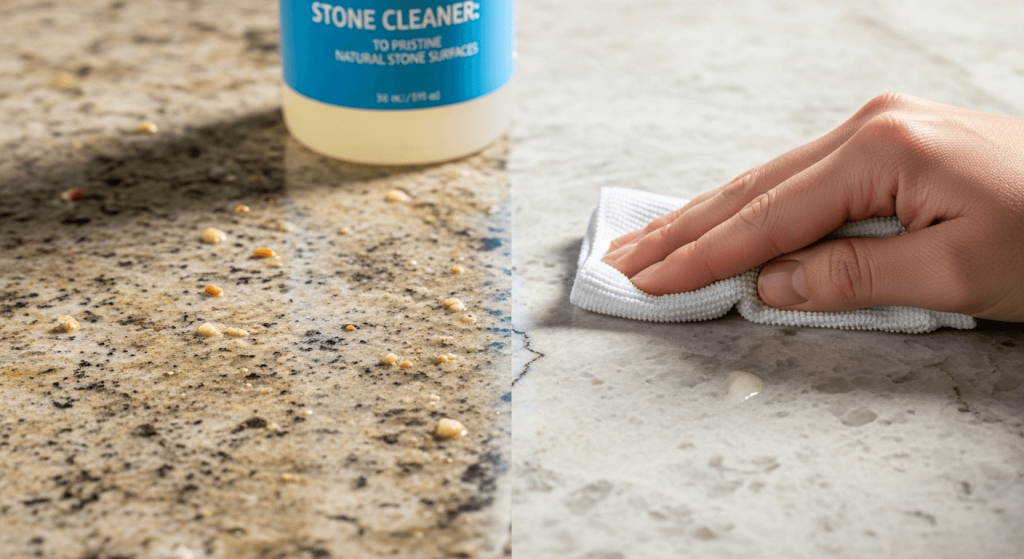
Natural stone countertops, floors, and fireplace surrounds are a timeless, high-value investment for any home – but they’re also surprisingly vulnerable to damage from improper cleaning. A single splash of vinegar on marble, or a harsh scouring pad on granite, can leave permanent etch marks, dullness, or stains that require expensive professional restoration to fix. The right stone cleaner, paired with proper maintenance, will keep your surfaces gleaming for decades without risk of damage.
This guide draws on industry-standard care guidelines from the Natural Stone Institute and real-world homeowner testing to walk you through identifying your stone type, selecting the safest and most effective cleaners, tackling stubborn stains, and avoiding the most common (and costly) cleaning mistakes. For more in-depth kitchen and home maintenance guides, browse our full kitchen care library for additional tips.
 A selection of top-rated pH-neutral stone cleaners formulated for different stone types and use cases
Identify Your Natural Stone Type First
The right stone cleaner depends entirely on the mineral composition of your surface, so accurate identification is the first step in any cleaning routine. Natural stone falls into three core categories, each with unique care needs:
- Siliceous stone: Includes granite, quartzite, slate, and soapstone. Made of silica-based minerals, these are highly durable, acid-resistant, and non-porous, making them the most low-maintenance natural stone options. They can tolerate occasional mild acidic cleaners for hard water spots, though pH-neutral formulas are still recommended for routine use.
- Calcareous stone: Includes marble, limestone, travertine, and onyx. Made of calcium carbonate, these are softer, more porous, and extremely sensitive to acidic substances. Even small amounts of vinegar, citrus, or tomato-based cleaners will etch the surface, leaving permanent dull, rough spots that can only be removed by professional polishing.
- Engineered stone: Includes quartz and quartzite composite. Made of ground stone bound with resin, these are non-porous and stain-resistant, but can be damaged by abrasive scrubbing pads or oil-based cleaners that break down the resin binder.
If you’re unsure of your stone type, check the product documentation from your installer, or test a small, hidden area (like the back of a cabinet overhang) with a tiny amount of pH-neutral cleaner to confirm it doesn’t cause discoloration or dullness.
Why Generic Cleaners Cause Irreversible Damage
Most standard household cleaners are formulated for tile, laminate, or stainless steel, not the delicate, porous surface of natural stone. Using the wrong product can cause three types of permanent damage:
- Etching: Acidic ingredients (vinegar, lemon juice, citrus, ammonia, wine, coffee) react with the calcium in calcareous stone, dissolving the top layer of the surface and leaving a matte, rough spot that cannot be fixed with cleaning alone.
- Discoloration and scratching: Abrasive particles in scouring pads, "heavy-duty" all-purpose cleaners, and even some "natural" cleaning blends can scratch polished finishes, leaving micro-scratches that trap dirt and make the stone look permanently dull. Harsh chemicals like bleach can also leach out natural pigments in marble and travertine, causing permanent yellowing or fading.
- Sealant degradation: Almost all natural stone is sealed during installation with a penetrating sealer that blocks stains and moisture. Acidic or highly alkaline cleaners break down this sealer over time, leaving the stone porous and prone to absorbing spills instantly.
A common mistake homeowners make is using dish soap for daily stone cleaning: while mild, residue-free dish soap is okay for occasional use, most formulas contain degreasers, fragrances, or citrus additives that leave a dull film on stone surfaces over time.
How to Choose the Right Stone Cleaner
When shopping for a stone cleaner, prioritize these four non-negotiable factors to ensure safe, effective results:
Prioritize pH-Neutral Formulas
Look for cleaners with a pH between 6.5 and 7.5, the neutral range that won’t react with stone or degrade sealant. The official Natural Stone Institute industry-standard stone care guidelines explicitly recommend pH-neutral cleaners for all routine natural stone cleaning to avoid long-term damage. Avoid any product labeled "acid-based" or "heavy-duty alkaline" unless it is explicitly marked safe for your specific stone type.
 pH-neutral stone cleaners are safe for all natural stone types, including delicate marble and limestone
Avoid All Abrasive Additives
Even fine micro-abrasives marketed for "scrubbing power" can scratch polished stone finishes, leaving micro-scratches that dull the surface over time. For textured stone like slate or tumbled marble that needs deeper grime removal, use a soft non-scratch cleaning brush to agitate dirt without causing damage.
Match the Formula to Your Use Case
- For daily wipe-downs of countertops and floors, a spray-on, no-rinse pH-neutral cleaner is most convenient.
- For bathrooms with soap scum or kitchen backsplashes with greasy buildup, a cream-based stone cleaner that can sit on the surface for 2–3 minutes before wiping will lift grime more effectively.
- For outdoor stone patios or walkways prone to moss or mildew, look for a pH-neutral cleaner with a mild, stone-safe mildewcide.
Confirm Sealant Compatibility
If you have an older home with topical (surface-level) sealant on your stone, avoid solvent-based cleaners that can dissolve the sealer. For modern installations with penetrating sealant (the standard for most new stone), any pH-neutral cleaner is safe. Test your sealer’s effectiveness every 6 months with a water droplet test: if water beads up on the surface, the sealer is intact; if it soaks in within 5 minutes, it’s time to reseal.
Top Stone Cleaner Categories for Every Need
Rather than one-size-fits-all product recommendations, these cleaner categories are tailored to common household stone care needs:
Best All-Purpose Daily Stone Cleaners
These spray-on formulas are ideal for routine countertop, floor, and tile cleaning:
- STONETECH Stone & Tile Cleaner: The most versatile all-purpose option, this pH-neutral, biodegradable formula is safe for all natural stone types and meets FDA guidelines for indirect food contact on kitchen countertops. It leaves no residue and requires no rinsing for most surfaces. Purchase STONETECH on Amazon
- Parker & Bailey Granite & Stone Cleaner: A gentle, streak-free formula ideal for daily use on polished stone surfaces, this pH-neutral cleaner lifts dirt and grime without leaving any residue or causing dullness. It’s safe for granite, marble, and quartz, and works well for both countertops and floors. Shop Parker & Bailey on Amazon
- Better Life Granite Cleaner & Polish: A plant-based, Leaping Bunny-certified eco-friendly option free of VOCs, synthetic fragrances, and harsh chemicals. It leaves a subtle shine that enhances stone’s natural luster, and is safe for households with kids and pets. Shop Better Life on Amazon
Best Heavy-Duty Stone Cleaners for Stubborn Grime
For set-in soap scum, grease, and high-traffic dirt:
- HG Natural Stone Cleaner Extra Strong: A pH-balanced, no-rinse formula designed to lift greasy kitchen backsplash grime and bathroom soap scum without acids or abrasives. It’s safe for all natural stone types, including delicate marble. Shop HG Natural Stone Cleaner on Amazon
- Stone Care International Granite Cleaner, Polish & Sealer: A 3-in-1 formula that cleans, adds a protective shine, and replenishes stone sealant in one step. It’s ideal for high-traffic areas like entryway tiles and kitchen floors that need extra protection. Shop Stone Care International on Amazon
Best Eco-Friendly Stone Cleaners
For households prioritizing low environmental impact:
- Method Granite Cleaner: Made with plant-derived ingredients and packaged in 100% recycled plastic, this pH-neutral formula is free of parabens, phosphates, and synthetic fragrances.
- Better Life Granite Cleaner & Polish (also listed above) is a top pick for its cruelty-free certification and food-safe formula.
Safe DIY Stone Cleaner Options
For light, routine cleaning, you can make your own effective stone cleaner at home: mix 1 cup of warm distilled water with 1–2 drops of mild, fragrance-free, pH-neutral dish soap (avoid citrus or degreasing formulas). Never use homemade mixes with vinegar, lemon juice, baking soda, or bleach, as these can etch, scratch, or discolor stone over time.
 Eco-friendly plant-based stone cleaners are free of harsh chemicals and safe for food-prep surfaces
 Cream-based heavy-duty stone cleaners are formulated to lift stubborn grime without damaging stone
Step-by-Step Stone Cleaning Routine
Follow this routine to keep your stone surfaces pristine without risk of damage:
Routine Daily/Weekly Cleaning
- Remove loose dust and debris with a soft microfiber cloth or soft-bristled broom – avoid stiff-bristled tools that can scratch polished finishes.
- Spray your pH-neutral stone cleaner directly onto a soft microfiber cloth (never directly onto the stone, to avoid oversaturation that can degrade sealant or cause mold growth).
- Wipe the surface in gentle, circular motions, agitating stuck-on grime on textured stone with a soft-bristled gentle scrubbing brush for deeper cleaning.
- Wipe the surface dry with a clean, dry microfiber cloth to prevent water spots.
 Spray cleaner onto a cloth first, not directly on the stone, to avoid oversaturation and sealer damage
 Wiping stone surfaces dry after cleaning prevents unsightly hard water spots
Deep Cleaning (Monthly or Quarterly)
- Clear all items from the surface to access the full area.
- Apply a cream-based stone cleaner to a soft cloth, working in small 1-foot sections to prevent the cleaner from drying on the surface.
- Let the cleaner sit for 2–3 minutes to lift built-up soap scum, grease, or dirt, then agitate with a soft-bristled brush.
- Wipe clean with a damp microfiber cloth, then dry thoroughly. Perform a water droplet test to check if resealing is needed.
 Cream-based stone cleaners are ideal for deep cleaning textured tile and removing stubborn buildup
Stain Removal for Common Spills
Act quickly to remove stains before they set:
- Oil-based stains (cooking oil, grease, butter): Blot up excess spill with a paper towel, then make a paste of baking soda and warm water. Apply to the stain, cover with plastic wrap, and let sit for 24 hours. Wipe clean, then reseal the area if needed. For stubborn stains, use a poultice of acetone and baking soda (test on a hidden area first for calcareous stone).
- Organic stains (wine, coffee, fruit juice, pet urine): Blot immediately (do not rub, which spreads the stain deeper into the stone). Apply a pH-neutral stone cleaner, let sit for 5 minutes, then wipe clean. For set-in stains, use a stone-specific oxygen bleach stain remover, avoiding chlorine bleach which can discolor stone.
- Hard water spots: For siliceous stone (granite, slate, quartzite), spray a 1:1 mix of distilled water and white vinegar, let sit 1 minute, then wipe clean. For calcareous stone (marble, limestone), use a pH-neutral descaler or a paste of cream of tartar and hydrogen peroxide, let sit 10 minutes, then wipe dry.
 All-purpose stone cleaners work for both polished and honed stone finishes
Common Stone Cleaning Mistakes to Avoid
Even with the right products, these common errors can cause permanent damage to your stone surfaces:
- Using acidic cleaners on calcareous stone: Even small amounts of citrus, vinegar, or tomato-based cleaners will etch marble, limestone, and travertine permanently. Never use these products on calcareous surfaces, even for "light" cleaning.
- Over-saturating stone with water: Excess water can seep into the stone’s pores, cause mold growth under the sealant, or leach out natural minerals leading to discoloration. Always wring out microfiber cloths thoroughly before wiping stone surfaces.
- Using abrasive scrubbing tools: Steel wool, scouring pads, and stiff-bristled brushes leave micro-scratches that dull the finish and trap dirt. Stick to soft microfiber cloths and soft-bristled brushes for all stone cleaning.
- Skipping regular sealing: Unsealed stone absorbs stains immediately, and once stains set, they are almost impossible to remove without professional restoration. Reseal high-traffic areas every 1–2 years, and low-traffic areas every 3–5 years.
- Using unlabeled all-purpose cleaners: Even if a cleaner claims to be "safe for all surfaces", most contain ingredients that degrade stone sealant over time. Only use products explicitly labeled safe for natural stone.
DIY Maintenance vs Professional Restoration: When to Call an Expert
For routine cleaning, minor stain removal, and DIY sealing, at-home care is more than sufficient to keep stone surfaces pristine. However, there are cases where professional help is worth the cost:
- Widespread etching or deep scratches that cannot be removed with household cleaners
- Set-in stains that do not respond to poultices or stain removers
- Complete sealant failure, where water soaks into the stone immediately across the entire surface
- Restoration of antique or high-value stone surfaces that require specialized polishing
Professional stone restoration costs $5–$15 per square foot for polishing and resealing, while DIY sealing kits cost just $0.50–$1 per square foot. Regular at-home maintenance can save you hundreds in professional costs over the lifetime of your stone surfaces.
Pro Tips for Long-Lasting Stone Beauty
These small, low-effort habits will extend the life and appearance of your stone surfaces:
- Always test any new cleaner on a small, hidden area of the stone before using it on the full surface.
- Use coasters, trivets, and placemats under glasses, dishes, and hot pans to prevent etching and heat damage.
- Blot spills immediately instead of wiping, which can spread the stain and push it deeper into the stone’s pores.
- For soapstone, which is naturally non-porous, you don’t need to apply a penetrating sealer, but occasional oiling with mineral oil will enhance its dark, rich patina.
- Avoid placing rubber-backed mats on stone floors for long periods, as they can trap moisture and cause discoloration.
- Pair your stone cleaner with a complete gentle cleaning tool set that includes microfiber cloths and soft-bristled brushes for streak-free, scratch-free results every time.
Conclusion
Natural stone surfaces add unmatched beauty and value to your home, but they require the right care to stay pristine for decades. The key takeaways for successful stone care are simple: identify your stone type, stick to pH-neutral, non-abrasive cleaners formulated for natural stone, follow a regular cleaning and sealing routine, and avoid common mistakes like using acidic cleaners or abrasive tools. With consistent, proper care, your granite countertops, marble floors, and slate backsplashes will look as stunning in 20 years as they did the day they were installed.
Ready to refresh your stone surfaces? Start with a pH-neutral cleaner formulated for your specific stone type, and pair it with top-rated gentle cleaning tools designed for delicate surfaces for flawless results every time.
Frequently Asked Questions
Can I use vinegar to clean natural stone?
No. Vinegar is acidic and will etch calcareous stones like marble, limestone, and travertine, leaving permanent dull, rough spots. It can also degrade the protective sealant on all natural stone types over time. For siliceous stones like granite and slate, diluted vinegar is occasionally safe for hard water spots, but pH-neutral stone cleaner is always the better choice.
How often should I seal natural stone surfaces?
Sealing frequency depends on use and stone type: high-traffic kitchen countertops need resealing every 1–2 years, while low-traffic bathroom floors can go 3–5 years. Test by dripping water on the surface: if it beads up within 5 minutes, the sealer is intact; if it soaks in immediately, it’s time to reseal.
What is the best homemade stone cleaner?
For light daily cleaning, mix 1 cup warm water with 1–2 drops of mild, fragrance-free, pH-neutral dish soap (avoid citrus or degreasing formulas). Never use vinegar, lemon juice, baking soda, or bleach in homemade stone cleaners, as these can etch, scratch, or discolor stone surfaces over time.
Why is my granite countertop dull after cleaning?
Dullness after cleaning usually comes from three sources: abrasive cleaner or scrubbing pads that left micro-scratches, residue from soap or all-purpose cleaner that builds up over time, or degraded sealant that no longer protects the stone's polished finish. Switch to a pH-neutral stone cleaner and soft cloths to fix the issue.
Can I use dish soap to clean marble?
Only occasionally, and only mild, fragrance-free, pH-neutral dish soap. Regular dish soap often contains acids, citrus, or degreasing agents that can etch marble's calcareous surface over time, and can leave a dull, sticky residue that attracts dirt. For routine cleaning, use a cleaner formulated specifically for natural stone.
How do I remove hard water stains from natural stone?
For siliceous stone (granite, slate, quartzite), spray a 1:1 mix of distilled water and white vinegar, let sit 1 minute, then wipe clean. For calcareous stone (marble, limestone), use a pH-neutral descaler or a paste of cream of tartar and hydrogen peroxide, let sit 10 minutes, then wipe dry.

I’m Abby Lu, a passionate home cook who loves simplifying everyday meals. At PlugChef.com, I share product reviews and cooking guides to help you find the best tools for your kitchen.
Related posts:
 How to Make a Fruit Basket for a Gift: Easy DIY Guide
 Do You Need a Basket? Essential Guide for Air Fryers
 Gray Kitchen With Stainless Steel Appliances: Modern Elegance
 Appliance Play Food Kitchen Toys: Ignite Imaginative Play
 How Long Do Beauty Blenders Last: Expert Tips Unveiled
 Philips Kitchen Appliances Compact Pasta And Noodle Maker: Effortless Homemade Pasta

