Small Glass Food Storage Containers With Lids: Perfect for Meal Prep
Small glass food storage containers with lids are a game-changer for anyone who regularly preps meals, packs lunches, or organizes kitchen leftovers. Unlike plastic, glass doesn’t retain odors, stain from tomato sauce or curry, or leach harmful chemicals when heated in the microwave, making it a safer, longer-lasting choice for daily use. These compact, leak-proof containers are ideal for portion control, reducing food waste, and cutting down on single-use plastic packaging. In this guide, we’ll break down the key features to look for, review top picks for every use case (from full weekly meal prep to baby food storage), and share practical care tips to keep your containers in top shape for years.
Why Small Glass Food Storage Containers With Lids Are Ideal for Meal Prep
For meal prep specifically, small glass containers offer unique benefits that plastic simply can’t match. The U.S. Food and Drug Administration (FDA) confirms that glass is a non-toxic, food-safe material that does not leach chemicals into food, even when exposed to high heat, eliminating the risk of BPA or phthalate exposure common with worn plastic containers U.S. FDA food storage safety guidance. Glass also resists staining and odor retention, so you can store bright curries, coffee, or berry smoothies one day, and plain leftovers the next, with no lingering aftertaste. Its even heating properties eliminate hot spots in the microwave, so your meals warm uniformly without burnt edges or cold centers. The pre-portioned small sizes (typically 4oz to 2 cups) make it easy to stick to dietary goals, while airtight, leak-proof lids let you toss containers in your work bag or lunchbox without worrying about spills. The only notable trade-off is weight: glass is heavier than plastic, but for most meal prep use cases, the difference is negligible, and the durability and safety benefits far outweigh this minor downside. If you’re prepping small ingredients like cheese slices for lunchboxes, our guide to even cheese portioning tips has easy steps for uniform cuts. If you have young kids in the home, pair these containers with childproofing cabinet hardware to keep cleaning supplies and sharp objects out of reach while you prep meals. For more ideas on streamlining your kitchen routine, check out our kitchen workflow ideas for busy home cooks.
Key Features to Look for When Shopping
Not all small glass food storage containers are created equal, so prioritize these features to get the most value for your money:
- Lid quality: Opt for lids with silicone gaskets for an airtight seal, and avoid cheap plastic lids that crack or warp after repeated dishwasher cycles. Look for labels that explicitly state "BPA-free" if you have chemical sensitivity concerns.
- Glass type: Tempered soda-lime glass works for everyday use, while borosilicate glass is more resistant to thermal shock, making it safe for direct transitions from freezer to microwave (or oven, if the container is labeled oven-safe).
- Size range: For full meal prep, 1.5 to 2-cup containers fit standard grain bowls, soups, or stir-fries. For snacks, dressings, or sides, 4oz to 1-cup sizes are more versatile.
- Stackability: Nested containers and lids save cabinet space, a huge plus for small kitchens. Look for sets with lids designed to stack inside the containers for compact storage.
- Certifications: If you’re buying for baby food, look for containers certified free of lead and cadmium, in addition to BPA.
Top Small Glass Food Storage Container Picks for Every Use Case
Best for Weekly Full Meal Prep: GULFLIN 24-Piece Small Glass Food Storage Containers
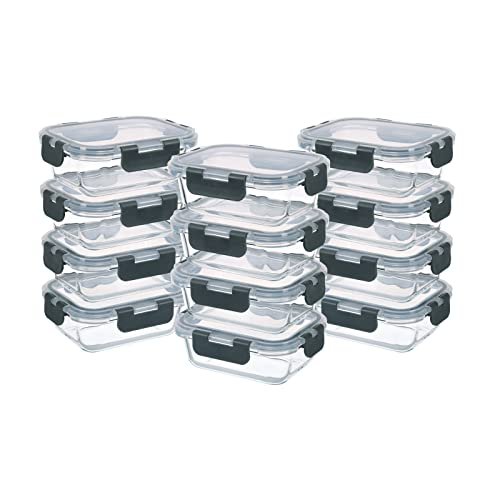
This 24-piece set includes 12 1.5-cup glass containers and 12 matching airtight grey lids, making it the most budget-friendly option for prepping a full week of lunches for one or two people. The uniform size is perfect for portion control, and the non-slip lids are easy to open even with wet or soapy hands. A common mistake new users make is overfilling the containers; leave ½ inch of headspace to ensure the seal closes properly and prevent leaks during transport. In practice, many users label lids with a dry-erase marker to mark prep dates, cutting down on food waste from forgotten leftovers.
Pros: Leak-proof airtight seal, microwave and dishwasher safe, BPA-free, uniform size for consistent portions.
Cons: No size variety, so not ideal if you need larger or smaller containers for different meals.
 These uniform 1.5-cup containers are ideal for prepping identical lunch portions for a full work week.
If you’re ready to eliminate weekly meal prep stress, this all-in-one set is available here.
These uniform 1.5-cup containers are ideal for prepping identical lunch portions for a full work week.
If you’re ready to eliminate weekly meal prep stress, this all-in-one set is available here.
Best for Versatile Cooking and Storage: Anchor Hocking Glass Storage Sets
Anchor Hocking is a legacy American glass brand known for durable, restaurant-quality containers, and their small sets are perfect for users who want containers that can go from stovetop or oven to fridge to microwave without transferring food.
First, the 12-piece set includes 6 assorted-size containers (two each of 1-cup, 1.5-cup, and 2-cup sizes) with navy blue SnugFit lids, rated safe for microwave, oven (up to 450°F), freezer, and dishwasher. The only downside is the limited navy blue lid color, so you can’t color-code meals by type.
 The oven-safe design lets you cook small meals directly in the container, then store leftovers without extra dishes.
If you want a single set that handles every step of meal prep, this 12-piece collection is available here.
For users who prefer matching sizes, the 1-cup and 2-cup Anchor Hocking sets are perfect add-ons: the 1-cup size fits dressings, yogurt, nuts, and side portions, while the 2-cup size holds full grain bowls, soup, or pasta.
The oven-safe design lets you cook small meals directly in the container, then store leftovers without extra dishes.
If you want a single set that handles every step of meal prep, this 12-piece collection is available here.
For users who prefer matching sizes, the 1-cup and 2-cup Anchor Hocking sets are perfect add-ons: the 1-cup size fits dressings, yogurt, nuts, and side portions, while the 2-cup size holds full grain bowls, soup, or pasta.
 The compact 1-cup size is ideal for prepping individual snacks and sides.
Grab this 6-pack of 1-cup containers here for versatile small-batch storage.
The compact 1-cup size is ideal for prepping individual snacks and sides.
Grab this 6-pack of 1-cup containers here for versatile small-batch storage.
 The 2-cup capacity fits standard single-serve meals without overflow.
For a slightly larger portion size for full meals, this 4-pack is available here.
A critical care note: never place Anchor Hocking’s plastic SnugFit lids in the oven, even if the glass is oven-safe, as high heat will warp the plastic seal.
The 2-cup capacity fits standard single-serve meals without overflow.
For a slightly larger portion size for full meals, this 4-pack is available here.
A critical care note: never place Anchor Hocking’s plastic SnugFit lids in the oven, even if the glass is oven-safe, as high heat will warp the plastic seal.
Best for Snacks, Small Batches, and On-the-Go
These smaller, specialized containers are perfect for prepping snacks, ingredients, or single-serve meals to grab on your way out the door.
First, the 3Pack Povinmos 10oz Overnight Oats Containers feature wide mouths and secure screw-on lids, making them ideal for thick foods like overnight oats, layered parfaits, salad dressings, or spice mixes. The compact size fits easily in lunch bags and gym totes.
 The wide mouth design makes scooping thick overnight oats or chia pudding mess-free.
For a versatile set of small jars perfect for snacks and ingredients, shop this 3-pack here.
Next, the EONJOE 6-Pack 8oz Glass Jars have a clear, slim design that fits easily in fridge doors and pantry shelves, perfect for storing jam, homemade baby snacks, candy, or small batches of sauce.
The wide mouth design makes scooping thick overnight oats or chia pudding mess-free.
For a versatile set of small jars perfect for snacks and ingredients, shop this 3-pack here.
Next, the EONJOE 6-Pack 8oz Glass Jars have a clear, slim design that fits easily in fridge doors and pantry shelves, perfect for storing jam, homemade baby snacks, candy, or small batches of sauce.
 The clear glass lets you spot contents quickly without opening each jar during busy morning routines.
For a pack of versatile small jars for pantry storage, grab this 6-pack here.
The B.GUBOBOYA 4-Pack 1.5-Cup Round Containers are perfect for soup, leftover pasta, or small portioned meals, with BPA-free airtight lids that prevent leaks during transport.
The clear glass lets you spot contents quickly without opening each jar during busy morning routines.
For a pack of versatile small jars for pantry storage, grab this 6-pack here.
The B.GUBOBOYA 4-Pack 1.5-Cup Round Containers are perfect for soup, leftover pasta, or small portioned meals, with BPA-free airtight lids that prevent leaks during transport.
 The round shape fits easily in lunch bags and small fridge compartments for on-the-go meals.
If you need small round containers for soup and leftovers, this 4-pack is ready to ship here.
Finally, the Libbey 8-Pack 6.25oz Small Glass Bowls with Lids are a multi-use option for prepping individual snacks, serving sides at dinner, or storing small leftovers. The clear, elegant design works for both meal prep and casual entertaining.
The round shape fits easily in lunch bags and small fridge compartments for on-the-go meals.
If you need small round containers for soup and leftovers, this 4-pack is ready to ship here.
Finally, the Libbey 8-Pack 6.25oz Small Glass Bowls with Lids are a multi-use option for prepping individual snacks, serving sides at dinner, or storing small leftovers. The clear, elegant design works for both meal prep and casual entertaining.
 The 3.45-inch diameter fits easily in lunch bags and standard fridge shelves.
For a versatile set that works for both meal prep and casual serving, grab this 8-pack here.
The 3.45-inch diameter fits easily in lunch bags and standard fridge shelves.
For a versatile set that works for both meal prep and casual serving, grab this 8-pack here.
Best for Baby Food and Toddler Meals: Rowinsydd 5-Pack Glass Baby Food Storage Containers
These 4oz leak-proof glass jars are designed specifically for parents making homemade baby food, with BPA-free, BPS-free lids and a shatter-resistant design (though still more fragile than plastic, so handle with care). The multi-color lids make it easy to color-code different purees or meal types, and the containers are microwave, freezer, and dishwasher safe. In practice, most parents freeze portions in these jars, then pop them directly into the microwave for 30-second bursts to warm food, no transferring needed. The only downside is the small 4oz capacity, which is ideal for infants but may be too small for older toddlers with larger appetites. If you’re storing baby food in lower cabinets, add toddler-proof cabinet locks to keep little ones from accessing them unsupervised.
Pros: Leak-proof seal, BPA-free, color-coded lids, microwave and freezer safe.
Cons: Small capacity for older kids, glass can break if dropped.
 Color-coded lids let you quickly identify different purees or meal types for little ones.
For parents seeking a safe, leak-proof option for homemade baby food, this 5-pack is available here.
Color-coded lids let you quickly identify different purees or meal types for little ones.
For parents seeking a safe, leak-proof option for homemade baby food, this 5-pack is available here.
Care and Maintenance for Long-Lasting Use
With proper care, high-quality small glass food storage containers can last 5+ years, making them a more cost-effective investment than disposable plastic or cheaper glass sets that crack after a year of use. Follow these tips to keep your containers in top shape:
- Avoid thermal shock: Never transfer boiling hot food to a room-temperature glass container, or take a container straight from the freezer to the oven, even if it’s borosilicate glass. Sudden temperature changes can cause cracking. Let frozen food thaw in the fridge first, or use the defrost setting on your microwave.
- Clean lids carefully: Hand-wash plastic lids if you notice warping after repeated dishwasher cycles, and avoid abrasive scrubbers that can scratch the silicone seal and cause leaks over time. For tough stains or stuck-on food, scrub with a sturdy cleaning brush and warm soapy water.
- Remove stains and odors: For stubborn tomato or curry stains, soak the container in a mixture of warm water and 1-2 tablespoons of baking soda for 30 minutes, then rinse. For lingering odors, leave a mix of equal parts water and white vinegar inside the container overnight, then wash as usual.
- Store safely: Nest lids inside containers or stack them separately to prevent chipping, and avoid stacking heavy items on top of glass containers in the pantry. The USDA recommends storing leftovers at 0°F or below to prevent spoilage, and airtight glass containers are ideal for meeting this standard USDA food safety guidance for frozen food storage.
Frequently Asked Questions
Are small glass food storage containers with lids safe for the microwave?
Yes, nearly all small glass containers are microwave-safe, but always remove the lid first to avoid pressure buildup. Avoid containers with metal accents, and reheat in 30-second intervals to prevent hot spots.
Can I store liquids in these containers?
Absolutely. Most high-quality sets come with airtight, leak-proof lids that prevent spills when properly sealed. A quick test to confirm: fill the container with water, close the lid tightly, and turn it upside down over the sink. If no water drips out, the seal is working.
Are the lids BPA-free?
Nearly all reputable brands use BPA-free plastic or silicone lids, but always check product packaging if you have specific chemical sensitivity concerns. Look for labels that explicitly state "BPA-free" or "phthalate-free" for extra peace of mind.
How do I clean these containers?
All sets in this guide are dishwasher-safe, but hand-washing lids can extend their lifespan by preventing warping. For manual cleaning, use mild soap and warm water, and avoid abrasive scrubbers that can scratch the glass or lid seal.
Can these containers be used in the freezer?
Yes, glass is non-porous, so it won’t absorb freezer odors or stain from frozen foods. Leave 1-2 inches of headspace for liquids that expand when frozen, and ensure lids are tightly sealed to prevent freezer burn.
Are these containers oven-safe?
Only select sets (like the Anchor Hocking line) are rated for oven use, typically up to 450°F. Never place plastic lids in the oven, as they will melt. If you plan to use your containers for baking, confirm the oven-safe rating on the product packaging before purchasing.
Final Verdict
Small glass food storage containers with lids are a worthwhile investment for anyone who regularly meal preps, packs lunches, or wants to reduce plastic waste in their kitchen. The best pick for you depends on your specific use case:
- For prepping a full week of identical lunches, the GULFLIN 24-piece set offers unbeatable value.
- For versatile use that includes cooking and reheating, the Anchor Hocking 12-piece set is the most flexible option.
- For snacks, small batches, and on-the-go meals, the 3Pack Overnight Oats, EONJOE, or B.GUBOBOYA sets fit the bill.
- For homemade baby food, the Rowinsydd 5-pack is purpose-built for safety and convenience. With proper care, these containers will last for years, keeping your food fresh, your kitchen organized, and your meal prep routine effortless. Upgrade your storage setup today and enjoy the peace of mind that comes with safe, reliable food storage.

I’m Abby Lu, a passionate home cook who loves simplifying everyday meals. At PlugChef.com, I share product reviews and cooking guides to help you find the best tools for your kitchen.
Similar Posts