
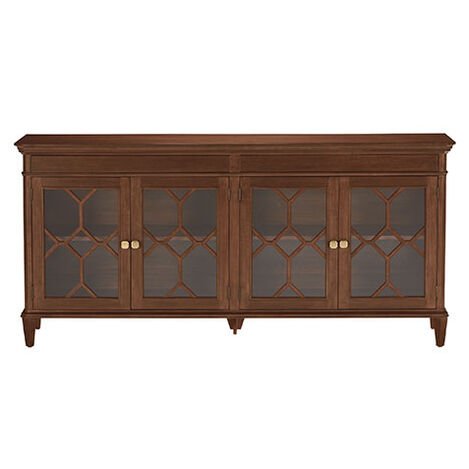
If you’ve ever browsed dining room furniture, you’ve likely seen the terms sideboard, buffet, and server used interchangeably — even by retailers. While these pieces share overlapping storage and serving functions, they are built for distinct use cases, space requirements, and styles. Choosing the wrong one can leave you with a piece that doesn’t fit your room, can’t hold your dishware, or gets in the way of daily use. This guide breaks down exact differences, practical use cases, and buying guidance to help you pick the right piece for your home in 2026, no confusing jargon required.
Core Definitions: Sideboard, Buffet, And Server
Before comparing features, it’s critical to understand what each piece is designed to do, as their core purpose dictates their build, size, and ideal use case.
What Is A Sideboard?
A sideboard is a low-profile storage cabinet originally built for dining rooms to hold dinnerware, linens, and serving supplies out of sight. Standard sideboards stand 30–36 inches tall, 30–36 inches deep, and 48–84 inches wide, making them one of the larger options of the three. They are designed first for concealed storage, with most models featuring 2–4 closed cabinets, 1–3 drawers, and optional adjustable shelves to accommodate bulky items like full dinnerware sets, tablecloths, or small kitchen appliances. While their flat top can be used for serving during gatherings, that is a secondary function. Modern sideboards are also commonly used as entryway storage, living room media consoles, or bedroom dressers thanks to their versatile sizing.
What Is A Buffet?
A buffet is a long, shallow cabinet built first for food service during meals, with secondary storage for dining essentials. Standard buffets are the same height as sideboards (30–36 inches) but are typically longer (60–96 inches wide) and shallower (18–22 inches deep) to leave room for placing large serving platters and drink stations. Most buffets feature a mix of 1–2 deep closed cabinets for bulk storage, 2–4 drawers for utensils and small items, and optional open shelving for displaying decorative pieces. They are almost exclusively used in dining rooms, positioned close to the dining table for easy serving during meals. Many high-end buffets also come with optional attached hutches for extra display and storage space.
What Is A Server?
A server is the smallest, most compact of the three pieces, built explicitly for serving food and drinks during gatherings with minimal bulk storage. Standard servers stand 24–30 inches tall, 16–20 inches deep, and 24–36 inches wide, making them ideal for tight spaces. They typically feature 1–3 open shelves for holding plates, glasses, and serving utensils, plus 1–2 shallow drawers for small items like napkins or cutlery. Many servers are fitted with lockable caster wheels for easy transport from kitchen to dining area, and some high-end models include built-in features like wine glass holders or small refrigerated compartments for keeping sides cool. Servers work well as dedicated serving stations, kitchen prep surfaces, or even small bar stations in living rooms.
Quick At-A-Glance Comparison Table
| Feature | Sideboard | Buffet | Server |
|---|---|---|---|
| Primary Purpose | Concealed bulk storage | Serving food + secondary storage | Compact serving station |
| Typical Size (WxDxH) | 48–84” x 30–36” x 30–36” | 60–96” x 18–22” x 30–36” | 24–36” x 16–20” x 24–30” |
| Storage Style | Mix of closed cabinets + drawers | Mix of closed cabinets + open shelves | Open shelves + shallow drawers |
| Serving Capability | Secondary, limited by depth | Primary, large unobstructed top | Primary, narrow, portable |
| Average 2026 Price | $250–$1,800 | $600–$3,200 | $180–$1,200 |
Key Features And Practical Differences
While the definitions above outline core purposes, the small design differences between these pieces have a big impact on how well they fit your needs.
Storage Capacity And Layout
Storage is the biggest differentiator between the three pieces, and the right choice depends on how much you need to store and what type of items you have:
- Sideboards offer the highest closed storage capacity, with most models including 2–4 full-height cabinets and 1–3 deep drawers. Adjustable shelves let you customize space for irregularly shaped items like serving platters, stand mixers, or large linen sets. Closed storage also hides clutter and protects delicate items from dust and sunlight.
- Buffets have a mix of closed and open storage, with 1–2 deep cabinets for bulk items and 2–4 drawers for small essentials. Open shelves are often included for displaying heirloom china or decorative pieces, but items left out will collect dust faster than closed storage.
- Servers have minimal closed storage, with most models only including 1–2 shallow drawers. Open shelves are the primary storage feature, making it easy to grab items quickly during meals, but offering no protection from dust or messes.
A common mistake is buying a server expecting it to hold a full 12-piece dinnerware set — most servers can only hold 4–6 place settings at most.
Serving Functionality
If you plan to use your piece for hosting, serving functionality should be a top priority:
- Buffets are purpose-built for serving, with a wide, shallow top surface that has no overhangs or decorative trim to get in the way of placing large serving dishes. Many high-end buffets also have scratch-resistant tops rated for heavy platters and hot dishes, making them ideal for holiday meals and dinner parties.
- Sideboards can be used for serving, but their deeper top surface (30–36 inches) makes reaching across for dishes less convenient, and decorative trim on some models can get in the way of large serving trays.
- Servers are optimized for easy serving, with a narrow width that lets you place them directly next to the dining table for quick passing of dishes. Caster wheels let you roll the server out for meals and tuck it away when not in use, and built-in features like utensil caddies or wine glass holders eliminate the need to run back to the kitchen for supplies.
Design And Style Flexibility
All three pieces come in a huge range of styles, but their size and build impact how well they fit different decor schemes:
- Sideboards are the most versatile style-wise, available in every design from rustic farmhouse to mid-century modern to traditional ornate. Their size makes them a statement piece in dining rooms, but they also work well as entryway storage, living room media consoles, or even bedroom dressers.
- Buffets are typically designed to match dining table sets, so they work best as a coordinated addition to your dining room. They are available in every finish from painted white to dark walnut to high-gloss lacquer, and their large size makes them a natural focal point for the space.
- Servers are the most subtle of the three, with their small size making them easy to tuck into tight spaces without overwhelming a room. They are popular in modern, industrial, and minimalist spaces, with many models featuring slim metal frames, glass shelves, or light wood tones that blend seamlessly with existing decor.
Placement And Sizing Guide For Your Space
The wrong placement can make even the most beautiful piece feel cramped or impractical. Follow these guidelines to ensure your chosen piece fits your space perfectly.
Measuring Your Space Correctly
Before you shop, take three key measurements to avoid costly mistakes:
- Measure the wall or area you plan to place the piece, and leave at least 30 inches of clearance in front for walking and chair pull-out. For dining rooms, leave at least 36 inches of clearance behind the dining table for people to walk behind seated guests.
- Measure all doorways, hallways, and staircases the piece will need to pass through to reach its spot. Standard interior doors are 30–32 inches wide, so any piece over 28 inches wide may need to be disassembled or carried in sideways.
- Note the depth of the space: dining room pieces should be no deeper than 24 inches if placed against a wall, to avoid blocking walkways.
Ideal Placement By Furniture Type
Each piece works best in specific locations:
- Sideboards are most often placed against a long dining room wall, opposite the dining table for easy access during meals. They also work well in entryways (36-inch tall models fit under most wall art) or living rooms as media consoles if they are 18–20 inches deep.
- Buffets should be placed directly adjacent to the dining table, no more than 3 feet away, so you don’t have to walk far to serve dishes. They are best suited for dining rooms of 12×12 feet or larger, as their 60+ inch width can overwhelm small spaces.
- Servers are perfect for small dining nooks, apartment dining areas, or kitchen islands as extra prep space. Their narrow width fits in tight spots, and their portable design lets you move them around as needed.
Traffic Flow And Safety Tips
To keep your space functional and safe:
- Avoid placing any of these pieces in front of windows that open, or in high-traffic areas like entryways next to front doors.
- If you have an open floor plan, a sideboard can act as a subtle room divider between dining and living areas, as long as it is at least 36 inches tall to create visual separation.
- For homes with young children, anchor all tall pieces (sideboards and buffets over 36 inches tall) to the wall to prevent tip-over accidents, following guidelines from the U.S. Consumer Product Safety Commission.
Budget And Long-Term Value
Furniture is a long-term investment, and understanding pricing and value will help you avoid overspending on a piece that won’t last.
2026 Price Range Comparisons
Prices vary widely based on material, construction quality, and brand, but current 2026 market rates break down as follows:
| Furniture Type | Typical Price Range | Material Impact On Cost |
|---|---|---|
| Sideboard | $250–$1,800 | Solid hardwoods (oak, walnut) drive higher prices; engineered wood with veneer is more budget-friendly |
| Buffet | $600–$3,200+ | Solid wood construction, custom finishes, and attached hutches add significant cost |
| Server | $180–$1,200 | Simple designs and MDF/particleboard builds keep prices low; solid wood and metal accents increase cost |
Don’t forget to factor in hidden costs: delivery for large buffets can cost $50–$150, while servers are small enough to transport in a standard passenger vehicle.
Value For Money By Use Case
The most expensive option isn’t always the best fit for your needs:
- If you host regularly and need a durable serving station, a $1,200 solid wood buffet will offer more long-term value than a $400 particleboard model that will warp or chip after 2–3 years of heavy use.
- If you need everyday storage for a family of 4, a $600 solid wood sideboard will last 20+ years with proper care, making it a better investment than a $250 MDF model that will need replacing in 5 years.
- If you live in a small apartment and only need occasional serving space, a $200 server is a cost-effective choice that won’t take up permanent space in your home.
Longevity And Resale Potential
Construction quality is the biggest driver of long-term value:
- Solid hardwood sideboards and buffets with dovetail drawer joints and soft-close hinges can last 20+ years with proper care, and often retain 50% or more of their original value if resold.
- Servers and budget particleboard pieces typically have a lifespan of 5–7 years with heavy use, and have very low resale value due to their utilitarian design.
- If you plan to move frequently, opt for a server or compact sideboard that is easy to transport, rather than a large, heavy buffet that will be costly to move.
Choosing Based On Your Lifestyle
The best piece for your home depends entirely on your daily habits and needs. Use these scenarios to match a piece to your lifestyle:
For Frequent Entertainers
If you host dinner parties, holiday meals, or game nights for 6+ people regularly, a buffet is your best bet: its large, unobstructed top surface lets you set up a full serving station, deep cabinets hold extra tableware and serving platters, and optional hutches provide extra space for displaying decor during non-hosting days. If you only entertain 2–4 people occasionally, a server is a more flexible option that can be rolled out for meals and tucked away when not in use. If you want a piece that works for both daily storage and occasional serving, a sideboard with a scratch-resistant top is the perfect middle ground.
For Small Spaces And Apartments
If you live in a studio, 1-bedroom apartment, or small home with limited square footage, a server is the most space-efficient option: its narrow 24–36 inch width fits easily in a dining nook, can double as a kitchen prep station, or even serve as a makeshift desk if needed. A slim sideboard (under 60 inches wide) works if you need more closed storage for linens and dishware, but avoid buffets entirely, as their 60+ inch width will overwhelm small spaces.
For Large Families And Daily Use
If you have a family of 4+ and plan to use the piece daily for storing dinnerware and serving meals, a sideboard is the most durable option: closed cabinets protect dishes from dust and kids’ messes, and sturdy solid wood construction holds up to daily wear and tear. Avoid servers with glass shelves or delicate metal accents, as they are prone to breaking in high-traffic homes. If you regularly host family gatherings, a buffet is a good secondary option for extra serving space.
For Style And Display Needs
If you want to display heirloom china, vintage glassware, or decorative items, a sideboard with glass-front cabinets or open shelving is perfect, as it lets you showcase your collection while keeping it protected from dust. If you want a statement piece for your dining room, a buffet with a bold finish (distressed wood, high-gloss lacquer) will anchor the space and tie together your dining set. If you want a subtle, multi-functional piece that fits modern or industrial decor, a server with slim metal framing and wood shelves is a low-profile option that won’t compete with other decor.
Maintenance And Durability
A piece’s lifespan depends as much on how you care for it as its initial build quality. Follow these guidelines to keep your sideboard, buffet, or server looking new for years.
Cleaning And Upkeep By Material
Different materials require different care routines to avoid damage:
- Solid wood pieces: Dust weekly with a microfiber cloth, and wipe down surfaces monthly with a gentle wood cleaner (avoid harsh ammonia or bleach-based products, which strip finishes). Polish with a beeswax-based product every 3–6 months to maintain the finish and prevent drying. Keep all wood pieces away from direct sunlight and heat sources (radiators, fireplaces) to prevent warping and fading.
- Glass or mirrored panels (common on buffets and modern servers): Clean with a streak-free glass cleaner applied to a microfiber cloth, never directly on the glass, to avoid seeping into wood frames and causing warping.
- Metal accents: Dust weekly with a dry cloth, and polish chrome or brass accents every 2–3 months with a metal polish to prevent tarnishing. If you notice rust on metal hardware, follow our guide to removing utensil corrosion to treat it early before it spreads.
- Laminate or veneer finishes: Wipe up spills immediately with a damp cloth, as water can seep into seams and cause warping. Avoid abrasive scrubbers that can scratch the finish.
Construction Quality And Wear Resistance
Not all pieces are built to last. When shopping, look for these quality markers:
- Dovetail joints for drawers (they don’t pull apart easily, unlike glued or stapled joints)
- Soft-close hinges and drawer glides (prevent slamming, extend the life of the piece)
- Solid wood frames (avoid particleboard core with a thin veneer top, which will warp if exposed to moisture)
- Leveling feet on the bottom of legs (adjust to stabilize on uneven floors, prevent wobbling)
Sideboards and buffets with solid hardwood construction can last 20+ years with proper care, while servers made from MDF or particleboard may only last 5–7 years with heavy use. If you have kids or pets, opt for pieces with a scratch-resistant polyurethane finish, which holds up better to daily wear than a natural oil finish.
Common Repair Fixes
Small damage is easy to fix at home, no professional help required:
- Small scratches on wood: Use a wax touch-up marker matching the finish, rub gently into the scratch, and wipe off excess.
- Deeper scratches: Fill with a wood filler, sand smooth, then stain or polish to match the existing finish.
- Loose hinges or drawer glides: Tighten screws with a screwdriver, and lubricate with a silicone-based lubricant if they stick.
- Wobbly legs: Adjust the leveling feet on the bottom of the legs to stabilize the piece on uneven floors. If you notice surface stains from spills, check out our guide to removing surface stains for safe, effective removal methods that won’t damage the finish.
Top Brands To Consider In 2026
Brand reputation is a good indicator of build quality and longevity. These are the top brands to consider across budget tiers:
Budget-Friendly Options (Under $500)
- IKEA: Offers functional, stylish options for light use, with popular models including the BILLY sideboard and LACK server line. Assembly is required, and durability is best for small spaces or occasional use.
- Wayfair: Carries a huge selection of budget-friendly sideboards, buffets, and servers from a range of manufacturers, with free shipping on orders over $35. Read recent customer reviews to check for quality issues before purchasing.
Mid-Range Picks ($500–$1,500)
- Crate & Barrel: Known for timeless, well-constructed pieces made from solid wood, ideal for daily family use. Their designs blend traditional and contemporary styles to fit most decor schemes.
- West Elm: Specializes in mid-century modern and sustainable furniture, with many pieces FSC-certified for responsibly sourced wood. Their servers and slim sideboards are perfect for small urban spaces.
- Pottery Barn: Offers durable farmhouse and traditional style pieces built for families, with scratch-resistant finishes and sturdy construction that holds up to kids and pets.
Luxury And Sustainable Brands
- Restoration Hardware: Makes heirloom-quality solid wood sideboards and buffets with custom finish options, built to last for decades. Their pieces retain high resale value if you upgrade in the future.
- Ethan Allen: Offers fully customizable sideboards and buffets with lifetime warranties on many models, ideal for anyone looking for a one-of-a-kind piece that matches their exact decor.
- Design Within Reach: Carries modern designer pieces made from sustainable, low-VOC materials, perfect for eco-conscious buyers who don’t want to sacrifice style.
If you’re prioritizing sustainability, look for pieces certified by the Forest Stewardship Council to ensure the wood was sourced responsibly.
Frequently Asked Questions
What Is The Difference Between A Sideboard And A Buffet?
The core difference lies in their primary design purpose. Sideboards are engineered first for concealed, high-capacity storage of dining essentials like dinnerware, linens, and small appliances, with a flat top surface that can be used for serving as a secondary function. Buffets, by contrast, are built first for food service during meals, with a large, unobstructed top surface (usually 18–22 inches deep) designed to hold heavy serving platters and drink stations, with secondary closed storage for tableware. While both pieces are typically 30–36 inches tall, buffets are almost always longer (60–84 inches wide) and shallower than sideboards, which average 30–36 inches deep to accommodate larger stored items. Many furniture retailers use the terms interchangeably, so always check product specifications to confirm a piece’s intended use.
Can A Server Replace A Sideboard Or Buffet?
Yes, but only for small spaces or light use cases. Servers are smaller, more portable, and optimized for serving rather than bulk storage, making them a viable replacement for a sideboard or buffet if you live in a studio or small apartment, only host 1–2 people occasionally, and don’t need to store full dinnerware sets or large linens. For families of 3+ people, or anyone who hosts regular dinner parties or holiday meals, a server will not have enough storage capacity to replace a sideboard or buffet. That said, servers can pair with either piece as a dedicated serving station during gatherings.
Which Is Best For Dining Room Storage?
A sideboard is the best option for dedicated, high-capacity dining room storage, as it has the most closed cabinet and drawer space for storing bulky items like full dinnerware sets, table linens, serving platters, and small appliances. A buffet is a close second if you also need regular serving space, as it has a mix of closed storage and open display shelves. A server is only suitable for small storage needs, such as holding everyday utensils and a few plates.
Are Sideboards, Buffets, And Servers Suitable For Modern Decor?
Absolutely. All three come in a wide range of modern styles, including minimalist designs with metal legs and glass shelves, mid-century modern pieces with tapered wood legs, and industrial styles with reclaimed wood and black metal frames. Look for pieces with clean lines, neutral finishes (white, black, light oak), and minimal ornamentation to fit modern decor schemes. Avoid ornate carvings or dark, glossy traditional finishes if you want a modern look.
Can I Use A Sideboard As A TV Stand?
Yes, many slim sideboards (18–20 inches deep) are the perfect depth for wall-mounted or small countertop TVs, making them a great alternative to a traditional media console. Just make sure the weight capacity of the sideboard is enough to hold your TV, and that the width is at least a few inches wider than your TV for stability. If you’re hosting a viewing party, you can even use the sideboard’s top surface to hold drinks and snacks.
Conclusion
Choosing between a sideboard, buffet, and server doesn’t have to be overwhelming. Start by measuring your available space and listing your top needs: do you need bulk closed storage, regular serving space, or a compact multi-functional piece? Sideboards are the all-around workhorse for storage and subtle display, buffets are built for effortless hosting, and servers are the space-saving solution for small homes and casual gatherings. No matter which piece you choose, prioritize solid construction and a finish that matches your lifestyle for long-term value. If you’re storing wooden dishware or cutting boards in your new piece, follow our guide to proper wood sanitization to prevent warping and bacterial growth. When hosting gatherings, you won’t have to run to the kitchen for every supply — learn seamless serving tips to keep your event running smoothly.
 Left to right: a wood sideboard with closed cabinets, a long buffet with serving space, and a narrow server on casters.
 Solid hardwood pieces (right) typically cost more upfront but last decades longer than MDF options (left).
 This compact server fits a small dining nook and provides easy access to serving supplies during meals.
Top Brands To Consider In 2026
Brand reputation is a reliable indicator of build quality, warranty coverage, and long-term value, especially for furniture you’ll use daily for years. These manufacturers consistently rank highest for sideboards, buffets, and servers across budget and luxury tiers in 2026, with options for every style and use case.
Budget-Friendly Options (Under $500)
For casual use, small spaces, or renters who don’t want to invest heavily, these brands offer functional pieces without sacrificing basic style:
- IKEA: The go-to for affordable, minimalist designs, with popular lines including the BILLY sideboard for closed storage and the LACK server for compact serving space. Assembly is required, and construction is best suited for light daily use rather than heavy hosting.
- Wayfair: Carries a massive inventory of budget-friendly sideboards, buffets, and servers from dozens of manufacturers, with free shipping on most orders over $35. Always sort reviews by “most recent” to check for quality control issues with specific batches.
Mid-Range Picks ($500–$1,500)
For families or frequent hosts who need durable, long-lasting pieces, these mid-range brands offer solid construction and timeless designs that won’t go out of style in a few years:
- Crate & Barrel: Specializes in well-built solid wood sideboards and buffets with classic silhouettes that work with both traditional and contemporary decor. Their pieces use dovetail drawer joints and soft-close hinges for extended durability, even with daily use.
- West Elm: Focuses on mid-century modern and sustainable designs, with many pieces FSC-certified for responsibly sourced wood. Their slim sideboards and compact servers are ideal for small urban apartments where space is limited.
- Pottery Barn: Builds heavy-duty, family-friendly pieces with scratch-resistant polyurethane finishes that hold up to kids, pets, and frequent moving. Their farmhouse-style buffets are a top pick for casual dining rooms that see regular use.
Luxury And Sustainable Brands
For heirloom-quality pieces that will last decades and can be passed down, these luxury brands offer custom options, lifetime warranties, and sustainably sourced materials:
- Restoration Hardware: Makes large-scale, solid hardwood sideboards and buffets with custom stain and finish options, built to withstand heavy use for 20+ years with proper care. Their pieces retain 50% or more of their original value if resold, making them a smart long-term investment.
- Ethan Allen: Offers fully customizable sideboards and buffets with lifetime warranties on structural components, ideal for anyone looking for a one-of-a-kind piece that matches their exact decor specifications.
- Design Within Reach: Carries modern designer pieces made from low-VOC, sustainably harvested materials, perfect for eco-conscious buyers who don’t want to sacrifice style or build quality. If sustainability is a top priority, look for furniture certified by the Forest Stewardship Council, which verifies that wood was sourced from responsibly managed forests.
Frequently Asked Questions
What Is The Difference Between A Sideboard And A Buffet?
The core difference lies in their primary design purpose and sizing. Sideboards are engineered first for high-capacity concealed storage of dining essentials like full dinnerware sets, table linens, serving platters, and small kitchen appliances, with a secondary function as a serving surface. They are typically 30–36 inches deep to accommodate larger stored items, and 48–84 inches wide. Buffets, by contrast, are built first for food service during meals, with a wide, shallow top surface (18–22 inches deep) designed to hold heavy serving dishes and drink stations without overhang, and secondary storage for tableware. Buffets are almost always longer (60–96 inches wide) and shallower than sideboards, and are designed to be placed directly adjacent to the dining table for easy serving. Many retailers use the terms interchangeably, so always check product dimensions and stated use case before purchasing.
Can A Server Replace A Sideboard Or Buffet?
Yes, but only for small spaces or light use cases. Servers are smaller, more portable, and optimized for serving rather than bulk storage, making them a viable standalone piece for studio apartments, small dining nooks, or anyone who only hosts 1–2 people occasionally and doesn’t need to store full dinnerware sets or large linens. For families of 3+ people, or anyone who hosts regular dinner parties, holiday meals, or large gatherings, a server will not have enough closed storage capacity to replace a sideboard or buffet. That said, servers pair perfectly with either piece as a dedicated, mobile serving station during events, eliminating the need to run back and forth to the kitchen.
Which Is Best For Dining Room Storage?
A sideboard is the best option for dedicated, high-capacity dining room storage, as it has the most closed cabinet and drawer space for storing bulky items like full 12–16 piece dinnerware sets, tablecloths, serving platters, and small appliances like blenders or coffee makers. A buffet is a close second if you also need regular serving space, as it has a mix of closed storage for bulk items and open shelves for displaying decorative pieces or everyday dishware. A server is only suitable for small storage needs, such as holding everyday utensils, a few plates, and napkins for casual meals.
Are Sideboards, Buffets, And Servers Suitable For Modern Decor?
Absolutely. All three come in a wide range of modern styles, including minimalist designs with slim metal legs and glass shelves, mid-century modern pieces with tapered wood legs and clean lines, and industrial styles with reclaimed wood and black metal frames. Look for pieces with unadorned surfaces, neutral finishes (white, matte black, light oak), and minimal ornamentation to fit modern decor schemes. Avoid ornate carvings, dark glossy finishes, or traditional hardware if you want a cohesive modern look.
Can I Use A Server In The Living Room?
Yes, servers work well as small bar stations, display shelves for books and decor, or even extra storage for remote controls and media accessories in living rooms. Their narrow footprint fits easily next to sofas or armchairs, and many models with caster wheels can be moved around as needed for hosting.
Conclusion
Choosing between a sideboard, buffet, and server comes down to three key factors: your available space, your storage needs, and how often you host. Sideboards are the versatile, high-storage workhorse for dining rooms, entryways, or living rooms that need concealed storage for dishware and linens. Buffets are purpose-built for effortless hosting, with a large, unobstructed top surface for serving and enough storage for full dinnerware sets. Servers are the compact, portable solution for small spaces, apartments, or anyone who needs a flexible serving station without committing to a large permanent piece. No matter which option you choose, prioritize solid construction (dovetail drawer joints, soft-close hinges, solid wood or scratch-resistant finishes) over trendy designs to ensure your piece lasts for years. If you’re pairing your new furniture with wooden dishware or cutting boards, follow our guide to proper wood sanitization to prevent warping and bacterial growth. For easy serving during your next gathering, check out our tips for opening cans without a can opener so you never get stuck without access to your serving supplies. If you pick up a vintage wooden piece secondhand, our guide to restoring wooden cutting boards shares techniques that work equally well for refinishing old furniture surfaces.

I’m Abby Lu, a passionate home cook who loves simplifying everyday meals. At PlugChef.com, I share product reviews and cooking guides to help you find the best tools for your kitchen.
Related posts:
 How to Make a Fruit Basket for a Gift: Easy DIY Guide
 Do You Need a Basket? Essential Guide for Air Fryers
 Small Kitchens With Black Appliances: Maximizing Style
 Allied Blenders And Distillers IPO: Investment Insights
 Whirlpool 4 Piece Kitchen Appliance Package: Ultimate Upgrade
 Kitchen Sink Cleaning: Ultimate Tips for a Sparkling Shine

